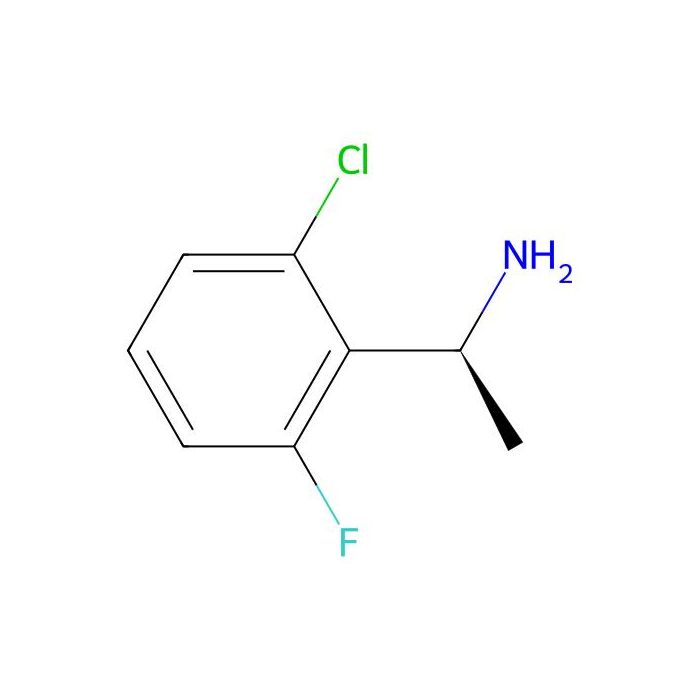
This compound belongs to the class of organic compounds known as fluorobenzenes. These are compounds containing one or more fluorine atoms attached to a benzene ring.
External Descriptors
Not available
1. Djoumbou Feunang Y, Eisner R, Knox C, Chepelev L, Hastings J, Owen G, Fahy E, Steinbeck C, Subramanian S, Bolton E, Greiner R, and Wishart DS. ClassyFire: Automated Chemical Classification With A Comprehensive, Computable Taxonomy. Journal of Cheminformatics, 2016, 8:61.
Certificats (CoA, COO, BSE/TSE et tableau d'analyse)
C of A & Other Certificates(BSE/TSE, COO):
Analytical Chart:
Propriétés chimiques et physiques
Poids moléculaire
173.610 g/mol
XLogP3
1.900
Hydrogen Bond Donor Count
1
Hydrogen Bond Acceptor Count
2
Rotatable Bond Count
1
Exact Mass
173.041 Da
Monoisotopic Mass
173.041 Da
Topological Polar Surface Area
26.000 Ų
Heavy Atom Count
11
Formal Charge
0
Complexity
131.000
Isotope Atom Count
0
Defined Atom Stereocenter Count
1
Undefined Atom Stereocenter Count
0
Defined Bond Stereocenter Count
0
Undefined Bond Stereocenter Count
0
The total count of all stereochemical bonds
0
Covalently-Bonded Unit Count
1
Calculateurs de solution
Molarity Calculator
Determine the necessary mass, volume, or concentration for preparing a solution.
Dilution Calculator
Determine the dilution needed to prepare a stock solution.
Reconstitution Calculator
Avis
Avis des clients
Application Protocols
Not applicable. This product is not supplied for bioassay formats (e.g., WB, IHC, IF, FC) and has no vendor-validated biological protocols. For practical usage, refer to the Reaction Conditions and Application notes relevant to small-molecule synthesis and handling.
Biological Roles
Item-specific biological data: Not specified for this item; refer to CoA/Spec Sheet.
General context (informational; not a claim of biological activity for this item)
Arylethanamines as a chemical class are structural motifs present in numerous bioactive small molecules; their primary amine can engage in ionic interactions (as a protonated ammonium) and hydrogen bonding with biological targets.
The dihalogenated aryl ring increases lipophilicity and can influence membrane permeability and metabolic stability in small-molecule design (medicinal chemistry principles).
Benzylic primary amines are typically protonated near physiological pH (pKaH ~9–10 for the conjugate acid), favoring aqueous solubility as salts and target engagement via ionic interactions in discovery assays.
Metabolic considerations (general)
Common biotransformations of benzylic amines include N-acetylation, oxidative deamination, and benzylic oxidation; aryl halides can alter the rate of oxidative metabolism.
Research Use Note: For research use only. No medical, diagnostic, or clinical use is intended or implied.
Buffer Applications
This compound is not a dedicated buffering agent and is not typically used to prepare defined buffer systems.
Practical notes
As a primary amine, it can act as a base in organic synthesis or as a transient pH adjuster in non-aqueous media; however, it lacks the conjugate acid/base pair and pKa spacing used for precise buffer formulations.
For aqueous buffers near neutral pH, select standard systems (e.g., phosphate, HEPES, Tris). If an amine-containing environment is required, dedicated buffering amines (e.g., Tris, ethanolamine) are preferred.
For pH control in synthetic steps or workups involving this reagent, use appropriate inorganic bases/acids or established buffering agents.
Green Alternatives
While the molecule itself is fixed, greener choices can be made for its use, purification, and derivatization.
Solvent substitutions (examples; performance must be verified experimentally)
| Use case | Conventional | Greener alternative | Trade-offs |
|---|---|---|---|
| Acylation/Carbamoylation | DCM | EtOAc or 2-MeTHF | Slightly slower rates; may need temp tuning |
| Pd Coupling (aryl Cl) | Dioxane/THF/Toluene | 2-MeTHF, CPME, propylene carbonate | Ligand/base optimization often required |
| Reductive amination | MeOH/DCM | EtOH, iPrOH, water-tolerant systems | Selectivity vs. over-reduction may vary |
| Workup/extraction | DCM | EtOAc, MTBE | Partitioning may change; emulsions possible |
Reagent choices
Use carbodiimide coupling with catalytic DMAP in EtOAc instead of acid chloride routes to reduce HCl waste.
Prefer NaBH(OAc)3 in alcoholic media for reductive amination over cyanoborohydride in some settings (reduced cyanide risk), or adopt catalytic hydrogenation when appropriate.
Process-intensification and waste minimization
Convert to crystalline salts (e.g., HCl, fumarate) to avoid chromatographic purifications.
Run at ambient temperature/pressure when feasible; avoid chlorinated solvents and stoichiometric halogenated reagents.
These recommendations are general/literature-based and should be optimized for the specific transformation involving this amine.
Pharmaceutical Uses
Item-specific pharmacopeial or excipient status: Not specified for this item; refer to CoA/Spec Sheet.
General, non-clinical context
Chiral benzylic amines like this one are frequently used as intermediates in the research synthesis of candidate APIs and analog libraries. They can be incorporated via amide/urea formation, reductive amination, or as chiral auxiliaries for stereocenter installation.
Salt forms (e.g., hydrochloride, mesylate, fumarate) are often selected during research-scale purification to improve handling, crystallinity, and stability; counterion selection influences hygroscopicity and processability.
No therapeutic or clinical claims are made for this product. It is supplied strictly for research and development in laboratory settings.
If used as a reference intermediate in screening collections, store under inert atmosphere to mitigate amine oxidation and track integrity via periodic LC–MS.
For assay compatibility, prepare DMSO stock solutions and dilute into assay media; confirm that protonation state and solubility are appropriate for the intended biological test system (research context only).
Physical Properties
Item-specific specs (this lot)
Appearance: Not specified for this item; refer to CoA/Spec Sheet.
Grade/Purity: Not specified for this item; refer to CoA/Spec Sheet.
Molecular Formula: Not specified for this item; refer to CoA/Spec Sheet.
Molecular Weight: Not specified for this item; refer to CoA/Spec Sheet.
Storage/Shipping (from Product Data)
Recommended storage: Room temperature
Shipped in: Not specified for this item; refer to CoA/Spec Sheet.
Literature/computed (for reference; not item specifications)
Approx. molecular formula: C8H9ClFN (derived from structure)
Acid-base: primary benzylic amine; conjugate acid pKaH typically ~9–10 for arylethanamines (literature range)
Lipophilicity: cLogP for dihalogenated arylethanamines is commonly in the ~2–3 range (predicted; tool-dependent)
Physical state: small benzylic amines can be low-melting solids or liquids; specific MP/BP for this compound were not located in standard references.
Not available in Product Data or curated literature
Melting point, boiling point, density, refractive index, water content, UV cutoff: Not specified for this item; refer to CoA/Spec Sheet.
Notes for practitioners
Solubility is expected to be good in common organic solvents (DCM, EtOAc, MeOH, THF) and in aqueous media upon protonation (e.g., as HCl salt). Verify experimentally for your application.
Enantiopurity-dependent properties (optical rotation, chiroptical data) are not provided; consult CoA or determine by chiral HPLC/polarimetry.
Quality and Grades
Item-specific quality information
Grade/Purity: Not specified for this item; refer to CoA/Spec Sheet.
Stabilizers/Inhibitors: Not specified for this item; refer to CoA/Spec Sheet.
Optical purity (ee): Not specified for this item; refer to CoA/Spec Sheet.
Interpreting common grades (general guidance)
Research grade: suitable for most synthetic and analytical research; impurity profiles may not be controlled for GMP or clinical use.
Chiral building blocks: vendors commonly report enantiomeric excess (ee) by chiral HPLC and chemical purity by achiral HPLC/GC; water and residual solvents may be listed on the CoA.
If offered as a salt (e.g., HCl), counterion assay and residual inorganic content may be specified; free-base vs. salt form affects mass balance and handling.
Best practices for quality verification (user side)
Confirm identity by 1H/13C NMR and HRMS; verify stereochemistry via chiral HPLC or derivatization (e.g., Mosher amides).
Assess amine content by nonaqueous titration or HPLC area %; check residual halogenated impurities if relevant to downstream coupling.
For trace-metal-sensitive applications, perform ICP-MS on a digest if material has undergone Pd/Ni-catalyzed steps upstream.
Documentation
For assay, specific optical rotation, residual solvents, and detailed impurity profile, consult the product’s CoA/Spec Sheet. Those are definitive for this catalog item.
Reaction and Applications
As an (S)-configured benzylic primary amine bearing orthogonal aryl halides (Cl and F), this reagent is a versatile chiral building block.
Typical uses in synthesis (literature-general)
Amide/urea/carbamate formation to install the chiral amine motif into targets (EDC/HOBt, HATU, CDI, p-nitrophenyl carbonates).
Imine formation and subsequent transformations (e.g., chiral auxiliaries, Strecker-type elaboration after imine generation).
Reductive amination partner to furnish higher homologs while retaining or transforming stereochemistry.
Salt formation (e.g., HCl, p-TsOH) for crystallization-induced enantioenrichment or handling.
Leveraging ring halides
Aryl chloride: platform for Pd-catalyzed cross-coupling (Suzuki–Miyaura, Buchwald–Hartwig, Sonogashira) after appropriate amine protection if necessary.
Aryl fluoride: generally inert under cross-coupling; can be exploited for 19F NMR handles or, in specialized contexts, SNAr if further ring activation is introduced in downstream intermediates.
Practical tips
Protect the amine (Boc, Cbz, Fmoc) prior to strong-base or metal-catalyzed couplings to prevent catalyst poisoning and side reactions.
For acylations, maintain ≤0 °C to rt addition to minimize over-acylation; use base scavengers (DIPEA) to suppress salt formation.
For enantiospecific transformations at the benzylic center, avoid conditions that could racemize (strong base, high temperature). Monitor ee by chiral HPLC.
Application domains (research)
Discovery library synthesis, chiral scaffold incorporation, and preparation of enantioenriched intermediates for materials/agro/medchem research (non-clinical).
Reaction Conditions
The following are general, literature-based conditions relevant to primary benzylic amines and aryl chlorides; adapt to your substrate and scale.
Handle in a fume hood to control vapors/odors and avoid inhalation.
Storage incompatibilities and precautions
Store tightly closed at room temperature per Product Data; protect from moisture and CO2 uptake (amines can form ammonium carbamates on prolonged air exposure).
Segregate from acids (to avoid unwanted salt formation), acid chlorides/anhydrides, isocyanates, and strong oxidizers.
First-aid overview (general guidance; defer to SDS)
Skin/eye contact: Immediate decontamination with copious water for ≥15 min; remove contaminated clothing.
Inhalation: Move to fresh air; seek medical attention if symptoms persist.
Ingestion: Rinse mouth; do not induce vomiting; seek medical attention.
Waste handling
Collect amine-containing organic waste in appropriate halogenated/non-halogenated streams per institutional and regulatory guidance.
Always consult the product-specific SDS for definitive hazard, toxicological, and response information.
Solvent Selection
This compound is a small benzylic primary amine with a dihalogenated aryl ring; it exhibits amphiphilic behavior (basic, H-bond donor/acceptor; moderately lipophilic ring).
Partly to poorly soluble: alkanes (hexanes, heptane) unless converted to a less polar derivative.
Aqueous systems: increase solubility dramatically by forming the ammonium salt (e.g., HCl, HBr, sulfate).
Solvent selection by task
Acylation/Carbamoylation: DCM or THF with a non-nucleophilic base (DIPEA, TEA); for greener options, EtOAc or 2-MeTHF often suffice.
Reductive amination: MeOH, EtOH, or iPrOH with NaBH3CN or H2/Pd; for water-compatible variants, use aqueous MeOH with NaBH(OAc)3 under buffered conditions.
Transition-metal coupling on aryl chloride (derivatization of ring): Toluene/1,4-dioxane/THF; greener swap: 2-MeTHF or CPME.
Salt formation/purification: IPA/Et2O anti-solvent crystallizations are common for amine salts.
Polarity/miscibility notes (literature-general)
As a primary amine, it can engage in H-bonding; dielectric constant of chosen solvent should balance reactivity vs. solvation of the ammonium form when protonated.
Quick comparison (indicative)
DCM: excellent solubility and reactivity control, non-green.
2-MeTHF/EtOAc: greener, often adequate for acylations and extractions.
Alcohols: beneficial for reductive amination; may compete in acylation reactions.
Storage and Reconstitution
Storage (from Product Data)
Store at room temperature in a tightly closed container.
Packaging/atmosphere
For best longevity of free-base amines, store under inert gas (N2/Ar) to limit CO2 uptake and oxidative discoloration. Use amber glass to minimize light exposure during extended storage.
Salt vs. free base
If received as free base, consider preparing an analytical portion as the hydrochloride salt for long-term archival stability; reconvert to free base immediately before use.
Reconstitution and solution handling
Solubility is typically excellent in DCM, EtOAc, MeOH, EtOH, THF, and ACN; prepare concentrated stock solutions (e.g., 0.1–1.0 M) as needed.
For aqueous applications, dissolve as a salt (e.g., HCl) to enhance solubility; adjust pH carefully to avoid racemization.
Freeze–thaw guidance
Not usually required at room temperature storage; if refrigerated or frozen for stability studies, avoid repeated freeze–thaw. Aliquot stock solutions and store desiccated.
Stability monitoring
Track by LC–MS/1H NMR for signs of oxidation or polymerization (rare for primary benzylic amines). Check enantiopurity periodically by chiral HPLC if stereochemical integrity is critical.
For any lot-specific stability or impurity data, consult the CoA/Spec Sheet. Research use only.
Structure and Identity
A chiral arylethanamine building block featuring ortho-dihalogenation on the phenyl ring and a single stereogenic center at the benzylic position.
Item-specific identifiers (from Product Data)
CAS: 1000922-53-1
InChIKey: Not specified for this item; refer to CoA/Spec Sheet. (Product Data lists: "401685")
SMILES: Not specified for this item; refer to CoA/Spec Sheet.
Literature/computed identifiers (for reference; not item specifications)
Preferred name (IUPAC-style): (S)-1-(2-chloro-6-fluorophenyl)ethan-1-amine (literature)
Representative SMILES (literature): NC@Hc1c(Cl)cccc1F or NC@Hc1c(F)cccc1Cl
Molecular formula (calculated from structure): C8H9ClFN (literature)
Stereochemistry: single chiral center at the benzylic carbon; specified (S)-configuration
2D description in words: a benzene ring substituted at C1 by a chiral –CH(CH3)–NH2 side chain; at C2 by Cl; at C6 by F; remaining ring positions are hydrogen.
Category (from catalog path): chemical/biochemical reagent; research use only
Synthetic Utility
Key reactivity arises from the primary amine and the orthogonal aryl halides.
Functional-group handles
Primary amine: nucleophilic at N; forms amides, sulfonamides, carbamates, ureas; imine/enamine chemistry; quaternization possible (though not typical here).
Benzylic stereocenter: susceptible to racemization under strong base or at elevated temperature; retain stereochemistry by avoiding prolonged exposure to strong bases and by using mild coupling conditions.
Aryl chloride/fluoride: chloride can engage in Pd-catalyzed cross-couplings; fluoride is generally inert but useful as a spectroscopic handle (19F NMR) downstream.
Named reactions and tactics (literature-general)
Amide couplings (HATU/HBTU/EDC) with carboxylic acids.
Curtius rearrangement/activated carbonate routes for carbamate installation onto the amine.
Buchwald–Hartwig amination (on aryl chloride after protecting the benzylic amine if necessary).
Suzuki–Miyaura cross-coupling on the aryl chloride to diversify the ring substituent pattern.
Reductive amination with aldehydes/ketones to elaborate the side chain while preserving stereochemistry at Cα when appropriate.
Derivatization strategy
Protect amine (Boc or Cbz) to facilitate metal-catalyzed couplings; deprotect under mild acid/hydrogenation respectively.
Convert to crystalline salt (e.g., HCl) for purification and to enhance shelf stability; neutralize immediately prior to use.
Retrosynthetic value
Serves as a chiral synthon for installing an (S)-1-aryl-ethylamine motif common in discovery chemistry.
Target Specificity
Not applicable. This product is a small-molecule chiral amine, not an antibody, enzyme, or affinity reagent. No antigen/epitope or species reactivity data apply. For intended use cases, see Reaction & Applications and Synthetic Utility sections.
Foire aux questions
What is the purity of this product?
This product is supplied at ≥95% purity (chemical assay). Lot-specific values are stated on the Certificate of Analysis.
How should this product be stored?
Store at room temperature.
What are the CAS number, molecular formula and molecular weight?
The CAS Number is 1000922-53-1. InChIKey WLQXZWHHERXWHA-YFKPBYRVSA-N.
What documentation is provided?
Available product documentation, including Certificates of Analysis (COA), Safety Data Sheets (SDS), and specification sheets, is shown in the product document area. Document availability and access follow the current site policy.
Nous utilisons des cookies pour garantir le bon fonctionnement du site et, lorsque cela est autorisé, pour améliorer votre expérience. Vous pouvez gérer vos préférences à tout moment dans les Paramètres. Pour en savoir plus, consultez notre Politique relative aux cookies.
Souhaitez-vous que nous vous envoyions un message lorsque des réductions seront disponibles?
Me rappeler plus tard
Merci ! Veuillez vérifier votre boîte de réception e-mail pour confirmer.
Products are supplied to verified businesses, institutions, and qualified professionals for research and development use only. Not for use in humans, animals, diagnosis, or therapy.