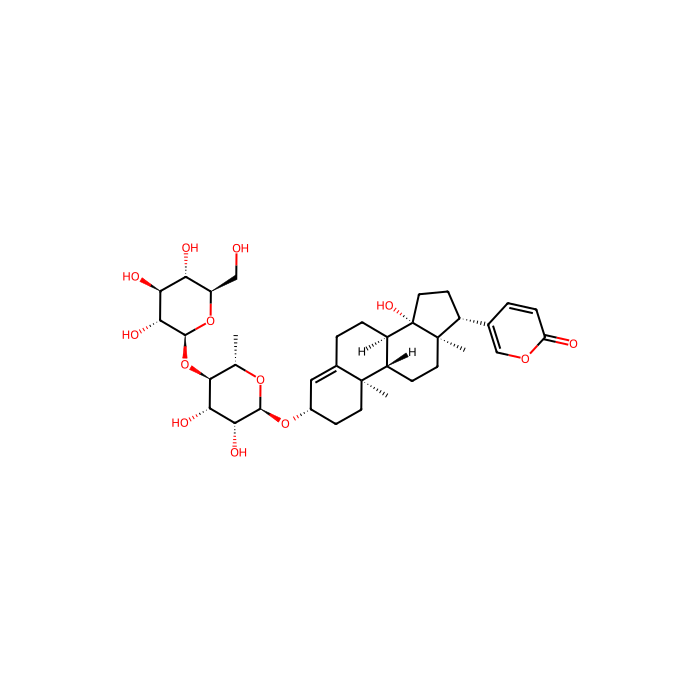
Scillaren A - ≥90%(LC/MS-ELSD) , CAS No.124-99-2

CAS: 124-99-2 Cat. No.: S463209 Poids moléculaire: 692.79 Numéro CE: 204-721-3 PubChem CID: 441870
DISPONIBLE À COMMANDE
GRADE & PURITY ≥90%(LC/MS-ELSD)
Storage
Store at -20°C
Shipped In
Ice chest + Ice pads
★
Size
Allemagne (EU)
USA*
Price
Qty
1mg
S463209-1mg
Sur commande · 8–12 semaines

936,20€

1 092,40€
Enregistrer 156,19 € (14.30%)
Enter a quantity for the sizes you want to add.
🧪

Why this grade

≥90%(LC/MS-ELSD) for sensitive chromatographic and analytical workflows requiring minimal baseline interference.

🌡

Storage & shipping

Store at -20°C Ships Ice chest + Ice pads Check lot-specific COA for exact specifications.

📋

Quality documents

SDS, COA, datasheet, and spec sheet available for download. Lot-specific COA accessible via lot number lookup.

📚

Literature proof

Cited in 0 peer-reviewed publications across chromatography, organic synthesis, and cross-coupling reactions.

Vue d’ensemble

Description

Natural product derived from plant source.}

Specifications

Spécifications et pureté
≥90%(LC/MS-ELSD)
Conditions de stockage de stockage
Store at -20°C
Expédié en
Ice chest + Ice pads
Ce produit nécessite l'expédition en chaîne froide. Les services terrestres et autres services économiques ne sont pas disponibles.
Pureté
≥90%(LC/MS-ELSD)
Noms et identifiants
Sourires canoniquesC[C@H]1[C@@H]([C@H]([C@H]([C@@H](O1)O[C@H]2CC[C@@]3([C@H]4CC[C@@]5([C@H](CC[C@@]5([C@@H]4CCC3=C2)O)C6=COC(=O)C=C6)C)C)O)O)O[C@H]7[C@@H]([C@H]([C@@H]([C@H](O7)CO)O)O)O
InChIKeyNXJOCELNFPGKIV-ARHXXGKOSA-N
INCHI1S/C36H52O13/c1-17-31(49-33-29(42)27(40)26(39)24(15-37)48-33)28(41)30(43)32(46-17)47-20-8-11-34(2)19(14-20)5-6-23-22(34)9-12-35(3)21(10-13-36(23,35)44)18-4-7-25(38)45-16-18/h4,7,14,16-17,20-24,26-33,37,39-44H,5-6,8-13,15H2,1-3H3/t17-,20-,21+,22-,23+,24+,2
Isomères SMILES C[C@H]1[C@@H]([C@H]([C@H]([C@@H](O1)O[C@H]2CC[C@@]3([C@H]4CC[C@@]5([C@H](CC[C@@]5([C@@H]4CCC3=C2)O)C6=COC(=O)C=C6)C)C)O)O)O[C@H]7[C@@H]([C@H]([C@@H]([C@H](O7)CO)O)O)O
PubChem CID 441870
Numéro ONU 2811
Poids moléculaire 692.79

Documentation

📋 Safety Data Sheet (SDS)

Comprehensive hazard, handling, storage, and regulatory compliance document.

Download SDS →

✅ Certificate of Analysis (COA)

Lot-specific quality data. Enter your lot number to retrieve the exact COA.

Look up COA →

📊 Datasheet

Quick-reference summary of product specifications and applications.

View datasheet →

🔬 Specification Sheet

Full quality attributes and acceptance criteria for this grade.

View spec sheet →

Advanced Data

Taxonomic Classification

Taxonomy Tree

KingdomOrganic compounds
SuperclassLipids and lipid-like molecules
ClasseSteroids and steroid derivatives
SubclassSteroid lactones
Intermediate Tree Nodes Not available
Direct ParentBufanolides and derivatives
Alternative Parents Steroidal glycosides  14-hydroxysteroids  Delta-4-steroids  O-glycosyl compounds  Disaccharides  Pyranones and derivatives  Oxanes  Tertiary alcohols  Heteroaromatic compounds  Secondary alcohols  Lactones  Cyclic alcohols and derivatives  Polyols  Oxacyclic compounds  Acetals  Hydrocarbon derivatives  Organic oxides  Primary alcohols  
Molecular FrameworkAromatic heteropolycyclic compounds
Substituents Bufanolide-skeleton - Steroidal glycoside - 14-hydroxysteroid - Hydroxysteroid - Delta-4-steroid - Disaccharide - Glycosyl compound - O-glycosyl compound - Pyranone - Oxane - Pyran - Tertiary alcohol - Cyclic alcohol - Heteroaromatic compound - Lactone - Secondary alcohol - Oxacycle - Acetal - Organoheterocyclic compound - Polyol - Organooxygen compound - Hydrocarbon derivative - Alcohol - Organic oxide - Organic oxygen compound - Primary alcohol - Aromatic heteropolycyclic compound
DescriptionThis compound belongs to the class of organic compounds known as bufanolides and derivatives. These are steroid lactones containing a pyran-2-one moiety linked to the C17 atom of a cyclopenta[a]phenanthrene derivative.
External Descriptors bufanolide - Bufanolides and derivatives
Structure 3D
Modèle de structure chimique interactif


Mécanismes d'action
Certificats (CoA, COO, BSE/TSE et tableau d'analyse)
C of A & Other Certificates(BSE/TSE, COO):
Analytical Chart:
Propriétés chimiques et physiques
Point d'éclair (°F)Not applicable
Point d'éclair (°C)Not applicable
Poids moléculaire692.800 g/mol
XLogP30.300
Hydrogen Bond Donor Count7
Hydrogen Bond Acceptor Count13
Rotatable Bond Count6
Exact Mass692.341 Da
Monoisotopic Mass692.341 Da
Topological Polar Surface Area205.000 Ų
Heavy Atom Count49
Formal Charge0
Complexity1370.000
Isotope Atom Count0
Defined Atom Stereocenter Count17
Undefined Atom Stereocenter Count0
Defined Bond Stereocenter Count0
Undefined Bond Stereocenter Count0
The total count of all stereochemical bonds0
Covalently-Bonded Unit Count1
Calculateurs de solution
Avis

Avis des clients

Application Protocols

Item-specific validated applications and dilutions: Not specified for this item.

General research workflow suggestions (for in vitro biochemical assays; non-clinical)

  • Stock preparation
    • Dissolve Scillaren A at 10–20 mM in anhydrous DMSO; vortex and, if needed, sonicate briefly. Filter through 0.22 µm PTFE if particulate persists.
  • Working solution
    • Dilute the DMSO stock into assay buffer (e.g., HEPES 20–50 mM, 100–150 mM NaCl, pH 7.2–7.5) to the desired concentration range, maintaining ≤1% DMSO final.
  • Controls
    • Include vehicle controls (matching DMSO %), and, where relevant, a reference inhibitor from the same class to benchmark response.
  • Stability check
    • Verify concentration by LC–UV or LC–MS at t=0 and post-incubation to confirm no significant degradation or adsorption losses under assay conditions.

These steps are provided as general laboratory practices for small-molecule bioactives and should be adapted to your specific assay. Always consult your institutional protocols.

Biological Roles
  • General (literature)

    • Class: cardioactive glycoside (bufadienolide). Members of this class bind to the α-subunit of Na+/K+-ATPase, altering intracellular ion homeostasis. This note is provided for mechanistic context in research settings; no clinical or therapeutic claims are made.
    • Origin: isolated historically from squill (Urginea/Drimia maritima and related species) as one component among several scillaren-type glycosides.
    • Structure–function features: the unsaturated bufadienolide lactone and the steroidal core are key for target engagement; the sugar moiety modulates solubility, membrane transport, and potency.
  • Laboratory implications

    • Handle with care as a potent bioactive; design in vitro assays with appropriate controls and concentration ranges spanning sub-micromolar to low micromolar, as guided by your lab’s literature sources for this class.
    • Degradation (e.g., hydrolysis to aglycone) can change apparent bioactivity; include stability checks (time-course LC–MS) in biological studies.
  • Item-specific biological data: Not specified for this item; refer to CoA/Spec Sheet or primary literature for quantitative parameters (e.g., binding constants) relevant to your assay system.

Buffer Applications

Scillaren A is not a buffering reagent and is not used to control pH.

  • Practical handling in buffers (general)

    • Prepare concentrated stocks in DMSO or ethanol; add to aqueous buffers (e.g., PBS, HEPES, Tris) with vigorous mixing to prevent precipitation.
    • Keep final co-solvent content low (typically ≤1% v/v) to minimize vehicle effects in biochemical or cell-free assays.
    • If surfactant is acceptable, 0.01–0.05% nonionic detergents (e.g., Tween-20) may help maintain solubility; verify compatibility with your assay readout.
  • pH considerations

    • Avoid high pH (>9) and strong bases that can cleave glycosidic bonds; near-neutral buffers (pH 6.5–7.5) generally favored for stability.

Item-specific buffer recipes, pKa values, and ionic strength roles: Not applicable/not specified for this item.

Green Alternatives

While Scillaren A itself is the analyte of interest and not replaceable in studies focused on this exact molecule, greener practice considerations apply to solvent and process choices.

  • Greener solvent choices (general)

    • Prefer DMSO or ethanol for stock solutions over chlorinated solvents.
    • For LC separations, use water/ethanol or water/acetonitrile gradients where feasible; minimize acetonitrile consumption and consider methanol as an alternative if resolution allows.
  • Comparison of common solvent options (general)

    | Use case | Conventional | Greener alternative | Trade-offs | |---|---|---|---| | Stock dissolution | DMF, CHCl3 | DMSO, EtOH | DMSO higher viscosity; EtOH lower solvency vs DMF | | Normal-phase work | CH2Cl2, Hexane | Cyclopentyl methyl ether (CPME), Heptane/EtOAc | May alter selectivity; validate TLC/flash | | LC mobile phase | ACN/H2O | MeOH/H2O | Higher backpressure with MeOH; sometimes reduced resolution |

  • Process minimization

    • Use microscale assay formats and efficient LC methods to reduce solvent usage.
    • Recycle high-purity solvents when compliant with your QA system.

Note: No changes to the compound itself are suggested; selection of greener media should not compromise analyte integrity (avoid strong base to prevent glycosidic cleavage).

Pharmaceutical Uses

No pharmacopeial or excipient status is provided for this item; it is supplied strictly for research use only.

  • Research/formulation-related uses (general)

    • Reference standard in analytical method development for natural product quality control (e.g., quantifying bufadienolide glycosides in plant materials).
    • Tool compound for preclinical, mechanistic in vitro studies; any formulation work should be limited to laboratory experiments (no clinical application implied).
  • Regulatory notes

    • Not specified in USP/EP/JP for excipient or API monographs for this catalog entry.
    • Any GMP/GLP applicability, residual solvent limits, or compendial tests: Not specified for this item; refer to CoA/Spec Sheet if applicable.
Physical Properties
  • Item-specific specs

    • Appearance: Not specified for this item; refer to CoA/Spec Sheet.
  • Literature/general properties for scillaren-type cardiac glycosides (for planning use only)

    • Physical state: typically a white to off-white amorphous solid or crystalline powder (literature for related cardiac glycosides).
    • Solubility: sparingly soluble in water; soluble in polar organic solvents such as methanol, ethanol, acetonitrile, and DMSO; limited solubility in nonpolar solvents (literature).
    • Partitioning: amphiphilic with overall lipophilic character due to the steroid core; enhanced polarity from hydroxyls and sugar moiety (qualitative, literature).
    • UV absorption: conjugated bufadienolide lactone exhibits UV absorbance in the near-UV (literature, qualitative). Specific cutoff/ε: Not specified for this item; refer to CoA/Spec Sheet.
    • Melting point, boiling point, density, refractive index, pKa/logP: Not specified for this item; refer to CoA/Spec Sheet.

Practical notes (general)

  • Prepare concentrated stocks in anhydrous DMSO or MeOH to ensure full dissolution; warm gently (≤40 °C) and sonicate if needed.
  • For aqueous work, dilute organic stock into buffer with vigorous mixing; final organic co-solvent typically kept ≤1–2% v/v to avoid precipitation in biochemical assays.
Quality and Grades
  • Item-specific grade/purity: Not specified for this item; refer to CoA/Spec Sheet.

  • Research use note: For research use only (not for human or veterinary use).

  • Interpreting quality for natural product glycosides (general guidance)

    • Identity confirmation commonly relies on high-resolution MS and 1H/13C NMR consistent with the expected aglycone and sugar profile. Optical rotation may be used to confirm stereochemistry.
    • Purity determination typically uses HPLC/UPLC with UV detection near the conjugated lactone absorbance; LC–MS helps detect close analogs and degradation products (e.g., aglycone from hydrolysis).
    • Residual solvents, water content (Karl Fischer), and ash/metals are sometimes reported, but these are Not specified for this item; refer to CoA/Spec Sheet.
  • Stabilizer/impurities

    • Stabilizers: Not specified for this item; refer to CoA/Spec Sheet.
    • Known degradants (general): aglycone via glycosidic cleavage; oxidized lactone products; sugar acetals/hemiketals under harsh conditions.
  • Practical QA tips

    • Upon receipt, verify chromatographic purity and identity if your application is sensitivity-critical (e.g., quantitative bioassay standards).
    • Minimize freeze–thaw cycles and protect from light to preserve integrity.
Reaction and Applications

This product is primarily used as a reference natural product and biochemical probe rather than as a routine synthetic reagent.

  • Research applications (general for cardiac glycosides)

    • Biochemical tool compound to study Na+/K+-ATPase interaction and downstream cellular responses in vitro (mechanistic research; no clinical use implied).
    • Natural product standard in metabolomics, plant extract profiling (Urginea/Drimia spp.), and stability/degradation studies (e.g., hydrolysis to aglycone).
    • Analytical calibrant for LC–UV/LC–MS method development targeting bufadienolide glycosides.
  • Transformations of interest (literature)

    • Glycosidic hydrolysis under acidic or enzymatic conditions to access the aglycone; re-glycosylation or derivatization for SAR studies.
    • Protection/deprotection of sugar hydroxyls (acetylation, benzoylation) to modulate solubility and chromatographic behavior.
    • Mild oxidation/reduction around the lactone or allylic positions to probe structure–activity relationships.
  • Practical tips

    • Maintain neutral to slightly acidic conditions during workup/purification to limit glycoside cleavage.
    • For quantitative assays, standardize extinction coefficients or use LC–MS response factors because UV absorptivity can vary with solvent and pH.

Note: No manufacturer-specific application notes were provided; the above are general, literature-informed uses for this class.

Reaction Conditions

General literature-guided conditions relevant to scillaren-type glycosides; not item-specific specifications.

  • Hydrolysis to aglycone (glycosidic cleavage)

    • Acidic: 0.05–0.5 M HCl or TFA in MeOH/H2O (50–70 °C, 1–6 h) can effect partial to complete cleavage; monitor by LC–MS. Minimize over-degradation of the aglycone by controlling time/temp.
    • Enzymatic: β-glycosidases under mildly acidic aqueous buffers (pH 4.5–6, 25–37 °C) for selective sugar removal.
  • Protection/deprotection of hydroxyls

    • Acetylation: Ac2O/Py or Ac2O/DMAP (rt, 1–4 h) gives peracetates; deacetylate with NaOMe/MeOH (cat., 0 °C to rt) cautiously to avoid glycosidic cleavage.
  • Mild modifications of the lactone region

    • Conjugate additions or reductions should be attempted under carefully buffered conditions; strong base promotes ring opening.
  • Analytical/quant prep

    • Reversed-phase HPLC: Water/ACN or Water/MeOH (0.05–0.1% FA), 25–40 °C column temp; detect by UV in near-UV region and/or MS (ESI+).
  • Expected outcomes

    • Yields and selectivity vary widely with substitution patterns; quantitative values are Not specified for this item.

These are general guidelines from literature on bufadienolide glycosides; adapt to your substrate and verify by small-scale trials.

Safety and Handling
  • Item-specific hazard information

    • Signal word: Not specified for this item; refer to SDS.
    • H-statements: Not specified for this item; refer to SDS.
    • GHS classification/pictograms: Not specified for this item; refer to SDS.
  • General safety (cardiac glycoside class; literature)

    • Cardioactive glycosides can be acutely toxic if ingested, inhaled as dust, or absorbed through skin. Handle as a potent bioactive natural product.
    • Avoid dust/aerosol formation. Use in a certified chemical fume hood.
    • PPE: lab coat, nitrile gloves, and safety glasses as minimum. Consider double gloving and using disposable sleeve covers for weighing.
    • First aid (overview; defer to SDS): if inhaled—fresh air and medical attention; skin/eye contact—rinse with water for ≥15 min; ingestion—rinse mouth, seek immediate medical attention.
    • Incompatibilities: strong acids/bases may hydrolyze the glycosidic bond; strong oxidizers may degrade the steroidal core; avoid prolonged exposure to light and heat which can promote lactone/sugar degradation.
  • Handling tips

    • Use antistatic tools and weigh boats; compound may be staticky and adhere to surfaces.
    • Prepare solutions with care; confirm complete dissolution to ensure accurate dosing in assays.

Always consult the product’s SDS for authoritative and up-to-date safety guidance.

Solvent Selection
  • Polarity and miscibility (general for scillaren-type glycosides)

    • Best solvents for stock solutions: DMSO, methanol, ethanol, and acetonitrile (good solvating power for polyhydroxylated steroids).
    • Water miscibility: limited; use co-solvent strategies for aqueous systems.
  • Practical guidance

    • Prepare a 5–20 mM DMSO stock; for biochemical assays, dilute into buffer to a final DMSO content ≤1% v/v to limit vehicle effects.
    • For preparative work or purification, MeOH/H2O or ACN/H2O with 0.1% formic acid are common mobile phases; avoid strong base that can cleave glycosidic bonds.
  • Comparison (general)

    • DMSO vs DMF: DMSO is preferred for bioassays (lower toxicity profile as a vehicle and fully miscible with water), while DMF offers similar solvency but is less favored in biology labs.
    • MeOH vs IPA: MeOH gives higher solubility and sharper LC peaks; IPA is useful when reducing solvent strength or improving MS ionization.
  • Incompatible/undesirable solvents (use judgment)

    • Strongly basic alcoholic solvents (e.g., NaOMe/MeOH) promote transglycosylation/hydrolysis—avoid unless performing deliberate reactions.

Note: Specific solubility limits and UV cutoff are Not specified for this item; verify empirically for your system.

Storage and Reconstitution
  • Item-specific conditions (Product Data)

    • Storage: Store at -20°C.
    • Shipping: Ice chest + ice pads.
  • General stability guidance for cardiac glycoside standards

    • Protect from light and moisture. Use desiccant in secondary containment.
    • Allow container to equilibrate to room temperature before opening to prevent condensation.
    • After opening, promptly reseal; consider storing under inert gas if repeated access is expected.
  • Solution handling (general recommendations)

    • Prepare small, single-use aliquots of DMSO or MeOH stock (e.g., 5–20 mM) and store at -20°C.
    • Avoid repeated freeze–thaw cycles; thaw on ice, mix gently, and return unused aliquots to -20°C promptly.
    • Aqueous working solutions are best prepared fresh; if necessary, store at 2–8°C protected from light and use within the same day.
  • Shelf life and specifications

    • Formal retest date, water/peroxide/metal limits, and UV cutoff: Not specified for this item; refer to CoA/Spec Sheet.

These recommendations support maintaining integrity of Scillaren A for research use only.

Structure and Identity

Brief overview: Scillaren A is a cardioactive glycoside (bufadienolide-type steroid aglycone bearing a sugar moiety). It is commonly studied as a natural product standard and biochemical probe.

  • Item-specific (Product Data)

    • CAS: 124-99-2
    • PubChem CID: 441870
    • InChIKey: 250383 (as provided)
    • SMILES: Not specified for this item; refer to CoA/Spec Sheet.
    • Molecular formula: Not specified for this item; refer to CoA/Spec Sheet.
    • Molecular weight: Not specified for this item; refer to CoA/Spec Sheet.
  • Structural features (general/literature description)

    • Core: steroidal bufadienolide skeleton (six–membered rings A/B/C/D in a trans-fused arrangement).
    • Pharmacophore: α,β-unsaturated six-membered lactone (bufadienolide) at C-17 of the steroid nucleus.
    • Glycone: one or more sugar residues O-glycosidically linked at C-3 of the aglycone (typical for scilliroside/scillaren-type glycosides); exact sugar identity and count should be confirmed on the CoA for this specific lot.
    • Stereochemistry: multiple defined chiral centers on the steroid framework and sugars; configuration consistent with cardiac glycoside series (literature).
  • 2D structural description (literature)

    • Tetracyclic steroid core with a pendant unsaturated lactone ring; an O-glycosidic linkage from C-3 to a deoxyhexose-type sugar; multiple hydroxyl groups on both aglycone and sugar enabling hydrogen bonding and limited aqueous solubility.

Note: For exact atom-level identifiers (canonical SMILES, InChI, confirmed stereochemistry) for this catalog item, consult the CoA/Spec Sheet.

Synthetic Utility

Scillaren A is a complex natural product; it is more often a target or standard than a reagent. Nonetheless, certain transformations are of synthetic interest (literature):

  • Functional groups and reactivity

    • O-Glycosidic linkage at C-3: acid- or enzyme-labile; enables access to aglycone via hydrolysis and re-glycosylation for SAR libraries.
    • Bufadienolide lactone at C-17: conjugated Michael acceptor; sensitive to strong nucleophiles and base. Mild hydrogenation can reduce the lactone’s unsaturation; ring opening under strong base.
    • Multiple secondary/tertiary alcohols: sites for selective protection (acetates/benzoates), oxidation (to ketones), or carbamate/carbonate formation to modulate lipophilicity.
  • Retrosynthetic/value

    • Serves as a scaffold for semi-synthetic analogs by altering sugar identity, anomeric substitution, or aglycone oxidation state.
    • Derivatization for analytical purposes: per-acetylation improves volatility/UV response and simplifies chromatographic behavior for trace analysis.
  • Purification/analysis

    • Normal-phase silica can cause tailing; reversed-phase C18 with aqueous organic eluents is preferred. Add 0.1% formic acid to stabilize and sharpen peaks.

Note: Exact conditions and yields are context-dependent and Not specified for this item; consult primary literature for protocols on bufadienolide glycoside chemistry.

Target Specificity
  • Item-specific target, epitope, or binding profile: Not specified for this item; refer to CoA/Spec Sheet and primary literature.

  • General (literature) context

    • Cardiac glycosides characteristically bind the Na+/K+-ATPase α-subunit. Binding affinity and isoform selectivity depend on aglycone stereochemistry and sugar composition. Quantitative constants for Scillaren A specifically are not provided here.

Shall we send you a message when we have discounts available?

Remind me later

Thank you! Please check your email inbox to confirm.

Oops! Notifications are disabled.