Determine the necessary mass, volume, or concentration for preparing a solution.
| Activity Type | Relation | Activity value | Units | Action Type | Journal | PubMed Id | doi | Assay Aladdin ID |
|---|

Taxonomy Tree
| Kingdom | Organic compounds |
|---|---|
| Superclass | Organic acids and derivatives |
| Classe | Carboxylic acids and derivatives |
| Subclass | Acrylic acids and derivatives |
| Intermediate Tree Nodes | Not available |
| Direct Parent | Acrylic acids |
| Alternative Parents | Carboxylic acid salts Monocarboxylic acids and derivatives Carboxylic acids Organic sodium salts Organic oxides Hydrocarbon derivatives Carbonyl compounds |
| Molecular Framework | Aliphatic acyclic compounds |
| Substituents | Acrylic acid - Carboxylic acid salt - Organic alkali metal salt - Monocarboxylic acid or derivatives - Carboxylic acid - Organic oxygen compound - Organic oxide - Hydrocarbon derivative - Organic sodium salt - Organic salt - Organooxygen compound - Carbonyl group - Aliphatic acyclic compound |
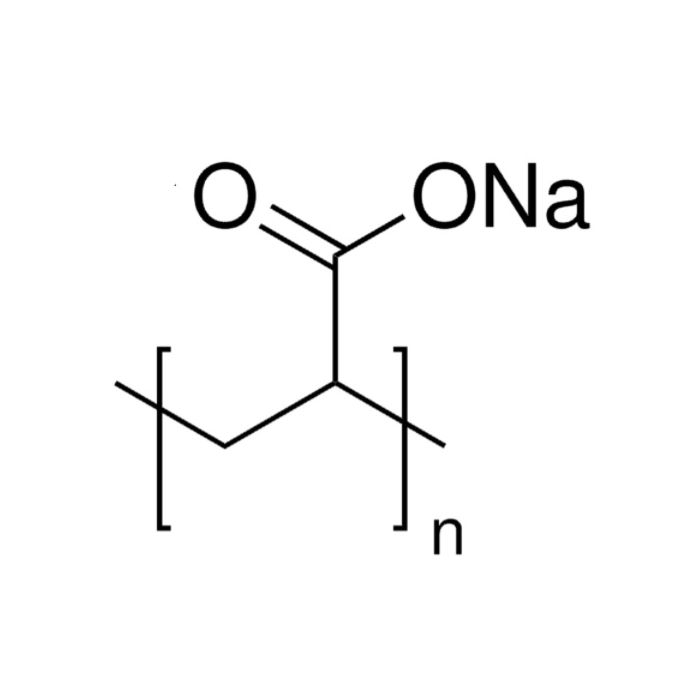
| Description | This compound belongs to the class of organic compounds known as acrylic acids. These are organic compounds containing acrylic acid CH2=CHCO2H. |
| External Descriptors | Not available |
| Activity Type | Relation | Activity value | Units | Action Type | Journal | PubMed Id | doi | Assay Aladdin ID |
|---|
Find and download the COA for your product by matching the lot number on the packaging.
| Lot Number | Certificate Type | Date | Article |
|---|---|---|---|
 J2614606 | Certificate of Analysis | Oct 08, 2026 | S165277 |
| J2614348 | Certificate of Analysis | Oct 08, 2026 | S165277 |
| J2614347 | Certificate of Analysis | Oct 08, 2026 | S165277 |
| J2614346 | Certificate of Analysis | Oct 08, 2026 | S165277 |
| K2406380 | Certificate of Analysis | Aug 04, 2026 | S165277 |
| G2613630 | Certificate of Analysis | Jun 12, 2026 | S165277 |
| G2613615 | Certificate of Analysis | Jun 12, 2026 | S165277 |
| G2613614 | Certificate of Analysis | Jun 12, 2026 | S165277 |
| G2613471 | Certificate of Analysis | Jun 12, 2026 | S165277 |
| G2509340 | Certificate of Analysis | Jul 01, 2025 | S165277 |
| G2509532 | Certificate of Analysis | Jul 01, 2025 | S165277 |
| G2509533 | Certificate of Analysis | Jul 01, 2025 | S165277 |
| I2314305 | Certificate of Analysis | Jun 10, 2025 | S165277 |
| I2314304 | Certificate of Analysis | Jun 10, 2025 | S165277 |
| G2228930 | Certificate of Analysis | Apr 15, 2025 | S165277 |
| K2406381 | Certificate of Analysis | Oct 22, 2024 | S165277 |
| K2406382 | Certificate of Analysis | Oct 22, 2024 | S165277 |
| K2406426 | Certificate of Analysis | Oct 22, 2024 | S165277 |
| E2611083 | Certificate of Analysis | Oct 22, 2024 | S165277 |
| G2418507 | Certificate of Analysis | Jul 06, 2024 | S165277 |
| G2418508 | Certificate of Analysis | Jul 06, 2024 | S165277 |
| G2418495 | Certificate of Analysis | Jul 06, 2024 | S165277 |
| A2218054 | Certificate of Analysis | May 20, 2024 | S165277 |
| D2415201 | Certificate of Analysis | Mar 13, 2024 | S165277 |
| B2423321 | Certificate of Analysis | Feb 02, 2024 | S165277 |
| B2423322 | Certificate of Analysis | Feb 02, 2024 | S165277 |
| B2423335 | Certificate of Analysis | Feb 02, 2024 | S165277 |
| B2423338 | Certificate of Analysis | Feb 02, 2024 | S165277 |
| B2428300 | Certificate of Analysis | Feb 02, 2024 | S165277 |
| B2428299 | Certificate of Analysis | Feb 02, 2024 | S165277 |
| B2428298 | Certificate of Analysis | Feb 02, 2024 | S165277 |
| J2127026 | Certificate of Analysis | Aug 16, 2023 | S165277 |
| A2425039 | Certificate of Analysis | Jul 21, 2023 | S165277 |
| H2309881 | Certificate of Analysis | Jul 21, 2023 | S165277 |
| H2309887 | Certificate of Analysis | Jul 21, 2023 | S165277 |
| H2309894 | Certificate of Analysis | Jul 21, 2023 | S165277 |
| H2309901 | Certificate of Analysis | Jul 21, 2023 | S165277 |
| I2314303 | Certificate of Analysis | Jul 21, 2023 | S165277 |
| F2309751 | Certificate of Analysis | May 31, 2023 | S165277 |
| F2309732 | Certificate of Analysis | May 31, 2023 | S165277 |
| F2309746 | Certificate of Analysis | May 31, 2023 | S165277 |
| F2310506 | Certificate of Analysis | May 31, 2023 | S165277 |
| K2222672 | Certificate of Analysis | Nov 04, 2022 | S165277 |
| K2222674 | Certificate of Analysis | Nov 04, 2022 | S165277 |
| K2222679 | Certificate of Analysis | Nov 04, 2022 | S165277 |
| G2221280 | Certificate of Analysis | Jul 26, 2022 | S165277 |
| G2228907 | Certificate of Analysis | Jun 02, 2022 | S165277 |
| Sensibilité | Moisture sensitive |
|---|---|
| Indice de réfraction | n20/D 1.423 |
| Poids moléculaire | 94.04 |
| XLogP3 | |
| Hydrogen Bond Donor Count | 0 |
| Hydrogen Bond Acceptor Count | 2 |
| Rotatable Bond Count | 1 |
| Exact Mass | 94.0031 Da |
| Monoisotopic Mass | 94.0031 Da |
| Topological Polar Surface Area | 40.100 Ų |
| Heavy Atom Count | 6 |
| Formal Charge | 0 |
| Complexity | 59.800 |
| Isotope Atom Count | 0 |
| Defined Atom Stereocenter Count | 0 |
| Undefined Atom Stereocenter Count | 0 |
| Defined Bond Stereocenter Count | 0 |
| Undefined Bond Stereocenter Count | 0 |
| The total count of all stereochemical bonds | 0 |
| Covalently-Bonded Unit Count | 2 |
H315:Causes skin irritation
H319:Causes serious eye irritation
H400:Very toxic to aquatic life
H410:Very toxic to aquatic life with long lasting effects
H411:Toxic to aquatic life with long lasting effects
P264:Wash hands [and …] thoroughly after handling.
P273:Avoid release to the environment.
P280:Wear protective gloves/protective clothing/eye protection/face protection.
P321:Specific treatment (see ... on this label).
P391:Collect spillage.
P302+P352:IF ON SKIN: wash with plenty of water.
P305+P351+P338:IF IN EYES: Rinse cautiously with water for several minutes. Remove contact lenses if present and easy to do - continue rinsing.
P362+P364:Take off contaminated clothing and wash it before reuse.
P501:Dispose of contents/container to an approved waste disposal plant.
P264+P265:Wash hands [and …] thoroughly after handling. Do not touch eyes.
P337+P317:If eye irritation persists: Get medical help.
P332+P317:If skin irritation occurs: Get medical help.