≥98% for sensitive chromatographic and analytical workflows requiring minimal baseline interference.
🌡
Storage & shipping
Store at -20°C Ships Ice chest + Ice pads Check lot-specific COA for exact specifications.
📋
Quality documents
SDS, COA, datasheet, and spec sheet available for download. Lot-specific COA accessible via lot number lookup.
📚
Literature proof
Cited in 0 peer-reviewed publications across chromatography, organic synthesis, and cross-coupling reactions.
Vue d’ensemble
Information
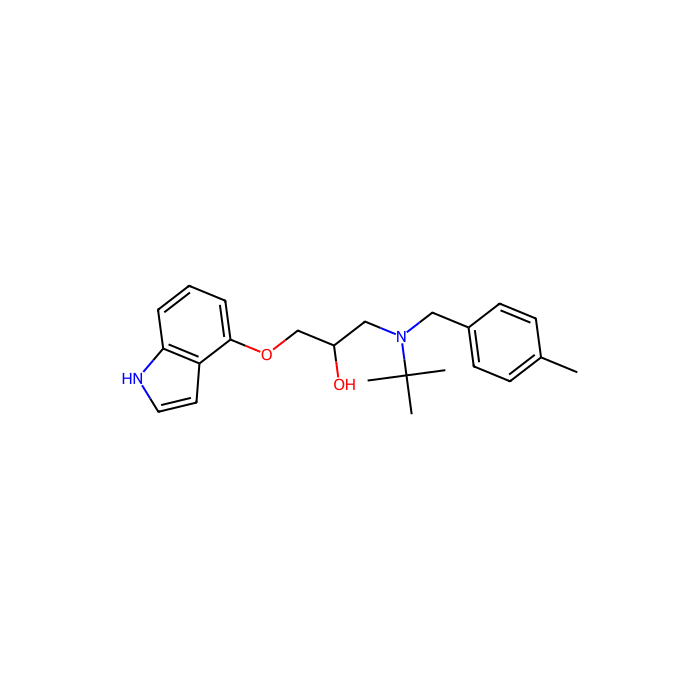
SR-18292 SR-18292 inhibits PGC-1α gluconeogenic activity and reduces co-activation of HNF4α by modulating the interaction between GCN5 and PGC-1α.
Targets
PGC-1α
In vitro
SR-18292 is a potent inhibitor of the gluconeogenic gene expression and glucose production in hepatocytes. It increases the interaction of PGC-1α with GCN5 and reduces co-activation of HNF4α by PGC-1α. SR-18292 suppresses HNF4α/PGC-1α gluconeogenic transcriptional function.
In vivo
SR-18292 reduces blood glucose, strongly increases hepatic insulin sensitivity and improves glucose homeostasis in dietary and genetic mouse models of type 2 diabetes. SR-18292 suppresses hepatic glucose production and increases liver insulin sensitivity in vivo. The liver is a major target of SR-18292 and probably accounts for a significant part of its anti-diabetic effects.
This compound belongs to the class of organic compounds known as indoles. These are compounds containing an indole moiety, which consists of pyrrole ring fused to benzene to form 2,3-benzopyrrole.
External Descriptors
Not available
1. Djoumbou Feunang Y, Eisner R, Knox C, Chepelev L, Hastings J, Owen G, Fahy E, Steinbeck C, Subramanian S, Bolton E, Greiner R, and Wishart DS. ClassyFire: Automated Chemical Classification With A Comprehensive, Computable Taxonomy. Journal of Cheminformatics, 2016, 8:61.
Determine the necessary mass, volume, or concentration for preparing a solution.
Dilution Calculator
Determine the dilution needed to prepare a stock solution.
Reconstitution Calculator
Avis
Avis des clients
Application Protocols
No vendor-validated application protocols are provided for SR-18292. The following general workflow may assist in deploying small-molecule screening compounds:
General small-molecule testing workflow (not item-specific)
Stock solution
Prepare at 10–50 mM in anhydrous DMSO (or alternative solvent compatible with your assay). Record exact concentration, solvent lot, and preparation date. Aliquot to avoid freeze–thaw.
Plate setup
Use serial dilutions (e.g., 10-point, half-log spacing) to generate concentration–response curves. Include vehicle controls and, when available, a positive control compound.
Assay execution
Biochemical assays: Pre-incubate compound with enzyme/protein as needed; initiate reaction and monitor by appropriate readout (fluorescence, absorbance, MS).
Cell-based assays: Dose cells with matched vehicle controls; monitor viability/phenotype at defined time points; control DMSO to ≤0.1–0.5% v/v.
Data analysis
Fit curves (four-parameter logistic) to derive IC50/EC50; verify Hill slope and assess assay Z’ factor/controls.
Follow-up
Confirm hits with fresh stocks and orthogonal assays; assess stability of working solutions over assay timescale.
These are generic recommendations; optimize for your specific biological system.
Biological Roles
Item-specific biological roles, targets, or pathways for SR-18292 are not provided in this listing, and no claims are made. As supplied, it is intended strictly as a research tool compound.
General considerations for tool compounds
Hypothesis testing: Small molecules can be used to transiently modulate biochemical pathways, allowing time-resolved interrogation of cellular responses without genetic manipulation.
Orthogonal validation: Combine compound treatment with genetic knockdown/knockout or overexpression to strengthen mechanistic inferences and rule out off-target artifacts.
Selectivity profiling: In the absence of defined target data, broaden your assay panel (e.g., kinome screens, panel enzymes, or phenotypic counterscreens) to understand potential polypharmacology.
DMSO controls: Always include vehicle controls and, where feasible, use inactive structural analogs as negative controls.
Data stewardship
Record exact lot, stock concentration, solvent, and storage history; repeated freeze–thaw or prolonged exposure to moisture/light can alter activity for many small molecules.
Note: For definitive biological function or target engagement data specific to SR-18292, consult peer-reviewed literature, vendor technical notes, or generate internal data under your experimental conditions.
Buffer Applications
SR-18292 is not a buffering agent and does not form a defined buffer system. Buffer selection is therefore application-driven rather than compound-driven.
Practical guidance for assay buffers (general)
Choose a buffer compatible with your biological target (e.g., HEPES or phosphate buffers at pH 7.2–7.5 for many cell assays; Tris for certain enzymatic systems). Maintain ionic strength and cofactors as required.
When dosing from DMSO stocks, keep final DMSO ≤0.1–0.5% v/v to minimize effects on enzyme kinetics and cell viability.
Include appropriate surfactants (e.g., 0.01–0.05% Tween-20) only if necessary to reduce nonspecific binding; verify no interference with readout.
For poorly soluble compounds, consider adding a low percentage of co-solvent (ethanol or DMSO) uniformly across controls and treatments.
Since item-specific acid–base properties and pKa are not provided, no buffer recipes are tied to SR-18292. Optimize buffer composition empirically for your assay.
Green Alternatives
Because SR-18292 is a discrete screening compound rather than a process solvent or commodity reagent, “green alternative” considerations mainly concern the choice of dissolution vehicle and assay workflow.
Greener practice suggestions (general)
Prefer ethanol or water/ethanol cosolvent systems over DMF/DMAC where solubility and assay tolerance permit.
Minimize DMSO concentration in final assays (≤0.1–0.5% v/v) to reduce potential cell stress and environmental load during waste handling.
Use micro-scale, high-throughput formats to limit chemical consumption and waste.
Implement closed, low-evaporation plates and solvent-saving dispensing (e.g., acoustic droplet ejection) to cut VOC emissions.
Comparison of common vehicles (general, not item-specific)
Ethanol: lower toxicity and environmental impact; may offer adequate solubility for moderately lipophilic compounds.
DMSO: excellent solvency but can facilitate dermal uptake; treat solutions as hazardous and segregate waste.
Acetonitrile/DMF: effective but less desirable environmentally and biologically; reserve for cases where other options fail.
Waste and EHS
Segregate halogenated vs non-halogenated organic waste; collect DMSO mixtures per institutional guidance.
Consider life-cycle impacts in plate washing and plasticware; adopt reusable glassware where compatible.
These recommendations are general; validate solvent choices for SR-18292 experimentally.
Pharmaceutical Uses
No pharmacopeial status, excipient role, or manufacturing use is provided for this item. SR-18292 is sold strictly for research use only (RUO) and is not intended for human or veterinary applications, clinical use, or diagnostic procedures.
Context (general)
Screening/lead discovery: Compounds of this type are commonly used in early discovery to explore biological pathways and structure–activity relationships (SAR). They are not formulated as drug products or drug substances for clinical administration.
Preformulation relevance: If advancing toward lead optimization, investigators may characterize solubility, stability, and salt/cocrystal forms; such work is outside the scope of the present RUO listing and requires additional development and quality controls.
Regulatory note: Use of RUO materials in GMP or clinical contexts is inappropriate. Any transition toward regulated use necessitates re-sourcing under applicable quality systems and documented specifications.
Conclusion
Treat SR-18292 as a research-only tool compound. Do not use for therapeutic, diagnostic, or clinical purposes.
Physical Properties
Item-specific physicochemical constants are not provided in this listing.
Appearance (form/color): Not specified for this item; refer to CoA/Spec Sheet.
Melting point: Not specified for this item; refer to CoA/Spec Sheet.
Boiling point: Not specified for this item; refer to CoA/Spec Sheet.
Density: Not specified for this item; refer to CoA/Spec Sheet.
Refractive index: Not specified for this item; refer to CoA/Spec Sheet.
pKa/logP/logD: Not specified for this item; refer to CoA/Spec Sheet.
Solubility: Not specified for this item; refer to CoA/Spec Sheet.
General/literature-style handling expectations for screening compounds (not item-specific)
Stock solution practice: Many discovery compounds are prepared at 10–50 mM in anhydrous DMSO for biochemical/cell assays; aqueous working concentrations typically keep DMSO ≤0.1–0.5% v/v to minimize solvent effects.
Alternative solvents: Ethanol or DMF can be used for primary dissolution when compatible with the assay; subsequent dilution into aqueous buffer, media, or vehicle is common.
Hygroscopicity/light sensitivity: Some heteroaromatic or conjugated systems can be moisture- or light-sensitive; store protected from moisture and light when in doubt (see Storage & Reconstitution).
Important: The above are general practices for small-molecule screening tools and are not specifications for SR-18292. For definitive values (e.g., MP, solubility), consult the CoA/Spec Sheet or measure under your lab conditions.
Quality and Grades
Grade/Purity: Not specified for this item; refer to CoA/Spec Sheet.
Research use note: For research use only (RUO); not for human or veterinary use, diagnostic procedures, or clinical applications.
What to expect for this class of product (general guidance)
Small-molecule library members are typically supplied at research grade, with lot-specific purity often determined by HPLC/UPLC and identity verified by MS and/or NMR. The specific analytical package varies by supplier and lot.
If low-UV applications (e.g., HPLC detection in the deep-UV) are planned, request the UV trace and impurity profile for your lot to confirm suitability.
Residual solvents, water content (KF), and salt/form (free base vs. salt) can profoundly affect solubility and assay response; confirm these on the CoA when available.
Interpreting common quality annotations (context)
“≥98% (HPLC)” indicates area% by a defined HPLC method; it is not equivalent to qNMR purity.
“LC–MS verified” confirms mass identity but not isomeric purity.
“Salt form” (e.g., HCl, TFA) can improve handling but may change counterion content; account for this in molarity calculations.
Recommendation
For SAR or screening campaigns, standardize on a single lot where possible, archive the CoA, and document preparation and storage conditions to ensure reproducibility across assays.
Reaction and Applications
This product is categorized as a research small molecule/library member and is typically used as a tool compound in screening, target validation, or SAR workflows rather than as a synthetic reagent.
Applicable research contexts (general guidance)
Primary/secondary screening: Evaluate concentration–response in biochemical or cell-based assays; define potency metrics (IC50/EC50) and preliminary selectivity against orthogonal readouts.
Mechanistic studies: Probe pathway engagement using phenotypic assays, transcriptomics/proteomics, or reporter systems; follow up with chemoproteomics or CETSA where appropriate.
SAR expansion: Use SR-18292 as a reference while synthesizing or sourcing close analogs; compare activity and physicochemical attributes.
ADME profiling: If pursuing lead optimization, assess solubility, microsomal stability, permeability (PAMPA/Caco-2), and protein binding.
Not typically applicable
Named synthetic reactions or use as a reagent (e.g., coupling partner, catalyst) are not typical for a library screening compound without structural context.
Important: No item-specific biological target or pathway claims are made here. Consult the literature and your internal data to define the most appropriate assays for SR-18292.
Reaction Conditions
Not typically applicable. SR-18292 is sold as a finished small molecule for biological screening rather than as a reagent for chemical transformations.
General guidance for biological testing workflows (not item-specific)
Stock preparation: Commonly 10–50 mM in anhydrous DMSO; vortex and, if needed, sonicate briefly to aid dissolution. Filter if particulate persists and the chemistry is filter-compatible.
Working solutions: Dilute into assay buffer or cell culture media to desired concentrations; maintain consistent vehicle across controls and treatments; typical final DMSO ≤0.1–0.5% v/v.
Temperature/exposure: Many cell assays are conducted at 37°C with 5% CO2; biochemical assays at room temperature or 4–30°C depending on enzyme stability.
Incubation times: Determined by the assay readout (minutes to hours for enzyme kinetics; hours to days for cellular phenotypes). Optimize empirically.
No chemical reaction temperatures, catalysts, or yields are provided or implied for SR-18292.
Safety and Handling
Hazard classification details are not provided with this item listing. Handle as a potentially hazardous laboratory chemical and defer to the Safety Data Sheet (SDS) for authoritative guidance.
GHS signal word / pictograms / H-statements: Not specified for this item; refer to SDS.
Primary risks (general for small molecules): Potential skin/eye irritation, respiratory irritation from dust/aerosols, and unknown toxicological profile. Avoid ingestion, inhalation, and contact with skin and eyes.
Engineering controls: Use in a certified chemical fume hood or biosafety cabinet as appropriate to the assay. Employ local exhaust when weighing powders or sonicating solutions.
Personal protective equipment (PPE): Lab coat, safety glasses or face shield, and appropriate chemically resistant gloves (e.g., nitrile). Consider double-gloving for DMSO solutions which can facilitate dermal transport.
Incompatibilities (general): Avoid strong oxidizers/reducers, strong acids/bases, and reactive acylating/alkylating agents unless the compound’s structure confirms compatibility. Keep away from sources of ignition if solvent stocks are flammable.
First aid (overview; consult SDS):
Inhalation: Move to fresh air; seek medical attention if symptoms occur.
Skin contact: Wash with soap and water; remove contaminated clothing.
Eye contact: Rinse cautiously with water for several minutes; remove contact lenses if present and easy to do; seek medical attention.
Ingestion: Rinse mouth; do not induce vomiting; seek medical attention.
Spill/leak response: Absorb with inert material, collect in a chemical-waste container, and decontaminate surfaces. Avoid generating dust/aerosols.
Fire-fighting: Use CO2, dry chemical, or foam suitable for solvent vehicle; wear self-contained breathing apparatus.
Always consult the product SDS and your institutional EHS protocols before use.
Solvent Selection
Item-specific polarity and solubility are not provided. The guidance below reflects common practices for non-formulated small-molecule screening tools and should be validated experimentally for SR-18292.
Typical vehicles for screening compounds (general)
DMSO (anhydrous): Most common primary solvent; high solvating power for diverse chemotypes; miscible with water and many organics. Consider final assay DMSO ≤0.1–0.5% v/v to limit solvent effects on cells/enzymes.
Ethanol (absolute) or Methanol: Useful for compounds moderately soluble in protic organics; often diluted into aqueous buffers or media; watch for protein precipitation in biochemical assays at higher percentages.
DMF or Acetonitrile: Alternative vehicles for difficult solutes; ensure compatibility with biological systems (typically used at very low final %).
Selection considerations
Aim for the weakest, least hazardous solvent that achieves the required stock concentration and assay compatibility (e.g., prefer ethanol over DMF where feasible).
If the compound is ionizable (unknown here), pH-adjusted co-solvent systems or salt formation may improve solubility; confirm no assay interference.
Filter sterilization (0.22 µm PTFE) may be used for sterile applications if the compound and solvent are filter-compatible.
Quick comparison (general)
DMSO: maximal solubility, strongest solvating power; potential to enhance dermal absorption; can affect membrane integrity at higher %.
Ethanol: greener, benign at low %, but lower solvency window.
ACN/DMF: powerful but less biocompatible; use sparingly.
Always determine solubility and stability of SR-18292 empirically under your specific assay conditions.
Storage and Reconstitution
Storage conditions provided for this item should be followed to preserve integrity.
Storage temperature (as provided): Store at −20°C.
Shipping conditions: Shipped in ice chest with ice pads to maintain a cold chain during transit.
Appearance: Not specified for this item; refer to CoA/Spec Sheet.
General best practices for RUO small molecules (not item-specific)
Protection from moisture/light: Store in tightly sealed containers, preferably under inert atmosphere or with desiccant. Protect from light if the compound is conjugated/aromatic or noted as photosensitive.
Aliquoting: Upon first receipt, divide into single-use aliquots to minimize headspace and freeze–thaw cycles. Label aliquots with concentration (if in solution), solvent, and date.
Solid vs solution storage: If supplied as a solid, keep desiccated at −20°C. If preparing DMSO or ethanol stocks, store at −20°C in amber vials or plates sealed with solvent-resistant caps/films.
Freeze–thaw: Avoid repeated cycles; thaw quickly at room temperature, mix, and return unused material to storage promptly.
Stability checks: Periodically assess by LC–MS or HPLC for degradation (general recommendation). Discard if significant impurities or precipitation persist after reasonable effort.
Reconstitution solvent: Not specified for this item; DMSO is commonly used for screening compounds, but confirm compatibility experimentally.
Always follow the product label and CoA/Spec Sheet for any lot-specific instructions.
Structure and Identity
SR-18292 is supplied as a research-only small-molecule library member. Item-specific structural identifiers are limited in the current listing.
Product name: SR-18292 (screening compound)
SKU: S414040
CAS: 2095432-55-4
PubChem CID: 129896798
InChIKey: 29587 (note: truncated/non-standard length as provided; consult CoA or PubChem entry for the full InChIKey)
SMILES: Not specified for this item; refer to CoA/Spec Sheet.
Molecular formula: Not specified for this item; refer to CoA/Spec Sheet.
Molecular weight: Not specified for this item; refer to CoA/Spec Sheet.
Structural features
Detailed functional groups, ring systems, and stereochemistry: Not specified for this item; refer to CoA/Spec Sheet or the referenced CID for literature structure.
2D/descriptor summary (general): As a designated SR-series screening compound, SR-18292 is expected to be a discrete organic small molecule intended for biochemical/cellular assay use. Without a provided SMILES or full InChIKey, definitive functional-group annotation cannot be given here.
Notes for identity confirmation (general guidance)
Cross-verify CAS (2095432-55-4) against the PubChem CID 129896798 entry to obtain the full standardized identifiers (SMILES, InChI, InChIKey) and to confirm registry equivalence.
For lot-specific verification, consult the Certificate of Analysis (NMR/HPLC/HRMS) when provided and match spectra to the literature structure (general best practice for screening compounds).
Synthetic Utility
SR-18292 is offered as a discrete screening compound and is not positioned as a synthetic building block or reagent. Without structure-specific information (functional groups, handles, or protecting groups), prescriptive synthetic roles cannot be assigned.
General notes (where relevant)
If structural information is obtained (via CoA or literature), chemists may consider whether latent handles exist for analog generation (e.g., aryl halides for cross-coupling, amines/acids for amide formation). Such activities fall under medicinal chemistry optimization rather than routine use of the catalog item.
Stability/reactivity assessments (hydrolysis, oxidation, photolysis) should be performed prior to any derivatization campaigns.
Bottom line
Treat SR-18292 as a terminal compound for biological testing. For synthetic elaboration or SAR, obtain or generate the structure and plan analog synthesis accordingly.
Target Specificity
Item-specific target, pathway, or binding data for SR-18292 are not provided in this listing.
Target/epitope/clone/isotype: Not applicable; this product is not an antibody or biologic.
Species reactivity: Not specified for this item; refer to literature or generate internal data.
Guidance (general)
If a putative target is hypothesized, perform orthogonal validation (e.g., genetic modulation, CETSA, pull-down/affinity MS) and counterscreens to assess selectivity.
Build a concentration–effect profile across related target families to characterize specificity.
We use cookies to ensure the website functions properly and, where permitted, to improve your experience. You can manage your preferences at any time in Settings. Learn more in our Cookie Policy.
Shall we send you a message when we have discounts available?
Remind me later
Thank you! Please check your email inbox to confirm.
Products are supplied to verified businesses, institutions, and qualified professionals for research and development use only. Not for use in humans, animals, diagnosis, or therapy.
 G2228173