Talc - Moligand™, 10 mM in DMSO , CAS No.14807-96-6

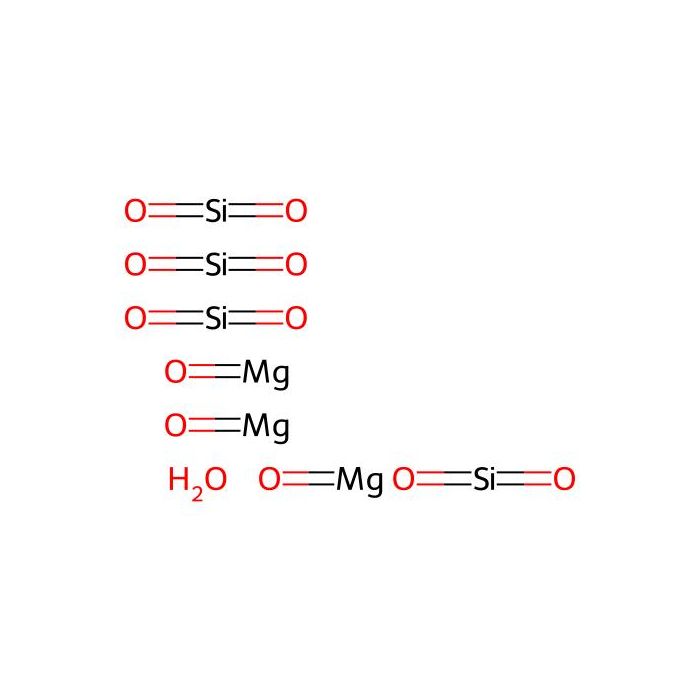
CAS: 14807-96-6 Cat. No.: T1499350 Formule: 3MgO·4SiO2·H2O Poids moléculaire: 379.27 Numéro CE: 238-877-9
DISPONIBLE À COMMANDE
QUALITÉ & PURETÉ Moligand™ ? Moligand™ — Aladdin's line of ligands and bioactive small molecules. Use for receptor, pathway, and binding studies needing defined small-molecule tools. 10 mM in DMSO
Storage
Store at -80°C
Shipped In
Dry ice packs + Cold packs
★
Taille
Allemagne (EU)
USA*
Prix
Qté
1ml
T1499350-1ml
Sur commande · 8–12 semaines
51,11€
Enter a quantity for the sizes you want to add.

Vue d’ensemble

Talc, a naturally occurring mineral composed primarily of magnesium, silicon and oxygen, is used in many cosmetics, from baby powder to blush .

Spécifications

Spécifications et pureté
Moligand™, 10 mM in DMSO
Conditions de stockage de stockage
Store at -80°C
Expédié en
Dry ice packs + Cold packs
Ce produit nécessite l'expédition en chaîne froide. Les services terrestres et autres services économiques ne sont pas disponibles.
Grade
Moligand™
Noms et identifiants
Isomères SMILES
O.O=[Mg].O=[Mg].O=[Mg].O=[Si]=O.O=[Si]=O.O=[Si]=O.O=[Si]=O
RTECS
WW2710000
Poids moléculaire
379.27

Données avancées

Certificats (CoA, COO, BSE/TSE et tableau d'analyse)
C of A & Other Certificates(BSE/TSE, COO):
Analytical Chart:
Propriétés chimiques et physiques
Point de fusion (°C)800°C
Sécurité et dangers (GHS)
RTECS
WW2710000
FAQ et articles
Mercapto Silane Coupling Agents: Structural Features, Classification, Applications, and Selection
Titanate Coupling Agents: Structural Features, Classification, Typical Applications, and Differences from Silane Coupling Agents
TCA-KTTS, a Titanate Coupling Agent Suitable for Use in Cosmetics: Basic Information, Application Characteristics, and Differences from 130 and 105
How Matting Agents in Coatings Build Low-Gloss Coating Surfaces: Mechanisms, Formulation Trade-Offs, and Product Selection
Application and Selection Guide for Alkyd Resin Coatings: Advantages, Limitations, Formulation Control, and Modification Directions
Guide to Epoxy Resin Performance Design: System Composition, Key Properties, Process Control, and Application Selection
Fluorocarbon Resin Coating Formulation Design: Resin Selection, Supporting Systems, and Key Application Control Points
Silicone Resin Coating Formulation Design: From Application Conditions to Matching Resins, Pigments and Fillers, Curing, and Substrates
Applications and Selection of Acrylic Resins in Coatings: Analysis of Architectural, Industrial, and Supporting Materials
Vinyl Acetate-Acrylic Emulsion (Vinyl Acrylic Emulsion): A Cost-Performance Balance Solution for Architectural Coatings
PVAc, VAE, and Vinyl Acetate-Based Emulsions: Film-Forming Logic and Performance Boundaries in Architectural Coatings
Phenolic-Modified Alkyd Resin: Performance Enhancement and Applications in Fast-Drying Industrial Coatings
Selection and Formulation Design Guidelines for Phenolic Resins in Coatings: Applicable Scenarios, Application Limitations, and Performance Verification
Application Positioning, Scenario Selection, and Key Use Considerations for Chlorinated Rubber Resin in Coatings
Formulation Design of Chlorinated Rubber Coatings: Component Synergy and Performance Control
Waterborne Resin Application Guide: Formulation Synergy, Troubleshooting, and Technology Development Trends
Mechanisms and Control of Coating Yellowing: From Chromophoric Structure Formation to Source Diagnosis and Formulation Optimization
Resin Polarity in Coating Formulations: From Molecular Structure to Dissolution, Compatibility, Interfacial Interactions, and Formulation Design
Why Do Daily Chemical Products Become Opaque? Formation Mechanisms of Milky Turbidity, Pearlescence, and Coverage, and How to Select the Right Ingredients
Color-Development Mechanisms, Formulation Forms, and Selection/Application Logic of Colorants in Personal Care Products
Analysis of the Production Process of Hydroxypropyl Methylcellulose (HPMC) for Putty: Understanding Differences in Substitution Structure and Gelation Temperature from High-Ratio and Low-Ratio Formulations
Types, Mechanisms of Action, Key Quality Indicators, and Selection and Application of Common Cellulose Ethers in Wall Putty
Influencing Factors and Control Strategies for Blistering in Neutral Wall Putty: An Experimental Analysis Based on HPMC Dosage, Viscosity, and Ground Calcium Carbonate Fineness
How to Select Binding/Gel Materials for Neutral Wall Putty? A Comparison of Pregelatinized Starch, PVA, and Redispersible Polymer Powder Based on Four Application Trials
Causes and Mechanism Analysis of Delamination During Sanding of Water-Resistant Putty
What Are the Differences Between Polyvinyl Alcohol 1788, 2488, and 2699? Understanding Workability, Bonding Strength, and Relative Water Resistance from the Perspective of Degree of Polymerization and Degree of Hydrolysis
Common Problems and Formulation Adjustment Strategies for Neutral Putty Under High Summer Temperatures
Differences and Application Selection of Cassava- and Corn-Based Pregelatinized Starch in Neutral Putty Formulations
The Role, Selection, Cracking Risk Analysis, and Dosage Control of Bentonite in Neutral Putty
Mechanism of Action of Porous Silica in Oil-Control Loose Powder: Pore Structure, Capillary Imbibition, and Surface Modification
What Is Direct Compression? Process Characteristics, Suitability Criteria, and Excipient Selection
Citations of This Product
Calculateurs de solution
Avis

Avis des clients

Souhaitez-vous que nous vous envoyions un message lorsque des réductions seront disponibles?

Me rappeler plus tard

Merci ! Veuillez vérifier votre boîte de réception e-mail pour confirmer.

Oups ! Les notifications sont désactivées.