QUALITÉ & PURETÉMoligand™?Moligand™ — Aladdin's line of ligands and bioactive small molecules. Use for receptor, pathway, and binding studies needing defined small-molecule tools.10mM in DMSO
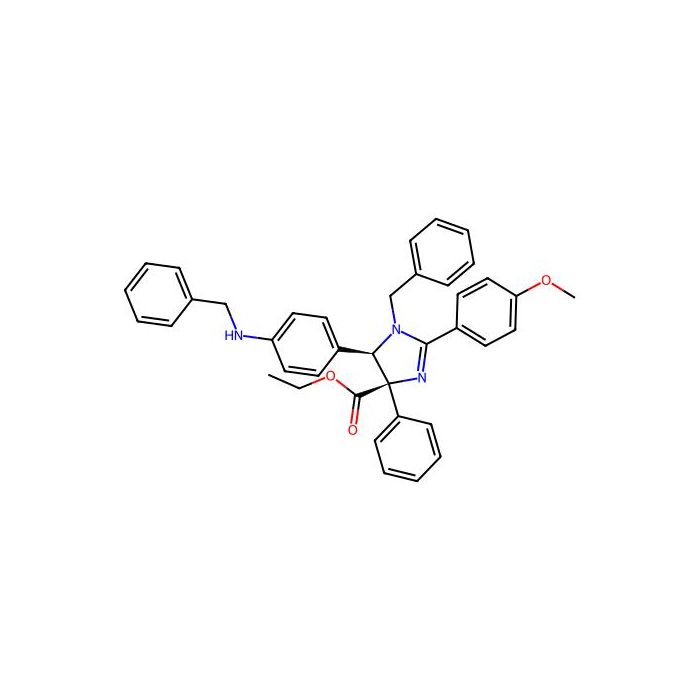
TCH-165 is a small molecule modulator of proteasome assembly , which increases 20S levels and facilitates 20S -mediated protein degradation
In Vitro
TCH-165 (0.01-10 μM; 72 hours; RPMI8226 and U87MG cells) treatment inhibits cell growth of RPMI8226 and U87MG cells with IC 50 of 1.6 μM and 2.4 μM, respectively. ?\nTCH-165 (0-10 μM; 24 hours; HEK293T cells) treatment enhances ODC degradation is blocked by BTZ indicated that this event is proteasome-mediated. TCH-165 enhances proteolytic degradation in a concentration-dependent manner. ?\nTCH-165 enhances the chymotrypsin-like (CT-L), trypsin-like (Tryp-L) and caspase-like (Casp-L) activities with EC 50 s of 4.2 μM, 3.2 μM and 4.7 μM, respectively. ?\nTCH-165 enhances 20S-mediated degradation of IDPs, α-syn, and tau in vitro, and does not induce the degradation of structured proteins such as GAPDH. ?\nTCH-165-treated cells display a decrease in the assembled 26S and an increase in the 20S proteasome. TCH-165 regulates the dynamic equilibrium between the 20S and 26S proteasome complexes, favoring 20S-mediated protein degradation. MCE has not independently confirmed the accuracy of these methods. They are for reference only. Cell Viability AssayCell Line: RPMI8226 and U87MG cells Concentration: 0.01-10 μM Incubation Time: 72 hours Result: Inhibited cell growth of RPMI8226 and U87MG cells with IC 50 of 1.6 μM and 2.4 μM, respectively. Western Blot AnalysisCell Line: HEK293T cells Concentration: 0 μM, 3 μM, 10 μM Incubation Time: 24 hours Result: Enhanced proteolytic degradation in a concentration-dependent manner.
IC50& Target:Proteasome assembly
Spécifications
Spécifications et pureté
Moligand™,10mM in DMSO
Mécanismes biochimiques et physiologiques
TCH-165 is a small molecule modulator of proteasome assembly , which increases 20S levels and facilitates 20S -mediated protein degradation.
Conditions de stockage de stockage
Store at -80°C
Expédié en
Dry ice packs + Cold packs
Ce produit nécessite l'expédition en chaîne froide. Les services terrestres et autres services économiques ne sont pas disponibles.
Certificats (CoA, COO, BSE/TSE et tableau d'analyse)
C of A & Other Certificates(BSE/TSE, COO):
Analytical Chart:
Calculateurs de solution
Molarity Calculator
Determine the necessary mass, volume, or concentration for preparing a solution.
Dilution Calculator
Determine the dilution needed to prepare a stock solution.
Reconstitution Calculator
Avis
Avis des clients
Application Protocols
No validated application protocols are provided in the Product Data. The following general procedures support handling of small-molecule library members like TCH-165.
Preparing stock solutions (general)
Allow vial to equilibrate to room temperature in a desiccator to avoid condensation. Weigh quickly to minimize moisture uptake.
Prepare a 10 mM stock in anhydrous DMSO. If solubility is limited, sonicate briefly or warm to 30–37°C. Filter through a 0.22 µm PTFE filter if particulates persist.
Aliquot into low-binding microtubes (e.g., 10–50 µL) under dry nitrogen/argon if feasible. Store at −80°C.
Assay dilution
Prepare serial dilutions in DMSO, then dilute into assay buffer/media to achieve desired final concentrations with constant vehicle (typically ≤0.1–0.5% DMSO v/v).
Mix thoroughly and inspect for precipitation. If observed, reduce concentration, add minimal co-solvent, or adjust temperature/mixing.
Quality control checkpoints
Verify concentration by UV (if chromophore present) or qNMR. Confirm purity and identity by LC–MS against CoA.
Recording and traceability
Document lot number, stock concentration, solvent, preparation date, and number of freeze–thaw cycles. Replace stocks after predefined stability interval or upon any sign of degradation.
Biological Roles
No specific biological target, pathway, or mode of action is provided for TCH-165 in the Product Data. The following guidance is general for small-molecule library members used in chemical biology.
Potential roles: Putative binder or modulator in enzyme, receptor, transporter, or protein–protein interaction studies, pending experimental confirmation.
Assay translation: Begin with biochemical target engagement (biophysical or enzymatic) before moving to cellular phenotypes to ensure on-target effects.
Selectivity profiling: Early breadth screens (kinome panels, receptor panels, or proteome-wide CETSA/TPP) can reveal off-targets and guide SAR.
ADME triage (discovery stage): Determine basic solubility, permeability, metabolic stability (microsomes/S9), and protein binding to inform follow-up experiments.
Interference assessment: Evaluate for PAINS motifs or redox/fluorescence interferents when using optical readouts; corroborate with orthogonal detection.
Important note
Any biological role must be established empirically for this compound. No clinical, diagnostic, or therapeutic claims are made. Use is restricted to research only (item-specific Research Use Note).
Buffer Applications
TCH-165 is a small organic screening compound and is not a buffering reagent. It does not define a useful pH range or buffer capacity in typical laboratory systems.
Practical note
When using in aqueous assays, prepare a concentrated DMSO stock and dilute into a preselected buffer system (e.g., PBS, HEPES, TRIS) validated for your assay. Maintain constant final DMSO across controls and test wells.
For any precipitation upon dilution, increase mixing time, warm gently to 30–37°C, or add a minimal amount of co-solvent while keeping assay conditions consistent.
Green Alternatives
When handling discovery compounds like TCH-165, most environmental impact arises from solvent choice and energy-intensive cold storage. While −80°C storage is required for this item, solvent selection and process design can be optimized.
Greener solvent considerations (general)
Favor DMSO and ethanol over chlorinated solvents for stock preparation and cleaning.
Replace DMF/NMP where possible with safer polar aprotics such as Cyrene (dihydrolevoglucosenone) or propylene carbonate for certain applications; confirm solubility and assay compatibility.
For analytical work, prefer water–acetonitrile gradients over water–methanol when waste reduction or toxicity profiles favor ACN at your facility; both are commonly used.
Small comparison (general guidance)
DMSO: High solubilizing power; relatively benign, biodegradable; viscous and hygroscopic.
Ethanol: Renewable and low-tox; limited solubility for many heteroaromatics.
Cyrene: Bio-based alternative to DMF/NMP; higher viscosity; compatibility must be validated.
CPME/2-MeTHF (synthetic chemistry context): Greener ethers vs THF; not typically required for assay stocks but useful for parallel medicinal chemistry.
Operational practices
Use micro-aliquots to reduce waste and freeze–thaw cycles.
Consolidate assay runs to minimize repeated thawing and solvent consumption.
Segregate solvent waste streams to facilitate recycling where available.
Pharmaceutical Uses
This product is supplied strictly for research use only and is not approved for human or veterinary use, clinical diagnostics, or as an active pharmaceutical ingredient.
Discovery and development context (general)
Role in R&D: Can serve as an internal reference material, tool compound candidate, or hit in primary screening cascades.
Formulation screening: Early-stage solubility and stability can be assessed in simple vehicles (DMSO, PEG400, aqueous buffers) to inform medicinal chemistry optimization; results are research-only and not for clinical application.
Documentation: For any regulated workstreams, maintain the CoA, SDS, and supplier traceability records.
Compendial/Excipient status
No pharmacopeial status is provided; not intended as an excipient. Any use in GMP or clinical development would require new sourcing/specifications and appropriate qualification.
Manufacturing considerations
If scale-up is needed for extended research, consider impurity profiling, residual solvent analysis, and polymorph/solid-state characterization per internal SOPs. Specific limits and grades are not specified for this item; refer to CoA/Spec Sheet or contact Aladdin Scientific.
Physical Properties
Item-specific physicochemical data were not provided in the Product Data.
Appearance: Not specified for this item; refer to CoA/Spec Sheet.
Molecular weight: Not specified for this item; refer to CoA/Spec Sheet.
Molecular formula: Not specified for this item; refer to CoA/Spec Sheet.
Melting point: Not specified for this item; refer to CoA/Spec Sheet.
Boiling point: Not specified for this item; refer to CoA/Spec Sheet.
Density: Not specified for this item; refer to CoA/Spec Sheet.
Solubility profile: Not specified for this item; refer to CoA/Spec Sheet.
LogP/logD, pKa, refractive index: Not specified for this item; refer to CoA/Spec Sheet.
Practical guidance (general, literature-based for small organic screening compounds)
Stock solutions are commonly prepared at 10–50 mM in anhydrous DMSO; confirm solubility empirically.
If aqueous use is required, prepare a DMSO stock and dilute into buffered media with vigorous mixing; typical final DMSO tolerated in bioassays is 0.05–0.5% v/v (assay-dependent).
For LC–MS quality control, use mixed aqueous/organic eluents (e.g., 0.1% formic acid in water–acetonitrile) and monitor for single dominant peak at expected retention as per CoA.
If crystallinity leads to slow dissolution, brief sonication or warming to 30–37°C can help; avoid prolonged heating or exposure to light unless stability data support it.
Quality and Grades
Grade: Moligand (item-specific). The Moligand designation indicates a discovery-grade small molecule prepared and packaged for screening, chemical biology, and hit-finding workflows.
What Moligand typically implies (general guidance)
Supplied to support HTS, fragment expansion, or focused library screening, with identity confirmed by analytical methods such as LC–MS and/or NMR per supplier SOPs.
UV transparency and chromatographic cleanliness are tuned for assay compatibility; however, for HPLC/UPLC quantitation, verify absorbance background in your detection window.
Stabilizers: Not specified for this item; refer to CoA/Spec Sheet.
Purity specification, residual solvents/metals, and water/peroxide content: Not specified for this item; refer to CoA/Spec Sheet.
Practical QA recommendations
On receipt, document lot number, condition of cold chain, and container integrity. Store immediately at −80°C (item-specific).
Prior to primary screening, perform a quick-check LC–MS to reconfirm identity and assess single-peak behavior under your method.
For SAR or scale-up, request a full analytical package (CoA, spectra). If you require compendial or higher grades (e.g., GMP, pharmacopeial), consult Aladdin Scientific for availability or custom synthesis.
Reaction and Applications
Use-case focus for TCH-165 centers on research screening and chemical biology rather than as a synthetic reagent. No manufacturer application text was provided; the following guidance is general for Moligand-type library members.
Screening and discovery workflows (general)
Biochemical assays: Assess binding/activity in enzyme or receptor assays; prepare serial dilutions from a DMSO stock to define IC50/EC50 where applicable.
Biophysical methods: Use DSF/thermal shift, SPR, MST, or NMR binding to validate target engagement and estimate affinity.
Cell-based assays: Evaluate phenotypic effects at multiple concentrations while keeping final DMSO ≤0.1–0.5% v/v to minimize vehicle artifacts.
Orthogonal confirmation: Confirm hits by counter-screens and orthogonal assay formats to mitigate false positives (e.g., redox cycling, aggregation, fluorescence interference).
Assay hygiene and controls
Include vehicle controls, positive/negative reference ligands (if available), and test for fluorescence/absorbance overlap when using optical readouts.
Run detergent-sensitive aggregation controls (e.g., 0.01% Triton X-100/Tween-20) and check Hill slopes for signs of promiscuity.
Sample preparation
Filter or centrifuge stock solutions to remove particulates. Quantify by UV or quantitative NMR if exact dosing is critical.
Note: No specific biological target, mechanism, or application scope is specified for this item; consult the CoA/Spec Sheet or supplier literature if available.
Reaction Conditions
Not typically applicable. TCH-165 is supplied as a research compound for screening rather than as a substrate, catalyst, or reagent with defined synthetic reaction conditions.
If you are performing follow-up chemistry on the scaffold (general guidance)
Establish the structure first (SMILES/InChI) and map modifiable positions.
Choose reaction conditions consistent with the functional groups present; begin with small-scale scouting reactions and monitor by LC–MS.
Typical medicinal-chemistry conditions include amide couplings (carbodiimide or propylphosphonic anhydride systems), cross-couplings (Suzuki–Miyaura, Buchwald–Hartwig), nucleophilic substitutions, and heterocycle formations—but applicability depends entirely on the actual scaffold and is not specified here.
For bioassays, “reaction conditions” translate to exposure conditions
Define concentration ranges, exposure times, and vehicle content; maintain strict control of DMSO percentage and temperature to ensure reproducibility.
Safety and Handling
Safety data specific to this catalog item were not provided in the Product Data.
GHS classification, signal word, hazard and precautionary statements: Not specified for this item; refer to SDS.
Pictograms: Not specified for this item; refer to SDS.
General laboratory precautions for small-molecule research compounds (follow your institutional EHS policies)
PPE: lab coat, safety glasses, and appropriate chemically resistant gloves (e.g., disposable nitrile). Handle powders in a certified fume hood to avoid inhalation.
Avoid contact with skin, eyes, and clothing. Prevent aerosolization or dust formation during weighing.
Storage incompatibilities: Until specific functional groups are known, segregate from strong oxidizers and acids/bases; avoid moisture and light exposure where feasible.
First aid (overview; defer to SDS): On skin/eye contact, rinse with water for at least 15 minutes and seek medical attention. If inhaled, move to fresh air; if ingested, rinse mouth and obtain medical advice.
Environmental precautions: Prevent release to drains; collect spills with inert absorbent and dispose according to local regulations.
Special risks and stability management
This item is shipped on dry ice/cold packs and should be stored at −80°C upon receipt (item-specific). Minimize freeze–thaw by aliquoting.
Until stability is confirmed, handle under dry conditions and protect from light. Label aliquots with preparation date and concentration.
Solvent Selection
Because no solubility or polarity data are specified for this item, choose solvents using best practices for small organic screening compounds.
Primary solvents for stocks
DMSO (anhydrous): First-line choice for 10–50 mM stocks due to broad solubilizing power and assay compatibility.
DMF or NMP (anhydrous): Useful when DMSO solubility is insufficient; assess cytotoxicity in cell assays at very low final percentages.
Assay-compatible diluents
Aqueous buffers (PBS, HEPES, TRIS) with 0.05–0.5% v/v DMSO final typically balance solubility with biological tolerance (assay-dependent; validate internally).
For purely chemical experiments, acetonitrile, methanol, ethanol, ethyl acetate, or acetone may be appropriate depending on polarity.
Decision tips
Start with 10 mM in DMSO; if undissolved, stepwise add co-solvent (e.g., add DMF), gentle heat (≤37°C), or sonication.
Avoid halogenated solvents unless required by stability; they can complicate waste handling and safety.
If aggregating behavior is suspected in assays, include a small amount of non-ionic surfactant (e.g., 0.01% Tween-20) or increase ionic strength to minimize artifacts.
Comparison (general)
DMSO: highest versatility; potential to interfere at >1% v/v.
Ethanol: greener, but lower solubilizing power for polar/heteroaromatic scaffolds.
Acetonitrile: LC–MS friendly, lower viscosity than DMSO, limited for very nonpolar solids.
Storage and Reconstitution
Storage
Store at −80°C upon receipt (item-specific). The product is shipped on dry ice packs + cold packs to maintain integrity (item-specific).
Keep container tightly closed, desiccated, and protected from light. Use secondary containment to prevent moisture ingress during cold storage.
Minimize freeze–thaw cycles by preparing single-use aliquots; record each thaw event.
Reconstitution (general guidance for small-molecule library members)
Bring the closed vial to room temperature inside a desiccator to prevent condensation.
Open only after temperature equilibration. Dissolve in anhydrous DMSO to prepare a concentrated stock (commonly 10–50 mM), verifying dissolution visually and by analytical means if critical.
If aqueous use is required, dilute the DMSO stock into the desired buffer or media with vigorous mixing. Maintain consistent final DMSO across samples and controls.
Stability considerations
Long-term stability data, solution stability, and light/moisture sensitivity: Not specified for this item; refer to CoA/Spec Sheet.
If stability is unknown, prepare fresh working solutions on the day of use, avoid repeated warming cycles, and discard any solutions showing discoloration or precipitate formation.
Disposal
Dispose of residues and solvent waste according to local regulations and your institution’s EHS policies.
Structure and Identity
Overview for SKU T656116 (TCH-165) — a Moligand small-molecule library member intended for research screening and discovery workflows.
Category: Small molecules and compound library (item-specific)
Molecular formula: Not specified for this item; refer to CoA/Spec Sheet.
Molecular weight: Not specified for this item; refer to CoA/Spec Sheet.
SMILES: Not specified for this item; refer to CoA/Spec Sheet.
InChIKey: Not specified for this item; refer to CoA/Spec Sheet.
Structural description
Specific functional groups, ring systems, and stereochemistry are not disclosed in the provided Product Data. For definitive structural details (2D structure, stereochemical descriptors, heteroatom content), consult the Certificate of Analysis (CoA) or structure file supplied with your lot.
Identity considerations for library members
For cheminformatics registration, use the CAS and the supplier SKU as primary identifiers until structural strings (SMILES/InChI) are confirmed.
If you maintain an internal ELN or screening db, capture lot number, receipt date, and any structure file provided by Aladdin Scientific to ensure traceability during hit validation.
Where applicable, verify identity by orthogonal methods (LC–MS, HRMS, 1H NMR) against CoA-specified acceptance criteria.
Synthetic Utility
TCH-165 is offered as a finished small molecule for screening and chemical biology. It is not positioned as a synthetic reagent or building block in the provided Product Data.
Functional group reactivity and named-reaction participation cannot be described without structural disclosure. Do not assume protecting-group compatibility or cross-coupling handles without consulting the structure/CoA.
If derivatization is desired (e.g., to create probe analogs, biotinylated tags, or photoaffinity variants), obtain the structure and assess feasible vectors for modification via retrosynthetic analysis.
For analytical method development, treat this as an analyte rather than a reagent: optimize LC–MS conditions for detection and purity tracking during any medicinal chemistry around the scaffold.
Summary
Not typically applicable as a reagent. Focus on assay application, characterization, and, if relevant, medicinal-chemistry follow-up once structural information is confirmed.
Target Specificity
No target information is provided for TCH-165 in the Product Data.
Target class, specific protein(s), species selectivity, and mechanism of action: Not specified for this item; refer to CoA/Spec Sheet or supplier literature if available.
For internal projects, determine specificity experimentally using orthogonal profiling (e.g., panel screens, CETSA/thermal proteome profiling, chemoproteomics) and compare against counterscreens to quantify selectivity indices.
Foire aux questions
What is Moligand??
Moligand? is one of Aladdin Scientific's premium product lines, formulated for high-purity applications across multiple workflows. Compared to standard grades in the same workflow, Moligand? products typically offer tighter specifications, more rigorous QC, and stronger lot-to-lot consistency.
How should this product be stored?
Store at ?80 °C. Ultra-low temperature storage is required to maintain the specified shelf life.
How is this product shipped?
This product ships frozen with dry ice and cold packs. Unpack on arrival and transfer it to the storage condition stated above; handle dry ice with insulated gloves in a ventilated area.
What are the CAS number, molecular formula and molecular weight?
The CAS Number is 1446350-60-2, the molecular formula is C39H37N3O3, and the molecular weight is 595.73 g/mol.
What documentation is provided?
Available product documentation, including Certificates of Analysis (COA), Safety Data Sheets (SDS), and specification sheets, is shown in the product document area. Document availability and access follow the current site policy.
Besoin d'aide pour choisir la qualité ?
Notre guide de sélection des qualités couvre la pureté, le statut du stabilisant et l'adéquation à l'application pour toutes les variantes de notre catalogue.
Nous utilisons des cookies pour garantir le bon fonctionnement du site et, lorsque cela est autorisé, pour améliorer votre expérience. Vous pouvez gérer vos préférences à tout moment dans les Paramètres. Pour en savoir plus, consultez notre Politique relative aux cookies.
Souhaitez-vous que nous vous envoyions un message lorsque des réductions seront disponibles?
Me rappeler plus tard
Merci ! Veuillez vérifier votre boîte de réception e-mail pour confirmer.
Products are supplied to verified businesses, institutions, and qualified professionals for research and development use only. Not for use in humans, animals, diagnosis, or therapy.