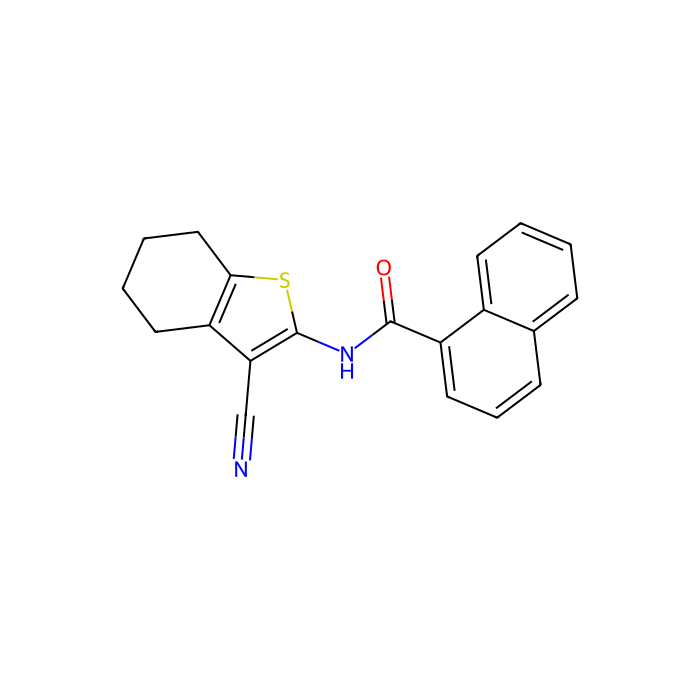
TCS JNK 5a - Moligand™, ≥99%(HPLC) , Inhibitor of mitogen-activated protein kinase 10;Inhibitor of mitogen-activated protein kinase 9, CAS No.312917-14-9, Inhibitor of mitogen-activated protein kinase 10;Inhibitor of mitogen-activated protein kinase 9

CAS: 312917-14-9 Cat. No.: T287056 Formule: C20H16N2OS Poids moléculaire: 332.42 PubChem CID: 766949
DISPONIBLE À COMMANDE
QUALITÉ & PURETÉ Moligand™ ? Moligand™ — Aladdin's line of ligands and bioactive small molecules. Use for receptor, pathway, and binding studies needing defined small-molecule tools. ≥99%(HPLC)
Synonyms
N-(3-Cyano-4,5,6,7-tetrahydrobenzo[b]thienyl-2-yl)-1-naphthalenecarboxamide, TCS JNK 5a | C20H16N2OS | EX-A543 | N-(3-Cyano-4,5,6,7-tetrahydrobenzo[b]thienyl-2-yl)-1-naphthalenecarboxamide | SC202671 | SC-202671 | BCP06751 | Oprea1_707865 | HY-15881 | NSC
Storage
Protected from light,Store at -20°C
Shipped In
Ice chest + Ice pads
★
Taille
Allemagne (EU)
USA*
Prix
Qté
5mg
T287056-5mg
—
3 En stock

20,74€

31,15€
Enregistrer 10,41 € (33.43%)
10mg
T287056-10mg
—
4 En stock

36,36€

54,58€
Enregistrer 18,22 € (33.39%)
25mg
T287056-25mg
—
3 En stock

72,80€

109,25€
Enregistrer 36,45 € (33.36%)
50mg
T287056-50mg
—
2 En stock

122,26€

183,87€
Enregistrer 61,61 € (33.51%)
100mg
T287056-100mg
—
2 En stock

202,96€

304,49€
Enregistrer 101,53 € (33.34%)
250mg
T287056-250mg
—
2 En stock

344,41€

517,09€
Enregistrer 172,68 € (33.39%)
Enter a quantity for the sizes you want to add.
🧪
Pourquoi cette qualité

Moligand™, ≥99%(HPLC) Moligand™ pour les flux de travail chromatographiques et analytiques sensibles nécessitant une interférence de ligne de base minimale.

🌡

Stockage & expédition

Protected from light,Store at -20°C Expédition Ice chest + Ice pads. Consultez le COA spécifique au lot pour les spécifications exactes.

📋

Documents qualité

SDS, COA, fiche technique et fiche de spécifications disponibles au téléchargement. COA spécifique au lot accessible via la recherche par numéro de lot.

📚

Preuve documentaire

Cité dans 0 publications à comité de lecture couvrant la chromatographie, la synthèse organique et les réactions de couplage croisé.

Spécifications

Synonymes
N-(3-Cyano-4,5,6,7-tetrahydrobenzo[b]thienyl-2-yl)-1-naphthalenecarboxamide, TCS JNK 5a | C20H16N2OS | EX-A543 | N-(3-Cyano-4,5,6,7-tetrahydrobenzo[b]thienyl-2-yl)-1-naphthalenecarboxamide | SC202671 | SC-202671 | BCP06751 | Oprea1_707865 | HY-15881 | NSC
Spécifications et pureté
Moligand™, ≥99%(HPLC)
Mécanismes biochimiques et physiologiques
Selective inhibitor of JNK2 and JNK3 (pIC50values are 6.7, 6.5, <5.0 and <4.8 for JNK3, JNK2, JNK1 and p38αrespectively). Displays no significant activity at a range of other protein kinases including EGFR, ErbB2, cdk2, PLK-1 and Src (pIC50< 5.0).
Conditions de stockage de stockage
Protected from light,Store at -20°C
Expédié en
Ice chest + Ice pads
Ce produit nécessite l'expédition en chaîne froide. Les services terrestres et autres services économiques ne sont pas disponibles.
Grade
Moligand™
Type d'action
INHIBITOR
Mécanisme d'action
Inhibitor of mitogen-activated protein kinase 10;Inhibitor of mitogen-activated protein kinase 9
Pureté
≥99%(HPLC)
Noms et identifiants
Pubchem Sid
Pubchem Sid Url
https://pubchem.ncbi.nlm.nih.gov/substance/488191451
Sourires canoniques
C1CCC2=C(C1)C(=C(S2)NC(=O)C3=CC=CC4=CC=CC=C43)C#N
IUPAC Name
N-(3-cyano-4,5,6,7-tetrahydro-1-benzothiophen-2-yl)naphthalene-1-carboxamide
InChIKey
WQGDQGAFSDMBLA-UHFFFAOYSA-N
INCHI
1S/C20H16N2OS/c21-12-17-15-9-3-4-11-18(15)24-20(17)22-19(23)16-10-5-7-13-6-1-2-8-14(13)16/h1-2,5-8,10H,3-4,9,11H2,(H,22,23)
Isomères SMILES
C1CCC2=C(C1)C(=C(S2)NC(=O)C3=CC=CC4=CC=CC=C43)C#N
PubChem CID
766949
Poids moléculaire
332.42

Documentation

📋 Fiche de données de sécurité (FDS)

Document complet couvrant les dangers, la manipulation, le stockage et la conformité réglementaire.

<<<<<<< HEAD Télécharger la SDS → ======= Télécharger la SDS → >>>>>>> release248-p3

✅ Certificat d'analyse (COA)

Données qualité spécifiques au lot. Saisissez votre numéro de lot pour récupérer le COA exact.

Rechercher le COA →

📊 Fiche technique

Résumé de référence rapide des spécifications et applications du produit.

Voir la fiche technique →

🔬 Fiche de spécifications

Attributs de qualité complets et critères d'acceptation pour cette qualité.

Voir la fiche de spécifications →

Données avancées

Taxonomic Classification

Taxonomy Tree

KingdomOrganic compounds
SuperclassBenzenoids
ClasseNaphthalenes
SubclassNaphthalenecarboxylic acids and derivatives
Intermediate Tree Nodes Not available
Direct ParentNaphthalenecarboxamides
Alternative Parents Thiophenes  Heteroaromatic compounds  Secondary carboxylic acid amides  Nitriles  Organopnictogen compounds  Organooxygen compounds  Organic oxides  Hydrocarbon derivatives  
Molecular FrameworkAromatic heteropolycyclic compounds
Substituents 1-naphthalenecarboxamide - Thiophene - Heteroaromatic compound - Carboxamide group - Secondary carboxylic acid amide - Carboxylic acid derivative - Carbonitrile - Nitrile - Organoheterocyclic compound - Organooxygen compound - Organonitrogen compound - Organic nitrogen compound - Organopnictogen compound - Organic oxide - Organic oxygen compound - Hydrocarbon derivative - Aromatic heteropolycyclic compound
DescriptionThis compound belongs to the class of organic compounds known as naphthalenecarboxamides. These are compounds containing a naphthalene moiety, which bears a carboxylic acid amide group at one or more positions. Naphthalene is a bicyclic compound that is made up of two fused benzene rings.
External Descriptors Not available
Structure 3D
Modèle de structure chimique interactif


Cibles associées (humaines)
MAPK10 Tchem Mitogen-activated protein kinase 10 (1 Activities)
Activity TypeActivity Value -log(M)Mechanism of ActionActivity ReferencePublications (PubMed IDs)
MAPK9 Tchem Mitogen-activated protein kinase 9 (1 Activities)
Activity TypeActivity Value -log(M)Mechanism of ActionActivity ReferencePublications (PubMed IDs)
ABL1 Tclin Tyrosine-protein kinase ABL (18331 Activities)
Activity TypeRelationActivity valueUnitsAction TypeJournalPubMed IddoiAssay Aladdin ID
EGFR Tclin Epidermal growth factor receptor erbB1 (33727 Activities)
Activity TypeRelationActivity valueUnitsAction TypeJournalPubMed IddoiAssay Aladdin ID
INSR Tclin Insulin receptor (5558 Activities)
Activity TypeRelationActivity valueUnitsAction TypeJournalPubMed IddoiAssay Aladdin ID
ERBB2 Tclin Receptor protein-tyrosine kinase erbB-2 (7851 Activities)
Activity TypeRelationActivity valueUnitsAction TypeJournalPubMed IddoiAssay Aladdin ID
PDGFRB Tclin Platelet-derived growth factor receptor beta (5195 Activities)
Activity TypeRelationActivity valueUnitsAction TypeJournalPubMed IddoiAssay Aladdin ID
IGF1R Tclin Insulin-like growth factor I receptor (8605 Activities)
Activity TypeRelationActivity valueUnitsAction TypeJournalPubMed IddoiAssay Aladdin ID
KIT Tclin Stem cell growth factor receptor (10667 Activities)
Activity TypeRelationActivity valueUnitsAction TypeJournalPubMed IddoiAssay Aladdin ID
CSNK2A1 Tchem Casein kinase II alpha (3512 Activities)
Activity TypeRelationActivity valueUnitsAction TypeJournalPubMed IddoiAssay Aladdin ID
DAPK3 Tchem Death-associated protein kinase 3 (2108 Activities)
Activity TypeRelationActivity valueUnitsAction TypeJournalPubMed IddoiAssay Aladdin ID
MAPK11 Tchem MAP kinase p38 beta (2785 Activities)
Activity TypeRelationActivity valueUnitsAction TypeJournalPubMed IddoiAssay Aladdin ID
LCK Tclin Tyrosine-protein kinase LCK (9212 Activities)
Activity TypeRelationActivity valueUnitsAction TypeJournalPubMed IddoiAssay Aladdin ID
MAPK14 Tchem MAP kinase p38 alpha (12866 Activities)
Activity TypeRelationActivity valueUnitsAction TypeJournalPubMed IddoiAssay Aladdin ID
GSK3B Tclin Glycogen synthase kinase-3 beta (11785 Activities)
Activity TypeRelationActivity valueUnitsAction TypeJournalPubMed IddoiAssay Aladdin ID
PRKCZ Tchem Protein kinase C zeta (2414 Activities)
Activity TypeRelationActivity valueUnitsAction TypeJournalPubMed IddoiAssay Aladdin ID
MAP2K6 Tchem Dual specificity mitogen-activated protein kinase kinase 6 (1284 Activities)
Activity TypeRelationActivity valueUnitsAction TypeJournalPubMed IddoiAssay Aladdin ID
MYLK Tchem Myosin light chain kinase, smooth muscle (1267 Activities)
Activity TypeRelationActivity valueUnitsAction TypeJournalPubMed IddoiAssay Aladdin ID
CSNK1G1 Tchem Casein kinase I gamma 1 (2496 Activities)
Activity TypeRelationActivity valueUnitsAction TypeJournalPubMed IddoiAssay Aladdin ID
FGFR2 Tclin Fibroblast growth factor receptor 2 (3405 Activities)
Activity TypeRelationActivity valueUnitsAction TypeJournalPubMed IddoiAssay Aladdin ID
FGFR1 Tclin Fibroblast growth factor receptor 1 (9149 Activities)
Activity TypeRelationActivity valueUnitsAction TypeJournalPubMed IddoiAssay Aladdin ID
STK3 Tchem Serine/threonine-protein kinase MST2 (3069 Activities)
Activity TypeRelationActivity valueUnitsAction TypeJournalPubMed IddoiAssay Aladdin ID
CSNK1D Tchem Casein kinase I delta (4546 Activities)
Activity TypeRelationActivity valueUnitsAction TypeJournalPubMed IddoiAssay Aladdin ID
CAMK2B Tchem CaM kinase II beta (1626 Activities)
Activity TypeRelationActivity valueUnitsAction TypeJournalPubMed IddoiAssay Aladdin ID
SRC Tclin Tyrosine-protein kinase SRC (10310 Activities)
Activity TypeRelationActivity valueUnitsAction TypeJournalPubMed IddoiAssay Aladdin ID
CDK6 Tclin Cyclin-dependent kinase 6 (1724 Activities)
Activity TypeRelationActivity valueUnitsAction TypeJournalPubMed IddoiAssay Aladdin ID
CHEK2 Tchem Serine/threonine-protein kinase Chk2 (4015 Activities)
Activity TypeRelationActivity valueUnitsAction TypeJournalPubMed IddoiAssay Aladdin ID
PDPK1 Tchem 3-phosphoinositide dependent protein kinase-1 (3758 Activities)
Activity TypeRelationActivity valueUnitsAction TypeJournalPubMed IddoiAssay Aladdin ID
PRKAA2 Tchem AMP-activated protein kinase, alpha-2 subunit (1328 Activities)
Activity TypeRelationActivity valueUnitsAction TypeJournalPubMed IddoiAssay Aladdin ID
AKT2 Tchem Serine/threonine-protein kinase AKT2 (4301 Activities)
Activity TypeRelationActivity valueUnitsAction TypeJournalPubMed IddoiAssay Aladdin ID
AKT3 Tchem Serine/threonine-protein kinase AKT3 (3157 Activities)
Activity TypeRelationActivity valueUnitsAction TypeJournalPubMed IddoiAssay Aladdin ID
CHUK Tchem Inhibitor of nuclear factor kappa B kinase alpha subunit (3170 Activities)
Activity TypeRelationActivity valueUnitsAction TypeJournalPubMed IddoiAssay Aladdin ID
IKBKB Tchem Inhibitor of nuclear factor kappa B kinase beta subunit (5554 Activities)
Activity TypeRelationActivity valueUnitsAction TypeJournalPubMed IddoiAssay Aladdin ID
DAPK2 Tchem Death-associated protein kinase 2 (740 Activities)
Activity TypeRelationActivity valueUnitsAction TypeJournalPubMed IddoiAssay Aladdin ID
AURKB Tchem Serine/threonine-protein kinase Aurora-B (6805 Activities)
Activity TypeRelationActivity valueUnitsAction TypeJournalPubMed IddoiAssay Aladdin ID
RPS6KA4 Tchem Ribosomal protein S6 kinase alpha 4 (2104 Activities)
Activity TypeRelationActivity valueUnitsAction TypeJournalPubMed IddoiAssay Aladdin ID
ROCK1 Tclin Rho-associated protein kinase 1 (4723 Activities)
Activity TypeRelationActivity valueUnitsAction TypeJournalPubMed IddoiAssay Aladdin ID
PIM1 Tchem Serine/threonine-protein kinase PIM1 (9629 Activities)
Activity TypeRelationActivity valueUnitsAction TypeJournalPubMed IddoiAssay Aladdin ID
PKN2 Tchem Protein kinase N2 (1991 Activities)
Activity TypeRelationActivity valueUnitsAction TypeJournalPubMed IddoiAssay Aladdin ID
CSK Tchem Tyrosine-protein kinase CSK (2395 Activities)
Activity TypeRelationActivity valueUnitsAction TypeJournalPubMed IddoiAssay Aladdin ID
JAK3 Tclin Tyrosine-protein kinase JAK3 (8349 Activities)
Activity TypeRelationActivity valueUnitsAction TypeJournalPubMed IddoiAssay Aladdin ID
RPS6KA5 Tchem Ribosomal protein S6 kinase alpha 5 (3355 Activities)
Activity TypeRelationActivity valueUnitsAction TypeJournalPubMed IddoiAssay Aladdin ID
PRKCE Tchem Protein kinase C epsilon (1520 Activities)
Activity TypeRelationActivity valueUnitsAction TypeJournalPubMed IddoiAssay Aladdin ID
PRKCG Tchem Protein kinase C gamma (2471 Activities)
Activity TypeRelationActivity valueUnitsAction TypeJournalPubMed IddoiAssay Aladdin ID
PRKD3 Tchem Protein kinase C nu (2315 Activities)
Activity TypeRelationActivity valueUnitsAction TypeJournalPubMed IddoiAssay Aladdin ID
SPHK2 Tchem Sphingosine kinase 2 (1579 Activities)
Activity TypeRelationActivity valueUnitsAction TypeJournalPubMed IddoiAssay Aladdin ID
PRKCI Tchem Protein kinase C iota (2821 Activities)
Activity TypeRelationActivity valueUnitsAction TypeJournalPubMed IddoiAssay Aladdin ID
PRKD1 Tchem Protein kinase C mu (1904 Activities)
Activity TypeRelationActivity valueUnitsAction TypeJournalPubMed IddoiAssay Aladdin ID
RAF1 Tclin Serine/threonine-protein kinase RAF (4169 Activities)
Activity TypeRelationActivity valueUnitsAction TypeJournalPubMed IddoiAssay Aladdin ID
SYK Tclin Tyrosine-protein kinase SYK (7372 Activities)
Activity TypeRelationActivity valueUnitsAction TypeJournalPubMed IddoiAssay Aladdin ID
PLK1 Tchem Serine/threonine-protein kinase PLK1 (28605 Activities)
Activity TypeRelationActivity valueUnitsAction TypeJournalPubMed IddoiAssay Aladdin ID
ITK Tclin Tyrosine-protein kinase ITK/TSK (3699 Activities)
Activity TypeRelationActivity valueUnitsAction TypeJournalPubMed IddoiAssay Aladdin ID
Cibles associées (non humaines)
Cdk4 Cyclin-dependent kinase 4 (3 Activities)
Activity TypeRelationActivity valueUnitsAction TypeJournalPubMed IddoiAssay Aladdin ID
PIK3CA PI3-kinase p110-alpha subunit (51 Activities)
Activity TypeRelationActivity valueUnitsAction TypeJournalPubMed IddoiAssay Aladdin ID
Prkcd Protein kinase C delta (192 Activities)
Activity TypeRelationActivity valueUnitsAction TypeJournalPubMed IddoiAssay Aladdin ID
Prkcb Protein kinase C beta (2 Activities)
Activity TypeRelationActivity valueUnitsAction TypeJournalPubMed IddoiAssay Aladdin ID
Mapk1 MAP kinase ERK2 (650 Activities)
Activity TypeRelationActivity valueUnitsAction TypeJournalPubMed IddoiAssay Aladdin ID
Fgfr4 Fibroblast growth factor receptor 4 (138 Activities)
Activity TypeRelationActivity valueUnitsAction TypeJournalPubMed IddoiAssay Aladdin ID
Fgfr3 Fibroblast growth factor receptor 3 (21 Activities)
Activity TypeRelationActivity valueUnitsAction TypeJournalPubMed IddoiAssay Aladdin ID
Camk2g CaM kinase II gamma (1 Activities)
Activity TypeRelationActivity valueUnitsAction TypeJournalPubMed IddoiAssay Aladdin ID
Tec Tyrosine-protein kinase TEC (25 Activities)
Activity TypeRelationActivity valueUnitsAction TypeJournalPubMed IddoiAssay Aladdin ID
Plasmodium falciparum (966862 Activities)
Activity TypeRelationActivity valueUnitsAction TypeJournalPubMed IddoiAssay Aladdin ID
Luciferin 4-monooxygenase (66902 Activities)
Activity TypeRelationActivity valueUnitsAction TypeJournalPubMed IddoiAssay Aladdin ID
rep Replicase polyprotein 1ab (378 Activities)
Activity TypeRelationActivity valueUnitsAction TypeJournalPubMed IddoiAssay Aladdin ID
Renilla-luciferin 2-monooxygenase (377 Activities)
Activity TypeRelationActivity valueUnitsAction TypeJournalPubMed IddoiAssay Aladdin ID
Mécanismes d'action
Certificats (CoA, COO, BSE/TSE et tableau d'analyse)
C of A & Other Certificates(BSE/TSE, COO):
Analytical Chart:

Find and download the COA for your product by matching the lot number on the packaging.

9 results found

Lot NumberCertificate TypeDateArticle
K2228671K2228671Certificate of AnalysisSep 16, 2025 T287056
K2228668K2228668Certificate of AnalysisSep 16, 2025 T287056
K2228670K2228670Certificate of AnalysisSep 16, 2025 T287056
K2228672K2228672Certificate of AnalysisSep 16, 2025 T287056
K2228669K2228669Certificate of AnalysisSep 16, 2025 T287056
K2228777K2228777Certificate of AnalysisSep 16, 2025 T287056
K2228667K2228667Certificate of AnalysisSep 16, 2025 T287056
K2228682K2228682Certificate of AnalysisSep 16, 2025 T287056
C2526161C2526161Certificate of AnalysisSep 16, 2022 T287056
Propriétés chimiques et physiques
SolubilitéSolvent:DMSO, Max Conc. mg/mL: 33.24, Max Conc. mM: 100
Sensibilitélight sensitive
Poids moléculaire332.400 g/mol
XLogP35.500
Hydrogen Bond Donor Count1
Hydrogen Bond Acceptor Count3
Rotatable Bond Count2
Exact Mass332.098 Da
Monoisotopic Mass332.098 Da
Topological Polar Surface Area81.100 Ų
Heavy Atom Count24
Formal Charge0
Complexity527.000
Isotope Atom Count0
Defined Atom Stereocenter Count0
Undefined Atom Stereocenter Count0
Defined Bond Stereocenter Count0
Undefined Bond Stereocenter Count0
The total count of all stereochemical bonds0
Covalently-Bonded Unit Count1
Calculateurs de solution
Avis

Avis des clients

Application Protocols

The Product Data do not list tested applications or validated dilutions for this item. The following are general, literature-based procedures for small-molecule kinase inhibitors; adjust to your assay and verify experimentally.

  • Stock preparation:
    • Allow vial to equilibrate to room temperature in the dark before opening to avoid condensation.
    • Prepare a 10–50 mM stock in anhydrous DMSO. Sonication or brief warming (≤37°C) may aid dissolution. Filter through a 0.2 µm PTFE syringe filter if particulates persist.
  • Biochemical kinase assay (example workflow):
    • Buffer: 25 mM HEPES pH 7.5, 10 mM MgCl2, 1 mM DTT, 0.01% Tween‑20.
    • Preincubate enzyme with inhibitor (0–30 min) at desired concentrations; initiate with ATP/substrate.
    • Maintain constant final DMSO (e.g., 0.5% v/v) across wells. Readout using ADP‑Glo or equivalent.
  • Cell treatment (general):
    • Dilute DMSO stock into pre-warmed medium to achieve target concentrations, keeping final DMSO low (≤0.1–0.5% v/v as tolerated).
    • Protect from light during handling (Product Data) and incubations where feasible.
    • Quantify pathway effects via phospho‑c‑Jun Western blot or ELISA.
  • Troubleshooting:
    • Precipitation after dosing: Increase mixing, slightly raise temperature, or adjust vehicle composition within assay constraints.
    • Adsorption losses: Use low-bind tubes/plates and minimize residence time in plastic consumables.

Always include proper controls and replicate measurements; document lot number and solution age.

Biological Roles

General background (literature; not item-specific claims):

  • The c‑Jun N‑terminal kinases (JNK1/2/3) are stress-activated MAP kinases that phosphorylate substrates including c‑Jun, ATF2, and other transcriptional regulators. They are activated by upstream MAP2Ks (MKK4/7) in response to cytokines, UV irradiation, oxidative stress, and ER stress.
  • In cells, JNK activity influences gene expression programs related to apoptosis, autophagy, metabolism, and differentiation, with context-dependent outcomes.

Relevance of JNK inhibitors as tools:

  • Small-molecule JNK inhibitors such as TCS JNK 5a are used to transiently attenuate JNK signaling, enabling dissection of pathway contribution to specific phenotypes.
  • Use of isoform-selective vs pan-JNK inhibitors can clarify roles of JNK1/2 compared with JNK3 (which is enriched in neuronal tissues). Isoform selectivity for this specific item is not specified; users should confirm with their own profiling data or the literature.

Experimental considerations:

  • Off-target effects within the MAPK family (e.g., p38, ERK) or other kinases can confound interpretation; include orthogonal controls (siRNA/CRISPR knockdown, genetic knockouts) where feasible.
  • Time- and dose-dependent effects should be mapped carefully; prolonged exposure can trigger compensatory signaling.

Caveat:

  • Do not infer clinical efficacy or safety from in vitro/in vivo research observations. This product is for research use only, as stated in the Product Data.
Buffer Applications

This item is a bioactive small-molecule inhibitor rather than a buffering agent. It does not function as a pH buffer and is not typically used to prepare buffer systems.

Practical notes for buffer use in assays (general guidance):

  • Prepare concentrated DMSO stocks and dilute into your assay buffer (e.g., HEPES- or Tris-based kinase buffers) with rapid mixing.
  • Maintain consistent buffer composition, ionic strength, and detergent/protein content across controls and treatments to reduce compound carry/adsorption and precipitation.
  • Verify that the chosen buffer does not interfere with readouts (e.g., fluorescence backgrounds) or compound stability. For light-sensitive compounds, use amber labware and minimize exposure.
Green Alternatives

As a bioactive tool compound, TCS JNK 5a is not a commodity solvent or reagent where greener drop-in replacements are well defined. Nonetheless, greener practices can be implemented in how it is used and processed.

Greener handling strategies (general):

  • Minimize DMSO usage: Optimize assay design to keep final DMSO ≤0.5–1.0% v/v while maintaining solubility.
  • Microscale assays: Employ miniaturized plate formats (384/1536‑well) to reduce compound mass, solvent, and plastic waste.
  • Solvent selection for analytics: Prefer acetonitrile/water over chlorinated solvents for HPLC/UPLC when method performance allows.
  • Energy efficiency: Store in consolidated, well-managed −20°C units and avoid unnecessary freeze-thaw cycles to reduce energy and material waste from repackaging.
  • Waste management: Segregate DMSO-organic waste streams and avoid halogenated solvents unless necessary for specific analytical methods.

Comparison of common vehicles (general, not item-specific):

  • DMSO: High solvency; relatively benign compared to chlorinated solvents in small volumes; ensure proper waste disposal.
  • Ethanol: Renewable feedstock potential; limited solvency for many kinase inhibitors.
  • PEG400 or cyclodextrins: Can enhance apparent solubility in certain contexts but may interfere with assays; evaluate case-by-case.

Trade-offs:

  • Reducing DMSO can lower solubility and reproducibility; balance environmental objectives with data quality by validating minimal effective vehicle conditions.
Pharmaceutical Uses

This product is supplied strictly for research use and is not intended for human or veterinary applications, clinical diagnostics, or as an active pharmaceutical ingredient.

Research and development context (general):

  • Tool/benchmark compound: Employed as a reference inhibitor in target validation, screening cascades, and exploratory pharmacology to contextualize activity of new chemical entities against JNK signaling.
  • Analytical reference: Can serve as a system suitability or positive control standard in biochemical assay qualification and LC/MS-based exposure measurements in preclinical models.

Formulation considerations for R&D experiments (not for therapy):

  • For in vitro assays, DMSO stock dosing into aqueous buffers is typical. For exploratory in vivo studies in laboratory animals (where permitted by institutional approvals), solubilization vehicles may include DMSO/PEG/saline mixtures; however, no vehicle is specified for this item—users must establish their own conditions and ensure ethical compliance.

Regulatory note:

  • No pharmacopeial monograph or GMP status is stated. Lot-specific identity/purity and analytical data must be taken from the CoA/Spec Sheet if required for documentation.
Physical Properties

Item-specific physicochemical specifications are not provided in the Product Data.

  • Appearance: Not specified for this item; refer to CoA/Spec Sheet.
  • Melting point: Not specified for this item; refer to CoA/Spec Sheet.
  • Boiling point: Not applicable for a high‑boiling, low‑volatility solid; exact value not specified for this item.
  • Density: Not specified for this item; refer to CoA/Spec Sheet.
  • Solubility: Not specified for this item; refer to CoA/Spec Sheet.
  • LogP/logD: Not specified for this item; refer to CoA/Spec Sheet.
  • Refractive index: Not applicable for a solid.

General guidance (literature/typical for kinase tool compounds; verify experimentally):

  • Many JNK inhibitors are moderately to highly lipophilic and formulated as concentrated DMSO stocks (e.g., 10–50 mM) before dilution into aqueous assay buffers; aqueous solubility may be limited and pH-dependent.
  • Precipitation can occur when adding DMSO stocks directly to cold buffers or media; pre-warm and add with vigorous mixing to minimize aggregation.
  • Light sensitivity: The Product Data specifies “Protected from light”; store and handle under subdued light and use amber vials when possible.

Practical tips:

  • Determine working solubility empirically by serial dilution into your exact matrix (buffer, medium, serum content). Monitor clarity and use nephelometry or light scattering if available.
  • If precipitation is observed at target working concentrations, consider co-solvent strategies (lower final DMSO >0.1–0.5% v/v as permitted by the assay) or surfactant-free carrier proteins where compatible.
Quality and Grades
  • Grade/Purity: Moligand™ (as listed in Product Data). The Moligand™ designation at Aladdin Scientific denotes a research-grade small-molecule ligand/tool compound intended for biochemical, cellular, and screening applications. It emphasizes suitability for discovery workflows rather than clinical or GMP use.

What this typically implies (general guidance):

  • Manufactured and packaged for research use only; not for human or veterinary use.
  • Intended for use as a reference standard, probe, or screening hit/lead in target validation and assay development.
  • UV/LC purity, residual solvent profile, water content, metal limits, and stabilizers: Not specified for this item; refer to CoA/Spec Sheet for lot-specific analytical details.

How to interpret grade for experimental planning:

  • Analytical use: For quantitative bioassays or LC-MS reference applications, consult the CoA for exact purity and identity data (e.g., HPLC area %, NMR confirmation, HRMS).
  • Reproducibility: Record lot number in your ELN to maintain traceability across replicates.
  • Stabilizers/additives: None are stated in the Product Data. If your assay is sensitive to antioxidants or acid stabilizers, verify the absence/presence on the CoA before use.

Documentation:

  • For regulatory or publication purposes, obtain and archive the CoA and, if needed, request supplementary analytical data (chromatograms, spectra) for the purchased lot.
Reaction and Applications

This product is primarily a bioactive small-molecule tool compound rather than a synthetic reagent. Its most relevant applications are in biochemical and cellular studies of JNK signaling.

Research applications (literature/general):

  • Enzyme inhibition assays: Evaluate inhibition of JNK kinase activity using recombinant JNK1/2/3 and peptide substrates (e.g., c‑Jun(1–79)); quantify via radiometric, ADP-Glo, or TR-FRET readouts.
  • Cell-based pathway interrogation: Assess effects on JNK-mediated phosphorylation events (e.g., c‑Jun Ser63/Ser73) following stress stimuli; analyze by Western blot or phospho-specific ELISA.
  • Target validation and selectivity profiling: Use panel assays across MAPK family members (JNK, p38, ERK) to map off-target liabilities and establish working concentrations with acceptable selectivity windows.
  • Chemical biology: Employ as a positive control in phenotypic screens where JNK pathway modulation is implicated.

Practical considerations:

  • Establish compound stability in your buffer/media and at assay temperature/time. Protect from light per Product Data.
  • Titrate across at least 8–12 half-log concentrations to derive IC50 values; include vehicle controls matched for DMSO.
  • Confirm on-target effects using orthogonal readouts (e.g., phospho-protein levels, reporter assays) to mitigate artifacts from cytotoxicity or aggregation.

Note: Reaction chemistry (e.g., coupling, protection/deprotection) is not typically applicable to this item in routine use; see “Synthetic Utility” if you plan to derivatize the scaffold for SAR.

Reaction Conditions

Chemical reaction conditions are not typically applicable, as this item is used as a bioactive probe rather than a reagent. The following covers general assay conditions for kinase studies (literature guidance; adjust to your system):

  • Enzymatic assays: 20–50 mM HEPES (pH 7.5), 10 mM MgCl2, 1 mM DTT, 0.01–0.05% Tween‑20, peptide/protein substrate (e.g., c‑Jun(1–79)), ATP near Km; temperature 25–30°C; reaction time 10–60 min.
  • Inhibitor dosing: Prepare 10–50 mM DMSO stocks; perform serial dilutions to achieve a range bracketing the expected potency; maintain constant final DMSO (typically 0.1–1% v/v) across wells.
  • Detection: Radiometric [γ‑32P]ATP incorporation, ADP-Glo luminescence, fluorescence polarization, or TR-FRET. Choose a method compatible with the compound’s optical properties and DMSO level.
  • Cellular assays: Pre-treat cells 15–60 min prior to pathway activation; quantify phospho-c‑Jun or downstream markers by Western blot/ELISA. Include cytotoxicity counterscreens (e.g., resazurin, CellTiter‑Glo).
  • Controls: Use vehicle blanks, no-enzyme controls, and a positive control inhibitor. Replicate (n≥3) and fit concentration–response curves with appropriate models (4PL).

Note: Expected yields, temperatures, and catalysts for organic synthesis are not relevant for this product’s typical use.

Safety and Handling

Hazard classifications are not provided in the Product Data for this item. Always review the Safety Data Sheet (SDS) for authoritative guidance prior to use.

  • GHS classification, pictograms, signal word, H-statements: Not specified for this item; refer to SDS.

General laboratory precautions (good practice for small-molecule bioactives):

  • PPE: Wear lab coat, safety glasses, and appropriate gloves (e.g., nitrile). Avoid skin/eye contact and inhalation of dust or aerosols.
  • Engineering controls: Handle powders in a chemical fume hood; minimize airborne particulate. Use amber glassware if light-sensitive.
  • Hygienic measures: Wash hands after handling; avoid ingestion and cross-contamination of common surfaces.
  • Spill response: For small spills, absorb with inert material and collect for disposal; avoid generating dust. Clean area with appropriate solvent compatible with your waste procedures.
  • Incompatibilities: Strong oxidizers and strong acids/bases may degrade organic inhibitors; segregate from reactive chemicals. Avoid prolonged light exposure (Product Data: “Protected from light”).
  • Thermal/physical risks: Avoid heating above decomposition temperatures; do not autoclave compound solutions.
  • First aid (overview; defer to SDS):
    • Inhalation: Move to fresh air; seek medical attention if symptoms persist.
    • Skin/eye contact: Rinse thoroughly with water for several minutes; remove contaminated clothing; seek medical attention if irritation persists.
    • Ingestion: Rinse mouth; do not induce vomiting; seek medical attention.
  • Waste: Dispose of in accordance with institutional and local regulations for organic laboratory waste; do not discharge to drains.
Solvent Selection

Item-specific solubility data are not provided. The following guidance reflects common practice for hydrophobic kinase inhibitors and should be verified experimentally for TCS JNK 5a.

  • Primary stock solvent: Anhydrous DMSO is typically preferred due to broad solvency and biochemical compatibility at low final percentages.
  • Aqueous dilution: Dilute DMSO stocks into assay buffer or culture medium with rapid mixing; keep final DMSO at the lowest level compatible with solubility and assay tolerance (often 0.05–1% v/v; verify for your system).
  • Alternative organic solvents (screening use, literature/general): DMF or ethanol can dissolve some scaffolds but may be less biocompatible. Acetonitrile can be used for analytical sample prep.
  • pH/vehicle effects: Apparent solubility may increase in buffers containing serum or proteins. Avoid strongly basic or acidic media unless stability has been established.

Comparison (general, not item-specific):

  • DMSO: High solvency, widely assay-compatible; may affect some enzymes above 1–2%.
  • DMF: Good solvency; higher toxicity concerns in cells; use sparingly.
  • Ethanol: Moderate solvency; volatility and cellular effects can confound assays.

Practical tips:

  • Pre-warm buffers (25–37°C) before spiking DMSO stocks to reduce precipitation.
  • Use polypropylene or glassware verified to be compatible with organic solvents; some hydrophobic compounds adsorb to polystyrene.
  • For LC/LC-MS sample preparation, maintain organic content >50% to keep the analyte in solution prior to injection.
Storage and Reconstitution
  • Storage conditions (item-specific): Protected from light; Store at −20°C (per Product Data). Maintain in original amber container where provided.
  • Shipping: Ice chest + ice pads (per Product Data). Inspect immediately upon receipt; return to −20°C storage after verification.
  • Research use note: For research use only.

Handling and reconstitution (general guidance):

  • Before opening, allow the sealed container to reach room temperature to prevent moisture condensation. Work quickly, under low light, and reseal promptly.
  • Prepare concentrated DMSO stocks (e.g., 10–50 mM) for convenience. Aliquot into small, single-use portions in solvent-resistant, light-protective vials to minimize freeze–thaw cycles.
  • Freeze–thaw: Avoid repeated thawing of the same aliquot. Thaw at room temperature, mix gently, and keep solutions protected from light.
  • Solution stability: Item-specific stability in DMSO or aqueous buffer is not specified for this item; refer to CoA/Spec Sheet. As general practice, store DMSO stocks at −20°C protected from light; discard if discoloration, precipitation (irreversible), or potency loss is observed.
  • Aqueous working solutions: Prepare fresh on the day of use whenever possible. If short-term storage is necessary, keep at 2–8°C protected from light and verify performance before critical experiments.

Disposal: Dispose of residual solutions and contaminated materials as organic laboratory waste in accordance with institutional and local regulations.

Structure and Identity

This product is supplied as a research-grade small molecule tool compound commonly used to probe JNK (c‑Jun N‑terminal kinase) signaling in biochemical and cellular studies.

  • Product name: TCS JNK 5a (SKU: T287056)
  • CAS: 312917-14-9
  • CID: 766949 (literature identifier for TCS JNK 5a)
  • InChIKey: Not specified for this item; refer to CoA/Spec Sheet. (Note: a valid InChIKey is typically 27 characters.)
  • SMILES: Not specified for this item; refer to CoA/Spec Sheet.
  • Molecular formula: Not specified for this item; refer to CoA/Spec Sheet.
  • Molecular weight: Not specified for this item; refer to CoA/Spec Sheet.

Structural features (general, literature context):

  • TCS JNK 5a is reported in the literature as a small-molecule kinase inhibitor designed to interact with the ATP-binding site of JNK family kinases. Exact functional groups and ring systems should be confirmed from a primary reference or the item-specific CoA/Spec Sheet.

2D structure (descriptive, literature context):

  • Typically depicted as a multi-ring heteroaromatic core decorated with heteroatoms configured to form hinge-binding interactions and solvent-exposed substituents. The precise scaffold and stereochemistry (if any) must be verified against authoritative structure data for this exact item.

Important note: Where exact identifiers (SMILES, InChIKey, MF, MW) are needed for computational work, please consult the CoA/Spec Sheet or the primary literature for TCS JNK 5a to avoid ambiguity.

Synthetic Utility

TCS JNK 5a is sold as a finished bioactive probe and is not primarily intended as a building block. Nevertheless, experienced medicinal chemists may consider the following if derivatization or SAR studies are planned (general/literature-oriented guidance):

  • Scaffold modification: Many JNK inhibitor chemotypes feature a heteroaromatic core capable of hinge binding; diversification commonly targets solvent-exposed positions to tune potency, solubility, and selectivity.
  • Vector analysis: Identify substituent vectors that maintain key H-bond interactions to the kinase hinge while altering peripheral groups to modulate ADME properties.
  • Late-stage functionalization: If the scaffold permits, explore minisci-type C–H functionalization or cross-coupling handles (e.g., aryl halides, boronates) to expedite library synthesis. The presence/absence of such handles for this specific item is not specified—consult structure data.
  • Conjugation: For target engagement assays (e.g., CETSA/thermal shift) or pull-downs, installation of reporter tags (biotin/fluorophores) via linkers may be possible if tolerated by the binding pharmacophore.

Caveat:

  • Without the confirmed structure for the exact lot, synthetic planning should begin by retrieving the item-specific structure (SMILES/InChI) from the CoA or primary literature to avoid misassignment of substitution patterns and functional groups.
Target Specificity

Item-specific biochemical profiling data are not provided in the Product Data.

General literature context for JNK tool compounds:

  • Primary target class: JNK family serine/threonine kinases (MAPK8/JNK1, MAPK9/JNK2, MAPK10/JNK3).
  • Binding mode: Many reported inhibitors are ATP-competitive and hinge-binding; however, allosteric mechanisms also exist. The exact mode for TCS JNK 5a should be confirmed from primary literature or the CoA if provided.
  • Isoform selectivity: Not specified for this item; users should determine selectivity across JNK isoforms and off-target kinases (e.g., p38, ERK, other CMGC kinases) via panel screening.

Recommendations:

  • Verify target engagement using orthogonal assays (thermal shift/CETSA, NanoBRET) alongside enzymatic inhibition.
  • Establish a cellular EC50 for pathway modulation (e.g., phospho‑c‑Jun reduction) and compare with biochemical IC50 to assess permeability and cellular potency.

Important note:

  • Do not infer therapeutic selectivity or safety from research assay data. Consult the SDS and CoA/Spec Sheet for any available item-specific characterization.

Foire aux questions

What is the purity of this product, and how is it determined?
This product is supplied at ≥99% purity, determined by HPLC. Lot-specific values are stated on the Certificate of Analysis.
What is Moligand??
Moligand? is one of Aladdin Scientific's premium product lines, formulated for high-purity applications across multiple workflows. Compared to standard grades in the same workflow, Moligand? products typically offer tighter specifications, more rigorous QC, and stronger lot-to-lot consistency.
How should this product be stored?
Store at ?20 °C, protected from light. The material is light-sensitive — keep it in its original opaque or amber container.
How is this product shipped?
This product ships in an insulated container with ice pads. Unpack on arrival and transfer it to the storage condition stated above.
What are the CAS number, molecular formula and molecular weight?
The CAS Number is 312917-14-9, the molecular formula is C20H16N2OS, and the molecular weight is 332.42 g/mol. InChIKey WQGDQGAFSDMBLA-UHFFFAOYSA-N.
What documentation is provided?
Available product documentation, including Certificates of Analysis (COA), Safety Data Sheets (SDS), and specification sheets, is shown in the product document area. Document availability and access follow the current site policy.

Besoin d'aide pour choisir la qualité ?

Notre guide de sélection des qualités couvre la pureté, le statut du stabilisant et l'adéquation à l'application pour toutes les variantes de notre catalogue.

Voir le guide des qualités Moligand™ →

Souhaitez-vous que nous vous envoyions un message lorsque des réductions seront disponibles?

Me rappeler plus tard

Merci ! Veuillez vérifier votre boîte de réception e-mail pour confirmer.

Oups ! Les notifications sont désactivées.