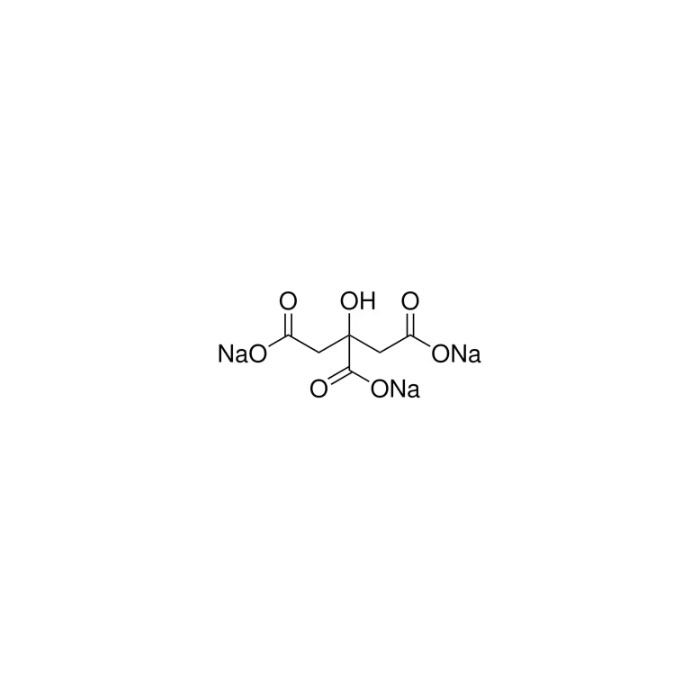
tri-Sodium citrate - Anhydrous Grade, USP, PharmPure™ , CAS No.68-04-2

CAS: 68-04-2 Cat. No.: T774745 Formule: C6H5O7Na3 Poids moléculaire: 258.07 Numéro CE: 200-675-3
DISPONIBLE À COMMANDE
QUALITÉ & PURETÉ Anhydrous Grade ? Anhydrous grade — water removed and packaged dry for moisture-sensitive chemistry. Use in reactions where even trace water would interfere or quench. PharmPure™ ? PharmPure™ — Aladdin's line of biopharmaceutical raw and starting materials. Use for pharma manufacturing inputs needing high purity and documentation. USP ? United States Pharmacopeia grade — meets USP monograph specs for pharmaceutical use. Use for drug manufacturing, QC, and applications requiring US compendial compliance.
Synonyms
tri-Sodium citrate
Storage
Room temperature,Argon charged,Desiccated
Shipped In
Normal
★
Taille
Allemagne (EU)
USA*
Prix
Qté
100g
T774745-GMP-100g
Sur commande · 8–12 semaines
29,42€
500g
T774745-GMP-500g
Sur commande · 8–12 semaines
117,93€
Enter a quantity for the sizes you want to add.
🧪
Pourquoi cette qualité

Anhydrous Grade, USP, PharmPure™ Anhydrous Grade,PharmPure™,USP pour les flux de travail chromatographiques et analytiques sensibles nécessitant une interférence de ligne de base minimale.

🌡

Stockage & expédition

Room temperature,Argon charged,Desiccated Expédition Normal. Consultez le COA spécifique au lot pour les spécifications exactes.

📋

Documents qualité

SDS, COA, fiche technique et fiche de spécifications disponibles au téléchargement. COA spécifique au lot accessible via la recherche par numéro de lot.

📚

Preuve documentaire

Cité dans 2092 publications à comité de lecture couvrant la chromatographie, la synthèse organique et les réactions de couplage croisé.

Vue d’ensemble

tri-Sodium citrate anhydrous is typically used as a citrate buffer system component for biomolecule downstream chromatography steps or final liquid formulation.

Spécifications

Synonymes
tri-Sodium citrate
Spécifications et pureté
Anhydrous Grade, USP, PharmPure™
Conditions de stockage de stockage
Room temperature,Argon charged,Desiccated
Expédié en
Normal
Grade
Anhydrous Grade, PharmPure™, USP
Noms et identifiants
PH
7.5-9.0 (20 °C, 10 g/L in H2O)
Sourires canoniques
C(C(=O)[O-])C(CC(=O)[O-])(C(=O)[O-])O.[Na+].[Na+].[Na+]
IUPAC Name
trisodium;2-hydroxypropane-1,2,3-tricarboxylate
InChIKey
HRXKRNGNAMMEHJ-UHFFFAOYSA-K
INCHI
1S/C6H8O7.3Na/c7-3(8)1-6(13,5(11)12)2-4(9)10;;;/h13H,1-2H2,(H,7,8)(H,9,10)(H,11,12);;;/q;3*+1/p-3
Isomères SMILES
C(C(=O)[O-])C(CC(=O)[O-])(C(=O)[O-])O.[Na+].[Na+].[Na+]
Poids moléculaire
258.07
Reaxy-Rn
3920956
Reaxys-RN_link_address
https://www.reaxys.com/reaxys/secured/hopinto.do?context=S&query=IDE.XRN=3920956&ln=

Documentation

📋 Fiche de données de sécurité (FDS)

Document complet couvrant les dangers, la manipulation, le stockage et la conformité réglementaire.

<<<<<<< HEAD Télécharger la SDS → ======= Télécharger la SDS → >>>>>>> release248-p3

✅ Certificat d'analyse (COA)

Données qualité spécifiques au lot. Saisissez votre numéro de lot pour récupérer le COA exact.

Rechercher le COA →

📊 Fiche technique

Résumé de référence rapide des spécifications et applications du produit.

Voir la fiche technique →

🔬 Fiche de spécifications

Attributs de qualité complets et critères d'acceptation pour cette qualité.

Voir la fiche de spécifications →

Données avancées

Taxonomic Classification

Taxonomy Tree

KingdomOrganic compounds
SuperclassOrganic acids and derivatives
ClasseCarboxylic acids and derivatives
SubclassTricarboxylic acids and derivatives
Intermediate Tree Nodes Not available
Direct ParentTricarboxylic acids and derivatives
Alternative Parents Tertiary alcohols  Carboxylic acid salts  Carboxylic acids  Organic sodium salts  Organic oxides  Hydrocarbon derivatives  Carbonyl compounds  
Molecular FrameworkAliphatic acyclic compounds
Substituents Tricarboxylic acid or derivatives - Tertiary alcohol - Carboxylic acid salt - Organic alkali metal salt - Carboxylic acid - Organic oxygen compound - Organic oxide - Hydrocarbon derivative - Organic sodium salt - Organic salt - Organooxygen compound - Carbonyl group - Alcohol - Aliphatic acyclic compound
DescriptionThis compound belongs to the class of organic compounds known as tricarboxylic acids and derivatives. These are carboxylic acids containing exactly three carboxyl groups.
External Descriptors organic sodium salt
Structure 3D
Modèle de structure chimique interactif


Certificats (CoA, COO, BSE/TSE et tableau d'analyse)
C of A & Other Certificates(BSE/TSE, COO):
Analytical Chart:

Find and download the COA for your product by matching the lot number on the packaging.

3 results found

Lot NumberCertificate TypeDateArticle
GMH2604129GMH2604129Certificate of AnalysisAug 06, 2026 T774745
GMC2610320GMC2610320Certificate of AnalysisDec 26, 2025 T774745
GML2523674GML2523674Certificate of AnalysisDec 26, 2025 T774745
Propriétés chimiques et physiques
Solubilité425 g/L
SensibilitéMoisture sensitive
Point de fusion (°C)150 °C (decomposition)
Poids moléculaire258.070 g/mol
XLogP3
Hydrogen Bond Donor Count1
Hydrogen Bond Acceptor Count7
Rotatable Bond Count2
Exact Mass257.973 Da
Monoisotopic Mass257.973 Da
Topological Polar Surface Area141.000 Ų
Heavy Atom Count16
Formal Charge0
Complexity211.000
Isotope Atom Count0
Defined Atom Stereocenter Count0
Undefined Atom Stereocenter Count0
Defined Bond Stereocenter Count0
Undefined Bond Stereocenter Count0
The total count of all stereochemical bonds0
Covalently-Bonded Unit Count4
FAQ et articles
GMP
From Spec to Bench: Understanding and Using USP Grade Reagents
The Guide to Anhydrous Grade for Reagents
Differences Among Antibodies for WB/FC/IP/ChIP/IF/IHC
Structural–Functional Characteristics, Production Technologies, and Application Progress of Thrombin
Practical Guide to Sodium Carboxymethyl Cellulose (CMC-Na): Thickening/Stabilizing Mechanisms, Key Controls for Solution Preparation, and Selection Navigation (including Table 1 and Tables A–C)
Systematic Anticoagulant Selection Strategy
Chymosin: A Review of Molecular Features, Coagulation Kinetics, and Activity Evaluation
Hemicellulases: A Review of Substrate Specificity, Catalytic Systems, and Research and Industrial Applications
Why LABSA (Sulfonic Acid) Is Commonly Used in Household Cleaning Formulations: Neutralization Mechanism, Detergency Action, and Formulation Application Points
From Structure to Performance: Conditioning, Film-Forming, Thickening, and Chelating Applications of Functional Ingredients in Personal Care and Home Care
Application of Fatty Acid Methyl Ester Sulfonate (MES) in Household Detergent and Cleaning Formulations: Detergency, Hard-Water Tolerance, and Selection Criteria
Differences, Mechanisms of Action, and Selection of Sodium Metasilicate and Sodium Tripolyphosphate in Detergent and Cleaning Formulations
The Role, Selection, and Validation of Chelating Agents in Daily Chemical Formulations
Differences, Functions, and Selection Guidelines for Sodium Hydroxide Flakes, Granules, Liquid Caustic Soda, and Caustic Soda in Household and Personal Care Product Manufacturing: The Functional and Application Logic of Sodium Hydroxide
Why Daily Chemical Formulations Need Alkaline Ingredients: From pH Adjustment and Saponification to Detergency Boosting and Selection Logic
Xiao Fang Bai, Da Fang Bai, PnB and DPnB: Mechanisms and Selection of Butyl Glycol Ethers in Hard-Surface Cleaning Formulations
Why Limonene Can Soften Greasy Soils Yet Is Difficult to Dissolve in Water: Understanding the Cleaning Mechanism and Formulation Applications of Naturally Derived Solvents from Molecular Structure
Degreasing Agents from a Molecular-Structure Perspective: How AEO, APG, and Related Surfactants Can Replace Nonylphenol Ethoxylates (NPE)
How Can Sodium Tripolyphosphate (STPP) Be Replaced? From Detergency Mechanisms to Formulation Choices for Low-Phosphorus/Phosphorus-Free Builder Systems
Interfacial Mechanism and Formulation Applications of AEO-9 (Fatty Alcohol Polyoxyethylene Ether): An Analysis of Emulsification, Wetting, Oil Soil Removal, and Co-Formulation Compatibility
More Than a pH Adjuster: Mechanisms, Selection Logic, and Alternative Acid Source Analysis of Citric Acid in Home-Care Cleaning
Structural Characteristics, Low-Temperature Flowability, and Home-Care Cleaning Applications of Palm-Derived Isomeric Alcohol Polyoxyethylene Ether PLE-S9
Performance Sources and Formulation Applications of Enzyme-Based Ingredients in Daily Chemical Products: Fermentation Transformation, Enzymatic Reactions, and Application Principles
Dispersants, Anti-Redeposition Agents, and Scale-Control Materials in Household Cleaning Formulations: Mechanisms of Action, Selection Logic, and Representative Products
Mechanism of Kojic Acid in Reducing Hyperpigmentation: From Tyrosinase Inhibition to Melanin Production Regulation
Antioxidant Mechanisms of Ferulic Acid in Skincare, Vitamin C/E Synergy, and Stable Delivery Applications
Potential Mechanisms of Succinic Acid in Acne Care: From Dicarboxylic Acid–Base Equilibria to Metabolic Antagonism Among Skin Microorganisms
Citations of This Product
Calculateurs de solution
Avis

Avis des clients

Besoin d'aide pour choisir la qualité ?

Notre guide de sélection des qualités couvre la pureté, le statut du stabilisant et l'adéquation à l'application pour toutes les variantes de notre catalogue.

Voir le guide des qualités Anhydrous Grade → Voir le guide des qualités PharmPure™ → Voir le guide des qualités USP →

Souhaitez-vous que nous vous envoyions un message lorsque des réductions seront disponibles?

Me rappeler plus tard

Merci ! Veuillez vérifier votre boîte de réception e-mail pour confirmer.

Oups ! Les notifications sont désactivées.