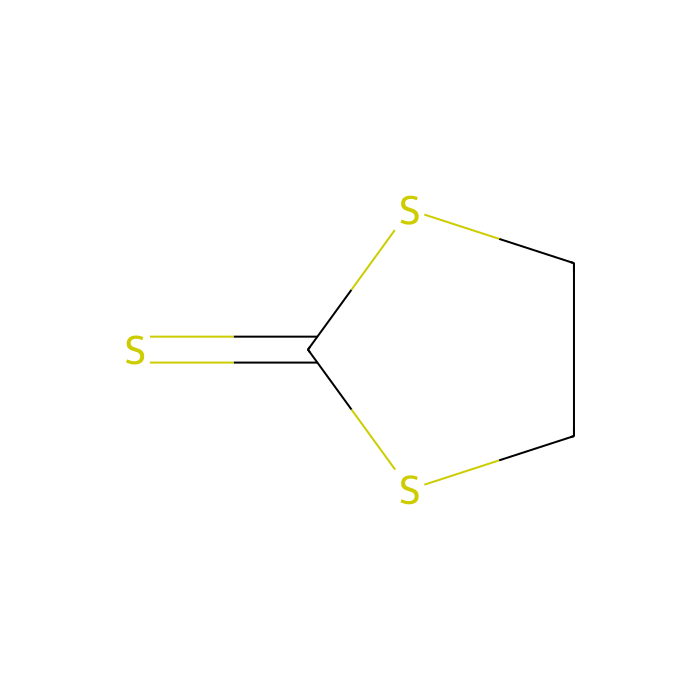
This compound belongs to the class of organic compounds known as 1,3-dithiolanes. These are organic compounds containing a 1,3-dithiolane ring. 1,3-dithiolane moiety is a 5-membered saturated aliphatic ring with three carbon atoms, and two sulfur atoms at the 1- and 3- ring positions.
External Descriptors
Not available
1. Djoumbou Feunang Y, Eisner R, Knox C, Chepelev L, Hastings J, Owen G, Fahy E, Steinbeck C, Subramanian S, Bolton E, Greiner R, and Wishart DS. ClassyFire: Automated Chemical Classification With A Comprehensive, Computable Taxonomy. Journal of Cheminformatics, 2016, 8:61.
Determine the necessary mass, volume, or concentration for preparing a solution.
Dilution Calculator
Determine the dilution needed to prepare a stock solution.
Reconstitution Calculator
Avis
Avis des clients
Application Protocols
Not applicable. No tested bioassay protocols (e.g., WB, IHC, IF, FC) are associated with this small-molecule reagent.
For synthetic procedures, see the Reaction Conditions and Reaction & Applications sections for general guidance and adapt from primary literature to your substrates.
Biological Roles
This product is a synthetic, sulfur-rich cyclic organic reagent without established physiological roles.
Not typically used as a metabolite, cofactor, or signaling molecule in biological systems.
Any biological testing should be performed strictly for research purposes; no clinical or diagnostic use is intended (see Research Use Only note).
If used in bioconjugation or polymer–biomolecule hybrid synthesis, its role is purely chemical (e.g., introducing thiocarbonyl/trithiocarbonate handles) rather than biological.
For biocompatibility, cytotoxicity, or environmental impact data, consult primary literature and conduct application-specific safety assessments; such data are not specified for this item and must be verified experimentally.
Buffer Applications
Not typically applicable. Ethylene trithiocarbonate is a neutral, nonionic organic reagent and does not serve as a buffering component in aqueous systems.
If used in aqueous/biological contexts (uncommon), it would be as a chemical modifier or reagent dissolved in a compatible organic co-solvent, not as a buffer. Select appropriate buffers separately (e.g., phosphate, HEPES) based on your assay needs.
Green Alternatives
Environmental considerations (general):
Sulfur-rich cyclic trithiocarbonates are not inherently “green”; they may have aquatic toxicity and generate sulfur-containing waste. However, their use can enable atom-economic sulfur transfer and controlled polymerization, reducing over-functionalization steps.
Greener choices by function (context-dependent):
For radical polymerization mediation where a trithiocarbonyl is required, consider RAFT agents that are solids with higher thermal stability to ease handling and minimize solvent use (e.g., polymer-bound RAFT agents). Tradeoff: lower versatility versus small-molecule precursors like cyclic trithiocarbonates.
For nucleophilic sulfuration, alternative sulfur donors (elemental sulfur under catalytic conditions, thiocarbonyl transfer via CS2 with greener bases, or xanthate methodologies in 2-MeTHF) may reduce hazard profiles. Tradeoff: more steps or use of CS2 (itself hazardous).
Solvent optimization:
Replace chlorinated solvents with 2-MeTHF, CPME, or ethyl acetate when solubility and selectivity allow. These can reduce environmental burden and facilitate solvent recovery.
Use ethanol or propylene carbonate as media for some nucleophilic reactions if compatible with stability.
Process changes:
Employ flow chemistry for radical steps to minimize inventory of energetic intermediates and improve heat/mass transfer.
Maximize atom economy by coupling ring-opening directly to product capture (e.g., in situ trapping) to avoid intermediate isolation.
Balance green metrics (E-factor, solvent selection guides, hazard banding) with performance and safety for your specific application.
Pharmaceutical Uses
No pharmacopeial monograph or excipient role is indicated for this material.
It is not used as an API or approved excipient; applications are limited to research and development chemistry (e.g., preparation of thiocarbonyl-containing intermediates, polymer chemistry studies).
If considered for materials interfacing with biological systems (e.g., RAFT-prepared polymers), all safety and extractables/leachables assessments must be devised independently. Such uses remain research-stage and are not specified for this item.
Physical Properties
Item-specific properties (from Product Data):
Appearance: Not specified for this item; refer to CoA/Spec Sheet.
Molecular Weight: Not specified for this item; refer to CoA/Spec Sheet.
Storage and shipping (from Product Data):
Store at 2–8 °C, protected from light.
Shipped on wet ice.
Literature/typical characteristics (general guidance; not product specifications):
Physical state: typically a low-melting solid or viscous liquid depending on purity and temperature; sulfur-rich compounds may appear pale yellow.
Volatility/thermal behavior: thiocarbonyl compounds can show thermal sensitivity and may decompose before distillation; purification is often by recrystallization or short-path at reduced pressure if applicable.
Solubility: expected to be sparingly soluble in water; generally soluble in common organic solvents (e.g., dichloromethane, chloroform, toluene, THF, acetone, acetonitrile) due to nonpolar/soft-sulfur character.
Polarity: relatively nonpolar/soft Lewis base character at sulfur; low hydrogen-bond basicity; no protic functionality.
Spectroscopic cues: strong C=S stretch typically observed in IR around 1050–1200 cm⁻¹ (literature), and deshielded thiocarbonyl carbon in 13C NMR (>180 ppm, literature). These are general identifiers rather than specifications.
Note: For definitive numeric values (mp, bp, density, refractive index, water/peroxide/metal limits), consult the item’s CoA/Spec Sheet; they are not specified for this item.
Quality and Grades
Item-specific grade/purity: Not specified for this item; refer to CoA/Spec Sheet.
What grade typically means (general context):
Research-grade trithiocarbonates are supplied with defined identity (NMR/IR) and assay; some applications (e.g., polymerization mediators) may require low UV-absorbing impurities and narrow residue-on-ignition.
HPLC/LCMS-grade solvents are irrelevant here; for a neat reagent like a cyclic trithiocarbonate, important quality markers may include assay by qNMR/GC, residual solvents, and trace metals (especially if used in polymerization or catalysis studies). These should be checked on the item’s CoA.
Stabilizers/inhibitors:
None are specified for this item. If stabilizers are present in comparable products, they are typically declared on the label/CoA. Presence of inhibitors can influence radical chemistry and polymerizations; verify if your application is inhibitor-sensitive.
Batch documentation: For reproducible research, consult the CoA for this SKU (E124195) for:
Identity verification (NMR, IR, HRMS as applicable).
Assay and impurity profile; residual solvent levels.
Recommended use notes and any additional storage precautions.
Note: Where a precise specification is required (UV cutoff, water or peroxide content, metal limits), it is not specified for this item and must be confirmed on the CoA/Spec Sheet.
Reaction and Applications
Functional profile:
Acts as a thiocarbonyl (C=S) electrophile embedded in a 1,3-dithiolane framework, enabling nucleophilic ring-opening and sulfur-transfer processes.
Serves as a modular precursor to trithiocarbonate motifs used in controlled radical polymerization (e.g., RAFT) and sulfur-functional materials.
Nucleophilic ring opening by thiolates, alkoxides, or amines to furnish acyclic trithiocarbonates, dithiocarbamates, or related thiocarbonyl derivatives. Choice of base/nucleophile governs selectivity.
Radical chemistry: the thiocarbonyl group can participate in reversible addition–fragmentation equilibria; cyclic trithiocarbonates are used as sulfur-transfer or chain-transfer components under AIBN or peroxide initiation in deoxygenated organic media.
Desulfurization/transformations: conversion to reduced or rearranged products using soft-metal reagents (e.g., Raney Ni, nickel boride) or phosphines; stepwise elaboration of dithioester/trithiocarbonate RAFT agents via alcohol/amine coupling after ring opening.
Coordination/ligand chemistry: sulfur-rich fragments from ring opening can chelate soft metals (Cu+, Ag+, Au+, Ni2+) and are used as building blocks for metal–organic assemblies and chalcogenide materials.
Practical tips:
Maintain anhydrous, oxygen-free conditions for radical processes; rigorously degas (freeze–pump–thaw or inert sparging) and use dry solvents.
For nucleophilic openings, titrate base strength to avoid overreaction; polar aprotic solvents and controlled temperature (0–25 °C) improve selectivity.
Monitor by IR (C=S band decrease), 13C NMR (thiocarbonyl carbon shift), and LC/GC where applicable.
Applications should be validated under your specific conditions; consult the primary literature for detailed procedures.
Reaction Conditions
The following are general, literature-based guidelines for transformations involving cyclic trithiocarbonates; they are not specifications for this product.
Nucleophilic ring opening:
Solvents: THF, MeCN, DMF, DMSO, or mixtures with toluene/EtOAc.
Bases/nucleophiles: NaH/KH for in situ alkoxide/thiolate generation from alcohols/thiols; tertiary amines or DBU for milder conditions; amines as both base and nucleophile.
Temperature: 0–25 °C initially; may warm to 40–60 °C if needed. Monitor to avoid overreaction.
Workup: quench with aqueous ammonium chloride or dilute acid; extract with organic solvent; purify by silica gel (minimize exposure to strong base on silica to prevent decomposition).
Radical sulfur-transfer/RAFT precursor uses:
Initiators: AIBN or organic peroxides (0.1–1 mol%).
Solvents: toluene, dioxane, anisole, or chlorobenzene; rigorously deoxygenated (freeze–pump–thaw or inert sparge for ≥20 min).
Temperature: 60–110 °C depending on initiator half-life and substrate stability.
Atmosphere: N2 or Ar; exclude light if photolysis is a concern (store and run under amber conditions when practical).
Desulfurization/transformation:
Reagents: Raney Ni, nickel boride, PPh3, or trialkyl phosphites under refluxing alcoholic or aromatic solvents (choose based on desired product class).
Note: sulfur-containing byproducts can poison catalysts—employ fresh catalysts and consider sacrificial scavengers when scaling.
Always confirm conditions with small-scale trials and consult primary literature for your exact substrates.
Safety and Handling
GHS information (from Product Data): Not specified for this item; refer to the SDS for authoritative classification, pictograms, and H/P statements.
General hazards for cyclic trithiocarbonates (literature-based, not item-specific):
May cause irritation to skin, eyes, and respiratory tract.
Sulfur-rich organics can release irritating sulfurous odors or decomposition products upon heating.
Potential aquatic toxicity; avoid release to the environment.
Handling and PPE (best practice):
Use in a fume hood; avoid inhalation of vapors or dusts.
Wear lab coat, safety glasses or splash goggles, and appropriate chemical-resistant gloves (e.g., nitrile). Change gloves regularly.
Avoid contact with strong oxidizers and strong bases that may induce ring opening or decomposition.
Storage (from Product Data and best practice):
Store at 2–8 °C, protected from light, in a tightly sealed, inert-compatible container (e.g., amber glass) to minimize photolysis and oxidative degradation.
Keep away from peroxides/strong oxidants and moisture.
First-aid overview (general guidance; defer to SDS):
Skin/eye contact: Rinse with water for at least 15 minutes; remove contaminated clothing; seek medical advice if irritation persists.
Inhalation: Move to fresh air; monitor breathing; seek medical attention if symptoms occur.
Ingestion: Rinse mouth; do not induce vomiting unless directed by medical personnel; seek medical attention.
Always consult the SDS for E124195 before use.
Solvent Selection
Ethylene trithiocarbonate is a neutral, sulfur-rich cyclic compound with limited polarity and no hydrogen-bonding functionality.
Solubility/miscibility (literature/general):
Sparingly soluble in water.
Readily soluble in many organic solvents: dichloromethane, chloroform, toluene, ethyl acetate, acetone, acetonitrile, THF, diethyl ether. Solubility may increase with temperature.
Polarity and interactions:
Predominantly dispersive and polarizability-driven interactions; the sulfur atoms are soft donors and can interact with soft Lewis acids and polarizable media.
Low hydrogen-bond basicity; not an H-bond donor.
Practical choices by task:
Spectroscopy/NMR: CDCl3 or DMSO-d6 are commonly suitable; CD2Cl2 can be used if volatility or solubility dictates.
Synthesis (nucleophilic ring opening): polar aprotics (THF, DMF, DMSO, MeCN) often favored to solvate nucleophiles/bases.
Radical chemistry: nonpolar or moderately polar, oxygen-free media such as toluene, xylene, chlorobenzene, or dioxane; degas thoroughly.
Comparison notes (general):
Versus carbonyl analogs (e.g., ethylene carbonate), the sulfur analog is less polar and more soluble in nonpolar solvents; choose chlorinated or aromatic solvents when higher solubility is required.
Avoid strongly basic aqueous media if ring-opening hydrolysis is undesirable.
Always verify solvent compatibility with downstream steps and purification plans.
Storage and Reconstitution
Storage (from Product Data):
Store at 2–8 °C.
Protect from light (use amber vials/foil wrap as needed).
Shipped on wet ice to maintain recommended temperature range.
General handling:
Allow container to equilibrate to room temperature before opening to minimize moisture condensation.
Reseal promptly under inert gas (N2/Ar) if long-term storage is anticipated, as thiocarbonyls can undergo slow oxidation or photolysis.
Reconstitution/dispensing:
If supplied as a solid or viscous oil, dissolve in a dry, oxygen-free organic solvent appropriate to the intended use (e.g., DCM, toluene, THF, MeCN). Sonication or mild warming may aid dissolution; avoid prolonged heating or bright light.
Prepare single-use aliquots to reduce repeated freeze–thaw and headspace oxygen exposure.
Stability notes (general):
Avoid strong bases and oxidants during storage. Trace acids/bases can promote ring opening over time; store in neutral glassware with PTFE-lined caps.
Monitor material integrity by IR/NMR periodically if stored for extended periods.
For definitive shelf-life and stability-in-solution data, consult the CoA/Spec Sheet and SDS; such specifics are not specified for this item.
Structure and Identity
Ethylene trithiocarbonate is a sulfur-rich cyclic thiocarbonyl compound commonly described as the trithiocarbonate analog of ethylene carbonate.
Item-specific identifiers (from Product Data):
SKU: E124195
CAS: 822-38-8
InChIKey: 414650 (as provided)
SMILES: Not specified for this item; refer to CoA/Spec Sheet.
Molecular Formula: Not specified for this item; refer to CoA/Spec Sheet.
Molecular Weight: Not specified for this item; refer to CoA/Spec Sheet.
Literature structural description (general information, not item-specific):
Common structural assignment: a five-membered 1,3-dithiolane ring bearing a thiocarbonyl (C=S) at the 2-position (i.e., a cyclic trithiocarbonate).
Functional groups/features: one thiocarbonyl (C=S) and two thioether sulfurs incorporated in a saturated five‑membered ring; no heteroatom oxygen in the ring (all sulfur analog of carbonate).
2D depiction in words: a five-membered ring with adjacent sulfur atoms at positions 1 and 3; position 2 is a C=S thiocarbonyl carbon; positions 4 and 5 are methylene carbons forming the “ethylene” segment of the ring.
Stereochemistry: none (achiral, no stereocenters in the parent ring).
Synthetic Utility
Ethylene trithiocarbonate provides a compact, bench-handleable entry to thiocarbonyl chemistry.
Key reactivity handles:
Thiocarbonyl (C=S) electrophilicity: susceptible to nucleophilic attack; enables conversion to trithiocarbonates, dithiocarbamates, and related motifs under appropriate conditions.
Ring activation: the 1,3-dithiolane framework can undergo ring opening with nucleophiles, allowing installation of sulfur-rich chains that are precursors to RAFT agents or crosslinkers.
Retrosynthetic value:
A convergent source of CS3-equivalents introduced onto alcohols (via alkoxides), amines (via amide/thiourea pathways), or thiols (via thiolates) with controlled stoichiometry.
Useful intermediate for preparing end-group–modified polymers (e.g., by post-polymerization thiocarbonylation), enabling reversible-deactivation radical polymerization strategies.
Xanthate/dithiocarbonate chemistry foundational to Barton–McCombie-type radical deoxygenation sequences (as precursors), though ethylene trithiocarbonate itself is typically a building block rather than the direct radical reagent.
Phosphine- or metal-mediated desulfurization to unveil reduced carbon frameworks or to exchange the thiocarbonyl for other functionalities.
Practical synthesis notes:
Compatible with many organic/organometallic reagents under anhydrous conditions.
Sensitivity to strong nucleophiles/bases suggests incremental addition and temperature control for chemoselectivity.
Target Specificity
Not applicable. This product is a small-molecule chemical reagent and has no antibody/biomolecule target specificity. No antigen/epitope, clone, isotype, or species reactivity information is relevant.
Foire aux questions
What documentation is provided?
Available product documentation, including Certificates of Analysis (COA), Safety Data Sheets (SDS), and specification sheets, is shown in the product document area. Document availability and access follow the current site policy.
How is this product shipped?
This product ships chilled on wet ice. Unpack on arrival and transfer it to the storage condition stated above.
What are the CAS number, molecular formula and molecular weight?
The CAS Number is 822-38-8, the molecular formula is C3H4S3, and the molecular weight is 136.26 g/mol. InChIKey XCWPBWWTGHQKDR-UHFFFAOYSA-N.
What is the purity of this product?
This product is supplied at ≥97% purity (chemical assay). Lot-specific values are stated on the Certificate of Analysis.
How should this product be stored?
Store at 2–8 °C, protected from light. The material is light-sensitive — keep it in its original opaque or amber container.
Nous utilisons des cookies pour garantir le bon fonctionnement du site et, lorsque cela est autorisé, pour améliorer votre expérience. Vous pouvez gérer vos préférences à tout moment dans les Paramètres. Pour en savoir plus, consultez notre Politique relative aux cookies.
Souhaitez-vous que nous vous envoyions un message lorsque des réductions seront disponibles?
Me rappeler plus tard
Merci ! Veuillez vérifier votre boîte de réception e-mail pour confirmer.
Products are supplied to verified businesses, institutions, and qualified professionals for research and development use only. Not for use in humans, animals, diagnosis, or therapy.

 K2420634