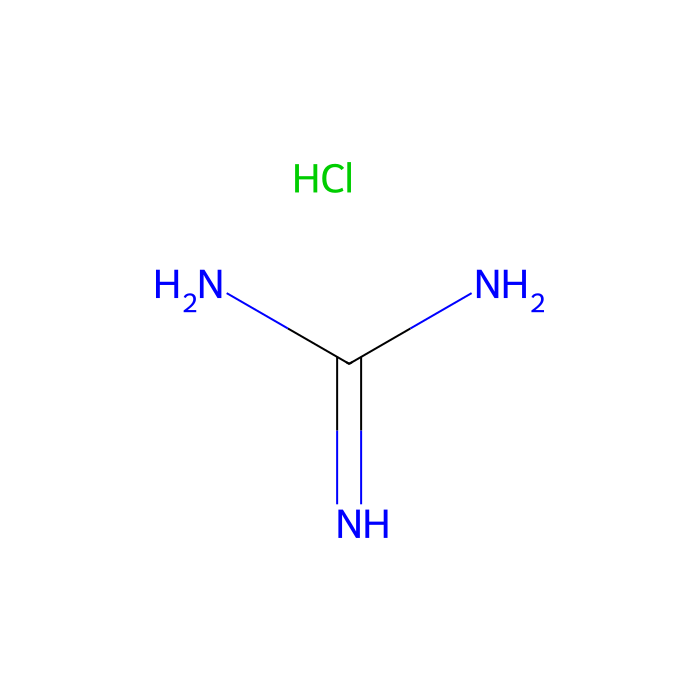
Guanidine HCl - 10mM in DMSO , CAS No.50-01-1

CAS: 50-01-1 Cat. No.: G408589 Formula: CH5N3 · HCl Peso molecolare: 95.53 Beilstein Registry Number: 3591990 Numero EC: 200-002-3
Disponibile su ordine
GRADE & PURITY 10mM in DMSO
Synonyms
Aminoformamidine HCl | Guanidine, hydrochloride (1:1)
Storage
Store at -80°C
Shipped In
Dry ice packs + Cold packs
★
Size
Germania (EU)
USA*
Price
Qty
1ml
G408589-1ml
—
1 Disponibile

206,44€

300,15€
Salva 93,72 € (31.22%)
Enter a quantity for the sizes you want to add.
🧪
Why this grade

10mM in DMSO for sensitive chromatographic and analytical workflows requiring minimal baseline interference.

🌡

Storage & shipping

Store at -80°C Ships Dry ice packs + Cold packs Check lot-specific COA for exact specifications.

📋

Quality documents

SDS, COA, datasheet, and spec sheet available for download. Lot-specific COA accessible via lot number lookup.

📚

Literature proof

Cited in 145 peer-reviewed publications across chromatography, organic synthesis, and cross-coupling reactions.

Panoramica

Information

Guanidine HCl (Aminoformamidine), the crystalline compound of strong alkalinity formed by the oxidation of guanine, is a normal product of protein metabolism and a protein denaturant.
In vitro

Guanidine HCl is the most popular protein denaturant. Analysis of unfolding transitions by Guanidine HCl provides several important parameters regarding the mechanism of conformational stability of proteins. Guanidine HCl at low concentrations refolds acid-unfolds apomyoglobin and cytochrome c, stabilizing the molten globule state. Guanidine HCl (> 1 M) causes co-operative unfolding of the molten globule state. Guanidine HCl is 2.8 times more effective than urea in unfolding ribonuclease but only 1.7 times more effective for lysozyme. △GH2Oapp. values of Guanidine HCl are 9.7 Cal/mole for ribonuclease at pH 6.6, 6.1 for lysozyme at pH 2.9, 8.3 for α-chymotrypsin at pH 4.3, and 11.7 for β-lactoglobulin at pH 3.2. Guanidine HCl at millimolar concentrations, is able to causes efficient loss of the normally stable [PSI+] element from yeast cells. 5 mM Guanidine HCl in growth media cures [PSI+] and other prions of yeast. 5 mM Guanidine HCl significantly reduces Hsp104-mediated basal and acquired thermotolerance by 30-fold and 50 fold, respectively. Guanidine HCl also reduces the ability of Hsp104 to restore activity of thermally denatured luciferase.

In vivo


Cell Data

cell lines:HT29-S-B6 colon cell

Concentrations:

Incubation Time:

Powder Purity:≥100%

Specifications

Sinonimi
Aminoformamidine HCl | Guanidine, hydrochloride (1:1)
Specifiche e purezza
10mM in DMSO
Meccanismi biochimici e fisiologici
Guanidine HCl (Aminoformamidine), the crystalline compound of strong alkalinity formed by the oxidation of guanine, is a normal product of protein metabolism and a protein denaturant.
Condizioni di conservazione di stoccaggio
Store at -80°C
Spedito in
Dry ice packs + Cold packs
Questo prodotto richiede spedizione a catena fredda. I servizi di terra e altri servizi economici non sono disponibili.
Nomi e identificatori
Isomeri SMILES C(=N)(N)N.Cl
WGK Germania 1
RTECS MF4300000
Peso molecolare 95.53
Beilstein 3591990
Reaxy-Rn 3591990
Reaxys-RN_link_address https://www.reaxys.com/reaxys/secured/hopinto.do?context=S&query=IDE.XRN=3591990&ln=

Documentazione

📋 Safety Data Sheet (SDS)

Comprehensive hazard, handling, storage, and regulatory compliance document.

Download SDS →

✅ Certificate of Analysis (COA)

Lot-specific quality data. Enter your lot number to retrieve the exact COA.

Look up COA →

📊 Datasheet

Quick-reference summary of product specifications and applications.

View datasheet →

🔬 Specification Sheet

Full quality attributes and acceptance criteria for this grade.

View spec sheet →

Advanced Data

Certificati (CoA, COO, BSE/TSE e tabella di analisi)
C of A & Other Certificates(BSE/TSE, COO):
Analytical Chart:
Proprietà chimiche e fisiche
Punto di fusione (°C)178-185°C
Domande frequenti e articoli
Comparing Guanidine Hydrochloride and Urea for Inclusion-Body Solubilization
Common Reagents for Reducing Protein Disulfide Bonds
How to Optimize Buffer Components for Ni-Agarose Beads
Obtaining soluble and biologically active recombinant proteins from inclusion bodies
Salting-In and Salting-Out: “Salt” Strategies in Protein Purification
How Biotinylated Molecules are Purified with Streptavidin Beads
How to Elute Biotinylated Proteins and Nucleic Acids from Streptavidin Beads?
His-Tagged Protein Purification
Biotin-Labeled Protein Purification
His-Tag Protein Purification: Common Troubleshooting Questions and Practical Solutions
How to Purify Proteins by Ion-Exchange Chromatography Under Denaturing Condition
A Practical Guide to Small-Molecule Chemical Probes: Concept Clarification, Causal Validation, and Experimental Selection (with Product Navigation and Tables A–D)
Endoproteinase Lys-C: Mechanism, Applications, and Method-Control Considerations for Lysine-Specific Digestion
A Review of Ten Commonly Used Techniques for Detection, Quantification, and Interaction Analysis in Nucleic Acid Research
Protein Tags Demystified: Classification, Properties, and Suitable Experimental Applications
RNA Extraction Technologies: Method Systems, Operational Workflows, and Key Quality-Control Considerations
dsDNase-Mediated Hydrolysis of Double-Stranded DNA: Enzymatic Characteristics, Methodological Strategies, and Bioanalytical Applications
Review of Chymotrypsin: Enzymological Properties, Catalytic Mechanism, and Research Applications
Roles of the Carboxypeptidase Family in Protein C-Terminal Processing and Experimental Analysis
Methodological Studies on Glycoprotein Structural Characterization and Quality Attribute Analysis
Research Framework for Multi-Enzyme Digestion Strategies and Optimization of Proteomic Coverage
Decision Logic for Peptide Synthesis Routes: Applicability and Criteria for Choosing among SPPS, LPPS, and Recombinant Expression
Thiol and Disulfide Status in Biological Samples: Detection Methods and Applications
What Is Synthetic Biology? The Industrialization Pathway from Upstream Reagent Toolchains to Biomanufacturing Applications
Citations of This Product
Calcolatori di soluzioni
Recensioni

Recensioni dei clienti

Domande frequenti

How should this product be stored?
Store at ?80 °C. Ultra-low temperature storage is required to maintain the specified shelf life.
How is this product shipped?
This product ships frozen with dry ice and cold packs. Unpack on arrival and transfer it to the storage condition stated above; handle dry ice with insulated gloves in a ventilated area.
What are the CAS number, molecular formula and molecular weight?
The CAS Number is 50-01-1, the molecular formula is CH5N3 · HCl, and the molecular weight is 95.53 g/mol.
What documentation is provided?
Available product documentation, including Certificates of Analysis (COA), Safety Data Sheets (SDS), and specification sheets, is shown in the product document area. Document availability and access follow the current site policy.

Shall we send you a message when we have discounts available?

Remind me later

Thank you! Please check your email inbox to confirm.

Oops! Notifications are disabled.