GRAU & PUREZARecombinant?Recombinant — produced via recombinant expression for defined sequence and consistency. Use for reproducible, animal-free proteins of known origin.ExactAb™?ExactAb™ — Aladdin's antibody line emphasizing precision and validated quality. Use for reliable, specificity-validated antibody applications.Validated?Validated grade — performance confirmed in defined applications before release. Use when you want documented assurance the reagent works as stated.See COA
Recombinant, ExactAb™, Validated, See COA ExactAb™,Recombinant,Validated para fluxos de trabalho cromatográficos e analíticos sensíveis que exigem interferência mínima da linha de base.
🌡
Armazenamento e envio
Store at -20°C,Avoid repeated freezing and thawing Envio Ice chest + Ice pads. Consulte o COA específico do lote para obter as especificações exatas.
📋
Documentos de qualidade
SDS, COA, ficha técnica e folha de especificações disponíveis para download. COA específico do lote acessível por meio de pesquisa por número de lote.
📚
Comprovação documental
Citado em 0 publicações revisadas por pares nas áreas de cromatografia, síntese orgânica e reações de acoplamento cruzado.
Visão geral
Rabbit anti Human Brachyury/Bry Antibody, Recombinant, could be used for WB and so on.
Especificações
Product Name
Recombinant Brachyury/Bry mAb - Primary antibody, specific to Brachyury/Bry, Rabbit IgG
Sinónimos
Brachyury | MGC104817 | Protein T | SAVA | T brachyury (mouse) homolog | T brachyury homolog | T Brachyury Transcription Factor | T, brachyury homolog (mouse) | T-Box Transcription Factor T | TBXT | TF | TFT | BRAC_HUMAN antibody | brachyury protein | Bra
Especificações e pureza
Recombinant, ExactAb™, Validated, See COA
Mecanismos bioquímicos e fisiológicos
Involved in the transcriptional regulation of genes required for mesoderm formation and differentiation. Binds to a palindromic site (called T site) and activates gene transcription when bound to such a site.
Espécie hospedeira
Rabbit
Especificidade
Brachyury/Bry
Imunogénio
A synthetic peptide derived from human Protein T (AA 250-435)
Controlo positivo
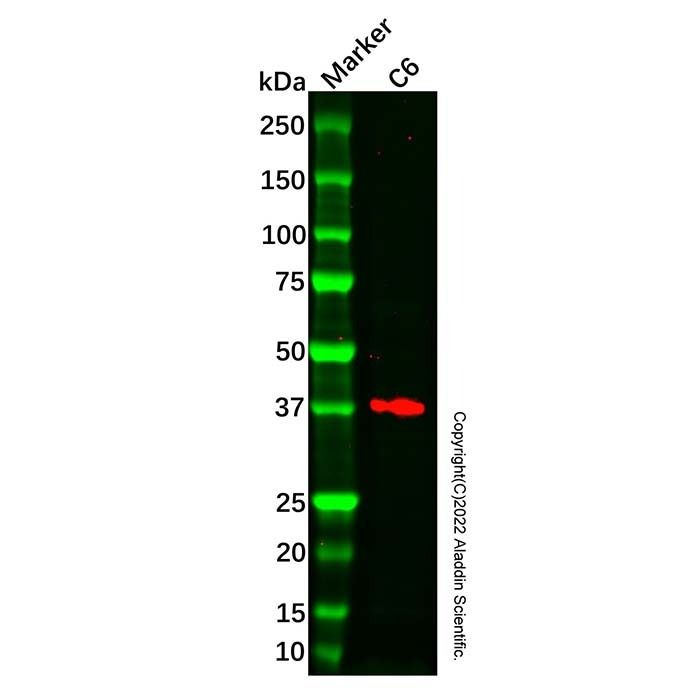
WB: MUG-Chor1, C6 lysates.
Conjugação
Unconjugated
Grau
ExactAb™, Recombinant, Validated
Isótipo
Rabbit IgG
Tipo de corrente de luz
kappa
SDS-PAGE
150 kDa
Método de purificação
Protein A purified
Concentração
See COA
Product Line
Produtos biológicos
Armazenamento e envio
Forma
Liquid
Condições de armazenamento de armazenamento
Store at -20°C,Avoid repeated freezing and thawing
Enviado em
Ice chest + Ice pads
Estabilidade e armazenamento
Store at 4°C short term (1-2 weeks). Store at -20℃ long term (12 months). Upon receipt, it is recommended to aliquot. Avoid freeze/thaw cycle.
Imagens
Recombinant Brachyury Antibody (Ab091590) - Western Blot All lanes: Recombinant Brachyury Antibody (Ab091590) at 1/500 dilution Samples: Lysates at 20 µg per lane Secondary: Goat Anti-Rabbit IgG H&L (HRP) (Ab170144) at 1/10000 dilution
Predicted band size: 47 kDa Observed band size: 38 kDa Exposure time: 150.0 s
Recombinant Brachyury Antibody (Ab091590) - Western Blot Western blot analysis of Brachyury expression in MUG-Chor1 (human sacral bone chordoma) cell lysate.
Predicted band size: 47 kDa Observed band size: 41, 47 kDa
Aplicação
Aplicação
Dilution info
WB
1/500-1/2000
Documentação
📋 Ficha de dados de segurança (FDS)
Documento abrangente sobre perigos, manuseamento, armazenamento e conformidade regulamentar.
Determine the necessary mass, volume, or concentration for preparing a solution.
Dilution Calculator
Determine the dilution needed to prepare a stock solution.
Reconstitution Calculator
Revisões
Avaliações dos Clientes
Application Protocols
Item-specific facts (from Product Data)
Manufacturer-tested applications, recommended dilutions, antigen retrieval methods, and positive control materials for Recombinant Brachyury/Bry mAb (Ab091590) are not specified for this item; refer to the CoA/Spec Sheet.
Note
As required by the product data policy, only manufacturer-provided protocols and application validations can be listed here. Please consult the item’s documentation for detailed, validated procedures.
Biological Roles
Target overview (literature)
Brachyury (Bry, T) is a T-box family transcription factor central to mesoderm specification, notochord formation, and early gastrulation in vertebrate embryogenesis.
It regulates genes involved in cell movement and differentiation during early development. Expression is tightly timed/spatially restricted and is a canonical marker of mesodermal lineage commitment in pluripotent stem cell differentiation protocols.
Research relevance
Brachyury expression serves as a readout for directed differentiation of human ESCs/iPSCs toward mesodermal fates. It is also used to map developmental trajectories and construct gene regulatory networks in early embryos across species.
In adult/pathological contexts, altered Brachyury expression has been observed in certain tissues in the literature; researchers investigate its roles in epithelial–mesenchymal transitions and lineage plasticity. No clinical or therapeutic claims are made here.
Antibody utility
An anti-Brachyury mAb enables selective detection of nuclear Brachyury protein in fixed cells/tissues or cell lysates, supporting temporal and spatial expression profiling.
Item-specific note
Epitope region, isotype, species reactivity, and cross-reactivity for Recombinant Brachyury/Bry mAb (Ab091590) are not specified for this item; refer to the CoA/Spec Sheet for target-binding particulars and validated species.
Buffer Applications
Applicability note
This is an antibody reagent; it is used within biological buffer systems rather than acting as a buffering agent itself.
General guidance (literature)
Common working buffers: PBS or TBS at pH ~7.2–7.6. Additives such as 0.05% Tween-20 can reduce nonspecific binding in wash steps.
Blocking solutions: 5% serum (species-appropriate), BSA (1–5%), or casein-based blockers to minimize background.
For IHC, antigen retrieval buffers (e.g., citrate pH ~6, Tris-EDTA pH ~9) may be used depending on fixation and tissue; optimize empirically for nuclear antigens like Brachyury.
For WB, transfer and blocking buffers should be optimized to preserve epitope integrity; inclusion of mild detergents can aid specificity.
Item-specific note
The supplied storage buffer, recommended working dilution buffer, and compatibility specifics for SKU Ab091590 are not specified for this item; please consult the CoA/Spec Sheet.
Green Alternatives
Applicability note
“Green alternatives” in the context of an antibody product primarily relate to buffer and workflow choices rather than solvent substitution for chemical reactions.
Greener practice suggestions (general)
Prefer phosphate-buffered saline (PBS) or TBS with minimal hazardous preservatives when compatible with your assay and biosafety policies.
Reduce single-use plastics by employing reusable, validated containers where contamination risk is controlled; use low-retention tips/tubes efficiently to minimize waste.
Choose non-toxic blocking agents and detergents where possible; avoid high concentrations of azide in workflows that lead to hazardous waste where institutional rules discourage it.
Optimize antibody titers to reduce reagent consumption without compromising data quality.
Trade-offs
Lower preservative concentrations may reduce shelf life or microbial robustness; balance safety goals with product stability.
Item-specific note
The precise formulation and preservative profile for SKU Ab091590 are not specified for this item; consult the CoA/Spec Sheet to plan greener buffer alternatives that maintain stability.
Pharmaceutical Uses
Applicability note
This reagent is for research use only and is not intended for diagnostic or therapeutic applications.
Context (general)
Monoclonal antibodies can serve as analytical tools in bioprocess development and quality control (e.g., ligand-binding assays, impurity tracking) but such uses require application-specific validation.
No pharmacopeial monograph, dosage form, or excipient role is provided for this product.
Item-specific statement
There are no pharmaceutical/formulation uses specified for Recombinant Brachyury/Bry mAb (Ab091590); refer to institutional guidelines if considering any regulated application, and contact Aladdin Scientific for documentation relevant to research-only workflows.
Physical Properties
Item-specific facts (from Product Data)
Appearance: Not specified for this item; refer to CoA/Spec Sheet.
Concentration, buffer composition, preservative, and exact protein content: Not specified for this item; refer to CoA/Spec Sheet.
Applicability note
Conventional physicochemical constants (bp, mp, density, refractive index, logP) are not applicable to macromolecular protein biologics such as monoclonal antibodies.
General properties (literature)
Approximate size: Immunoglobulin G (IgG) antibodies are typically ~150 kDa; hydrodynamic radius ~5–6 nm; isoelectric point can vary (commonly pI 6–9 depending on isotype and sequence).
Solubility: Readily soluble in aqueous physiological buffers (e.g., PBS, TBS) with stabilizers (e.g., 0.1–1% carrier protein or polyols) where specified by supplier; avoid extreme pH and high ionic detergents unless validated for the application.
Stability: Sensitive to repeated freeze–thaw and prolonged exposure to elevated temperature; stability is strongly formulation-dependent.
Practical implications
Handle on ice where feasible; keep in recommended buffer; avoid vigorous vortexing/foaming to minimize aggregation.
For exact formulation, concentration, and excipients for SKU Ab091590, consult the item’s CoA/Spec Sheet.
Quality and Grades
Item-specific facts (from Product Data)
Grade/Purity: Recombinant, ExactAb™, Validated
What these designations mean (general)
Recombinant mAb: Sequence-defined production in a controlled host system (e.g., mammalian or other expression), providing enhanced lot-to-lot consistency compared with hybridoma-derived monoclonals.
ExactAb™: Platform designation indicating precise, recombinant, sequence-verified antibody production with stringent release criteria (general description; see product documentation for platform specifics). The advantage is minimized batch variability and improved reproducibility across experiments.
Validated: Indicates performance verification in defined applications and/or sample types by the manufacturer. For this specific SKU, the exact validated applications, species reactivity, and sample prep methods are not listed here; refer to the CoA/Spec Sheet for validated use-cases.
Release testing (typical for recombinant mAbs; general)
Identity/sequence confirmation, concentration determination, purity by SDS-PAGE/SEC, and functional binding assessments (e.g., ELISA/biolayer interferometry) are common. Exact test panel for Ab091590 is not specified for this item; refer to CoA/Spec Sheet.
Practical impact
Expect strong reproducibility and reduced need for re-optimization across lots; still verify titer and background in your own matrix due to laboratory- and protocol-specific variables.
Reaction and Applications
Applicability note
As a recombinant monoclonal antibody, this product is used in immunoassay and detection workflows rather than as a reagent in synthetic chemical reactions.
General application domains for anti-Brachyury antibodies (literature)
Immunodetection of Brachyury (T/Bry), a T-box transcription factor critical for mesoderm formation, in developmental biology, stem cell differentiation models, and embryoid body studies.
Techniques where anti-Brachyury mAbs are commonly employed include immunofluorescence (IF/ICC) for nuclear localization, immunohistochemistry (IHC) in tissue sections, Western blotting (WB) for size-specific detection, ELISA for quantitative analyses, and flow cytometry (FC) if the epitope is accessible (e.g., after permeabilization).
Practical considerations (general)
For nuclear transcription factors like Brachyury, antigen retrieval and permeabilization are often required (optimize fixative, retrieval buffer, and detergent).
Include appropriate positive controls (Brachyury-expressing cells/tissues) and negative controls (knockdown/knockout, isotype control).
Titrate the antibody to balance signal and background; blocking reagents (serum or protein-based blockers) and optimized wash conditions can improve S/N.
Item-specific note
Manufacturer-tested applications and dilutions for SKU Ab091590 are not specified here; refer to the CoA/Spec Sheet for validated applications and recommended conditions.
Reaction Conditions
Applicability note
Conventional reaction conditions (solvent, temperature, catalysts, yields) are not applicable to antibody-based detection reagents.
General method conditions (literature) for immunoassays
Incubations typically occur at 4–25°C for 1–16 h depending on assay (WB/IHC/IF/ELISA), followed by washes in buffered saline with mild detergent.
Fixation/permeabilization for nuclear targets like Brachyury commonly uses paraformaldehyde (PFA) and Triton X-100/saponin, or alcohol-based methods depending on downstream needs.
Signal development uses enzyme substrates or fluorophores under light-protected conditions; blocking and stringent washes reduce background.
Item-specific note
Exact, validated incubation times, temperatures, and dilutions for Ab091590 are not specified for this item; refer to the CoA/Spec Sheet for manufacturer-validated conditions.
Safety and Handling
Item-specific facts (from Product Data)
GHS classification, signal word, hazard statements, pictograms: Not specified for this item; refer to the product SDS.
Research use note: For research use only.
General safety guidance (literature/standard lab practice)
Personal protective equipment: Lab coat, gloves, and safety glasses when handling antibody solutions and ancillary reagents (fixatives, substrates, secondary antibodies).
Avoid ingestion, inhalation of aerosols, and contact with skin/eyes. Handle in a clean area to prevent biological contamination of the reagent.
Incompatibilities: Avoid mixing with strong oxidizers or proteases; avoid exposure to extreme pH (<5 or >9) unless the protocol requires it and stability is validated.
First aid (overview; defer to SDS): Rinse skin/eyes with water upon contact; seek medical attention if irritation persists. If inhaled as aerosol, move to fresh air; if ingested, rinse mouth and follow institutional procedures.
Waste: Dispose according to institutional biological and chemical waste guidelines; decontaminate surfaces with appropriate disinfectants.
Notes
Always consult the SDS for SKU Ab091590 for authoritative hazard, PPE, and spill/first-aid instructions.
Some antibody formulations may contain preservatives (e.g., sodium azide); check the CoA/SDS for specific handling and disposal considerations.
Solvent Selection
Applicability note
This product is a recombinant monoclonal antibody intended for aqueous biological workflows. Traditional “solvent selection” (organic solvent choice by polarity, dielectric constant) is not typically applicable.
Practical guidance (general)
Use isotonic, neutral pH buffers (e.g., PBS or TBS) as recommended by the product documentation.
Avoid high percentages of organic solvents (e.g., >10–20% methanol, acetonitrile, DMSO) which can denature or precipitate antibodies unless a validated protocol explicitly requires them.
Low concentrations of gentle nonionic detergents (e.g., 0.05% Tween-20) may be used in wash buffers to reduce nonspecific binding, subject to application compatibility.
Item-specific buffer recommendation
Exact formulation and compatible buffer systems for SKU Ab091590 are not specified for this item; consult the CoA/Spec Sheet.
Storage and Reconstitution
Item-specific facts (from Product Data)
Storage conditions: Store at −20°C. Avoid repeated freezing and thawing.
Shipping: Ice chest + ice pads
Reconstitution details, working aliquot guidance, and formulation: Not specified for this item; refer to CoA/Spec Sheet.
General guidance (literature/best practice)
If provided lyophilized: Reconstitute with sterile, antibody-grade water or buffer as recommended by the datasheet; gently mix by inversion; allow to fully dissolve on ice; avoid foaming.
If provided in solution: Prepare single-use aliquots on receipt to prevent freeze–thaw cycles; store at the recommended temperature. Keep on ice during handling.
For short-term use (days–weeks), many antibodies are stable at 2–8°C; however, follow the item-specific recommendation of −20°C for Ab091590 to maximize stability and avoid deviations from validated storage.
Protect from microbial contamination; use sterile technique. Do not use after signs of precipitation or turbidity appear unless validated by test spin/clarification.
Reminder
For exact buffer composition, concentration, and any stabilizers/preservatives for SKU Ab091590, consult the CoA/Spec Sheet and the SDS.
Structure and Identity
Item-specific facts (from Product Data)
Product name: Recombinant Brachyury/Bry mAb (SKU: Ab091590)
CAS / CID / InChIKey / SMILES: Not applicable to antibodies; not specified for this item; refer to CoA/Spec Sheet.
Molecular formula and molecular weight: Not specified for this item; refer to CoA/Spec Sheet.
General description (literature)
Monoclonal antibodies are large glycoproteins (~150 kDa for IgG isotypes) composed of two heavy and two light chains with disulfide linkages; they recognize a single epitope with high affinity/specificity.
“Recombinant” indicates sequence-defined production in an expression host for lot-to-lot consistency.
Brachyury (also known as Bry or T) is a T-box transcription factor; antibodies targeting Brachyury are typically used to detect nuclear protein in developmental biology and stem cell differentiation studies.
2D/structural features (descriptive)
Typical IgG architecture: two Fab antigen-binding arms (variable domains containing CDRs) and one Fc domain (constant region mediating effector interactions). Epitope binding occurs via paratope residues in VH/VL variable regions.
Notes on identity verification (general best practice)
Verify identity by application-specific performance (e.g., a nuclear signal in Brachyury-positive controls) and sequence documentation provided for recombinant antibodies (if available).
Synthetic Utility
Applicability note
As a biological detection reagent, this recombinant monoclonal antibody is not used as a substrate, catalyst, or reagent in synthetic organic/inorganic chemistry.
Where it can intersect with chemistry (general)
Antibodies may be chemically conjugated to enzymes (e.g., HRP, AP), fluorophores, haptens, or solid supports for assay development. Such conjugations typically proceed through amine-reactive (NHS-ester), thiol-reactive (maleimide) chemistries, or click strategies (azide–alkyne) after suitable derivatization.
Item-specific note
Conjugation-ready format, buffer amine content, and recommended coupling chemistries for SKU Ab091590 are not specified for this item; consult the CoA/Spec Sheet before performing chemical modifications.
Clone, isotype, host species, species reactivity, epitope, and cross-reactivity: Not specified for this item; refer to CoA/Spec Sheet.
General notes (literature)
Brachyury is a nuclear protein; high-quality mAbs typically recognize a defined linear or conformational epitope within the T-box or adjacent regions. Nuclear localization necessitates appropriate fixation/permeabilization for detection.
Verification practices (general)
Validate specificity using knockout/knockdown controls, peptide competition (if epitope peptide is available), and orthogonal methods (qPCR of T gene or proteomics) where feasible.
Precisa de ajuda para escolher o grau?
O nosso guia de seleção de graus abrange pureza, estado do estabilizador e adequação à aplicação para todas as variantes do nosso catálogo.
Usamos cookies para garantir o funcionamento adequado do site e, quando permitido, para melhorar a sua experiência. Você pode gerenciar suas preferências a qualquer momento nas Configurações. Saiba mais em nossa Política de Cookies.
Deseja que lhe enviemos uma mensagem quando tivermos descontos disponíveis?
Lembrar-me mais tarde
Obrigado! Por favor, verifique a sua caixa de entrada de e-mail para confirmar.
Products are supplied to verified businesses, institutions, and qualified professionals for research and development use only. Not for use in humans, animals, diagnosis, or therapy.