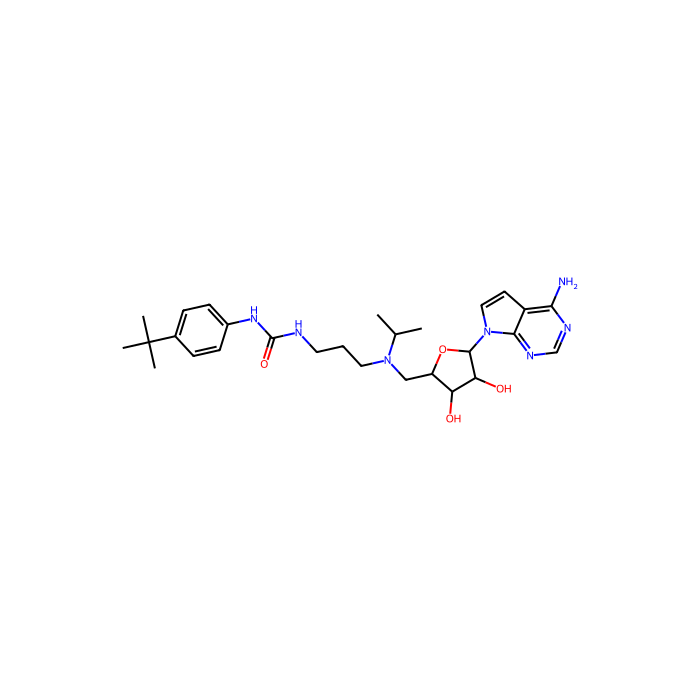
EPZ 004777 - Moligand™, ≥98%(HPLC) , Inhibitor of DOT1 like histone lysine methyltransferase, CAS No.1338466-77-5, Inhibitor of DOT1 like histone lysine methyltransferase
EPZ 004777 - Moligand™, ≥98%(HPLC) , Inhibitor of DOT1 like histone lysine methyltransferase, CAS No.1338466-77-5, Inhibitor of DOT1 like histone lysine methyltransferase
GRADE & PURITYMoligand™?Moligand™ — Aladdin's line of ligands and bioactive small molecules. Use for receptor, pathway, and binding studies needing defined small-molecule tools.≥98%(HPLC)
Highly potent DOT1L inhibitor (IC50= 0.4 nM). Exhibits >1000-fold selectivity for DOT1L over a panel of other methyltransferases. Selectively inhibits proliferation and induces apoptosis ofMLL-rearranged cellsin vitro. Prolongs survival in a MLL xenograft
Condiciones de almacenamiento de almacenamiento
Store at -20°C
Enviado en
Ice chest + Ice pads
Este producto requiere envío en cadena de frío. Los servicios terrestres y otros servicios económicos no están disponibles.
Grado
Moligand™
Tipo de acción
INHIBITOR
Mecanismo de acción
Inhibitor of DOT1 like histone lysine methyltransferase
This compound belongs to the class of organic compounds known as glycosylamines. These are compounds consisting of an amine with a beta-N-glycosidic bond to a carbohydrate, thus forming a cyclic hemiaminal ether bond (alpha-amino ether).
External Descriptors
Not available
1. Djoumbou Feunang Y, Eisner R, Knox C, Chepelev L, Hastings J, Owen G, Fahy E, Steinbeck C, Subramanian S, Bolton E, Greiner R, and Wishart DS. ClassyFire: Automated Chemical Classification With A Comprehensive, Computable Taxonomy. Journal of Cheminformatics, 2016, 8:61.
We use cookies to ensure the website functions properly and, where permitted, to improve your experience. You can manage your preferences at any time in Settings. Learn more in our Cookie Policy.
Shall we send you a message when we have discounts available?
Remind me later
Thank you! Please check your email inbox to confirm.
Products are supplied to verified businesses, institutions, and qualified professionals for research and development use only. Not for use in humans, animals, diagnosis, or therapy.

 F2204374