
Why Do Alcohols Differ in Function: Why Is Glycerol Mainly Moisturizing, Propylene Glycol Mainly Solubilizing, and Isopropyl Alcohol Fast-Drying? — Understanding Personal Care Formulation Functions from Structural Differences
Why Do Alcohols Differ in Function: Why Is Glycerol Mainly Moisturizing, Propylene Glycol Mainly Solubilizing, and Isopropyl Alcohol Fast-Drying? — Understanding Personal Care Formulation Functions from Structural Differences
1. Structural Differences: Why Do Alcohols Differ in Function?
In the ingredient lists of personal care and daily chemical products, propylene glycol, glycerol, and isopropyl alcohol all contain the word “alcohol” or belong to alcohol-type compounds, but their roles in formulations are not the same. Glycerol, also known as glycerin, is commonly used for moisturization and for improving lubricity. Propylene glycol is often used for auxiliary moisturization, solubilization, and improving system uniformity. Isopropyl alcohol is more commonly used in fast-drying, cleaning, degreasing, and disinfection-related products.
The fundamental reason for these differences lies in molecular structure. In particular, the number of hydroxyl groups, molecular polarity, hydrogen-bonding ability, and volatility determine their different functional characteristics in personal care formulations.
Ingredient | Structural Characteristics | Main Formulation Performance |
Isopropyl Alcohol, IPA | 3 carbon atoms, 1 hydroxyl group | Fast evaporation, fast drying, degreasing, cleaning |
Propylene Glycol, PG | 3 carbon atoms, 2 hydroxyl groups | Auxiliary moisturization, solubilization, carrier, skin-feel adjustment |
Glycerol / Glycerin | 3 carbon atoms, 3 hydroxyl groups | Humectant moisturization, lubricity, improvement of dryness |
2. Starting with Structure: The Differences Among These Three “Alcohols” Begin with the Number of Hydroxyl Groups
All three are three-carbon alcohol compounds, but they differ in the number and position of hydroxyl groups. This forms the basis for their subsequent performance differences.
Ingredient | Number of Hydroxyl Groups | Alcohol Type | Key Structural Feature |
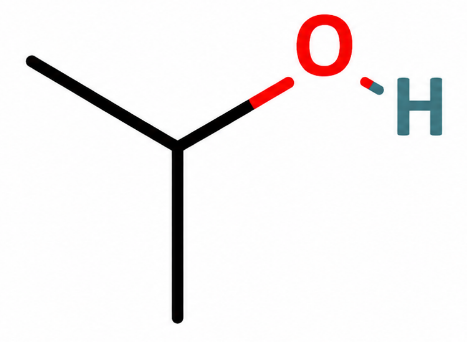
Isopropyl alcohol | 1 | Secondary alcohol | The hydroxyl group is attached to the middle carbon atom |
Propylene glycol | 2 | Diol | One hydroxyl group is located at each of the 1,2-positions |
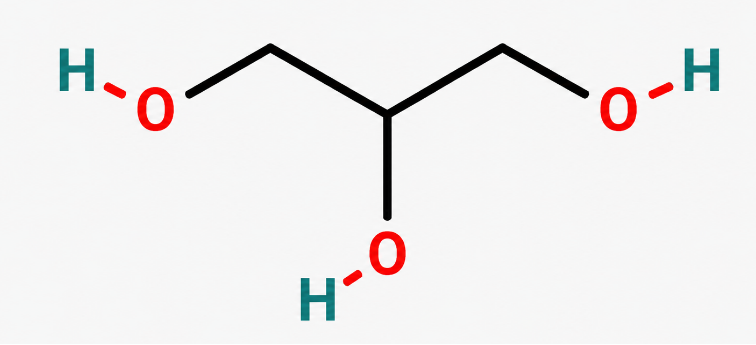
Glycerol | 3 | Triol | Three hydroxyl groups are distributed across the three carbon atoms |
2.1 Isopropyl Alcohol: A Monohydric Secondary Alcohol
The molecular structure of isopropyl alcohol consists of 3 carbon atoms and 1 hydroxyl group, with the hydroxyl group located on the middle carbon atom. It is therefore classified as a secondary alcohol. Structurally, isopropyl alcohol contains two functional features: the polarity contributed by the hydroxyl group, and the affinity for organic phases contributed by the hydrocarbon structure. Because it has only 1 hydroxyl group, the number of sites available for hydrogen bonding is limited. This is the structural basis for its clear differences from propylene glycol and glycerol.
2.2 Propylene Glycol: A Dihydric Three-Carbon Alcohol
In personal care and daily chemical formulations, “propylene glycol” usually refers to 1,2-propylene glycol. It has 3 carbon atoms and 2 hydroxyl groups, making it a diol. Compared with isopropyl alcohol, propylene glycol has one additional hydroxyl group; compared with glycerol, it has one fewer hydroxyl group. This structure places propylene glycol between monohydric alcohols and trihydric alcohols in terms of hydrogen-bonding sites and molecular polarity. It also allows propylene glycol to provide both a certain degree of water-binding ability and solubilizing capability in personal care formulations.

2.3 Glycerol: A Trihydric Three-Carbon Alcohol
Glycerol, also known as glycerin, has 3 carbon atoms and 3 hydroxyl groups in its molecule, making it a triol. Among these three molecules, glycerol has a relatively high number of hydroxyl groups and can provide multiple hydrogen-bonding sites. This structural feature gives it strong interactions with water and makes it important in moisturizing systems for personal care products.
3. How Structure Translates into Performance: Hydrogen Bonding, Volatility, Viscosity, and Solubility
3.1 Humectant Moisturization: Mainly Related to Hydroxyl Group Number, Hydrogen-Bonding Ability, and the Formulation Environment
An important function of humectant moisturizers is to form hydrogen bonds with water through polar groups such as hydroxyl groups, thereby helping the formulation system and the skin surface environment bind water. From a structure–property perspective, an increase in the number of hydroxyl groups usually means an increase in the number of sites available for hydrogen bonding with water, which can also enhance water-binding ability. Therefore, glycerol, propylene glycol, and isopropyl alcohol show clear differences in moisturizing tendency.
Ingredient | Number of Hydroxyl Groups | Ability to Form Hydrogen Bonds with Water | Humectant Moisturizing Tendency |
Glycerol | 3 | Relatively strong | Relatively significant |
Propylene glycol | 2 | Moderate | Moderate |
Isopropyl alcohol | 1 | Relatively weak | Relatively weak |
It should be noted that actual moisturizing performance is not determined solely by the number of hydroxyl groups. It is also affected by the addition level, ambient humidity, the composition of the aqueous phase, and the presence of paired ingredients such as oils, film-forming agents, and occlusive agents.
3.2 Volatility: Determined by Intermolecular Forces and Molecular Size
Volatility is closely related to intermolecular forces. The stronger the intermolecular forces, the more difficult it is for liquid molecules to escape from the surface; the weaker the intermolecular forces, the more pronounced the tendency to evaporate. Isopropyl alcohol has only 1 hydroxyl group, so its intermolecular hydrogen bonding is weaker than that of propylene glycol and glycerol. As a result, it is more volatile. Propylene glycol and glycerol contain more hydroxyl groups, leading to stronger intermolecular hydrogen bonding and relatively lower volatility.
Ingredient | Characteristics of Intermolecular Forces | Volatility Tendency | Performance After Application |
Isopropyl alcohol | Monohydric; relatively weak intermolecular forces | Relatively high | Easy to create a fast-drying, low-residue feel |
Propylene glycol | Dihydric; moderate intermolecular forces | Relatively low | Can continuously participate in the regulation of aqueous systems |
Glycerol | Trihydric; relatively strong intermolecular forces | Low | More noticeable residue and lubricating feel |
Volatility itself is neither an advantage nor a disadvantage; it is a physical property. In fast-drying products, it can create a refreshing feel. In moisturizing products, however, it may contribute to dryness and tightness.
3.3 Viscosity and Residual Feel: Determined by Intermolecular Hydrogen Bonding
As the number of hydroxyl groups increases, molecules are more likely to form stronger interactions with each other through hydrogen bonding. This usually increases liquid viscosity and enhances the residual feel after application. Glycerol contains 3 hydroxyl groups and has relatively strong intermolecular forces, so its viscosity and lubricating feel are more pronounced. Propylene glycol contains 2 hydroxyl groups and has lower viscosity than glycerol, giving it a relatively lighter sensory profile. Isopropyl alcohol has only 1 hydroxyl group and is relatively volatile, so it leaves little residue.
Ingredient | Viscosity and Residual Feel | Impact on Sensory Feel |
Glycerol | Relatively high viscosity and noticeable residual feel | Increases lubricity, but may also cause tackiness |
Propylene glycol | Moderate viscosity and lighter residual feel | Helps reduce the heaviness of a glycerol-only system |
Isopropyl alcohol | Fast evaporation and low residual feel | Creates a fast-drying and refreshing feel, but provides insufficient moisturized feel |
3.4 Solubility: Determined by Molecular Polarity and Affinity for Organic Phases
Alcohol molecules usually contain both polar hydroxyl groups and nonpolar hydrocarbon structures, giving them certain distinctive properties in solvent systems. However, different alcohols vary in polarity, hydrophilicity, and affinity for organic phases, so they are suited to different solvent-related tasks.
Propylene glycol has two hydroxyl groups, giving it good hydrophilicity while still retaining some affinity for organic phases. Therefore, in aqueous or hydroalcoholic systems, it is often used to improve the dissolution and dispersion of certain ingredients. Although isopropyl alcohol has only one hydroxyl group, its hydrocarbon portion accounts for a relatively larger share of the molecule, giving it some ability to dissolve certain oils and organic substances. At the same time, its relatively high volatility makes it suitable for solvent systems requiring low residue. Glycerol has three hydroxyl groups, strong hydrophilicity, and high viscosity, so it is more oriented toward humectant moisturization and lubricity. It can also participate in the dissolution of some water-soluble systems, but rapid evaporation and degreasing are not its main characteristics.
4. From Performance to Formulation: How to Choose Among the Three Types of Products
4.1 Moisturizing Products: Glycerol Provides Basic Moisturization, While Propylene Glycol Assists with Adjustment
In creams, body lotions, hand creams, sheet mask essences, and facial cleansers, glycerol is commonly used to provide basic moisturization and a lubricating feel. Its value lies in its clear water-binding ability, which can enhance the moist feel and moisturizing performance of a product. However, when glycerol is used at high levels, it can increase tackiness, stringiness, and heaviness. Therefore, actual formulations usually do not rely solely on glycerol; instead, they combine it with other ingredients to improve sensory feel.
Formulation Objective | Main Design Approach |
Improve basic moisturization | Use humectants such as glycerol, propylene glycol, betaine, and sodium hyaluronate to establish water-binding ability |
Improve dryness and roughness | Combine with emollients, occlusive agents, film-forming agents, or barrier-repair ingredients |
Reduce tackiness | Control the level of glycerol and add propylene glycol, butylene glycol, or light-feel solvents to adjust spreadability |
Improve long-lasting moisturization | Humectants provide water-binding ability, while oils, silicones, or film-forming agents help reduce water loss, creating a synergistic moisturizing effect |
4.2 Toners, Serums, and Sheet Mask Essences: Propylene Glycol Supports Solubilization and System Uniformity
Toners, serums, sheet mask essences, wet wipe liquids, and cleansing or hair/body wash products often contain fragrances, botanical extracts, preservative components, or certain functional ingredients. These formulations require ingredients that can maintain compatibility in the aqueous phase while also helping certain components dissolve or disperse uniformly. In such systems, the value of propylene glycol is mainly reflected in the following aspects:
Formulation Requirement | Role of Propylene Glycol |
Dispersion of active ingredients | Acts as a solvent or co-solvent to improve the dispersion state of certain components |
Compatibility of fragrances and extracts | Helps certain organic components enter aqueous systems |
Sensory adjustment | Reduces the thick and heavy feel of a glycerol-only system |
System stability | Improves the uniformity of aqueous formulations |
Auxiliary moisturization | Provides a certain degree of water-binding ability |
4.3 Cleaning, Fast-Drying, and Disinfection-Related Products: Isopropyl Alcohol Provides Volatility, Degreasing, and Low Residue
Cleaning, fast-drying, and disinfection-related products require rapid spreading and drying, while reducing oil residues on the skin or object surfaces. The volatility and degreasing ability of isopropyl alcohol make it suitable for these functions. Common applications include: ① rinse-free hand sanitizers; ② disinfecting wipes; ③ cleaning sprays; ④ degreasing products; ⑤ nail care or tool-cleaning products; and ⑥ some quick-drying sprays or hair products.
In cosmetics and personal care products, isopropyl alcohol can be used as a solvent, viscosity modifier, defoaming agent, and more. However, its use requires control of dryness. With frequent use or use at high concentrations, the skin may experience dryness, tightness, or stinging. Therefore, products such as rinse-free hand sanitizers are often combined with glycerol, propylene glycol, panthenol, or other moisturizing and soothing ingredients to improve the post-use skin feel.
5. How to Judge the Roles of the Three Ingredients from an Ingredient List
5.1 First, Look at the Product Type
The same ingredient can have different meanings in different products. When making a judgment, the product type should be considered first.
Product Type | Common Role of Glycerol | Common Role of Propylene Glycol | Common Role of Isopropyl Alcohol |
Creams, lotions, body lotions | Moisturization, lubricity | Auxiliary moisturization, solubilization | Usually not a core ingredient |
Toners, serums, sheet mask essences | Moisturization | Solubilization, auxiliary moisturization, carrier | At low levels, may be used as a solvent or to create a refreshing skin feel |
Shampoos, body washes, facial cleansers | Reduces dryness after washing | Moisturization, solubilization, support for preservative systems | Less commonly used for moisturizing purposes |
Rinse-free hand sanitizers, disinfecting wipes | Helps reduce dryness | Auxiliary moisturization or solubilization | Fast drying, cleaning, disinfection-related functions |
Cleaning sprays, degreasing products | Usually not the main functional ingredient | System support | Degreasing, volatility, fast drying |
5.2 Then, Look at Ingredient Order
Ingredient order can help estimate approximate usage level and functional intensity. When glycerol appears relatively high in the ingredient list, the product usually has more noticeable moisturization and lubricity, but it may also be tackier. When propylene glycol appears relatively high in the ingredient list, it may simultaneously provide auxiliary moisturization, solubilization, and sensory adjustment. When isopropyl alcohol appears relatively high in the ingredient list, the product usually emphasizes volatility, freshness, degreasing, or disinfection-related functions, and it may be more likely to cause a dry feel.
Ingredient order can only be used to roughly judge the product design direction; it cannot be used to infer the exact addition level. The final sensory feel also depends on the combination of oils, thickeners, film-forming agents, surfactants, active ingredients, and fragrance systems.
5.3 Finally, Look at Paired Ingredients
Ingredient combinations often reveal the formulation design intent more clearly than a single ingredient alone.
Combination | Possible Indication |
Glycerol + sodium hyaluronate + panthenol | Oriented toward moisturization, soothing, and improvement of dryness |
Glycerol + oils + silicones | Glycerol provides water-binding ability, while oils and silicones help reduce water loss; overall, this indicates a richer moisturizing design |
Propylene glycol + botanical extracts + fragrance | May serve as a solvent for extracts or fragrance components |
Propylene glycol + preservative components | May help dissolve and disperse the preservative system |
Isopropyl alcohol + water + thickener | Suggests a fast-drying gel or cleaning system |
Isopropyl alcohol + glycerol | Provides fast drying while reducing dryness |
6. Three Common Misunderstandings
6.1 Misunderstanding 1: Anything with “Alcohol” in Its Name Must Be Irritating
Glycerol, propylene glycol, and isopropyl alcohol all belong to alcohol-type compounds, but their structures and sensory profiles are completely different. Glycerol and propylene glycol are polyols and are commonly used for moisturization and solubilization. Isopropyl alcohol is a relatively volatile monohydric alcohol and is more commonly used in fast-drying, cleaning, and disinfection-related products. Whether an ingredient is irritating cannot be judged solely by whether its name contains “alcohol.” It also depends on the specific ingredient, concentration, product type, application area, and skin condition.
6.2 Misunderstanding 2: The More Glycerol, the Better the Moisturizing Effect
Glycerol has clear humectant moisturizing ability, but high use levels can cause tackiness, heaviness, and poor spreadability. For refreshing-type skincare products, the amount of glycerol needs to be balanced with the overall sensory profile. An effective moisturizing formulation usually does not rely on glycerol alone. Instead, it combines humectants, occlusive agents, emollients, and film-forming agents so that hydration, water retention, and sensory feel can all be achieved at the same time.
6.3 Misunderstanding 3: Propylene Glycol and Glycerol Can Be Freely Substituted for Each Other
Glycerol has stronger moisturizing ability, but it is also more likely to cause tackiness. Propylene glycol has weaker moisturizing ability, but its solubilizing and sensory-adjusting properties are more prominent. Replacing glycerol with propylene glycol may reduce the richness of moisturization. Replacing propylene glycol with glycerol may affect solubility, refreshing feel, and system stability. When substituting raw materials, solubility, viscosity, sensory feel, stability, and the target product type should all be considered comprehensively.
7. Classification and Application Tables for Alcohols and Related Moisturizing, Solubilizing, and Cleaning Raw Materials in Personal Care and Daily Chemical Formulations
Table 1. Core Alcohols and Volatile Solvents
Category | CAS No. | Aladdin Catalog No. | Name | Specification or Purity | Product Features and Applications |
Triol moisturizing raw material | 56-81-5 | Glycerol | Molecular biology grade, ≥99% | A typical triol, suitable for studies on polyhydroxy structures, humectant moisturization, viscosity changes, and water-binding ability | |
Diol solubilizing and moisturizing raw material | 57-55-6 | 1,2-Propanediol | AR, ≥99% | A typical diol, suitable for studies on auxiliary moisturization, co-solvent systems, active ingredient dispersion, and skin-feel adjustment | |
Volatile alcohol solvent | 67-63-0 | Isopropyl Alcohol (IPA) | Anhydrous grade, ≥99.5% | A typical volatile secondary alcohol, suitable for comparative studies on fast-drying, degreasing, cleaning, and alcohol-based disinfection systems | |
Volatile alcohol solvent | 64-17-5 | E299578 | 75% Disinfectant Alcohol | Moligand™, ≥75%, for disinfection | Suitable for studies on alcohol-based disinfection systems, hand-cleaning products, volatility, and dry-skin feel |
Volatile alcohol solvent | 71-23-8 | n-Propanol | Anhydrous grade, ≥99.7% | A linear propanol, suitable for comparative studies on the volatility, solubility, and cleaning performance of propanol isomers | |
Aromatic alcohol solvent | 100-51-6 | Benzyl Alcohol | Anhydrous grade, ≥99.8% | An aromatic alcohol solvent, suitable for studies on fragrance solvents, preservative systems, and application differences between aromatic alcohols and aliphatic alcohols |
Table 2. Diols, Polyols, and Polyether-Type Solubilizing and Moisturizing Raw Materials
Category | CAS No. | Aladdin Catalog No. | Name | Specification or Purity | Product Features and Applications |
Diol solubilizing and moisturizing raw material | 107-88-0 | 1,3-Butanediol | Anhydrous grade, ≥99% | A commonly used diol, suitable for studies on moisturization, solubilization, low-tack aqueous systems, and skin-feel adjustment | |
Diol solubilizing and moisturizing raw material | 504-63-2 | 1,3-Propanediol | Suitable for synthesis | A three-carbon diol, suitable for comparative studies on structural differences, moisturizing performance, and solvent properties of propanediol isomers | |
Diol solubilizing and moisturizing raw material | 25265-71-8 | Dipropylene Glycol (isomer mixture) (DPG) | ≥99% | A low-volatility diol solvent, suitable for studies on fragrance carriers, solubilizing systems, and volatility differences | |
Diol solubilizing and moisturizing raw material | 24800-44-0 | Tripropylene Glycol | ≥97% (mixture of isomers) | A propylene glycol polymer-derived solvent, suitable for studies on low-volatility solvent systems, fragrance carriers, and ingredient compatibility | |
Diol solubilizing and moisturizing raw material | 107-41-5 | 2-Methyl-2,4-pentanediol (MPD) | ≥99% | A branched diol solvent, suitable for studies on solubilization, wetting, viscosity adjustment, and compatibility in aqueous formulations | |
Diol solubilizing and moisturizing raw material | 2163-42-0 | 2-Methyl-1,3-propanediol | ≥98% | A branched diol, suitable for studies on moisturization, solubilization, solvent replacement, and refreshing aqueous systems | |
Long-chain diol moisturizing synergist | 5343-92-0 | 1,2-Pentanediol | ≥98% | A carbon-chain-extended diol, suitable for studies on moisturization, preservative synergy, active ingredient solubilization, and water activity regulation | |
Long-chain diol moisturizing synergist | 6920-22-5 | 1,2-Hexanediol | ≥98% | A medium-chain diol, suitable for studies on moisturization, preservative synergy, and serum and sheet mask essence systems | |
Long-chain diol moisturizing synergist | 1117-86-8 | 1,2-Octanediol | ≥96% | A long-chain diol, suitable for studies on moisturization, preservative synergy, skin-feel improvement, and the influence of alcohol carbon-chain length | |
Long-chain diol moisturizing synergist | 1119-86-4 | 1,2-Decanediol | ≥98% | A long-chain diol, suitable for studies on preservative synergy and the effects of hydrophobic chains on solubility and antimicrobial performance | |
Polyether-type water-soluble solvent | 25322-68-3 | Polyethylene Glycol (PEG) | Average Mn 400 | A water-soluble polyether, suitable for studies on solubilization, moisturization, active ingredient carriers, and hydrophilic solvent systems |
Table 3. Sugar Alcohols, Polyhydroxy Moisturizers, and Natural Moisturizing Factor-Related Ingredients
Category | CAS No. | Aladdin Catalog No. | Name | Specification or Purity | Product Features and Applications |
Natural moisturizing factor-related ingredient | 28874-51-3 | Sodium L-pyrrolidone-5-carboxylate | 50% oily liquid | A natural moisturizing factor-related salt, suitable for studies on stratum corneum water binding, moisturizing systems, and water-retention ability | |
Sugar alcohol moisturizing raw material | 87-99-0 | X434315 | Xylitol | Pharmaceutical grade | A polyhydroxy sugar alcohol, suitable for studies on moisturization, oral care, sugar alcohol structure, and water-binding ability |
Sugar alcohol moisturizing raw material | 50-70-4 | D-Sorbitol | High purity, ≥99% | A polyhydroxy sugar alcohol, suitable for studies on moisturization, oral care, humectant systems, and water activity regulation | |
Sugar alcohol moisturizing raw material | 69-65-8 | D-Mannitol | Ultrapure grade, ≥99% (HPLC) | A polyhydroxy sugar alcohol, suitable for studies on moisturization, osmotic pressure regulation, sugar alcohol hygroscopicity, and stability | |
Sugar alcohol moisturizing raw material | 149-32-6 | meso-Erythritol | ≥99% | A tetrahydroxy sugar alcohol, suitable for studies on refreshing moisturizing systems, sugar alcohol water-binding ability, and oral care | |
Polyhydroxy cyclic alcohol | 87-89-8 | Inositol | Moligand™, ≥99% | A polyhydroxy cyclic alcohol, suitable for studies on skin conditioning, scalp care, and the performance of polyhydroxy structures | |
Water-soluble moisturizing and conditioning ingredient | 107-43-7 | Betaine, anhydrous | Moligand™, ultrapure grade, ≥99% | An amphoteric small-molecule moisturizing ingredient, suitable for studies on osmotic pressure regulation, surfactant irritation mitigation, and moisturizing combinations | |
Natural moisturizing factor-related ingredient | 57-13-6 | Urea | AR, ≥99% | A natural moisturizing factor-related ingredient, suitable for studies on stratum corneum hydration, dry-skin care, and moisturizing efficacy evaluation | |
Acid-type moisturizing and regulating ingredient | 50-21-5 | DL-Lactic Acid | ACS, ≥85% | A natural moisturizing factor-related acid, suitable for studies on moisturization, pH adjustment, keratin care, and the influence of formulation acidity |
Category | CAS No. | Aladdin Catalog No. | Name | Specification or Purity | Product Features and Applications |
Panthenol-type moisturizing and soothing ingredient | 16485-10-2 | DL-Panthenol | ≥99% | A panthenol-type ingredient, suitable for studies on moisturization, soothing effects, hair care, and combinations with alcohol-based moisturizing systems | |
Panthenol-type moisturizing and soothing ingredient | 81-13-0 | D-Panthenol | ≥98% | A panthenol-type ingredient, suitable for studies on moisturization, soothing effects, barrier care, and skin and hair care formulations | |
Soothing and repairing pairing ingredient | 97-59-6 | Allantoin | ≥98% | A skin-conditioning ingredient, suitable for studies on soothing effects, dry-skin discomfort care, and moisturizing system combinations | |
Preservative- and solvent-related ingredient | 122-99-6 | Phenoxyethanol | ≥99% | An aromatic ether alcohol ingredient, suitable for studies on preservative systems, solvent systems, and preservative synergy with diols | |
Preservative synergist and skin-feel adjustment ingredient | 70445-33-9 | 3-(2-Ethylhexyloxy)-1,2-propanediol | ≥98% (GC) | A glyceryl ether-structured ingredient, suitable for studies on preservative synergy, skin-feel adjustment, deodorizing systems, and combinations with diols |
Note: The above products are representative Aladdin products for scientific research, analysis, and formulation research. More information on product specifications, grades, and COA/SDS documents can be searched on the Aladdin website by “product name/CAS/catalog number.” Whether the relevant products can be used in cosmetics, disinfection products, or other finished-product manufacturing should be confirmed separately based on product grade, regulatory requirements, quality documents, and specific application scenarios.
References
[1] National Center for Biotechnology Information. PubChem Compound Summary for Isopropanol, CID 3776. PubChem. Accessed June 1, 2026.
[2] National Center for Biotechnology Information. PubChem Compound Summary for Propylene Glycol, CID 1030. PubChem. Accessed June 1, 2026.
[3] National Center for Biotechnology Information. PubChem Compound Summary for Glycerol, CID 753. PubChem. Accessed June 1, 2026.
[4] Fiume M M, Bergfeld W F, Belsito D V, et al. Safety Assessment of Propylene Glycol, Tripropylene Glycol, and PPGs as Used in Cosmetics. International Journal of Toxicology, 2012, 31(Suppl. 5): 245S–260S.
[5] Cosmetic Ingredient Review. Safety Assessment of Glycerin as Used in Cosmetics. Cosmetic Ingredient Review.
[6] European Commission. CosIng: Cosmetics Ingredients Database. European Commission.
[7] Centers for Disease Control and Prevention. Hand Sanitizer Guidelines and Recommendations. Clean Hands, CDC. Updated March 12, 2024.
[8] Centers for Disease Control and Prevention. Hand Sanitizer Facts. Clean Hands, CDC. Updated April 17, 2024.
For more related articles, please see below:
Understanding Brij 35: A Deep Dive into Its Role as a Nonionic Surfactant
Structural Basis and Laboratory Applications of Sodium Cholate as an Anionic Biosurfactant
From Foxglove to the Lab Bench: How Digitonin Works as a Non-ionic Surfactant
Understanding n-Octyl-β-D-glucopyranoside: A Non-ionic Surfactant for Research and Biotechnology
n-Dodecyl-β-D-maltoside (DDM): Structure, Properties, and Applications as a Non-ionic Surfactant
Sodium Lauroyl Sarcosinate: Structure–Property–Application of an Amino-Acid–Based Anionic Surfactant
CTAB Demystified: Structure, Properties, and Practical Uses of a Classic Cationic Surfactant
Poloxamers Explained: A Comprehensive Guide to Non-Ionic Block Copolymer Surfactants
Tween 20 and Tween 80 as Non-Ionic Surfactants: Structure, Properties, and Applications
Saponins as Natural Non-ionic Surfactants: Structure, Function, and Applications
Non-ionic Detergents Explained: From Chemical Structure to Laboratory Use