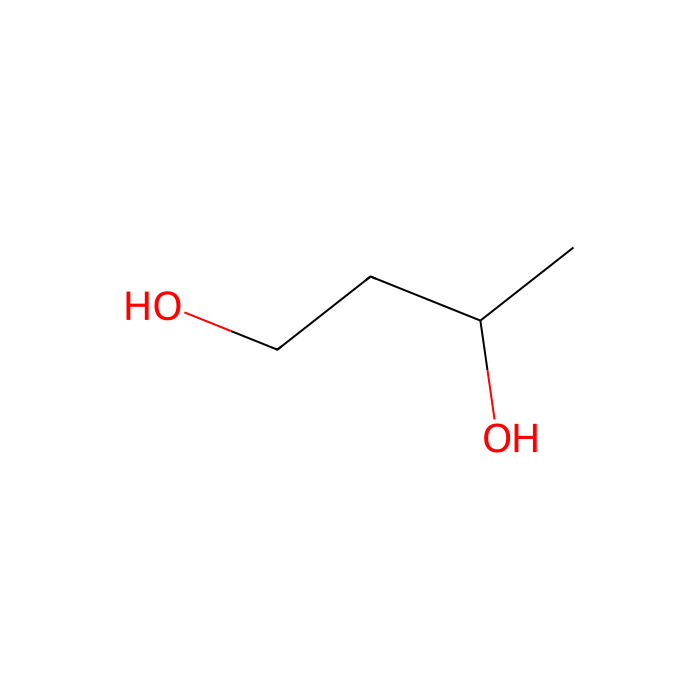
(±)-1,3-Butanediol - Anhydrous Grade, ≥99% , CAS No.107-88-0

CAS: 107-88-0 Cat. No.: B119672 Formula: C4H10O2 Molecular Weight: 90.12 Beilstein Registry Number: 1731276 EC Number: 203-529-7
AVAILABLE TO ORDER
GRADE & PURITY Anhydrous Grade ? Anhydrous grade — water removed and packaged dry for moisture-sensitive chemistry. Use in reactions where even trace water would interfere or quench. ≥99%
Synonyms
1,3-BUTYLENE GLYCOL [FCC] | ShiZhenTaiYiTang Moxibustion Patch | .beta.-Butylene glycol | 1,3-Butylene glycol | AI3-11077 | F8880-3340 | FT-0605126 | (R)-1,3-butanediol | 1,3-butane diol | 1,3-Butanodiol | AKOS000119043 | B0679 | BUTANEDIOL,1,3- | BUTYLEN
Storage
Room temperature,Argon charged
Shipped In
Normal
★
Size
USA
Germany (EU)*
Price
Qty
100ml
B119672-100ml
1 In stock
—
$45.90
500ml
B119672-500ml
1 In stock
1 In stock
$99.90
Enter a quantity for the sizes you want to add.
🧪
Why this grade

Anhydrous Grade, ≥99% Anhydrous Grade for sensitive chromatographic and analytical workflows requiring minimal baseline interference.

🌡

Storage & shipping

Room temperature,Argon charged Ships Normal Check lot-specific COA for exact specifications.

📋

Quality documents

SDS, COA, datasheet, and spec sheet available for download. Lot-specific COA accessible via lot number lookup.

📚

Literature proof

Cited in 39 peer-reviewed publications across chromatography, organic synthesis, and cross-coupling reactions.

Overview

A building block for proteomics research


application:

(±)-1,3-Butanediol may be used as a solvent in the preparation of 6-methoxy-2-benzoxazolinone via condensation reaction between 2-hydroxy-4-methoxyphenyJarnmonium chloride and urea. It can also react with carboxylic acids to form the corresponding chlorohydrin esters in the presence of chlorotrimethylsilane.


Specifications

Synonyms
1,3-BUTYLENE GLYCOL [FCC] | ShiZhenTaiYiTang Moxibustion Patch | .beta.-Butylene glycol | 1,3-Butylene glycol | AI3-11077 | F8880-3340 | FT-0605126 | (R)-1,3-butanediol | 1,3-butane diol | 1,3-Butanodiol | AKOS000119043 | B0679 | BUTANEDIOL,1,3- | BUTYLEN
Specifications & Purity
Anhydrous Grade, ≥99%
Storage
Room temperature,Argon charged
Shipped In
Normal
Grade
Anhydrous Grade
Purity
≥99%
Names and Identifiers
Pubchem Sid
Pubchem Sid Url
https://pubchem.ncbi.nlm.nih.gov/substance/528753707
Canonical Smiles
CC(CCO)O
IUPAC Name
butane-1,3-diol
InChIKey
PUPZLCDOIYMWBV-UHFFFAOYSA-N
INCHI
1S/C4H10O2/c1-4(6)2-3-5/h4-6H,2-3H2,1H3
Isomeric SMILES
CC(CCO)O
WGK Germany
1
RTECS
EK0440000
Molecular Weight
90.12
Beilstein
1731276
Reaxy-Rn
1718945
Reaxys-RN_link_address
https://www.reaxys.com/reaxys/secured/hopinto.do?context=S&query=IDE.XRN=1718945&ln=

Documentation

📋 Safety Data Sheet (SDS)

Comprehensive hazard, handling, storage, and regulatory compliance document.

Download SDS →

✅ Certificate of Analysis (COA)

Lot-specific quality data. Enter your lot number to retrieve the exact COA.

Look up COA →

📊 Datasheet

Quick-reference summary of product specifications and applications.

View datasheet →

🔬 Specification Sheet

Full quality attributes and acceptance criteria for this grade.

View spec sheet →

Advanced Data

Taxonomic Classification

Taxonomy Tree

KingdomOrganic compounds
SuperclassOrganic oxygen compounds
ClassOrganooxygen compounds
SubclassAlcohols and polyols
Intermediate Tree Nodes Not available
Direct ParentSecondary alcohols
Alternative Parents Primary alcohols  Hydrocarbon derivatives  
Molecular FrameworkAliphatic acyclic compounds
Substituents Secondary alcohol - Hydrocarbon derivative - Primary alcohol - Aliphatic acyclic compound
DescriptionThis compound belongs to the class of organic compounds known as secondary alcohols. These are compounds containing a secondary alcohol functional group, with the general structure HOC(R)(R') (R,R'=alkyl, aryl).
External Descriptors a glycol
3D Structure
Interactive Chemical Structure Model


Certificates(CoA,COO,BSE/TSE and Analysis Chart)
C of A & Other Certificates(BSE/TSE, COO):
Analytical Chart:

Find and download the COA for your product by matching the lot number on the packaging.

16 results found

Lot NumberCertificate TypeDateItem
C2617299Certificate of AnalysisMar 11, 2026 B119672
C2617300Certificate of AnalysisMar 11, 2026 B119672
C2617301Certificate of AnalysisMar 11, 2026 B119672
B2525152Certificate of AnalysisFeb 18, 2025 B119672
B2525153Certificate of AnalysisFeb 18, 2025 B119672
B2525155Certificate of AnalysisFeb 18, 2025 B119672
E2523076Certificate of AnalysisFeb 18, 2025 B119672
B2506097Certificate of AnalysisMar 26, 2024 B119672
D2411158Certificate of AnalysisMar 26, 2024 B119672
D2411159Certificate of AnalysisMar 26, 2024 B119672
D2411160Certificate of AnalysisMar 26, 2024 B119672
B2428020Certificate of AnalysisMar 31, 2023 B119672
B2428188Certificate of AnalysisMar 31, 2023 B119672
D2308759Certificate of AnalysisMar 31, 2023 B119672
D2308765Certificate of AnalysisMar 31, 2023 B119672
D2308766Certificate of AnalysisMar 31, 2023 B119672
Chemical and Physical Properties
SolubilitySolubility in water: soluble Solubility in other solvents: soluble in acetone, methyl ethyl ketone, ethanol slightly soluble in ether practically insoluble in aliphatic hydrocarbons, benzene, toluene and CCl4.
SensitivityMoisture sensitive
Refractive Index1.44
Flash Point(°F)251.6℉
Flash Point(°C)122℃
Boil Point(°C)207°C
Melt Point(°C)-50℃
Molecular Weight90.120 g/mol
XLogP3-0.400
Hydrogen Bond Donor Count2
Hydrogen Bond Acceptor Count2
Rotatable Bond Count2
Exact Mass90.0681 Da
Monoisotopic Mass90.0681 Da
Topological Polar Surface Area40.500 Ų
Heavy Atom Count6
Formal Charge0
Complexity28.700
Isotope Atom Count0
Defined Atom Stereocenter Count0
Undefined Atom Stereocenter Count1
Defined Bond Stereocenter Count0
Undefined Bond Stereocenter Count0
The total count of all stereochemical bonds0
Covalently-Bonded Unit Count1
Documents & Articles
The Guide to Anhydrous Grade for Reagents
Solvents, Co-solvents, and Solubilization Systems in Home and Personal Care Formulations: Classification, Functions, and Selection Guide
From Structure to Rheology: How Carbomer Forms Gel Structures and Enables Thickening, Suspension, and Auxiliary Emulsion Stabilization
Why Do Alcohols Differ in Function: Why Is Glycerol Mainly Moisturizing, Propylene Glycol Mainly Solubilizing, and Isopropyl Alcohol Fast-Drying? — Understanding Personal Care Formulation Functions from Structural Differences
Thickening, Suspension, Auxiliary Stabilization, and Agglomeration Mechanisms of Xanthan Gum in Personal Care Formulations: From Molecular Structure to Processing Applications
Analysis of Structural Differences in Diols: Moisturization, Co-solvency, Skin Feel, and Formulation Selection for Propylene Glycol, Butylene Glycol, and Medium- to Long-Chain 1,2-Alkanediols
Analysis of Hydrolyzed Pearl as a Cosmetic Raw Material: Preparation Process, Active Components, and Skincare Formulation Applications
Antioxidant Mechanisms of Ferulic Acid in Skincare, Vitamin C/E Synergy, and Stable Delivery Applications
Moisturizing Mechanism of Polyglutamic Acid: From the γ-Glutamyl Structure to Hydration Networks and Surface Film-Forming Behavior
Moisturizing Mechanisms of Tremella fuciformis Polysaccharides: From Polysaccharide Structure and Hydration Rheology to Dynamic Film Formation on the Skin Surface
How Arbutin Regulates Melanin Production: α/β Anomeric Configuration and Tyrosinase Action
Rotary-Evaporation-Assisted Reversible Dehydration Reactions: Reduced-Pressure Evaporation, Removal of Volatile Components, and Equilibrium Response
Citations of This Product
Solution Calculators
Reviews

Customer Reviews

Shall we send you a message when we have discounts available?

Remind me later

Thank you! Please check your email inbox to confirm.

Oops! Notifications are disabled.