GAPDH Mouse mAb (Biotin) - 1차 항체, specific to GAPDH

Cat. No.: Ab219252
주문 가능
등급 & 순도 ExactAb™ ? ExactAb™ — Aladdin's antibody line emphasizing precision and validated quality. Use for reliable, specificity-validated antibody applications. Validated ? Validated grade — performance confirmed in defined applications before release. Use when you want documented assurance the reagent works as stated. 0.5 mg/mL
Application
Flow Cytometry, IF/ICC, WB
Host species
마우스
Reactive species
인간
Isotype
Mouse IgG1
Clone Number
B08/4A11
Conjugation
Biotin
★
크기
USA
독일 (EU)*
가격
수량
10μl
Ab219252-10μl
US 주문제작 · 2–4주 ·
—
US$87.90
50μl
Ab219252-50μl
US 주문제작 · 2–4주 ·
—
US$259.90
100μl
Ab219252-100μl
US 주문제작 · 2–4주 ·
—
US$399.90
1ml
Ab219252-1ml
US 주문제작 · 2–4주 ·
—
US$1,999.90
Enter a quantity for the sizes you want to add.
🧪
이 등급을 선택하는 이유

ExactAb™, Validated, 0.5 mg/mL ExactAb™,Validated 최소한의 기준선 간섭이 필요한 민감한 크로마토그래피 및 분석 워크플로우용.

🌡

보관 및 배송

Protected from light,Store at -20°C,Avoid repeated freezing and thawing Ice chest + Ice pads 출고. 정확한 사양은 로트별 COA를 확인하세요.

📋

품질 문서

SDS, COA, 데이터시트, 사양서를 다운로드할 수 있습니다. 로트별 COA는 로트 번호 조회를 통해 확인할 수 있습니다.

📚

문헌적 근거

크로마토그래피, 유기 합성 및 교차 커플링 반응 분야의 동료 심사 논문 0편에서 인용되었습니다.

개요

Mouse anti Human GAPDH Antibody, Monoclonal (B08/4A11), could be used for WB; IF/ICC and Flow Cytometry.

사양

Product Name
GAPDH Mouse mAb (Biotin) - 1차 항체, specific to GAPDH
동의어
38 kDa BFA-dependent ADP-ribosylation substrate antibody | aging associated gene 9 protein antibody | Aging-associated gene 9 protein antibody | BARS-38 antibody | cb609 antibody | EC 1.2.1.12 antibody | Epididymis secretory sperm binding protein Li 162eP
사양 및 순도
ExactAb™, Validated, 0.5 mg/mL
숙주 종
마우스
특이성
GAPDH
면역원
Recombinant full length human GAPDH
포지티브 제어
WB: HEK293, HeLa, Jurkat and K562 whole cell lysates Flow Cytometry: HEK293 cells ICC/IF: HeLa cells
변화
Biotin
등급
ExactAb™, Validated
라이트 체인 유형
kappa
정화 방법
Protein A purified
집중력
0.5 mg/mL
Product Line
생물 제품
보관 및 배송
보관 조건
Protected from light,Store at -20°C,Avoid repeated freezing and thawing
배송
Ice chest + Ice pads
안정성 및 스토리지
Store at -20°C. Protect from light. Avoid freeze/thaw cycles.
이미지

GAPDH Mouse mAb (Biotin) (Ab219252) - Western Blot
All lanes: GAPDH Mouse mAb (Biotin) (Ab219252) at 1/5000 dilution
Samples: Lysates at 20 µg per lane
Secondary: Streptavidin (HRP) (np156148) at 1/10000 dilution
Predicted band size: 36 kDa
Observed band size: 36 kDa
Exposure time: 127.5 s

GAPDH Mouse mAb (Biotin) (Ab219252) - Flow Cytometry
Flow cytometry analysis of GAPDH expression by HEK293 cells (red) compared to an isotype control (blue). Cells were fixed and permeabilized with 100% methanol and then stained with GAPDH Mouse mAb (Biotin) (Ab219252) (Red). Then incubated with Streptavidin protein (FITC) (rp155876) at 0.1μg/test for 30 minutes at 4°C in the dark. Blue - Mouse IgG (Biotin) (Ab180306). Black - Unlabelled control, cells without incubation with primary antibody.

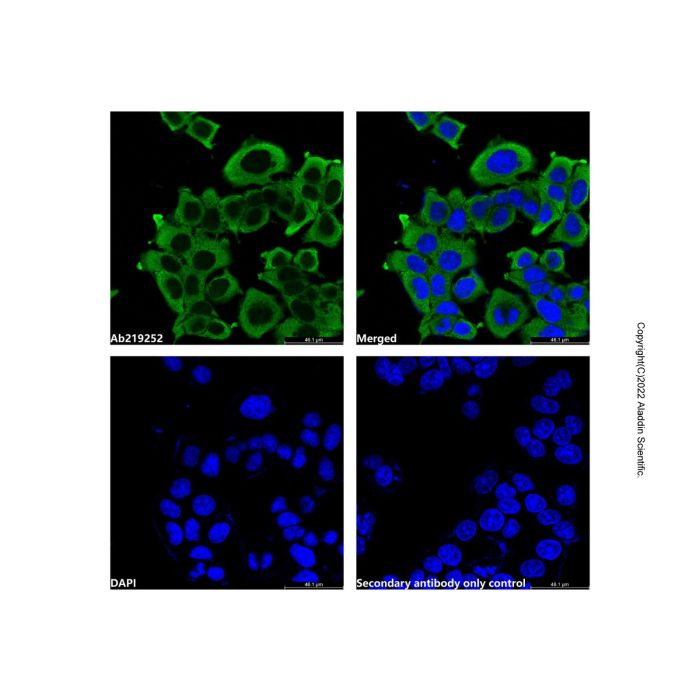
GAPDH Mouse mAb (Biotin) (Ab219252) – IF/ICC
IF analysis of GAPDH (green) in MCF-7 cells. The cells were fixed and permeabilized with 100% methanol for 5 minutes, and blocked with 2% BSA for 1 hour at room temperature. Cells were stained with GAPDH Mouse mAb (Biotin) (Ab219252) at a dilution of 1/1000 in blocking buffer for 2 hour at RT and then incubated with Recombinant Streptavidin Protein (Oregon Green 488) (rp217313) at a dilution of 1/1000 for 1 hour at room temperature in the dark. Cells were counterstained with DAPI (blue). Images were taken on the confocal laser scanning microscope.

적용
적용
Dilution info
IF/ICC

1/100-1/1000

Flow Cytometry

1/1000 - 1/10000

문서

📋 안전 데이터 시트(SDS)

위험성, 취급, 보관 및 규제 준수를 포괄하는 종합 문서.

<<<<<<< HEAD SDS 다운로드 → ======= SDS 다운로드 → >>>>>>> release248-p3

✅ 분석 성적서(COA)

로트별 품질 데이터. 로트 번호를 입력하여 정확한 COA를 확인하세요.

COA 조회 →

📊 데이터시트

제품 사양 및 응용 분야에 대한 빠른 참조 요약.

데이터시트 보기 →

🔬 사양서

이 등급의 전체 품질 특성 및 합격 기준.

사양서 보기 →

고급 데이터

관련 대상(인간)
GAPDH Tchem Glyceraldehyde-3-phosphate dehydrogenase (0 Activities)
Activity TypeActivity Value -log(M)Mechanism of ActionActivity ReferencePublications (PubMed IDs)
인증서(CoA, COO, BSE/TSE 및 분석 차트)
C of A & Other Certificates(BSE/TSE, COO):
Analytical Chart:

Find and download the COA for your product by matching the lot number on the packaging.

3 results found

Lot NumberCertificate Type날짜항목
ZJ25F0521670ZJ25F0521670Certificate of AnalysisMar 16, 2026 Ab219252
ZJ25F0521671ZJ25F0521671Certificate of AnalysisMar 16, 2026 Ab219252
ZJ25F0521672ZJ25F0521672Certificate of AnalysisMar 16, 2026 Ab219252
자주 묻는 질문과 기사
솔루션 계산기
리뷰

고객 리뷰

Application Protocols

Item-specific tested applications, recommended dilutions, positive controls, and step-by-step protocols are not specified for this SKU; refer to the product CoA/Spec Sheet and SDS for authoritative instructions.

  • General notes for biotinylated primaries (literature/general; not item-specific recommendations):
    • Use biotin-free blockers/diluents; free biotin competes with the conjugate for streptavidin.
    • Employ streptavidin-HRP/AP for chromogenic/chemiluminescent detection or streptavidin-fluorophores for IF/FC; protect from light.
    • Include appropriate controls: no-primary, isotype control (matching the mAb isotype; not specified here), and known GAPDH-positive lysates (e.g., common mammalian cell lines).
    • Titrate antibody to determine the minimal concentration that yields the desired signal-to-noise in your assay context.

These general practices are provided for context only and should be adapted based on the item’s datasheet and your lab’s validated protocols.

Biological Roles

This antibody targets GAPDH (glyceraldehyde-3-phosphate dehydrogenase), a ubiquitous glycolytic enzyme.

  • Target overview (literature/general knowledge):

    • Enzymatic role: catalyzes the sixth step of glycolysis, converting glyceraldehyde-3-phosphate to 1,3-bisphosphoglycerate with concurrent NAD+ reduction to NADH.
    • Cellular localization: predominantly cytosolic; can associate with membranes and the nucleus under certain conditions.
    • Additional functions: beyond metabolism, GAPDH participates in RNA binding, DNA repair, vesicular transport, and redox signaling (context- and modification-dependent).
    • Expression: highly and constitutively expressed in most tissues and cell lines, making it a common loading/normalization control in protein quantification workflows.
  • Relevance to experimental design (general):

    • Stable baseline expression of GAPDH is useful for normalization in Western blots, ICC/IHC, and qPCR protein validation, but researchers should verify stability under specific perturbations since metabolic stress can modulate GAPDH levels.
  • Item-specific target specificity data such as clone, epitope mapping, species cross-reactivity, and isotype are not specified for this SKU; refer to the CoA/Spec Sheet for authoritative details.

Buffer Applications

Not typically applicable. This product is an antibody reagent, not a buffering compound.

  • For practical use, select compatible immunoassay buffers (general guidance):
    • Coating/Capture: carbonate–bicarbonate buffer (pH ~9.6) for plate coating, then block with a protein-based, biotin-free blocker.
    • Wash/Assay: PBS or TBS with 0.05% Tween-20 to reduce nonspecific binding.
    • Sample/Diluent: PBS/TBS with carrier protein (e.g., 0.1% BSA) and without free biotin to prevent interference with streptavidin.

Item-specific buffer composition supplied with this antibody is not specified; see the CoA/Spec Sheet.

Green Alternatives

While antibodies are not chemical solvents or reagents in large-scale synthesis, sustainability still applies to assay design and waste minimization.

  • Greener practice options (general guidance):

    • Use aqueous buffers (PBS/TBS) and avoid organic co-solvents whenever possible.
    • Select preservative and blocking agents with lower environmental impact; minimize azide-containing waste where compatible with your biosafety policy. If azide is present, collect waste separately to prevent metal azide formation in plumbing (presence for this item is not specified).
    • Opt for fluorescent detection over chromogenic substrates where appropriate to reduce peroxidase substrate waste; conversely, HRP systems can be less energy-intensive than high-power imaging—choose based on your lab’s footprint analysis.
    • Employ miniaturized assay formats (e.g., 96-/384-well) and microfluidic blots to reduce reagent volumes.
    • Reusable, validated PDVF transfer cassettes and low-waste imaging systems can further reduce consumables.
  • Comparison of detection strategies (general):

    • Biotin–streptavidin systems offer high sensitivity enabling lower antibody usage (reduced protein production footprint) but may introduce streptavidin and biotin-related consumables. Directly labeled antibodies reduce components but may require higher antibody amounts. Choose based on sensitivity needs and total material usage.

Item-specific formulation details that affect waste handling (e.g., presence of azide, glycerol) are not specified for this item; refer to SDS/Spec Sheet.

Pharmaceutical Uses

Not applicable. This product is provided strictly for research use only (per Product Data) and is not intended for diagnostic, therapeutic, or clinical applications.

  • General context (literature/general):
    • Monoclonal antibodies can be used as analytical reagents in bioprocess development and quality control assays, but such uses require validated, regulatory-compliant methods and materials distinct from research-grade reagents.

For SKU Ab219252, no pharmacopeial status, excipient role, or GMP suitability is specified. Refer to your quality unit and the product CoA/SDS for suitability determinations in regulated workflows.

Physical Properties
  • Item-specific properties from Product Data:

    • Appearance: Not specified for this item; refer to CoA/Spec Sheet.
    • Molecular weight (exact): Not specified for this item; refer to CoA/Spec Sheet.
  • General/literature values for monoclonal IgG (for context only; not item-specific specifications):

    • Approximate protein size: ~150 kDa for an intact IgG (literature typical value).
    • Isoelectric point (pI): typically ~6–9 depending on isotype/clone (literature range).
    • Solubility: antibodies are water-soluble in physiological buffers (e.g., PBS, TBS); stability depends on formulation excipients (e.g., BSA, sugars) (literature/general).
    • Conjugate considerations: biotinylation minimally perturbs size/charge but can slightly increase hydrophobicity depending on degree of labeling (DOL) (literature/general).
  • Practical notes (general):

    • Avoid extreme pH (<5 or >9) and high ionic strength unless validated for the assay; these can affect binding affinity.
    • Do not freeze concentrated buffers high in phosphate without cryoprotectants, as salt crystallization can stress proteins.

All numerical specifications (e.g., concentration, formulation, DOL, buffer, preservatives) are not specified for this item; consult the Certificate of Analysis (CoA) or Specification Sheet for item-specific details.

Quality and Grades
  • Item-specific grade:

    • ExactAb™, Validated (from Product Data).
  • What this generally implies (general guidance; not a substitute for the CoA):

    • ExactAb™ denotes a standardized, lot-controlled monoclonal antibody preparation with defined identity and performance characteristics. Validation typically includes epitope-specific binding, consistent titer, and performance across common immunoassay formats; however, the exact test panel for this item is not specified—refer to the CoA/Spec Sheet.
    • "Validated" indicates the antibody has undergone functional checks against its target and/or performance qualification under defined conditions. The precise validation applications, species reactivities, and acceptance criteria are not specified for this item.
  • Implications of biotin conjugation (general):

    • Biotin labeling enables sensitive detection via streptavidin-HRP/AP or streptavidin-fluorophore systems and can improve assay linearity when paired with amplification chemistries. Degree of labeling (DOL) influences signal; item-specific DOL is not specified.
  • Lot-to-lot reliability (general):

    • Monoclonal antibodies provide epitope and affinity consistency across lots compared to polyclonals. Nonetheless, verify performance upon receipt using your in-house controls.
  • Documentation:

    • For this SKU (Ab219252), any item-specific specifications such as concentration, buffer composition, preservative content, isotype, clone ID, species reactivity, and tested applications are not specified here; refer to the Certificate of Analysis/Spec Sheet and SDS prior to experimental use.
Reaction and Applications

As an immunoreagent, this product is not used to mediate chemical transformations. Its value lies in detection and capture workflows leveraging the biotin–streptavidin interaction.

  • Item-specific applications: Not specified for this item; refer to CoA/Spec Sheet.

  • General application domains for biotinylated anti-GAPDH mAbs (literature/general):

    • Immunoblotting (Western blot): detection of GAPDH as a loading control with streptavidin-HRP or streptavidin-fluorophore secondaries.
    • Immunocytochemistry/Immunohistochemistry: visualization of cytosolic GAPDH in fixed cells/tissues using streptavidin-based amplification.
    • ELISA and sandwich assays: as capture or detection antibody in biotin–streptavidin architectures.
    • Flow cytometry (permeabilized cells): intracellular staining of GAPDH for normalization or gating controls.
    • Proximity assays and bead-based assays: coupling via streptavidin to magnetic or polymer beads for pull-downs or multiplexed detection.
  • Practical considerations (general):

    • Confirm that sample preparation preserves GAPDH epitopes (avoid over-fixation or harsh denaturation beyond validated protocols).
    • Use biotin-free blocking and diluent systems to maximize streptavidin binding capacity.
    • Titrate antibody to minimize background; biotin conjugates often need lower working concentrations due to amplification.

Note: The specific tested applications, working dilutions, and species cross-reactivity for SKU Ab219252 are not specified; consult the product CoA/Spec Sheet.

Reaction Conditions

Not applicable to chemical reactions. For immunoassays, working conditions are assay-specific.

  • Item-specific tested conditions (e.g., WB dilution, incubation times/temps, IHC retrieval): Not specified for this item; refer to CoA/Spec Sheet.

  • General immunoassay condition guidance (literature/general):

    • Western blot: incubate primary antibody at 4°C overnight or 1–2 h at room temperature in blocking buffer; detect with streptavidin-HRP and chemiluminescence.
    • IHC/ICC: optimize antigen retrieval (if applicable), then incubate with biotinylated primary followed by streptavidin reporter; protect from light if using fluorescent streptavidin.
    • ELISA: typical primary concentrations are 0.05–2 µg/mL with 1–2 h RT or overnight 4°C incubations.

These are general guidelines only. For SKU Ab219252, use conditions recommended in the item’s CoA/Spec Sheet and optimize for your samples and instrumentation.

Safety and Handling
  • GHS classification and hazard communication (item-specific):

    • Signal word: Not specified for this item; refer to SDS.
    • H-statements/Pictograms: Not specified for this item; refer to SDS.
  • General safety guidance for laboratory antibodies (literature/general):

    • Handle as a laboratory reagent; avoid ingestion, inhalation of aerosols, and contact with eyes/skin. Wear appropriate PPE: lab coat, gloves, and safety glasses.
    • Some antibody formulations contain preservatives (e.g., sodium azide) at low concentrations; avoid contact with acids that can liberate hydrazoic acid vapors, and prevent accumulation in copper/lead plumbing. The presence/absence of preservatives for this item is not specified—consult SDS.
    • Use in a clean area dedicated to immunoassays to avoid cross-contamination with biotinylated materials, which can affect streptavidin-based detection.
  • First-aid overview (general):

    • Skin/eye contact: Rinse with water for several minutes. Remove contaminated clothing. Seek medical attention if irritation persists.
    • Inhalation: Move to fresh air. Seek attention if symptoms occur.
    • Ingestion: Rinse mouth; seek medical advice.
  • Handling/compatibilities (general):

    • Protect from light to maintain biotin-conjugate integrity (item-specific requirement).
    • Avoid repeated freeze–thaw cycles (item-specific requirement) to prevent aggregation and loss of activity.
    • Follow institutional biosafety procedures. Always defer to the product SDS for authoritative safety data.
Solvent Selection

This product is a biotin-conjugated monoclonal antibody and is not used as a reaction solvent. Consider buffer compatibility instead of organic solvent choice.

  • Item-specific buffer details: Not specified for this item; refer to CoA/Spec Sheet.

  • General guidance for antibody buffers (literature/general):

    • Preferred matrices: PBS (pH 7.2–7.6) or TBS (pH 7.4–8.0) with 0.05–0.1% carrier protein (e.g., BSA) and 0.01–0.05% preservative (e.g., sodium azide or ProClin) to stabilize and prevent microbial growth.
    • Avoid: strong organic solvents (e.g., >10% DMSO, DMF, acetone), extremes of pH, and high detergent levels that can denature antibodies or disrupt antigen binding. Low levels of nonionic detergents (e.g., 0.05% Tween-20) are commonly used in wash buffers for immunoassays.
    • Biotin-conjugate consideration: minimize free biotin in diluents and blocking buffers, as it competes with the conjugate for streptavidin binding and reduces signal.
  • Practical tip:

    • When coupling to streptavidin-coated surfaces, pre-block with non-biotin-containing protein blocks. Validate any buffer additives (salts, sugars, glycerol) for compatibility with your detection modality.
Storage and Reconstitution
  • Item-specific storage/shipping (from Product Data):

    • Store at −20°C.
    • Protect from light.
    • Avoid repeated freezing and thawing.
    • Shipped in an ice chest with ice pads.
  • Reconstitution and handling:

    • Reconstitution instructions, if lyophilized, are not specified for this item; refer to CoA/Spec Sheet. If supplied liquid, mix gently by inversion—do not vortex vigorously.
    • For working aliquots, thaw on ice, gently mix, and keep protected from light. Refreeze unused portions promptly to minimize time above −20°C.
    • To prevent freeze–thaw stress, prepare single-use aliquots upon first thaw. Use low-protein-binding tubes and chilled pipette tips.
  • General stability guidance (literature/general):

    • Many antibodies tolerate short-term storage at 2–8°C once thawed, but stability depends on formulation (e.g., presence of glycerol, BSA, preservatives), which is not specified for this SKU.
    • Avoid exposure to biotin-rich contaminants. Maintain aseptic technique to reduce microbial contamination.

Consult the product CoA/Spec Sheet for formulation, concentration, and any reconstitution buffer details specific to Ab219252.

Structure and Identity

High-quality mouse monoclonal antibody recognizing GAPDH, supplied as a biotin-conjugated format for use with streptavidin-based detection.

  • Item-specific facts (from Product Data):

    • Product: GAPDH Mouse mAb (Biotin)
    • Conjugate: Biotin
    • Host/Type: Mouse monoclonal antibody (mAb)
    • Grade: ExactAb™, Validated
    • CAS, SMILES, InChIKey, InChI: Not applicable to antibodies
    • Molecular formula, exact MW: Not specified for this item; refer to CoA/Spec Sheet.
  • Structural features (general antibody architecture; literature/general knowledge):

    • Typical IgG architecture with two identical heavy chains and two identical light chains forming a Y-shaped heterotetramer stabilized by inter-chain disulfides.
    • Biotinylation: primary amine-directed labeling (commonly on lysine side chains) introduces biotin moieties, enabling high-affinity binding to streptavidin/avidin reagents for signal amplification.
    • Binding site: variable regions (VH/VL) recognize epitopes within GAPDH (glyceraldehyde-3-phosphate dehydrogenase), a cytosolic housekeeping enzyme.
  • 2D description in words (general):

    • Each Fab arm contains an antigen-binding pocket formed by six complementarity-determining regions (CDRs). The Fc region mediates isotype-dependent interactions (isotype for this item is not specified). Biotin groups are appended to solvent-exposed lysines; distribution and labeling ratio are conjugate/process dependent (not specified for this item).
Synthetic Utility

Not applicable. As a biotin-conjugated monoclonal antibody, this product is not employed as a synthetic building block or reagent in chemical synthesis.

  • Related general note:
    • Antibodies may be used as affinity reagents to purify or enrich target proteins or complexes from biological samples, which can indirectly support chemical biology workflows.

For chemical synthesis guidance, see other reagents in our catalog designed for organic transformations.

Target Specificity
  • Item-specific information (from Product Data):

    • Target: GAPDH (glyceraldehyde-3-phosphate dehydrogenase)
    • Antibody type: Mouse monoclonal antibody (mAb)
    • Conjugation: Biotin
  • Not specified for this item; refer to CoA/Spec Sheet:

    • Clone ID and epitope
    • Isotype/subclass
    • Species reactivity and cross-reactivity profile
    • Validated applications and performance metrics
  • General comment (literature/general):

    • GAPDH is highly conserved; many anti-GAPDH clones exhibit cross-reactivity across mammalian species, but epitope dependence is significant. Always verify species reactivity empirically or via the item’s datasheet.

자주 묻는 질문

How should this product be stored?
Store at ?20 °C, protected from light. Avoid repeated freeze–thaw cycles. Aliquot into single-use volumes before freezing.
How is this product shipped?
This product ships in an insulated container with ice pads. Unpack on arrival and transfer it to the storage condition stated above.
What does ExactAb? mean?
ExactAb? indicates the product has been validated for use in rigorous antibody validation workflows. Validation may include positive/negative control samples, signal-to-noise testing, and protocol-specific QC. Lot-specific test data is published on the Certificate of Analysis where available.
What does Validated mean?
Validated indicates the product has been validated for use in rigorous antibody validation workflows. Validation may include positive/negative control samples, signal-to-noise testing, and protocol-specific QC. Lot-specific test data is published on the Certificate of Analysis where available.
What documentation is provided?
Available product documentation, including Certificates of Analysis (COA), Safety Data Sheets (SDS), and specification sheets, is shown in the product document area. Document availability and access follow the current site policy.
Which species reactivity has this antibody been validated against?
Validated reactivity is listed on the PDP and on each lot's datasheet. We validate against the most commonly tested species for the target (GAPDH Mouse mAb (Biotin)); cross-reactivity in untested species may exist but is not guaranteed. Contact technical support for specific species inquiries.

등급 선택에 도움이 필요하신가요?

당사의 등급 선택 가이드는 카탈로그의 모든 변형 제품에 대해 순도, 안정제 상태 및 용도 적합성을 다룹니다.

Validated 등급 가이드 보기 → ExactAb™ 등급 가이드 보기 →

관련 상품

Goat Anti-Mouse IgG H&L Antibody - 2차 항체, for ELISA,LF,GICA various applications, from Mouse, generated in Goat
Goat Anti-Mouse IgG H&L (HRP) - 2차 항체, for WB,ELISA,IHC-P various applications, from Mouse, generated in Goat, IgG
Mouse IgG - 아이소타입 대조 항체, generated in Rat, >95%, IgG
Rabbit Anti-Mouse IgG H&L (HRP) - 2차 항체, IgG
Recombinant GAPDH Antibody - 1차 항체, specific to GAPDH, Rabbit IgG
BALB/c Mouse IgG - 아이소타입 대조 항체, IgG
Rabbit Anti-Mouse IgG antibody - 2차 항체
Goat Anti-Mouse IgG H&L (FITC) - 2차 항체
Goat Anti-Mouse IgG H&L (TRITC) - 2차 항체
Goat Anti-Mouse IgG H&L Antibody - 2차 항체, Goat IgG
Goat Anti-Mouse IgG H&L (Cy5) - 2차 항체
Goat Anti-Mouse IgG H&L (HRP) - 2차 항체
Goat Anti-Mouse IgG H&L (Biotin) - 2차 항체
GAPDH Mouse mAb - 1차 항체, specific to GAPDH, IgG1
Rabbit Anti-Mouse IgG (HRP) - 2차 항체
Rabbit Anti-Mouse IgG (Biotin) - 2차 항체
Goat Anti-Mouse IgG H&L (HRP) - 2차 항체, Goat IgG
Goat Anti-Mouse IgG H&L (TRITC) - 2차 항체, Goat IgG
Goat Anti-Mouse IgG H&L (Biotin) - 2차 항체, Goat IgG
Goat Anti-Mouse IgG H&L (FITC) - 2차 항체, Goat IgG
GAPDH Mouse mAb - 1차 항체, specific to GAPDH, IgG1
Goat Anti-Mouse IgG H&L (Cy5) - 2차 항체, Goat IgG
Goat Anti-Mouse IgG H&L (PE) - 2차 항체, Goat IgG
Goat Anti-Mouse IgG H&L (APC) - 2차 항체, Goat IgG
Mouse IgG (Biotin) - 아이소타입 대조 항체, Mouse IgG
Mouse IgG (PE) - 아이소타입 대조 항체, Mouse IgG
Mouse IgG (APC) - 아이소타입 대조 항체, Mouse IgG
Mouse IgG (FITC) - 아이소타입 대조 항체, Mouse IgG
Mouse IgG2a-Fc - 아이소타입 대조 항체, Mouse IgG2a
Goat Anti-Mouse IgG H&L (Alkaline Phosphatase) - 2차 항체, Goat IgG
Goat Anti-Mouse IgG H&L (AF405) - 2차 항체, Goat IgG
Goat Anti-Mouse IgG H&L (AF647) - 2차 항체, Goat IgG
Mouse IgG2b-kappa, anti-Spike RBD - 아이소타입 대조 항체, specific to Spike RBD, Mouse IgG2b
Mouse IgG2a-kappa, anti-Spike RBD - 아이소타입 대조 항체, specific to Spike RBD, Mouse IgG2a
Mouse IgG3-kappa, anti-HEL - 아이소타입 대조 항체, specific to HEL, Mouse IgG3
Mouse IgG2c-kappa, anti-HEL - 아이소타입 대조 항체, specific to HEL, Mouse IgG2c
Mouse lgG2A(D265A)-kappa, anti-HEL - 아이소타입 대조 항체, specific to HEL, Mouse IgG2a(D265A)
Mouse IgG1(D265A)-kappa, anti-HEL - 아이소타입 대조 항체, specific to HEL, Mouse IgG1(D265A)
Mouse IgG (AF488) - 아이소타입 대조 항체, IgG
Mouse IgG (PerCP) - 아이소타입 대조 항체, IgG
Mouse IgG (AF405) - 아이소타입 대조 항체, IgG
Mouse IgG (AF647) - 아이소타입 대조 항체, IgG
Goat Anti-Mouse IgG H&L (AF555) - 2차 항체, specific to Mouse IgG, Goat IgG
Mouse IgG (AF700) - 아이소타입 대조 항체, IgG
Goat Anti-Mouse IgG H&L (AF700) - 2차 항체, specific to Mouse IgG, Goat IgG
Mouse IgG (PE-Cy5) - 아이소타입 대조 항체
Mouse IgG (PE-Cy7) - 아이소타입 대조 항체
마우스 IgG2b-카파, 항-E8L - 아이소타입 대조 항체, specific to E8L
마우스 IgG2a-카파, 항-A29L - 아이소타입 대조 항체, specific to A29L
Mouse IgG2c-kappa (AF647), anti-HEL - 아이소타입 대조 항체, specific to HEL
Mouse IgG2c-kappa (AF700), anti-HEL - 아이소타입 대조 항체, specific to HEL
Mouse IgG2c-kappa (AF405), anti-HEL - 아이소타입 대조 항체, specific to HEL
Mouse IgG2c-kappa (Biotin), anti-HEL - 아이소타입 대조 항체, specific to HEL
Mouse IgG2a-kappa (APC), anti-Spike RBD - 아이소타입 대조 항체, specific to Spike RBD
Mouse IgG2a-kappa (FITC), anti-Spike RBD - 아이소타입 대조 항체, specific to Spike RBD
Mouse IgG2a-kappa (AF700), anti-Spike RBD - 아이소타입 대조 항체, specific to Spike RBD
Mouse IgG2a-kappa (AF647), anti-Spike RBD - 아이소타입 대조 항체, specific to Spike RBD
Mouse IgG2a-kappa (AF555), anti-Spike RBD - 아이소타입 대조 항체, specific to Spike RBD
Mouse IgG2a-kappa (AF405), anti-Spike RBD - 아이소타입 대조 항체, specific to Spike RBD
Mouse IgG2c-kappa (FITC), anti-HEL - 아이소타입 대조 항체, specific to HEL
Mouse IgG2c-kappa (AF555), anti-HEL - 아이소타입 대조 항체, specific to HEL
Mouse IgG2c-kappa (APC), anti-HEL - 아이소타입 대조 항체, specific to HEL
Mouse IgG2c-kappa (PE), anti-HEL - 아이소타입 대조 항체, specific to HEL
Mouse IgG2a-kappa (Biotin), anti-Spike RBD - 아이소타입 대조 항체, specific to Spike RBD
Mouse IgG2a-Fc (Biotin) - 아이소타입 대조 항체
Mouse IgG2a-Fc (FITC) - 아이소타입 대조 항체
Mouse IgG (AF555) - 아이소타입 대조 항체
Mouse IgG2b-kappa (Biotin), anti-Spike RBD - 아이소타입 대조 항체, specific to Spike RBD
Mouse IgG2b-kappa (FITC), anti-Spike RBD - 아이소타입 대조 항체, specific to Spike RBD
Mouse IgG2b-kappa (APC), anti-Spike RBD - 아이소타입 대조 항체, specific to Spike RBD
Mouse IgG2b-kappa (APC-Cy7), anti-Spike RBD - 아이소타입 대조 항체, specific to Spike RBD
Goat Anti-Mouse IgG H&L (PE-Cy5) - 2차 항체, specific to Mouse IgG
Centrose patent anti-dysadherin (anti-Dysadherin) - 1차 항체, specific to FXYD5
Mouse IgG2a-kappa (AF405), anti-A29L - 아이소타입 대조 항체, specific to A29L
Mouse IgG2a-kappa (AF488), anti-A29L - 아이소타입 대조 항체, specific to A29L
Mouse IgG2a-kappa (AF647), anti-A29L - 아이소타입 대조 항체, specific to A29L
Mouse IgG2a-kappa (AF700), anti-A29L - 아이소타입 대조 항체, specific to A29L
Mouse IgG2a-kappa (Biotin), anti-A29L - 아이소타입 대조 항체, specific to A29L
Mouse IgG2a-kappa (FITC), anti-A29L - 아이소타입 대조 항체, specific to A29L
Recombinant GAPDH Antibody - 1차 항체, specific to GAPDH
Mouse IgG3-kappa (Biotin), anti-HEL - 아이소타입 대조 항체, specific to HEL
Mouse IgG3-kappa (FITC), anti-HEL - 아이소타입 대조 항체, specific to HEL
Mouse IgG3-kappa (PE), anti-HEL - 아이소타입 대조 항체, specific to HEL
Mouse IgG3-kappa (AF488), anti-HEL - 아이소타입 대조 항체, specific to HEL
Mouse IgG3-kappa (APC), anti-HEL - 아이소타입 대조 항체, specific to HEL
Mouse IgG3-kappa (AF647), anti-HEL - 아이소타입 대조 항체, specific to HEL
Mouse IgG2b-kappa (AF555), anti-Spike RBD - 아이소타입 대조 항체, specific to Spike RBD
Goat Anti-Mouse IgG H&L (AF488) - 2차 항체
Goat Anti-Mouse IgG H&L (PE-Cy7) - 2차 항체
Mouse IgG (PE-Cy5.5) - 아이소타입 대조 항체
Goat Anti-Mouse IgG H&L (AF750) - 2차 항체
Mouse IgG2a-kappa (AF555), anti-A29L - 아이소타입 대조 항체, specific to A29L
Mouse IgG2a-kappa (PE-Cy5.5), anti-A29L - 아이소타입 대조 항체, specific to A29L
Goat Anti-Mouse IgG H&L (AF546) - 2차 항체
Goat Anti-Mouse IgG H&L (Oregon Green 488) - 2차 항체
Goat Anti-Mouse IgG H&L (Cy3) - 2차 항체
Mouse IgG2a-kappa (APC), anti-A29L - 아이소타입 대조 항체, specific to A29L
Mouse IgG3-kappa (AF555), anti-HEL - 아이소타입 대조 항체, specific to HEL
GAPDH Mouse mAb (HRP) - 1차 항체, specific to GAPDH
Mouse IgG (PE-AF647) - 아이소타입 대조 항체

Shall we send you a message when we have discounts available?

Remind me later

Thank you! Please check your email inbox to confirm.

Oops! Notifications are disabled.