Hydrogen peroxide solution - Suitable for microbiology, 3% , CAS No.7722-84-1

CAS: 7722-84-1 Cat. No.: H755825 분자식: H2O2 분자량: 34.01 Beilstein Registry Number: 3587191 EC 번호: 231-765-0
주문 가능
등급 & 순도 Suitable for microbiology ? Microbiology grade — suited to culturing and testing microorganisms. Use in microbial media, identification, and susceptibility work. 3%
Synonyms
H2O2
Storage
Protected from light,Room temperature
Shipped In
Normal
★
크기
USA
독일 (EU)*
가격
수량
100ml
H755825-100ml
재고 있음 ≥10
7 재고 있음
US$85.90
Enter a quantity for the sizes you want to add.
🧪
이 등급을 선택하는 이유

Suitable for microbiology, 3% Suitable for microbiology 최소한의 기준선 간섭이 필요한 민감한 크로마토그래피 및 분석 워크플로우용.

🌡

보관 및 배송

Protected from light,Room temperature Normal 출고. 정확한 사양은 로트별 COA를 확인하세요.

📋

품질 문서

SDS, COA, 데이터시트, 사양서를 다운로드할 수 있습니다. 로트별 COA는 로트 번호 조회를 통해 확인할 수 있습니다.

📚

문헌적 근거

크로마토그래피, 유기 합성 및 교차 커플링 반응 분야의 동료 심사 논문 4256편에서 인용되었습니다.

개요

Hydrogen peroxide has several important microbial applications due to its strong oxidizing properties. For example:Disinfectant: Hydrogen peroxide can be used as a disinfectant for surfaces, materials, and equipment in microbiology labs. When applied to surfaces, hydrogen peroxide reacts with organic materials, such as bacteria and fungi, and destroys them through oxidation.Sterilization: Hydrogen peroxide is often used in sterilization procedures in microbiology, especially in the pharmaceutical and medical industries. It effectively kills spores that are resistant to many other types of disinfectants.Microbial detection: Hydrogen peroxide can be used to detect catalase activity in bacteria, making it useful in microbial identification and differentiation. The species of bacteria may be distinguished based on their ability to catalyze the breakdown of hydrogen peroxide.

사양

동의어
H2O2
사양 및 순도
Suitable for microbiology, 3%
보관 조건
Protected from light,Room temperature
배송
Normal
등급
Suitable for microbiology
제품 특성
ALogP
-0.9
이름과 식별자
Pubchem Sid
PH
6-8 (25 °C)
이성체 SMILES
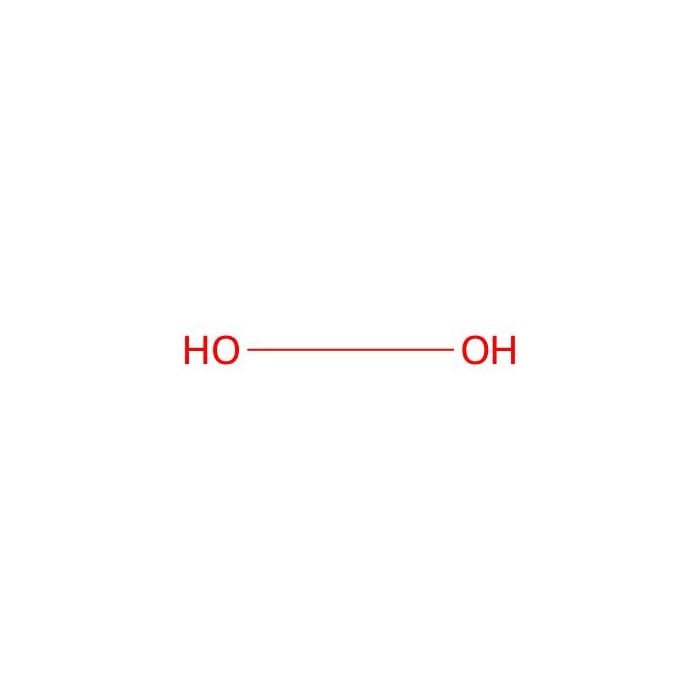
OO
WGK 독일
1
RTECS
MX0900000
대체 CAS
7722-84-1,8007-30-5,12325-10-9
NSC 번호
19892
MeSH 용어
Hydrogen Peroxide;Hydrogen Peroxide (H2O2);Hydroperoxide;Oxydol;Perhydrol;Peroxide, Hydrogen;Superoxol
분자량
34.01
Beilstein
3587191

문서

📋 안전 데이터 시트(SDS)

위험성, 취급, 보관 및 규제 준수를 포괄하는 종합 문서.

<<<<<<< HEAD SDS 다운로드 → ======= SDS 다운로드 → >>>>>>> release248-p3

✅ 분석 성적서(COA)

로트별 품질 데이터. 로트 번호를 입력하여 정확한 COA를 확인하세요.

COA 조회 →

📊 데이터시트

제품 사양 및 응용 분야에 대한 빠른 참조 요약.

데이터시트 보기 →

🔬 사양서

이 등급의 전체 품질 특성 및 합격 기준.

사양서 보기 →

고급 데이터

인증서(CoA, COO, BSE/TSE 및 분석 차트)
C of A & Other Certificates(BSE/TSE, COO):
Analytical Chart:

Find and download the COA for your product by matching the lot number on the packaging.

8 results found

Lot NumberCertificate Type날짜항목
I2614701I2614701Certificate of AnalysisSep 18, 2026 H755825
H2601028H2601028Certificate of AnalysisAug 04, 2026 H755825
F2602003F2602003Certificate of AnalysisJun 03, 2026 H755825
D2609557D2609557Certificate of AnalysisApr 17, 2026 H755825
C2607003C2607003Certificate of AnalysisMar 11, 2026 H755825
L2516635L2516635Certificate of AnalysisDec 22, 2025 H755825
J2510156J2510156Certificate of AnalysisOct 16, 2025 H755825
F2505004F2505004Certificate of AnalysisJun 06, 2025 H755825
화학 및 물리적 특성
감도Light sensitive
굴절률1.335
끓는점(°C)100.0 °C
분자량34.015 g/mol
XLogP3-0.900
Hydrogen Bond Donor Count2
Hydrogen Bond Acceptor Count2
Rotatable Bond Count0
Exact Mass34.0055 Da
Monoisotopic Mass34.0055 Da
Topological Polar Surface Area40.500 Ų
Heavy Atom Count2
Formal Charge0
Complexity0.000
Isotope Atom Count0
Defined Atom Stereocenter Count0
Undefined Atom Stereocenter Count0
Defined Bond Stereocenter Count0
Undefined Bond Stereocenter Count0
The total count of all stereochemical bonds0
Covalently-Bonded Unit Count1
자주 묻는 질문과 기사
Reagents Suitable for Microbiology
Differences Among Antibodies for WB/FC/IP/ChIP/IF/IHC
Cyanine 3 Tyramide (Cy3 Tyramide): Principles, Applications, and Experimental Selection Guide for Tyramide Signal Amplification (TSA)
Fundamentals and Applications of Etching Solutions: Using Metallic Copper / PCB Etching as an Example
Glucose Oxidase: A Versatile Biocatalyst Across Multiple Fields
Horseradish Peroxidase (HRP) — Structural Features, Enzymatic Properties and Application Overview
TEMPO-Catalyzed Oxidation Quick Reference (Alcohol Oxidation Focus): Three Regeneration Routes (NaOCl / Cu–O₂ / PIDA) + Selection & Troubleshooting
Understanding ALD Precursor Chemistry: Element Map, Ligand-Based Taxonomy, Typical Pairings, and Troubleshooting (with a Co-Reactant/Precursor List)
Alkaline Phosphatase (AP) and Horseradish Peroxidase (HRP) Colorimetric Detection Systems—A Complete Guide: Mechanisms of Soluble Colorimetric vs. Precipitating Substrates, Selection, and Troubleshooting (with Product Navigator Tables 1–3)
ALD and CVD Beginner’s Complete Guide: Mechanisms, Process Branches, Application Scenarios, and a Selection Decision Tree
Strategies and Progress in the Asymmetric Catalytic Synthesis of Chiral 1,2-Bis(boronic) Esters: Route Types, Selectivity Challenges, and Sequential Site Utilization (with Product Selection Navigator and Tables 1–4)
From Piperidine to Pyridine: The “Most Common N-Heterocycle” Shift in FDA Small-Molecule New Drugs (2013–2023) and a Selection Guide (Tables 1–4)
A Review of Ten Commonly Used Techniques for Detection, Quantification, and Interaction Analysis in Nucleic Acid Research
Why Acridine Can Turn “Trace Molecules” into a Measurable Light Signal: A Mechanistic, Selection, and Troubleshooting Guide to Acridinium Ester Chemiluminescent Immunoassays (Including Product Tables 1–4)
Functions and Significance of Common Physiological and Biochemical Indices in Animals and Plants
Amino Acid Oxidases: Oxygen-Dependent Oxidative Deamination Systems and Their Analytical and Applied Uses
Lipid Panel Testing in Research (TC, TG, HDL-C, LDL-C): Indicator System, Assay Principles, Technical Routes, and Application Overview
Glucose Content Determination: A Systematic Review of Detection Principles, Method Validation, and Research Application Frameworks
Procyanidins: Structural Features and Key Points for Research and Application
Chlorophyll: Structural Features, Physicochemical Properties, and Key Points for Research and Industrial Applications
Methionine: Biological Roles and Key Points for Research Application
Ferulic Acid: Structural Features, Preparation Routes, and Key Points for Research Applications
Paeonol: Physicochemical Features, Uses, and Key Points for Research Applications
Famotidine: Physicochemical Features, Mechanism of Action, and Key Points for Research Applications
Coelenterazine (CTZ) Differences and an Application Overview
Alginate : An Overview of Extraction and Purification Processes, Quality Identification, and Multidomain Applications
Review of Glucose-6-phosphate Dehydrogenase (G6PD): Structural Features, Metabolic Functions, and Research Applications
Glutaraldehyde-mediated Microbial Inactivation: Chemical Mechanisms, Determinants, and Key Validation Considerations
Review of the Principles, Methods, and Application Considerations for Superoxide Dismutase Activity Determination
Enzyme Labels in Immunoassays, Signal Amplification, and Multi-Enzyme Detection Platforms: A Functional Overview
Antioxidant Enzyme Networks in Skin Cells and Their Applications in Skincare and Cosmetics
Functional Systems of Plasma Proteins in Metal Transport, Inflammatory Responses, and Tissue Injury
Oxidative Stress and Experimental Interpretation Framework for ROS, JC-1, MPTP, and Calcium Indicators in Mitochondrial Function Assessment
Liquid Polyisoprene: Material Characteristics, Application Directions, and Selection Considerations
Experimental Assessment of Dibenzyl N,N-Diisopropylphosphoramidite for Alcohol O-Phosphorylation: Coupling, Oxidation, and Debenzylation
Tyramide Signal Amplification in In Situ Fluorescence Detection
Experimental Assessment of HOPO in Carbodiimide-Mediated Amide Coupling: Low-Racemization Control, Application Scenarios, and Process Considerations
Cell Apoptosis Detection by TUNEL Labeling: Signal Interpretation and Result Evaluation
Comparison of Principles, System Control, and Result Interpretation in Hydroxyl Radical Scavenging Capacity Assays
Preparation Methods and Precautions for Silane Coupling Agent Primer Solutions
Enzymatic Hydroxylation Mechanism of Salicylate Conversion to Catechol
From Natural Cellulose to Nanocrystals: Structural Characteristics, Application Directions, and Industrialization Challenges of CNC
Principles, Methodological Differences, and Result Interpretation of Chemical Fecal Occult Blood Testing
The Chemical Basis of Natural Lacquer Durability: Urushiol Structure, Oxidative Polymerization Film Formation, and Coating Film Properties
Oxalate Metabolism and Degradation Detection Methods: Enzymatic Assays, Chromatography, and Enzymatic Degradation System Analysis
Practical Guide to TSA Tyramide Signal Amplification: How to Select Reagents, Optimize the Workflow, and Reduce Background When Detection Signals Are Weak for Low-Abundance Targets
Signal Transduction Mechanism of Graphene Biosensors: From Molecular Recognition to Electrical/Optical Signal Readout and Materials Selection
Sodium Metasilicate in Cleaning Applications: Hydration-Form Differences, Mechanisms of Action, and Selection Logic
What Is an Etchant? Etching Mechanisms for Revealing Metallographic Microstructures, Selection Methods, and Applications of Related Wet-Etching Reagents
Why Do Rust Spots Appear on Neutral Wall Putty? Iron Sources, Moisture Migration, Oxidative Color Development, and Prevention Measures
Summary of Research Advances in Oxidative Stress
Operating Procedure for p16/Ki-67 Immunocytochemical Dual Staining in Cervical Cytology
Evaluation of Blood-Brain Barrier Permeability: Tracer Extravasation, TEER Measurement, and Interpretation of In Vitro Model Results
Functional Roles of Auxiliary Enzymes in Enzyme-Coupled Colorimetric Reactions: Mutarotase, Oxidases, Peroxidases, and Dehydrogenases
The Skin Anti-Aging Mechanisms of α-Lipoic Acid: ALA/DHLA Redox Cycling, the Antioxidant Network, and Regulation of Collagen AGE Formation
Deoxyfluorination of Hydroxyalkyl-Substituted Aryl/Alkenyl Boronates: C–F Bond Construction and C–B Bond Retention via a BF3K Intermediate
Antioxidant Mechanisms, Stability, and Delivery Strategies of Resveratrol in Skincare Research
Antioxidant Mechanisms of Ferulic Acid in Skincare, Vitamin C/E Synergy, and Stable Delivery Applications
Skin Anti-Aging Mechanisms of Carnosine and Decarboxy Carnosine: Active Carbonyl Scavenging, Oxidative-Stress Buffering, and Inhibition of Collagen Glycation Cross-Linking
How Do Collagen Peptides Act on the Skin? From Surface Hydration and Percutaneous Delivery to Fibroblasts and Collagen Homeostasis
Scientific Rationale and Application Assessment of Olive Leaf Extract in Skin Redness Care
Anti-Photoaging Potential of Artemia Extract: UV-Induced Damage Cascades, HSP70-Related Stress Protection, and GP4G Metabolic Insights
Gentiana Root Extract and Gentiopicroside: Chemical Composition, Antioxidant and Inflammation-Modulating Mechanisms, and Their Potential Effects on Skin Barrier Homeostasis
Overcoming the Electronic-Effect Limitations of Nucleophilic Aromatic Substitution in Fluoroarenes: Anion Activation, Concerted Substitution, and HF Capture by t-Bu-P4
How Does Collagen Tripeptide Act on the Skin: Stratum Corneum Delivery, Matrix Protection, and Regulation of Collagen Homeostasis
Mechanisms of Action, Representative Compounds, and Research Applications of Senolytics
How Coenzyme Q10 Acts on the Skin: Mitochondrial Electron Transfer, Antioxidant Protection of Membrane Lipids, and Lipid-Carrier Delivery
Structural Characteristics of Ergothioneine, OCTN1-Mediated Uptake by Skin Cells, and Antioxidant Mechanisms
Cellular Peroxide-Scavenging Enzyme Systems: Functional Division of Glutathione Peroxidase, Catalase, and Peroxiredoxin
Regio- and Stereoselectivity in Monolignol Oxidative Coupling: Single-Electron Oxidation, Radical Coupling, and Dirigent Proteins
p38 MAPK Signaling Pathway: Activation Mechanisms, MK2 Functional Output, and Experimental Interpretation
Citations of This Product
솔루션 계산기
리뷰

고객 리뷰

Shall we send you a message when we have discounts available?

Remind me later

Thank you! Please check your email inbox to confirm.

Oops! Notifications are disabled.