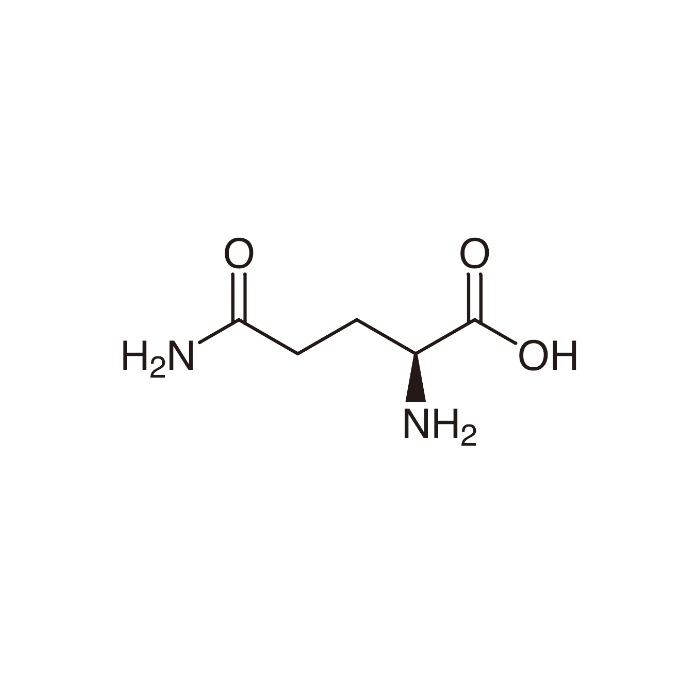
L-Glutamine - Moligand™, ≥99% , Sodium-coupled neutral amino acid transporter 3, CAS No.56-85-9, Sodium-coupled neutral amino acid transporter 3

CAS: 56-85-9 Cat. No.: G105425 분자식: C5H10N2O3 분자량: 146.15 Beilstein Registry Number: 4491 EC 번호: 200-292-1
주문 가능
등급 & 순도 Moligand™ ? Moligand™ — Aladdin's line of ligands and bioactive small molecules. Use for receptor, pathway, and binding studies needing defined small-molecule tools. ≥99%
Synonyms
Glutamine (L-Glutamine)|Levoglutamida|Glutamic acid-5-amide|L-Glutaminsaeure-5-amid|Nutrestore (TN)|GLUTAMINE (L)|GLUTAMINE [USP MONOGRAPH]|Levoglutamide [DCF:INN]|Memoril|Resource Glutasolve|GLUTAMINE [INCI]|[3H]glutamine|[3H]-glutamine|(2S)-2,5-diamino-5-oxopentanoic acid|2,5-Diamino-5-oxopentanoic acid, (S)-|GLUTAMINE (USP MONOGRAPH)|Glutamine [USAN]|L-Glutamic acid .gamma.-amide|2-Aminoglutaramic acid, L-|H-Gln|L-2-Aminoglutaramidic acid|Pentanoic acid, 2,5-diamino-5-oxo-, (S)-|glumin|Glutamine [USAN:USP:INN]|Levoglutamide|Q. Levoglutamide|(S)-2,5-Diamino-5-oxopentanoic acid|Glutacerebro|Levoglutamina|Glutamine-S|Levoglutamidum [INN-Latin]|L-Glutamic acid gamma-amide|L-Glutamine,(S)|(2S)-2-amino-4-carbamoylbutanoic acid|2-aminoglutaramic acid|gamma-Glutamine|glutamic acid gamma-amide|Glutaminsaeure-5-amid|GlutaSolve|L-Alanyl-L-glutamide|Cebrogen|GLUTAMINE (USP-RS)|l glutamine|L-gln|(2S)-2,5-diamino-5-oxopentanoate|L-(+)-Glutamine|L-2-Aminoglutaramic acid|Glutamine (USP)|Glavamin|GLUTAMINE (D)|L-Glutamin|starbld0006818|glum|glutamina|Glutamic acid amide|GLUTAMINE (MART.)|Glutamine (VAN)|[14C]glutamine|[14C]-glutamine|Endari (TN)|Gebrogen|L-Glutamid|Sympt-X|GLUTAMINE [MI]|L-Glutamide|GLUTAMINE [INN]|H-Gln-OH|Levoglutamid|L-Glutamine (JP17)|S(+)Glutamine|S(+)-Glutamine|3h-l-glutamine|GLUTAMINE,L-|Miglu-P|Saforis|GLUTAMINE, L-|L-Glutamine [JAN]|Nutrestore|d(-)-glutamine|glutamine|GLUTAMINE [USP-RS]|L-Glutamic acid 5-amide|GLUTAMINE [MART.]|Glutaven|ENDARI|gln|Levoglutamidum|Sympt-X G.I.|(S)-glutamine|L-Glutamine [JAN]
Storage
Protected from light,Room temperature
Shipped In
Normal
★
크기
USA
독일 (EU)*
가격
수량
25g
G105425-25g
재고 있음 ≥10
—
US$9.90
100g
G105425-100g
재고 있음 ≥10
4 재고 있음

US$11.90

US$16.90
저장 US$5.00 (29.59%)
250g
G105425-250g
4 재고 있음
3 재고 있음

US$25.90

US$33.90
저장 US$8.00 (23.60%)
500g
G105425-500g
4 재고 있음
3 재고 있음

US$45.90

US$54.90
저장 US$9.00 (16.39%)
Enter a quantity for the sizes you want to add.

개요

L-Glutamine is a non-essential amino acid present abundantly throughout the body and is involved in many metabolic processes.

사양

동의어
Glutamine (L-Glutamine) | Levoglutamida | Glutamic acid-5-amide | L-Glutaminsaeure-5-amid | Nutrestore (TN) | GLUTAMINE (L) | GLUTAMINE [USP MONOGRAPH] | Levoglutamide [DCF:INN] | Memoril | Resource Glutasolve | GLUTAMINE [INCI] | [3H]glutamine | [3H]-glutamine | (2S)-2,5-diamino-5-oxopentanoic acid | 2,5-Diamino-5-oxopentanoic acid, (S)- Show more
사양 및 순도
Moligand™, ≥99%
생화학 및 생리적 메커니즘
Amino acid. Major respiratory fuel and substrate for nucleic acid synthesis in mammalian intestinal cells. Inhibits the generation of L-Arginine by cultured endothelial cells.
보관 조건
Protected from light,Room temperature
배송
Normal
등급
Moligand™
작동 메커니즘
Sodium-coupled neutral amino acid transporter 3
참고
Wherever possible, you should prepare and use solutions on the same day. However, if you need to make up stock solutions in advance, we recommend that you store the solution as aliquots in tightly sealed vials at -20°C. Generally, these will be useable for up to one month. Before use, and prior to opening the vial we recommend that you allow your product to equilibrate to room temperature for at least 1 hour. Refer to SDS for further information Need more advice on solubility, usage and handling? Please visit our frequently asked questions (FAQ) page for more details.
순수함
≥99%
이름과 식별자
Pubchem Sid
Pubchem Sid Url
https://pubchem.ncbi.nlm.nih.gov/substance/488179975
SMILES
N[C@@H](CCC(N)=O)C(O)=O
IUPAC Name
(2S)-2,5-diamino-5-oxopentanoic acid
InChIKey
ZDXPYRJPNDTMRX-VKHMYHEASA-N
InChI
1S/C5H10N2O3/c6-3(5(9)10)1-2-4(7)8/h3H,1-2,6H2,(H2,7,8)(H,9,10)/t3-/m0/s1
이성체 SMILES
C(CC(=O)N)[C@@H](C(=O)O)N
WGK 독일
1
RTECS
MA2275100
분자량
146.15
Beilstein
4491
Reaxys
1723795
Reaxys-RN_link_address
https://www.reaxys.com/reaxys/secured/hopinto.do?context=S&query=IDE.XRN=1723795&ln=

고급 데이터

Taxonomic Classification

Taxonomy Tree

KingdomOrganic compounds
SuperclassOrganic acids and derivatives
분류Carboxylic acids and derivatives
SubclassAmino acids, peptides, and analogues
Intermediate Tree Nodes Amino acids and derivatives - Alpha amino acids and derivatives - Alpha amino acids
Direct ParentL-alpha-amino acids
Alternative Parents Fatty acids and conjugates  Amino acids  Monocarboxylic acids and derivatives  Carboxylic acids  Carboximidic acids  Organopnictogen compounds  Organic oxides  Monoalkylamines  Hydrocarbon derivatives  Carbonyl compounds  
Molecular FrameworkAliphatic acyclic compounds
Substituents L-alpha-amino acid - Fatty acid - Amino acid - Carboximidic acid - Carboximidic acid derivative - Carboxylic acid - Monocarboxylic acid or derivatives - Amine - Hydrocarbon derivative - Primary amine - Organooxygen compound - Organonitrogen compound - Organic oxide - Primary aliphatic amine - Organopnictogen compound - Organic oxygen compound - Organic nitrogen compound - Carbonyl group - Aliphatic acyclic compound
설명This compound belongs to the class of organic compounds known as l-alpha-amino acids. These are alpha amino acids which have the L-configuration of the alpha-carbon atom.
External Descriptors Common amino acids
3D 구조
상호 작용 화학 구조 모델


관련 대상(인간)
SLC38A3 Tbio Sodium-coupled neutral amino acid transporter 3 (0 Activities)
Activity TypeActivity Value -log(M)Mechanism of ActionActivity ReferencePublications (PubMed IDs)
GPRC6A Tchem G-protein coupled receptor family C group 6 member A (1 Activities)
Activity TypeActivity Value -log(M)Mechanism of ActionActivity ReferencePublications (PubMed IDs)
CA2 Tclin Carbonic anhydrase II (17698 Activities)
Activity TypeRelationActivity valueUnitsAction TypeJournalPubMed IddoiAssay Aladdin ID
CA1 Tclin Carbonic anhydrase I (13240 Activities)
Activity TypeRelationActivity valueUnitsAction TypeJournalPubMed IddoiAssay Aladdin ID
ARSA Tbio Cerebroside-sulfatase (655 Activities)
Activity TypeRelationActivity valueUnitsAction TypeJournalPubMed IddoiAssay Aladdin ID
ALOX15 Tchem Arachidonate 15-lipoxygenase (7108 Activities)
Activity TypeRelationActivity valueUnitsAction TypeJournalPubMed IddoiAssay Aladdin ID
SLC1A4 Tbio Neutral amino acid transporter A (18 Activities)
Activity TypeRelationActivity valueUnitsAction TypeJournalPubMed IddoiAssay Aladdin ID
CYP3A4 Tclin Cytochrome P450 3A4 (53859 Activities)
Activity TypeRelationActivity valueUnitsAction TypeJournalPubMed IddoiAssay Aladdin ID
Homo sapiens (32628 Activities)
Activity TypeRelationActivity valueUnitsAction TypeJournalPubMed IddoiAssay Aladdin ID
FEN1 Tchem Flap endonuclease 1 (12055 Activities)
Activity TypeRelationActivity valueUnitsAction TypeJournalPubMed IddoiAssay Aladdin ID
EHMT2 Tchem Histone-lysine N-methyltransferase, H3 lysine-9 specific 3 (93046 Activities)
Activity TypeRelationActivity valueUnitsAction TypeJournalPubMed IddoiAssay Aladdin ID
BLM Tchem Bloom syndrome protein (4248 Activities)
Activity TypeRelationActivity valueUnitsAction TypeJournalPubMed IddoiAssay Aladdin ID
PMP22 Tbio Peripheral myelin protein 22 (699 Activities)
Activity TypeRelationActivity valueUnitsAction TypeJournalPubMed IddoiAssay Aladdin ID
KMT2A Tchem Histone-lysine N-methyltransferase MLL (17327 Activities)
Activity TypeRelationActivity valueUnitsAction TypeJournalPubMed IddoiAssay Aladdin ID
SLC1A5 Tchem Neutral amino acid transporter B(0) (65 Activities)
Activity TypeRelationActivity valueUnitsAction TypeJournalPubMed IddoiAssay Aladdin ID
관련 대상(비인간)
Hdac6 Histone deacetylase 6 (222 Activities)
Activity TypeRelationActivity valueUnitsAction TypeJournalPubMed IddoiAssay Aladdin ID
Plasmodium falciparum (966862 Activities)
Activity TypeRelationActivity valueUnitsAction TypeJournalPubMed IddoiAssay Aladdin ID
Canis familiaris (36305 Activities)
Activity TypeRelationActivity valueUnitsAction TypeJournalPubMed IddoiAssay Aladdin ID
rep Replicase polyprotein 1ab (378 Activities)
Activity TypeRelationActivity valueUnitsAction TypeJournalPubMed IddoiAssay Aladdin ID
pfk 6-phospho-1-fructokinase (7870 Activities)
Activity TypeRelationActivity valueUnitsAction TypeJournalPubMed IddoiAssay Aladdin ID
Txnrd1 Thioredoxin reductase 1, cytoplasmic (45279 Activities)
Activity TypeRelationActivity valueUnitsAction TypeJournalPubMed IddoiAssay Aladdin ID
Grin1 Glutamate NMDA receptor (6467 Activities)
Activity TypeRelationActivity valueUnitsAction TypeJournalPubMed IddoiAssay Aladdin ID
Slc16a10 Monocarboxylate transporter 10 (73 Activities)
Activity TypeRelationActivity valueUnitsAction TypeJournalPubMed IddoiAssay Aladdin ID
Slc1a5 Amino acid transporter (271 Activities)
Activity TypeRelationActivity valueUnitsAction TypeJournalPubMed IddoiAssay Aladdin ID
Slc7a10 Asc-type amino acid transporter 1 (14 Activities)
Activity TypeRelationActivity valueUnitsAction TypeJournalPubMed IddoiAssay Aladdin ID
Carbonic anhydrase-like protein, putative (25 Activities)
Activity TypeRelationActivity valueUnitsAction TypeJournalPubMed IddoiAssay Aladdin ID
작용 메커니즘
인증서(CoA, COO, BSE/TSE 및 분석 차트)
C of A & Other Certificates(BSE/TSE, COO):
Analytical Chart:

Find and download the COA for your product by matching the lot number on the packaging.

50 results found

Lot NumberCertificate Type날짜항목
H2617295H2617295Certificate of AnalysisJun 25, 2026 G105425
H2617277H2617277Certificate of AnalysisJun 25, 2026 G105425
H2617275H2617275Certificate of AnalysisJun 25, 2026 G105425
A2623369A2623369Certificate of AnalysisJan 09, 2026 G105425
A2623370A2623370Certificate of AnalysisJan 09, 2026 G105425
A2623368A2623368Certificate of AnalysisJan 09, 2026 G105425
B2222455B2222455Certificate of AnalysisDec 10, 2025 G105425
H2512289H2512289Certificate of AnalysisJul 25, 2025 G105425
H2512534H2512534Certificate of AnalysisJul 25, 2025 G105425
H2512535H2512535Certificate of AnalysisJul 25, 2025 G105425
H2512536H2512536Certificate of AnalysisJul 25, 2025 G105425
D2515404D2515404Certificate of AnalysisJan 17, 2025 G105425
D2515392D2515392Certificate of AnalysisJan 17, 2025 G105425
D2515324D2515324Certificate of AnalysisJan 17, 2025 G105425
D2515414D2515414Certificate of AnalysisJan 17, 2025 G105425
B2514312B2514312Certificate of AnalysisJan 17, 2025 G105425
B2514311B2514311Certificate of AnalysisJan 17, 2025 G105425
B2514305B2514305Certificate of AnalysisJan 17, 2025 G105425
B2514304B2514304Certificate of AnalysisJan 17, 2025 G105425
K2415301K2415301Certificate of AnalysisOct 23, 2024 G105425
K2415345K2415345Certificate of AnalysisOct 23, 2024 G105425
K2415356K2415356Certificate of AnalysisOct 23, 2024 G105425
K2415357K2415357Certificate of AnalysisOct 23, 2024 G105425
E2422144E2422144Certificate of AnalysisMay 10, 2024 G105425
E2422234E2422234Certificate of AnalysisMay 10, 2024 G105425
E2422364E2422364Certificate of AnalysisMay 10, 2024 G105425
E2422366E2422366Certificate of AnalysisMay 10, 2024 G105425
K2406192K2406192Certificate of AnalysisMay 10, 2024 G105425
C2412253C2412253Certificate of AnalysisMar 01, 2024 G105425
K2320155K2320155Certificate of AnalysisOct 30, 2023 G105425
K2320158K2320158Certificate of AnalysisOct 30, 2023 G105425
K2320159K2320159Certificate of AnalysisOct 30, 2023 G105425
K2320162K2320162Certificate of AnalysisOct 30, 2023 G105425
C2412034C2412034Certificate of AnalysisOct 30, 2023 G105425
C23181097C23181097Certificate of AnalysisMar 01, 2023 G105425
C23181096C23181096Certificate of AnalysisMar 01, 2023 G105425
C23181098C23181098Certificate of AnalysisMar 01, 2023 G105425
C23181102C23181102Certificate of AnalysisMar 01, 2023 G105425
C23181103C23181103Certificate of AnalysisMar 01, 2023 G105425
C23181104C23181104Certificate of AnalysisMar 01, 2023 G105425
K2224119K2224119Certificate of AnalysisNov 28, 2022 G105425
I2221419I2221419Certificate of AnalysisJul 28, 2022 G105425
I2221429I2221429Certificate of AnalysisJul 28, 2022 G105425
I2221421I2221421Certificate of AnalysisJul 28, 2022 G105425
I2221420I2221420Certificate of AnalysisJul 28, 2022 G105425
I2221413I2221413Certificate of AnalysisJul 28, 2022 G105425
B2222456B2222456Certificate of AnalysisJan 18, 2022 G105425
B2222448B2222448Certificate of AnalysisJan 18, 2022 G105425
B2222439B2222439Certificate of AnalysisJan 18, 2022 G105425
B2222445B2222445Certificate of AnalysisJan 14, 2022 G105425
화학 및 물리적 특성
용해성Soluble in water (35 mg/ml at 20 °C), DMSO (<1 mg/ml at 25 °C), and ethanol (<1 mg/ml at 25 °C). Insoluble in methanol, and ether.
감도Moisture sensitive;Light sensitive
특정 회전[α]6.8 ° (C=4, H2O)
녹는점(°C)185-186°C
분자량146.14
XLogP3-3.100
Hydrogen Bond Donor Count3
Hydrogen Bond Acceptor Count4
Rotatable Bond Count4
Exact Mass146.069 Da
Monoisotopic Mass146.069 Da
Topological Polar Surface Area106.000 Ų
Heavy Atom Count10
Formal Charge0
Complexity146.000
Isotope Atom Count0
Defined Atom Stereocenter Count1
Undefined Atom Stereocenter Count0
Defined Bond Stereocenter Count0
Undefined Bond Stereocenter Count0
The total count of all stereochemical bonds0
Covalently-Bonded Unit Count1
안전 및 위험(GHS)
WGK 독일
1
RTECS
MA2275100
Reaxys
1723795
Reaxys-RN_link_address
https://www.reaxys.com/reaxys/secured/hopinto.do?context=S&query=IDE.XRN=1723795&ln=
메르크 지수
4471
자주 묻는 질문과 기사
Culture scheme of neural stem cells
Synthesis and Metabolism of Glutamate and GABA: Core Mechanisms of Neurotransmitters
FAQs on Animal Cell Culture Media
108 common laboratory cell lines
FAQ on Cell Culture Serum
Key Enzymes in Amino Acid Metabolism: A Mechanistic Framework and Research Applications
Review of Glucose-6-phosphate Dehydrogenase (G6PD): Structural Features, Metabolic Functions, and Research Applications
β-Acyloxy Alkenyl Amides (AAAs): A New Approach to Amide Bond and Peptide Bond Construction Worth Attention
Silicon Reagent-Assisted Peptide Synthesis: Research Progress and Methodological Value of Peptide Bond Formation from Unprotected Substrates
From Analytical Instrument to Synthetic Platform: A New Strategy for Reconstructing Automated Flow Solid-Phase Peptide Synthesis with Standard Analytical HPLC
Coupling Mechanisms Between Terminal Reducing-Power Allocation in Photosynthetic Electron Transport and Metabolic Demand
Methods and Applications for the Determination of Amino Acid Content and Composition
Selection Strategies for Animal-Derived Serum, Functionalized Serum, and Non-Animal-Derived Culture Supplementation Systems in Cell Culture
Why Do Cancer Cells Synthesize Their Own Fatty Acids? From the De Novo Fatty Acid Synthesis Pathway to Experimental Assessment
Applications of Enzymatic Protein Crosslinking Systems in Gel Construction and Functional Evaluation
Mechanisms and Experimental Applications of β-GP, Ascorbic Acid, and Dexamethasone in Osteogenic Induction Systems
TCA Cycle Metabolite Detection Methods and Result Interpretation
Citations of This Product
솔루션 계산기
리뷰

고객 리뷰

Application Protocols

No item-specific, validated application protocols are provided in the Product Data.

General literature guidance (for research planning only; adjust to your system):

  • Preparation of aqueous stock solutions:

    • Target stock: 100–200 mM in sterile water or appropriate buffer (e.g., PBS without Ca/Mg).
    • Procedure: Add ~80% of final volume of solvent, slowly add L-glutamine with stirring to dissolve, adjust volume, and sterile-filter (0.22 µm). Work at room temperature but avoid prolonged warming.
    • Storage of stocks: Aliquot and freeze (−20 to −80 °C) to limit degradation; avoid repeated freeze–thaw (literature guidance). For this item, solid storage per Product Data is at room temperature, protected from light.
  • Peptide coupling set-up (solution phase, example):

    • Dissolve protected partner in DMF, add L-glutamine derivative, HATU (1.1 eq), and DIPEA (2 eq); stir 30–60 min at rt; monitor by HPLC. Quench and purify as appropriate.

For application-specific parameters (e.g., cell culture supplementation levels), consult domain-specific references and institutional SOPs.

Biological Roles

General biochemistry (literature):

  • Conditionally essential amino acid: A major nitrogen carrier in animals and many microbes; intracellular concentrations are typically high to support biosynthesis.
  • Nitrogen donation: Amide nitrogen serves as a donor in nucleotide (purine/pyrimidine) and hexosamine biosynthesis via amidotransferases.
  • Anaplerosis and energy metabolism: Converted by glutaminase to glutamate, then to α-ketoglutarate entering the TCA cycle; critical for rapidly proliferating cells in culture.
  • Acid–base and osmotic roles: Acts as an osmolyte in some tissues and participates in renal ammoniagenesis (biochemical context); in cell culture, influences pH and ammonia load upon degradation.
  • Protein synthesis: Encoded by CAG/CAA codons; incorporated into proteins as glutamine residues; contributes to hydrogen bonding and structural motifs via side-chain amide.
  • Post-translational modification: Substrate for transglutaminases forming ε-(γ-glutamyl) lysine crosslinks in proteins.

Notes for laboratory use:

  • In cell culture, L-glutamine supplementation is often necessary but solutions are unstable; degrade to glutamate and ammonia, which can affect cell physiology. Prepare fresh or use stabilized sources (e.g., dipeptides) where appropriate (literature guidance).

No clinical or therapeutic claims are made; for research use only (as per Product Data).

Buffer Applications

L-Glutamine is not a dedicated buffering reagent.

  • Buffering capacity: Weak near its pKa values (∼2.1 and ∼9.1, literature); not practical for maintaining physiological pH.
  • Recommended use: Employ standard biological buffers (e.g., phosphate, HEPES, MOPS) for pH control and add L-glutamine separately as a nutrient or reagent.

If a precipitative workup is desired, pH adjustment near the isoelectric point (~5.65, literature) can reduce solubility to aid crystallization, but this is not the same as buffering.

Green Alternatives

While L-glutamine is not a solvent, greener practice considerations focus on stability, sourcing, and waste minimization.

Greener choices and strategies (general, literature-based):

  • Use of stable dipeptides: L-alanyl-L-glutamine or glycyl-L-glutamine provide improved aqueous stability, reducing frequent remake of stocks and associated energy/waste; they enzymatically release glutamine in biological systems.
  • Aqueous processing: Favor water as the reaction/assay medium; avoid unnecessary use of polar aprotic solvents (DMF/DMSO). If organic cosolvent is required, minimize volume and consider bio-based solvents where compatible.
  • Controlled pH and temperature: Maintaining near-neutral pH and cold storage for solutions reduces degradation and ammonia release, lowering fume hood burden and waste.
  • Biobased sourcing: Where available, select material produced via fermentation/biocatalysis with lower environmental footprint (supplier documentation dependent).

Illustrative comparison (general):

  • Free L-glutamine: Immediate bioavailability; degrades faster in solution; more frequent preparation (higher resource use).
  • L-alanyl-L-glutamine: Higher stability in solution; fewer preparations (lower waste/energy); requires enzymatic cleavage to liberate glutamine in cells/bioprocesses.

Note: These are general sustainability considerations. Item-specific certifications (e.g., biobased content, carbon footprint) are not specified for this item; refer to CoA/Spec Sheet.

Pharmaceutical Uses

Formulation/manufacturing context (general, non-clinical):

  • Processing aid/nutrient: Used in fermentation media and cell culture feeds to support biomass and product formation.
  • Excipient role: May be included in certain formulations as a stabilizer or nutrient in bioprocessing intermediates; suitability depends on impurity profile and regulatory status.
  • Compendial status: L-Glutamine has pharmacopeial monographs (e.g., USP/EP) in the literature; conformance of this specific item is not stated.

Item-specific statements:

  • Compliance to any pharmacopeia, residual solvent class, endotoxin/bioburden limits: Not specified for this item; refer to CoA/Spec Sheet.
  • Intended use: For research use only (as provided). Not for human or veterinary use.
Physical Properties

Item-specific specifications (from Product Data):

  • Appearance: Not specified for this item; refer to CoA/Spec Sheet.
  • Molecular formula: Not specified for this item; refer to CoA/Spec Sheet.
  • Molecular weight: Not specified for this item; refer to CoA/Spec Sheet.

Literature/general reference values (not product specifications):

  • Molecular formula: C5H10N2O3 (literature)
  • Molecular weight: 146.15 g/mol (literature)
  • Physical state: White to off-white crystalline solid (typical literature description)
  • Melting/decomposition: ~185–190 °C with decomposition (literature)
  • Solubility: Water ~35 g/L at 25 °C; practically insoluble in ethanol/ether; slightly soluble in dilute acids/bases (literature)
  • pKa values: pKa1 (α-COOH) ~2.1; pKa2 (α-NH3+) ~9.1; side-chain amide non-ionizable under physiological conditions (literature)
  • Isoelectric point (pI): ~5.65 (literature)
  • LogP (XlogP3): approximately −3.1 (literature, indicative of high hydrophilicity)

Notes for use (general):

  • The amide side chain can hydrolyze under strong acidic/basic conditions or elevated temperatures.
  • Aqueous solutions of L-glutamine are less stable than the solid; degradation to glutamate and pyroglutamate is accelerated by heat and alkaline pH (literature).
Quality and Grades
  • Grade on this item: Moligand™ (as provided)

What this means (general explanation):

  • Moligand™ denotes a proprietary research-use grade from Aladdin Scientific intended for laboratory and R&D applications. It does not imply suitability for human or veterinary use.
  • Typical quality attributes for research-grade amino acids include identity confirmation (NMR/IR/HRMS), purity by HPLC or GC (where applicable), and limits on inorganic/organic impurities. Exact acceptance criteria vary by lot.

Item-specific quality details:

  • Purity, stabilizers, metal content, residual solvents, bioburden/endotoxin: Not specified for this item; refer to CoA/Spec Sheet.
  • UV cutoff, optical rotation, specific conductance: Not specified for this item; refer to CoA/Spec Sheet.

Practical implications:

  • For sensitive biological work (e.g., cell culture, enzymology), consult the CoA for purity and impurity profile, and perform incoming QC as required (e.g., amino acid analysis, endotoxin testing if critical).
  • If peptide synthesis is planned, verify enantiopurity and absence of racemization indicators (optical rotation or chiral HPLC) in the lot documentation.

Regulatory note:

  • For research use only (as stated). Not tested for clinical, diagnostic, or therapeutic applications.
Reaction and Applications

As a chiral amino acid bearing an amide side chain, L-glutamine serves both in biological workflows and as a synthetic building block.

Representative applications (general, literature-based):

  • Peptide synthesis: Coupling at the α-carboxyl group to build peptides and peptidomimetics; side-chain amide is typically left unprotected (non-nucleophilic) but can participate in hydrogen bonding that influences conformation.
  • Derivatization: Formation of N-acyl, N-protected derivatives (Boc-, Fmoc-, Cbz-) at the α-amino group for orthogonal peptide assembly. Carboxyl activation via EDC/HOBt, HATU, or PyBOP is common.
  • Biocatalysis: Substrate for glutaminase/transglutaminase enzymes; conversion to glutamate and subsequently to α-ketoglutarate in metabolic assays; amide nitrogen donation in amidotransferase reactions.
  • Materials/bioconjugation: Provides pendant amide for hydrogen-bonding networks; used in model studies of hydrogen bonding and in creating zwitterionic/polyamide interfaces.

Practical tips:

  • Minimize base exposure during couplings to suppress racemization at the α-center and avoid side-chain deamidation.
  • For solution work, prepare fresh aqueous stocks immediately before use or store aliquots frozen to mitigate degradation to glutamate/pyroglutamate (general literature advice).
  • Control pH near neutral (6.8–7.4) in biochemical assays to balance solubility and stability.

Manufacturer Applications from catalog: Not specified; users typically employ L-glutamine in media supplementation, enzymatic assays, and peptide/amide synthesis (general context expansion).

Reaction Conditions

General literature guidance for common transformations (not product specifications):

  • Peptide coupling (solution or SPPS):

    • Solvent: DMF, NMP, or mixed aqueous-organic (e.g., water/DMF) depending on platform.
    • Reagents: HATU or HBTU (1.0–1.2 eq), base (DIPEA 2–3 eq), coupling times 30–120 min at rt; EDC·HCl with Oxyma/HOAt/HOBt in water/DMF also effective.
    • Notes: Keep temperature ambient; minimize base exposure to avoid racemization. For SPPS, side-chain protection for Gln is often unnecessary but can be employed to suppress side reactions.
  • Hydrolysis to L-glutamic acid:

    • Conditions: 6 M HCl, 100–110 °C, 12–24 h (typical amino acid hydrolysis, literature) converts side-chain amide to carboxylate; racemization may occur under harsh conditions.
  • Cyclization to pyroglutamate (5-oxoproline):

    • Conditions: Thermal or acidic dehydration; can occur inadvertently during prolonged heating or acidic workups. Control by mild temperatures and brief processing.
  • Enzymatic conversions:

    • Glutaminase: pH 7.5–8.5, 25–37 °C; produces glutamate and ammonia; useful in metabolic assays.

Expected outcomes: Yields and rates depend strongly on protecting groups, solvent, and coupling system; consult specific protocols and perform small-scale optimizations.

Safety and Handling

GHS and hazard information (item-specific):

  • Signal word: Not specified for this item; refer to SDS.
  • H-statements: Not specified for this item; refer to SDS.
  • GHS classification: Not specified for this item; refer to SDS.
  • Pictograms: Not specified for this item; refer to SDS.

General laboratory safety guidance (not a substitute for the SDS):

  • PPE: Wear appropriate lab coat, safety glasses, and nitrile gloves when handling solids and solutions.
  • Engineering controls: Handle powders in a fume hood or ventilated enclosure to minimize dust inhalation.
  • Incompatibilities: Avoid strong oxidizers; prolonged exposure to strong acids/bases or elevated temperatures can promote hydrolysis/deamidation with ammonia evolution.
  • Special risks: Dust may cause mechanical irritation. Aqueous solutions can degrade over time, potentially releasing ammonia—ensure adequate ventilation when preparing concentrated/alkaline solutions.
  • First aid (overview): If inhaled, move to fresh air. If on skin/eyes, rinse with water. If ingested, rinse mouth with water. Seek medical attention if symptoms persist. Always follow institutional protocols.
  • Spill/cleanup: Avoid dust formation; collect mechanically and dispose of in accordance with local regulations. For solutions, absorb with inert material.

Always consult the SDS for authoritative, item-specific safety data and emergency procedures.

Solvent Selection

L-Glutamine is a highly polar, hydrophilic solid best handled in aqueous media.

General solubility/miscibility profile (literature):

  • Water: Freely soluble to tens of g/L at ambient temperature; solubility improves modestly with gentle warming.
  • Alcohols/ethers: Practically insoluble in ethanol, methanol (limited), and diethyl ether.
  • Polar aprotics: Limited solubility in DMF/DMSO; dissolution may be aided by mild heating, but aqueous systems are preferred.
  • Acids/bases: Solubility increases in dilute mineral acids or bases; however, alkaline conditions accelerate degradation.

Selection guidance by application:

  • Cell culture/biochemistry: Use sterile water or appropriate isotonic buffers (e.g., PBS without Ca/Mg) to prepare stock solutions; filter-sterilize (0.22 µm). Avoid prolonged exposure to elevated temperature.
  • Peptide coupling/derivatization: Use water or mixed aqueous-organic systems (e.g., water/DMF) with carbodiimide or uronium reagents; the presence of base should be minimized to reduce racemization and deamidation.
  • Crystallization/purification: Water or water–alcohol mixtures; pH adjustment near the isoelectric point (~5.6, literature) can reduce solubility for recrystallization.

Comparison to alternatives (general):

  • Versus L-alanyl-L-glutamine (dipeptide): The dipeptide is vastly more stable in aqueous solution but requires enzymatic/biological cleavage to yield free glutamine; choose free L-glutamine when immediate availability and defined chemistry are required.
Storage and Reconstitution

Item-specific storage from Product Data:

  • Storage conditions (solid): Protect from light; store at room temperature.
  • Shipped: Normal conditions (ambient).

General handling notes:

  • Keep container tightly closed in a dry place. Minimize exposure to moisture and elevated temperatures to preserve integrity.
  • If prolonged storage is anticipated, consider using a desiccator to limit humidity exposure.

Reconstitution (general guidance for aqueous work):

  • Solvent: Sterile water or appropriate buffer.
  • Technique: Add solvent gradually with stirring to ensure complete dissolution; filter-sterilize for biological applications.
  • Stability of solutions (literature): L-glutamine solutions degrade over time, especially at elevated temperature and alkaline pH. Prepare fresh when possible, or store aliquots frozen (−20 to −80 °C) to reduce degradation. Avoid repeated freeze–thaw.

Important:

  • The above solution-handling recommendations are general literature guidance. Solid-state storage instructions for this item are as specified by the Product Data. For lot-specific stability and reconstitution details, refer to the CoA/Spec Sheet.
Structure and Identity

L-Glutamine is a proteinogenic, neutral amino acid featuring an α-amino group and a side-chain carboxamide.

  • SKU: G105425
  • Product name: L-Glutamine
  • CAS: 56-85-9
  • PubChem CID: 5961
  • InChIKey (as provided in Product Data): 454341
  • Grade: Moligand™

Item-specific identifiers from Product Data:

  • SMILES: Not specified for this item; refer to CoA/Spec Sheet.

Computed/literature structural data (for reference):

  • Molecular formula (literature): C5H10N2O3
  • Molecular weight (literature): 146.15 g/mol
  • Canonical SMILES (literature): O=C(O)C@@HCCC(=O)N
  • InChIKey (literature): ZDXPYRJPNDTMRX-VKHMYHEASA-N
  • Stereochemistry: L-configuration at the α-carbon (S absolute configuration by CIP)

Structural features (general chemistry description):

  • Backbone: α-amino acid motif with α-carboxylate (CO2H) and α-amine (NH2) on C2 of a five-carbon chain.
  • Side chain: Three-carbon linker terminating in a primary carboxamide (–CONH2).
  • Functional groups: One primary amine (α), one α-carboxylic acid, one primary amide; capable of forming zwitterions at physiological pH.
  • 2D description in words: A chiral center bearing an amine and a carboxyl group; side chain extends three methylenes to a terminal amide (glutamyl amide).
Synthetic Utility

Reactivity profile (general):

  • Electrophile at α-carboxyl: Amenable to peptide coupling via carbodiimide (EDC/DCC) or uronium (HATU/HBTU) activation, often with HOAt/HOBt or Oxyma as additives.
  • Nucleophile at α-amine: Protect with Boc/Fmoc/Cbz for orthogonal synthesis; acylation and reductive amination routes available after protection.
  • Side-chain amide: Typically inert under mild conditions; can be hydrolyzed to glutamate (–CH2–CH2–COO−) under forcing acidic/basic conditions, or converted to lactam (pyroglutamate) upon cyclization.
  • Chiral pool utility: The L-stereocenter enables enantiospecific synthesis of derivatives or serves as a chiral auxiliary/precursor to γ-lactams and other N,O-heterocycles.

Applications:

  • Synthesis of protected amino acid derivatives (Fmoc-L-Gln, Boc-L-Gln) and peptide fragments.
  • Preparation of γ-lactams (pyroglutamates) via intramolecular cyclization/dehydration.
  • Derivatization for analytical methods (e.g., Marfey’s, AccQ-Tag) to enable chiral/fluorescent detection of amino acids.

Best practices:

  • Use mild bases (DIPEA, NMM) and short exposure times to minimize racemization and deamidation.
  • Consider side-chain protecting strategies (e.g., Trt on Gln in SPPS via protected surrogates like Gln(Trt)) when harsh conditions are anticipated, though the native amide is often left unprotected.
Target Specificity

Not applicable. This product is a small-molecule amino acid, not an antibody, enzyme preparation, or targeted biological reagent. No antigen/epitope, species reactivity, clone, or isotype information applies to L-glutamine.

자주 묻는 질문

What is the purity of this product?
This product is supplied at ≥99% purity (chemical assay). Lot-specific values are stated on the Certificate of Analysis.
What is Moligand??
Moligand? is one of Aladdin Scientific's premium product lines, formulated for high-purity applications across multiple workflows. Compared to standard grades in the same workflow, Moligand? products typically offer tighter specifications, more rigorous QC, and stronger lot-to-lot consistency.
How should this product be stored?
Store at room temperature, protected from light. The material is light-sensitive — keep it in its original opaque or amber container.
How is this product shipped?
This product ships under standard ambient conditions. No temperature-controlled packaging is required.
What are the CAS number, molecular formula and molecular weight?
The CAS Number is 56-85-9, the molecular formula is C5H10N2O3, and the molecular weight is 146.15 g/mol. InChIKey ZDXPYRJPNDTMRX-VKHMYHEASA-N.
What documentation is provided?
Available product documentation, including Certificates of Analysis (COA), Safety Data Sheets (SDS), and specification sheets, is shown in the product document area. Document availability and access follow the current site policy.

등급 선택에 도움이 필요하신가요?

당사의 등급 선택 가이드는 카탈로그의 모든 변형 제품에 대해 순도, 안정제 상태 및 용도 적합성을 다룹니다.

Moligand™ 등급 가이드 보기 →

Shall we send you a message when we have discounts available?

Remind me later

Thank you! Please check your email inbox to confirm.

Oops! Notifications are disabled.