GRADE & PURITYMoligand™?Moligand™ — Aladdin's line of ligands and bioactive small molecules. Use for receptor, pathway, and binding studies needing defined small-molecule tools.10 mM in DMSO
Moligand™, 10 mM in DMSO Moligand™ for sensitive chromatographic and analytical workflows requiring minimal baseline interference.
🌡
Storage & shipping
Store at -80°C Ships Dry ice packs + Cold packs Check lot-specific COA for exact specifications.
📋
Quality documents
SDS, COA, datasheet, and spec sheet available for download. Lot-specific COA accessible via lot number lookup.
📚
Literature proof
Cited in 1 peer-reviewed publications across chromatography, organic synthesis, and cross-coupling reactions.
개요
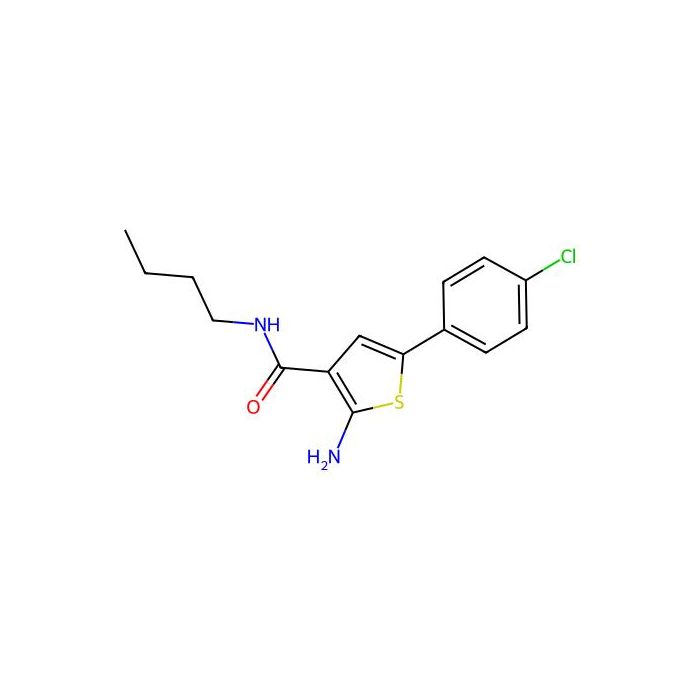
R110 is a potent, competitive inhibitor of macrophage migration inhibitory factor 2 (MIF2) tautomerase with an IC 50 of 15 μM. R110 has the potential for the research of cancer diseases.
Specifications
사양 및 순도
Moligand™, 10 mM in DMSO
보관 조건
Store at -80°C
배송
Dry ice packs + Cold packs
이 제품은 콜드 체인 배송이 필요합니다.지상 및 기타 경제 서비스는 사용할 수 없습니다.
등급
Moligand™
이름과 식별자
분자량
308.83
Documentation
📋 Safety Data Sheet (SDS)
Comprehensive hazard, handling, storage, and regulatory compliance document.
1.Mingxin Wu, Yujie Zhang, Quan Liu, He Huang, Xin Wang, Zhekun Shi, Yinping Li, Sheng Liu, Longjian Xue, Yifeng Lei. (2019) A smart hydrogel system for visual detection of glucose. BIOSENSORS & BIOELECTRONICS, [PMID:31387025][10.1016/j.bios.2019.111547]
솔루션 계산기
Molarity Calculator
Determine the necessary mass, volume, or concentration for preparing a solution.
Dilution Calculator
Determine the dilution needed to prepare a stock solution.
Reconstitution Calculator
리뷰
고객 리뷰
Application Protocols
Item-specific facts (from Product Data):
No tested applications or recommended dilutions are provided for this item.
General protocols for small-molecule screening (not item-specific):
Stock preparation: Dissolve at 10–50 mM in anhydrous DMSO; vortex and, if needed, sonicate briefly. Record exact concentration by weight-in or by UV/LC quantitation if the chromophore is known.
Plate handling: Dispense using acoustic or positive-displacement systems into assay plates; include vehicle controls. Seal plates to limit evaporation; equilibrate to assay temperature before readout.
Concentration–response: Prepare serial dilutions (e.g., 1:3 or 1:2) across 8–11 points; fit data with a 4-parameter logistic model, reporting Hill slope and confidence intervals.
Artifact control: Include detergent for aggregation, antioxidant controls if redox activity is suspected, and fluorescence/luminescence interference checks.
Because structure and specific assay history are not provided, treat these as general starting points and tailor to your target system.
Biological Roles
Item-specific facts (from Product Data):
No target, pathway, or biological role is specified for this item.
General context for screening compounds (not item-specific):
As a Moligand™ entry, R110 is positioned for discovery workflows where intrinsic biological roles are not pre-assigned. Any observed phenotype or target modulation arises from experimental screening rather than known endogenous function.
Upon obtaining activity data, consider annotating putative mechanisms using chemoinformatics (similarity to known bioactives), target deconvolution (affinity capture/proteomics, CETSA, thermal profiling), or genetic interaction mapping.
Evaluate ADME-relevant properties experimentally (permeability, stability in microsomes/S9, protein binding) after hits are confirmed to distinguish assay artifacts from genuine, tractable biology.
No clinical or therapeutic claims are made; this product is for research use only.
Buffer Applications
Item-specific facts (from Product Data):
No buffer system guidance is specified for this item.
General guidance for using small molecules in buffered assays (not item-specific):
Stock handling: Prepare concentrated stocks in DMSO or another suitable solvent. For working solutions, add the organic stock last to pre-made assay buffer with vigorous mixing to avoid local supersaturation and precipitation.
Typical assay buffers: HEPES (pH 7.0–7.5), Tris (pH 7.4–8.0), PBS, or MOPS, chosen based on target stability. Maintain constant ionic strength and include detergents (e.g., 0.01% Tween-20) if aggregation is a concern.
Cosolvent limits: Keep final organic solvent low (often ≤0.1–1% v/v). Always include matched vehicle controls and verify target tolerance to the chosen cosolvent.
Light/oxidation sensitivity: If the compound is light- or air-sensitive (unknown here), protect with amberware and inert atmosphere; add reducing agents only if compatible with the assay and the compound’s chemistry.
Because the specific structure is not provided, no buffer pKa/pH optimization unique to this item can be recommended; determine empirically once the structure and ionization state are known.
Green Alternatives
Item-specific facts (from Product Data):
No solvent/process details are specified.
General greener-practice considerations for handling screening compounds (not item-specific):
Minimize DMSO volumes by preparing higher-concentration stocks when solubility allows, thereby reducing waste.
Prefer sealed, low-dead-volume dispensing (acoustic or positive-displacement) to cut plastic and solvent usage.
For extraction/cleanup, consider ethyl acetate, 2-MeTHF, or CPME over chlorinated solvents when compatible with the compound’s polarity (confirm with this item’s structure/solubility first).
Solvent comparison (general; not specific to this item):
DMSO: performance gold standard for stocks; poor environmental profile in large-scale waste streams due to high boiling point and energy-intensive recovery.
2-MeTHF: bio-based ether alternative to THF; good for extractions; peroxidizable—monitor and manage peroxides; not usually used for assay stocks.
PEG400/propylene glycol: lower volatility and reduced emissions; may complicate analytics and biological readouts.
Balanced approach:
Use microplates with low-evaporation lids to limit solvent losses.
Validate greener solvent substitutions with small pilot assays to confirm no impact on signal-to-background, target stability, or compound solubility for this specific item.
Pharmaceutical Uses
Item-specific facts (from Product Data):
No excipient role, compendial status, or formulation guidance is specified for this item.
General context (not item-specific; no therapeutic claims):
Screening compounds like this are used in preclinical research to explore structure–activity relationships and to identify chemical matter for further optimization. They are not supplied or qualified as APIs or excipients.
If formulation-like studies are required (e.g., for in vivo tool validation), determine compound-specific solubility and stability to select appropriate vehicles (e.g., aqueous with cyclodextrin, PEG400/ethanol/saline mixtures), always guided by institutional ethical and regulatory standards for animal research.
For this specific catalog entry, no pharmaceutical or excipient use is stated; consult the CoA/Spec Sheet for any available physicochemical data that might inform pre-formulation research.
Physical Properties
Item-specific facts (from Product Data):
Appearance: Not specified for this item; refer to CoA/Spec Sheet.
Physical constants (bp, mp, density, refractive index, logP, pKa, UV cutoff, solubility): Not specified for this item; refer to CoA/Spec Sheet.
Literature/general guidance for small-molecule library members (not specific to this item):
Many screening compounds are crystalline or amorphous solids at ambient temperature and are commonly supplied dry or as DMSO solutions for HTS. Actual mp/bp vary widely by chemotype.
Solubility screening is recommended: test solubility in anhydrous DMSO at 10–50 mM, then dilute into assay buffer keeping final DMSO ≤0.1–1% v/v as assay tolerance allows. Consider alternative cosolvents (ethanol, PEG400) if precipitation occurs upon aqueous dilution.
If UV–Vis or LC-UV quantitation is intended, first obtain the item’s specific extinction behavior/λmax from CoA or by empirical scan (200–600 nm) to avoid detector saturation or underestimation.
Hygroscopicity and polymorphism can influence handling and assay reproducibility. Equilibrate closed vials to room temperature before opening in low-humidity conditions to minimize moisture uptake and condensation.
Note: Do not treat any of the above as specifications for this item; confirm with the CoA/Spec Sheet or determine experimentally under your lab conditions.
What Moligand™ generally implies (general description; check this item’s CoA for details):
Intended for discovery research: small-molecule ligand screening, chemical biology probes, and SAR exploration. Such items are commonly provided with identity confirmation (e.g., LC–MS, NMR) and a stated purity on the CoA.
Documentation: The specific test methods, acceptance criteria, and any stabilizers/contraindications should be confirmed on the item’s CoA/Spec Sheet.
Clarifications for this catalog entry:
Exact purity percentage, residual solvent/volatile limits, and elemental/metal analyses are not specified for this item; refer to CoA/Spec Sheet.
UV absorbance profile, water content, and peroxide content (if applicable) are not specified for this item; refer to CoA/Spec Sheet.
Practical guidance:
For HTS or biophysical assays, review the chromatogram and mass trace to ensure a single dominant component and acceptable impurity profile. Where relevant, consider a quick in-house check (analytical LC and HRMS) to confirm fit-for-purpose purity for sensitive assays (SPR, ITC, NMR binding).
Reaction and Applications
Item-specific facts (from Product Data):
Manufacturer applications: Not provided for this entry.
General applications for Moligand™-type screening compounds (not item-specific):
Primary/secondary screening: Create concentration–response curves (e.g., 11-point 1:3 serial dilutions) to evaluate biochemical or cell-based target modulation. Include replicates and vehicle controls to differentiate true activity from assay artifacts.
Biophysical binding assays: Assess target engagement via SPR, BLI, DSF/thermal shift, MST, NMR (STD/WaterLOGSY), or ITC. Use ligand-observed NMR for initial triage to reduce protein consumption and false positives.
Orthogonal readouts: Cross-validate hits with an orthogonal assay (e.g., fluorescence vs luminescence vs mass-based readout) to mitigate interference from intrinsic compound fluorescence, quenching, or redox activity.
Counterscreens and PAINS/REOS filters: Run aggregation controls (0.01% Triton X-100/Tween-20), redox/thiol reactivity tests, and promiscuity panels. Use light scattering or DLS to detect colloidal aggregation.
Cell-based work: Confirm cytotoxicity windows (e.g., resazurin/CellTiter) and monitor precipitation at working concentrations under culture conditions. Consider serum binding effects on apparent potency.
Chemistry follow-up: If structure is available, prioritize analog selection for SAR, explore matched molecular pairs, and evaluate physicochemical property tuning (logD, TPSA) for permeability/solubility balance.
Important: Because structural details for this item are not provided here, tailor all protocols only after reviewing the CoA/Spec Sheet and any available structural characterization.
Reaction Conditions
This section is not typically applicable to an unspecified screening compound intended for biological assays rather than as a general-purpose reagent.
General note (not item-specific):
If you plan to derivatize or scale synthetic routes for this molecule, first obtain the detailed structure and any available literature/precedent. Optimize conditions (solvent, base/acid, temperature, catalysts) based on the functional group landscape and run small-scale scouting experiments. No reaction temperatures, catalysts, or yields can be provided for this item without its structural information.
Safety and Handling
Item-specific facts (from Product Data):
GHS signal word/pictograms/classification: Not specified for this item; refer to SDS.
H-statements: Not specified for this item; refer to SDS.
Storage conditions: Store at −80°C.
Shipping: Dry ice packs + Cold packs.
General laboratory guidance (not item-specific; defer to SDS):
Handle unknown small molecules in a chemical fume hood with appropriate PPE: lab coat, safety glasses, and nitrile gloves. Escalate controls (double-gloving, face shield) for powders or if aerosolization is possible.
Avoid inhalation, ingestion, and skin/eye contact. Use tools (spatulas, micro-scoops) to minimize direct handling; consider weighing boats with anti-static measures for fine powders.
Incompatibilities are structure-dependent; as a precaution, keep away from strong oxidizers and reducing agents until specific reactivity is known. Avoid open flames/ignition sources when using organic solvents.
First aid (overview; consult SDS): rinse eyes/skin with water for ≥15 minutes upon contact; remove contaminated clothing; seek medical attention if symptoms persist; if inhaled, move to fresh air; if ingested, do not induce vomiting unless directed by medical personnel.
Waste: Collect solutions/solids in halogenated or non-halogenated organic waste per solvent matrix. Decontaminate surfaces with suitable solvent and detergent.
Always consult the official SDS for authoritative hazard, exposure limits, and emergency procedures.
Solvent Selection
Item-specific facts (from Product Data):
No solvent recommendations are specified for this item; refer to CoA/Spec Sheet.
General guidance for small-molecule screening compounds (not item-specific):
Stock solutions: Anhydrous DMSO is the default for 10–50 mM stocks due to broad solvency and assay compatibility at ≤0.1–1% v/v. Filter (0.2 μm PTFE) if particulate persists.
Alternate solvents: Ethanol or isopropanol can be suitable for UV-transparent assays and rapid drying; PEG400 or propylene glycol can improve apparent aqueous compatibility for higher-concentration stocks at the expense of viscosity and detection background.
Aqueous dilution: To prevent precipitation, perform serial pre-dilutions in DMSO/solvent then add to buffer last, vortexing vigorously. Include a vehicle control at matching solvent percentage.
pH dependence: If ionizable groups are present (unknown here), solubility can improve under acidic or basic conditions. Use minimal pH adjustment compatible with assay biology.
Comparison (general):
DMSO: broad solvency, low volatility, widely tolerated in cells up to ~0.1–0.5% v/v (assay-dependent); hygroscopic.
Ethanol: volatile, easy removal, but lower solvency for polar/large molecules and may disrupt membranes at ≥0.5% v/v.
PEG400: excellent solvency for diverse chemotypes; viscous; can interfere with some readouts.
Confirm solvent compatibility with your assay and verify solubility empirically for this specific item.
Storage and Reconstitution
Item-specific facts (from Product Data):
Storage conditions: Store at −80°C.
Shipped in: Dry ice packs + Cold packs.
General guidance (not item-specific; verify against CoA/SDS for this item):
Upon receipt: Keep frozen until use. Allow the sealed vial to equilibrate to room temperature before opening to minimize condensation. If supplied as a solution, briefly centrifuge to collect contents before opening.
Reconstitution: If provided as a solid, prepare a concentrated stock in an appropriate solvent (commonly anhydrous DMSO) to the desired molarity. Mix thoroughly; if particulates remain, warm gently (≤40°C) and/or sonicate briefly. Do not exceed temperatures that risk degradation without stability data.
Aliquoting: Divide stock into single-use aliquots (low-bind tubes) to avoid repeated freeze–thaw. Protect from light if the compound is photosensitive (unknown here).
Storage of solutions: Store frozen (e.g., −20 to −80°C depending on stability) and minimize exposure to moisture and air. Track freeze–thaw cycles and discard aliquots showing precipitation or discoloration.
Note: Stability, solvent choice, and light/air sensitivity for this item are not specified; refer to the CoA/Spec Sheet and SDS and establish in-house stability if long-term studies are planned.
Structure and Identity
Item-specific facts (from Product Data):
Product name: R110 (SKU: R1494963)
CAS: 1985622-33-0
Grade: Moligand™ (screening compound category)
Molecular formula: Not specified for this item; refer to CoA/Spec Sheet.
Molecular weight: Not specified for this item; refer to CoA/Spec Sheet.
SMILES: Not specified for this item; refer to CoA/Spec Sheet.
InChIKey: Not specified for this item; refer to CoA/Spec Sheet.
Interpretive notes (general):
R110 is listed within a small-molecule/compound library category, suggesting it is a discrete organic small molecule intended for screening or ligand discovery workflows.
Without a structure, specific functional groups, ring systems, stereochemistry, and 2D/3D descriptors cannot be detailed for this catalog entry. Consult the CoA/Spec Sheet for exact identity confirmation (structure drawing, NMR/LC–MS identifiers) prior to use in structure–activity relationship (SAR) studies.
For database cross-referencing (e.g., PubChem CID, InChI), use the supplied CAS in your preferred registry; verify equivalence to avoid mix-ups between similarly named “R110” items in the literature (nomenclature can be non-unique).
Synthetic Utility
Item-specific facts (from Product Data):
No functional group or reactivity information is specified for this item.
Applicability:
This catalog entry is positioned as a screening/ligand discovery compound rather than a synthetic reagent or building block. Without a disclosed structure, synthetic transformations, named-reaction compatibility, or functional group tactics cannot be responsibly described.
General note (not item-specific):
If derivative synthesis or tagging (e.g., biotinylation, photoaffinity labels, fluorophore conjugation) is desired, obtain the exact structure and assess functional handles (amines, carboxylates, halides). Route design should consider preserving the pharmacophore while enabling attachment through a minimally perturbing linker.
Target Specificity
Item-specific facts (from Product Data):
No target(s), affinity values, or selectivity data are specified for this item.
General guidance (not item-specific):
Establish target specificity through orthogonal assays (biochemical vs biophysical), selectivity panels across related protein families, and counterscreens to exclude assay interference. Confirm binding stoichiometry and kinetics where possible (e.g., SPR kinetic fits, ITC thermodynamics).
For this catalog entry, no target or selectivity profile is provided; consult your screening data and follow-up characterization to define specificity.
We use cookies to ensure the website functions properly and, where permitted, to improve your experience. You can manage your preferences at any time in Settings. Learn more in our Cookie Policy.
Shall we send you a message when we have discounts available?
Remind me later
Thank you! Please check your email inbox to confirm.
Products are supplied to verified businesses, institutions, and qualified professionals for research and development use only. Not for use in humans, animals, diagnosis, or therapy.