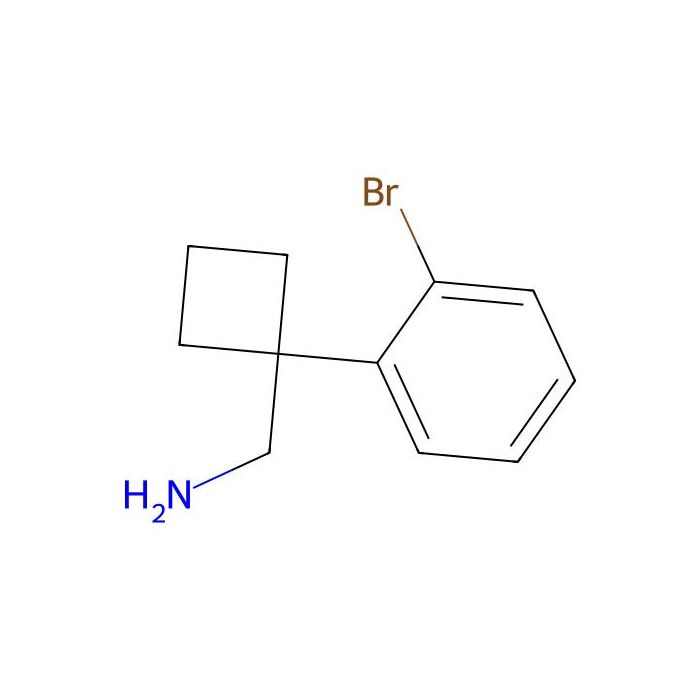
This compound belongs to the class of organic compounds known as bromobenzenes. These are organic compounds containing a bromine atom attached to a benzene ring.
External Descriptors
Not available
1. Djoumbou Feunang Y, Eisner R, Knox C, Chepelev L, Hastings J, Owen G, Fahy E, Steinbeck C, Subramanian S, Bolton E, Greiner R, and Wishart DS. ClassyFire: Automated Chemical Classification With A Comprehensive, Computable Taxonomy. Journal of Cheminformatics, 2016, 8:61.
Zertifikate (CoA, COO, BSE/TSE und Analyse-Diagramm)
C of A & Other Certificates(BSE/TSE, COO):
Analytical Chart:
Chemische und physikalische Eigenschaften
Molekulargewicht
240.140 g/mol
XLogP3
2.800
Hydrogen Bond Donor Count
1
Hydrogen Bond Acceptor Count
1
Rotatable Bond Count
2
Exact Mass
239.031 Da
Monoisotopic Mass
239.031 Da
Topological Polar Surface Area
26.000 Ų
Heavy Atom Count
13
Formal Charge
0
Complexity
177.000
Isotope Atom Count
0
Defined Atom Stereocenter Count
0
Undefined Atom Stereocenter Count
0
Defined Bond Stereocenter Count
0
Undefined Bond Stereocenter Count
0
The total count of all stereochemical bonds
0
Covalently-Bonded Unit Count
1
Lösungsrechner
Molarity Calculator
Determine the necessary mass, volume, or concentration for preparing a solution.
Dilution Calculator
Determine the dilution needed to prepare a stock solution.
Reconstitution Calculator
Bewertungen
Kundenbewertungen
Application Protocols
Not applicable. No validated bioassay or immunoassay protocols (e.g., WB, IHC, IF, FC) are associated with this small-molecule building block. For synthetic applications, see the Reaction Conditions and Synthetic Utility sections.
Biological Roles
Item-specific biological roles are not defined. This product is supplied for research use only.
General context (literature/biochemical perspective):
The compound is a synthetic, non-natural small molecule combining an aryl bromide and a primary aliphatic amine on a constrained cyclobutane. Such motifs are explored in medicinal chemistry to adjust basicity, lipophilicity, and 3D shape, but they are not known endogenous metabolites.
The primary amine can be derivatized to bioconjugation handles (e.g., amide linkage to NHS esters) for probe development. However, any biological activity would be sequence/derivative-specific and is not implied here.
Aryl bromides can serve as sites for late-stage diversification to generate small libraries for SAR screening in chemical biology, enabling exploration of target engagement via structure tuning. The bromine atom itself does not confer a defined biological role.
No claims of pharmacology, efficacy, or therapeutic relevance are made. For any use in biological systems, appropriate containment, dosing controls, and approvals are required.
Buffer Applications
This compound is not a conventional buffering agent. While primary amines have conjugate acid pKa values typically around 9–10 (literature), this molecule is not used as a defined buffer system.
Practical notes:
If preparing aqueous solutions of the free base, protonation with HCl, H2SO4, or acetic acid will increase solubility; however, this constitutes salt formation, not buffering.
For experiments requiring controlled pH, use established laboratory buffers (e.g., Tris, HEPES, phosphate) and dissolve this compound separately (often in DMSO or alcohol) before spiking into the buffered medium.
Conclusion: Buffer selection is not typically applicable for this item; see Solvent Selection and Storage sections for handling guidance.
Green Alternatives
Greener choices focus on solvent and reagent selection, as the substrate itself is fixed.
Solvent substitutions (literature/general):
Replace traditional ethers and chlorinated solvents with greener options where feasible:
THF → 2-MeTHF (bio-derived, higher boiling, better peroxide resistance than THF; water immiscible aids workup).
Dioxane/toluene → CPME (low peroxide tendency, tunable polarity) or anisole.
DCM/CHCl3 for amide couplings → EtOAc or Me-THF, when solubility allows; or conduct couplings in acetonitrile.
DMF/DMAc/NMP (reprotoxic) → PC/GBL or Cyrene in compatible transformations; check catalyst compatibility.
Reagent choices and practices:
Prefer T3P (50% in EtOAc) or EDC·HCl over carbodiimides that require chlorinated solvents; minimize racemization where relevant.
For Suzuki couplings, consider aqueous ethanol or water/EtOH biphasic systems with suitable bases and ligands.
Use microwave heating or flow chemistry to reduce reaction time/energy use where appropriate.
Trade-offs:
Greener solvents may change solubility, rate, and selectivity; ligand/base systems often need re-optimization.
Polar green solvents (e.g., Cyrene) can coordinate to catalysts or be incompatible with strong bases.
Waste minimization:
Employ catalyst scavengers and aqueous workups to reduce chlorinated waste.
Opt for crystallization/salt formation rather than chromatography when possible.
Note: Verify substrate stability and catalyst performance with any solvent change on small scale before scale-up.
Pharmaceutical Uses
No pharmacopeial status or excipient role is provided for this item; it is offered for research use only.
General formulation/manufacturing context (literature/general):
Compounds of this class are typically used as intermediates or building blocks in medicinal chemistry and process development rather than as finished dosage components. The primary amine facilitates salt formation (e.g., HCl, sulfate, maleate) to improve crystallinity and handling during intermediate isolation.
If advanced to development candidates (not implied for this item), standard preformulation activities include: salt screening, polymorph exploration, and stability studies (hygroscopicity, oxidation, light sensitivity). These considerations may inform selection of counterions and crystallization solvents during route scouting.
For analytical support, HPLC/UPLC with basic mobile phase modifiers (e.g., 0.1% NH4OH or TEA) can improve peak shape of amines; qNMR is often used for assay.
Item-specific pharmaceutical uses: Not specified for this item; refer to CoA/Spec Sheet.
Compliance note: This product is not intended for human or veterinary use. No claims are made regarding therapeutic application.
Appearance: Not specified for this item; refer to CoA/Spec Sheet.
Grade/Purity: Not specified for this item; refer to CoA/Spec Sheet.
Molecular weight: Not specified for this item; refer to CoA/Spec Sheet.
Molecular formula: Not specified for this item; refer to CoA/Spec Sheet.
Literature/general expectations for compounds of this class (aryl bromide + primary aliphatic amine on a cyclobutane):
State at ambient conditions: Often low-melting solids or viscous oils; formation of crystalline amine salts (e.g., HCl) is common to improve handling and MP. Exact state for this item is not specified.
Basicity: Primary aliphatic amines typically exhibit pKaH ~ 9–10.5 (literature); protonated salts are water-soluble, while free bases are less polar and more volatile/odorous.
Solubility profile (qualitative):
Free base: good in DCM, chloroform, THF, EtOAc, MeOH/EtOH, and aromatic solvents (toluene); limited in water.
Protonated salts: good in water, lower alcohols; reduced solubility in nonpolar media.
Partitioning: Aryl bromides with a single primary amine typically show moderate lipophilicity as free bases; salt formation markedly reduces logP/logD at physiological pH (literature trend).
Volatility: Free-base amines can show noticeable vapor odor; aryl bromide substitution generally increases BP relative to unsubstituted analogs (qualitative literature note).
Refractive index, density, UV cutoff: Not specified for this item; refer to CoA/Spec Sheet.
Melting/boiling points for the specific CAS: Not specified for this item; refer to CoA/Spec Sheet.
Always consult the item-specific CoA/SDS for definitive properties before process design.
Quality and Grades
Item-specific quality details are not provided in the listing.
Grade/Purity (this item): Not specified for this item; refer to CoA/Spec Sheet.
Stabilizers/Inhibitors: Not specified for this item; refer to CoA/Spec Sheet.
Context and guidance (general):
Research grade small-molecule building blocks are typically offered at ≥95% GC/HPLC purity unless otherwise specified. When higher assay is critical (e.g., for structure–activity studies), request the batch CoA showing assay method (HPLC/GC/NMR), residual solvents, and key impurity profiles.
Oxidation to nitroso/nitro or formation of amides/carbamates during storage in presence of CO2 and moisture.
Metal traces (from Pd-catalyzed couplings if used in synthesis). If trace metals matter, request ICP-MS data.
UV profile: If planning chromatographic detection, verify low UV background and elution behavior on intended columns (C18, phenyl-hexyl). For normal-phase/purification, amines may tail; addition of 0.1–1% Et3N to mobile phase can reduce tailing (general practice).
Salt form vs free base: If handling properties (crystallinity, melting range, solubility) are critical, consider sourcing/asking for a defined salt form (e.g., HCl) and ensure the CoA clearly states the form and counterion content.
Recommendation: Obtain the latest CoA and, if needed, request a Spec Sheet detailing assay, water/volatile content (KF/TGA), and residual-metal limits.
Reaction and Applications
This scaffold is a versatile bifunctional building block. The key handles are the aryl bromide (a cross-coupling electrophile) and the primary aliphatic amine (a nucleophile/basic site).
Suzuki–Miyaura to install diverse aryl/alkenyl/heteroaryl groups (Pd(0/II), base, 50–110 °C). Often conducted after amine protection (Boc, Cbz) to avoid catalyst deactivation.
Buchwald–Hartwig amination to introduce anilines/alkylamines on the aryl ring. Orthogonal to the existing aliphatic amine on cyclobutane.
Sonogashira/Heck couplings to append alkynes/alkenes; substituent effects from the ortho-bromide should be considered.
Transformations of the primary amine:
Amide/urea/sulfonamide formation (HATU, T3P, CDI, or sulfonyl chlorides). The cyclobutane provides conformational constraint valued in medicinal chemistry.
Reductive amination with aldehydes/ketones to access secondary/tertiary amines; careful control to avoid overalkylation.
Carbamate protection (Boc/Fmoc/Cbz) for orthogonal multi-step sequences.
Orthogonal strategies:
Protect amine → perform cross-coupling → deprotect → further elaboration.
Alternatively, derivatize amine first to tune solubility/handleability, then execute Pd-catalyzed steps.
Applications:
Medicinal chemistry: incorporation of a constrained cyclobutyl benzylic amine motif to explore SAR, reduce conformational entropy, and probe ortho-substitution vectors.
Chemical biology probes: the amine enables conjugation to linkers/labels; the aryl bromide allows late-stage diversification (literature concept).
Practical tips:
Scrupulously dry solvents for moisture-sensitive couplings; degas for Pd catalysis.
For silica chromatography, add 0.5–1% Et3N to mobile phase to minimize streaking of the basic compound.
Consider salt formation (e.g., HCl) for crystallization and solid handling when needed.
Reaction Conditions
General literature guidance for common transformations on aryl-bromide primary amines. Optimize for your specific substrate and scale.
Suzuki–Miyaura coupling (at aryl Br):
Catalyst/ligand: Pd2(dba)3 (1–2 mol%) with SPhos/XPhos (2–4 mol%) or Pd(PPh3)4 (3–5 mol%) for simpler systems.
Base: K3PO4, K2CO3, or Cs2CO3 (2–3 equiv).
Solvent: 1,4-dioxane/H2O (3:1), toluene/H2O, THF/H2O, or EtOH/H2O.
Temperature/time: 60–100 °C, 2–16 h.
Notes: Protect the aliphatic amine (e.g., Boc) if catalyst inhibition is observed. Degas solvents; employ inert atmosphere.
Buchwald–Hartwig amination:
Catalyst/ligand: Pd2(dba)3 (1–2 mol%) with BrettPhos/RuPhos; or Pd(OAc)2 with BINAP.
Base: NaOtBu, KOtBu, or Cs2CO3 (2–3 equiv).
Solvent: toluene, dioxane, or CPME.
Temperature: 80–110 °C.
Notes: Amines present on the substrate may require protection to avoid competitive binding.
Amide formation (derivatization of the primary amine):
Reagents: HATU or T3P (1.1–1.5 equiv) with DIPEA (2–3 equiv) in DMF/DCM/EtOAc.
Conditions: 0–25 °C addition, then rt to 40 °C for 1–6 h.
Notes: For acid chlorides, use pyridine/Et3N in DCM at 0–10 °C to minimize overacylation.
Reductive amination:
Carbonyl partner (1.0–1.5 equiv), AcOH (0.5–1 equiv) in MeOH/THF/EtOH; add NaBH3CN (1.2–2 equiv) at 0–25 °C, 2–6 h.
Alternative: NaBH(OAc)3 in DCE/MeOH with AcOH.
Yields: Depend strongly on substituents and conditions; consult primary literature for analogous ortho-bromobenzyl cyclobutyl amines. All values here are general guidance from literature practices, not item-specific specifications.
Safety and Handling
Authoritative safety data must be taken from the SDS for this exact SKU. No item-specific GHS details are provided in the listing.
Item-specific hazard fields (as provided):
Signal Word: Not specified for this item; refer to SDS.
H-Statements: Not specified for this item; refer to SDS.
GHS Classification: Not specified for this item; refer to SDS.
Pictograms: Not specified for this item; refer to SDS.
General safety considerations for aryl-bromide primary amines (literature/general):
Hazards: Many low-MW amines are corrosive/irritant to skin, eyes, and respiratory tract; they may be sensitizers. Free bases can be flammable/combustible liquids or low-melting solids. Avoid inhalation of vapors and aerosols.
PPE: Use lab coat, nitrile gloves, splash goggles. Handle in a fume hood to avoid exposure to amine vapors/odors.
Incompatibilities: Strong oxidizers, acylating/alkylating agents, isocyanates, acid chlorides/anhydrides (vigorous reactions). Amines can react with CO2 from air to form carbamates; keep containers tightly closed. Avoid copper alloys if contamination/catalysis of side reactions is a concern.
First aid (overview; follow SDS):
Skin/eye contact: Immediate decontamination with water for ≥15 minutes; seek medical attention for persistent irritation.
Inhalation: Move to fresh air; medical evaluation if symptoms occur.
Ingestion: Rinse mouth; do not induce vomiting; seek medical advice.
Fire-fighting: Use dry chemical, CO2, or alcohol-resistant foam. Combustion may release HBr/Br-containing fumes and NOx.
Storage: See Storage tab. Keep in original, tightly closed container; segregate from acids and oxidizers. Label secondary containers clearly.
Always defer to the product SDS for classification, exposure limits, and spill/accident response.
Solvent Selection
Chemical profile: Bifunctional molecule with a basic primary amine and a moderately lipophilic aryl bromide on a cyclobutane scaffold. The free base is amphiphilic; salt forms are polar and water compatible.
Practical solvent choices (general guidance):
Reaction solvents for derivatization at the amine:
DCM or DMF/DMAc/NMP for amide couplings (HATU/EDC/T3P). DCM gives easy workups; DMF provides solubility for coupling reagents.
MeOH/EtOH/IPA for reductive amination and salt formation; alcohols dissolve both reagent and reducing agents (NaBH3CN/NaBH(OAc)3) when used.
Cross-coupling at the aryl bromide:
Toluene, dioxane, THF, CPME with inorganic bases; or DMAc/NMP for higher-temperature protocols. Consider amine protection to avoid catalyst poisoning.
Purification solvents:
Normal-phase: Hexanes/EtOAc or DCM/MeOH with 0.1–1% Et3N to minimize tailing.
Reverse-phase: Water/MeCN (0.1% NH4OH or TEA) to keep amine deprotonated and sharpen peaks.
Formulation/stock solutions:
Screening stocks at 10–100 mM commonly prepared in DMSO; dilute with MeOH or buffer as needed (beware of free-base precipitation upon dilution into water without acid).
Miscibility and polarity considerations (literature/general):
Free base shows strong solubility in chlorinated, aromatic, ether, and polar aprotic solvents; limited in neat water.
Protonated salts are compatible with aqueous media and polar organics (alcohols).
Selection tips:
Choose protic solvents and/or mild acid if salt formation is desired for crystallization.
Choose aprotic, amine-free media for Pd-catalyzed cross-coupling; protect the amine when necessary.
Storage and Reconstitution
Item-specific conditions:
Storage Conditions: Room temperature (as provided).
Shipped In: Not specified for this item; refer to CoA/Spec Sheet.
Appearance: Not specified for this item; refer to CoA/Spec Sheet.
General handling guidance (amines/aryl bromides):
Store in a tightly sealed container under ambient, dry conditions, protected from prolonged light and moisture. Primary amines can absorb CO2 forming carbamates; minimize headspace exposure and close promptly after use.
If provided as a free base and an odor is noted, consider preparing a stable salt (e.g., HCl) for long-term storage; verify form and counterion content before use.
For solution stocks, prepare single-use aliquots (e.g., in anhydrous DMSO, MeOH, or THF) and store at –20 to 4 °C to limit degradation; bring to room temperature before opening to avoid condensation. Discard if discoloration/precipitation indicates degradation.
Avoid contact with strong oxidizers and segregate from acids during storage to prevent unintended salt formation or reactions.
Reconstitution:
For synthetic work, dissolve the free base in DCM, THF, MeOH/EtOH, DMF, or toluene as appropriate. For aqueous applications, first form a water-soluble salt by adding a stoichiometric acid (e.g., HCl in dioxane) and then dissolve in water or aqueous alcohols.
Always confirm with the current CoA/SDS for lot-specific stability and storage details.
Structure and Identity
Brief overview: A bifunctional small-molecule building block combining an aryl bromide with a primary aliphatic amine on a cyclobutane framework, suitable for cross-coupling and amide/urea formation.
SKU: C732934
Product name (as listed): 1-(2-broMophenyl)cyclobutyl)MethanaMine
SMILES: Not specified for this item; refer to CoA/Spec Sheet.
Molecular formula: Not specified for this item; refer to CoA/Spec Sheet.
Molecular weight: Not specified for this item; refer to CoA/Spec Sheet.
Structural features (interpretation of the name; literature/general description):
Contains a 2-bromophenyl ring (aryl bromide electrophile) bonded to a cyclobutane carbon.
The same carbon of the cyclobutane bears a methanamine (–CH2–NH2) substituent, making a primary aliphatic amine adjacent to a substituted cyclobutane.
The benzylic/cyclobutyl quaternary center linking aryl and methanamine side chain may be a stereogenic center; materials of this type are commonly supplied as racemates unless otherwise indicated (no stereochemical specification provided for this item).
2D description in words: A benzene ring bearing bromine at the ortho position relative to the ring–cyclobutane bond; the cyclobutane’s bridgehead-like carbon connects to a –CH2–NH2 arm.
Notes:
Exact constitutional/positional detail should be confirmed against the product’s CoA/structure file. The above reflects typical interpretation of the catalog name and general literature conventions.
Synthetic Utility
Functional group handles and their utility (literature/general):
Aryl bromide (ortho-bromophenyl): A robust electrophile for Pd-catalyzed Suzuki, Buchwald–Hartwig, Sonogashira, and Heck couplings, enabling rapid diversification of the aromatic ring. Ortho substitution can influence oxidative addition rates and selectivity; ligand choice (bulky, electron-rich) often helps.
Primary aliphatic amine: A strong nucleophile/base for forming amides, ureas, carbamates, sulfonamides, and for reductive amination. Also serves as a handle for immobilization or tagging (e.g., NHS-ester conjugation) in probe synthesis.
Cyclobutane ring: Imparts conformational constraint; benzylic/cyclobutyl centers can be leveraged for C–H functionalization or radical transformations in advanced methodologies.
Retrosynthetic value:
The molecule sits at the crossroads of two orthogonal chemistries. One can plan routes that either:
First derivatize the amine (e.g., amide formation to tune polarity/handleability) → perform cross-coupling.
Practical guidance:
For Pd couplings, consider amine protection (Boc/Cbz) to reduce catalyst poisoning and sidereactions. After coupling, acidic deprotection (Boc) or hydrogenolysis (Cbz) is straightforward.
During amide couplings, avoid overacylation/polymerization; use base scavengers or additive control to minimize side-products.
Purification tips: Add 0.5–1% Et3N to silica eluent to prevent amine tailing. Consider salt formation for crystallization where suitable.
Target Specificity
Not applicable. This product is a small-molecule chemical building block and is not an antibody, enzyme, or affinity reagent. No target specificity data are provided for this item.
Wir verwenden Cookies, um die ordnungsgemäße Funktion der Website sicherzustellen und, soweit zulässig, Ihr Nutzererlebnis zu verbessern. Sie können Ihre Einstellungen jederzeit unter „Einstellungen“ verwalten. Weitere Informationen finden Sie in unserer Cookie-Richtlinie.
Shall we send you a message when we have discounts available?
Remind me later
Thank you! Please check your email inbox to confirm.
Products are supplied to verified businesses, institutions, and qualified professionals for research and development use only. Not for use in humans, animals, diagnosis, or therapy.