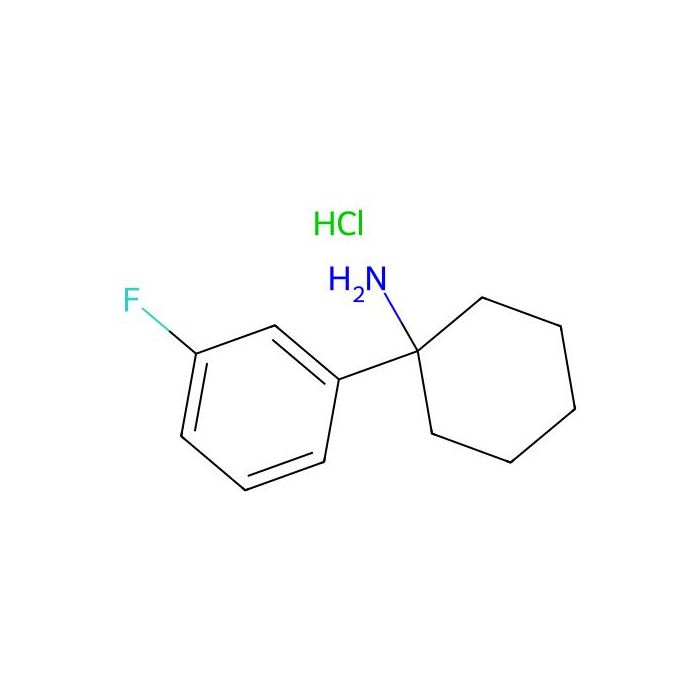
This compound belongs to the class of organic compounds known as fluorobenzenes. These are compounds containing one or more fluorine atoms attached to a benzene ring.
External Descriptors
Not available
1. Djoumbou Feunang Y, Eisner R, Knox C, Chepelev L, Hastings J, Owen G, Fahy E, Steinbeck C, Subramanian S, Bolton E, Greiner R, and Wishart DS. ClassyFire: Automated Chemical Classification With A Comprehensive, Computable Taxonomy. Journal of Cheminformatics, 2016, 8:61.
Zertifikate (CoA, COO, BSE/TSE und Analyse-Diagramm)
C of A & Other Certificates(BSE/TSE, COO):
Analytical Chart:
Chemische und physikalische Eigenschaften
Molekulargewicht
229.720 g/mol
XLogP3
Hydrogen Bond Donor Count
2
Hydrogen Bond Acceptor Count
2
Rotatable Bond Count
1
Exact Mass
229.103 Da
Monoisotopic Mass
229.103 Da
Topological Polar Surface Area
26.000 Ų
Heavy Atom Count
15
Formal Charge
0
Complexity
187.000
Isotope Atom Count
0
Defined Atom Stereocenter Count
0
Undefined Atom Stereocenter Count
0
Defined Bond Stereocenter Count
0
Undefined Bond Stereocenter Count
0
The total count of all stereochemical bonds
0
Covalently-Bonded Unit Count
2
Lösungsrechner
Molarity Calculator
Determine the necessary mass, volume, or concentration for preparing a solution.
Dilution Calculator
Determine the dilution needed to prepare a stock solution.
Reconstitution Calculator
Bewertungen
Kundenbewertungen
Application Protocols
Not applicable. There are no manufacturer-verified biological assay protocols (e.g., WB, IHC, IF, FC) for this small-molecule reagent in the Product Data.
General laboratory usage suggestions (non-validated):
For solution preparation, weigh the desired amount of the HCl salt, dissolve in water or alcohol as appropriate, and, if necessary, adjust pH cautiously to maintain the desired protonation state.
For synthetic steps, first convert to the free base for nucleophilic reactions, or keep as the salt for crystallization/purification. Always confirm identity by NMR/LC-MS prior to use in critical experiments.
Biological Roles
This product is supplied strictly for research use. No medical or clinical claims are made.
General biochemistry context (not item-specific claims):
Primary amines and their salts are ubiquitous motifs in bioactive small molecules. The ammonium form enhances aqueous compatibility and can influence membrane transport when converted to the free base.
Fluorine substitution on aromatic rings is widely used to modulate lipophilicity, metabolic stability, and pKa in medicinal chemistry. A meta-fluoro group is inductively electron-withdrawing and typically reduces aromatic ring reactivity toward electrophilic substitution.
Aryl–cyclohexyl frameworks combine an aromatic ring and a saturated lipophilic ring, a motif often explored in structure–property relationship studies for enzyme/receptor binders. The specific biological targets of 1-(3-fluorophenyl)cyclohexan-1-amine derivatives depend strongly on additional substitution patterns and are not inferred here.
Protonation state: At physiological pH, primary amines are largely protonated (pKa of R–NH3+ commonly ~9–10, scaffold-dependent), affecting solubility and ion-pairing with biological counterions in model systems.
Usage note:
Any in vitro or biochemical assays should be designed recognizing the compound’s acid–base behavior (salt vs. free base), potential for nonspecific binding at higher lipophilicity, and the influence of fluorine on metabolic stability. Verify identity and purity from the CoA prior to biological experimentation. This section does not imply any specific biological activity for this item.
Buffer Applications
This compound is not a buffering agent and is not typically used to prepare defined pH buffer systems.
Practical guidance (general):
If preparing assay solutions, dissolve the hydrochloride salt directly in the desired aqueous buffer to the target concentration. Adjust pH only minimally, as over-basification will convert the ammonium salt to the free base and may reduce aqueous solubility.
For extractions or partition studies, use paired buffer systems (e.g., phosphate, pH 7.2; carbonate, pH 10.2) to evaluate protonation-state effects on distribution between aqueous and organic phases.
For classical buffer formulations (phosphate, Tris, HEPES, acetate, citrate, etc.), consult standard recipes. This product itself does not define a buffering range.
Green Alternatives
Opportunity areas to reduce environmental footprint when working with 1-(3-fluorophenyl)cyclohexan-1-amine hydrochloride (general, not item-specific):
Solvent choices for coupling/alkylation:
Replace DCM with 2-MeTHF, CPME, or EtOAc for amide couplings. Many HATU/EDC couplings proceed efficiently in 2-MeTHF or EtOAc with tertiary amine bases.
For reductive amination, EtOH or MeOH can replace CH2Cl2/DMF in many cases using NaBH(OAc)3 at ambient temperature.
Workup and salt formation:
Use isopropanol or ethanol with HCl (alcoholic HCl or gaseous HCl sparging) to crystallize the HCl salt, avoiding diethyl ether where possible due to peroxide and flammability concerns.
Energy efficiency:
Many amine couplings proceed at room temperature; avoid unnecessary heating. Employ microwave only when it offers clear time/energy savings.
Base and reagent selection:
Favor less hazardous bases (K2CO3, DIPEA) over strongly caustic bases when compatible. Consider CDI for carbamates/ureas as a phosgene alternative.
Process intensification:
Evaluate solvent-lean or solvent-free melt reactions for acylations when feasible. Continuous-flow reductive amination in alcohols can reduce solvent volumes and improve safety.
Illustrative comparison (general):
DCM vs. 2-MeTHF: similar polarity for many couplings; 2-MeTHF is from renewable feedstocks, has better safety/EHS, and can simplify waste handling.
THF vs. CPME: CPME often offers broader immiscibility with water and greater peroxide stability than THF, aiding greener workups.
Always confirm solubility and reaction performance empirically with this specific substrate before committing to process changes.
Pharmaceutical Uses
For research use only. No medical or clinical use is intended or implied for this product.
Formulation/manufacturing context (general information for small-molecule amine salts):
Salt form rationale: Converting a basic amine to its hydrochloride salt can improve crystallinity, stability, and handling, and often enhances aqueous solubility for process operations (e.g., crystallization, filtration, washing). These are general advantages of HCl salts and are not item-specific claims.
Excipient status: This compound is not an established pharmacopeial excipient. If used in pre-formulation research, typical considerations include counterion selection (HCl vs. alternative acids), hygroscopicity control, and polymorph screening.
Analytical controls: For salt forms, monitor counterion content (chloride assay), water (KF), residual solvents, and polymorph/solvate form by PXRD/DSC/TGA.
Process operations: Crystallization from alcohols (EtOH, IPA) or alcohol/ether mixtures is common for amine HCl salts. Seeded crystallization can improve particle size distribution and filterability.
Regulatory note: Any translation from research use to regulated environments requires comprehensive characterization (solid form, stability, impurities) and toxicological evaluation. Aladdin Scientific supplies this item strictly for laboratory research.
Physical Properties
Item-specific (Product Data):
Appearance: Not specified for this item; refer to CoA/Spec Sheet.
Grade/Purity: Not specified for this item; refer to CoA/Spec Sheet.
Molecular Formula: Not specified for this item; refer to CoA/Spec Sheet.
Molecular Weight: Not specified for this item; refer to CoA/Spec Sheet.
Literature/computed values (for guidance only; not product specifications):
Expected formula (HCl salt): C12H17ClFN (computed by adding HCl to the free base)
Phase at RT: typically a crystalline solid for many primary amine hydrochlorides (general observation; verify for this item).
Polarity/ionization: presented as an ammonium chloride; predominantly ionic in neutral water, favoring aqueous solubility relative to the free base (general behavior of amine salts).
Acid/base: conjugate acid of a primary amine; pKa of R–NH3+ typically ~9–10 (literature, scaffold-dependent). The aromatic F is strongly inductive–withdrawing and meta-directing on the ring but has minimal direct effect on ammonium basicity (general).
Boiling point, melting point, density, refractive index, UV cutoff: Not specified for this item; refer to CoA/Spec Sheet. If needed for method development, determine experimentally or consult primary literature for this exact CAS.
Practical note:
For preparative handling and formulation, verify hygroscopicity and aqueous solubility experimentally; these properties vary across amine hydrochlorides and are not specified here.
Quality and Grades
Item-specific Product Data:
Grade/Purity: Not specified for this item; refer to CoA/Spec Sheet.
Guidance for interpreting quality on this compound class (general information for professional users):
Research-grade amine hydrochloride salts are typically offered with assay by HPLC/UPLC or qNMR, and residual solvent/water (KF) limits. For chromatographic or bioassay-sensitive applications, higher grades may include tighter controls on inorganic counterions, residual metals, and UV-absorbing impurities.
If designated “≥98%” or similar, the percentage usually reflects the salt form purity on an anhydrous basis unless specified. Check whether the CoA reports free-base content versus salt basis; this affects stoichiometry in coupling reactions.
Stabilizers: Not common for simple amine salts; if present they are disclosed on the label/CoA. Absence or presence of stabilizers should be verified before sensitive catalysis.
Water content: Many amine hydrochlorides can be hygroscopic, potentially forming hydrates. If water/KF is critical to your process (e.g., peptide coupling, organometallic steps), obtain the exact KF value from the CoA and dry appropriately.
Trace analysis: For applications such as medicinal chemistry screening, low levels of halides and transition metals are preferred. Request elemental analysis/ICP when needed.
Recommendation:
For precision stoichiometry, normalize assay to free-base equivalents using the CoA’s salt content and water content. If values are not specified for this item, request the latest CoA from Aladdin Scientific.
Reaction and Applications
This compound is a versatile aryl–cyclohexyl primary amine offered as its hydrochloride salt. Typical research applications (general guidance; adapt to your protocols):
Amide/urea/carbamate formation:
Couple the free base with carboxylic acids using EDC·HCl/HOBt, HATU/DIPEA, or acid chlorides (Et3N, pyridine) to access amides. Phosgene substitutes (triphosgene, CDI) enable urea/carbamate synthesis.
Practical: First liberate the free base (e.g., aqueous Na2CO3 or NaOH), extract into DCM/EtOAc, dry, and use immediately to avoid re-absorption of HCl/water.
Reductive amination/alkylation at nitrogen:
The primary amine undergoes reductive amination with aldehydes/ketones (NaBH3CN, NaBH(OAc)3) or direct alkylation with alkyl halides under basic conditions. Control mono- vs. dialkylation via stoichiometry and base choice.
N-Arylation:
Buchwald–Hartwig coupling with aryl bromides/chlorides using Pd catalysts (e.g., Pd2(dba)3, BrettPhos/BippyPhos-type ligands) gives anilines/diarylamines. Ensure use of the free base and an appropriate base (NaOtBu, Cs2CO3) in dioxane/PhMe.
Ring functionalization considerations:
The aromatic fluorine is deactivating and meta-directing; SNAr substitution is generally disfavored without additional strong ring EWG. Directed lithiation is challenging at room conditions; specialized conditions (e.g., Li–halogen exchange adjacent to F at low temperature) would need rigorous optimization.
Salt toggling for purification:
Converting crude free-base products back to the HCl salt (HCl in Et2O/IPA) often affords crystalline materials with improved handling and analytical consistency.
Applications in discovery chemistry:
As a lipophilic, fluorinated amine building block, it is useful in SAR libraries where steric bulk and lipophilicity around a basic center are explored (general medicinal chemistry context; no clinical claims).
Reaction Conditions
General literature guidance for typical transformations of primary amines like 1-(3-fluorophenyl)cyclohexan-1-amine (apply to this substrate with appropriate optimization):
Basification to free base:
Conditions: Dissolve salt in water; add Na2CO3 or 1–2 M NaOH to pH >11; extract with DCM or EtOAc; dry (Na2SO4); use immediately. Keep temperature ambient to limit emulsions.
Amide coupling:
Solvent: DMF, NMP, DCM, or greener options (2-MeTHF, EtOAc).
Reagents: HATU (1.1–1.5 eq), DIPEA (2–3 eq); or EDC·HCl (1.2 eq) with HOAt/HOBt alternatives; or acid chloride (1.05 eq) with Et3N (2 eq).
Temperature/time: 20–25 °C, 1–12 h typically; monitor by TLC/LC-MS.
Expected outcomes: Good conversions to amides with primary amines are typical in these systems (yields substrate-dependent).
Reductive amination:
Solvent: MeOH, EtOH, DCE.
Conditions: Carbonyl (1.0–1.5 eq), AcOH (0.5–1 eq), NaBH(OAc)3 (1.5–2.5 eq), 20–25 °C, 2–18 h. Quench with NaHCO3 and extract.
Solvent/temperature: Toluene or dioxane, 80–110 °C, 6–24 h.
Salt re-formation/crystallization:
Dissolve free base in minimal EtOAc or IPA; add HCl in IPA/Et2O dropwise at 0–10 °C to precipitate the HCl salt; age and filter. Dry under vacuum.
Notes:
The meta-fluorophenyl ring generally resists SNAr without additional activation; plan aromatic diversification via cross-coupling on pre-halogenated intermediates, not via F displacement.
Always confirm reaction conditions on small scale; the above are literature norms, not item-specific specifications.
Safety and Handling
Authoritative safety data must be taken from the product SDS. The following is general guidance for primary amine hydrochloride salts and does not replace the SDS.
Item-specific Product Data:
GHS Classification: Not specified for this item; refer to SDS.
Signal Word / H-Statements / Pictograms: Not specified for this item; refer to SDS.
Storage Conditions: Room temperature.
General safety considerations (literature-based):
Hazards: Primary amine salts can be irritants to skin, eyes, and respiratory tract. Dust may cause irritation. While the HCl salt is non-volatile compared to the free base, avoid aerosolization and inhalation.
PPE: Use lab coat, safety glasses, and appropriate gloves (e.g., nitrile). Handle powders in a fume hood or ventilated enclosure to minimize dust exposure.
Incompatibilities: Strong bases (will liberate the free amine); strong oxidizers; acylating/alkylating agents (reactivity with the amine after basification). Avoid contact with reactive acid chlorides/anhydrides unless under controlled synthetic conditions.
First aid overview: In case of skin or eye contact, rinse with water for ≥15 minutes and remove contaminated clothing; seek medical attention if irritation persists. If inhaled, move to fresh air; if ingested, rinse mouth and seek medical guidance. Always follow the SDS instructions.
Spill/cleanup: Avoid dust formation; sweep up solids carefully and place in suitable container for disposal. Wash spill area with water while preventing entry into drains per institutional procedures.
Fire: Use standard extinguishing media (CO2, dry chemical, foam). Combustion may produce NOx, HCl, HF, and CO/CO2; firefighters should wear self-contained breathing apparatus.
Solvent Selection
Applicability: As a primary amine presented as its hydrochloride salt, solvent behavior differs markedly between the protonated salt and the free base.
General guidance (literature-based, not item specifications):
Protonated HCl salt:
Solubility profile: often freely soluble in water and polar protic solvents (MeOH, EtOH). Limited solubility in nonpolar organic solvents.
Preferred media: aqueous buffers for bioconjugation or salt handling; alcohols for recrystallization. Ion-pairing or basification is typically required to transfer to nonpolar phases.
Free base (after basification):
Solubility profile: increased solubility in organic solvents such as DCM, EtOAc, THF, CPME, MTBE, toluene, and acetonitrile; reduced solubility in water due to deprotonation.
Isolation/extractions: Liberate the free base with Na2CO3/NaOH and extract into organic phase; re-protonate with HCl in ether/EtOAc for salt re-formation if desired.
Polarity class: amphiphilic scaffold (aryl + cyclohexyl with a basic center). The fluorophenyl ring slightly elevates lipophilicity relative to the non-fluorinated analogue (general trend).
Comparison notes:
Water vs. alcohols: Water maximizes salt solubility; alcohols can balance solubility and crystallization behavior.
DCM/EtOAc vs. greener ethers (2-MeTHF/CPME): For free-base processing, greener ethers often perform comparably while simplifying solvent recovery and EHS profiles.
Practical tip:
Choose solvent based on the protonation state required by your transformation. For coupling or N-alkylation, operate with the free base in an aprotic organic solvent; for purifications by salt formation, use alcohol/ether systems to induce crystallization.
Storage and Reconstitution
Item-specific (Product Data):
Storage Conditions: Room temperature.
Shipped In: Not specified for this item; refer to CoA/Spec Sheet.
General guidance for this compound class:
Container/atmosphere: Store tightly closed in a clean, dry container. While hygroscopicity is not specified for this item, many amine hydrochlorides can absorb moisture; including a desiccant pack is prudent in humid environments.
Light: No special light sensitivity is expected for this scaffold; store away from direct sunlight as good practice.
Reconstitution/solution preparation:
Aqueous: Dissolve directly in deionized water or buffer to the target concentration. Avoid strong base unless intentionally liberating the free base.
Organic: If solubility in organic solvents is required, first generate the free base by basification and extract into the chosen solvent (e.g., DCM, EtOAc, 2-MeTHF). Use promptly or convert back to the HCl salt for storage.
Freeze–thaw: Not typically applicable to solids. For stock solutions, aliquot to avoid repeated freeze–thaw cycles. Aqueous ammonium salts are generally stable for short periods at 2–8 °C; verify stability by LC before extended storage.
Stability checks: Periodically verify identity/purity (NMR, HPLC) for long-term projects. Any specific shelf-life or impurity limits are Not specified for this item; refer to CoA/Spec Sheet.
Note: Always consult the SDS for safe handling during storage and preparation. This product is supplied for research use only.
Structure and Identity
Brief description: 1-(3-Fluorophenyl)cyclohexan-1-amine hydrochloride is an aryl–cyclohexyl primary amine presented as its hydrochloride salt. The carbon at C1 of the cyclohexane ring bears both the amino substituent (as ammonium in the HCl salt) and a meta-fluorophenyl group.
Item-specific identifiers (Product Data):
CAS: 125802-18-8
CID: 45259864
InChIKey (as provided): 19868
SMILES: Not specified for this item; refer to CoA/Spec Sheet.
Literature/computed identifiers and features (not item specifications):
Expected hydrochloride salt formula: C12H17ClFN (computed from protonation + Cl−)
Structural features: one cyclohexane ring (substituted at C1), one fluorinated phenyl ring (fluorine at the meta position relative to the cyclohexyl-bearing carbon), and a primary amine (as ammonium chloride in the salt). No stereocenters are present at C1 in the planar name; the material may be racemic if a chiral center arises due to tetra-substitution at C1 in 3D conformations.
2D structure in words: a cyclohexane ring with its C1 attached to –NH2 (protonated as –NH3+ in the salt) and to a 3-fluorophenyl substituent; the phenyl ring carries F at the position meta to the cyclohexyl linkage.
Notes:
Exact string identifiers (canonical SMILES, full InChI/InChIKey) are not provided in the Product Data and should be confirmed from the CoA/SDS or primary databases before registration or informatics use.
Synthetic Utility
Functional group leverage (general guidance for this scaffold):
Primary amine (as HCl salt): serves as a nucleophile for amide/urea/carbamate synthesis, sulfonamide formation, and reductive amination. The salt must be basified to access nucleophilicity in non-aqueous media.
Aryl fluorine (meta): electronically deactivating and meta-directing. While challenging to displace directly via SNAr without additional ring activation, it can be retained as a metabolic or physicochemical tuning element in analog design.
Tertiary substituted cyclohexyl center (C1 disubstituted): imparts steric bulk that can modulate conformation in target molecules; useful in SAR where steric shielding near the amine is desirable.
Named reactions and strategies:
Amide formation via HATU/HBTU/EDC couplings; CDI-mediated carbamate/urea formation.
Buchwald–Hartwig N-arylation to elaborate the amine onto haloarenes/heteroarenes.
Sulfonylation (sulfonyl chlorides, base) for sulfonamide derivatives.
Reductive amination with aldehydes/ketones (NaBH3CN or NaBH(OAc)3) to secondary/tertiary amines.
Retrosynthetic value:
Serves as a convergent “amine synthon” introducing both a cyclohexyl and a meta-fluorophenyl handle in a single step, streamlining libraries where hydrophobic and electronic parameters are co-varied.
Handling tips:
Convert to the free base immediately prior to coupling/alkylation to maximize reactivity. Control stoichiometry carefully to avoid over-alkylation. Re-form the HCl salt for purification and long-term handling if crystalline.
Target Specificity
Not applicable. This product is a small-molecule amine hydrochloride, not an antibody, enzyme, or affinity reagent. No antigen/epitope or species reactivity applies.
Wir verwenden Cookies, um die ordnungsgemäße Funktion der Website sicherzustellen und, soweit zulässig, Ihr Nutzererlebnis zu verbessern. Sie können Ihre Einstellungen jederzeit unter „Einstellungen“ verwalten. Weitere Informationen finden Sie in unserer Cookie-Richtlinie.
Shall we send you a message when we have discounts available?
Remind me later
Thank you! Please check your email inbox to confirm.
Products are supplied to verified businesses, institutions, and qualified professionals for research and development use only. Not for use in humans, animals, diagnosis, or therapy.