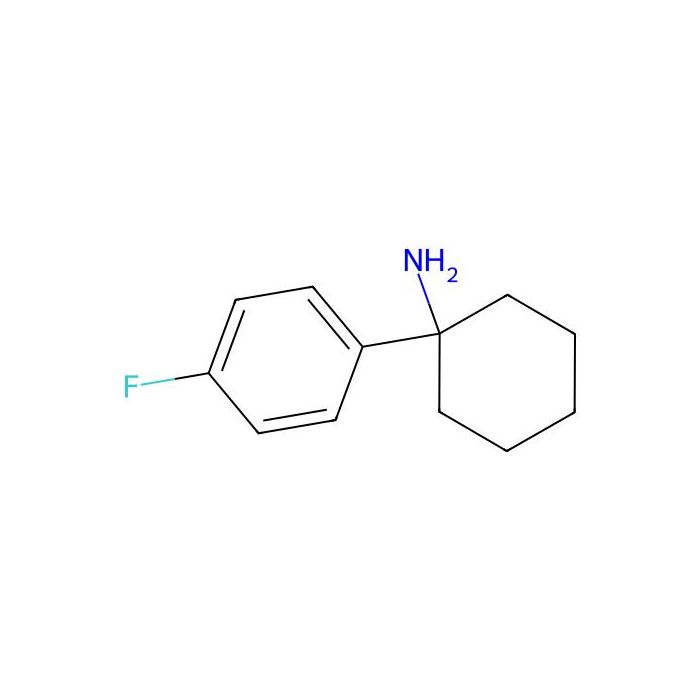
This compound belongs to the class of organic compounds known as fluorobenzenes. These are compounds containing one or more fluorine atoms attached to a benzene ring.
External Descriptors
Not available
1. Djoumbou Feunang Y, Eisner R, Knox C, Chepelev L, Hastings J, Owen G, Fahy E, Steinbeck C, Subramanian S, Bolton E, Greiner R, and Wishart DS. ClassyFire: Automated Chemical Classification With A Comprehensive, Computable Taxonomy. Journal of Cheminformatics, 2016, 8:61.
Zertifikate (CoA, COO, BSE/TSE und Analyse-Diagramm)
C of A & Other Certificates(BSE/TSE, COO):
Analytical Chart:
Chemische und physikalische Eigenschaften
Molekulargewicht
193.260 g/mol
XLogP3
2.500
Hydrogen Bond Donor Count
1
Hydrogen Bond Acceptor Count
2
Rotatable Bond Count
1
Exact Mass
193.127 Da
Monoisotopic Mass
193.127 Da
Topological Polar Surface Area
26.000 Ų
Heavy Atom Count
14
Formal Charge
0
Complexity
179.000
Isotope Atom Count
0
Defined Atom Stereocenter Count
0
Undefined Atom Stereocenter Count
0
Defined Bond Stereocenter Count
0
Undefined Bond Stereocenter Count
0
The total count of all stereochemical bonds
0
Covalently-Bonded Unit Count
1
Lösungsrechner
Molarity Calculator
Determine the necessary mass, volume, or concentration for preparing a solution.
Dilution Calculator
Determine the dilution needed to prepare a stock solution.
Reconstitution Calculator
Bewertungen
Kundenbewertungen
Application Protocols
No standardized bioassay or analytical application protocols are specified for this item.
Item-specific tested applications: Not specified for this item; refer to CoA/Spec Sheet.
General lab practices (for synthetic use)
Prepare 10–100 mM stock solutions in dry DMSO or MeOH for combinatorial reactions; store aliquots desiccated to minimize moisture pickup.
For chromatography of the free base, precondition silica with 0.5–1% TEA or elute with 0.1% NH3 in solvents to reduce tailing.
For salt screens, titrate with HCl/HOAc/TsOH in IPA/Et2O or EtOAc/hexanes and evaluate crystallinity by PXRD/DSC.
Biological Roles
This product is a synthetic small-molecule amine intended as a chemical building block. It does not have established endogenous biological roles.
General notes (literature/general)
Aromatic fluorination (para-F) is frequently used in medicinal chemistry to tune metabolic stability, binding interactions, and lipophilicity.
Cyclohexyl-bearing primary amines often serve as fragments or cores in SAR around amide, urea, and sulfonamide series.
No natural occurrence is reported for 1-(4-fluorophenyl)cyclohexan-1-amine specifically.
Use context
Suitable for in vitro research, ligand design, and synthesis of probe molecules once incorporated into larger scaffolds.
No medical or clinical claims are made; for research use only.
Buffer Applications
This compound is not a buffering reagent and is not typically used to prepare biochemical buffers.
Practical note
As a basic amine, it will be protonated in acidic aqueous solutions and can form salts, but it does not constitute a defined buffer system with a known pKa window like Tris, HEPES, or phosphate.
For aqueous work, consider standard buffers; this amine may be dissolved as its salt for compatibility but will not control pH.
Green Alternatives
Context
As a nitrogenous building block, the primary “greenness” lever is in the choice of solvents, coupling reagents, and protection strategies rather than substituting the reagent itself.
Greener choices around this reagent (general guidance)
Solvents: Prefer 2-MeTHF or CPME over THF/Et2O; EtOAc or toluene over DCM where feasible; MeOH/EtOH over DMF/DMSO for reductive amination if solubility allows.
Couplings: Employ catalytic amidations (e.g., boronic acid–mediated, enzyme-catalyzed) or modern uronium reagents with minimal racemization waste; consider aqueous micellar catalysis when compatible.
Avoid over-stoichiometric carbodiimides where possible; use EDC (water-soluble urea byproducts) or green activating esters.
Workup/waste: Salt formation and crystallization can replace chromatographic purifications, reducing silica and solvent consumption.
Small comparison (illustrative)
DCM vs EtOAc/toluene: EtOAc/toluene reduce chlorinated waste; may require temperature control to match solubility and reaction rates.
THF vs 2-MeTHF: 2-MeTHF is bio-based, higher boiling, and less peroxide-prone; check rates/selectivity.
DMF/DMSO vs MeOH/EtOH/Water: Protic/aqueous media simplify workup and reduce toxicity but may affect reagent stability (amine protonation) and equilibrium in imine chemistry.
Trade-offs
Greener media can alter reaction kinetics and selectivity; pilot on small scale before adoption.
Highly basic amines may require buffering to run efficiently in water-rich media.
Pharmaceutical Uses
Item-specific pharmacopeial status: Not specified for this item; refer to CoA/Spec Sheet.
General formulation relevance (no therapeutic claims)
Role: Synthetic intermediate/building block used to access amide, urea, sulfonamide, and carbamate derivatives in drug substance development.
Salt forms: Formation of HCl, HBr, mesylate, or p-toluenesulfonate salts can improve crystallinity, stability, and manageability for process development.
Impurity profiling: Monitor for residual solvents, over-alkylation (secondary/tertiary amines), and oxidative byproducts (imines, nitroso traces) during storage and processing.
Regulatory considerations (general)
As a research-only reagent, it is not intended for human or veterinary use. Any progression to GMP would require full characterization, impurity limits, and validated analytical methods specific to the chosen salt form.
Physical Properties
Item-specific specifications
Appearance: Not specified for this item; refer to CoA/Spec Sheet.
Molecular weight: Not specified for this item; refer to CoA/Spec Sheet.
Literature/general values for the free base (for reference only; not product specifications)
Empirical formula: C12H16FN (derived from structure)
Formula weight: ~193.26 g/mol (calculated)
Physical state: typically a low-melting solid or viscous oil for comparable benzylic cyclohexylamines; exact form depends on purity and temperature (literature, general trend)
Density, refractive index, melting point, boiling point, UV cutoff: Not widely reported; consult primary literature or determine experimentally for your lot.
Solubility profile (qualitative, literature):
Miscible with common organic solvents (EtOAc, DCM, toluene, MeOH, EtOH, THF).
Moderately soluble in water as the free base; highly soluble in aqueous media upon protonation (formation of ammonium salts).
pKa (conjugate acid of a similar benzylic primary amine): typically ~9–10.5 (literature range for aliphatic primary amines; exact value for this compound not located).
LogP/logD: Expected moderate lipophilicity due to aryl and cyclohexyl groups; specific values not located.
Practical notes (general)
Forms stable salts (e.g., HCl, TsOH) with improved crystallinity and aqueous solubility.
Free base can absorb CO2/H2O from air over time; handle under dry conditions for analytics.
Quality and Grades
Item-specific grade/purity
Grade/Purity: Not specified for this item; refer to CoA/Spec Sheet.
Stabilizers/Inhibitors: Not specified for this item; refer to CoA/Spec Sheet.
Guidance for interpreting common grades (general information)
Research grade: Suitable for most synthesis and screening; may contain trace residual solvents or minor impurities.
Purified/96–99%+: Typically acceptable for route scouting and medicinal chemistry when combined with NMR/LC-MS release.
HPLC grade (for solvents) or low-UV grade: Tailored for analytical applications; not applicable to this solid/reagent unless explicitly stated.
Quality control considerations for this scaffold (general best practices)
Purity assessment: LC-MS/UPLC with UV 210–254 nm; consider ELSD due to weak UV of saturated ring.
Residual solvents/water/peroxides/metals/UV cutoff: Not specified for this item; refer to CoA/Spec Sheet.
Lot documentation
For exact specifications, acceptance criteria, and analytical methods, defer to the item’s CoA/Spec Sheet.
Reaction and Applications
Typical applications (general for this scaffold)
Building block in medicinal chemistry and agrochemical discovery; the para‑fluorophenyl–cyclohexyl motif imparts lipophilicity and metabolic stability.
Precursor to amides, carbamates, ureas, sulfonamides via acylation, carbonylation, and sulfonylation.
Formation of quaternary ammonium salts (alkylation), though primary amines typically give secondary/tertiary amines before quaternization.
Salt formation with mineral/organic acids for improved handling and crystallinity.
Transformations
Acylation: Use acid chlorides/anhydrides with base (e.g., DIPEA, pyridine) in DCM/THF; carbodiimide coupling (EDC/HOBt, HATU) with carboxylic acids in DMF/MeCN.
Sulfonylation: RSO2Cl, base (TEA/DIPEA) in DCM to give sulfonamides; monitor for over-reaction minimal due to primary amine selectivity.
Reductive amination: Condense with aldehydes/ketones (NaBH3CN/NaBH(OAc)3) in MeOH/MeCN with AcOH catalyst; or catalytic hydrogenation (H2, Pd/C) of the imine.
Carbamate/urea synthesis: Chloroformates (ROCOCl) or CDI; reaction with isocyanates to form ureas.
Aryl C–F substitution
The para‑fluoro substituent on an unactivated ring is generally inert to SNAr; C–F activation typically requires specialized catalysts or harsh conditions. Therefore, the aryl fluoride is best treated as a persistent handle for binding interactions rather than a synthetic handle.
Practical notes
Dry conditions minimize imine equilibration in reductive aminations.
Utilize 19F NMR to track the aryl fluoride integrity during harsh reactions.
For silica chromatography, add 0.1–1% TEA or use pretreated basic silica to reduce amine tailing.
Reaction Conditions
Illustrative conditions from general literature for primary aliphatic amines and benzylic amines; adjust to your substrate and scale.
Acylation to amides
Reagents: RCOCl (1.0–1.2 eq) or anhydride; Base: DIPEA/TEA (2–3 eq)
Solvent: DCM or THF; Temperature: 0–25 °C; Time: 0.5–4 h
Condense with aldehyde/ketone (1.0–1.5 eq) in MeOH/MeCN with AcOH (0.5–1.0 eq); Reduce with NaBH3CN (1.2–2 eq) at 0–25 °C, 2–12 h.
Alternative: H2 (1–5 bar), Pd/C (5–10 wt%), MeOH/EtOH, 25–50 °C, 2–8 h for imine hydrogenation.
Urea formation
Reagents: CDI (1.1–1.5 eq) then amine partner; Solvent: DMF/THF; 25–50 °C; 2–16 h.
Notes
For reactions sensitive to basicity, pre-form the ammonium salt and liberate in situ with base.
Monitor by LC-MS; 19F NMR is a convenient orthogonal handle to ensure aryl fluoride integrity.
Expected yields vary widely (50–95%) depending on electrophile and conditions (literature ranges).
Safety and Handling
Item-specific hazard data
GHS classification: Not specified for this item; refer to SDS.
Signal word / H-statements / Pictograms: Not specified for this item; refer to SDS.
General safety considerations for benzylic primary amines (literature/analogous compounds)
Hazards: May cause skin/eye irritation and respiratory tract irritation; amines can be corrosive to some materials and have strong odors.
PPE: Lab coat, nitrile gloves, splash goggles. Use in a fume hood to control vapors/odors.
First aid (overview; follow SDS):
Inhalation: Move to fresh air; seek medical attention if symptoms persist.
Skin: Wash with soap and water; remove contaminated clothing.
Eyes: Rinse cautiously with water for several minutes; remove contact lenses if present and easy.
Ingestion: Rinse mouth; do not induce vomiting; seek medical attention.
Incompatibilities: Strong oxidizers; acid chlorides/anhydrides and isocyanates (vigorous acylation/urea formation); carbonyls form imines/Schiff bases; may attack copper alloys.
Reactivity notes: Basic; can absorb CO2 forming carbamates on surfaces; benzyl-type amines may discolor on air exposure due to trace oxidation.
Environmental and waste
Avoid release to environment; collect amine-containing waste in halogenated or non-halogenated organic waste per institutional guidance.
Always consult the product-specific SDS for authoritative hazard and response information.
Solvent Selection
Polarity and acid/base behavior (general)
The compound is a basic, non-volatile primary amine. As a solute, it dissolves well in polar protic (MeOH, EtOH, i-PrOH) and polar aprotic solvents (MeCN, DMF, DMSO) and is also soluble in moderately nonpolar solvents (EtOAc, DCM, toluene) due to the aryl–cyclohexyl framework.
In water, the free base has limited solubility; protonation with mineral acids gives water-soluble salts.
Practical selection by use case
Reaction medium for acylation/sulfonylation: DCM, THF, or EtOAc with a tertiary amine base or aqueous biphasic workup.
Reductive amination or alkylation: MeOH, EtOH, or i-PrOH (hydrogenation conditions) or MeCN/THF (borohydride/cyanoborohydride systems).
Salt formation/crystallization: IPA/Et2O or EtOAc/hexanes often provide manageable solids for ammonium salts.
Analytical prep: DMSO or MeOH stock solutions; dilute into mobile phase. Add 0.1% acid to suppress tailing on silica or reverse phase.
Comparison notes (general)
Versus more hydrophobic amines: Slightly better solubility in polar media due to primary amine.
Versus highly polar diamines: Easier extraction into organic phase as free base.
Dielectric constants, Hansen parameters, etc.: Not specified for this item; consult solvent tables as needed.
Storage and Reconstitution
Item-specific storage
Storage conditions: Room temperature (as provided in Product Data).
Shipped in: Not specified for this item; refer to CoA/Spec Sheet.
General handling
Keep container tightly closed under an inert atmosphere or dry air; store in a desiccator if possible to minimize moisture/CO2 uptake by the free base.
Avoid prolonged exposure to light and air if discoloration is observed; store in amber glass when practical.
Reconstitution/solution preparation (general)
Stock solutions: Prepare in dry DMSO, MeOH, EtOH, THF, or EtOAc at desired concentration. Filter if particulates are present.
Aqueous work: Convert to an acid salt (e.g., HCl) for improved water solubility; adjust pH cautiously to avoid emulsions during extractions.
Freeze–thaw: If solutions are frozen, minimize cycles by aliquoting; check for precipitation/crystallization on thaw and redissolve with gentle warming.
Stability notes
No item-specific stability data are provided. For long-term storage, periodic re-check of purity by LC-MS/NMR is recommended.
Any specific shelf-life/retention limits: Not specified for this item; refer to CoA/Spec Sheet.
Structure and Identity
Brief overview: 1-(4-Fluorophenyl)cyclohexan-1-amine is a benzylic primary amine in which the anilinic (para-fluoro) phenyl ring and the amino group are bonded to the same bridgehead carbon (C1) of a cyclohexane ring.
Canonical SMILES (one possible representation): NC1(c2ccc(F)cc2)CCCCC1 (computed; depiction may vary by tool)
2D structural description: A cyclohexane ring substituted at C1 by an –NH2 group and a para‑fluorophenyl group; the para‑position of the phenyl bears F; the C1 center is tetrasubstituted but not stereogenic due to ring symmetry.
No stereocenters; can exist as conformational chair isomers of the cyclohexane ring.
The aryl C–F bond is robust and generally inert to many nucleophiles under standard conditions.
Synthetic Utility
Functional group leverage
Primary amine enables: acylation to amides, sulfonylation to sulfonamides, carbamoylation to carbamates, coupling to ureas/thioureas, and reductive amination for N-alkyl analogs.
Benzylic positioning at C1 (adjacent to aryl) facilitates formation of imines and can modestly stabilize cationic intermediates during alkylation.
Aryl fluoride is typically retained as a metabolically stabilizing feature; not a convenient leaving group without activation.
Retrosynthetic value
Disconnect to cyclohexanone via reductive amination with 4-fluoroaniline derivatives or via addition of 4-fluorophenyl organometallics to imines, followed by hydrogenation.
Alternative route: Addition of 4-fluorophenylmagnesium/organolithium to cyclohexanone, then conversion of the tertiary alcohol to amine via Mitsunobu/azidation–reduction or via oxime formation/reduction.
Derivatization vectors
On nitrogen: acyl, sulfonyl, carbamate libraries; N-alkyl homologation.
On aryl: electrophilic aromatic substitution is deactivated by F; cross-coupling from C–F is challenging; consider C–H borylation strategies if diversification is needed.
On ring: oxidation to ketone at adjacent positions is non-trivial; C–H functionalization methods (radical or metal-catalyzed) can diversify the cyclohexyl ring.
Purification
Free bases may streak on silica; add 0.5–1% TEA or use amine-treated silica. Salt-switch crystallization is often effective.
Target Specificity
This product is a small-molecule chemical building block and does not have a biological “target specificity” in the sense used for antibodies, enzymes, or bioactive ligands.
Item-specific bio-target data: Not applicable and not specified for this item.
If used in ligand design, any target engagement arises from the final derivative, not from the amine itself.
Wir verwenden Cookies, um die ordnungsgemäße Funktion der Website sicherzustellen und, soweit zulässig, Ihr Nutzererlebnis zu verbessern. Sie können Ihre Einstellungen jederzeit unter „Einstellungen“ verwalten. Weitere Informationen finden Sie in unserer Cookie-Richtlinie.
Shall we send you a message when we have discounts available?
Remind me later
Thank you! Please check your email inbox to confirm.
Products are supplied to verified businesses, institutions, and qualified professionals for research and development use only. Not for use in humans, animals, diagnosis, or therapy.