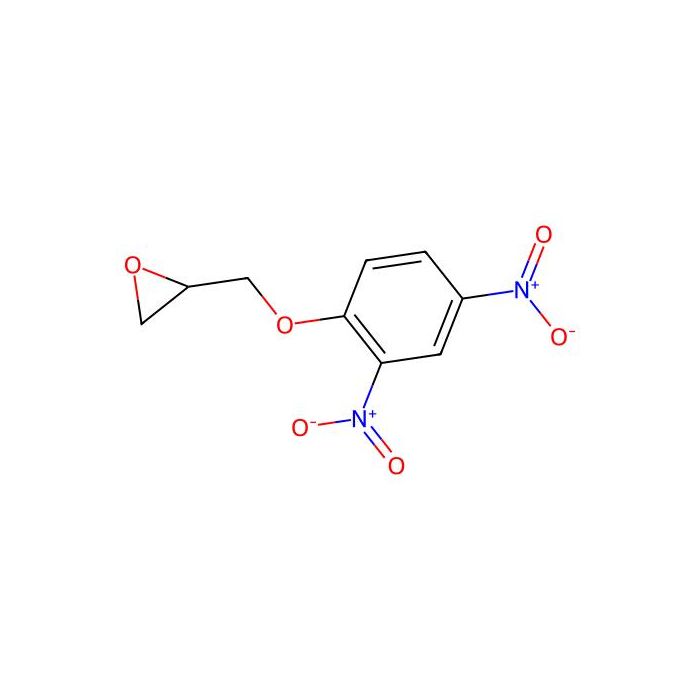
This compound belongs to the class of organic compounds known as nitrophenyl ethers. These are aromatic compounds containing a nitrobenzene moiety that carries an ether group on the benzene ring.
External Descriptors
Not available
1. Djoumbou Feunang Y, Eisner R, Knox C, Chepelev L, Hastings J, Owen G, Fahy E, Steinbeck C, Subramanian S, Bolton E, Greiner R, and Wishart DS. ClassyFire: Automated Chemical Classification With A Comprehensive, Computable Taxonomy. Journal of Cheminformatics, 2016, 8:61.
Zertifikate (CoA, COO, BSE/TSE und Analyse-Diagramm)
C of A & Other Certificates(BSE/TSE, COO):
Analytical Chart:
Chemische und physikalische Eigenschaften
Molekulargewicht
240.170 g/mol
XLogP3
1.200
Hydrogen Bond Donor Count
0
Hydrogen Bond Acceptor Count
6
Rotatable Bond Count
3
Exact Mass
240.038 Da
Monoisotopic Mass
240.038 Da
Topological Polar Surface Area
113.000 Ų
Heavy Atom Count
17
Formal Charge
0
Complexity
312.000
Isotope Atom Count
0
Defined Atom Stereocenter Count
0
Undefined Atom Stereocenter Count
1
Defined Bond Stereocenter Count
0
Undefined Bond Stereocenter Count
0
The total count of all stereochemical bonds
0
Covalently-Bonded Unit Count
1
Lösungsrechner
Molarity Calculator
Determine the necessary mass, volume, or concentration for preparing a solution.
Dilution Calculator
Determine the dilution needed to prepare a stock solution.
Reconstitution Calculator
Bewertungen
Kundenbewertungen
Application Protocols
No tested biological assay protocols are provided for this item in the Product Data. For synthetic use, consider the guidance under Reaction Conditions and Reaction & Applications for setting up nucleophilic ring-opening reactions, including solvent choice, temperature, catalysts, and monitoring by HPLC/UV or NMR.
For any bespoke application (e.g., tagging a nucleophilic analyte), conduct a small-scale screen to optimize nucleophile equivalents, solvent, and temperature, and verify product identity by NMR/MS/HPLC prior to scale-up.
Biological Roles
This product is a synthetic chemical building block for laboratory research. It is not intended for use in biological systems as a nutrient, metabolite, or therapeutic.
General/biochemistry context (literature-based, not product-specific):
Epoxide electrophiles can covalently modify nucleophilic residues in biomolecules (e.g., thiols of cysteine, amines of lysine) under suitable conditions. Such reactivity is exploited in probe design and bioconjugation but also underlies potential toxicity.
The 2,4-dinitrophenyl (DNP) group is a classic hapten/chromophore used to tag biomolecules for spectroscopic detection; however, this specific compound is provided strictly for research use in chemical synthesis, not for in vivo studies.
For any biological or bioconjugation experiments, carefully validate reactivity, selectivity, and biocompatibility in controlled in vitro assays. No biological role or regulatory status is claimed for this SKU.
Buffer Applications
Not typically applicable. 2-(2,4-Dinitrophenoxymethyl)oxirane is a reactive organic building block, not a buffering agent. It does not form a conventional acid–base buffer system.
If used in biochemical coupling, it would typically be dissolved in organic or mixed aqueous–organic media and reacted under controlled pH, but the compound itself does not provide buffering capacity. Choose buffers compatible with epoxide chemistry (e.g., avoid strong nucleophiles like primary amines if undesired).
Green Alternatives
Perspective: 2-(2,4-Dinitrophenoxymethyl)oxirane provides useful epoxide reactivity and a DNP chromophore but includes a nitroaromatic moiety and may require halogenated or dipolar aprotic solvents for challenging couplings. Consider the following greener strategies where compatible with your synthesis goals.
Alternative reagents/handles:
Non-nitro glycidyl ethers (e.g., phenyl glycidyl ether, allyl glycidyl ether) avoid nitroaromatic content and can reduce toxicity and energetic concerns, though they lack the strong UV handle.
Carbonate-based electrophiles (e.g., cyclic carbonates derived from glycerol) can sometimes replace epoxides in ring-opening reactions with improved safety/biodegradability profiles.
Solvent substitutions (where feasible):
Replace DCM with EtOAc or 2‑MeTHF.
Replace DMF/DMAc/NMP with MeCN, propylene carbonate, or Cyrene (dihydrolevoglucosenone) when compatible with nucleophile/catalyst.
Processing choices:
Use catalytic over stoichiometric promoters (e.g., catalytic Lewis acids or phase-transfer catalysts) to minimize waste.
Employ solvent recycling and real‑time analytical monitoring (HPLC/UV via DNP) to reduce rework.
Comparison (general):
2-(2,4-Dinitrophenoxymethyl)oxirane: high UV visibility; potent electrophile; nitroaromatic content; potential sensitization.
2‑MeTHF vs THF/DCM: bio‑based, lower VOC emissions; may alter rates/selectivity—validate prior to scale-up.
Pharmaceutical Uses
No pharmacopeial grade or excipient use is specified for this item; refer to CoA/Spec Sheet. This product is supplied for research use only.
General formulation context (literature-based; not product-specific):
Glycidyl ethers may serve as crosslinkers or intermediates in the synthesis of polymeric materials, affinity ligands, or analytical reagents. The DNP chromophore enables UV-detectable tagging of small molecules or peptides in analytical workflows.
This does not imply suitability for API manufacture or clinical use. For any GMP or regulatory applications, obtain appropriate grades, documentation, and perform full qualification. Aladdin lists this SKU strictly for laboratory research.
Physical Properties
Item-specific (from Product Data):
Appearance: Not specified for this item; refer to CoA/Spec Sheet.
Grade/Purity: Not specified for this item; refer to CoA/Spec Sheet.
Molecular Formula: Not specified for this item; refer to CoA/Spec Sheet.
Molecular Weight: Not specified for this item; refer to CoA/Spec Sheet.
Physical state/solubility (general expectation): Aromatic glycidyl ethers are typically low‑melting solids or viscous oils, soluble in common organic solvents (e.g., acetone, acetonitrile, dichloromethane, THF, ethyl acetate) and poorly soluble in water. Actual solubility and state may vary by lot; verify experimentally.
Spectroscopic features: DNP chromophore usually shows strong UV absorption around 260–360 nm (literature, substituent-dependent). This can aid in reaction monitoring (HPLC/UV) but is not a UV‑cutoff specification for this item.
Not specified for this item; refer to CoA/Spec Sheet for: melting/boiling point, density, refractive index, logP, pKa, water/peroxide/metal limits, and UV cutoff.
Quality and Grades
Item-specific grade/purity: Not specified for this item; refer to CoA/Spec Sheet.
What to expect in specification documents:
Identification tests (e.g., NMR, IR, HPLC/GC purity) to verify the glycidyl ether and DNP functionalities.
Residual solvent levels, related substances, and stability markers (e.g., epoxide content) may be reported when applicable.
Water content (Karl Fischer), inorganic residue, and UV profile may be included for chromatography or photometric applications. None are specified here for this SKU.
Considerations for this compound class:
Epoxides can undergo slow ring-opening during storage if moisture or base is present. High-purity material typically shows a single major peak by HPLC/GC and a clean epoxide signal by NMR (oxirane protons around 2.5–3.5 ppm; literature ranges).
Request the current CoA for batch-specific purity, stabilizer content (if any), and analytical methods. If low UV background is needed (e.g., photometric assays), confirm UV absorbance specifications—Not specified for this item; refer to CoA/Spec Sheet.
Reaction and Applications
Core reactivity: The oxirane ring is a strained, electrophilic three-membered ring prone to nucleophilic ring opening. The adjacent aryl ether is deactivating via the 2,4-dinitrophenyl group, which also provides UV visibility.
Aminolysis: Primary/secondary amines open the epoxide to give β-amino alcohols. Conditions range from neat amine or amine in MeCN/THF at 0–60 °C. Tertiary amines can act as catalysts for other nucleophiles.
Thiolysis: Thiols give β-mercapto alcohols, often under base (e.g., Et3N) or thiolate conditions; useful for conjugation to cysteine-containing peptides/proteins in organic/aqueous-organic media.
Alcoholysis: Alcohols add to epoxides under acid catalysis (e.g., BF3·OEt2, p‑TsOH) to form β-alkoxy alcohols. Lewis acids can promote regioselective opening.
Carbanion additions: Organocuprates or stabilized enolates may open the epoxide at the less substituted carbon to form extended alcohols.
Polymer/labile linker chemistry: Glycidyl ethers act as crosslinking points; the DNP tag can assist HPLC monitoring of coupling efficiency.
Practical tips:
Control moisture: adventitious water causes hydrolysis to diols; use dry glassware/solvents.
Regioselectivity: Under basic/nucleophilic conditions, attack generally occurs at the less substituted epoxide carbon (here, the terminal CH2). Under acidic/Lewis-acidic conditions, attack may reverse.
Monitoring: The DNP chromophore allows convenient HPLC/UV tracking (ca. 260–360 nm; verify λmax experimentally). NMR (disappearance of oxirane signals) is also effective.
Workup: Quench carefully to avoid over‑reaction; neutralize acids/bases and remove salts. Silica gel chromatography is typically suitable; protect from strong acids on silica to avoid side reactions.
Reaction Conditions
General guidance from literature for epoxide ring opening (not product specifications; optimize per substrate):
Aminolysis (β-amino alcohol formation):
Solvent: MeCN, THF, or neat amine.
Temperature: 0–60 °C.
Base/catalyst: Often none required; tertiary amine (e.g., Et3N) can accelerate. Typical times 0.5–16 h.
Thiolysis (β-mercapto alcohols):
Solvent: MeCN, DMF, or DMSO for poorly soluble thiols.
Base: Et3N/K2CO3 or NaSH for thiolate formation.
Temperature: 0–40 °C; times 0.5–6 h.
Alcoholysis (β-alkoxy alcohols):
Catalyst: BF3·OEt2, Ti(OiPr)4, or p‑TsOH (1–10 mol%).
Solvent: DCM, toluene, or the alcohol itself.
Temperature: 0–25 °C; monitor to avoid oligomerization.
Halohydrin formation:
Reagent: LiBr or HBr in aprotic solvents (e.g., MeCN) at 0–25 °C.
Carbanion addition:
Nucleophile: Gilman reagents or soft carbanions.
Solvent: Ether solvents (THF/Et2O) at −78 to 0 °C; inert atmosphere.
Workup/monitoring:
Monitor by HPLC/UV (DNP chromophore) or NMR. Quench with aqueous ammonium chloride or bicarbonate. Extract into organic solvent; dry and purify by silica gel.
These conditions are representative for aryl glycidyl ethers. Pilot small-scale trials are recommended to determine exact stoichiometry, temperature, and catalyst loading for your system.
Safety and Handling
Item-specific hazard/GHS information: Not specified for this item; refer to SDS.
General safety guidance for epoxides and dinitrophenyl aryl ethers (literature-based; not a substitute for SDS):
Likely hazards: Epoxides are typically skin/eye irritants and sensitizers; DNP derivatives can be acutely toxic and harmful if swallowed or inhaled. Avoid skin contact and inhalation of dust/vapors.
PPE: Lab coat, safety glasses or face shield, and chemical-resistant gloves (e.g., nitrile). Work in a fume hood. Use splash protection for charging/scale-up.
Handling: Minimize exposure to heat and strong light. Avoid contact with strong bases/acids and strong nucleophiles unless intended; such reagents can rapidly open the epoxide. Avoid amines and thiols during storage/use unless under controlled reaction conditions.
Incompatibilities: Strong oxidizers/reducers, strong bases/acids (accelerate ring opening), reactive metals. Nitroaromatics may present combustion hazards—keep away from ignition sources.
First aid (overview):
Skin/eye contact: Rinse with water for at least 15 minutes; remove contaminated clothing; seek medical evaluation.
Inhalation: Move to fresh air; monitor breathing; seek medical attention.
Ingestion: Rinse mouth; do not induce vomiting; seek medical attention.
Spill/containment: Absorb with inert material, avoid dust/aerosol generation, and dispose as hazardous waste per local regulations.
Defer to the official Aladdin SDS for authoritative hazard classifications (signal word, H‑statements, pictograms) and exposure limits for SKU D1026647.
Solvent Selection
This product is a reactive building block, not a solvent. Selection below pertains to using it as a substrate/reagent.
Polarity/miscibility (general expectations for aryl glycidyl ethers):
Soluble in moderately polar aprotic solvents (acetonitrile, DMF, DMSO) and common organics (THF, EtOAc, DCM). Poorly soluble in water.
Choose dry, peroxide-free solvents for base- or anion-promoted transformations to minimize epoxide hydrolysis and side reactions.
Typical choices by reaction class:
Nucleophilic ring opening with amines/thiols/alcohols: MeCN, THF, DCM, or toluene; for less nucleophilic partners, DMF/DMSO may be needed.
Catalyzed openings (Lewis acids): DCM, toluene, or EtOAc under anhydrous conditions.
Anionic polymerization/coupling: THF or glyme ethers under inert atmosphere.
When to choose alternatives:
For greener profiles, replace DCM with EtOAc or 2-MeTHF; replace DMF/DMSO with MeCN or propylene carbonate where feasible. Validate solubility/reactivity before scale-up.
Drying/quality tips:
Predry hygroscopic solvents (molecular sieves 3Å/4Å). Degas if moisture- or oxygen-sensitive catalysts are used. Always verify solvent compatibility with nucleophile and downstream workup.
Storage and Reconstitution
Storage (item-specific from Product Data): Room temperature.
General handling recommendations for epoxide reagents (literature-based; supplement to Product Data):
Keep container tightly closed under dry, inert atmosphere if possible. Use desiccant to limit moisture ingress; epoxides can slowly hydrolyze.
Store away from bases, acids, and strong nucleophiles to prevent premature ring opening. Minimize exposure to heat and strong light.
Reconstitution/Preparation for use:
Dissolve immediately before use in a dry, compatible solvent (e.g., MeCN, THF, DCM, EtOAc). Filter if particulate matter is present.
For moisture-sensitive transformations, predry solvents and glassware; consider adding 3Å/4Å molecular sieves.
Stability notes:
Avoid prolonged storage of dilute solutions; prepare fresh solutions as needed.
If crystallization/solidification occurs, gently warm to ambient and homogenize under inert gas.
For definitive storage and stability statements (including any stabilizers or shelf-life), consult the Aladdin CoA/SDS for SKU D1026647. Research use only.
Structure and Identity
Brief description: 2-(2,4-Dinitrophenoxymethyl)oxirane is a glycidyl aryl ether featuring a reactive epoxide (oxirane) linked via a methylene bridge to a 2,4-dinitrophenyl phenoxy group. The molecule presents a strongly electron‑withdrawing, chromophoric 2,4-dinitrophenyl (DNP) ring and a strained three‑membered epoxide ring.
Item-specific (from Product Data):
Product Name: 2-(2,4-Dinitrophenoxymethyl)oxirane
CAS: 19652-60-9
CID: 319009
InChIKey: 128393 (as provided)
SMILES: Not specified for this item; refer to CoA/Spec Sheet.
Computed/literature identity (non-specification; for reference):
Common synonym (literature): 2,4-Dinitrophenyl glycidyl ether (DNPG)
Functional groups: epoxide (oxirane), aryl ether, two nitro substituents (2- and 4- on phenyl)
Molecular formula (computed): C9H8N2O6
Molecular weight (computed): ~240.16 g/mol
2D structure (verbal): A phenyl ring bearing nitro groups para (4) and ortho (2) to the phenoxy linkage. The phenoxy oxygen is bonded to a –CH2– substituent that forms part of a three‑membered epoxide ring (oxirane) with the adjacent carbon.
Notes:
The DNP ring increases electron withdrawal and UV absorption, while the oxirane provides electrophilic reactivity toward nucleophiles.
For definitive structure identifiers (SMILES/InChI), consult the Aladdin CoA/Spec Sheet for this specific SKU (D1026647).
Synthetic Utility
Electrophilic handle: The epoxide enables formation of β‑functionalized alcohols with high atom economy via nucleophilic ring opening (amines, thiols, alkoxides, halides, cyanide, and stabilized carbon nucleophiles).
Tagging/detection: The 2,4‑dinitrophenyl (DNP) unit imparts strong UV absorbance, facilitating HPLC monitoring of reaction progress and enabling synthesis of UV‑labeled intermediates/standards.
Linker chemistry: As a glycidyl aryl ether, it can introduce a secondary alcohol after opening, leaving the aryl ether intact for further transformations (e.g., nitration level adjustments, reduction of nitro to amine for downstream coupling, or SNAr on suitably activated positions—subject to substitution pattern constraints).
Retrosynthetic value: Serves as a masked 1,2-difunctional synthon delivering a terminal nucleophile and an adjacent alcohol, useful in convergent assembly of β‑substituted alcohol frameworks and in preparing surfactant-like motifs or polymer side chains.
Selectivity control: Choice of acid vs base catalysis, solvent polarity, and nucleophile hardness allows tuning of regio- and stereochemical outcomes (literature: less-substituted attack under basic conditions; potential inversion at the reacting carbon).
Compatibility: Avoid strong bases over extended times (risk of elimination or polymerization). Use mild Lewis acids for alcoholysis and halide promoters (e.g., LiBr) for halohydrin formation when desired.
Target Specificity
Not applicable. This product is a small-molecule chemical reagent and does not have antigen/epitope targets, clone/isotype information, or species reactivity. No item-specific target data are provided in the Product Data.
Wir verwenden Cookies, um die ordnungsgemäße Funktion der Website sicherzustellen und, soweit zulässig, Ihr Nutzererlebnis zu verbessern. Sie können Ihre Einstellungen jederzeit unter „Einstellungen“ verwalten. Weitere Informationen finden Sie in unserer Cookie-Richtlinie.
Shall we send you a message when we have discounts available?
Remind me later
Thank you! Please check your email inbox to confirm.
Products are supplied to verified businesses, institutions, and qualified professionals for research and development use only. Not for use in humans, animals, diagnosis, or therapy.