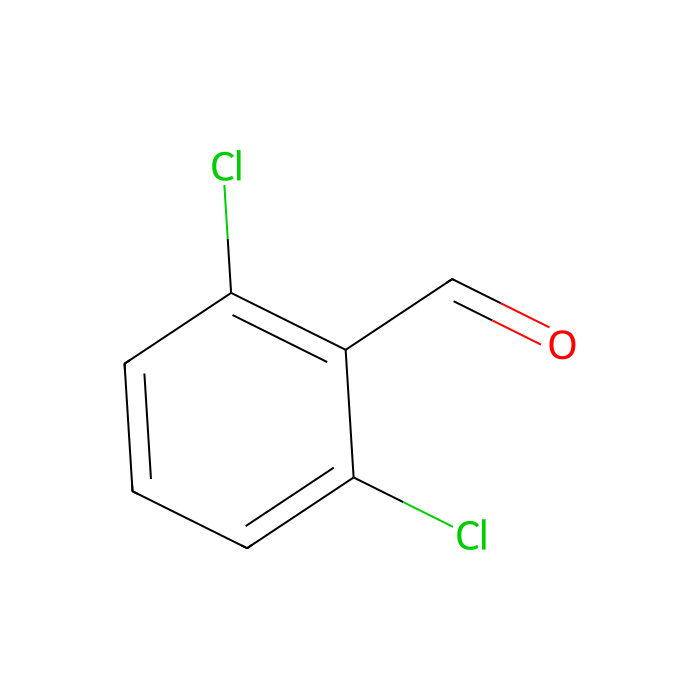
This compound belongs to the class of organic compounds known as dichlorobenzenes. These are compounds containing a benzene with exactly two chlorine atoms attached to it.
External Descriptors
Not available
1. Djoumbou Feunang Y, Eisner R, Knox C, Chepelev L, Hastings J, Owen G, Fahy E, Steinbeck C, Subramanian S, Bolton E, Greiner R, and Wishart DS. ClassyFire: Automated Chemical Classification With A Comprehensive, Computable Taxonomy. Journal of Cheminformatics, 2016, 8:61.
Determine the necessary mass, volume, or concentration for preparing a solution.
Dilution Calculator
Determine the dilution needed to prepare a stock solution.
Reconstitution Calculator
Bewertungen
Kundenbewertungen
Application Protocols
No item-specific, tested bioassay or analytical protocols are provided in the Product Data. As a general-purpose building block, protocol choice depends on the intended synthetic transformation.
General synthetic handling (literature/typical):
Dissolution: Prepare stock solutions in dry DCM, THF, toluene, MeCN, or EtOAc under inert gas; determine concentration gravimetrically.
Moisture/air control: Degas solvents (sparge with argon or perform freeze–pump–thaw). Use oven-dried glassware. Keep headspace under argon as per Product Data.
Reaction monitoring: TLC (hexanes/EtOAc), GC–FID, or LC–MS. Aldehyde shows strong IR C=O band (ca. 1690–1710 cm−1).
Workup: For basic reactions, quench carefully to avoid Cannizzaro side products; for oxidative steps, neutralize oxidants and extract into greener solvents where possible.
Purification: Crystallization from hexanes/EtOAc or EtOAc/MeOH; or silica gel chromatography (avoid prolonged strong base on silica).
If you require a validated, step-by-step protocol for a specific reaction class (e.g., Wittig, TEMPO oxidation, Suzuki coupling), request application notes tailored to your scale and equipment.
Biological Roles
This compound is a synthetic aromatic aldehyde and is not a natural metabolite. No item-specific biological data are provided in the Product Data. The following are general, literature-based considerations for aldehydes; they are not clinical or therapeutic claims.
Reactivity with biomolecules (general): Aldehydes can form reversible Schiff bases with primary amines (e.g., lysine residues) and can further undergo reduction to stabilize adducts. The ortho-dichloro substitution increases lipophilicity and may enhance membrane association relative to benzaldehyde, but also reduces ring reactivity.
Enzyme interactions: Non-specific covalent or reversible interactions via imine formation are possible under physiological-like conditions, but 2,6-dichlorobenzaldehyde is not recognized as a specific enzyme substrate or cofactor in metabolism.
Biotransformation: Typical metabolic fates of aromatic aldehydes include oxidation to the corresponding carboxylic acids (via aldehyde dehydrogenases) and reduction to benzyl alcohols (via aldo-keto reductases), followed by conjugation (glucuronidation/sulfation) for excretion.
Toxicology notes (general): Halogenated aromatic aldehydes can exhibit irritancy and may display aquatic toxicity. Handle strictly for research use in appropriate containment.
Conclusion: Use is primarily as a chemical intermediate or probe in biochemical research settings, not as a buffer component, nutrient, or biopolymer building block.
Buffer Applications
Not typically applicable. 2,6-Dichlorobenzaldehyde is a hydrophobic aromatic aldehyde and does not serve as a buffering agent. It is only sparingly soluble in water and lacks acid/base conjugate pairs in the physiological pH range. For aqueous biochemical work, consider using it as an organic-phase reagent or in biphasic/organic media and refer to the Reaction & Applications and Synthetic Utility sections for relevant uses.
Green Alternatives
As a substrate, 2,6-dichlorobenzaldehyde itself is not replaceable when its exact structure is desired. However, greener choices can be made for solvents and reagents in its transformations.
Greener solvent choices (literature/general):
Replacement of chlorinated solvents:
DCM/CHCl3 → EtOAc, 2-MeTHF, CPME where feasible (extractions, crystallizations, many condensations).
Ether alternatives:
THF → 2-MeTHF or CPME (comparable performance in Grignard/Wittig; reduced peroxide concerns vs THF, better phase separation, often bio-based).
Aromatics:
Toluene → p-cymene or anisole when high-temperature non-polar media are needed, mindful of boiling points and reactivity.
Representative comparison (general; not item-specific):
DCM vs EtOAc
EHS profile: DCM is a chlorinated solvent with higher environmental/health concerns; EtOAc is biodegradable with lower toxicity.
Process impact: DCM evaporates readily; EtOAc requires slightly more energy to remove but improves E-factor.
THF vs 2-MeTHF
EHS profile: 2-MeTHF can be derived from biomass (furfural); lower miscibility with water aids workups.
Reactivity: Similar for many nucleophilic additions and Wittig reactions; always confirm on small scale.
Greener reagents/conditions:
Oxidations: Prefer TEMPO/NaClO, Oxone, or catalytic aerobic oxidations over Cr(VI)/Mn(VII) reagents.
Reductions: Catalytic hydrogenation or mild hydrides (NaBH4 in green solvents) over stoichiometric metal hydrides in hazardous media.
Energy: Employ flow chemistry, photoredox, or microwave assistance to shorten times and reduce solvent volumes.
Pharmaceutical Uses
Item-specific pharmacopeial status, GMP grade, and excipient suitability are not provided in the Product Data.
General, literature-based context (not item-specific; no therapeutic claims):
Role: Used as a synthetic intermediate in the preparation of bioactive scaffolds where ortho-dichloro substitution imparts steric and electronic effects. Typical downstream transformations include imine formation/reduction (to benzylamines), Wittig/HWE olefinations (to styrenes), and oxidation (to benzoic acids) used in drug and agrochemical discovery.
Formulation/excipient use: Aromatic aldehydes are generally not used as excipients due to reactivity with amines and proteins; they can cause discoloration and instability in formulations. Consequently, if present, they are typically treated as impurities to be minimized.
Impurity/ICH perspective: Aldehydes are considered reactive impurities; control strategies may involve specification limits, scavenging (e.g., with amino resins), or in situ conversions to less reactive derivatives.
Process considerations: For scale-up, attention is paid to containment (odor), off-gassing during heating, and oxidation control. Greener solvents (EtOAc, 2-MeTHF) and catalytic transformations (aerobic oxidations, transfer hydrogenations) are often preferred in line with QbD and sustainability targets.
For regulated applications, request grade documentation and full CoA/SDS to confirm compliance with internal specifications.
Physical Properties
Item-specific specifications (purity, appearance, exact numeric limits) are not provided in the Product Data. Consult the CoA/Spec Sheet for definitive values.
Literature/typical properties for 2,6-dichlorobenzaldehyde (reference only; not item-specific):
Phase/appearance (literature): crystalline solid
Melting point (literature): ~49–52 °C
Boiling point (literature): ~244–246 °C at 1 atm (with some decomposition possible upon prolonged heating)
Density (literature): solid; liquid density near mp is not commonly reported
Solubility (literature):
Water: very low solubility (typical of dichloroaryl aldehydes)
Organic: good solubility in alcohols (MeOH/EtOH), ethers (THF, MTBE), chlorinated solvents (DCM, CHCl3), esters (EtOAc), aromatics (toluene)
pKa: not applicable (aldehyde; no acidic protons on carbonyl carbon)
UV characteristics (literature): π→π* aromatic/aldehyde absorption; UV cutoff not standardized; use low-UV solvents for HPLC detection applications
Vapor pressure (literature): low at ambient temperature; handle in well-ventilated hood to minimize odor exposure
General considerations (chemistry knowledge):
The ortho dichloro substituents increase crystallinity and mp versus benzaldehyde, and decrease water solubility.
Aldehydes can undergo slow air oxidation to the corresponding acid; minimize heat and air exposure to preserve material integrity.
Quality and Grades
Item-specific grade, purity, appearance, and detailed specification limits are not provided in the Product Data for SKU D129145.
Not specified for this item; refer to CoA/Spec Sheet.
General guidance (chemistry/manufacturing context):
Common commercial grades for aromatic aldehydes include:
Research grade: suitable for general synthesis and screening.
Purified/recrystallized grade: tighter limits on residual solvents and related aromatics.
Chromatography (HPLC/GC) grade: controlled UV background and low non-volatile residue (when supplied as solution or when intended for analytical use).
Stabilizers: Aromatic aldehydes are typically supplied neat without stabilizers; quality is maintained by limiting exposure to air (oxygen), light, and moisture. The Product Data specify argon charging, which helps minimize oxidative degradation to 2,6-dichlorobenzoic acid.
Identity/assay verification typically includes: 1H/13C NMR (formyl signal ~9.9–10.2 ppm), IR (C=O ~1690–1710 cm−1 with aryl shifts), GC/LC purity, and MS (M+ at m/z 175 with 3:1 35Cl/37Cl isotopic pattern, plus 175/177 doublet).
Recommendation: For air-/oxidation-sensitive applications (e.g., low-level impurity studies), request most recent CoA, including assay, water content, and impurity profile. If trace metals or peroxides are critical, specify acceptance criteria and obtain a custom specification if needed.
Reaction and Applications
2,6-Dichlorobenzaldehyde is a versatile electrophile whose reactivity is shaped by the ortho dichloro substituents (deactivating, weakly ortho/para directing) that modulate both the ring and carbonyl chemistry.
Key transformations (literature/general):
Nucleophilic additions to the aldehyde: Grignard/organolithium reagents give secondary alcohols (work in dry ether/THF, 0–25 °C). Hydride reductions (NaBH4, DIBAL-H) provide 2,6-dichlorobenzyl alcohol.
Oxidations: to 2,6-dichlorobenzoic acid (Jones, KMnO4, TEMPO/bleach, Pinnick, or O2/catalyst). Aldehyde hydration is slow; oxidations are often high yielding.
Condensations: Schiff bases with amines (imine formation; catalytic acid or dehydrating conditions). Knoevenagel/Perkin condensations with active methylenes or anhydrides under base or amine catalysis (toluene, Dean–Stark).
Wittig/Horner–Wadsworth–Emmons: efficient alkenylation to (E/Z)-2,6-dichlorostyrenes; control E/Z via ylide type/temperature.
Cannizzaro (non-enolizable aldehyde behavior): under strong base (e.g., concentrated NaOH) disproportionation to 2,6-dichlorobenzyl alcohol and 2,6-dichlorobenzoate.
Multicomponent: Passerini and Ugi reactions using the aldehyde component to generate peptidomimetics and diverse scaffolds.
Ring chemistry: The aryl chlorides serve as handles for cross-coupling (Suzuki, Buchwald–Hartwig after conversion or via direct C–Cl activation with suitable catalysts); ortho dichloro substitution affords regioselective couplings.
Applications:
Intermediate to agrochemical and material science motifs where ortho-chloro substitution impacts sterics/electronics.
Useful in producing sterically encumbered ligands and heterocycles where ortho dihalogenation influences conformation and reactivity.
Practical tips:
Maintain inert atmosphere (argon) to suppress oxidation.
For base-catalyzed condensations, limit exposure time to avoid side reactions (Cannizzaro).
Reaction Conditions
The following are general, literature-based conditions for common transformations of 2,6-dichlorobenzaldehyde; they are guidance only and not item-specific.
Grignard addition (to form secondary alcohols):
Solvent: dry THF or Et2O; inert atmosphere.
Temperature: 0 °C to RT.
Stoichiometry: 1.1–1.5 equiv RMgX.
Workup: saturated NH4Cl or aqueous acid quench; typical isolated yields 70–90% depending on R.
NaBH4 reduction (to benzyl alcohol):
Solvent: MeOH, EtOH, or MeOH/THF.
Temperature: 0–25 °C.
Stoichiometry: 1.1–2.0 equiv NaBH4; 30–120 min; yields often 80–95%.
TEMPO/bleach oxidation (to acid):
Solvent: MeCN/H2O or EtOAc/H2O with NaHCO3 buffer.
Catalyst: TEMPO (1–5 mol%), NaClO (1.2–2.0 equiv as active chlorine), KBr (co-catalyst) optional.
Temp: 0–25 °C; 1–4 h; yields typically 80–95%.
Wittig olefination:
Solvent: THF or toluene.
Base: n-BuLi or NaHMDS to generate ylide if not preformed.
Temp: −78 °C to RT; E/Z control via ylide type; 60–90% yields common.
Knoevenagel condensation:
Partners: malononitrile, ethyl cyanoacetate, etc.
Catalyst: piperidine, pyridine, or ammonium acetate.
Solvent: toluene (Dean–Stark) or EtOH; 60–95% yields.
Suzuki coupling (on aryl chloride):
Catalyst: Pd2(dba)3 or Pd(OAc)2 with SPhos/XPhos (2–5 mol%).
Base: K3PO4 or Cs2CO3.
Solvent: toluene/H2O or dioxane/H2O.
Temp: 90–120 °C; 4–24 h; yields variable (40–85%) due to C–Cl activation.
Always dry solvents and exclude air/moisture, consistent with the Product Data’s argon storage guidance.
Safety and Handling
Item-specific GHS details (signal word, H-statements, pictograms) are not provided in the Product Data. Always refer to the product SDS for authoritative hazard, first-aid, and regulatory information.
General safety profile for aromatic aldehydes (literature/typical; not item-specific):
Likely hazards: skin/eye irritation, respiratory irritation, harmful if swallowed; may be hazardous to aquatic life due to halogenation.
Odor: characteristic aromatic/aldehydic odor—use in a fume hood.
PPE and engineering controls (good laboratory practice):
Wear lab coat, safety glasses or face shield, and appropriate chemically resistant gloves (e.g., nitrile). Work in a certified chemical fume hood.
Avoid breathing vapors or dust; avoid skin/eye contact. Wash thoroughly after handling.
Handling and storage:
From Product Data: store at room temperature under inert gas (argon charged). Keep container tightly closed. Protect from moisture, air, and prolonged light exposure to limit oxidation to the corresponding benzoic acid.
Inhalation: move to fresh air; seek medical attention if symptoms persist.
Skin/eye contact: rinse with plenty of water; remove contaminated clothing; seek medical attention for persistent irritation.
Ingestion: rinse mouth; do not induce vomiting; seek medical attention.
Spill/fire response:
Contain solids to prevent dusting; absorb with inert material for disposal. Combustible solid; use CO2, dry chemical, or foam to extinguish. Combustion may produce HCl and phosgene—firefighters should use SCBA.
Solvent Selection
As a moderately lipophilic aromatic aldehyde, 2,6-dichlorobenzaldehyde dissolves readily in many organic solvents and poorly in water.
Poorly soluble in: water, hexanes (solubility improves on warming or with small amounts of polar co-solvent).
Dielectric perspective (literature): effective dissolution in solvents with ε ≈ 4–40 (toluene → MeCN).
Chromatography: Typically elutes at moderate to high Rf in hexanes/EtOAc (3:1 to 1:1); aldehyde band can trail—add 0.1–1% Et3N if needed to sharpen, but avoid prolonged base exposure.
When to choose what:
DCM/EtOAc: fast dissolution at RT; good for extractions and workups.
THF/Et2O: preferred for nucleophilic additions (Grignard, organolithium) and Wittig; dry, oxygen-free conditions recommended.
Toluene: thermal condensations (Perkin/Knoevenagel) with Dean–Stark water removal.
Alcohols (MeOH/EtOH): reductions (NaBH4), imine formation with amines; watch for acetal/hemiacetal formation under acid.
MeCN: oxidative conversions and CN-based condensations; good for photoredox setups due to transparency.
Comparison (general considerations):
THF vs 2-MeTHF: similar solubility; 2-MeTHF is greener and less miscible with water, aiding separations.
DCM vs EtOAc: DCM offers superior solvency and volatility; EtOAc is greener, biodegradable, and non-chlorinated.
Storage and Reconstitution
Item-specific storage (from Product Data): Store at room temperature under argon (argon charged). Ship under normal conditions. Keep container tightly sealed.
Additional handling guidance (general chemistry):
Aldehydes are prone to slow air oxidation to the corresponding acid; inert headspace (as provided) reduces this pathway. Minimize repeated air exchange by using septum-sealed bottles or transferring to crimp vials for long-term storage.
Protect from moisture and strong light; store in a dry place. Desiccant in the outer container can help in humid environments.
If solidifies/crystallizes unevenly, gently warm (30–40 °C) under inert gas to homogenize, then allow to cool before dispensing, avoiding prolonged heating.
Do not freeze–thaw aqueous systems (not applicable here); the compound is typically handled neat or in anhydrous organic solvents.
Reconstitution notes:
Not applicable as a lyophile. For solution preparation, dissolve the required mass in a dry, oxygen-free organic solvent (e.g., THF, DCM, EtOAc, toluene, MeCN). Filter through a PTFE syringe filter if particulates are present.
Record concentration gravimetrically; store solutions under inert gas at low temperature (e.g., 2–8 °C) where compatible with the solvent, and use within days to weeks to limit oxidation.
For precise shelf-life and re-test intervals, consult the product CoA/Spec Sheet.
Structure and Identity
A deactivated, ortho,ortho-dichloro–substituted aromatic aldehyde used as a versatile electrophilic building block.
Item-specific (from Product Data)
SKU: D129145
Product Name: 2,6-Dichlorobenzaldehyde
CAS: 83-38-5
CID: 6737
InChIKey (as provided): 67208
Storage: Room temperature, Argon charged
Shipped In: Normal
Research Use Note: For research use only
Computed/Literature structural identifiers (for reference; not item-specific)
Core: monosubstituted benzaldehyde ring bearing two ortho chlorine atoms at C2 and C6 relative to the aldehyde.
Functional groups: aromatic ring; aldehyde (–CHO); two aryl chlorides (–Cl) that are deactivating and ortho/para directing.
Electronic effects: strong −I inductive withdrawal from the two ortho chlorides reduces ring nucleophilicity and slightly modulates the aldehyde’s reactivity (often increasing chemoselectivity in nucleophilic additions).
2D description: a benzene ring with an aldehyde at position 1, chlorines at positions 2 and 6. No stereocenters; planar aromatic system with a trigonal planar formyl carbon.
Notes: Where the Product Data omit or differ (e.g., SMILES), literature identifiers above are provided for convenience; consult the CoA/Spec Sheet for definitive item identifiers.
Condensation partner (imines/oximes/hydrazones; Knoevenagel/Perkin with active methylenes/anhydrides).
Olefination via Wittig/HWE to access 2,6-dichlorostyrenes.
Oxidation to 2,6-dichlorobenzoic acid (robust and high-yielding with TEMPO/bleach, Pinnick, or O2 catalysts).
Aryl chlorides (2,6-positions):
Cross-coupling handles (Suzuki–Miyaura, Buchwald–Hartwig, Negishi, Kumada) under appropriate Pd/Ni catalysis; ortho dichloro substitution often enables stepwise, regioselective coupling.
Directed ortho-metalation adjacent to the formyl may be impeded by chlorides but can be accessed with strong bases under cryogenic conditions for further elaboration.
Retrosynthetic value:
2,6-Dichlorobenzaldehyde serves as a convergent node: install the aldehyde late (e.g., via formylation of 2,6-dichloroaryl precursors) or start from the aldehyde and diversify via coupling on the aryl chlorides, enabling rapid SAR around a constant benzylic handle.
Select named reactions (literature/general):
Wittig/HWE, Knoevenagel, Perkin, Cannizzaro (base-promoted), Passerini/Ugi, oxime/semicarbazone formation for purification or protection.
Process tips:
Maintain inert gas (argon) as specified to suppress oxidation.
For couplings, employ ligands optimized for aryl chlorides (e.g., BrettPhos, SPhos, XPhos) and elevated temperatures; microflow or microwave can accelerate difficult C–Cl activations.
Target Specificity
Not applicable. This product is a small-molecule chemical intermediate, not a biological targeting reagent (e.g., antibody, enzyme inhibitor with defined target panel, or nucleic acid). No target, epitope, clone, isotype, or species reactivity information is relevant.
Häufig gestellte Fragen
What is the purity of this product?
This product is supplied at ≥98% purity (chemical assay). Lot-specific values are stated on the Certificate of Analysis.
How should this product be stored?
Store at room temperature under argon. It is supplied under an argon blanket; reseal under inert gas after each use.
How is this product shipped?
This product ships under standard ambient conditions. No temperature-controlled packaging is required.
What are the CAS number, molecular formula and molecular weight?
The CAS Number is 83-38-5, the molecular formula is C7H4Cl2O, and the molecular weight is 175.01 g/mol. InChIKey DMIYKWPEFRFTPY-UHFFFAOYSA-N.
What documentation is provided?
Available product documentation, including Certificates of Analysis (COA), Safety Data Sheets (SDS), and specification sheets, is shown in the product document area. Document availability and access follow the current site policy.
Wir verwenden Cookies, um die ordnungsgemäße Funktion der Website sicherzustellen und, soweit zulässig, Ihr Nutzererlebnis zu verbessern. Sie können Ihre Einstellungen jederzeit unter „Einstellungen“ verwalten. Weitere Informationen finden Sie in unserer Cookie-Richtlinie.
Dürfen wir Sie über Rabattaktionen informieren?
Später erinnern
Vielen Dank! Bitte überprüfen Sie Ihren E-Mail-Posteingang, um zu bestätigen.
Products are supplied to verified businesses, institutions, and qualified professionals for research and development use only. Not for use in humans, animals, diagnosis, or therapy.

 E2203202