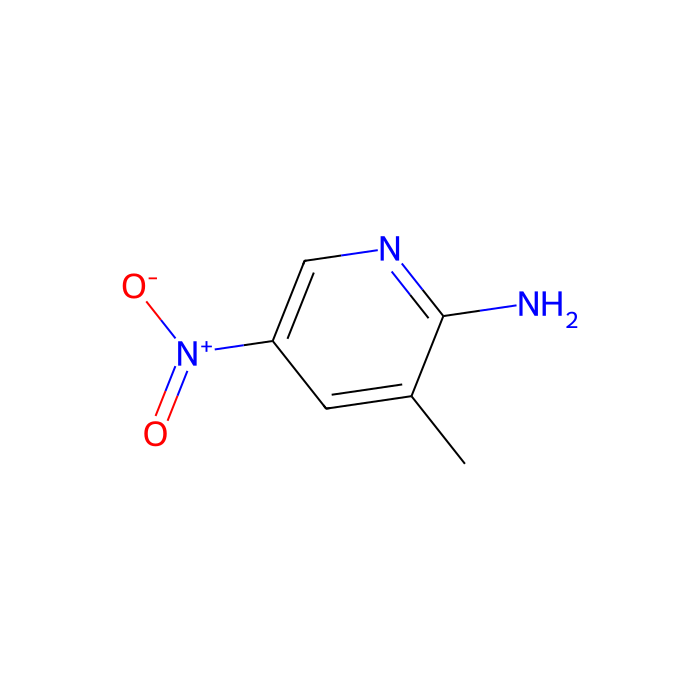
2-Amino-3-methyl-5-nitropyridine - ≥98% , CAS No.18344-51-9

CAS: 18344-51-9 Cat. No.: A151663 Summenformel: C6H7N3O2 Molekulargewicht: 153.14 Beilstein Registry Number: 22(5)9,285 EG-Nummer: 623-204-7
Zu bestellen verfügbar
QUALITÄT & REINHEIT ≥98%
Synonyms
2-Amino-5-nitro-3-methylpyridine|2-Amino-3-methyl-5-nitropyridine|3-methyl-5-nitropyridin-2-amine|2-PYRIDINAMINE, 3-METHYL-5-NITRO-|3-methyl-5nitro-2-aminopyridine|3-methyl-5-nitro-pyridin-2-ylamine|2-Amino-5-nitro-3-picoline
Storage
Room temperature
Shipped In
Normal
★
Größe
Deutschland (EU)
USA*
Preis
Menge
1g
A151663-1g
—
6 Auf Lager

8,59€

12,93€
Speichern 4,34 € (33.56%)
5g
A151663-5g
—
5 Auf Lager

14,66€

22,47€
Speichern 7,81 € (34.75%)
10g
A151663-10g
Auf Bestellung · 8–12 Wochen

25,08€

38,09€
Speichern 13,02 € (34.17%)
25g
A151663-25g
—
1 Auf Lager

36,36€

54,58€
Speichern 18,22 € (33.39%)
100g
A151663-100g
1 Auf Lager
1 Auf Lager

77,14€

116,19€
Speichern 39,05 € (33.61%)
Enter a quantity for the sizes you want to add.

Spezifikationen

Synonyme
2-Amino-5-nitro-3-methylpyridine | 2-Amino-3-methyl-5-nitropyridine | 3-methyl-5-nitropyridin-2-amine | 2-PYRIDINAMINE, 3-METHYL-5-NITRO- | 3-methyl-5nitro-2-aminopyridine | 3-methyl-5-nitro-pyridin-2-ylamine | 2-Amino-5-nitro-3-picoline
Spezifikationen & Reinheit
≥98%
Storage
Room temperature
Verschickt in
Normal
Reinheit
≥98%
Namen und Kennungen
Pubchem Sid
Pubchem Sid Url
https://pubchem.ncbi.nlm.nih.gov/substance/504761136
SMILES
CC1=CC(=CN=C1N)[N+](=O)[O-]
IUPAC Name
3-methyl-5-nitropyridin-2-amine
InChIKey
JLPYUDJJBGYXEZ-UHFFFAOYSA-N
InChI
1S/C6H7N3O2/c1-4-2-5(9(10)11)3-8-6(4)7/h2-3H,1H3,(H2,7,8)
Isomere SMILES
CC1=CC(=CN=C1N)[N+](=O)[O-]
WGK Deutschland
1
Molekulargewicht
153.14
Beilstein
22(5)9,285
Reaxys
126947
Reaxys-RN_link_address
https://www.reaxys.com/reaxys/secured/hopinto.do?context=S&query=IDE.XRN=126947&ln=

Erweiterte Daten

Taxonomic Classification

Taxonomy Tree

KingdomOrganic compounds
SuperclassOrganic 1,3-dipolar compounds
KlasseAllyl-type 1,3-dipolar organic compounds
SubclassOrganic nitro compounds
Intermediate Tree Nodes C-nitro compounds
Direct ParentNitroaromatic compounds
Alternative Parents Methylpyridines  Aminopyridines and derivatives  Imidolactams  Heteroaromatic compounds  Propargyl-type 1,3-dipolar organic compounds  Organic oxoazanium compounds  Azacyclic compounds  Primary amines  Organopnictogen compounds  Organic zwitterions  Organic oxides  Hydrocarbon derivatives  
Molecular FrameworkAromatic heteromonocyclic compounds
Substituents Nitroaromatic compound - Aminopyridine - Methylpyridine - Pyridine - Imidolactam - Heteroaromatic compound - Organic oxoazanium - Propargyl-type 1,3-dipolar organic compound - Azacycle - Organoheterocyclic compound - Amine - Hydrocarbon derivative - Organic oxide - Organic zwitterion - Organopnictogen compound - Primary amine - Organonitrogen compound - Organic oxygen compound - Organic nitrogen compound - Aromatic heteromonocyclic compound
BeschreibungThis compound belongs to the class of organic compounds known as nitroaromatic compounds. These are c-nitro compounds where the nitro group is C-substituted with an aromatic group.
External Descriptors Not available
3D-Struktur
Interaktives chemisches Strukturmodell


Zertifikate (CoA, COO, BSE/TSE und Analyse-Diagramm)
C of A & Other Certificates(BSE/TSE, COO):
Analytical Chart:

Find and download the COA for your product by matching the lot number on the packaging.

4 results found

Lot NumberCertificate TypeDatumArtikel
D2001050D2001050Certificate of AnalysisJan 16, 2024 A151663
L2311329L2311329Certificate of AnalysisDec 14, 2023 A151663
E2320326E2320326Certificate of AnalysisMay 31, 2023 A151663
E2320327E2320327Certificate of AnalysisMay 25, 2023 A151663
Chemische und physikalische Eigenschaften
Siedepunkt (°C)261 °C
Schmelzpunkt (°C)255°C(lit.)
Molekulargewicht153.14
XLogP30.700
Hydrogen Bond Donor Count1
Hydrogen Bond Acceptor Count4
Rotatable Bond Count0
Exact Mass153.054 Da
Monoisotopic Mass153.054 Da
Topological Polar Surface Area84.700 Ų
Heavy Atom Count11
Formal Charge0
Complexity156.000
Isotope Atom Count0
Defined Atom Stereocenter Count0
Undefined Atom Stereocenter Count0
Defined Bond Stereocenter Count0
Undefined Bond Stereocenter Count0
The total count of all stereochemical bonds0
Covalently-Bonded Unit Count1
Sicherheit und Gefahren (GHS)
Piktogramm(e)
GHS05,   GHS07
Signal
Danger
Gefahrenhinweise

H302:Harmful if swallowed

H315:Causes skin irritation

H318:Causes serious eye damage

H319:Causes serious eye irritation

H335:May cause respiratory irritation

Sicherheitshinweise

P261:Avoid breathing dust/fume/gas/mist/vapors/spray.

P264:Wash hands [and …] thoroughly after handling.

P270:Do not eat, drink or smoke when using this product.

P271:Use only outdoors or in a well-ventilated area.

P280:Wear protective gloves/protective clothing/eye protection/face protection.

P321:Specific treatment (see ... on this label).

P330:Rinse mouth.

P302+P352:IF ON SKIN: wash with plenty of water.

P304+P340:IF INHALED: Remove person to fresh air and keep comfortable for breathing.

P305+P351+P338:IF IN EYES: Rinse cautiously with water for several minutes. Remove contact lenses if present and easy to do - continue rinsing.

P362+P364:Take off contaminated clothing and wash it before reuse.

P405:Store locked up.

P403+P233:Store in a well-ventilated place. Keep container tightly closed.

P501:Dispose of contents/container to an approved waste disposal plant.

P264+P265:Wash hands [and …] thoroughly after handling. Do not touch eyes.

P301+P317:IF SWALLOWED: Get medical help.

P305+P354+P338:IF IN EYES: Immediately rinse with water for several minutes. Remove contact lenses if present and easy to do. Continue rinsing.

P317:Get emergency medical help.

P337+P317:If eye irritation persists: Get medical help.

P332+P317:If skin irritation occurs: Get medical help.

P319:Get medical help if you feel unwell.

WGK Deutschland
1
Reaxys
126947
Reaxys-RN_link_address
https://www.reaxys.com/reaxys/secured/hopinto.do?context=S&query=IDE.XRN=126947&ln=
Lösungsrechner
Bewertungen

Kundenbewertungen

Application Protocols

No validated bioassay or antibody protocols apply to this small-molecule intermediate.

General lab use suggestions (non-validated):

  • Prepare a 10–100 mM DMSO or DMF stock solution for screening chemistry or analytical standards; filter (0.2 µm PTFE) if needed.
  • For synthetic steps, see Reaction Conditions for representative setups (reduction, GBB cyclization, benzylic functionalization). Adjust stoichiometry and temperature based on scale and desired chemoselectivity.

For method-specific protocols (chromatography, crystallization, salt formation), consult internal SOPs and adapt to your instrumentation.

Biological Roles

This compound is a synthetic heteroaromatic intermediate and does not have a known intrinsic biological role.

General context (no medical claims):

  • The 2-aminopyridine motif is a privileged scaffold in medicinal chemistry and chemical biology due to its ability to form hydrogen-bonding interactions and to serve as a nucleophilic partner in heterocycle assembly (e.g., imidazo[1,2-a]pyridines). Such scaffolds are often explored in enzyme inhibitor and receptor-ligand libraries, but any biological activity arises from elaborated derivatives, not from the starting material itself.
  • Nitro groups are frequently used as synthetic handles; they can modulate electronic properties of the ring and be transformed into amines, enabling diverse SAR exploration.
  • The pyridine nitrogen and an exocyclic amine together can provide bidentate coordination sites upon derivatization, relevant for probing metalloenzyme mimics in basic research.

For laboratory work in biochemistry:

  • Stock solutions are typically prepared in DMSO and diluted into assay buffers; pre-screen solubility and aggregation. Protonated salt forms may improve aqueous compatibility but can alter assay pH/ionic strength.

All uses are strictly for research and laboratory investigations. Consult your institutional biosafety protocols when moving compounds into biological assay environments.

Buffer Applications

Not typically used as a buffer component. As a basic heteroaromatic amine, it can accept protons, but it lacks the defined pKa profile, solubility, and regulatory status expected of standard buffer systems.

Practical notes for labs:

  • If solutions are needed for screening, prepare concentrated DMSO stocks and dilute into established buffers (e.g., phosphate, HEPES, MOPS). Verify final DMSO content and pH.
  • For improved aqueous solubility, form a mineral-acid salt (e.g., HCl) and adjust pH after dissolution, but this is for compound handling rather than true buffering.

For buffer formulations, use validated systems with known buffering ranges rather than this substrate.

Green Alternatives

Greener choices pertain to the transformations performed on this substrate, as the compound itself is a solid building block (not a solvent).

Selected greener substitutions (literature guidance):

  • Nitro reduction:
    • Prefer catalytic hydrogenation (H2, Pd/C in EtOH or iPrOH) or transfer hydrogenation (HCO2NH4/Pd-C) over stoichiometric tin(II) chloride or iron/acid to minimize metal-salt waste.
  • Benzylic oxidation:
    • Use catalytic TEMPO/bleach (pH-controlled) or Mn-catalyzed oxidations instead of chromium(VI) reagents.
  • Benzylic bromination:
    • Employ photoredox catalysis (blue LEDs, organocatalysts) or NBS in greener solvents (EtOAc, MeCN) rather than CCl4/benzene.
  • Amide/urea formation:
    • Use coupling reagents with improved EHS profiles (e.g., COMU, T3P) or acid chlorides generated in situ with CO2-based activations; consider aqueous micellar catalysis where feasible.

Compact comparison (general):

| Transformation | Conventional option | Greener alternative | |---|---|---| | Nitro → amine | SnCl2/HCl, Fe/HCl | H2/Pd-C in EtOH; transfer hydrogenation | | CH3 → CH2Br | NBS/AIBN in CCl4 | NBS under photoredox in MeCN/EtOAc | | CH3 → CHO/CO2H | Cr(VI) oxidants | TEMPO/NaOCl; Ru- or Mn-catalyzed aerobic | | Amide coupling | DCC/HOBt | T3P, COMU; aqueous micellar media |

General operational tips:

  • Favor ethanol or isopropanol as reaction media where compatible.
  • Design telescoped sequences to reduce solvent swaps and workups.
  • Evaluate salt formation/recrystallization as purification to cut down on chromatography solvent use.
Pharmaceutical Uses

No excipient or pharmacopeial status is specified for this item; it is offered for research use only.

General notes (non-clinical, non-therapeutic):

  • Role in pharma R&D: a building block for the synthesis of heterocycles (e.g., imidazo[1,2-a]pyridines) and substituted pyridines during hit-to-lead and SAR campaigns. The presence of both nitro and amino groups enables divergent routes (reduction/derivatization, protection–deprotection sequences).
  • Process considerations: salt screening (e.g., HCl, sulfate) may be used in development to improve handling and crystallinity of intermediates derived from this scaffold.
  • Analytical development: due to the nitro chromophore and aromatic ring, UV detection in HPLC is typically robust; amine derivatization can assist LC–MS ionization profiling for impurities during route scouting.

This listing does not imply any suitability for human or veterinary use, nor any clinical application. For regulated manufacturing or GMP contexts, request detailed specifications and compliance documentation in advance.

Physical Properties

Item-specific specifications: Not specified for this item; refer to CoA/Spec Sheet.

General/literature characteristics (for professional reference; not product specifications):

  • Physical state: expected solid crystalline heteroaromatic (literature, typical for aminonitropyridines).
  • Polarity/functional profile: polar aromatic (primary amine and nitro), basic ring nitrogen; capable of hydrogen bonding (donor via –NH2, acceptor via ring N and nitro O’s).
  • Acid–base behavior: the ring nitrogen is weakly basic; the 2-amine is more basic than the ring N but attenuated by the adjacent ring N and nitro substituent (literature trend for 2-aminopyridines bearing EWG). Protonation leads to salts that are typically more water soluble.
  • Solubility (literature expectations):
    • High in polar aprotic solvents (DMSO, DMF, NMP)
    • Moderate in alcohols (MeOH, EtOH)
    • Low to sparingly soluble in water at neutral pH; increased solubility as mineral-acid salts
    • Limited solubility in nonpolar solvents (hexanes, toluene) unless assisted by co-solvents
  • LogP/logD: expected low to moderate due to dual heteroatom content (literature expectation for aminonitropyridines); specific values not provided.
  • Spectroscopic signatures (general): strong nitro asymmetric/symmetric stretches in IR; aromatic and benzylic resonances in 1H NMR; diagnostic downfield ring N-adjacent protons.

If precise BP/MP/density/refractive index or UV cutoff are required, please consult the CoA/Spec Sheet for this lot.

Quality and Grades
  • Grade/Purity: Not specified for this item; refer to CoA/Spec Sheet.
  • Appearance: Not specified for this item; refer to CoA/Spec Sheet.

Guidance on interpreting grades (general):

  • Research/technical grade material is typically suitable for synthesis and method development. If HPLC, GC, or bioassay readiness is critical, request or select chromatographic grade or material accompanied by detailed impurity profiling.
  • For heteroaromatics with multiple heteroatoms (amine/nitro), trace metal and residual solvent profiles can influence catalytic steps (e.g., hydrogenation, cross-couplings after functional-group interconversions). If your application is catalyst-sensitive, request CoA data on metals and volatile content.
  • Stabilizers: none specified. Amino-containing pyridines generally do not require stabilizers; however, salt forms (e.g., hydrochloride) may be offered in some catalogs to enhance stability/handling. This listing does not specify a salt.

Lot-specific documents: For assay, related substances, water content (KF), residual solvents, and melting behavior, consult the CoA/Spec Sheet for SKU A151663. We can provide additional testing (e.g., HPLC purity, NMR, GC-MS) on request for regulated workflows.

Reaction and Applications

As a multifunctional heteroaromatic, 2-amino-3-methyl-5-nitropyridine is a versatile intermediate.

Representative application families (literature guidance):

  • Heterocycle construction from 2-aminopyridines:
    • Groebke–Blackburn–Bienaymé (GBB) multicomponent reaction with aldehydes and isocyanides to access imidazo[1,2-a]pyridines. The 3-methyl group can remain intact or be leveraged in subsequent benzylic chemistry.
    • Condensation with 1,2-dicarbonyls to form imidazo[1,2-a]pyridine frameworks under acid catalysis.
  • Nitro group transformations:
    • Reduction (H2/Pd-C, Fe/NH4Cl, SnCl2, or transfer hydrogenation) to the corresponding 2,5-diamino-3-methylpyridine, enabling azo coupling, diazotization (with caution on pyridine substrates), or cross-coupling after further derivatization (e.g., diazonium to halide/sandmeyer-type on suitably positioned anilines; pyridine chemistry may require alternative strategies).
    • Nucleophilic substitution at a nitro-bearing pyridine is generally disfavored; however, after activation (e.g., conversion to 5-chloro via diazotization after reduction), SNAr becomes feasible with strong nucleophiles.
  • Benzylic (3-methyl) functionalization:
    • Radical bromination (NBS/AIBN, hv) to 3-(bromomethyl) derivatives; subsequent SN2 to alcohols, amines, or azides, or oxidation to aldehydes/acids (SeO2, MnO2, chromium-free alternatives like TEMPO/bleach for alcohol→aldehyde after oxidation steps).
  • Exocyclic amine chemistry:
    • Formation of amides/ureas/carbamates (acyl/curtius reagents); protection as Boc/CBz for orthogonal manipulations.

Use cases:

  • Scaffold elaboration in medicinal chemistry SAR campaigns (no therapeutic claims).
  • Ligand precursors for coordination chemistry upon appropriate derivatization.

Practical tips:

  • Protect the 2-amine if incompatible with downstream steps; protonation can assist crystallizations.
  • Control chemoselectivity between amine acylation and benzylic functionalization via protection order and solvent selection.
Reaction Conditions

General literature guidance (example conditions; not product specifications):

  • Nitro reduction (to 2,5-diamino-3-methylpyridine):
    • H2 (1–5 bar) over 10% Pd/C (5–10 wt% cat.) in EtOH or iPrOH at 20–50°C, 2–8 h. Add acid (HCl) to form diamine salts and suppress over-reduction of ring. Alternative: Fe/NH4Cl in EtOH/H2O (70–80°C) or SnCl2·2H2O in EtOH under reflux.
  • GBB multicomponent reaction (imidazo[1,2-a]pyridine formation):
    • 2-aminopyridine (this substrate), aldehyde (1.0–1.5 eq), isocyanide (1.0–1.5 eq), catalytic acid (e.g., AcOH or Lewis acid) in MeOH, EtOH, or MeCN at rt–60°C for 2–24 h. Microwave conditions (100–140°C) shorten times.
  • Benzylic bromination (for CH3 → CH2Br):
    • NBS (1.1–1.3 eq), AIBN (5–10 mol%), hv or 80°C in MeCN/EtOAc (2–6 h). Work under inert atmosphere to limit side reactions; avoid CCl4 by using greener solvents.
  • Benzylic oxidation:
    • SeO2 (0.5–1.0 eq) in toluene/1,4-dioxane at reflux to give the aldehyde; or TEMPO (5–10 mol%), NaOCl (1.2–1.5 eq), NaHCO3 buffer in biphasic EtOAc/H2O at 0–25°C after pre-oxidation to alcohol.
  • Amide formation at the exocyclic amine:
    • Acid chloride (1.0–1.2 eq) with DIPEA (2.0 eq) in DCM or THF at 0–25°C, 1–3 h; or T3P (50% in EtOAc) coupling with carboxylic acids in EtOAc/DMF at rt–50°C.

Notes:

  • Protect the amine (Boc) if selective benzylic chemistry is desired in the presence of acylating agents.
  • If aqueous workups are problematic due to emulsions, isolate as an HCl salt then basify.
  • For LC–MS tracking, positive ESI typically works well for amine-containing intermediates; the nitro parent may ionize less efficiently in positive mode.
Safety and Handling

Item-specific GHS details: Not specified for this item; refer to SDS.

General safety considerations for aminonitropyridines (literature-based guidance; defer to SDS for authoritative data):

  • Potential hazards: irritation to skin/eyes/respiratory tract; nitroaromatics may pose toxicity if ingested or upon prolonged exposure. Avoid dust formation and inhalation.
  • PPE: lab coat, safety glasses or goggles, and appropriate chemical-resistant gloves (e.g., nitrile). Use in a fume hood to control vapors/dust.
  • First aid (general):
    • Inhalation: move to fresh air; seek medical attention if symptoms persist.
    • Skin contact: wash with soap and water; remove contaminated clothing.
    • Eye contact: rinse cautiously with water for several minutes; remove contact lenses if present and easy.
    • Ingestion: rinse mouth; seek medical advice; do not induce vomiting unless directed by medical personnel.
  • Handling/storage: store tightly closed at room temperature away from strong oxidizers and strong acids/bases that could lead to undesired reactions (e.g., salt formation or decomposition). Keep dry; moisture may affect handling and assay for amines.
  • Incompatibilities: strong reducing agents (uncontrolled reduction of nitro), strong oxidizers, acylating agents without proper control (exotherm with amines).
  • Thermal stability: aromatic nitro compounds are generally thermally stable under normal lab conditions; avoid heating to decomposition. Do not grind vigorously or subject to friction beyond normal handling.
  • Waste: collect in halogenated/non-halogenated organic waste stream per local regulations; nitroaromatic-containing waste may require specialized disposal.

Always consult the product SDS for definitive hazard classifications, H/P statements, and emergency procedures.

Solvent Selection

This compound is a polar heteroaromatic solid featuring a primary amine and a nitro group.

General solvent behavior (literature expectations):

  • Highly soluble: DMSO, DMF, NMP; good choices for stock solutions and reactions requiring polar aprotics.
  • Moderately soluble: methanol, ethanol, acetonitrile; often adequate for crystallizations or recrystallizations with antisolvents.
  • Limited solubility: water at neutral pH; convert to a mineral-acid salt (e.g., HCl) to enhance aqueous solubility for extractions or crystallizations.
  • Poor solubility: nonpolar solvents (hexanes, heptane); use co-solvents or phase-transfer strategies if needed.

Selection tips:

  • For reductions (nitro→amine) by catalytic hydrogenation, alcohols (EtOH, iPrOH) or acetic acid can be effective media; DMSO/DMF are also used but may complicate workup.
  • For electrophilic acylation/sulfonylation at the exocyclic amine, use dichloromethane, THF, or acetonitrile with a base (e.g., DIPEA). Polar aprotics favor clean kinetics.
  • For benzylic functionalization at the 3-methyl group (e.g., NBS bromination), choose solvents that support radical chemistry (MeCN, CCl4 alternatives such as EtOAc or PhCF3 as greener options) with AIBN/initiator.

Quick comparison (general):

  • DMSO/DMF: maximal solubilization; high-boiling, tougher removal.
  • MeOH/EtOH: greener, easy removal; may form salts or undergo competing reactions with acylating agents.
  • Aqueous mineral acid: increases solubility via protonation; useful for salt formation and purifications.
Storage and Reconstitution

Item-specific storage/shipping (from Product Data):

  • Storage Conditions: Room temperature
  • Shipped In: Normal

General handling:

  • Keep container tightly closed, in a dry and well-ventilated place. Protect from excessive heat and light. Use desiccant if ambient humidity is high to maintain assay for amines.

Reconstitution and solution preparation (general guidance):

  • Solvents: DMSO, DMF, or ethanol are typical for stock solutions. Water solubility is expected to be limited at neutral pH; solubility improves upon protonation (e.g., dissolve in minimal dilute HCl, then dilute/buffer as needed).
  • Concentrations: prepare 10–100 mM stocks for screening; verify solubility and stability by test dissolution on a small scale.
  • Filtration: use PTFE or PVDF syringe filters (0.2–0.45 µm) for particle removal.
  • Stability of solutions: Not specified for this item; refer to CoA/Spec Sheet. As a precaution, prepare fresh solutions or store aliquots at 2–8°C (short term) or −20°C (long term) protected from light and moisture. Avoid repeated freeze–thaw; aliquot stocks.

No stabilizers or special additives are specified for this item. Always consult the CoA/SDS for lot-specific recommendations and stability data.

Structure and Identity

A heteroaromatic building block combining an ortho-aminopyridine, a benzylic methyl, and a nitro substituent on the pyridine ring.

  • SKU: A151663
  • Product Name: 2-Amino-3-methyl-5-nitropyridine
  • CAS: 18344-51-9; PubChem CID: 2734446
  • InChIKey (from Product Data): 163694
  • SMILES: Not specified for this item; refer to CoA/Spec Sheet.

Item-specific facts (from Product Data):

  • Storage: Room temperature; Shipped in: Normal
  • Research Use: For research use only

Literature/computed identifiers and features (for reference):

  • Typical molecular formula (literature): C6H7N3O2
  • Typical molecular weight (literature): ~153.14 g/mol
  • Representative SMILES (literature, may vary by canonicalization): Nc1nc(C)cc(N+[O-])c1

Structural description (general):

  • Core ring: substituted pyridine (one ring nitrogen at position 1).
  • Substituents (nomenclature orientation with ring N as position 1):
    • 2-amino (–NH2) ortho to ring N
    • 3-methyl (–CH3) adjacent to the amino group
    • 5-nitro (–NO2) meta to the amino, para to the methyl across the ring
  • Functional groups: primary aryl amine, nitro group, heteroaromatic nitrogen, benzylic methyl (on 3-picoline scaffold).
  • 2D structure in words: a six-membered aromatic ring containing one nitrogen. Moving clockwise from the ring nitrogen (position 1): C-2 bears –NH2, C-3 bears –CH3, C-5 bears –NO2; other ring carbons bear hydrogens.
Synthetic Utility

Key reactive elements and their utility (literature-based):

  • Exocyclic primary amine (2-position):
    • N-acylation, N-sulfonylation, and carbamate formation to tune electronics and protect the amine.
    • Entry into imidazo[1,2-a]pyridines via GBB reaction (with aldehyde + isocyanide) or via condensation with 1,2-dicarbonyls under acid catalysis.
    • Nucleophilic substitutions on activated electrophiles; can be used in urea formation with CDI or isocyanates.
  • Nitro group (5-position):
    • Chemoselective reduction to an aniline-like amine furnishes a 2,5-diaminopyridine, enabling further diversification (diazotization, coupling, or directing-group chemistry on the pyridine core).
    • Retained nitro group exerts strong –I/–M effects, modulating ring reactivity, typically deactivating the ring toward electrophilic substitution while stabilizing certain anionic or radical intermediates.
  • Benzylic methyl (3-position on picoline motif):
    • Oxidation to aldehyde/acid for convergent linking (e.g., to form amides via 3-carboxy derivatives).
    • Halogenation (NBS) to 3-(bromomethyl) derivatives for SN2 couplings to nucleophiles (RO–, R2NH, N3–), enabling late-stage diversification.

Retrosynthetic value:

  • Serves as a linchpin that can branch in orthogonal directions: (1) modify N(2), (2) transform NO2(5) to NH2, and/or (3) functionalize CH3(3). Orthogonality can be enhanced by temporary protection (Boc/CBz on the amine) and by staged chemoselective reductions.

Analytical tips:

  • Track nitro-to-amine reductions by IR (loss of NO2 bands, emergence of NH stretches) and LC–MS (–30 Da mass change). Monitor benzylic transformations by distinctive 1H NMR shifts around 4.3–4.5 ppm (–CH2–X) vs ~2.3 ppm (–CH3).
Target Specificity

Not applicable. This product is a small-molecule chemical building block, not a biological targeting reagent. No antigen/epitope, clone, isotype, or species reactivity is associated with this item.

Häufig gestellte Fragen

What is the purity of this product?
This product is supplied at ≥98% purity (chemical assay). Lot-specific values are stated on the Certificate of Analysis.
How should this product be stored?
Store at room temperature.
How is this product shipped?
This product ships under standard ambient conditions. No temperature-controlled packaging is required.
What are the CAS number, molecular formula and molecular weight?
The CAS Number is 18344-51-9, the molecular formula is C6H7N3O2, and the molecular weight is 153.14 g/mol. InChIKey JLPYUDJJBGYXEZ-UHFFFAOYSA-N.
What documentation is provided?
Available product documentation, including Certificates of Analysis (COA), Safety Data Sheets (SDS), and specification sheets, is shown in the product document area. Document availability and access follow the current site policy.

Dürfen wir Sie über Rabattaktionen informieren?

Später erinnern

Vielen Dank! Bitte überprüfen Sie Ihren E-Mail-Posteingang, um zu bestätigen.

Hoppla! Benachrichtigungen sind deaktiviert.