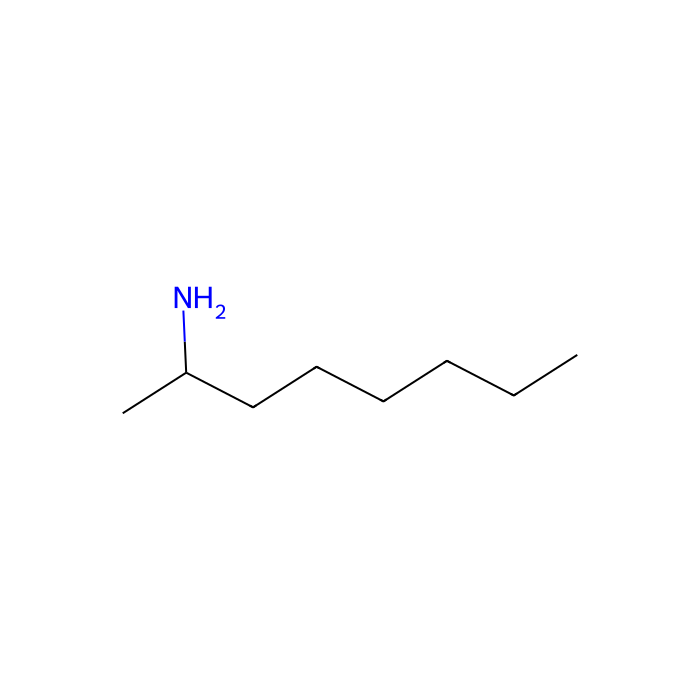
2-Aminooctane - ≥98% , CAS No.693-16-3

CAS: 693-16-3 Cat. No.: A151716 Summenformel: C8H19N Molekulargewicht: 129.25 Beilstein Registry Number: 4196 EG-Nummer: 211-744-2
Zu bestellen verfügbar
QUALITÄT & REINHEIT ≥98%
Synonyms
Heptylamine, 1-methyl-|octan-2-amine|1-methylheptyl amine|(RS)-2-OCTYLAMINE|2-Octanamine, (.+/-.)-|(RS)-1-METHYLHEPTYLAMINE|2-Aminooctane|2-amino-octane|(+/-)-2-AMINOOCTANE|2-Octylamine|racemic 2-octylamine|2-Caprylamine|(+/-)-2-OCTANAMINE|2-Octanamine|(+/-)-2-OCTYLAMINE|1-methyl heptylamine|1-Amino-1-methyl heptane|1-METHYLHEPTYLAMINE
Storage
Store at 2-8°C,Argon charged
Shipped In
Wet ice
★
Größe
Deutschland (EU)
USA*
Preis
Menge
1g
A151716-1g
—
8 Auf Lager
55,45€
5g
A151716-5g
—
1 Auf Lager
202,10€
25g
A151716-25g
—
1 Auf Lager
531,84€
Enter a quantity for the sizes you want to add.

Spezifikationen

Synonyme
Heptylamine, 1-methyl- | octan-2-amine | 1-methylheptyl amine | (RS)-2-OCTYLAMINE | 2-Octanamine, (.+/-.)- | (RS)-1-METHYLHEPTYLAMINE | 2-Aminooctane | 2-amino-octane | (+/-)-2-AMINOOCTANE | 2-Octylamine | racemic 2-octylamine | 2-Caprylamine | (+/-)-2-OCTANAMINE | 2-Octanamine | (+/-)-2-OCTYLAMINE | 1-methyl heptylamine | 1-Amino-1-methy Show more
Spezifikationen & Reinheit
≥98%
Storage
Store at 2-8°C,Argon charged
Verschickt in
Wet ice
Dieses Produkt erfordert Kühlkettenversand. Grundversand und andere Economy-Optionen sind nicht verfügbar.
Reinheit
≥98%
Namen und Kennungen
Pubchem Sid
Pubchem Sid Url
https://pubchem.ncbi.nlm.nih.gov/substance/488181721
SMILES
CCCCCCC(C)N
IUPAC Name
octan-2-amine
InChIKey
HBXNJMZWGSCKPW-UHFFFAOYSA-N
InChI
1S/C8H19N/c1-3-4-5-6-7-8(2)9/h8H,3-7,9H2,1-2H3
Isomere SMILES
CCCCCCC(C)N
RTECS
MK1210000
UN-Nummer
2734
Verpackungsgruppe
II
Molekulargewicht
129.25
Beilstein
4196
Reaxys
1719318
Reaxys-RN_link_address
https://www.reaxys.com/reaxys/secured/hopinto.do?context=S&query=IDE.XRN=1719318&ln=

Erweiterte Daten

Taxonomic Classification

Taxonomy Tree

KingdomOrganic compounds
SuperclassOrganic nitrogen compounds
KlasseOrganonitrogen compounds
SubclassAmines
Intermediate Tree Nodes Primary amines
Direct ParentMonoalkylamines
Alternative Parents Organopnictogen compounds  Hydrocarbon derivatives  
Molecular FrameworkAliphatic acyclic compounds
Substituents Organopnictogen compound - Hydrocarbon derivative - Primary aliphatic amine - Aliphatic acyclic compound
BeschreibungThis compound belongs to the class of organic compounds known as monoalkylamines. These are organic compounds containing an primary aliphatic amine group.
External Descriptors Not available
3D-Struktur
Interaktives chemisches Strukturmodell


Zertifikate (CoA, COO, BSE/TSE und Analyse-Diagramm)
C of A & Other Certificates(BSE/TSE, COO):
Analytical Chart:

Find and download the COA for your product by matching the lot number on the packaging.

7 results found

Lot NumberCertificate TypeDatumArtikel
C2316885C2316885Certificate of AnalysisDec 10, 2025 A151716
C2316916C2316916Certificate of AnalysisDec 10, 2025 A151716
C2316917C2316917Certificate of AnalysisDec 10, 2025 A151716
C2316918C2316918Certificate of AnalysisDec 10, 2025 A151716
C2316927C2316927Certificate of AnalysisDec 10, 2025 A151716
C2316920C2316920Certificate of AnalysisMar 06, 2023 A151716
J2522047J2522047Certificate of AnalysisMar 06, 2023 A151716
Chemische und physikalische Eigenschaften
EmpfindlichkeitAir sensitive
Brechungsindex1.42
Flammpunkt (°C)50 °C
Siedepunkt (°C)165°C(lit.)
Molekulargewicht129.24
XLogP32.600
Hydrogen Bond Donor Count1
Hydrogen Bond Acceptor Count1
Rotatable Bond Count5
Exact Mass129.152 Da
Monoisotopic Mass129.152 Da
Topological Polar Surface Area26.000 Ų
Heavy Atom Count9
Formal Charge0
Complexity52.500
Isotope Atom Count0
Defined Atom Stereocenter Count0
Undefined Atom Stereocenter Count1
Defined Bond Stereocenter Count0
Undefined Bond Stereocenter Count0
The total count of all stereochemical bonds0
Covalently-Bonded Unit Count1
Sicherheit und Gefahren (GHS)
Piktogramm(e)
GHS02,   GHS05,   GHS06
Signal
Danger
Gefahrenhinweise

H226:Flammable liquid and vapor

H301:Toxic if swallowed

H314:Causes severe skin burns and eye damage

Sicherheitshinweise

P210:Keep away from heat, hot surface, sparks, open flames and other ignition sources. - No smoking.

P233:Keep container tightly closed.

P240:Ground/bond container and receiving equipment.

P241:Use explosion-proof [electrical/ventilating/lighting/.../] equipment.

P242:Use only non-sparking tools.

P243:Take precautionary measures against static discharge.

P260:Do not breathe dust/fume/gas/mist/vapors/spray.

P264:Wash hands [and …] thoroughly after handling.

P270:Do not eat, drink or smoke when using this product.

P280:Wear protective gloves/protective clothing/eye protection/face protection.

P321:Specific treatment (see ... on this label).

P330:Rinse mouth.

P363:Wash contaminated clothing before reuse.

P301+P330+P331:IF SWALLOWED: Rinse mouth. Do NOT induce vomiting.

P303+P361+P353:IF ON SKIN (or hair): Take off Immediately all contaminated clothing. Rinse SKIN with water [or shower].

P304+P340:IF INHALED: Remove person to fresh air and keep comfortable for breathing.

P370+P378:In case of fire: Use ... to extinguish.

P405:Store locked up.

P403+P235:Store in a well-ventilated place. Keep cool.

P501:Dispose of contents/container to an approved waste disposal plant.

P301+P316:IF SWALLOWED: Get emergency medical help immediately.

P305+P354+P338:IF IN EYES: Immediately rinse with water for several minutes. Remove contact lenses if present and easy to do. Continue rinsing.

P302+P361+P354:IF ON SKIN: Take off Immediately all contaminated clothing. Immediately rinse with water for several minutes.

P316:Get emergency medical help immediately.

RTECS
MK1210000
Reaxys
1719318
Reaxys-RN_link_address
https://www.reaxys.com/reaxys/secured/hopinto.do?context=S&query=IDE.XRN=1719318&ln=
Klasse
3(8)
Lösungsrechner
Bewertungen

Kundenbewertungen

Application Protocols

No vendor-tested bioassay protocols are provided for this small-molecule reagent.

General laboratory guidance (literature/general):

  • Standardize amine content by acidimetric titration before kinetics or stoichiometric reactions.
  • For reductive amination screens, prepare stock solutions in dry MeOH or MeCN under inert gas; include a small aliquot of AcOH to promote imine formation when using NaBH(OAc)3.
  • For amide couplings, premix coupling reagent and carboxylic acid before adding the amine to manage exotherm and minimize overactivation.

Refer to the CoA/SDS for any lot-specific handling notes. Adapt conditions to your specific substrates and scale.

Biological Roles

This product is intended for research use only. No clinical/medical claims are made.

General biochemical context for long-chain aliphatic amines (literature/general):

  • Structural motif: Primary aliphatic amines can mimic cationic lipid headgroups when protonated, promoting interactions with acidic biomolecules and membranes. A C8 tail provides moderate hydrophobicity compared with longer polyamines.
  • Derivatization: Sec-octyl substitutions on amines are used to tune membrane affinity and permeability in probe molecules, ion-pairing agents, or as intermediates toward cationic surfactants (e.g., quaternary ammonium salts).
  • Ion pairing/extraction: Protonated amines form ion pairs with anionic species, aiding liquid–liquid extraction of carboxylates/sulfonates in analytical workflows.

Note: 2-Aminooctane itself is not a common metabolite or buffer component; biological effects depend on derivatization and context. Handle as a basic organic chemical; consult institutional biosafety policies for any in vitro exposure studies.

Buffer Applications

Not typically used as a buffer. Primary aliphatic amines with long hydrophobic chains have limited aqueous solubility; while the conjugate acid of 2-aminooctane would exhibit a pKa in the ~10–11 range (literature-general for primary aliphatic amines), practical buffering near this pH is not common due to solubility and odor concerns.

If an amine buffer is required, consider dedicated systems such as Tris (pKa ~8.1), Bicine, TAPS, or ethanolamine, chosen for water solubility, low UV absorbance, and well-characterized buffering ranges.

Green Alternatives

Perspective (general; not item-specific): greener choices focus on solvent and reagent selection when using 2-aminooctane rather than replacing the amine itself.

Greener process choices:

  • Solvents: Prefer biorenewable/safer solvents (2-MeTHF, Cyrene, EtOAc, propylene carbonate, MeOH/EtOH) over chlorinated solvents. Heptane/toluene can replace DCM in some acylations when coupled with phase-transfer or catalytic strategies.
  • Coupling reagents: Use catalytic amide formations (e.g., boron-catalyzed amidation, catalytic CDI protocols) or low-waste systems (T3P in EtOAc) instead of HATU/HBTU where feasible.
  • Reductive amination: Choose NaBH(OAc)3 in alcoholic media or catalytic hydrogenation over cyanoborohydride to reduce cyanide waste; explore transfer hydrogenation (HCO2H/Et3N, HCOONH4) with Pd/C or Ru catalysts.
  • Workup: Employ acid–base extraction to minimize chromatographic silica waste; isolate as a crystalline salt to avoid large solvent volumes.

Example comparison (literature-general):

  • DCM in acylation vs 2-MeTHF: 2-MeTHF offers lower toxicity and renewable origin; may require temperature optimization to match rates.
  • NaBH3CN vs catalytic H2: Hydrogenation avoids cyanide but needs pressure equipment and careful control to prevent over-reduction.
Pharmaceutical Uses

No therapeutic claims. Research-use-only.

General formulation/manufacturing context (literature/general):

  • Salt former/building block: Primary amines serve as intermediates en route to API side chains (amides, ureas, sulfonamides). The sec-octyl motif can be used to modulate lipophilicity and solid-state properties.
  • Ion-pairing agent: Long-chain amines and their salts may function as transient ion-pairing reagents in purification of acidic drug intermediates.
  • Excipients: Free aliphatic amines are rarely used directly as excipients due to odor/irritancy; quaternized derivatives (ammonium salts) are more common in materials and antimicrobial coatings. Any such use requires pharmacopeial-grade sourcing and toxicological justification.

For GMP or pharmacopeial applications, confirm:

  • Residual solvent limits, amine value, nitrosamine risk control (avoid nitrite/nitrosating agents), and trace metals.
  • Identity by orthogonal methods (NMR/GC-MS) and enantiomeric composition if chirality impacts performance.
Physical Properties

Item-specific specifications: Not specified for this item; refer to CoA/Spec Sheet for any measured values (bp, density, refractive index, water/peroxide/metal content, UV cutoff, etc.).

Literature/general values and qualitative behavior (for planning only; not item specifications):

  • Physical state: typically a colorless to pale liquid for C8 primary amines at ambient temperature.
  • Volatility: moderate; less volatile than C6–C7 analogs; handle in a fume hood.
  • Polarity/solubility: amphiphilic. Poorly soluble in water due to the long C8 chain, but miscible with many organic solvents (alcohols, ethers, chlorinated solvents, hydrocarbons). Forms water-soluble ammonium salts upon protonation with mineral acids.
  • Basicity: primary aliphatic amines pKb ~3–4 (conjugate acid pKa typically ~10–11; literature range for CnH2n+1CH(NH2)R). 2-Aminooctane expected in this range.
  • Partitioning: hydrophobic free base with high organic/aqueous partitioning unless protonated.
  • Odor: characteristic amine odor.

Always confirm working properties on your lot via the CoA/SDS before process use.

Quality and Grades

Item-specific grade/purity: Not specified for this item; refer to CoA/Spec Sheet for assay, residual solvents, water, and impurity profiles.

Guidance on grades (general; not item-specific):

  • Research grade primary amines may be offered as neat liquids with titration or GC assay (e.g., ≥95–99%). Stabilizers are typically unnecessary, but inert-gas headspace helps suppress oxidation/discoloration.
  • HPLC/UV grade is uncommon for long-chain amines; when specified, it indicates tight control of UV-absorbing impurities for chromatographic use.
  • Low-water or anhydrous variants, when available, are packaged under inert atmosphere with Karl Fischer specifications; absence of an explicit water spec means lot-to-lot water must be confirmed on the CoA if critical.

What to verify on receipt:

  • Assay (%), identity (GC-MS, 1H/13C NMR), residual solvents, color (APHA), amine value/acid number, and any metal or halide residues if relevant to catalysis. Confirm enantiomeric composition if a chiral (R/S) material is required; this listing should be assumed racemic unless otherwise specified.
Reaction and Applications

Use-cases (literature/general; expandable from typical catalog applications for primary aliphatic amines):

  • Amide formation: Nucleophilic acyl substitution with acid chlorides/anhydrides; peptide-style couplings (EDC/HOBt, HATU, T3P) in DMF/DCM/THF to access N-sec-octyl amides. Steric hindrance at C2 can modestly affect rates vs 1-octylamine.
  • Reductive amination: Condensation with aldehydes/ketones to imines/oxazolidines, followed by NaBH3CN, NaBH(OAc)3, or catalytic hydrogenation (Pd/C) to give secondary amines with a sec-octyl substituent.
  • Sulfonamide/carbamate formation: Reaction with sulfonyl chlorides (tosyl, mesyl) or chloroformates to give protectable/functional handles; useful in materials and medicinal chemistry.
  • Alkylation/acylation cascades: N-alkylation with alkyl halides or epoxides under phase-transfer or polar aprotic conditions; control over-alkylation by stoichiometry and base.
  • Ureas/thioureas/guanidines: With CDI, isothiocyanates, or carbodiimides. Hydrophobic N-substitution helps modulate membrane affinity in probes.
  • Salt formation: Generation of crystalline hydrochloride or p-toluenesulfonate salts for handling, purification, or formulation.

Practical tips:

  • Dry the amine (molecular sieves or azeotrope) before moisture-sensitive couplings.
  • Use inert atmosphere to avoid CO2 uptake and nitrosation risks.
  • Titrate free-base content (acid–base titration) to standardize equivalents in scale-up.
Reaction Conditions

General, literature-based guidance (not item-specific; optimize per substrate):

  • Amide formation:
    • Acid chloride route: DCM or THF, 0–25°C, 1.0–1.2 equiv amine, 1–2 equiv base (Et3N or DIPEA). Typical reaction times 0.5–4 h; monitor by TLC/GC.
    • Carbodiimide coupling: EDC·HCl (1.1–1.5 equiv) with HOBt/HOAt or Oxyma in DMF/DCM; 0–25°C; T3P in EtOAc as a lower-waste option.
  • Reductive amination:
    • NaBH(OAc)3 in DCE/MeCN/MeOH with AcOH buffer (pH ~5–6), rt–40°C, 2–16 h. For ketones, slightly elevated temperature and excess amine can help.
    • H2, Pd/C (5–10%), MeOH/EtOH, 1–5 bar H2, rt–50°C, 2–8 h.
  • N-Alkylation:
    • Primary alkyl halides or epoxides in DMF/MeCN, K2CO3/Na2CO3, rt–60°C; control over-alkylation by stoichiometry and slow addition.
  • Buchwald–Hartwig amination:
    • Pd2(dba)3 or Pd(OAc)2 (1–3 mol%), BINAP/XPhos/BrettPhos ligands, NaOtBu/Cs2CO3, toluene/dioxane, 80–110°C, 6–20 h.
  • Workup/purification:
    • Acid–base extraction (aqueous HCl to transfer to water; basify to recover free base) minimizes silica load. Crystallize as HCl or TsO salt when possible.

Yields vary widely with substrate sterics/electronics; consult primary literature for specific pairings.

Safety and Handling

Item-specific hazard classification: Not specified for this item; consult the SDS for definitive GHS, pictograms, signal word, and H-statements.

General safety guidance for aliphatic primary amines (literature/general; not item-specific):

  • Hazards: Corrosive/irritant to skin, eyes, and respiratory tract; harmful if swallowed; flammable liquid/vapor possible depending on flash point. Amines can cause strong, persistent odors.
  • PPE: Chemical-resistant gloves (e.g., nitrile), lab coat, splash goggles; use in a certified fume hood. Consider face shield for scale-up.
  • First aid: Eye/skin contact—flush with water for ≥15 min and remove contaminated clothing; seek medical attention. Inhalation—move to fresh air; assist breathing if needed. Ingestion—rinse mouth; do NOT induce vomiting; seek medical attention. Follow SDS.
  • Incompatibilities: Strong oxidizers, acid chlorides/anhydrides, isocyanates, nitrosating agents (risk of nitrosamine formation), CO2 (surface carbamate formation), and strong acids/bases (exothermic neutralization).
  • Special risks: Can absorb CO2/moisture; may discolor on air exposure. Avoid copper/bronze in long-term contact due to potential amine corrosion/complexation.

Storage/handling per Product Data:

  • Store at 2–8°C, under argon; minimize headspace oxygen/CO2.
  • Shipped on wet ice. Warm to room temperature before opening to avoid moisture condensation. Reseal under inert gas.
Solvent Selection

This product is a reactive substrate (primary amine), not typically used as a chromatography-grade solvent. Selection here refers to solvents for dissolving 2-aminooctane during reactions, extractions, or purifications.

General guidance (literature/general):

  • Polarity class: moderately polar, basic solute; free base is more soluble in nonpolar/medium-polar organics; protonated salt is water/methanol soluble.
  • Miscibility profile: Good solubility in ethers (THF, MTBE), alcohols (MeOH, EtOH, i-PrOH), chlorinated solvents (DCM, CHCl3), and hydrocarbons (toluene, heptane). Aqueous solubility limited unless acidified.
  • Choosing a medium:
    • Acylations/couplings: DCM, DMF, NMP, MeCN, or THF; include base scavengers if needed.
    • Reductive amination: MeOH/EtOH/i-PrOH or DCE/MeCN; buffer pH near 5–6 (for NaBH(OAc)3) when applicable.
    • Alkylations: Polar aprotic (DMF, DMSO, MeCN) to solubilize salts and halides; control base strength to minimize elimination.
    • Salt formation/purification: Form HCl or p-toluenesulfonate salts in Et2O/MTBE to precipitate solids from alcohol/ether media.

Note: Avoid aqueous strong base during workup to limit emulsions; perform acid–base extraction exploiting amine protonation for clean phase separations.

Storage and Reconstitution

Item-specific instructions (from Product Data):

  • Storage: Store at 2–8°C, under argon (argon charged).
  • Shipping: Shipped on wet ice.

Practical guidance (general):

  • Upon receipt, allow container to reach room temperature before opening to minimize moisture condensation. Open and handle under inert gas if possible.
  • Reseal tightly; backfill headspace with inert gas (argon or nitrogen). Avoid prolonged exposure to air/CO2 to prevent carbamate film formation and discoloration.
  • Keep away from acids, oxidizers, and nitrosating agents. Use clean, dry glassware; avoid copper/bronze contact for long-term storage.
  • If solid salt forms are prepared (e.g., HCl), store desiccated at 2–8°C; free base can be regenerated by basification and extraction.

Reconstitution: Not applicable; supplied neat. If crystallized or viscous at low temperature, warm gently to ambient and mix thoroughly before use. Verify concentration by titration or GC where accurate stoichiometry is required.

Structure and Identity

Professional summary: 2-Aminooctane is a branched primary aliphatic amine (chiral at C2) used as a hydrophobic nucleophile and cationic headgroup precursor in materials and synthesis.

  • Item-specific registry data (from Product Data):

    • SKU: A151716
    • CAS: 693-16-3
    • CID: 12735
    • InChIKey: Not specified for this item; refer to CoA/Spec Sheet.
    • SMILES: Not specified for this item; refer to CoA/Spec Sheet.
  • Computed/literature identity (general information; not item specifications):

    • Preferred name: 2-Aminooctane (also: octan-2-amine; sec-octylamine)
    • Molecular formula (literature): C8H19N
    • Molecular weight (calculated): ~129.25 g/mol
    • Structural features: primary amine (–NH2) on C2 of an octyl chain; one stereogenic center at C2 (typically supplied as racemate unless otherwise stated). No rings; saturated hydrocarbon backbone.
    • 2D description: CH3–CH(NH2)–(CH2)5–CH3; the amino-bearing carbon is secondary, making it more sterically hindered than n-octylamine but still a strong nucleophile/base.
  • Stereochemistry: Contains one chiral center at C2; unless specified, assume racemic mixture (R/S).

Synthetic Utility

Functional group profile:

  • Nucleophilicity/basicity: Primary amine capable of acylation, alkylation, condensation to imines/oximes, and addition to activated electrophiles (epoxides, Michael acceptors).
  • Stereochemistry: C2 chirality enables access to chiral secondary amines after selective transformations; racemic feedstock can be resolved via diastereomeric salt formation.

Representative transformations (literature/general):

  • Amide synthesis: With acyl chlorides/anhydrides or carbodiimide couplings; hydrophobic N-sec-octyl amides often crystallize well.
  • Reductive amination: Formation of N-sec-octyl secondary amines; useful in SAR libraries to probe hydrophobic bulk.
  • Sulfonamides/carbamates/ureas: Protection or functionality introduction with TsCl, Boc2O, CDI.
  • Quaternization: Alkylation to form ammonium salts (e.g., benzyl bromide → benzylsec-octylammonium bromide), valuable as phase-transfer catalysts/surfactants after further alkylation.
  • Metal-catalyzed couplings: As nucleophilic partners in Buchwald–Hartwig amination with aryl halides/triflates to form N-sec-octyl anilines; bulky ligand/catalyst systems improve rates.

Retrosynthetic value: Serves as a convenient hydrophobic amine synthon to introduce a C8 sec-alkyl group onto nitrogen, tuning cLogP and membrane interaction without adding aromaticity.

Target Specificity

Not applicable. This product is a small-molecule amine, not a biological targeting reagent or antibody. No antigen/epitope, species reactivity, clone, or isotype information applies.

Häufig gestellte Fragen

What is the purity of this product?
This product is supplied at ≥98% purity (chemical assay). Lot-specific values are stated on the Certificate of Analysis.
How should this product be stored?
Store at 2–8 °C under argon. It is supplied under an argon blanket; reseal under inert gas after each use.
How is this product shipped?
This product ships chilled on wet ice. Unpack on arrival and transfer it to the storage condition stated above.
What are the CAS number, molecular formula and molecular weight?
The CAS Number is 693-16-3, the molecular formula is C8H19N, and the molecular weight is 129.25 g/mol. InChIKey HBXNJMZWGSCKPW-UHFFFAOYSA-N.
What documentation is provided?
Available product documentation, including Certificates of Analysis (COA), Safety Data Sheets (SDS), and specification sheets, is shown in the product document area. Document availability and access follow the current site policy.

Dürfen wir Sie über Rabattaktionen informieren?

Später erinnern

Vielen Dank! Bitte überprüfen Sie Ihren E-Mail-Posteingang, um zu bestätigen.

Hoppla! Benachrichtigungen sind deaktiviert.