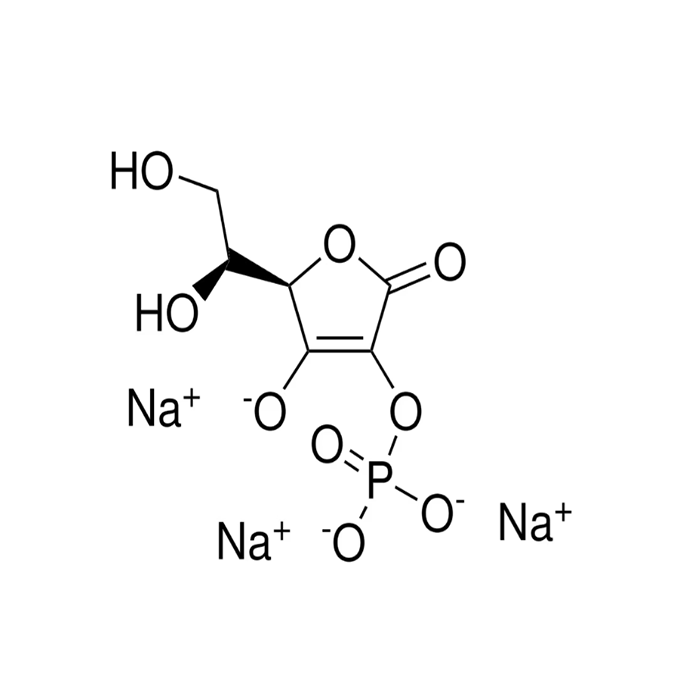
2-Phospho-L-ascorbic acid trisodium salt - ≥96% , CAS No.66170-10-3

CAS: 66170-10-3 Cat. No.: S304311 Summenformel: C6H6Na3O9P· xH2O Molekulargewicht: 322.05 (anhydrous basis) EG-Nummer: 613-904-0
Zu bestellen verfügbar
QUALITÄT & REINHEIT ≥96%
Synonyms
2-phospho-l-ascorbic acid trisodium salt|Sodium ascorbyl monophosphate;Sodium ascorbyl phosphate|trisodium;[(2R)-2-[(1S)-1,2-dihydroxyethyl]-3-oxido-5-oxo-2H-furan-4-yl] phosphate|L-Ascorbic acid 2-phosphate trisodium|SODIUM ASCORBYL PHOSPHATE [INCI]|L-Ascorbicacid, 2-(dihydrogen phosphate), sodium salt (1:3)|sodium ascorbate 2-phosphate|Sodium ascorbyl monophosphate|Trisodium(R)-5-((S)-1,2-dihydroxyethyl)-4-oxido-2-oxo-2,5-dihydrofuran-3-ylphosphate|sodium (R)-5-((S)-1,2-dihydroxyethyl)-2-oxido-4-oxo-4,5-dihydrofuran-3-yl phosphate|trisodium [(2R)-2-[(1S)-1,2-dihydroxyethyl]-3-oxido-5-oxo-2H-furan-4-yl] phosphate|Trisodium L-ascorbate-2-phosphate|l-Ascorbic acid, 2-monophosphate, trisodium salt|2-(Dihydrogen phosphate)-L-ascorbic acid sodium salt|Trisodium ascorbate-2-phosphate|sodium ascorbyl phosphate|(R)-2-Amino-5-ureido-pentanoic acid|Sodium L-Ascorbyl-2-Phosphate|Benzoyltropeine|AA2P|L-Ascorbic acid 2-phosphate (trisodium)|L-Ascorbic acid 2-phosphate trisodium salt|Trisodium (R)-5-((S)-1,2-dihydroxyethyl)-4-oxido-2-oxo-2,5-dihydrofuran-3-yl phosphate
Storage
Room temperature,Argon charged,Desiccated
Shipped In
Normal
★
Größe
Deutschland (EU)
USA*
Preis
Menge
1g
S304311-1g
—
2 Auf Lager
8,59€
5g
S304311-5g
—
2 Auf Lager
9,46€
25g
S304311-25g
—
5 Auf Lager
17,27€
100g
S304311-100g
—
2 Auf Lager
41,56€
500g
S304311-500g
—
1 Auf Lager
124,87€
Enter a quantity for the sizes you want to add.

Übersicht

L-ascorbic acid-2-phosphate trisodium salt has been used as a supplement to Dulbecco's modified Eagle medium (DMEM) for the culture of adipose derived stem cells, human mesenchymal stem cells and osteoblasts.

Spezifikationen

Synonyme
2-phospho-l-ascorbic acid trisodium salt | Sodium ascorbyl monophosphate;Sodium ascorbyl phosphate | trisodium;[(2R)-2-[(1S)-1,2-dihydroxyethyl]-3-oxido-5-oxo-2H-furan-4-yl] phosphate | L-Ascorbic acid 2-phosphate trisodium | SODIUM ASCORBYL PHOSPHATE [INCI] | L-Ascorbicacid, 2-(dihydrogen phosphate), sodium salt (1:3) | sodium ascorbate Show more
Spezifikationen & Reinheit
≥96%
Biochemische und physiologische Mechanismen
Stable ascorbic acid derivative used in cell culture; in combination with FGF-2, maintains differentiation potential in bone marrow-derived mesenchymal stem cells (MSC) through increased expression of HGF. Also exhibits synergistic protection of hMSCs under oxidative stress in combination withN-acetylcysteine.
Storage
Room temperature,Argon charged,Desiccated
Verschickt in
Normal
Reinheit
≥96%
Namen und Kennungen
Pubchem Sid
Pubchem Sid Url
https://pubchem.ncbi.nlm.nih.gov/substance/488197030
SMILES
C(C(C1C(=C(C(=O)O1)OP(=O)([O-])[O-])[O-])O)O.[Na+].[Na+].[Na+]
IUPAC Name
trisodium;[(2R)-2-[(1S)-1,2-dihydroxyethyl]-3-oxido-5-oxo-2H-furan-4-yl] phosphate
InChIKey
YRWWOAFMPXPHEJ-OFBPEYICSA-K
InChI
1S/C6H9O9P.3Na/c7-1-2(8)4-3(9)5(6(10)14-4)15-16(11,12)13;;;/h2,4,7-9H,1H2,(H2,11,12,13);;;/q;3*+1/p-3/t2-,4+;;;/m0.../s1
Isomere SMILES
C([C@@H]([C@@H]1C(=C(C(=O)O1)OP(=O)([O-])[O-])[O-])O)O.[Na+].[Na+].[Na+]
Molekulargewicht
322.05 (anhydrous basis)

Erweiterte Daten

Taxonomic Classification

Taxonomy Tree

KingdomOrganic compounds
SuperclassOrganoheterocyclic compounds
KlasseDihydrofurans
SubclassFuranones
Intermediate Tree Nodes Not available
Direct ParentButenolides
Alternative Parents Phosphate esters  Vinylogous acids  Enoate esters  Secondary alcohols  Lactones  1,2-diols  Oxacyclic compounds  Monocarboxylic acids and derivatives  Primary alcohols  Organic sodium salts  Organic oxides  Hydrocarbon derivatives  Carbonyl compounds  Organic cations  
Molecular FrameworkAliphatic heteromonocyclic compounds
Substituents 2-furanone - Organic phosphoric acid derivative - Phosphoric acid ester - Enoate ester - Alpha,beta-unsaturated carboxylic ester - Vinylogous acid - 1,2-diol - Carboxylic acid ester - Lactone - Secondary alcohol - Monocarboxylic acid or derivatives - Carboxylic acid derivative - Oxacycle - Organic alkali metal salt - Organic oxygen compound - Primary alcohol - Hydrocarbon derivative - Organooxygen compound - Organic oxide - Alcohol - Carbonyl group - Organic salt - Organic sodium salt - Organic cation - Aliphatic heteromonocyclic compound
BeschreibungThis compound belongs to the class of organic compounds known as butenolides. These are dihydrofurans with a carbonyl group at the C2 carbon atom.
External Descriptors Not available
3D-Struktur
Interaktives chemisches Strukturmodell


Zertifikate (CoA, COO, BSE/TSE und Analyse-Diagramm)
C of A & Other Certificates(BSE/TSE, COO):
Analytical Chart:

Find and download the COA for your product by matching the lot number on the packaging.

40 results found

Lot NumberCertificate TypeDatumArtikel
F2630677F2630677Certificate of AnalysisJun 16, 2026 S304311
F2630676F2630676Certificate of AnalysisJun 16, 2026 S304311
F2630675F2630675Certificate of AnalysisJun 16, 2026 S304311
F2630667F2630667Certificate of AnalysisJun 16, 2026 S304311
F2630666F2630666Certificate of AnalysisJun 16, 2026 S304311
I2503617I2503617Certificate of AnalysisAug 18, 2025 S304311
I2503614I2503614Certificate of AnalysisAug 18, 2025 S304311
I2503613I2503613Certificate of AnalysisAug 18, 2025 S304311
I2503612I2503612Certificate of AnalysisAug 18, 2025 S304311
I2503604I2503604Certificate of AnalysisAug 18, 2025 S304311
F2603006F2603006Certificate of AnalysisAug 18, 2025 S304311
F2603005F2603005Certificate of AnalysisAug 18, 2025 S304311
E2608049E2608049Certificate of AnalysisAug 18, 2025 S304311
G2508643G2508643Certificate of AnalysisJun 05, 2025 S304311
G2508665G2508665Certificate of AnalysisJun 05, 2025 S304311
G2508424G2508424Certificate of AnalysisJun 05, 2025 S304311
G2508423G2508423Certificate of AnalysisJun 05, 2025 S304311
G2508666G2508666Certificate of AnalysisJun 05, 2025 S304311
A2515547A2515547Certificate of AnalysisJan 07, 2025 S304311
A2515546A2515546Certificate of AnalysisJan 07, 2025 S304311
A2515545A2515545Certificate of AnalysisJan 07, 2025 S304311
A2515538A2515538Certificate of AnalysisJan 07, 2025 S304311
C2122042C2122042Certificate of AnalysisJan 02, 2024 S304311
J2218336J2218336Certificate of AnalysisOct 21, 2022 S304311
E2213158E2213158Certificate of AnalysisMay 18, 2022 S304311
J2421259J2421259Certificate of AnalysisJan 20, 2022 S304311
I2403019I2403019Certificate of AnalysisJan 20, 2022 S304311
A2304217A2304217Certificate of AnalysisJan 20, 2022 S304311
E2422118E2422118Certificate of AnalysisJan 20, 2022 S304311
E2304360E2304360Certificate of AnalysisJan 20, 2022 S304311
B2217376B2217376Certificate of AnalysisJan 20, 2022 S304311
B2217373B2217373Certificate of AnalysisJan 20, 2022 S304311
B2217364B2217364Certificate of AnalysisJan 20, 2022 S304311
B2217344B2217344Certificate of AnalysisJan 20, 2022 S304311
B2217322B2217322Certificate of AnalysisJan 20, 2022 S304311
A2417090A2417090Certificate of AnalysisJan 20, 2022 S304311
A2411070A2411070Certificate of AnalysisJan 20, 2022 S304311
A2329015A2329015Certificate of AnalysisJan 20, 2022 S304311
A2304229A2304229Certificate of AnalysisJan 20, 2022 S304311
A2304218A2304218Certificate of AnalysisJan 20, 2022 S304311
Chemische und physikalische Eigenschaften
LöslichkeitSolvent:water, Max Conc. mg/mL: 32.2, Max Conc. mM: 100
EmpfindlichkeitMoisture sensitive
Schmelzpunkt (°C)260℃
Molekulargewicht322.05
XLogP3
Hydrogen Bond Donor Count2
Hydrogen Bond Acceptor Count9
Rotatable Bond Count3
Exact Mass321.944 Da
Monoisotopic Mass321.944 Da
Topological Polar Surface Area162.000 Ų
Heavy Atom Count19
Formal Charge0
Complexity357.000
Isotope Atom Count0
Defined Atom Stereocenter Count2
Undefined Atom Stereocenter Count0
Defined Bond Stereocenter Count0
Undefined Bond Stereocenter Count0
The total count of all stereochemical bonds0
Covalently-Bonded Unit Count4
Sicherheit und Gefahren (GHS)
Signal
Warning
Gefahrenhinweise

H315:Causes skin irritation

H319:Causes serious eye irritation

H335:May cause respiratory irritation

Sicherheitshinweise

P261:Avoid breathing dust/fume/gas/mist/vapors/spray.

P305+P351+P338:IF IN EYES: Rinse cautiously with water for several minutes. Remove contact lenses if present and easy to do - continue rinsing.

FAQs und Artikel
Progress in Research on Sugar-Nucleotide Metabolism Related to Ascorbate Biosynthesis in Plants
Mechanistic Analysis of Topical Glutathione in Skincare: Cellular Redox Regulation, Skin Delivery Challenges, and SLN-Based Delivery Strategies
Mechanism of Kojic Acid in Reducing Hyperpigmentation: From Tyrosinase Inhibition to Melanin Production Regulation
The Skin Anti-Aging Mechanisms of α-Lipoic Acid: ALA/DHLA Redox Cycling, the Antioxidant Network, and Regulation of Collagen AGE Formation
Tocopherols in the Vitamin E Family: How They Block the Chain Reaction of Lipid Peroxidation in Skin Lipids
Analysis of Hydrolyzed Pearl as a Cosmetic Raw Material: Preparation Process, Active Components, and Skincare Formulation Applications
The Dual-Targeted Skin-Brightening Mechanism of 4-MSK: Inhibiting Melanin Production and Reducing Epidermal Pigment Retention
Antioxidant Mechanisms of Ferulic Acid in Skincare, Vitamin C/E Synergy, and Stable Delivery Applications
How Do Collagen Peptides Act on the Skin? From Surface Hydration and Percutaneous Delivery to Fibroblasts and Collagen Homeostasis
Phenylethyl Resorcinol (377): Structural Characteristics, Melanogenesis-Regulating Mechanisms, and Related Applications in Formulation Research
Mechanism of Action of Tranexamic Acid in Pigmentation Care: From the Plasmin System to Regulation of Inflammation-Driven Pro-Melanogenic Signaling
How Does Collagen Tripeptide Act on the Skin: Stratum Corneum Delivery, Matrix Protection, and Regulation of Collagen Homeostasis
Mechanistic Basis of Acetyl Hexapeptide-8 in the Management of Expression Lines: SNARE Complex Interference, Constraints on Percutaneous Delivery, and Combination Strategies
Citations of This Product
Lösungsrechner
Bewertungen

Kundenbewertungen

Application Protocols

Item-specific validated protocols: Not specified for this item; refer to CoA/Spec Sheet and SDS for any test methods provided.

General literature protocols (for research use; optimize for your system)

  1. Aqueous stock preparation
  • Weigh required amount quickly in a dry environment (hygroscopic). Dissolve in degassed, deionized water to prepare a 10–100 mM stock. Optional: adjust to desired pH with sterile buffer. Filter‑sterilize (0.22 µm) if needed. Store aliquots under inert atmosphere in amber vials at 2–8 °C for short term.
  1. Enzymatic release of ascorbate
  • Combine aqueous 2‑phospho‑L‑ascorbate trisodium salt (e.g., 1–5 mM final) with alkaline phosphatase in compatible buffer (e.g., Tris or HEPES, pH 7.4). Incubate at 25–37 °C for 15–60 min. Monitor ascorbate formation by HPLC or an ascorbate oxidase–coupled assay. Quench or use immediately to limit oxidation.
  1. Cell culture supplementation (research literature guidance)
  • Prepare sterile stock (e.g., 100 mM in water). Add to culture medium to achieve the desired concentration; literature reports using low‑to‑mid micromolar ranges (tens to hundreds of µM) depending on cell type and objective. Validate for your cells and conditions; monitor medium pH and osmolarity.
  1. Redox control in biochemical assays
  • Add immediately before initiating the reaction. Include metal chelators if compatible, and maintain inert atmosphere when practical.

Notes

  • Always run appropriate blanks/controls. Stability depends strongly on pH, temperature, light, and metal content.
Biological Roles

General biochemistry (literature)

  • Pro‑vitamin C donor: 2‑Phospho‑L‑ascorbic acid functions as a protected form of L‑ascorbate. In biological systems, phosphatases can hydrolyze the phosphate monoester, liberating L‑ascorbate and inorganic phosphate. This strategy provides a more sustained ascorbate level in cells and enzymatic systems compared with direct L‑ascorbic acid addition.
  • Redox activity: The ascorbate generated participates in one‑electron and two‑electron redox reactions, reduces reactive oxygen species, and maintains metal centers (e.g., Fe2+ state) in certain enzymes in vitro. The phosphate group itself is not redox‑active but modulates stability and transport.
  • Stability profile: Phosphate substitution at C2 reduces enediol auto‑oxidation and lactone ring opening at near‑neutral pH, thus stabilizing solutions against rapid degradation observed with L‑ascorbic acid.
  • Transport/uptake considerations: The trisodium salt is highly polar and membrane‑impermeant; cellular uptake relies on extracellular dephosphorylation to L‑ascorbate, which is then transported by sodium‑dependent vitamin C transporters (SVCTs) in many cell types (literature mechanism).
  • Enzymology: Useful in assays requiring ascorbate as a co‑substrate or reductant while avoiding rapid depletion; examples include collagen‑related hydroxylases and certain dioxygenases in vitro (literature context; users should validate for their system).

Note: The above reflects biochemical roles observed in research contexts. No clinical or therapeutic claims are implied.

Buffer Applications

Applicability: This compound is not a dedicated buffering agent. It does not provide a defined buffering range suitable for pH control on its own.

Practical guidance (literature/general)

  • Use within buffers: Prepare stock solutions in deionized water and dilute into an appropriate biological buffer (e.g., PBS, HEPES, Tris, or citrate-phosphate buffer) that controls pH in your assay’s required range. The phosphate ester does not significantly increase buffering capacity beyond background phosphate at typical working concentrations.
  • pH stability: Stability is generally improved in mildly acidic to neutral buffers (approximately pH 5.5–7.4, literature trend). Strongly basic solutions can accelerate phosphate ester cleavage and subsequent oxidation.
  • Ionic strength: Being a trisodium salt, it contributes Na+ and phosphate to the ionic strength; account for this when formulating low‑ionic‑strength media.
  • Sterile work: For cell‑based assays, dissolve in sterile water or buffer and 0.22 µm filter if sterility is required. Avoid repeated freeze–thaw cycles of buffered stocks.

Summary: Employ this reagent as a functional additive within a well‑chosen buffer system; rely on established buffers for pH control and capacity.

Green Alternatives

Context: As a highly water‑soluble, nonvolatile inorganic–organic salt, 2‑Phospho‑L‑ascorbic acid trisodium salt already aligns with several green chemistry principles (safer solvents, inherently low volatility). However, greener choices can be considered at the system level.

Comparison (literature-based, qualitative)

  • Current reagent: 2‑Phospho‑L‑ascorbic acid trisodium salt
    • Pros: Aqueous processing; low VOC; improved stability vs ascorbic acid reduces waste; low flammability.
    • Cons: Sodium/phosphate load in effluent; upstream synthesis of phosphate esters can be resource‑intensive.
  • Alternative antioxidant sources:
    • L‑Ascorbic acid (vitamin C): Less inorganic load, but degrades faster at neutral pH, leading to higher consumption/waste.
    • Sodium ascorbate: Good aqueous solubility and buffering, yet less stable than phosphate ester.
    • Plant‑derived polyphenols (e.g., catechins) for radical scavenging: Renewable but introduce UV‑active impurities and color; different reactivity/selectivity.

Greener process tips

  • Solvent: Use water or buffered aqueous media whenever feasible; avoid organic co‑solvents unless required for assay compatibility.
  • Energy: Conduct at ambient temperature; store and handle at room temperature as permitted (see Storage)—reduces energy use.
  • Waste minimization: Prepare only the volume required; employ enzyme‑triggered release to minimize excess reducing agent.
  • Recovery: Where compatible, neutralize and discharge according to local regulations; phosphate in waste streams may require treatment to limit eutrophication.

Conclusion: For aqueous redox and stability‑sensitive applications, the trisodium phosphate ester is a practical, low‑VOC choice; weigh phosphate footprint vs performance gains.

Pharmaceutical Uses

Scope and limitations

  • This product is supplied strictly for research use only (per Product Data). No clinical, diagnostic, or therapeutic use is intended or implied.

Formulation and manufacturing context (literature/general)

  • Stabilized vitamin C source: The 2‑phosphate ester of L‑ascorbic acid is widely studied as a more stable form of ascorbate in aqueous environments. In preformulation research, the trisodium salt is evaluated for its improved resistance to oxidation and potential for in situ enzymatic conversion to L‑ascorbate.
  • Excipient compatibility: The salt is highly water‑soluble and compatible with common hydrophilic excipients. However, interaction with multivalent cations can occur (complexation/precipitation). Metal contaminants catalyze oxidation of released ascorbate—minimize trace metals.
  • Processing: Amenable to aqueous granulation and solution processes under inert atmosphere and light protection. Hygroscopic nature requires humidity control during blending and filling.
  • Analytical control: Typical quality controls in formulation studies include assay by HPLC/UV, related substances (dephosphorylated/oxidized ascorbate), pH, moisture (e.g., KF), and residual inorganic impurities. Enzymatic conversion assays may be used to profile release.

Regulatory note

  • Pharmacopoeial monographs may exist for ascorbic acid and sodium ascorbate, but not necessarily for the 2‑phosphate trisodium salt. Researchers should define in‑house specifications appropriate to their application and comply with institutional and regulatory frameworks for non‑clinical materials.
Physical Properties

Item-specific (Product Data)

  • Molecular formula: Not specified for this item; refer to CoA/Spec Sheet.
  • Molecular weight: Not specified for this item; refer to CoA/Spec Sheet.
  • Appearance: Not specified for this item; refer to CoA/Spec Sheet.

Literature/general properties (for the trisodium salt of L‑ascorbic acid 2‑phosphate; indicative only)

  • Physical state: Typically a hygroscopic, white to off‑white crystalline solid (literature/common supplier descriptions).
  • Solubility: Highly water‑soluble; sparingly soluble in most nonpolar organic solvents (literature). Readily forms clear aqueous solutions over a broad concentration range.
  • pH behavior: Aqueous solutions are mildly acidic to near‑neutral depending on concentration and degree of neutralization; phosphate group contributes multiple pKa values (literature, phosphate monoesters often show pKa1 ~1–2, pKa2 ~6–7; exact values depend on microenvironment).
  • Partitioning: Strongly hydrophilic; logP expected to be strongly negative; essentially non‑extractable into nonpolar solvents (literature, qualitative).
  • Thermal behavior: Phosphate ester improves thermal/oxidative stability relative to L‑ascorbic acid; however, prolonged heating in aqueous solution accelerates hydrolysis/oxidation (literature trend).
  • Optical activity: Retains L‑configuration; solutions may exhibit optical rotation consistent with L‑ascorbate derivatives (literature).

Practical notes

  • Hygroscopicity: Minimize moisture pickup; work rapidly in dry atmosphere when weighing.
  • UV–Vis: Ascorbate chromophore absorbs in the UV; phosphate substitution slightly perturbs spectra; use water as reference when quantifying (literature guidance). Always verify with your method.

Always rely on your CoA for item-specific numeric specifications.

Quality and Grades

Item-specific

  • Grade/Purity: Not specified for this item; refer to CoA/Spec Sheet.

Interpretation and guidance (general)

  • Typical research grades you may encounter for this material include: Bioreagent/Cell culture grade (tested for endotoxin/bioburden), Reagent grade (assay by titration/HPLC), and High‑purity grade (tight control of inorganic impurities, metals, and moisture). Without a stated grade, treat this as a general research reagent and verify critical quality attributes on the CoA.
  • Stabilizer policy: Phosphate‑stabilized ascorbate salts commonly do not require additional stabilizers; nonetheless, some lots may specify residual moisture levels or antioxidant stabilizers. If present, stabilizers will be declared on the CoA/SDS.
  • Analytical quality considerations:
    • Assay/identity: Often established by quantitative NMR or HPLC with phosphate/ascorbate detection, plus IR for phosphate/lactone signatures.
    • Impurities: Free phosphate, inorganic salts (e.g., sodium chloride), unphosphorylated ascorbate, oxidized ascorbate (dehydroascorbate), and moisture are typical impurities assessed in high‑quality material. Metal content is important for applications sensitive to redox catalysis.
    • UV background: For analytical and cell‑based work, low UV background and low metal content can be important. Confirm on CoA if applicable to your method.

Recommendations

  • For cell culture and enzyme assays, request documentation on endotoxin, bioburden, and heavy metals if not listed. For synthetic use, confirm water content and inorganic residue limits if these affect stoichiometry or crystallization.
Reaction and Applications

Scope (literature/general)

  • Biochemical reagent: Widely used as a stable, water‑soluble precursor to L‑ascorbate; undergoes enzymatic or chemical dephosphorylation to release active ascorbate in biological systems or enzyme assays. Useful in cell culture and biochemical studies that require sustained antioxidant capacity.
  • Redox chemistry: Serves as a reducing agent under conditions where phosphate ester hydrolysis occurs, ultimately delivering ascorbate that can reduce metal ions or quench radicals. Compared to L‑ascorbic acid, auto‑oxidation is slower at neutral pH.
  • Coupling/derivatization: The free phosphate enables conjugation strategies (e.g., carbodiimide‑mediated activation of phosphate is uncommon but coupling via intermediate linkers to amines/diols is reported). The enediol can participate in selective protection/deprotection and glycosylation chemistry in carbohydrate‑mimetic synthesis (literature niche).
  • Analytical applications: Employed as a stable standard or internal control for assays that detect ascorbate after phosphatase treatment.

Practical tips

  • Hydrolysis control: For chemical release of ascorbate, mildly acidic aqueous conditions (pH 4–6) and/or added phosphatase enzymes can be used; monitor by HPLC.
  • Metal catalysis: Trace Fe/Cu accelerate oxidation of ascorbate; use metal‑free plastics/glassware and, if necessary, include validated chelators (e.g., DTPA) while recognizing they may complex essential metals in bioassays.
  • Oxygen/light: Prepare solutions under inert gas and protect from light (amber vials or foil wrap) to extend solution life.
  • Compatibility: Generally compatible with common biological buffers; avoid strong oxidants and strong bases that cleave phosphate esters or open the lactone.

Always tailor conditions to your system and validate with controls.

Reaction Conditions

General guidance (literature; adjust to your system)

  • Solvent: Water or buffered aqueous media (e.g., citrate–phosphate, HEPES, or Tris buffers). Avoid strong alkaline conditions if phosphate integrity is needed.
  • Temperature: Ambient (20–25 °C) is typical. Mild cooling (4–8 °C) extends solution longevity; gentle warming (≤37 °C) is acceptable for enzymatic dephosphorylation but may accelerate degradation over extended periods.
  • Atmosphere: Inert gas (argon or nitrogen) recommended during dissolution and storage to limit oxidation.
  • Light: Protect from light (amber glass/foil) to prevent photodegradation of the ascorbate moiety post‑hydrolysis.
  • Catalysts/enzymes: Alkaline phosphatase or other phosphomonoesterases (literature) efficiently convert the phosphate ester to free ascorbate under mild conditions (e.g., pH 7–8, 25–37 °C). Reaction times vary from minutes to hours depending on enzyme load and matrix.
  • pH: Mildly acidic to neutral (pH ~5.5–7.4) balances stability and reactivity. At pH >8, phosphate cleavage and subsequent ascorbate oxidation are faster.
  • Concentration: Stocks of 10–100 mM in water are common in research workflows; verify solubility and stability for your application (literature ranges; optimize empirically).
  • Monitoring: Use HPLC‑UV (ascorbate absorbance in UV), ion chromatography for phosphate, or enzymatic assays to follow conversion/degradation.

Expected outcomes (literature)

  • Enzymatic dephosphorylation yields near‑quantitative conversion to L‑ascorbate under optimized conditions. In absence of enzymes, slow hydrolysis occurs, with rates increasing at higher pH/temperature.

Note: Numeric conditions are general literature guidance, not specifications for this item.

Safety and Handling

Authoritative data

  • GHS classification, signal word, pictograms, H‑statements: Not specified for this item; refer to SDS for definitive hazard communication.

General laboratory safety (literature/practice for inorganic–organic phosphate salts and ascorbate derivatives)

  • Expected hazards: Low acute toxicity profile is typical for phosphate salts of ascorbate; may cause mild irritation to eyes/skin/respiratory tract. Dusts may be irritating.
  • PPE: Lab coat, safety glasses, and suitable gloves (e.g., nitrile). Handle powders in a fume hood or ventilated enclosure to minimize dust inhalation.
  • Incompatibilities: Strong oxidizers (can accelerate degradation). Strong bases/acids may promote hydrolysis of the phosphate ester. Transition metal ions (Fe, Cu) catalyze ascorbate oxidation; use metal‑free containers where possible.
  • Special risks: Hygroscopic—clumping and solution pH drift may occur upon moisture uptake. Aqueous solutions can oxidize over time, particularly with air/light exposure.
  • First aid (overview; consult SDS):
    • Inhalation: Move to fresh air; seek medical advice if symptoms persist.
    • Skin/eye contact: Rinse with water for several minutes; remove contaminated clothing; seek medical attention for persistent irritation.
    • Ingestion: Rinse mouth; do not induce vomiting; seek medical advice.
  • Fire fighting: Not flammable as such; in a fire, may decompose to irritant/toxic fumes (e.g., phosphorus oxides). Use water spray, CO2, dry chemical as appropriate to surroundings; firefighters wear SCBA.
  • Spills & disposal: Avoid dust generation; sweep up gently and place in suitable container for disposal per institutional and local regulations. Prevent entry to waterways. Decontaminate area with water.

Always consult the product’s SDS for authoritative safety information.

Solvent Selection

Applicability: This compound is a highly polar, ionic phosphate salt. Solvent selection is straightforward for most uses.

General solvent behavior (literature)

  • Primary solvent: Water is the solvent of choice. The trisodium salt dissolves readily in deionized water to high concentrations.
  • Miscibility/solubility: Insoluble or only sparingly soluble in nonpolar and many polar aprotic organic solvents (e.g., ether, toluene, DCM, acetonitrile). Limited solubility in alcohols; solubility may improve in water–alcohol mixtures.
  • pH considerations: Dissolution in water yields mildly acidic to near‑neutral solutions, but buffering capacity is limited; use an external buffer for precise pH control.

Selection guidance

  • Biochemical assays/cell culture: Use sterile water or physiological buffers (e.g., PBS, HBSS) to prepare working solutions; filter‑sterilize if sterility is required.
  • Synthetic/analytical use: For aqueous‑phase transformations or as a redox additive in water, employ water or buffered aqueous media. Avoid strong acid/base if phosphate ester integrity is required.

Quick comparison (literature trends)

  • 2‑Phospho‑L‑ascorbic acid trisodium salt vs L‑ascorbic acid:
    • Stability in water: Improved for the phosphate salt
    • Solubility in organics: Lower for the phosphate salt
    • pH sensitivity: Phosphate ester mitigates rapid degradation at neutral pH

Tips

  • Degas water (argon/nitrogen) when preparing stock to reduce oxidative degradation.
  • Avoid chelating agents that introduce metals inadvertently; if metal chelation is necessary, use high‑purity chelators and validated protocols.
Storage and Reconstitution

Item-specific (from Product Data)

  • Storage conditions: Store at room temperature, under argon, and desiccated.
  • Shipped in: Normal conditions.

General best practices (literature/experience)

  • Container: Keep tightly closed in original, moisture‑barrier packaging. Purge headspace with inert gas after each use. Use desiccant in secondary containment.
  • Light protection: Store in the dark or in amber containers to limit photodegradation, especially if partial hydrolysis to ascorbate occurs.
  • Hygroscopicity: Minimize time the container is open. If caking or moisture uptake occurs, gently break up in a dry box before weighing; verify assay if critical.

Reconstitution

  • Solvent: Use degassed, deionized water as primary solvent. For biological work, dissolve directly into sterile water or buffer and 0.22 µm filter if required.
  • Concentration: Prepare concentrated stocks (e.g., 10–100 mM) to minimize repeated handling. Adjust pH only if necessary, as strong base can accelerate cleavage/degradation.
  • Aliquoting: Dispense single‑use aliquots into inert‑gas‑purged, amber vials or microtubes. Avoid repeated opening/closing of bulk container.

In‑solution stability (guidance)

  • Short term: Refrigerated (2–8 °C), inert atmosphere, light‑protected aqueous solutions are generally stable over days; verify by assay.
  • Long term: For extended storage, keep as dry solid under recommended conditions. Avoid freezing aqueous solutions unless validated, as freeze–thaw can promote degradation.

Always consult the lot‑specific CoA for any item‑specific limits on water content, assay, or stability.

Structure and Identity

Brief description: 2‑Phospho‑L‑ascorbic acid trisodium salt is the trisodium salt of L‑ascorbic acid (vitamin C) mono‑phosphate at the C2 position; a water‑soluble, phosphate‑protected antioxidant donor of L‑ascorbate under dephosphorylating conditions.

Item-specific (from Product Data)

  • Product name: 2‑Phospho‑L‑ascorbic acid trisodium salt (SKU: S304311)
  • CAS: 66170‑10‑3
  • PubChem CID: 10990876
  • InChIKey: 445270 (as provided)
  • Grade/Purity: Not specified for this item; refer to CoA/Spec Sheet.
  • Appearance: Not specified for this item; refer to CoA/Spec Sheet.

Literature/structural description (general)

  • Identity: Trisodium salt of L‑ascorbic acid 2‑phosphate (often abbreviated “APS‑Na3” or “Asc‑2‑P·3Na”).
  • Core scaffold: L‑Ascorbate (γ‑lactone, enediol system at C2/C3) bearing a phosphate monoester at C2; counterions: three Na+.
  • Functional groups: γ‑lactone ring; enediol (acidic hydroxyls); phosphate monoester (tetrahedral PO4). Multiple ionizable groups impart high aqueous solubility.
  • Stereochemistry: L‑configuration at the ascorbate chiral center retained from L‑ascorbic acid.
  • 2D description (words): A five‑membered lactone ring with a side‑chain enediol; the C2 hydroxyl is phosphorylated to a phosphate tetrahedral center; sodium counterions balance the overall negative charge.

Notes

  • Exact SMILES/InChI for this specific salt form can vary with protonation/tautomeric state; consult the CoA/SDS for the identifier used for this lot. If needed, retrieve canonical identifiers from PubChem CID 10990876 (literature).
Synthetic Utility

General synthetic perspective (literature)

  • Protected ascorbate synthon: The 2‑phosphate group protects the enediol at C2, modulating reactivity during multi‑step synthesis involving the ascorbate scaffold. It can be retained for polarity/solubility control or removed under hydrolytic/enzymatic conditions to regenerate L‑ascorbate.
  • Chemoselective handles:
    • Phosphate monoester: Can be leveraged for further derivatization via formation of mixed anhydrides or through linker strategies to generate phosphate esters/diesters, though direct activation is less common than with carboxylates.
    • Lactone: Susceptible to nucleophilic opening under basic conditions to access open‑chain derivatives for downstream chemistry (with caution to avoid over‑degradation).
    • Enediol (masked): Upon deprotection, enables redox transformations and conjugation to electrophiles (e.g., isothiocyanates, carbonyls) for probe synthesis.
  • Aqueous-phase transformations: The high water solubility makes it suitable for bioconjugation and enzyme‑mediated steps (e.g., phosphatase-triggered release) in water, aligning with green chemistry principles.
  • Redox/additive roles: In catalytic systems sensitive to oxygen, in situ generated ascorbate can act as a sacrificial reductant or radical quencher.

Caveats

  • Base/heat sensitivity: Strong base can cleave the phosphate and degrade the ascorbate nucleus; maintain mild conditions.
  • Metal-catalyzed pathways: Transition metals can trigger undesired oxidation; maintain low metal background or add validated chelators.

Overall: A niche but valuable hydrophilic synthon/additive when controlled release of ascorbate or phosphate tagging is desired.

Target Specificity

This product is a small‑molecule reagent, not a biological targeting reagent (e.g., antibody, ligand with defined protein selectivity). No target specificity, clone, isotype, or species reactivity data apply.

  • Target specificity data: Not applicable.
  • If used in biological systems, its effects derive from chemical reactivity (release of L‑ascorbate and redox behavior) rather than selective binding to a biological target.

Häufig gestellte Fragen

What is the purity of this product?
This product is supplied at ≥96% purity (chemical assay). Lot-specific values are stated on the Certificate of Analysis.
How should this product be stored?
Store at room temperature, desiccated, under argon. It is supplied under an argon blanket; reseal under inert gas after each use.
How is this product shipped?
This product ships under standard ambient conditions. No temperature-controlled packaging is required.
What are the CAS number, molecular formula and molecular weight?
The CAS Number is 66170-10-3, the molecular formula is C6H6Na3O9P, and the molecular weight is 322.05 (anhydrous basis) g/mol. InChIKey YRWWOAFMPXPHEJ-OFBPEYICSA-K.
What documentation is provided?
Available product documentation, including Certificates of Analysis (COA), Safety Data Sheets (SDS), and specification sheets, is shown in the product document area. Document availability and access follow the current site policy.

Dürfen wir Sie über Rabattaktionen informieren?

Später erinnern

Vielen Dank! Bitte überprüfen Sie Ihren E-Mail-Posteingang, um zu bestätigen.

Hoppla! Benachrichtigungen sind deaktiviert.