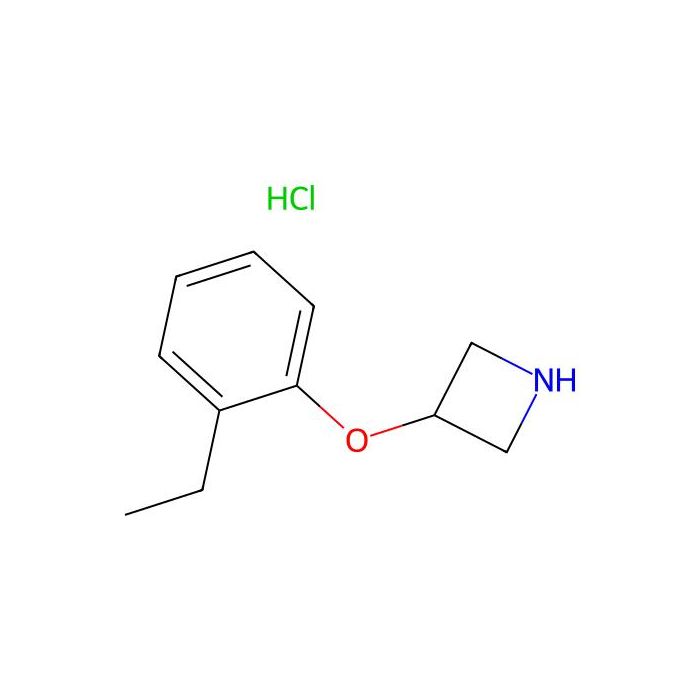
This compound belongs to the class of organic compounds known as phenol ethers. These are aromatic compounds containing an ether group substituted with a benzene ring.
External Descriptors
Not available
1. Djoumbou Feunang Y, Eisner R, Knox C, Chepelev L, Hastings J, Owen G, Fahy E, Steinbeck C, Subramanian S, Bolton E, Greiner R, and Wishart DS. ClassyFire: Automated Chemical Classification With A Comprehensive, Computable Taxonomy. Journal of Cheminformatics, 2016, 8:61.
Zertifikate (CoA, COO, BSE/TSE und Analyse-Diagramm)
C of A & Other Certificates(BSE/TSE, COO):
Analytical Chart:
Chemische und physikalische Eigenschaften
Molekulargewicht
213.700 g/mol
XLogP3
Hydrogen Bond Donor Count
2
Hydrogen Bond Acceptor Count
2
Rotatable Bond Count
3
Exact Mass
213.092 Da
Monoisotopic Mass
213.092 Da
Topological Polar Surface Area
21.300 Ų
Heavy Atom Count
14
Formal Charge
0
Complexity
156.000
Isotope Atom Count
0
Defined Atom Stereocenter Count
0
Undefined Atom Stereocenter Count
0
Defined Bond Stereocenter Count
0
Undefined Bond Stereocenter Count
0
The total count of all stereochemical bonds
0
Covalently-Bonded Unit Count
2
Lösungsrechner
Molarity Calculator
Determine the necessary mass, volume, or concentration for preparing a solution.
Dilution Calculator
Determine the dilution needed to prepare a stock solution.
Reconstitution Calculator
Bewertungen
Kundenbewertungen
Application Protocols
No tested biological assay protocols are provided for this item. As a small-molecule reagent, usage protocols depend on the intended synthetic or screening application. General guidance:
For chemical synthesis, see the Reaction Conditions tab for common transformations on azetidine nitrogen.
For in vitro screening, prepare stock solutions in DMSO or water as permitted by assay design; filter (0.22 μm) if particulate is present.
Refer to your lab’s SOPs and method-specific literature for detailed protocols. This product is for research use only.
Biological Roles
No biological roles are specified for this catalog item. The following provides general context (literature/general) relevant to azetidine-containing small molecules:
Azetidine motif: A four-membered, saturated nitrogen heterocycle that introduces ring strain, influencing basicity (pKa of conjugate acid typically ~10–11) and conformational restriction. Such features are often leveraged in discovery chemistry to tune solubility, permeability, and metabolic stability.
Aryl–O–alkyl ether: Typically metabolically stable to many phase I oxidations relative to benzylic C–O bonds; however, O‑dealkylation can occur depending on substitution pattern (general biotransformation note).
Salt form (HCl): Enhances aqueous solubility and can aid in formulation for in vitro assays; the protonated amine alters ionization state and interactions with biomolecules (electrostatics/transport) in a pH‑dependent manner.
Important: This product is supplied strictly for research use only. No claims are made regarding physiological function, therapeutic activity, or diagnostic utility. Any biological testing should be designed and interpreted by qualified professionals, and appropriate approvals and safety protocols must be followed.
Buffer Applications
This compound is not a standard buffering agent and no buffer-system applications are specified for this item. As an amine hydrochloride salt, it will contribute to solution acidity/basicity, but it is not used to maintain a defined pH range like dedicated buffers (e.g., phosphate, HEPES, Tris).
Practical note (general):
If preparing aqueous stocks for biochemical assays, dissolve in water or compatible buffer at the target pH. Avoid highly basic buffers if the salt form must be maintained; basification will liberate the free base and may change solubility.
For buffer preparation guidance, refer instead to established buffering systems; this product is best viewed as a small-molecule building block or probe, not a buffer component.
Green Alternatives
While specific process conditions are not defined for this item, the following greener strategies (literature/general) can reduce solvent and hazard footprints when working with azetidine salts and related building blocks:
Comparison of common solvent choices (general):
DCM vs 2‑MeTHF/EtOAc: For extractions and acylations, 2‑MeTHF or ethyl acetate can often replace dichloromethane, reducing halogenated waste.
DMF/DMAc vs MeCN/EtOAc: Where high polarity is not essential, MeCN or EtOAc may substitute for DMF/DMAc to improve EHS profiles.
THF vs CPME/2‑MeTHF: CPME or 2‑MeTHF offer better peroxide resistance and higher boiling points relative to THF (still monitor peroxides; literature/general).
Operational choices:
Use aqueous workups that exploit the salt/free-base partitioning instead of chromatography (pH‑switch crystallization/extraction).
Favor micellar catalysis (e.g., TPGS‑750‑M in water) for N‑acylations or couplings when compatible.
Apply flow chemistry for exothermic acylations to enhance safety and scalability.
Tradeoffs:
Greener solvents may change solubility of the HCl salt; you may need to generate the free base to operate in greener aprotic media.
Some alternatives (2‑MeTHF/CPME) have different azeotrope and drying characteristics; validate dryness and reaction rates.
Always confirm performance and impurity profiles when swapping solvents; item-specific solvent compatibility is not provided.
Pharmaceutical Uses
No pharmacopeial status, excipient role, or formulation use is specified for this item. The following general considerations apply to amine HCl salts in development chemistry (literature/general), without implying clinical or therapeutic use:
Salt selection: Converting amines to mineral acid salts (e.g., HCl) can improve crystallinity, stability, and aqueous solubility for handling and analytical characterization.
Processability: HCl salts often show reduced volatility and odor versus free bases, facilitating GMP-like handling during research-scale process development.
Solid-state screening: Different salt forms (HCl, HBr, sulfate, tartrate) may be evaluated in early developability studies to optimize properties such as hygroscopicity and flow; such evaluation would be compound-specific.
Important: Aladdin supplies this product for research use only. No claims are made regarding therapeutic applications, dosing, safety in humans/animals, or compliance with pharmacopoeial monographs.
Physical Properties
Item-specific numeric specifications are not provided in the Product Data. Consult the CoA/Spec Sheet for authoritative values.
Appearance: Not specified for this item; refer to CoA/Spec Sheet.
Melting point (MP): Not specified for this item; refer to CoA/Spec Sheet.
Boiling point (BP): Not applicable to the HCl salt (decomposes; literature generality).
Density: Not specified for this item; refer to CoA/Spec Sheet.
Refractive index: Not applicable (solid salt; literature generality).
pKa: For azetidine free bases, conjugate acid pKa typically in the range ~10–11 (literature/general), but salt behavior depends on counterion and structure.
Solubility (literature/general behavior): amine hydrochloride salts are typically highly soluble in water and polar protic solvents (e.g., methanol, ethanol) and show good solubility in DMSO; free bases are more soluble in aprotic organics (DCM, THF, EtOAc). Actual solubility of this specific item is not specified.
Hygroscopicity: Many amine HCl salts are mildly hygroscopic (literature/general). Item-specific hygroscopicity is not specified.
LogP: Not specified for this item; refer to CoA/Spec Sheet.
Practical notes (general): the HCl salt form often presents as a crystalline solid with higher melting/decomposition temperatures relative to the corresponding free base. Always verify lot-specific properties on the CoA before process design.
Quality and Grades
Grade/Purity: Not specified for this item; refer to CoA/Spec Sheet.
Stabilizers/Inhibitors: Not specified for this item; refer to CoA/Spec Sheet.
UV cutoffs, metal content, residual solvents: Not specified for this item; refer to CoA/Spec Sheet.
Interpretation and guidance (general):
For small-molecule building blocks, catalog listings may be offered as research grade, suitable for synthetic and screening applications. When purity is specified (e.g., ≥97% GC/HPLC), it refers to the main component area% by the indicated method; confirm on CoA.
If provided as an HCl salt, the form enhances handling and aqueous solubility and reduces volatility of the amine free base. Assay may be reported on anhydrous basis; check if water/solvent content is corrected.
If low-UV absorbance is important (e.g., analytical HPLC), verify UV cutoff/impurities on the CoA. For bioassay work, review residual solvent profile and inorganic counterion assay (chloride) if relevant to your system.
Research Use Note: For research use only. Not for human or veterinary use, diagnostic procedures, or food applications.
Reaction and Applications
This molecule is a versatile heterocyclic building block combining an azetidine ring (strain-enhanced reactivity at nitrogen/carbon under certain conditions) with a 2‑ethylphenoxy aryl ether. While item-specific performance data are not provided, typical applications for azetidine-containing aryl ethers (literature/general) include:
N‑functionalization after liberation of the free base: formation of amides (acylation with acyl chlorides/anhydrides), carbamates/ureas (via chloroformates or isocyanates), and sulfonamides (with sulfonyl chlorides).
Salt–free base interconversion for phase manipulation, purification, and subsequent transformations or coupling steps.
Reductive alkylation on the azetidine nitrogen (e.g., aldehyde/ketone + reducing agent) to access N‑alkyl derivatives.
Protection strategies: temporary N‑Boc or N‑Cbz protection to direct chemoselectivity on multi-step routes.
Exploitation of the aryl ether as a robust, non-nucleophilic handle surviving many conditions (e.g., amide couplings, hydrogenations tolerant of aryl ethers).
Incorporation into fragment libraries and SAR studies; azetidines often modulate basicity, 3D shape, and solubility (literature/general medicinal chemistry insight).
Practical tips:
Convert to free base under basic aqueous conditions to avoid acid-promoted ring opening.
Maintain low temperatures with strong acylating agents to mitigate side reactions on the strained ring.
Use non-nucleophilic bases (DIPEA, Hunig’s base) for N‑acylations; avoid strong bases that could induce ring-opening.
Note: Manufacturer application notes were not provided; the above reflects general synthetic utility of azetidine HCl salts.
Reaction Conditions
Item-specific conditions are not provided. The following general conditions are commonly effective with azetidine free bases and their salts (literature/general):
Liberation of free base: Dissolve the HCl salt in water; basify with Na2CO3/NaHCO3 (mild) or NaOH (stronger), extract with EtOAc/MTBE/DCM, dry (MgSO4/Na2SO4). Keep temperatures ≤25–30 °C to minimize ring opening.
N‑Acylation: Use acyl chloride or anhydride (1.1–1.5 eq) with DIPEA/Et3N in DCM/THF/EtOAc at 0–25 °C; typical times 0.5–4 h. Monitor by TLC/HPLC.
Carbamate/Urea formation: Boc2O with catalytic DMAP in MeCN/THF (0–25 °C); or CDI/triphosgene routes for ureas at 0–25 °C.
Reductive amination: Condense with aldehyde/ketone in MeOH/EtOH (with AcOH as needed), then reduce with NaBH3CN or BH3·THF at 0–25 °C.
Salt re-formation: Treat free base with HCl in Et2O/IPA to precipitate or crystallize the hydrochloride; dry under vacuum.
Notes and cautions:
Avoid strong bases and high temperatures that can prompt azetidine ring opening.
The aryl ether is generally inert under these conditions, enabling chemoselective N‑modifications.
For scale-up, control exotherms in acylations and quench carefully; consider in situ FTIR or calorimetry.
Yields will vary with substrate and conditions; consult primary literature for closely related azetidine derivatives.
Safety and Handling
Hazard classification for this specific item is not provided in the Product Data. Always consult the product SDS for authoritative safety information.
GHS/CLP: Not specified for this item; refer to SDS.
Signal word / H-statements / Pictograms: Not specified for this item; refer to SDS.
General safety considerations for amine hydrochloride salts (literature/general):
May cause skin/eye irritation; dust can irritate respiratory tract. Handle powders in a fume hood; avoid inhalation.
Avoid contact with strong bases (which liberate the free base and HCl) and strong oxidizers.
Incompatible with strong reducing agents under acidic conditions that could release gases.
First aid (general guidance; not a substitute for SDS):
Skin/eye contact: Rinse with water for ≥15 min; remove contaminated clothing. Seek medical attention if irritation persists.
Inhalation: Move to fresh air; seek medical attention if symptoms occur.
Ingestion: Rinse mouth; do not induce vomiting; seek medical attention.
Spill/leak response (general): Avoid dust generation; collect with inert absorbent, transfer to a suitable container for disposal according to local regulations.
Fire: Use CO2, dry chemical, or foam. Combustion may produce COx, NOx, and HCl. Use SCBA in confined fires.
Solvent Selection
This product is supplied as a hydrochloride salt of a basic azetidine. Item-specific solubility is not provided; use the following general guidance for amine hydrochloride salts (literature/general):
Aqueous media: Typically high solubility in water and buffered aqueous systems at neutral to acidic pH.
Polar organics: Good solubility in methanol, ethanol, isopropanol, and DMSO.
Aprotic organics: Limited solubility for the salt in DCM, EtOAc, MTBE, hexanes. The corresponding free base is more soluble in such solvents.
Practical approaches:
For biochemistry assays, prepare stock solutions in water or DMSO depending on assay tolerance to organic cosolvent.
For organic synthesis, if solubility in aprotic solvents is required, first liberate the free base by basification (e.g., aqueous NaHCO3/Na2CO3 or saturated NaOH with extraction), then dry and use the free base in anhydrous solvents.
Selection hints:
Choose DMSO for high-concentration screening stocks.
Choose MeOH/EtOH for facile removal under reduced pressure with modest heating.
Use aqueous buffers (pH 4–7) when maintaining salt form and charge state is desirable (e.g., ionic interactions, water-phase chemistry).
Note: Confirm actual solubility and stability in your chosen solvent experimentally, as they are not specified for this item.
Storage and Reconstitution
Storage temperature (from Product Data): Room temperature. Protect from moisture and strong light.
Shipped in: Not specified for this item; refer to CoA/Spec Sheet.
Container: Store tightly closed in a dry place; consider desiccation for long-term storage (general guidance for amine HCl salts).
Stability: Item-specific shelf life and stability are not provided; consult the CoA and monitor by HPLC/LC–MS for long-term projects.
Reconstitution and solution handling (general guidance):
For aqueous work: Dissolve the hydrochloride salt directly in deionized water or compatible buffer. Adjust pH only if necessary; strong base will convert to the free base and may alter solubility.
For organic reactions requiring the free base: Basify an aqueous solution/suspension and extract into an organic solvent; dry thoroughly before use in moisture-sensitive steps.
Stock solutions: Prepare in DMSO, MeOH, or water as appropriate. Filter sterilize (0.22 μm) if used in bioassays. Avoid repeated freeze–thaw; aliquot and store at recommended temperatures for the chosen solvent (e.g., 2–8 °C for aqueous stocks, if compatible).
Always refer to the SDS and CoA/Spec Sheet for lot-specific storage and handling recommendations.
SMILES: Not specified for this item; refer to CoA/Spec Sheet.
Molecular formula: Not specified for this item; refer to CoA/Spec Sheet.
Molecular weight: Not specified for this item; refer to CoA/Spec Sheet.
Structural description (based on name; general chemistry interpretation):
The compound is the hydrochloride salt of a tertiary amine-like heterocycle, specifically an azetidine (a saturated, four‑membered N-heterocycle). In the free-base form, azetidine contains a secondary amine; in this product, the nitrogen is protonated (HCl salt).
Substitution at the 3‑position of the azetidine ring by a 2‑ethylphenoxy group indicates an aryl–O–(azetidinyl) ether linkage, where the aryl fragment is an o‑ethyl substituted phenyl ring bound through oxygen.
Stereochemistry: None implied by the name; the 3‑substituted azetidine carbon is prochiral but no specific configuration is indicated (racemic or achiral, literature/general note).
Note: Identity parameters specific to this lot (exact formula, exact MW, and structural strings) are not specified in the provided Product Data and should be confirmed against the CoA/Spec Sheet.
Synthetic Utility
This molecule merges an azetidine ring with a 2‑ethylphenoxy substituent, offering several orthogonal handles (literature/general guidance):
Nitrogen chemistry: After basification to the free base, the azetidine N can undergo:
Acylation to give amides (e.g., with acyl chlorides, anhydrides, activated esters).
Sulfonamide formation (sulfonyl chlorides with base).
Reductive amination to N‑alkyl analogs.
N‑protection (Boc, Cbz) to control chemoselectivity during multi-step sequences.
Azetidine ring: The 4‑membered ring is strained; harsh nucleophiles/bases can trigger ring opening (to β‑amino alcohol/halide derivatives), which can be exploited synthetically or avoided with milder conditions.
Aryl ether: The 2‑ethylphenoxy moiety is typically robust; it can survive many hydrogenations, oxidations (mild), and couplings that target the nitrogen. Its presence can modulate lipophilicity and electronic effects.
Phase and purification control: The HCl salt is ideal for pH‑switch workflows—interconvert between water-soluble salt and organic-soluble free base to streamline workups and crystallizations.
Use cases:
Incorporation into lead optimization series as a conformationally restricted, basic fragment.
Preparation of matched sets (N‑acyl, N‑sulfonyl, N‑alkyl) for SAR profiling while keeping the aryl ether constant.
Target Specificity
Not applicable. This product is a small-molecule building block, not a biological macromolecule or affinity reagent. No antigen/epitope or species reactivity information applies.
Wir verwenden Cookies, um die ordnungsgemäße Funktion der Website sicherzustellen und, soweit zulässig, Ihr Nutzererlebnis zu verbessern. Sie können Ihre Einstellungen jederzeit unter „Einstellungen“ verwalten. Weitere Informationen finden Sie in unserer Cookie-Richtlinie.
Dürfen wir Sie über Rabattaktionen informieren?
Später erinnern
Vielen Dank! Bitte überprüfen Sie Ihren E-Mail-Posteingang, um zu bestätigen.
Products are supplied to verified businesses, institutions, and qualified professionals for research and development use only. Not for use in humans, animals, diagnosis, or therapy.