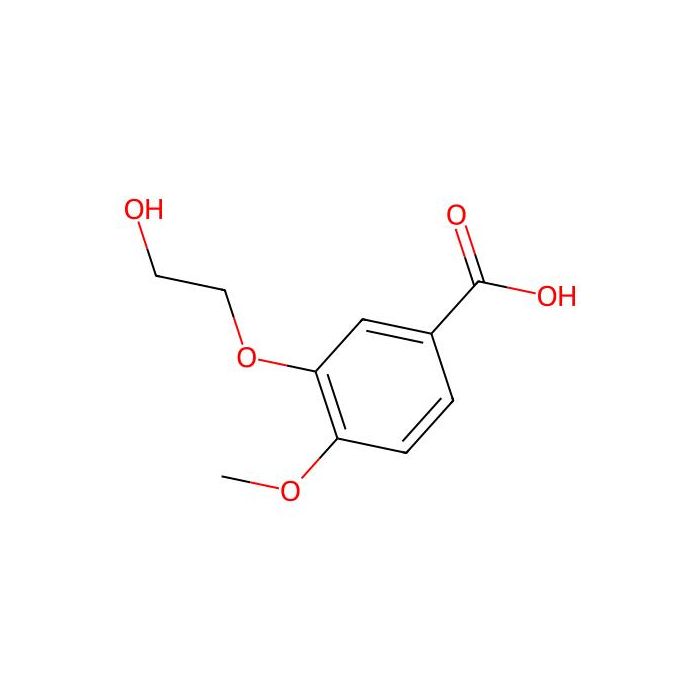
This compound belongs to the class of organic compounds known as p-methoxybenzoic acids and derivatives. These are benzoic acids in which the hydrogen atom at position 4 of the benzene ring is replaced by a methoxy group.
External Descriptors
Not available
1. Djoumbou Feunang Y, Eisner R, Knox C, Chepelev L, Hastings J, Owen G, Fahy E, Steinbeck C, Subramanian S, Bolton E, Greiner R, and Wishart DS. ClassyFire: Automated Chemical Classification With A Comprehensive, Computable Taxonomy. Journal of Cheminformatics, 2016, 8:61.
Zertifikate (CoA, COO, BSE/TSE und Analyse-Diagramm)
C of A & Other Certificates(BSE/TSE, COO):
Analytical Chart:
Chemische und physikalische Eigenschaften
Molekulargewicht
212.200 g/mol
XLogP3
0.900
Hydrogen Bond Donor Count
2
Hydrogen Bond Acceptor Count
5
Rotatable Bond Count
5
Exact Mass
212.068 Da
Monoisotopic Mass
212.068 Da
Topological Polar Surface Area
76.000 Ų
Heavy Atom Count
15
Formal Charge
0
Complexity
206.000
Isotope Atom Count
0
Defined Atom Stereocenter Count
0
Undefined Atom Stereocenter Count
0
Defined Bond Stereocenter Count
0
Undefined Bond Stereocenter Count
0
The total count of all stereochemical bonds
0
Covalently-Bonded Unit Count
1
Lösungsrechner
Molarity Calculator
Determine the necessary mass, volume, or concentration for preparing a solution.
Dilution Calculator
Determine the dilution needed to prepare a stock solution.
Reconstitution Calculator
Bewertungen
Kundenbewertungen
Application Protocols
No application protocols are validated or specified for this item. For general use as a synthetic intermediate or analytical reference:
Prepare stock solutions in DMSO or methanol as required.
For analytical HPLC/LC–MS, develop gradients using water/acetonitrile (0.1% formic acid or ammonium acetate as needed) and monitor in the near‑UV.
For coupling reactions, follow standard organic synthesis protocols outlined under Reaction Conditions and verify by TLC/HPLC/NMR.
For any specialized application, refer to your lab’s SOPs and the CoA/Spec Sheet for lot‑specific details.
Biological Roles
Item-specific biological role: Not specified for this item.
General context (biochemistry/literature; no clinical claims):
This molecule is a synthetic aromatic carboxylic acid with a methoxy and hydroxyethoxy substituent. It is not a known endogenous metabolite.
Similar anisic‑acid derivatives are commonly used as intermediates in medicinal chemistry to modulate lipophilicity and hydrogen‑bonding capacity of lead series, potentially influencing permeability and solubility profiles during SAR exploration.
The terminal primary alcohol allows conjugation to reporter tags, linkers, or polymers (e.g., PEG fragments) for biochemical assay development or affinity materials.
In analytical or metabolic studies, such compounds can serve as reference standards to study phase‑II conjugation tendencies (e.g., glucuronidation of phenolic/benzylic alcohols or acyl glucuronidation of carboxylates) using liver microsomes or recombinant enzymes.
Enzyme interactions (expected from functional groups):
Carboxylic acids may bind to enzymes or transporters via ionic interactions in vitro; terminal alcohols can undergo enzymatic oxidation under suitable systems. These general behaviors are context dependent and require empirical validation.
Buffer Applications
This compound is not a buffering reagent and is not typically used to prepare defined pH buffer systems.
Practical note: If solubilization is required for assays, dissolution in DMSO or alcohol followed by dilution into an appropriate biological buffer (e.g., phosphate or HEPES) may be used. Adjust pH only if intentional; carboxylate formation above pH ~5 will increase apparent aqueous solubility but changes the compound’s ionization state.
Green Alternatives
Solvent and reagent choices with improved sustainability (literature guidance):
Replace chlorinated solvents where possible:
Use EtOAc or 2‑MeTHF for extractions and many esterifications instead of DCM/CHCl3.
2‑MeTHF or CPME can substitute for THF in many coupling and protection reactions (better boiling point and lower peroxide tendency than THF, though still monitor peroxides).
Carbodiimide couplings:
Consider T3P (propylphosphonic anhydride) in EtOAc/MeCN as a greener alternative to DCC, reducing urea waste and simplifying workup.
Acid activation:
Mixed anhydrides via isobutyl chloroformate can sometimes be run in greener solvents (EtOAc, MeTHF). Evaluate E‑factors and solvent recyclability.
Comparative notes (tradeoffs):
2‑MeTHF vs THF: improved safety and biorenewable sourcing, but may reduce solubility for highly polar reagents; monitor water content.
EtOAc vs DCM: greener profile and easier disposal, but lower density can impact phase separations; some reactions may require higher temperatures.
Enzymatic esterifications (lipase‑catalyzed) in tert‑amyl alcohol or solvent‑free conditions can provide high selectivity; requires substrate compatibility and may be slower.
Solid handling:
Aim for solvent‑minimized crystallizations (antisolvent or cooling) and avoid excessive chromatographic purification by employing crystallizable derivatives (e.g., p‑toluidide) to improve process greenness.
Pharmaceutical Uses
Item-specific pharmacopeial/excipient status: Not specified for this item; refer to CoA/Spec Sheet.
General formulation/manufacturing context (no therapeutic claims):
Aromatic carboxylic acids of this type are primarily intermediates in API synthesis or tools for impurity profiling and analytical method development.
Functional handles enable prodrug motif exploration (esterification of the acid, carbonate/carbamate formation at the primary alcohol) during medicinal chemistry campaigns.
As a reference standard, it may support stability‑indicating HPLC methods, impurity identification, or metabolite tracking for related scaffolds bearing methoxy/ether side chains.
Solid‑state considerations for development studies may include salt screening (carboxylate salts with amines) to enhance crystallinity or processability; such activities are research‑focused and require characterization (XRPD, DSC, TGA) for each salt form.
Regulatory note: This product is supplied for research use only and is not intended for human or veterinary use.
Physical Properties
Item-specific specifications: Not specified for this item; refer to CoA/Spec Sheet.
Literature/computed descriptors for the scaffold (informational, not product specs):
Expected state: Organic solid at ambient conditions typical for substituted benzoic acids bearing short ether chains.
Acid–base: Aromatic carboxylic acid; pKa for para‑methoxybenzoic acids generally in the ~4–5 range (literature, analogs). Deprotonates readily in basic media to form water‑soluble carboxylate salts.
Polarity/solubility (qualitative): Moderately polar owing to CO2H and ether/alcohol oxygens. Typically soluble in polar aprotic solvents (DMSO, DMF, acetone, acetonitrile) and alcohols; low solubility in nonpolar hydrocarbons; limited solubility in neutral water, increased upon basification.
Hydrogen bonding: Can act as H‑bond donor (CO2H, –OH) and acceptor (carbonyl and ether oxygens), enabling strong solvation in H‑bonding solvents.
Volatility: Negligible; nonvolatile under standard lab handling.
UV characteristics: Aromatic ring with anisole motif typically shows UV absorption in the near‑UV (ca. 200–300 nm, literature for anisic acids), useful for UV detection in analytical methods.
Refractive index, density, melting/boiling point, logP, and water content: Not specified for this item; refer to CoA/Spec Sheet.
Quality and Grades
Item-specific grade/purity: Not specified for this item; refer to CoA/Spec Sheet.
Interpretation and expectations:
In the absence of a declared grade, researchers typically verify suitability by reviewing the lot‑specific Certificate of Analysis (CoA) for assay, related substances, residual solvents, and moisture.
For analytical applications (e.g., as a reference or process impurity standard), users often require ≥98% purity with documented chromatography and spectroscopic identity (NMR, MS, IR). If an HPLC or LC–MS grade is needed (low UV baseline/particulates), confirm in the Spec Sheet.
Stabilizers/additives: Not specified for this item; refer to CoA/Spec Sheet. Aromatic carboxylic acids of this type generally do not require stabilizers when stored properly.
Trace metals, water/peroxide content, and UV cutoff: Not specified for this item; refer to CoA/Spec Sheet.
What to request/verify for sensitive work:
Residual water by Karl Fischer if performing moisture‑sensitive couplings.
Identity confirmation via 1H/13C NMR and HRMS; single major chromatographic peak (HPLC/GC) at appropriate detection wavelength (near‑UV).
If used in regulated workflows, request documentation on batch traceability and impurity profiling.
Reaction and Applications
General roles in synthesis (literature):
Bifunctional aryl building block featuring an aromatic carboxylic acid and a primary alcohol masked as a 2‑hydroxyethoxy chain. This enables orthogonal derivatization: convert the acid to esters/amides while independently manipulating the terminal alcohol/ether.
Representative transformations:
Amide coupling: EDC/HOBt, HATU, or T3P to furnish amides from the carboxylic acid; DIPEA/TEA as base. Protect the primary alcohol (e.g., TBDMS, acetyl) if needed to avoid side reactions.
Esterification: Fischer (ROH, catalytic H2SO4 or p‑TsOH, Dean–Stark) or Steglich (DCC/DMAP) methods. Alkyl chloroformates provide mixed anhydrides for further elaboration.
Acid chloride formation: SOCl2 or oxalyl chloride (DMF catalytic) followed by nucleophiles (alcohols/amines); avoid excess heat to protect ether linkages.
Alcohol derivatization: Tosylation/mesylation (TsCl/MsCl, base) to create a leaving group for intramolecular cyclizations or nucleophilic substitutions; carbonate or carbamate formation for pro‑moiety studies.
Oxidations: TEMPO/BAIB or Dess–Martin to oxidize the terminal alcohol to an aldehyde or acid, enabling side‑chain diversification.
O‑alkylation/ether modifications: Williamson ether synthesis on the phenolic ether is generally unreactive (methoxy is stable), but the terminal –OH undergoes selective alkylation/acylation.
Application domains:
Useful intermediate in medicinal chemistry for constructing anisic‑acid‑derived amides/esters with solubilizing side chains; analytical reference for metabolism or impurity profiling of related scaffolds.
Reaction Conditions
General guidance (literature; adjust per substrate and objective):
Amide coupling: HATU (1.1–1.5 equiv), amine (1.2 equiv), DIPEA (2–3 equiv) in DMF or MeCN, 0–25 °C, 1–12 h. EDC·HCl/HOBt or Oxyma/DIPEA in DMF/DCM also effective. Protect the terminal OH if undesired acylation occurs.
Esterification: Steglich conditions (DCC, 1.1–1.5 equiv; DMAP catalytic; DCM/DMF, 0–25 °C) or Fischer (ROH solvent, catalytic TsOH, reflux, Dean–Stark where applicable). For benzyl esters, use BnBr/K2CO3 in DMF or acid chloride + BnOH, then hydrogenolysis to deprotect.
Acid chloride formation: SOCl2 (2–5 equiv) with a DMF catalytic drop in DCM or toluene, 0–70 °C, 0.5–3 h; remove excess under reduced pressure; quench cautiously.
Alcohol derivatization: TsCl (1.2–1.5 equiv), pyridine or Et3N, DCM, 0–25 °C, 1–4 h; then SN2 with nucleophiles (e.g., azide, halides, thiols) in DMF at 50–80 °C.
Oxidation of –CH2CH2OH: TEMPO (5–10 mol%), NaOCl/KBr, pH ~9, 0–5 °C for aldehyde; or Dess–Martin (1.5 equiv) in DCM, 0–25 °C. Over‑oxidation to acid via Pinnick (NaClO2) after aldehyde formation.
Workup/purification tips:
Acid/base extractions exploiting the carboxylate enhance separations. Silica gel chromatography with 0.1–1% AcOH can minimize streaking of acids; pre‑esterification may further aid purification.
Expected outcomes:
Yields and kinetics are substrate‑ and condition‑dependent; consult primary literature and run small‑scale scouts to optimize for this scaffold.
Safety and Handling
GHS classification and hazard statements: Not specified for this item; refer to SDS for authoritative safety information.
General precautions (good laboratory practice):
Handle in a chemical fume hood to avoid inhalation of dust or aerosols. Avoid contact with skin and eyes.
Wear appropriate PPE: lab coat, safety glasses or splash goggles, and chemically resistant gloves (e.g., nitrile). For weighing fine powders, consider a dust mask/respirator as per institutional policy.
Chemical hazards (general for aromatic carboxylic acids/phenoxy alcohols):
May cause irritation to skin, eyes, and respiratory tract upon contact or inhalation of particulates.
Incompatible with strong oxidizers and strong bases/acids for prolonged contact (base will form carboxylate salt; strong oxidizers may affect the anisole/ether moieties). Avoid reactive acylation/alkylation reagents unless intended.
First aid (overview; defer to SDS):
Skin/eye contact: Rinse with copious water for at least 15 minutes; remove contaminated clothing; seek medical evaluation if irritation persists.
Inhalation: Move to fresh air; seek medical attention if symptoms occur.
Ingestion: Rinse mouth; do not induce vomiting; seek medical attention.
Fire safety: Organic solid; use CO2, dry chemical, or foam extinguishers. Combustion may produce CO/CO2 and irritating fumes; firefighters should use self‑contained breathing apparatus.
Spill response: Avoid dust formation; collect mechanically and place in suitable container for disposal per local regulations.
Solvent Selection
Polarity class and miscibility (literature/chemical rationale):
The compound is moderately polar with multiple hydrogen‑bonding sites. It dissolves well in DMSO, DMF, NMP, methanol, ethanol, acetone, and acetonitrile; sparingly in nonpolar solvents (hexanes, toluene). Aqueous solubility increases markedly above pH ~5 upon carboxylate formation.
Practical choices by task:
Stock solutions for bioassays/analytics: DMSO or methanol; filter through 0.22 µm if needed.
Preparative transformations: DMF, DCM/MeOH, MeCN, or THF depending on reaction (see Reaction Conditions).
Workup/partitioning: Acidic form extracts into moderately polar organics (EtOAc, MTBE). For basified aqueous phases, re‑acidify (pH <2) to back‑extract the free acid.
Selection versus alternatives (considerations):
Compared to nonpolar aromatics, this substrate benefits from polar aprotic media that solvate both the aryl core and heteroatoms, enhancing coupling and alkylation efficiency.
For environmentally preferred media, consider 2‑MeTHF or EtOAc where compatible (see Green Alternatives).
Drying notes:
If anhydrous conditions are required (e.g., acid chloride formation, carbodiimide coupling), ensure solvents are thoroughly dried (molecular sieves or distillation) to prevent ester hydrolysis and minimize competing carboxylate formation.
Storage and Reconstitution
Storage (item-specific):
Storage conditions: Room temperature (per Product Data). Keep container tightly closed in a dry, well‑ventilated place.
General best practices:
Protect from prolonged exposure to moisture and strong light. If frequent weighing is anticipated, consider storing in a desiccator to maintain consistent mass for analytical work.
If long‑term storage is planned, segregation into aliquots minimizes atmospheric exposure during repeated openings.
Reconstitution/solution stability:
No item‑specific solvent or concentration is specified; refer to CoA/Spec Sheet.
For stock solutions, use dry solvents (DMSO, MeOH, DMF) and store at 2–8 °C or −20 °C in sealed vials if stability is a concern; bring to room temperature before opening to avoid moisture condensation.
Avoid strong bases/acids in storage solutions to limit esterification/hydrolysis side reactions.
Shipping: Not specified for this item; refer to CoA/Spec Sheet.
Research use: For research use only (per Product Data).
SMILES: Not specified for this item; refer to CoA/Spec Sheet.
Structural features (literature/structure interpretation):
Core: Monosubstituted benzoic acid ring bearing two oxygenated substituents.
Functional groups: Aromatic carboxylic acid (–CO2H) para to a methoxy (–OCH3) and meta to a 2‑hydroxyethoxy side chain (–O–CH2–CH2–OH).
Heteroatoms: Five oxygens distributed among carboxyl, methoxy, and ether/alcohol functions.
2D description: A benzene ring with the carboxyl at position 1, a methoxy group at position 4 (para to the acid), and an –O–CH2–CH2–OH substituent at position 3. No stereocenters; achiral.
Formula and molecular weight:
Molecular formula: Not specified for this item; refer to CoA/Spec Sheet.
Molecular weight: Not specified for this item; refer to CoA/Spec Sheet.
Notes:
The combination of a carboxylic acid and a primary alcohol on the same aryl scaffold provides orthogonal handles for selective derivatization in synthesis.
Synthetic Utility
Orthogonal reactivity:
Carboxylic acid: amenable to esterification, amidation, acyl chloride formation, and late‑stage diversification via coupling regimes (EDC/HATU/T3P). Acyl protection (e.g., as methyl/benzyl ester) can mask acidity during transformations on the side chain.
Primary alcohol (on hydroxyethoxy chain): convertible to halides/mesylates/tosylates for substitution/cyclization; oxidizable to aldehyde/acid; protectable (TBDMS/TBS, TIPS, acetates) to control chemoselectivity.
Aryl platform behavior:
The anisole (para‑methoxy) enhances electron density but typically resists electrophilic demethylation under mild conditions; demethylation requires strong reagents (BBr3) and may not be compatible with the hydroxyethoxy ether—use protective strategies if phenol access is desired.
The 3‑(2‑hydroxyethoxy) substituent can engage intramolecular H‑bonding with the carboxylate in basic media, occasionally influencing solubility and crystallization.
Retrosynthetic value:
Accessible from 3‑hydroxy‑4‑methoxybenzoic acid via O‑alkylation with 2‑bromoethanol or ethylene carbonate under basic conditions; alternative routes include Mitsunobu inversion strategies starting from 3‑(2‑hydroxy)phenols (literature, general).
Downstream elaboration:
Linker installation (e.g., PEGylation) through the terminal OH while maintaining the aryl acid as an anchoring point for amide arrays, useful in fragment elaboration and bifunctional conjugates.
Target Specificity
Not applicable. This product is a small organic molecule, not an antibody, enzyme, or biological targeting agent. No antigen/epitope specificity is associated with this item.
Wir verwenden Cookies, um die ordnungsgemäße Funktion der Website sicherzustellen und, soweit zulässig, Ihr Nutzererlebnis zu verbessern. Sie können Ihre Einstellungen jederzeit unter „Einstellungen“ verwalten. Weitere Informationen finden Sie in unserer Cookie-Richtlinie.
Shall we send you a message when we have discounts available?
Remind me later
Thank you! Please check your email inbox to confirm.
Products are supplied to verified businesses, institutions, and qualified professionals for research and development use only. Not for use in humans, animals, diagnosis, or therapy.