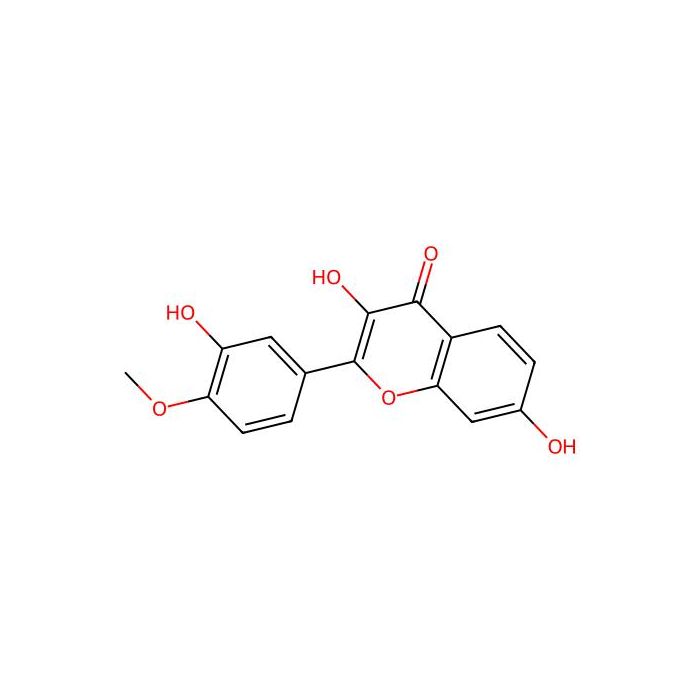
3,3',7-Trihydroxy-4'-methoxyflavone , CAS No.57396-72-2

CAS: 57396-72-2 Cat. No.: T991463 Summenformel: C16H12O6 Molekulargewicht: 300.26 PubChem CID: 5378244
Zu bestellen verfügbar
Storage
Room temperature
★
Size
Deutschland (EU)
USA*
Price
Qty
100mg
T991463-100mg
Auf Bestellung · 8–12 Wochen
1.732,79€
Enter a quantity for the sizes you want to add.
🧪

Why this grade

for sensitive chromatographic and analytical workflows requiring minimal baseline interference.

🌡

Storage & shipping

Room temperature Ships Check lot-specific COA for exact specifications.

📋

Quality documents

SDS, COA, datasheet, and spec sheet available for download. Lot-specific COA accessible via lot number lookup.

📚

Literature proof

Cited in 0 peer-reviewed publications across chromatography, organic synthesis, and cross-coupling reactions.

Specifications

Storage
Room temperature
Namen und Kennungen
Kanonisches LächelnCOC1=C(C=C(C=C1)C2=C(C(=O)C3=C(O2)C=C(C=C3)O)O)O
IUPAC Name3,7-dihydroxy-2-(3-hydroxy-4-methoxyphenyl)chromen-4-one
InChIKeyQVYSSMFEUBQBEU-UHFFFAOYSA-N
INCHI1S/C16H12O6/c1-21-12-5-2-8(6-11(12)18)16-15(20)14(19)10-4-3-9(17)7-13(10)22-16/h2-7,17-18,20H,1H3
Isomere SMILES COC1=C(C=C(C=C1)C2=C(C(=O)C3=C(O2)C=C(C=C3)O)O)O
PubChem CID 5378244
Molekulargewicht 300.26

Documentation

📋 Safety Data Sheet (SDS)

Comprehensive hazard, handling, storage, and regulatory compliance document.

Download SDS →

✅ Certificate of Analysis (COA)

Lot-specific quality data. Enter your lot number to retrieve the exact COA.

Look up COA →

📊 Datasheet

Quick-reference summary of product specifications and applications.

View datasheet →

🔬 Specification Sheet

Full quality attributes and acceptance criteria for this grade.

View spec sheet →

Advanced Data

Taxonomic Classification

Taxonomy Tree

KingdomOrganic compounds
SuperclassPhenylpropanoids and polyketides
KlasseFlavonoids
SubclassFlavones
Intermediate Tree Nodes Not available
Direct ParentFlavonols
Alternative Parents 4'-O-methylated flavonoids  3'-hydroxyflavonoids  3-hydroxyflavonoids  7-hydroxyflavonoids  Chromones  Methoxyphenols  Methoxybenzenes  Anisoles  Phenoxy compounds  1-hydroxy-2-unsubstituted benzenoids  Alkyl aryl ethers  Pyranones and derivatives  1-hydroxy-4-unsubstituted benzenoids  Heteroaromatic compounds  Oxacyclic compounds  Hydrocarbon derivatives  Organic oxides  
Molecular FrameworkAromatic heteropolycyclic compounds
Substituents 4p-methoxyflavonoid-skeleton - 3-hydroxyflavone - 3'-hydroxyflavonoid - 3-hydroxyflavonoid - 7-hydroxyflavonoid - Hydroxyflavonoid - Chromone - Benzopyran - Methoxyphenol - 1-benzopyran - Phenoxy compound - Anisole - Methoxybenzene - Phenol ether - Phenol - 1-hydroxy-2-unsubstituted benzenoid - Pyranone - Alkyl aryl ether - 1-hydroxy-4-unsubstituted benzenoid - Benzenoid - Pyran - Monocyclic benzene moiety - Heteroaromatic compound - Organoheterocyclic compound - Oxacycle - Ether - Organooxygen compound - Organic oxygen compound - Hydrocarbon derivative - Organic oxide - Aromatic heteropolycyclic compound
BeschreibungThis compound belongs to the class of organic compounds known as flavonols. These are compounds that contain a flavone (2-phenyl-1-benzopyran-4-one) backbone carrying a hydroxyl group at the 3-position.
External Descriptors Flavones and Flavonols
3D-Struktur
Interaktives chemisches Strukturmodell


Zertifikate (CoA, COO, BSE/TSE und Analyse-Diagramm)
C of A & Other Certificates(BSE/TSE, COO):
Analytical Chart:
Chemische und physikalische Eigenschaften
Molekulargewicht300.260 g/mol
XLogP32.300
Hydrogen Bond Donor Count3
Hydrogen Bond Acceptor Count6
Rotatable Bond Count2
Exact Mass300.063 Da
Monoisotopic Mass300.063 Da
Topological Polar Surface Area96.200 Ų
Heavy Atom Count22
Formal Charge0
Complexity473.000
Isotope Atom Count0
Defined Atom Stereocenter Count0
Undefined Atom Stereocenter Count0
Defined Bond Stereocenter Count0
Undefined Bond Stereocenter Count0
The total count of all stereochemical bonds0
Covalently-Bonded Unit Count1
Lösungsrechner
Bewertungen

Kundenbewertungen

Application Protocols

No item-specific validated protocols are provided for this product. Refer to the primary literature and method notes below as general guidance; adjust to your system.

  • General stock solution preparation (research use)

    • Dissolve the solid in DMSO or ethanol to 10–50 mM. Filter (0.22 µm PTFE) if needed. Store small aliquots protected from light.
  • Example analytical workflow (LC–MS, general)

    • Mobile phase: water (A) and acetonitrile (B) with 0.1% formic acid or 5 mM ammonium formate.
    • Gradient: 10% to 70% B over 10–15 min; detect at 270 and 340 nm; confirm by MS in negative ESI.
  • Antioxidant assay setup (DPPH, general)

    • Prepare DPPH in methanol (~100 µM). Mix with serial dilutions of the compound in methanol. Incubate 20–30 min in the dark; read A517 nm. Include Trolox standard for comparison.

These are literature-style examples only. Not specified for this item; refer to CoA/Spec Sheet and SDS, and validate in your laboratory.

Biological Roles

Note: For research use only. The following summarizes general biochemical roles of flavones; it does not imply medical or clinical use.

  • General context (literature)

    • Flavones are plant polyphenols with roles in pigmentation and defense. 3-hydroxyflavones exhibit characteristic excited-state intramolecular proton transfer (ESIPT), affecting fluorescence and UV–Vis behavior.
    • The 3-hydroxy–4-keto motif can chelate metal ions (e.g., Fe3+, Cu2+), relevant in studies of redox chemistry and metal-catalyzed oxidative processes.
  • In vitro biochemical behavior

    • Acts as a hydrogen atom donor and radical scavenger in antioxidant assays; the activity depends on the number and position of phenolic OH groups and conjugation.
    • Can modulate enzyme activity in cell-free systems (e.g., oxidoreductases) through noncovalent binding and metal chelation; binding is often driven by π–π stacking and H-bonding within active sites (literature observations for flavonoids).
  • Analytical utility

    • Serves as a standard for LC–MS method development in natural product chemistry; ionizes in negative ESI as [M–H]− and forms characteristic fragments from retro-Diels–Alder and CO loss (general for flavones).
  • Caution

    • Avoid extrapolating in vitro biochemical effects to in vivo outcomes. Experimental conditions (pH, cosolvent, protein content) strongly influence observed activity.
Buffer Applications

This compound is not a buffering reagent. It is typically dissolved in an organic solvent and then diluted into aqueous buffers for biochemical assays.

  • Practical guidance
    • Stock solutions: Prepare in DMSO or ethanol (e.g., 10–50 mM), then dilute into assay buffer (e.g., phosphate, HEPES, Tris) keeping organic cosolvent ≤1% v/v to minimize effects on enzymes or proteins.
    • pH considerations: The 3-OH/4-keto system is sensitive to deprotonation; increasing pH can cause bathochromic shifts and altered fluorescence. Maintain consistent buffer pH during measurements.
    • Solubility aids: If precipitation occurs upon aqueous dilution, add stock slowly with vigorous mixing, use surfactant-free BSA (for some assays), or slightly increase cosolvent (still ≤2% when permissible).
Green Alternatives

This product is a solid research chemical rather than a solvent; “green alternatives” mainly concern solvent selection and processing routes rather than substitution of the compound itself.

  • Greener solvent choices for handling/analysis (general guidance)

    • Prefer ethanol or methanol over DMF/DMSO when feasible for sample preparation and recrystallization, due to lower toxicity and easier removal.
    • For chromatography, consider water–acetonitrile systems with formic acid or ammonium formate buffers; acetonitrile offers low UV background and lower toxicity than chlorinated solvents.
    • For extractions, ethyl acetate or 2-MeTHF can replace dichloromethane in many workups.
  • Example comparison (qualitative)

    • DMSO: high solvency, difficult to remove, low volatility.
    • Ethanol: renewable, low toxicity, good for moderate solubility, easy to remove.
    • Ethyl acetate: biodegradable, versatile for partitioning, moderate solvency for polyphenols.
  • Process considerations

    • Minimize solvent volumes by preparing concentrated stocks and using microplate-based assays.
    • Use amber glassware and room-temperature operations where possible to reduce energy input and light-induced degradation.
Pharmaceutical Uses

No therapeutic or clinical claims. The compound may be employed in pharmaceutical research workflows as follows (general information; not item-specific specifications):

  • Analytical and reference uses

    • Reference standard for development and validation of chromatographic methods (HPLC/UPLC–UV–MS) targeting flavonoids in botanical raw materials or formulations.
    • System suitability marker for assessing retention and detector response in methods designed for polyphenols.
  • Preformulation and excipient interaction studies

    • Model polyphenol for investigating protein binding, solubility enhancement strategies (e.g., cyclodextrin inclusion, co-solvents), and antioxidant compatibility testing in formulations.
  • Metabolism and stability (in vitro research)

    • Subject of microsomal/S9 fraction studies for phase II conjugation (glucuronidation/sulfation) typical of phenolics, to understand chromatographic behavior of conjugates (literature context for flavonoids).
  • Regulatory status

    • Not a pharmacopeial excipient or API listing for this product. Any compendial status is not specified for this item; refer to CoA/Spec Sheet and applicable pharmacopeias if required.
Physical Properties
  • Item-specific specifications

    • Appearance: Not specified for this item; refer to CoA/Spec Sheet.
    • Molecular Formula: Not specified for this item; refer to CoA/Spec Sheet.
    • Molecular Weight: Not specified for this item; refer to CoA/Spec Sheet.
  • Literature/general values and expectations (for planning; not item specifications)

    • Physical state: typically a pale yellow to yellow polyphenolic solid (flavones commonly crystalline solids; literature).
    • Solubility: sparingly soluble in water; soluble in polar organic solvents such as DMSO, DMF, acetone, methanol, ethanol; limited solubility in nonpolar hydrocarbons (literature/general for flavones bearing phenolic groups).
    • Acid–base: phenolic pKa values for flavonoids commonly in the 7–10 range depending on ring position and conjugation; 3-OH adjacent to the 4-keto is typically the most acidic due to chelation stabilization (literature/general trend).
    • LogP: polyphenolic flavones generally show moderate lipophilicity; methoxy substitution increases lipophilicity while multiple OH reduce it (qualitative, literature trend).
    • UV–Vis: strong π→π* absorption in near-UV; typical flavone bands I/II around ~330–380 nm and ~250–280 nm, respectively; exact maxima depend on solvent and ionization state (literature).
    • Melting point, boiling point, density, refractive index: Not specified for this item; refer to CoA/Spec Sheet.
  • Practical notes

    • For solution prep, pre-dissolve in DMSO or MeOH before aqueous dilution. Gentle warming (≤40 °C) and sonication can aid dissolution. Avoid strong base unless deprotonation is intended.
Quality and Grades
  • Item-specific quality information

    • Grade/Purity: Not specified for this item; refer to CoA/Spec Sheet.
    • Stabilizers/Inhibitors: Not specified for this item; refer to CoA/Spec Sheet.
  • Guidance on interpreting grades (general)

    • Research-grade flavonoid standards are typically supplied at high chemical purity (often ≥95% by HPLC) to support analytical and bioassay reproducibility. If a specific assay grade (e.g., HPLC reference standard) is required, confirm by reviewing the product CoA.
    • Low-UV impurity specifications are important when using the compound as a calibration standard in LC-UV/LC-MS methods; HPLC grade products minimize late-eluting background.
    • Residual solvent, water content, and ash/metals: When critical for your application (e.g., trace analysis or metal-chelation studies), verify limits on the CoA/Spec Sheet. Not specified for this item; refer to CoA/Spec Sheet.
  • Practical QC considerations

    • Identity confirmation is commonly performed by 1H/13C NMR, HRMS, and HPLC purity profiles. Polyphenolic flavones exhibit characteristic UV spectra and 3-OH/4-keto chelation signatures in NMR (downfield 3-OH, intramolecular H-bonding).
Reaction and Applications
  • Typical research applications (general for this flavone)

    • Analytical standard for flavonoid profiling by LC-UV/LC-MS; useful in retention/ionization studies due to combined 3-OH/4-keto chelation motif.
    • Probe for antioxidant capacity (DPPH, ABTS, FRAP assays) and for studying structure–activity relationships of phenolic substitution patterns.
    • Ligand in metal–flavonoid coordination studies via the 3-hydroxy-4-keto chelation site; complexes show distinct spectral shifts.
  • Chemical reactivity and derivatization

    • Phenolic OH groups undergo O-alkylation (Williamson etherification), O-acylation, and silylation under standard conditions. Site selectivity often favors the more acidic 3-OH (adjacent to the 4-keto), especially under basic conditions.
    • The 4'-methoxy can be demethylated (e.g., with BBr3) to access the corresponding phenol, enabling library synthesis of O-derivatives on the B-ring.
    • Electrophilic substitution on the aromatic rings is deactivated relative to simple anisoles due to the electron-withdrawing chromenone carbonyl.
  • Practical tips

    • Maintain anhydrous, oxygen-limited conditions for sensitive transformations (e.g., selective O-acylations) to avoid oxidative side reactions.
    • For metal-binding studies, control pH precisely; deprotonation of 3-OH is key to chelation and spectroscopic changes.
    • Monitor reactions by LC–MS with UV at ~270–370 nm to exploit strong chromophores typical for flavones.
Reaction Conditions

General conditions for common transformations on polyphenolic flavones (guidance from literature; not item-specific specs):

  • O-alkylation (ether formation)

    • Conditions: K2CO3 or Cs2CO3, alkyl halide (e.g., MeI, BnBr), acetone/DMF, 0–50 °C, 2–24 h.
    • Notes: 3-OH is typically most reactive; protect selectively if other OH sites must remain free. Monitor for multiple alkylations.
  • O-acylation

    • Conditions: Ac2O or acyl chloride, pyridine or Et3N, catalytic DMAP, CH2Cl2/THF, 0 °C to rt, 1–6 h.
    • Notes: Intramolecular H-bonding at 3-OH can slow acylation; DMAP accelerates. Acyl groups are removable under basic or hydrazinolysis conditions.
  • Demethylation of 4'-OMe

    • Conditions: BBr3 (1–3 equiv per OMe) in dry CH2Cl2 at −78 to 0 °C, 1–4 h; quench with MeOH/water.
    • Notes: Protect other phenols if required; avoid overbromination by strict anhydrous technique.
  • Metal complexation studies

    • Conditions: Mix ligand with metal salts (e.g., FeCl3, Cu(OAc)2) in MeOH/H2O; adjust pH (7–9) to induce 3-O−/4-keto chelation; record UV–Vis/fluorescence shifts.
  • Analytical detection

    • LC–MS: Negative ESI often gives [M–H]− with fragments due to CO loss and retro-Diels–Alder cleavage; use water–acetonitrile with 0.1% formic acid or ammonium formate for robust ionization.
Safety and Handling
  • Item-specific hazard details

    • Signal Word: Not specified for this item; refer to SDS.
    • H-Statements: Not specified for this item; refer to SDS.
    • GHS Classification: Not specified for this item; refer to SDS.
    • Pictograms: Not specified for this item; refer to SDS.
  • General laboratory safety guidance (for similar polyphenolic flavones; defer to SDS for authoritative data)

    • Likely hazards: May cause eye/skin irritation and respiratory tract irritation as dust. Avoid inhalation of powders and contact with eyes/skin.
    • Personal protective equipment: Lab coat, safety glasses, and suitable gloves (e.g., nitrile). Use a fume hood for weighing/handling powders to avoid dust exposure.
    • Incompatibilities: Strong oxidizers may degrade phenolics; strong bases can induce phenoxide formation and potential oxidative coloration; avoid prolonged exposure to light/air that may promote slow oxidation.
    • First-aid overview: Inhalation—move to fresh air. Skin/eye contact—rinse with water for several minutes; remove contaminated clothing. Ingestion—rinse mouth with water. Seek medical attention as needed. Consult SDS for full instructions.
    • Fire safety: Organic solid; use CO2, dry chemical, or foam. Combustion may produce CO/CO2 and irritant fumes.
    • Handling tips: Minimize moisture uptake; phenolic solids can show hygroscopicity to a minor extent and may cake. Use clean, dry spatulas and amber containers to limit light exposure.
Solvent Selection
  • Polarity and miscibility (general guidance)

    • 3,3',7-Trihydroxy-4'-methoxyflavone is moderately polar due to multiple phenolic OH groups yet retains aromatic character; it is typically insoluble in water but dissolves in polar aprotic and protic organics.
    • Good solvents: DMSO, DMF, acetone, acetonitrile, methanol, ethanol. Moderately soluble in ethyl acetate; poor in alkanes/ethers without hydrogen bonding.
  • Choosing a solvent by application

    • Bioassays/cell-free enzyme studies: Prepare a concentrated DMSO or ethanol stock (e.g., 10–50 mM), then dilute into aqueous buffer maintaining ≤1% organic cosolvent to avoid assay artifacts.
    • Spectroscopy: Methanol or ethanol provide well-defined UV bands; note bathochromic shifts upon base addition due to 3-OH deprotonation.
    • Preparative workup and crystallization: Ethyl acetate/hexanes or ethanol/water systems can be tuned to crystallize flavones bearing OH/OMe groups.
  • Comparison (general)

    • DMSO: highest solvating power; best for concentrated stocks; may interfere in some assays.
    • Methanol/ethanol: greener and volatile; suitable for UV–Vis and RP-HPLC sample prep.
    • Acetonitrile: LC-compatible, low UV background; moderate solubility for polyphenols.
  • Drying notes

    • Although the solid is not typically deliquescent, ensure solvents are anhydrous for reactions involving derivatization or metal complexation to maintain reproducibility.
Storage and Reconstitution
  • Item-specific storage

    • Storage Conditions: Room temperature (per Product Data).
    • Shipped In: Not specified for this item; refer to CoA/Spec Sheet.
  • General handling guidance

    • Protect from light and moisture. Store in a tightly sealed, amber vial. For long-term stability, many polyphenolic flavones remain stable at ambient conditions when dry; refrigeration is optional but avoid repeated warming/cooling cycles that may cause condensation.
    • After opening, consider desiccation (e.g., with silica gel) to minimize humidity exposure.
  • Reconstitution (general recommendations for research use)

    • Prepare concentrated stocks in DMSO or ethanol (e.g., 10–50 mM). Vortex and, if necessary, sonicate gently or warm to 30–40 °C to aid dissolution. Filter through a 0.22 µm PTFE syringe filter for analytical applications.
    • For aqueous assays, add the organic stock slowly to buffer with vigorous mixing to prevent precipitation. Keep final organic content low (typically ≤1%).
    • Aliquot stocks to minimize freeze–thaw of solutions; store solution aliquots at −20 °C protected from light. Verify stability by LC before critical experiments.
  • Stability notes

    • Phenolic compounds can undergo slow oxidative discoloration; minimize air/light exposure. Avoid strong base during storage to prevent phenoxide formation.
Structure and Identity

Brief description: 3,3',7-Trihydroxy-4'-methoxyflavone is a polyphenolic flavone bearing three phenolic hydroxyls (C3 of the heterocycle, C7 on the A-ring, and C3' on the B-ring) and a methoxy substituent at C4' on the B-ring. The core is the flavone scaffold (2-phenyl-4H-1-benzopyran-4-one).

  • Item-specific identifiers (Product Data)

    • SKU: T991463
    • Product Name: 3,3',7-Trihydroxy-4'-methoxyflavone
    • CAS: 57396-72-2
    • PubChem CID: 5378244
    • InChIKey: Not specified for this item; refer to CoA/Spec Sheet.
    • SMILES: Not specified for this item; refer to CoA/Spec Sheet.
  • Literature/Computed identifiers (clearly labeled)

    • Molecular formula (literature): C16H12O6 (derived from flavone with 3 OH and 1 OMe substituents)
    • Molecular weight (literature): ~300.26 g/mol
  • Structural features (general chemistry description)

    • Core: flavone (chromen-4-one) with a conjugated benzopyranone fused ring and a pendant phenyl (B-ring) at C2.
    • Functional groups: 1 carbonyl (4-one), 1 aryl ether (ring oxygen in chromenone), 3 phenolic OH groups (acidic), and 1 anisole-type methoxy (para to C3' OH on the B-ring).
    • Substitution pattern: A-ring 7-OH; C-ring 3-OH; B-ring 3'-OH and 4'-OMe; overall planar, polyaromatic, H-bond donor/acceptor rich.
    • Stereochemistry: Achiral; no stereocenters. 2D structure can be visualized as a planar chromen-4-one ring fused to a benzene (A-ring), with a phenyl (B-ring) at C2 bearing 3'-OH/4'-OMe.
Synthetic Utility

Although primarily a research standard, 3,3',7-trihydroxy-4'-methoxyflavone can serve as a versatile building block for derivatization and SAR libraries.

  • Functional group transformations

    • Phenolic OH groups: O-alkylation (e.g., MeI/Ag2O or Me2SO4/base), O-acylation (Ac2O, acid chlorides/anhydrides with DMAP), and protection as silyl ethers (TBS/TBDPS) for multi-step synthesis.
    • Selective demethylation of the 4'-OMe (BBr3, AlCl3/thiols) affords the corresponding catechol-like B-ring diol, enabling further diversification.
    • Chelation-directed modifications at the 3-OH/4-keto site can form transient metal complexes that alter regioselectivity in subsequent O-functionalizations (literature strategy for flavonols/flavones).
  • Cross-coupling and late-stage modification

    • While the scaffold lacks halogens, electrophilic handles can be installed (e.g., triflates from phenols) to enable Suzuki/Heck/Sonogashira couplings on the A- or B-ring.
  • Retrosynthetic perspective

    • Accessible via Baker–Venkataraman rearrangement or Algar–Flynn–Oyamada-type routes followed by selective O-methylation. The presence of 3-OH is consistent with flavonol-type chemistry, enabling study of ESIPT and metal-binding derivatives.
  • Practical notes

    • Control of phenolic site selectivity often hinges on base strength, counterion, and solvent polarity; monitor with LC–MS and 2D NMR for positional isomer discrimination.
Target Specificity

Not applicable. This product is a small-molecule flavone, not an antibody or affinity reagent. No antigen/epitope/isotype data are relevant. If your work involves binding studies (e.g., enzyme inhibition or metal chelation), refer to the Reaction & Applications and Biological Roles sections for mechanistic context.

Shall we send you a message when we have discounts available?

Remind me later

Thank you! Please check your email inbox to confirm.

Oops! Notifications are disabled.