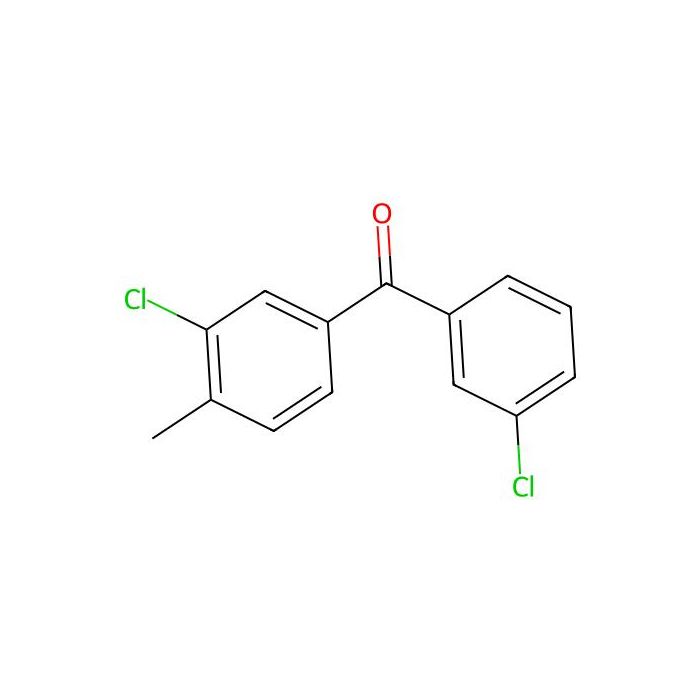
3,3'-Dichloro-4'-methylbenzophenone , CAS No.951890-84-9

CAS: 951890-84-9 Cat. No.: D963068 Summenformel: C14H10Cl2O Molekulargewicht: 265.13 PubChem CID: 24723104
Zu bestellen verfügbar
Storage
Room temperature
★
Size
Deutschland (EU)
USA*
Price
Qty
1g
D963068-1g
Auf Bestellung · 8–12 Wochen
1.518,46€
2g
D963068-2g
Auf Bestellung · 8–12 Wochen
2.446,07€
5g
D963068-5g
Auf Bestellung · 8–12 Wochen
4.056,59€
Enter a quantity for the sizes you want to add.
🧪
Why this grade

for sensitive chromatographic and analytical workflows requiring minimal baseline interference.

🌡

Storage & shipping

Room temperature Ships Check lot-specific COA for exact specifications.

📋

Quality documents

SDS, COA, datasheet, and spec sheet available for download. Lot-specific COA accessible via lot number lookup.

📚

Literature proof

Cited in 0 peer-reviewed publications across chromatography, organic synthesis, and cross-coupling reactions.

Specifications

Storage
Room temperature
Namen und Kennungen
Kanonisches Lächeln
CC1=C(C=C(C=C1)C(=O)C2=CC(=CC=C2)Cl)Cl
IUPAC Name
(3-chloro-4-methylphenyl)-(3-chlorophenyl)methanone
InChIKey
LUTWWINBVFITDD-UHFFFAOYSA-N
INCHI
1S/C14H10Cl2O/c1-9-5-6-11(8-13(9)16)14(17)10-3-2-4-12(15)7-10/h2-8H,1H3
Isomere SMILES
CC1=C(C=C(C=C1)C(=O)C2=CC(=CC=C2)Cl)Cl
PubChem CID
24723104
Molekulargewicht
265.13

Documentation

📋 Safety Data Sheet (SDS)

Comprehensive hazard, handling, storage, and regulatory compliance document.

Download SDS →

✅ Certificate of Analysis (COA)

Lot-specific quality data. Enter your lot number to retrieve the exact COA.

Look up COA →

📊 Datasheet

Quick-reference summary of product specifications and applications.

View datasheet →

🔬 Specification Sheet

Full quality attributes and acceptance criteria for this grade.

View spec sheet →

Advanced Data

Taxonomic Classification

Taxonomy Tree

KingdomOrganic compounds
SuperclassBenzenoids
KlasseBenzene and substituted derivatives
SubclassBenzophenones
Intermediate Tree Nodes Not available
Direct ParentBenzophenones
Alternative Parents Diphenylmethanes  Aryl-phenylketones  Benzoyl derivatives  Toluenes  Chlorobenzenes  Aryl chlorides  Organochlorides  Organic oxides  Hydrocarbon derivatives  
Molecular FrameworkAromatic homomonocyclic compounds
Substituents Benzophenone - Diphenylmethane - Aryl-phenylketone - Benzoyl - Aryl ketone - Toluene - Halobenzene - Chlorobenzene - Aryl halide - Aryl chloride - Ketone - Organooxygen compound - Organochloride - Organohalogen compound - Organic oxide - Organic oxygen compound - Hydrocarbon derivative - Aromatic homomonocyclic compound
BeschreibungThis compound belongs to the class of organic compounds known as benzophenones. These are organic compounds containing a ketone attached to two phenyl groups.
External Descriptors Not available
3D-Struktur
Interaktives chemisches Strukturmodell


Zertifikate (CoA, COO, BSE/TSE und Analyse-Diagramm)
C of A & Other Certificates(BSE/TSE, COO):
Analytical Chart:
Chemische und physikalische Eigenschaften
Molekulargewicht265.100 g/mol
XLogP35.600
Hydrogen Bond Donor Count0
Hydrogen Bond Acceptor Count1
Rotatable Bond Count2
Exact Mass264.011 Da
Monoisotopic Mass264.011 Da
Topological Polar Surface Area17.100 Ų
Heavy Atom Count17
Formal Charge0
Complexity279.000
Isotope Atom Count0
Defined Atom Stereocenter Count0
Undefined Atom Stereocenter Count0
Defined Bond Stereocenter Count0
Undefined Bond Stereocenter Count0
The total count of all stereochemical bonds0
Covalently-Bonded Unit Count1
Lösungsrechner
Bewertungen

Kundenbewertungen

Application Protocols

Not applicable. No validated bioassay protocols (e.g., WB, IHC, IF, FC) are associated with this small-molecule building block. For synthetic use, follow standard organic chemistry procedures outlined under Reaction Conditions and Synthetic Utility.

Biological Roles

This product is a synthetic small molecule used as a research chemical/building block. No endogenous biological role is known.

General considerations for benzophenone derivatives (literature/general):

  • Photoreactivity: Benzophenone motifs can enter a triplet excited state upon UV irradiation and abstract hydrogen atoms; this property is leveraged in photoaffinity labeling reagents when appropriately derivatized. The current compound is not a designated photoaffinity probe, but the chromophore shares the underlying photophysics.
  • Lipophilicity: The halogenated, methylated aryl ketone is expected to be strongly hydrophobic, tending to partition into organic phases or lipid-like environments, which may complicate biological assay handling (e.g., adsorption to plastics, need for carrier solvents like DMSO).

No biological targets, transporters, or metabolic pathways are specified for this item. Any biological use should be limited to laboratory research with appropriate controls. Avoid clinical or diagnostic applications; see Research Use Note: For research use only.

Buffer Applications

Not typically applicable. 3,3'-Dichloro-4'-methylbenzophenone is a hydrophobic organic building block and is not used to prepare aqueous buffer systems. For work in biological assays, dissolve in a compatible co‑solvent (e.g., DMSO or MeCN) before dilution into buffered media, ensuring the final solvent content and compound solubility are acceptable.

Green Alternatives

While 3,3'-dichloro-4'-methylbenzophenone itself is a halogenated aromatic (not inherently “green”), several greener practice options apply to its use (literature/general):

  • Solvent choices:

    • Prefer 2‑MeTHF, CPME, or toluene over chlorinated solvents (DCM/CHCl3) when solubility and reactivity allow.
    • For polar environments, EtOAc or MeCN (HPLC-grade, recycled) may substitute for DMF/DMAc/NMP in certain couplings.
  • Catalysis and conditions:

    • Use modern Pd precatalysts and dialkylbiaryl phosphines enabling aryl chloride activation at lower loadings and temperatures, reducing energy and waste.
    • Micellar catalysis (aqueous surfactant media) has enabled Suzuki couplings of aryl chlorides under milder, water-rich conditions—evaluate substrate compatibility.
  • Workup/waste minimization:

    • Employ solid-supported scavengers for metal removal and base neutralization to reduce solvent use.
    • Optimize crystallization instead of chromatography when feasible; the benzophenone core often crystallizes well.
  • Energy and safety:

    • If photochemistry is used, consider LED sources with tuned wavelengths and higher electrical efficiency over mercury lamps.

Comparison (general):

  • Chlorinated solvents: excellent solvency but higher environmental/health burden.
  • 2‑MeTHF/CPME: renewable origin (2‑MeTHF), reduced peroxide tendency vs ethers like THF (CPME), better phase separation; may require higher temps or longer dissolution time.

Adopt process analytical technology (in situ IR/UV) to minimize repeats and rework, further reducing environmental footprint.

Pharmaceutical Uses

No pharmacopeial status or excipient role is specified for this item; refer to CoA/Spec Sheet if such information becomes available.

General, non-clinical context (literature/general):

  • Halogenated benzophenones may serve as intermediates in the synthesis of candidate molecules or polymer additives studied in preformulation or materials aspects of drug delivery research (e.g., as UV‑absorbing motifs). Any such use remains at the laboratory research stage.

Important: No medical, therapeutic, or diagnostic claims are made for this product. It is supplied strictly for research use only.

Physical Properties

Item-specific specifications:

  • Appearance: Not specified for this item; refer to CoA/Spec Sheet.
  • Grade/Purity: Not specified for this item; refer to CoA/Spec Sheet.
  • Molecular Formula: Not specified for this item; refer to CoA/Spec Sheet.
  • Molecular Weight: Not specified for this item; refer to CoA/Spec Sheet.

Literature/computed (for guidance only; verify experimentally):

  • Empirical formula (literature/computed): C14H12Cl2O.
  • Formula weight (literature/computed): ≈ 267.15 g/mol.
  • Physical state: Many benzophenone derivatives are crystalline solids at ambient conditions; confirm for this item via CoA.
  • Solubility (general expectation):
    • Organic solvents: soluble in chlorinated solvents (CH2Cl2, CHCl3), aromatics (toluene), ethers (THF), and polar aprotics (acetone, acetonitrile). Degree of solubility should be verified.
    • Water: very low solubility expected due to hydrophobic aromatic framework (literature/general).
  • LogP: High logP expected (>3) for triaryl ketones with halogen/methyl substitution (literature/general); obtain measured value from CoA if critical.
  • pKa: No ionizable groups in the neutral range; carbonyl oxygen is basic but non-ionizing in water (literature/general).
  • UV-Vis: Benzophenone chromophore typically shows absorption in near‑UV (ca. 240–260 nm and 320–350 nm; literature/general). Substitution will shift intensities/wavelengths; verify for this derivative if spectroscopic use is intended.

Note: Where precise numeric properties (mp, bp, density, refractive index) are required, consult the item’s CoA/SDS or measure under your conditions.

Quality and Grades

Item-specific quality information:

  • Grade/Purity: Not specified for this item; refer to CoA/Spec Sheet.
  • Stabilizers/Inhibitors: Not specified for this item; refer to CoA/Spec Sheet.

Guidance on grades for small-molecule building blocks (general):

  • Research grade: typical for synthetic intermediates; suitable for most discovery chemistry and method development. If trace metals, halides, or UV impurities are critical (e.g., in photocatalysis or analytical applications), request a detailed CoA including HPLC purity, GC area %, residual solvents, and trace metal profile.
  • Chromatography grade (if offered): emphasizes low non-volatile residue and low UV background—useful when spectroscopic transparency is required.
  • Custom specs: For cross‑coupling or catalytic reactions sensitive to halide purity, controlling trace water, peroxides, or acid content can be important. If needed, inquire about additional drying, light protection, or packaging under inert gas.

What the grade implies (general):

  • Purity claims (e.g., ≥98%) usually refer to area % by HPLC/GC with specific detection conditions; confirm method.
  • Water/peroxide/metal content: Not specified for this item; refer to CoA/Spec Sheet.

Recommendation: If the compound will be used in quantitative photochemistry or for SAR libraries, request analytical data (1H/13C NMR, HRMS, HPLC chromatogram, residual solvent analysis) associated with your lot.

Reaction and Applications

This compound serves as a versatile aryl ketone building block combining a benzophenone carbonyl with two aryl chlorides and a para‑methyl substituent. Typical research applications (literature/general):

  • Photochemistry and triplet sensitization: Benzophenone scaffolds are classic n→π* triplet sensitizers. Substitution with Cl/Me modulates triplet energy and intersystem crossing; useful in energy transfer, photoinitiation of radical polymerizations, and hydrogen‑abstraction studies. Employ degassed solvents and control light intensity to avoid side reactions.

  • Nucleophilic additions to the carbonyl: Grignard or organolithium reagents add to form tertiary benzhydrols. Use dry THF/Et2O at −78 to 0 °C, then quench and purify. The aryl chlorides are typically tolerated under these conditions.

  • Reductions and rearrangements: NaBH4 or catalytic hydrogenation can reduce the ketone to alcohol; more forcing conditions (Clemmensen/Wolff–Kishner) remove the carbonyl. Baeyer–Villiger oxidation affords aryl esters/aryl formates depending on migration aptitude; substitution pattern can influence regioselectivity.

  • Cross‑coupling on aryl chloride sites: With appropriate Pd catalysts/ligands (e.g., Buchwald-type), aryl chlorides can undergo Suzuki–Miyaura, Buchwald–Hartwig amination, or Sonogashira couplings to diversify the scaffold. The ketone typically survives coupling; use base and temperature tuned to avoid enolization.

  • Halogen–metal exchange: t‑BuLi or iPrMgCl·LiCl (Turbo Grignard) can effect site‑selective metalation on aryl chloride positions under cryogenic conditions, enabling subsequent electrophile trapping (formylation, borylation). Exercise caution to avoid addition to the carbonyl (protect as ketal if needed).

  • Electrophilic aromatic substitution on the methyl-bearing ring: Benzylic oxidation (e.g., with MnO2 or SeO2) can convert the p‑methyl to an aldehyde/acid, allowing further functional handle introduction.

Selectivity notes: The meta‑chloro groups are deactivating; direct SNAr is unlikely without additional activation. Tailor catalysts/ligands for aryl chloride activation and monitor for photochemical side reactions under intense light.

Reaction Conditions

General literature guidance for common transformations on aryl ketones bearing aryl chlorides (verify and optimize for your setup):

  • Suzuki–Miyaura coupling (on Ar–Cl):

    • Catalyst: Pd2(dba)3 (1–2 mol%) + XPhos/SPhos/RuPhos (2–4 mol%) or precatalysts (e.g., XPhos Pd G3 1–2 mol%).
    • Base: K3PO4, Cs2CO3, or K2CO3 (2–3 equiv).
    • Solvent: 1,4-dioxane/H2O (3:1), toluene/H2O, or CPME/H2O.
    • Temperature: 80–110 °C; time: 2–16 h.
    • Notes: The ketone is generally tolerated; exclude air/moisture as needed.
  • Buchwald–Hartwig amination (Ar–Cl → Ar–NR2):

    • Catalyst: Pd(OAc)2 (1–3 mol%) + BrettPhos or tBuBrettPhos (2–6 mol%).
    • Base: NaOtBu or Cs2CO3; Solvent: toluene, tAmylOH, or dioxane.
    • Temperature: 80–110 °C; time: 6–24 h.
  • Sonogashira coupling (Ar–Cl → Ar–C≡C–R):

    • Catalyst: Pd(PPh3)2Cl2 (1–3 mol%) + CuI (5–10 mol%).
    • Base: Et3N or iPr2NEt; Solvent: THF, DMF, or MeCN.
    • Temperature: rt–70 °C; inert atmosphere.
  • Nucleophilic addition to carbonyl (Grignard):

    • Reagents: RMgX (1.2–2.0 equiv), dry THF/Et2O.
    • Temperature: −78 to 0 °C; quench with NH4Cl.
    • Notes: If aryl chloride metal–halogen exchange is undesired, choose milder nucleophiles.
  • Baeyer–Villiger oxidation:

    • Reagents: mCPBA (1.2–2.0 equiv) in DCM or CHCl3.
    • Temperature: 0–25 °C; time: 2–24 h.
    • Notes: Substituent pattern can influence migration; monitor by TLC/GC.
  • Benzylic oxidation of the p‑methyl:

    • Reagents: KMnO4 (basic aqueous), or Co/Mn/Br‑catalyzed aerobic conditions; Solvent: acetone/toluene/water biphasic.

These ranges are representative literature conditions and are not product specifications. Adjust to substrate, scale, and equipment.

Safety and Handling

Item-specific hazard data:

  • Signal Word: Not specified for this item; refer to SDS.
  • H-Statements: Not specified for this item; refer to SDS.
  • GHS Classification: Not specified for this item; refer to SDS.
  • Pictograms: Not specified for this item; refer to SDS.

General safety guidance for aryl ketones/halogenated aromatics (literature/general):

  • Likely hazards: may cause irritation to skin, eyes, and respiratory tract; harmful if swallowed. Avoid dust formation if solid. Prevent inhalation of particulates/vapors.
  • PPE: lab coat, safety glasses or chemical splash goggles, and appropriate chemical-resistant gloves (e.g., nitrile). Use in a fume hood.
  • Storage incompatibilities: keep away from strong oxidizers and strong bases that may induce aldol‑type condensations or deprotonation at alpha-positions under forcing conditions. Avoid strong reducing agents unless intended.
  • Photochemical reactivity: benzophenone cores can undergo photochemical reactions (e.g., triplet sensitization, Norrish processes). Store protected from excessive light if photostability is a concern (general precaution).
  • Spills: absorb with inert material, collect for disposal; avoid environmental release.
  • First aid (overview; defer to SDS):
    • Inhalation: move to fresh air; seek medical attention if symptoms persist.
    • Skin: wash with soap/water; remove contaminated clothing.
    • Eyes: rinse cautiously with water for several minutes; remove contact lenses if present and easy to do.
    • Ingestion: rinse mouth; do not induce vomiting; seek medical advice.

Always consult the product SDS for authoritative hazard classification and response measures.

Solvent Selection

Compound type and polarity (general/literature):

  • A halogenated benzophenone with high hydrophobicity and an apolar–moderately polarizable aromatic core; expected very low water solubility.

Practical solvent choices (general guidance):

  • Best solvents for dissolution: dichloromethane, chloroform, toluene, THF, diethyl ether, ethyl acetate, acetone, acetonitrile, DMF, DMSO.
  • Poor solvents: water, very protic/low‑polarity alcohol–water mixtures at low organic content.

Selection tips by application:

  • Photochemistry/sensitization studies: choose spectroscopic‑grade acetonitrile, 2‑MeTHF, or toluene for cleaner UV backgrounds. Minimize absorbance at the analytical wavelength.
  • Cross‑coupling on aryl chlorides: polar aprotics (dioxane, DMF, DMAc, NMP) or toluene with a polar co‑solvent often improve Pd‑catalyzed activation; add water or base as required by the catalyst system.
  • Nucleophilic additions to the carbonyl (e.g., Grignard, organolithium): use rigorously anhydrous ethers (THF, Et2O) and inert atmosphere.
  • Reductions (NaBH4, DIBAL‑H): alcoholic solvents (MeOH, EtOH) for NaBH4 under controlled conditions; toluene/THF for hydride reagents that are moisture‑sensitive.

Quick comparison (general):

  • DCM/CHCl3: excellent solubility, easy workup; environmental/health considerations apply.
  • THF/2‑MeTHF: good for organometallics; 2‑MeTHF is a greener alternative with higher hydrophobicity.
  • Toluene: high boiling, good for thermal reactions; slower dissolution than DCM/THF for some solids.

Always verify solution stability under light and base if photochemical or enolization pathways are possible.

Storage and Reconstitution

Item-specific storage from Product Data:

  • Storage Conditions: Room temperature.
  • Shipped In: Not specified for this item; refer to CoA/Spec Sheet.
  • Appearance: Not specified for this item; refer to CoA/Spec Sheet.

General guidance (literature/practice; not product specifications):

  • Keep container tightly closed in a dry, well‑ventilated place. Minimize headspace and moisture ingress.
  • Protect from prolonged or intense light if photochemical reactivity is a concern for your application.
  • If preparing stock solutions (e.g., in DMSO, MeCN, THF): use anhydrous solvent, filter if particulates are present, and store aliquots in amber vials at room temperature or 2–8 °C depending on solvent stability. Avoid repeated freeze–thaw of solutions.

Research Use Note: For research use only.

Structure and Identity

Short description: 3,3'-Dichloro-4'-methylbenzophenone is a substituted benzophenone bearing two chloro substituents (meta on each ring) and a para-methyl group on one ring, providing a halogenated, mildly electron‑withdrawing/electron‑donating substitution pattern around a central aryl ketone.

Item-specific identifiers (from Product Data):

  • CAS: 951890-84-9
  • CID: 24723104
  • InChIKey: 209723 (as provided; not the standard 27-character InChIKey format)
  • SMILES: Not specified for this item; refer to CoA/Spec Sheet.

Molecular formula and weight:

  • Molecular Formula: Not specified for this item; refer to CoA/Spec Sheet.
  • Molecular Weight: Not specified for this item; refer to CoA/Spec Sheet.

Computed/literature structure details (not product specifications):

  • Expected core: benzophenone (diphenyl ketone) scaffold with carbonyl (C=O) flanked by two phenyl rings.
  • Substituents: Cl at the 3-position of each ring (3,3′-dichloro); CH3 at the 4′-position of one ring.
  • Typical empirical formula for this substitution pattern: C14H12Cl2O (literature/computed), MW ≈ 267.15 g/mol (literature/computed). Verify against the CoA.

2D structural description (literature/general):

  • Central trigonal planar carbonyl carbon double-bonded to oxygen and single-bonded to two sp2 aryl carbons.
  • One ring bears meta‑chloro (relative to the carbonyl) only; the other bears meta‑chloro and para‑methyl substituents relative to the carbonyl-bearing ipso carbon.
  • No stereocenters; overall achiral, conformational freedom around the Ar–C(=O) and C(=O)–Ar bonds.

Functional groups and features (general):

  • Aryl ketone (photochemically active triplet sensitizer class), two aryl chlorides (cross‑coupling handles), one para‑methyl (weakly donating, increases hydrophobicity).
Synthetic Utility

Functional group handles and strategic value (literature/general):

  • Aryl ketone: versatile node for nucleophilic additions (organometallics), reductions to alcohol or hydrocarbons, and rearrangements (Baeyer–Villiger).
  • Two aryl chlorides: orthogonal handles for Pd‑catalyzed cross‑couplings (Suzuki–Miyaura, Buchwald–Hartwig, Sonogashira), and for directed metalation/halogen–metal exchange under cryogenic conditions.
  • Para‑methyl group: benzylic functionalization (oxidation to aldehyde/acid, radical bromination to benzyl bromide) enabling late‑stage diversification.

Representative transformations:

  • Protection strategies: Convert the ketone to a ketal (ethylene glycol, acid catalysis) to shield the carbonyl during aggressive metalations on the aryl chlorides.
  • Sequential coupling: Exploit differential reactivity of the two aryl chlorides via sterics/electronics or ligand control to install two distinct substituents sequentially.
  • Carbonyl elaboration: Wittig/Julia–Kocienski olefination at the carbonyl-derived aldehyde (after reduction/oxidation sequence) to install alkenes; or convert to oxime, then Beckmann rearrangement for amide synthesis.
  • Photochemical derivatization: Use the benzophenone triplet to graft onto C–H rich polymers (surface modification) in materials research.

Retrosynthetic perspective:

  • The target often arises from Friedel–Crafts acylation of substituted benzenes with substituted benzoyl chlorides, or via coupling of aryl nucleophiles with substituted benzoyl derivatives, allowing modular access to diverse analogs.

Practical notes:

  • Monitor for dehalogenation under hydrogenation.
  • Choose bases/ligands that avoid ketone enolization during cross‑coupling (e.g., K3PO4, Cs2CO3, bulky electron-rich phosphines).
Target Specificity

Not applicable. This product is a small-molecule chemical, not a biological affinity reagent. No antigen/epitope/clone/isotype information applies.

Shall we send you a message when we have discounts available?

Remind me later

Thank you! Please check your email inbox to confirm.

Oops! Notifications are disabled.