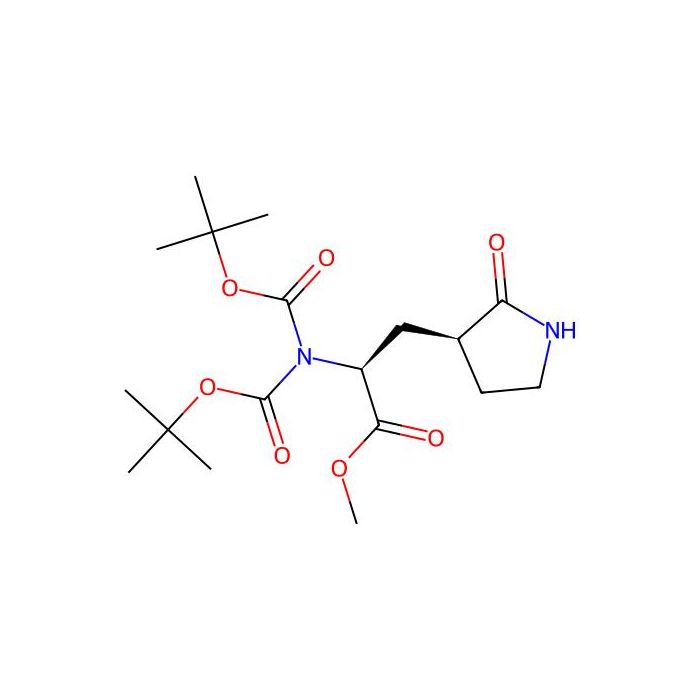
Zertifikate (CoA, COO, BSE/TSE und Analyse-Diagramm)
C of A & Other Certificates(BSE/TSE, COO):
Analytical Chart:
Chemische und physikalische Eigenschaften
Löslichkeit
DMSO : 100 mg/mL (258.77 mM; Need ultrasonic)
Lösungsrechner
Molarity Calculator
Determine the necessary mass, volume, or concentration for preparing a solution.
Dilution Calculator
Determine the dilution needed to prepare a stock solution.
Reconstitution Calculator
Bewertungen
Kundenbewertungen
Application Protocols
No tested applications, recommended dilutions, or validated protocols are provided for this item in the product data.
For experimental use, develop assay‑specific protocols and include appropriate negative/vehicle controls and positive reference standards.
Consult the SDS and CoA for any handling or preparation instructions that may accompany your lot.
All uses are for research purposes only.
Biological Roles
Item-specific biological targets, pathways, or roles are not provided.
The descriptor “antiviral agent” is a functional label in a research context, not an established biological role. Without disclosed structure, target engagement, or pathway data, no definitive biological roles can be assigned to this item.
General considerations for antiviral research compounds (non‑item‑specific):
Potential modes of action in research include inhibition of viral enzymes (polymerases, proteases), interference with entry/assembly, or modulation of host factors essential for replication.
Early biological characterization typically includes cytotoxicity baselines (e.g., CC50), antiviral potency (e.g., EC50 in relevant cell lines/virus systems), and selectivity index; these values are not provided for this item and should be determined experimentally.
Off‑target risk and assay interference (e.g., redox cycling, aggregation) should be assessed using orthogonal assays and detergent controls.
No clinical or in vivo roles are claimed. For detailed biological information, obtain the structure/CoA and consult peer‑reviewed literature if the compound is known.
Buffer Applications
This product is a small‑molecule research compound rather than a buffering agent. No intrinsic buffering system is applicable.
General laboratory guidance (non‑item‑specific) for using small molecules in buffered assays:
Stock preparation: Dissolve in anhydrous DMSO to 10–50 mM when solubility allows. Filter if particulate persists (PTFE, 0.2 μm) and verify by LC–MS/HPLC.
Dilution into buffers: Add stock to assay buffers (e.g., PBS, HBSS, cell culture media) keeping final DMSO at the lowest effective level (commonly ≤0.1–1% v/v). Include matched vehicle controls.
Detergent aid: 0.01–0.05% nonionic surfactant (e.g., Tween‑20, Pluronic F‑127) can mitigate aggregation for hydrophobic chemotypes; confirm no assay interference.
Stability checks: Monitor compound integrity in the working buffer over the assay time course (LC–UV/MS) and visually inspect for precipitation.
Item-specific buffer compatibility and pH stability are not provided; determine empirically for your assay system.
Green Alternatives
Item-specific solvent and process data are not provided. The guidance below addresses greener handling choices for small‑molecule research compounds in general.
Prefer DMSO or ethanol over chlorinated solvents for stock solutions where assay compatibility permits.
For chromatography/analytical work, consider ACN/water or MeOH/water systems rather than halogenated eluents; optimize gradients to minimize solvent use.
Implement microscale biology and analytics (96–384 well plates, microflow LC) to reduce solvent and material consumption.
Use closed‑cap, low‑headspace vials and cold‑chain logistics already in place (shipped on ice) to limit waste from degradation.
Tradeoffs (general):
Greener solvents may have lower solvency for highly lipophilic compounds, requiring co‑solvent strategies or modest temperature elevation.
Switching from DMF/DMF-like solvents to ethanol may increase evaporation losses; confirm concentration by weight or LC.
Recommendation: Document and review solvent volumes and waste streams during assay development; substitute with greener options when data show equivalent performance.
Pharmaceutical Uses
No pharmacopeial status, excipient role, or formulation use is provided for this item.
This material is supplied strictly for research use only (as stated in the product data). It is not intended for human or veterinary use, clinical diagnostics, or as a drug substance/excipient.
General formulation considerations for research compounds (non‑item‑specific):
For preclinical in vitro studies, DMSO stocks with controlled final solvent percentages are standard. For any nonclinical in vivo method development, appropriate vehicle design (e.g., aqueous cosolvents, cyclodextrins, lipid carriers) requires compound‑specific data and regulatory oversight; none are provided here.
Conclusion: No pharmaceutical or GMP manufacturing uses are claimed or supported for this product.
Physical Properties
Item-specific specifications are not provided in the product data.
Appearance: Not specified for this item; refer to CoA/Spec Sheet.
Melting point: Not specified for this item; refer to CoA/Spec Sheet.
Boiling point: Not specified for this item; refer to CoA/Spec Sheet.
Density: Not specified for this item; refer to CoA/Spec Sheet.
Refractive index: Not specified for this item; refer to CoA/Spec Sheet.
pKa/logP/logD: Not specified for this item; refer to CoA/Spec Sheet.
Solubility: Not specified for this item; refer to CoA/Spec Sheet.
Literature/computed values:
Not available without a disclosed structure. No computed or literature data can be provided at this time.
Practical guidance (general, non‑item‑specific):
For library compounds of unknown solubility, a common approach is to first attempt dissolution in anhydrous DMSO (to prepare a concentrated stock), then dilute into aqueous assay buffers keeping final DMSO ≤0.1–1% v/v as assay‑tolerated. Confirm actual solubility experimentally.
Quality and Grades
Item-specific grade/purity is not provided in the current product data.
Grade/Purity: Not specified for this item; refer to CoA/Spec Sheet.
Context for small‑molecule library compounds (general guidance):
Library/screening compounds are commonly supplied at research grade, with identity confirmed by techniques such as LC–MS and/or 1H NMR, and purity typically assessed by HPLC/UPLC at a specified wavelength. Exact acceptance criteria vary by supplier and lot; always verify on the accompanying CoA.
If low‑UV or high‑UV HPLC grades are relevant (e.g., for photometric assays), the UV cutoff and absorptivity should be confirmed on the CoA/Spec.
Stabilizers/salt forms: Not specified for this item; refer to CoA/Spec Sheet. The presence or absence of stabilizers, counter‑ions, or residual solvents can impact solubility and assay background.
Recommendations:
For structure‑activity work, confirm both identity and purity of the received lot by orthogonal methods (e.g., LC–MS + NMR) prior to biological testing.
Document water content or residual solvent only if stated on CoA; otherwise determine as needed (e.g., Karl Fischer, GC headspace).
Reaction and Applications
Scope based on product labeling and category:
The designation “Antiviral agent 5” indicates intended use as a research compound for antiviral screening and mechanism studies. No therapeutic or clinical use is implied.
Research applications (general, non‑item‑specific):
High‑throughput or targeted screening against viral enzymes or host pathways that modulate viral replication (e.g., polymerases, proteases, helicases, entry/fusion factors) depending on the actual MOA once known.
Hit validation workflows: concentration–response curves, orthogonal assay formats (biochemical vs cell‑based), and counterscreens to flag assay interference or cytotoxicity.
ADME‑relevant in vitro profiling (solubility, stability in assay media, microsomal stability, permeability) to contextualize biological readouts.
Analytical tips:
Establish a stable reference stock (e.g., in DMSO) and track freeze–thaw cycles.
Confirm identity/purity by LC–MS prior to biological use; monitor for degradation in assay buffer by time‑course LC–UV/MS.
Because the structure and functional groups are undisclosed, specific synthetic or mechanistic reaction families cannot be annotated for this item. When structural information becomes available, reaction class and physicochemical tailoring strategies (e.g., scaffold hops, bioisosteres) can be articulated.
Reaction Conditions
Not applicable to this listing as a user‑facing reagent without disclosed structure or defined synthetic role.
General guidance (non‑item‑specific):
If using the compound as a substrate or ligand in exploratory chemistry, first obtain structural information and assess stability across temperature and pH to avoid degradation.
For analytical method development (HPLC/UPLC), begin with water–acetonitrile or water–methanol gradients (0.05–0.1% formic acid for positive‑ion MS) and optimize based on observed retention and UV profile.
No item‑specific temperatures, catalysts, or yields are available.
Safety and Handling
GHS/SDS:
Signal word: Not specified for this item; refer to SDS.
Hazard/Pictograms/Classification: Not specified for this item; refer to SDS.
General laboratory precautions (non‑item‑specific):
Handle in a well‑ventilated fume hood with appropriate PPE: lab coat, safety glasses, and suitable chemical‑resistant gloves.
Avoid inhalation of dust/aerosols and skin/eye contact. Wash thoroughly after handling.
Prevent environmental release; follow institutional chemical hygiene procedures.
Storage and incompatibilities:
Storage (item‑specific): Store at −20°C.
Shipment: Shipped on ice (ice chest + ice pads) to preserve material integrity.
Keep container tightly closed. Until stability data are known, prudent practice is to protect from light and moisture and minimize freeze–thaw cycles.
Incompatibilities are not specified for this item; consult SDS before mixing with oxidizers, acids/bases, or reducing agents.
First aid (general overview; defer to SDS):
Skin/eye contact: Immediately rinse with water for ≥15 minutes; remove contaminated clothing.
Inhalation: Move to fresh air; seek medical attention if symptoms persist.
Ingestion: Rinse mouth; seek medical attention. Do not induce vomiting unless directed by medical personnel.
Solvent Selection
Item-specific solubility and polarity are not provided. The following is general best practice for small‑molecule library compounds.
Primary stock solvent (common): Anhydrous DMSO due to broad solvating power and compatibility with biochemical/cell assays at low final %.
Secondary solvents (if DMSO not suitable): DMF, ethanol, or acetonitrile for analytical preparations; verify assay tolerance first.
Aqueous work: Prepare DMSO stock, then dilute into buffered media; include solvent controls. Consider co‑solvent strategies (e.g., 0.1–1% DMSO + 0.01–0.05% nonionic surfactant) for poorly soluble compounds.
pH effects: If ionizable functionality is later disclosed, solubility may be enhanced by adjusting pH within assay‑compatible limits. Without structure, empirical screening of pH 6–8 is typical for biochemical assays.
Quick comparison (general):
DMSO: Highest success rate for initial stocks; hygroscopic—store dry.
DMF: Similar solvency; higher toxicity and often less assay‑compatible.
Ethanol: Lower solvency for hydrophobic chemotypes; often more assay‑tolerable.
Acetonitrile: Good for analytics; limited use in live‑cell assays.
Always verify actual solubility and stability experimentally (visual inspection, LC–MS/HPLC, time‑course checks).
Storage and Reconstitution
Item-specific storage and shipping:
Storage: Store at −20°C.
Shipping: Shipped on ice (ice chest + ice pads) to maintain stability during transit.
Reconstitution:
Not specified for this item; refer to CoA/Spec Sheet.
General guidance (non‑item‑specific) for small‑molecule reconstitution:
Allow vial to equilibrate to room temperature in a desiccator before opening to minimize moisture condensation.
Prepare concentrated stocks in anhydrous DMSO when compatible; record exact concentration by weight and/or LC quantitation.
Aliquot stocks to minimize freeze–thaw cycles; store sealed under inert atmosphere or with desiccant when feasible.
For aqueous working solutions, prepare fresh on the day of use and discard after the experiment unless stability has been verified analytically.
Research use note: For research use only.
Structure and Identity
Brief overview: This listing is part of a small‑molecule compound library. Structural identifiers are not disclosed in the product data provided.
Item name: Antiviral agent 5 (SKU: A648344)
CAS: 2698336-82-0
Molecular formula: Not specified for this item; refer to CoA/Spec Sheet.
Molecular weight: Not specified for this item; refer to CoA/Spec Sheet.
SMILES: Not specified for this item; refer to CoA/Spec Sheet.
InChIKey: Not specified for this item; refer to CoA/Spec Sheet.
Synonyms/Descriptors: Functional descriptor “antiviral agent” (research context). No formal chemical name provided in product data.
Structural features (general note):
Not enough information is provided to describe ring systems, functional groups, or stereochemistry for this item.
If structure is needed for cheminformatics, please request the current CoA/Spec Sheet from Aladdin Scientific.
Synthetic Utility
Structure and functional groups are not disclosed for this product; therefore, specific synthetic transformations, reactivity patterns, or named‑reaction participation cannot be assigned.
General notes (non‑item‑specific) for library compounds:
If a structure becomes available, evaluate handles for diversification (e.g., halides for cross‑coupling, amines/acids for amide formation, heteroaromatic positions for C–H functionalization) to support SAR exploration.
Confirm stability of the core under common medicinal chemistry conditions (e.g., base/acid sensitivity, redox lability) before planning parallel synthesis.
Analytical QC for synthetic follow‑up should include LC–MS purity at multiple wavelengths, 1H/13C NMR, and, where relevant, chiral HPLC.
For this specific catalog item, please consult the CoA/Spec Sheet for any disclosed functional groups, salt form, or protecting groups before planning derivatization.
Target Specificity
Target/epitope/biomolecule: Not specified for this item; refer to CoA/Spec Sheet.
Species reactivity or selectivity: Not specified for this item; refer to CoA/Spec Sheet.
Note: The label “antiviral agent” does not identify a specific molecular target. Determine target engagement with appropriate biochemical or biophysical assays once structural and mechanistic data are available.
Häufig gestellte Fragen
What is the purity of this product?
This product is supplied at ≥98% purity (chemical assay). Lot-specific values are stated on the Certificate of Analysis.
How should this product be stored?
Store at ?20 °C. Freezer storage is required to maintain the specified shelf life.
How is this product shipped?
This product ships in an insulated container with ice pads. Unpack on arrival and transfer it to the storage condition stated above.
What are the CAS number, molecular formula and molecular weight?
The CAS Number is 2698336-82-0, the molecular formula is C18H30N2O7, and the molecular weight is 386.44 g/mol.
What documentation is provided?
Available product documentation, including Certificates of Analysis (COA), Safety Data Sheets (SDS), and specification sheets, is shown in the product document area. Document availability and access follow the current site policy.
Wir verwenden Cookies, um die ordnungsgemäße Funktion der Website sicherzustellen und, soweit zulässig, Ihr Nutzererlebnis zu verbessern. Sie können Ihre Einstellungen jederzeit unter „Einstellungen“ verwalten. Weitere Informationen finden Sie in unserer Cookie-Richtlinie.
Dürfen wir Sie über Rabattaktionen informieren?
Später erinnern
Vielen Dank! Bitte überprüfen Sie Ihren E-Mail-Posteingang, um zu bestätigen.
Products are supplied to verified businesses, institutions, and qualified professionals for research and development use only. Not for use in humans, animals, diagnosis, or therapy.