Determine the necessary mass, volume, or concentration for preparing a solution.
Dilution Calculator
Determine the dilution needed to prepare a stock solution.
Reconstitution Calculator
Bewertungen
Kundenbewertungen
Application Protocols
No tested application list, dilutions, or validated protocols are provided for AX-024 HCl in the product data. The following generic procedure is often used for small-molecule tool compounds in research settings; adapt as needed.
General stock and working solution preparation (guidance):
Weigh the required amount quickly to minimize ambient moisture uptake; recap promptly.
Prepare a concentrated stock in DMSO (e.g., 10–50 mM, as solubility permits) or water if readily soluble.
Filter through 0.22 µm (PTFE/nylon for organic, PES for aqueous) to remove particulates.
For biological assays, serially pre-dilute the stock into assay buffer or media to reach the working concentration while keeping final DMSO ≤0.1–0.5% v/v (typical). Include vehicle controls.
Document lot number, stock concentration, preparation date, and storage conditions.
Analytical method setup (optional, general):
LC–MS: Develop a gradient in water/acetonitrile (0.1% FA) or water/methanol; monitor for parent ion and potential in-source adducts.
Item-specific, validated protocols are not available for this SKU; consult your assay SOPs and the CoA/SDS.
Biological Roles
No target, pathway, or mode-of-action information is provided in the product data for AX-024 HCl. Accordingly, no compound-specific biological role can be stated here.
General context for small-molecule research tools (non-clinical, literature/general):
Small molecules are often used as chemical probes to perturb biochemical pathways, enabling target validation, phenotypic screening, and SAR studies.
The hydrochloride salt form typically enhances water compatibility and may facilitate use in aqueous assays, transport studies, or intracellular delivery when appropriate formulations are used.
When evaluating biological roles experimentally, best practices include determining potency (e.g., EC50/IC50), selectivity, off-target liabilities, and ADME-relevant parameters in the intended system.
Caveats:
Activity, selectivity, and toxicity are context-dependent and require empirical validation.
This product is labeled For research use only and is not intended for diagnostic, therapeutic, or in vivo clinical applications.
For definitive biological role information (if applicable), consult primary literature associated with the CAS or conduct in-house profiling under controlled experimental conditions.
Buffer Applications
AX-024 HCl is not a buffering agent, and no pKa values are provided. Therefore, classical buffer system guidance (e.g., phosphate, HEPES, Tris) does not apply directly to this compound.
Practical notes for assay buffers (general):
Prepare a concentrated stock in DMSO or water (as solubility permits), then serially pre-dilute into the target assay buffer (e.g., PBS, HEPES-buffered saline, assay-specific medium) to avoid precipitation.
Control the final DMSO content in biological assays (commonly ≤0.1–0.5% v/v) and include vehicle controls.
If aqueous solubility is marginal, adjust buffer ionic strength or pH slightly (keeping within biological compatibility) to maintain the protonated form of the hydrochloride salt (literature/general).
Filter working solutions through 0.22 µm membranes before sensitive optical/biological measurements to remove particulates.
Since item-specific acid–base properties are not available, determine compatibility empirically by small-scale tests and consult the CoA for any formulation notes.
Green Alternatives
While detailed solubility and reactivity for AX-024 HCl are not provided, solvent and process choices can influence the environmental footprint of handling small-molecule tool compounds.
Greener solvent considerations (general):
Prefer water or aqueous buffers when feasible; many hydrochloride salts are water compatible (literature/general).
If organic solvent is required for stocks, use ethanol instead of methanol where compatible, due to lower toxicity.
DMSO is common and relatively low volatility but is persistent; minimize quantities and ensure proper waste management.
Use microscale preparations and aliquoting to reduce waste.
Employ closed containers and low-temperature storage to extend solution life and avoid repeat preparations.
Validate room-temperature stability to avoid unnecessary use of cooling media.
All recommendations above are general; verify compatibility with this specific SKU by small-scale tests and consult the CoA/SDS for constraints.
Pharmaceutical Uses
No pharmacopeial status, excipient role, or formulation designation is provided for AX-024 HCl in the product data. This product is labeled For research use only and is not intended for human or veterinary use.
General considerations for hydrochloride salts (literature/general, non-clinical):
Hydrochloride formation is a common strategy to improve aqueous solubility, crystallinity, and handling of basic small molecules.
In pharmaceutical development contexts (outside the scope of this item), HCl salts may influence polymorphism, hygroscopicity, and stability, which can impact dosage-form selection and manufacturability.
Research laboratory context:
AX-024 HCl may be used as a reference material or tool compound during early discovery experiments and assay development, strictly under research settings.
If translational work is considered, extensive additional data (identity, purity, residual solvents/metals, solid-state form, stability, and toxicology) would be required; such data are not provided for this catalog item.
For any formulation-relevant details (e.g., salt content, water content, residual solvents), consult the CoA/Spec Sheet for SKU A413602.
Physical Properties
Item-specific specifications are not provided in the product data. The following notes distinguish between unspecified values and general expectations.
Appearance: Not specified for this item; refer to CoA/Spec Sheet.
Molecular Weight: Not specified for this item; refer to CoA/Spec Sheet.
Molecular Formula: Not specified for this item; refer to CoA/Spec Sheet.
Melting Point (MP): Not specified for this item; refer to CoA/Spec Sheet.
Boiling Point (BP): Not applicable for most organic hydrochloride salts (decompose before boiling; literature/general). Item-specific BP: Not specified for this item.
Density: Not specified for this item; refer to CoA/Spec Sheet.
Solubility:
Water: Not specified for this item. Many amine hydrochlorides are water-soluble (literature/general).
DMSO, methanol, ethanol: Often suitable for stock solutions of small-molecule salts (literature/general). Item-specific solubility: Not specified.
pKa (conjugate acid/base): Not specified for this item; refer to CoA/Spec Sheet.
logP/logD: Not specified for this item; refer to CoA/Spec Sheet.
Hygroscopicity: Not specified for this item. Many HCl salts exhibit slight hygroscopicity (literature/general).
Refractive Index: Not applicable to solids; not specified for this item.
Practical implications (general): If high aqueous solubility is desired, retain as HCl salt; if solubility in less polar organic solvents is needed, consider basifying to the free base immediately prior to use (literature/general guidance). Always confirm item-specific limits on the CoA.
Quality and Grades
Grade/Purity: Not specified for this item; refer to CoA/Spec Sheet.
Stabilizers/Inhibitors: Not specified for this item; refer to CoA/Spec Sheet.
Interpretation and context (general guidance for small-molecule research reagents):
Research-grade small molecules are typically assessed by HPLC/LC–MS purity and NMR identity. If UV transparency or trace metals are critical (e.g., for photochemical assays or catalysis), consult the CoA for this specific lot.
When a product is listed without an explicit grade (e.g., AR, HPLC, BioUltra), assume it is intended for general research and is not certified for clinical, diagnostic, or GMP manufacturing use.
If a hydrochloride salt is supplied, ensure the counterion content and residual solvent specifications (when available) meet your assay needs. Some applications require tight control of water content (Karl Fischer) or residual inorganic chloride; these parameters are item/lot-specific and must be checked on the CoA.
For chromatography-dependent work (e.g., LC–MS bioassays), look for low levels of non-volatile impurities in the CoA to minimize ion-suppression or adduct formation.
Documentation:
For batch-resolved details (purity, identity tests, residual solvents, water, salts), request the Certificate of Analysis (CoA) and Specification Sheet for SKU A413602.
Reaction and Applications
This product is cataloged under a small-molecule/compound library category and is primarily intended as a research tool compound rather than as a bulk synthetic reagent. No manufacturer application text is provided beyond research use; the following guidance is general and non-target-specific.
Applications (general research context):
Assay development and screening: Preparation of concentrated DMSO stocks for biochemical or cell-based assays, followed by controlled dilution into aqueous media.
Chemical biology: Use as a probe candidate in pathway interrogation studies, structure–activity relationship (SAR) comparisons, or phenotypic screens (no specific biological target is provided in the product data).
Analytical reference: Potential use as an internal/external standard or system-suitability compound in method development when appropriately characterized.
Not typically used for named synthetic reactions (e.g., cross-couplings, condensations); any synthetic transformation would depend on the unknown functional groups of the free base and is outside the scope of this item’s intended use.
Practical considerations:
Ensure accurate mass confirmation and purity by LC–MS/HPLC prior to mechanistic studies.
Confirm solution stability over the experimental timeframe (light, temperature, pH), as small molecules can undergo hydrolysis or oxidation depending on structure (literature/general).
Maintain careful control of DMSO carryover in bioassays (commonly ≤0.1–0.5% v/v final), and include appropriate vehicle controls.
Reaction Conditions
No named reactions or catalytic conditions are specified for AX-024 HCl. The following general procedures relate to handling hydrochloride salts for solution preparation and, if needed, conversion to the free base for non-aqueous work. These are literature/general guidelines and should be validated on small scale.
Preparing stock solutions (general):
DMSO: Weigh accurately; dissolve to prepare 10–50 mM stocks (or as solubility permits). Vortex and sonicate if needed; filter (0.22 µm) prior to use.
Aqueous: Dissolve in water or buffer; if solubility is limited, mildly acidify to maintain protonation. Avoid extreme pH unless stability is known.
Free-base generation (small scale, general):
Dissolve the HCl salt in minimal water or MeOH.
Add aqueous NaHCO3 or Na2CO3 (or a slight excess of organic base such as triethylamine) to pH >9 while stirring.
Extract with an immiscible organic solvent (e.g., EtOAc/MTBE). Dry organic layer (Na2SO4), filter, and concentrate at low temperature/pressure.
Use the freshly generated free base immediately; confirm identity by LC–MS/NMR.
Stability checks (general):
Assess solution stability at intended temperature and light conditions over the experimental timeframe.
Avoid repeated freeze–thaw; aliquot stocks.
Item-specific temperatures, times, and yields are not available; refer to CoA/SDS and validate empirically.
Safety and Handling
Authoritative safety information is provided in the product SDS. The following reflects what is and is not specified for this item, plus general good laboratory practice (GLP).
GHS Classification: Not specified for this item; refer to SDS.
Signal Word: Not specified for this item; refer to SDS.
Hazard (H) Statements: Not specified for this item; refer to SDS.
Pictograms: Not specified for this item; refer to SDS.
Research Use: For research use only (product data).
General handling guidance (literature/general):
PPE: Wear lab coat, safety glasses, and appropriate gloves; avoid inhalation of dust/particles and contact with skin/eyes.
Engineering controls: Handle powders in a fume hood or ventilated enclosure; minimize aerosol/dust generation.
Incompatibilities: Strong oxidizers and strong bases/acids may be incompatible depending on the organic cation; avoid contact with reactive acylating/alkylating agents.
HCl salt considerations: Some organic hydrochloride salts can be mildly acidic and may be hygroscopic; keep container tightly closed.
First aid (overview):
Inhalation: Move to fresh air; seek medical advice if symptoms occur.
Skin/eyes: Rinse with water for several minutes; remove contaminated clothing; seek medical advice if irritation persists.
Ingestion: Rinse mouth; do not induce vomiting; seek medical attention.
Spill response: Avoid dust formation; collect with inert absorbent and transfer to suitable waste container.
Waste: Dispose of in accordance with institutional and local regulations.
Always consult the SDS for this specific SKU (A413602) before use.
Solvent Selection
Solubility behavior and solvent choice are critical for small-molecule tool compounds. Item-specific solubility values are not provided; use the following general decision-making framework for hydrochloride salts.
Polarity class (general): Organic cation paired with chloride; HCl salts frequently exhibit enhanced polarity and aqueous compatibility (literature/general).
Common stock solvents (general):
DMSO: Widely used for preparing concentrated stocks (e.g., 10–50 mM typical ranges) for biological assays; miscible with water and many buffers.
Water or aqueous buffers: Often suitable for HCl salts; if needed, mildly acidify to maintain the protonated form.
Alcohols (MeOH/EtOH): Useful intermediates for dilution or analytical injections.
Less polar organic solvents: If the free base is required to dissolve in solvents such as DMF, acetonitrile, EtOAc, or toluene, convert a small portion of the salt to the free base just prior to use (see Reaction Conditions for a general free-base procedure).
Quick comparison (general):
Water/buffer: best biocompatibility; may limit maximum concentration.
DMSO: highest solubilizing power; control final v/v% in assays (commonly ≤0.1–0.5%).
Methanol/ethanol: moderate solubility; compatible with many analytical methods.
Practical tips (general):
Filter stock solutions (0.22 µm PTFE/nylon) to remove particulates prior to sensitive assays.
Validate solubility visually and by analytical injection; avoid supersaturation and precipitation upon buffer dilution by serial pre-dilution steps.
Storage and Reconstitution
Storage (solid): Store at −20°C (product data). Protect from moisture and light. Keep the container tightly closed.
Shipping: Shipped in an ice chest with ice pads (product data) to maintain a cold chain during transit.
Reconstitution solvents: Not specified for this item; typical choices include DMSO for concentrated stocks or water/buffer when soluble (literature/general). Validate on small scale.
Aliquoting: To avoid repeated freeze–thaw cycles, prepare single-use aliquots of stock solutions. Use low-bind tubes where adsorption is a concern.
Stability: Item-specific stability (solid or in solution) is not specified; refer to CoA. As general guidance, many small-molecule DMSO stocks are stable for weeks to months at −20°C when protected from moisture and light; verify by LC–MS/HPLC before critical experiments (literature/general).
Thawing/handling: Thaw on ice or at room temperature as appropriate; vortex to ensure homogeneity. Inspect for precipitation or discoloration before use.
Disposal: Follow institutional chemical waste procedures; do not discharge to drains.
For any lot-specific instructions (e.g., recommended solvent, concentration limits, hygroscopicity), consult the CoA/Spec Sheet for SKU A413602.
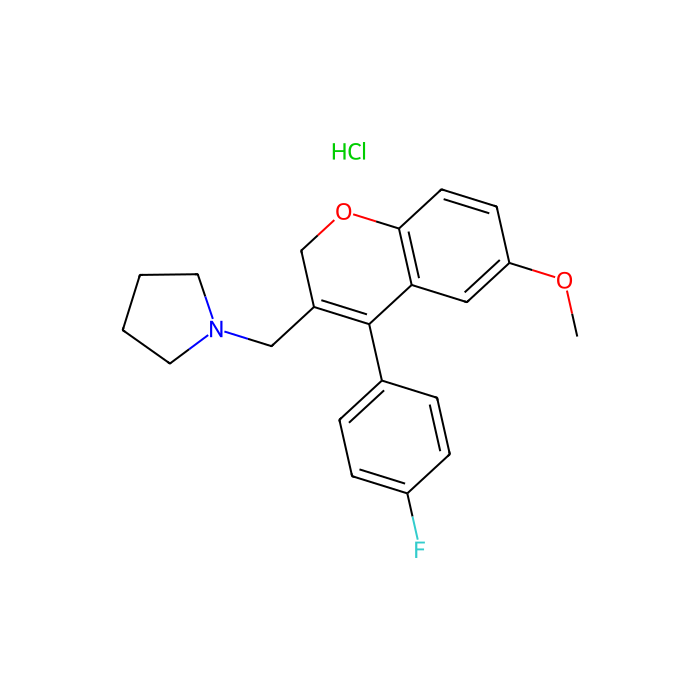
Structure and Identity
Brief overview: AX-024 HCl is supplied as the hydrochloride salt of an unspecified small-molecule research tool compound.
Product Name: AX-024 HCl (hydrochloride salt)
SKU: A413602
CAS: 1704801-24-0 (product data)
PubChem CID: 129909862 (product data)
InChIKey: 62493 (as provided in product data)
SMILES: Not specified for this item; refer to CoA/Spec Sheet.
Molecular Formula: Not specified for this item; refer to CoA/Spec Sheet.
Molecular Weight: Not specified for this item; refer to CoA/Spec Sheet.
Structural features (general context):
As a hydrochloride salt, the molecule likely contains a basic nitrogen (e.g., amine) that is protonated and paired with Cl−. This enhances water compatibility and handling versus the free base (literature/general).
2D structure (descriptive, general): cationic organic framework (free-base scaffold) paired with a chloride counterion; absence/presence of rings, heteroatoms, or stereocenters is not specified in the item data.
Notes on identification:
For definitive structure confirmation (skeletal diagram, exact stereochemistry, SMILES, full InChI/InChIKey), please consult the Aladdin CoA/Spec Sheet or primary literature corresponding to CAS 1704801-24-0.
Synthetic Utility
AX-024 HCl is offered as a small-molecule research tool and is not positioned primarily as a building block. No functional groups are disclosed in the product data; therefore, no compound-specific transformations can be recommended.
General considerations (literature/general):
If conversion to the free base is performed, subsequent reactivity would depend entirely on the scaffold’s functional groups (amines, heteroaryl systems, halides, etc.). Potential avenues could include N-acylations/alkylations, cross-couplings (if aryl halides/boronates are present), or amide couplings—subject to actual structure.
The HCl salt itself is typically a convenient storage/handling form rather than a direct reactant. For synthetic manipulation, laboratories often liberate the free base under basic conditions and proceed immediately to transformation to avoid instability.
Analytical and preparative notes:
Verify purity and identity (HPLC, LC–MS, 1H/13C NMR after basification/neutralization when appropriate) before integrating into synthetic sequences.
If used in SAR libraries, maintain consistent salt form across analogs or explicitly convert to a common form to simplify yield and potency comparisons.
Because item-specific structural information is not provided here, consult the CoA or primary literature for any tailored synthetic strategies.
Target Specificity
No target, binding partner, enzyme/receptor class, or selectivity profile is provided in the product data for AX-024 HCl. Accordingly:
Target name/epitope: Not provided for this item.
Species reactivity: Not provided for this item.
Assay-proven selectivity or off-targets: Not provided for this item.
Use case guidance (general):
If AX-024 HCl is used as a tool compound, establish in-house specificity with orthogonal assays (e.g., counter-screens, chemical genetics, proteomics) before drawing mechanistic conclusions.
Report and control vehicle effects and confirm dose–response behavior with replicates.
For any target-related information, consult primary literature corresponding to the CAS or internal validation data.
Wir verwenden Cookies, um die ordnungsgemäße Funktion der Website sicherzustellen und, soweit zulässig, Ihr Nutzererlebnis zu verbessern. Sie können Ihre Einstellungen jederzeit unter „Einstellungen“ verwalten. Weitere Informationen finden Sie in unserer Cookie-Richtlinie.
Dürfen wir Sie über Rabattaktionen informieren?
Später erinnern
Vielen Dank! Bitte überprüfen Sie Ihren E-Mail-Posteingang, um zu bestätigen.
Products are supplied to verified businesses, institutions, and qualified professionals for research and development use only. Not for use in humans, animals, diagnosis, or therapy.

 F2230045