QUALITÄT & REINHEITMoligand™?Moligand™ — Aladdin's line of ligands and bioactive small molecules. Use for receptor, pathway, and binding studies needing defined small-molecule tools.10 mM in DMSO
Zertifikate (CoA, COO, BSE/TSE und Analyse-Diagramm)
C of A & Other Certificates(BSE/TSE, COO):
Analytical Chart:
Lösungsrechner
Molarity Calculator
Determine the necessary mass, volume, or concentration for preparing a solution.
Dilution Calculator
Determine the dilution needed to prepare a stock solution.
Reconstitution Calculator
Bewertungen
Kundenbewertungen
Application Protocols
No validated application protocols are provided for this item in the product data.
General HTS/assay workflow (for guidance; adapt to your system)
Stock solution: Prepare 10 mM in anhydrous DMSO (or as solubility permits). Aliquot and store at -80°C to limit freeze–thaw.
Plate handling: Thaw on ice or at 4°C; centrifuge briefly to collect condensate; mix thoroughly before dispensing. Use acoustic or pin-tool transfer for low-volume accuracy.
Assay addition: Target ≤0.5–1% DMSO final. Include vehicle controls, positive controls (where applicable), and at least 8-point serial dilutions for CRCs.
Data quality: Monitor Z’ factor, include duplicates/triplicates, and perform post-screen confirmation with freshly prepared stocks.
Note: The above is general practice for small-molecule screening and is not an item-specific validated protocol.
Biological Roles
Item-specific biological function, targets, and pathways for Camobucol are not provided in the product data. No claims are made regarding its biological activity or mechanism.
General considerations for small-molecule library members (not item-specific)
Screening role: Library compounds are evaluated as potential ligands/modulators across biochemical or cellular assays to discover structure–activity relationships (SAR).
Profiling: Hits typically undergo broad off-target panels and physicochemical property profiling (e.g., solubility, stability, permeability) to contextualize observed activity.
Aggregation/assay interference: Some scaffolds may act as colloidal aggregators or redox cyclers; deploy appropriate controls (detergent, counterscreens, orthogonal readouts).
Research-use limitation
For research use only. Not intended for diagnostic, therapeutic, or clinical applications. Any biological roles must be established experimentally by the end user or provided by the manufacturer’s CoA/technical note.
Buffer Applications
This product is a small-molecule screening compound rather than a buffering reagent. Therefore, conventional buffer system guidance (pH range, recipes) is not typically applicable.
Practical notes (general assay context)
Delivery into buffers: Prepare concentrated DMSO stocks and dilute into assay buffers at low final DMSO fractions to maintain buffer capacity and assay performance.
Surfactants: For hydrophobic compounds, incorporating 0.01–0.05% nonionic surfactant can mitigate nonspecific adsorption and aggregation in buffered media.
For buffer formulation details, refer to standard biochemical buffers (e.g., phosphate, HEPES, Tris) appropriate to your assay rather than the compound itself.
Green Alternatives
Sustainability guidance focuses on solvent and process choices around Camobucol’s use, since the compound’s intrinsic structure and synthesis are not provided.
Greener handling of stock solutions (general)
Prefer aqueous-compatible delivery from concentrated DMSO stocks at ≤1% final v/v to reduce organic solvent use in assays.
Consider bio-based or lower-toxicity solvents for preparative work where compatible (e.g., ethanol, 2-propanol) instead of higher-toxicity amide solvents.
Solvent alternatives (general comparison; not item-specific)
Greener option vs conventional:
2-Methyltetrahydrofuran (2-MeTHF) vs THF: bio-derived, higher boiling, lower peroxide risk than ethers like diethyl ether; check solubility.
Cyrene or GBL vs DMF/DMAc: potential drop-in for some reactions or extractions; assess stability and solubilizing power.
Ethyl acetate vs dichloromethane for workups and chromatography when feasible.
Operational measures
Scale stocks appropriately to minimize waste; use inert gas blankets and crimp-sealed vials to extend lifetime of DMSO solutions, reducing remakes.
Implement microplate-based solubility screens to avoid preparing excessive volumes of poorly soluble working solutions.
Tradeoffs: Greener solvents may alter solubility, assay backgrounds, or evaporation rates; validate with small pilots before full deployment.
Pharmaceutical Uses
No pharmacopeial status or excipient role is provided for Camobucol, and it is offered strictly for research use only.
Context for researchers (general, non-clinical)
Discovery stage: Small-molecule library members like Camobucol may be evaluated as starting points for medicinal chemistry programs, but any such use requires independent characterization and is outside the scope of the supplied product.
Manufacturing/CMC: There are no claims regarding GMP status, impurity profiles, or suitability for human or veterinary use.
Compliance note
Do not use in humans or for diagnostic procedures. For any regulated applications, obtain appropriate grade material and regulatory documentation.
Physical Properties
Item-specific physicochemical specifications have not been provided in the product data.
Item-specific specs
Appearance: Not specified for this item; refer to CoA/Spec Sheet.
Molecular weight: Not specified for this item; refer to CoA/Spec Sheet.
Molecular formula: Not specified for this item; refer to CoA/Spec Sheet.
Melting point: Not specified for this item; refer to CoA/Spec Sheet.
Boiling point: Not specified for this item; refer to CoA/Spec Sheet.
Density: Not specified for this item; refer to CoA/Spec Sheet.
Solubility: Not specified for this item; refer to CoA/Spec Sheet.
LogP/logD: Not specified for this item; refer to CoA/Spec Sheet.
pKa: Not specified for this item; refer to CoA/Spec Sheet.
Refractive index/UV cutoff: Not specified for this item; refer to CoA/Spec Sheet.
General guidance for library compounds (literature/practice, not specifications)
Many screening compounds are provided as dry films or DMSO solutions; if provided neat, they are commonly reconstituted in anhydrous DMSO for primary stocks (typically 10–50 mM) and aliquoted to minimize freeze–thaw.
Solubility and stability can vary widely depending on scaffold; empirical solubility screening (DMSO, DMF, ethanol, aqueous cosolvent) is recommended prior to assay deployment.
Always defer to the SDS and the item’s CoA for authoritative physical property data and handling limits.
Quality and Grades
Item-specific grade information
Grade: Moligand™ (as provided). This denotes inclusion in a small-molecule ligand/screening set intended for discovery workflows and biochemical/biophysical assays. It does not imply pharmaceutical or clinical suitability.
Research use: For research use only.
What Moligand-grade typically implies (general guidance; not a specification)
Sourcing and library format appropriate for HTS, fragment/ligand screening, and SAR-by-catalog efforts.
Packaging optimized for chemical stability and sample integrity during shipment and long-term storage (often sealed under inert atmosphere or as dry films; consult CoA for exact format).
Trace documentation enabling compound ID tracking (CAS/CID/lot), with CoA providing purity, identity confirmation methods, and solvent of final rinse if applicable.
Purity and stabilizers
Purity percentage, residual solvents, stabilizers, and analytical thresholds are not specified for this item; refer to CoA/Spec Sheet.
Practical notes for users
On receipt, verify lot identity against your screening database (CAS 216167-92-9; CID 9875498).
Record aliquotting and freeze–thaw cycles to maintain data integrity across screening campaigns.
If orthogonal quality checks are required (e.g., LC/MS purity, HRMS, NMR), perform upon receipt and document results for your cheminformatics records.
Reaction and Applications
Item-specific applications
Manufacturer Applications: Not specified beyond inclusion in a small-molecule/compound library (Moligand™). Suitable for ligand discovery, HTS, biochemical/biophysical screening, and early SAR exploration.
Discovery workflows (general guidance)
Biochemical assays: Evaluate concentration–response curves from DMSO stocks; include counterscreens for assay interference (e.g., redox cycling, aggregation).
Biophysical assays: Consider DSF, MST, SPR, ITC, or NMR ligand-observed methods to confirm direct binding where relevant.
Cellular assays: Assess cytotoxicity windows and permeability as needed; confirm target engagement with orthogonal readouts.
Hit triage: Deploy orthogonal analytical QC (LC/MS purity, HRMS) and re-purchase/resynthesize confirmation to validate hits.
Practical tips
Minimize freeze–thaw cycles of stock solutions; aliquot upon initial dissolution.
Include detergent (e.g., 0.01–0.05% nonionic surfactant) in assay buffers to reduce nonspecific aggregation artifacts.
Utilize PAINS and nuisance filter sets judiciously; do not discard potential actives without confirmatory experiments.
Note: Specific reaction chemistry (named reactions, synthetic transformations) is not discussed here because Camobucol’s structure and functional groups are not provided in the product data.
Reaction Conditions
Item-specific reaction conditions are not applicable here because the structure and functional groups of Camobucol are not provided.
General guidance for handling small-molecule library compounds in solution (not specifications)
Stock preparation: Dissolve in anhydrous DMSO at 10–50 mM; vortex and, if needed, sonicate briefly. Filter through 0.2 µm PTFE for particulate removal.
Working concentrations: Typical biochemical assays operate at 0.1–50 µM final compound concentrations with ≤1% DMSO v/v.
Stability checks: Monitor by LC/MS after storage or multiple freeze–thaw cycles to confirm integrity.
If you intend to use Camobucol in synthetic reactions, first obtain the structural data from the CoA and consult literature precedents for the specific chemotype.
Safety and Handling
Safety details specific to Camobucol are not present in the provided product data. Treat as a research-use small molecule of unknown hazard profile unless otherwise specified.
Item-specific hazard data
Signal word: Not specified for this item; refer to SDS.
H-statements: Not specified for this item; refer to SDS.
GHS classification/pictograms: Not specified for this item; refer to SDS.
General laboratory precautions (best practice; defer to SDS for authority)
PPE: Wear lab coat, safety glasses, and appropriate gloves (e.g., nitrile). Use in a chemical fume hood to avoid inhalation of dust or vapors.
Avoidance: Prevent contact with skin, eyes, and clothing. Avoid inhalation of dust/aerosols. Do not ingest. Wash thoroughly after handling.
Incompatibilities: Without a disclosed structure, avoid strong oxidizers, strong acids/bases, and reactive reducing agents until compatibility is known.
Spills: Absorb small spills with inert material (e.g., vermiculite), collect in a labeled waste container. Ventilate area and avoid dust generation.
First aid (overview):
Inhalation: Move to fresh air; seek medical attention if symptoms persist.
Skin/eye contact: Rinse with water for at least 15 minutes; remove contaminated clothing; seek medical attention as needed.
Ingestion: Rinse mouth; do not induce vomiting unless directed by medical personnel.
Waste: Dispose of via organic chemical waste streams in accordance with institutional and regulatory requirements.
Always consult the product’s SDS for definitive hazard and response information.
Solvent Selection
Because the exact structure and polarity of Camobucol are not provided, select solvents using general best practices for small-molecule screening compounds.
Item-specific note
Solubility data are not specified for this item; refer to CoA/Spec Sheet.
General solvent guidance (literature/practice)
Primary stock solvent: Anhydrous DMSO is the default for HTS and biochemical assay stocks due to broad solubilizing power and assay compatibility at low final v/v (≤1–2%).
Alternative organic solvents: DMF, ethanol, isopropanol, or acetonitrile may be used depending on scaffold compatibility and downstream assay tolerance.
Aqueous delivery: Prepare DMSO concentrates and dilute into buffered media with surfactant or cosolvent if needed; pre-wet plasticware to mitigate adsorption for hydrophobic compounds.
Degassing/filtration: For sensitive assays, 0.2 µm filtration of working solutions and gentle degassing can improve reproducibility.
DMF: Good solvency; higher toxicity; less common for assay stocks.
Ethanol/IPA: Useful for moderately lipophilic compounds; limited solubility ceiling.
Acetonitrile: Low viscosity; limited for very lipophilic compounds; good LC compatibility.
Always verify solubility, stability, and assay compatibility empirically for Camobucol.
Storage and Reconstitution
Item-specific storage/shipping
Storage conditions: Store at -80°C (from Product Data).
Shipped in: Dry ice packs + Cold packs (from Product Data). Inspect immediately upon receipt to ensure temperature compliance.
Item-specific formulation details
Appearance, solvent content, and recommended reconstitution solvent are not specified for this item; refer to CoA/Spec Sheet.
General guidance for library compounds (not specifications)
Reconstitution: If supplied as a solid, dissolve in anhydrous DMSO to prepare concentrated stocks (e.g., 10–50 mM). If supplied pre-dissolved, maintain frozen at -80°C and minimize time at ambient temperature.
Aliquoting: Dispense single-use aliquots in inert, low-bind vials or plates; purge headspace with nitrogen/argon to limit oxidation/hydrolysis where relevant.
Freeze–thaw: Avoid repeated cycles. Track and discard aliquots after a defined number of thaws (e.g., 1–2) per your QC policy.
Stability checks: Periodically assess by LC/MS or HPLC to confirm identity and purity after storage.
Safety note
Follow the SDS for thawing/handling precautions and spill response. For any ambiguity in solvent choice or concentration, consult the CoA or contact technical support.
Structure and Identity
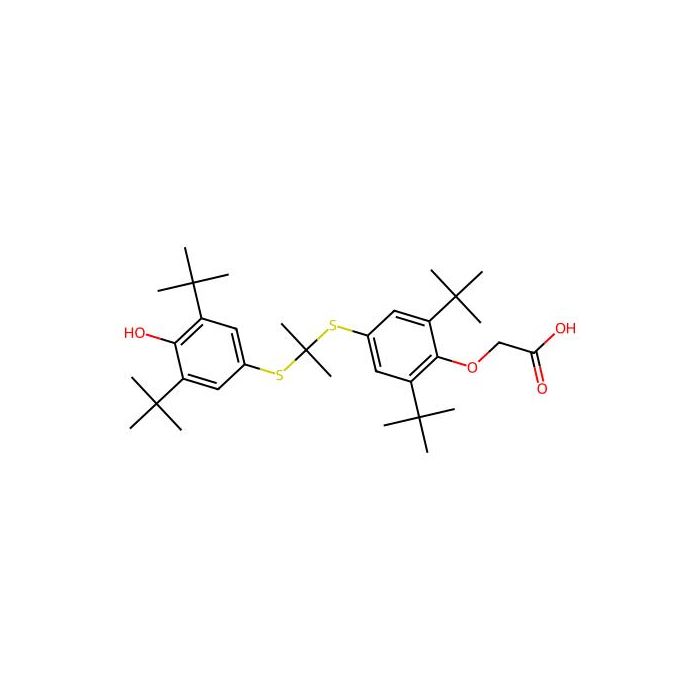
Brief overview: Camobucol is supplied as a Moligand screening compound for research use. Structural descriptors are not provided in this listing; consult the CoA/Spec Sheet for definitive identifiers.
Item-specific facts (from Product Data)
SKU: C1497582
Product name: Camobucol
CAS: 216167-92-9
PubChem CID: 9875498
Grade: Moligand™
Storage: Store at -80°C
Shipping: Dry ice packs + Cold packs
Structure identifiers
Molecular formula: Not specified for this item; refer to CoA/Spec Sheet.
Molecular weight: Not specified for this item; refer to CoA/Spec Sheet.
SMILES: Not specified for this item; refer to CoA/Spec Sheet.
InChIKey: Not specified for this item; refer to CoA/Spec Sheet.
Structural features (general note)
Functional groups, ring systems, and stereochemistry are not provided in the product data. For 2D/3D structure, purity trace, and exact identifiers, see the certificate of analysis or contact technical support.
Category context
Category path: 全部 / 可售 / 小分子和化合物库 — offered as part of a small-molecule/compound library for ligand discovery and screening.
Synthetic Utility
Specific synthetic reactivity, functional-group compatibility, or named-reaction roles for Camobucol cannot be described without a disclosed structure.
General approaches for library compound utilization in synthesis (not item-specific)
Derivatization for SAR: If the scaffold is known from the CoA or literature, consider parallel synthesis to explore side-chain and heteroatom substitutions, guided by property targets (solubility, polarity, clearance surrogates).
Tagging/immobilization: For mechanism-of-action studies, attachment of linkers or photoaffinity tags (diazirine/alkyne) may enable chemoproteomics pull-downs, provided functional handles exist.
Probing reactivity: Establish chemotype reactivity profile (acid/base stability, nucleophile/electrophile sensitivity) through small test reactions before scale-up.
Documentation
Capture full analytical characterization (LC/MS, 1H/13C NMR, HRMS) before and after modifications to ensure identity and purity through synthetic campaigns.
Target Specificity
Target, selectivity profile, and binding constants for Camobucol are not provided in the supplied product data.
Item-specific info
Target(s): Not specified for this item; refer to CoA/Spec Sheet or published literature linked to CAS 216167-92-9.
Species reactivity/assay systems: Not specified for this item; refer to CoA/Spec Sheet.
General guidance
Establish specificity through orthogonal assays (biochemical vs cellular), concentration–response analysis, and competition experiments with known ligands.
Apply counter-screens against common off-targets relevant to your biology area to de-risk false positives.
Häufig gestellte Fragen
What is Moligand??
Moligand? is one of Aladdin Scientific's premium product lines, formulated for high-purity applications across multiple workflows. Compared to standard grades in the same workflow, Moligand? products typically offer tighter specifications, more rigorous QC, and stronger lot-to-lot consistency.
How should this product be stored?
Store at ?80 °C. Ultra-low temperature storage is required to maintain the specified shelf life.
How is this product shipped?
This product ships frozen with dry ice and cold packs. Unpack on arrival and transfer it to the storage condition stated above; handle dry ice with insulated gloves in a ventilated area.
What are the CAS number, molecular formula and molecular weight?
The CAS Number is 216167-92-9, the molecular formula is C33H50O4S2, and the molecular weight is 574.88 g/mol.
Benötigen Sie Hilfe bei der Auswahl der Qualität?
Unser Leitfaden zur Qualitätsauswahl behandelt Reinheit, Stabilisatorstatus und Anwendungseignung für alle Varianten in unserem Katalog.
Wir verwenden Cookies, um die ordnungsgemäße Funktion der Website sicherzustellen und, soweit zulässig, Ihr Nutzererlebnis zu verbessern. Sie können Ihre Einstellungen jederzeit unter „Einstellungen“ verwalten. Weitere Informationen finden Sie in unserer Cookie-Richtlinie.
Dürfen wir Sie über Rabattaktionen informieren?
Später erinnern
Vielen Dank! Bitte überprüfen Sie Ihren E-Mail-Posteingang, um zu bestätigen.
Products are supplied to verified businesses, institutions, and qualified professionals for research and development use only. Not for use in humans, animals, diagnosis, or therapy.