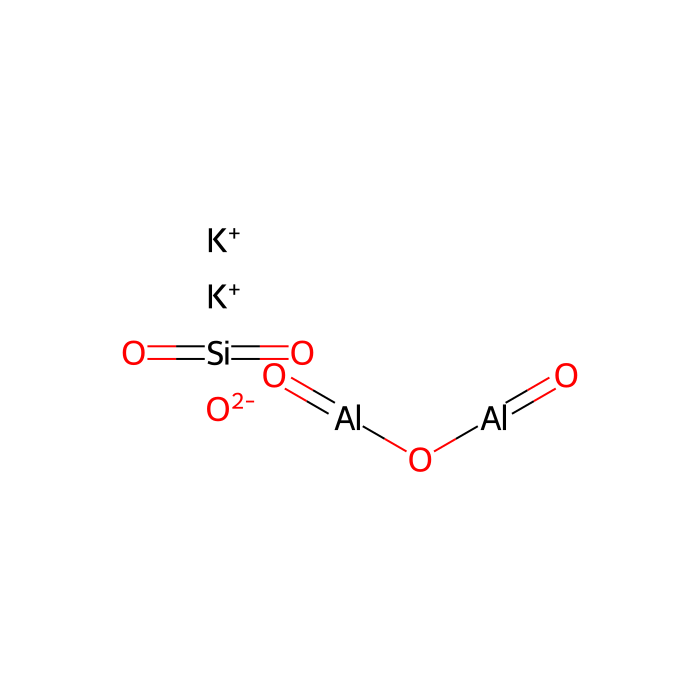
Dehydrated mica - 20 mesh , CAS No.12001-26-2

CAS: 12001-26-2 Cat. No.: D590951 Summenformel: K2O.3Al2O3.6SiO2∙2H2O Molekulargewicht: 796.65(760.62anhy) EG-Nummer: 601-648-2
Zu bestellen verfügbar
GRADE & PURITY 20 mesh
Synonyms
Muscovite|12001-26-2|Chacaltaite|Astrolit|Astrolite|Cogemika|Serikuron|Fluorian muscovite|Muscovite, fluorian|Clarite 30C|Clarite 60C|1318-94-1|dipotassium;dioxosilane;oxo(oxoalumanyloxy)alumane;oxygen(2-)|Muscovite (Al2K(Si3Al)((OH)0.5-1F0-0.5)2O10)
Storage
Room temperature,Desiccated
Shipped In
Normal
★
Size
Deutschland (EU)
USA*
Price
Qty
100g
D590951-100g
—
1 Auf Lager

17,27€

21,61€
Speichern 4,34 € (20.08%)
500g
D590951-500g
1 Auf Lager
2 Auf Lager

27,68€

52,85€
Speichern 25,16 € (47.62%)
Enter a quantity for the sizes you want to add.
🧪
Why this grade

20 mesh for sensitive chromatographic and analytical workflows requiring minimal baseline interference.

🌡

Storage & shipping

Room temperature,Desiccated Ships Normal Check lot-specific COA for exact specifications.

📋

Quality documents

SDS, COA, datasheet, and spec sheet available for download. Lot-specific COA accessible via lot number lookup.

📚

Literature proof

Cited in 3 peer-reviewed publications across chromatography, organic synthesis, and cross-coupling reactions.

Specifications

Synonyme
Muscovite | 12001-26-2 | Chacaltaite | Astrolit | Astrolite | Cogemika | Serikuron | Fluorian muscovite | Muscovite, fluorian | Clarite 30C | Clarite 60C | 1318-94-1 | dipotassium;dioxosilane;oxo(oxoalumanyloxy)alumane;oxygen(2-) | Muscovite (Al2K(Si3Al)((OH)0.5-1F0-0.5)2O10)
Spezifikationen & Reinheit
20 mesh
Storage
Room temperature,Desiccated
Verschickt in
Normal
Namen und Kennungen
Pubchem Sid528775035
Kanonisches Lächeln[O-2].O=[Al]O[Al]=O.O=[Si]=O.[K+].[K+]
IUPAC Namedipotassium;dioxosilane;oxo(oxoalumanyloxy)alumane;oxygen(2-)
InChIKeyYGANSGVIUGARFR-UHFFFAOYSA-N
INCHI1S/2Al.2K.O2Si.4O/c;;;;1-3-2;;;;/q;;2*+1;;;;;-2
Isomere SMILES [O-2].O=[Al]O[Al]=O.O=[Si]=O.[K+].[K+]
Molekulargewicht 796.65(760.62anhy)

Documentation

📋 Safety Data Sheet (SDS)

Comprehensive hazard, handling, storage, and regulatory compliance document.

Download SDS →

✅ Certificate of Analysis (COA)

Lot-specific quality data. Enter your lot number to retrieve the exact COA.

Look up COA →

📊 Datasheet

Quick-reference summary of product specifications and applications.

View datasheet →

🔬 Specification Sheet

Full quality attributes and acceptance criteria for this grade.

View spec sheet →

Advanced Data

Taxonomic Classification

Taxonomy Tree

KingdomInorganic compounds
SuperclassMixed metal/non-metal compounds
KlasseAlkali metal oxoanionic compounds
SubclassAlkali metal aluminates
Intermediate Tree Nodes Not available
Direct ParentAlkali metal aluminates
Alternative Parents Miscellaneous aluminates  Metalloid salts  Inorganic salts  Inorganic oxides  
Molecular FrameworkNot available
Substituents Aluminate - Alkali metal aluminate - Inorganic oxide - Inorganic salt - Inorganic metalloid salt
BeschreibungThis compound belongs to the class of inorganic compounds known as alkali metal aluminates. These are inorganic compounds in which the largest oxoanion is aluminate, and in which the heaviest atom not in an oxoanion is an alkali metal.
External Descriptors Not available
3D-Struktur
Interaktives chemisches Strukturmodell


Zertifikate (CoA, COO, BSE/TSE und Analyse-Diagramm)
C of A & Other Certificates(BSE/TSE, COO):
Analytical Chart:

Find and download the COA for your product by matching the lot number on the packaging.

3 results found

Lot NumberCertificate TypeDatumArtikel
F23151048Certificate of AnalysisJun 26, 2023 D590951
F23151049Certificate of AnalysisJun 26, 2023 D590951
F23151058Certificate of AnalysisJun 26, 2023 D590951
Chemische und physikalische Eigenschaften
LöslichkeitInsoluble in water
FAQs und Artikel
Mica Materials: Selection and Applications—Structural Features, Composition, and Industrial Uses
Mercapto Silane Coupling Agents: Structural Features, Classification, Applications, and Selection
TCA-KTTS, a Titanate Coupling Agent Suitable for Use in Cosmetics: Basic Information, Application Characteristics, and Differences from 130 and 105
How Matting Agents in Coatings Build Low-Gloss Coating Surfaces: Mechanisms, Formulation Trade-Offs, and Product Selection
Four Core Applications of Epoxy Resins: Bonding, Protection, Load-Bearing, and Insulation Protection
Guide to Epoxy Resin Performance Design: System Composition, Key Properties, Process Control, and Application Selection
Fluorocarbon Resin Coating Formulation Design: Resin Selection, Supporting Systems, and Key Application Control Points
Silicone Resin Coating Formulation Design: From Application Conditions to Matching Resins, Pigments and Fillers, Curing, and Substrates
Formulation Design of Chlorinated Rubber Coatings: Component Synergy and Performance Control
Applicability Boundaries, Failure Risks, and Alternative System Selection for Chlorinated Rubber Resin in Coatings
Why Do Daily Chemical Products Become Opaque? Formation Mechanisms of Milky Turbidity, Pearlescence, and Coverage, and How to Select the Right Ingredients
Color-Development Mechanisms, Formulation Forms, and Selection/Application Logic of Colorants in Personal Care Products
Types, Mechanisms of Action, Key Quality Indicators, and Selection and Application of Common Cellulose Ethers in Wall Putty
How to Select Binding/Gel Materials for Neutral Wall Putty? A Comparison of Pregelatinized Starch, PVA, and Redispersible Polymer Powder Based on Four Application Trials
Causes and Mechanism Analysis of Delamination During Sanding of Water-Resistant Putty
Mechanism of Action of Porous Silica in Oil-Control Loose Powder: Pore Structure, Capillary Imbibition, and Surface Modification
Citations of This Product
Lösungsrechner
Bewertungen

Kundenbewertungen

Shall we send you a message when we have discounts available?

Remind me later

Thank you! Please check your email inbox to confirm.

Oops! Notifications are disabled.