≥95% for sensitive chromatographic and analytical workflows requiring minimal baseline interference.
🌡
Storage & shipping
Room temperature Ships Normal Check lot-specific COA for exact specifications.
📋
Quality documents
SDS, COA, datasheet, and spec sheet available for download. Lot-specific COA accessible via lot number lookup.
📚
Literature proof
Cited in 0 peer-reviewed publications across chromatography, organic synthesis, and cross-coupling reactions.
Übersicht
Dimethyl 3-methylglutarate is an ester. It participates in the synthesis of (R,Z)- muscenone, a valuable perfume ingredient.
Application:
Dimethyl 3-methylglutarate may be used in the synthesis of (R)- and (S)-4-amino-3-methylbutanoic acids, via initial enantioselective hydrolysis with pig liver esterase. It may be used in the preparation of optically active form of verrucarinic acid derivative. It may be used as building block for chemoenzymatic asymmetric synthesis.
This compound belongs to the class of organic compounds known as fatty acid methyl esters. These are compounds containing a fatty acid that is esterified with a methyl group. They have the general structure RC(=O)OR', where R=fatty aliphatic tail or organyl group and R'=methyl group.
External Descriptors
Not available
1. Djoumbou Feunang Y, Eisner R, Knox C, Chepelev L, Hastings J, Owen G, Fahy E, Steinbeck C, Subramanian S, Bolton E, Greiner R, and Wishart DS. ClassyFire: Automated Chemical Classification With A Comprehensive, Computable Taxonomy. Journal of Cheminformatics, 2016, 8:61.
Determine the necessary mass, volume, or concentration for preparing a solution.
Dilution Calculator
Determine the dilution needed to prepare a stock solution.
Reconstitution Calculator
Bewertungen
Kundenbewertungen
Application Protocols
Not applicable. No validated immunoassay or bioassay protocols (WB, IHC, IF, FC) are provided for this small-molecule reagent. For synthetic or polymer applications, refer to the Reaction Conditions and Synthetic Utility sections for general procedural guidance.
Biological Roles
Applicability: This product is intended for research use only and is not intended for biological administration.
General biochemical context (literature)
As a small aliphatic diester, dimethyl 3-methylglutarate itself does not have a natural biological role. However, hydrolysis generates 3-methylglutaric acid, a structural analog related to intermediates in branched-chain amino acid and isoprenoid biosynthetic pathways (e.g., 3-methylglutaryl motifs occur in HMG-CoA biochemistry).
In biocatalysis research, aliphatic diesters can serve as model substrates for esterases/lipases to study regioselectivity (mono- vs di-ester hydrolysis) and effects of branching on enzyme activity.
The branched center may influence enzyme binding and hydrolysis rates compared with linear dimethyl glutarate—useful for probing active-site sterics.
Practical notes for biochemical experiments
Aqueous compatibility is limited; use co-solvents (≤10–20% v/v DMSO, MeCN, or EtOH) to deliver substrates to enzyme assays, validating that the co-solvent does not inhibit the enzyme.
Monitor hydrolysis by GC or LC with derivatization as needed; consider pH-stat titration to quantify acid formation.
No clinical or therapeutic claims are made; any biological investigation should remain in vitro or ex vivo under appropriate institutional approvals.
Buffer Applications
This compound is not a buffer reagent and is not typically used to formulate aqueous buffers or electrophoresis systems.
If included in biochemical assays, it would be as a substrate or hydrophobic additive, not as a buffering component. Maintain buffering capacity using standard systems (e.g., phosphate, HEPES, Tris) and introduce this ester via a suitable co-solvent.
Confirm that the chosen buffer and pH will not catalyze hydrolysis or transesterification if the ester must remain intact.
Green Alternatives
Context: Aliphatic dibasic esters (DBEs) like dimethyl succinate, glutarate, adipate, and branched analogs (e.g., dimethyl 3-methylglutarate) are widely considered greener replacements for chlorinated solvents and phthalate plasticizers in certain applications due to lower toxicity and better biodegradability (literature/general).
Comparative overview (general, literature)
Dimethyl 3-methylglutarate vs chlorinated solvents (e.g., DCM): far lower vapor emissions and persistence; non-halogenated; higher bp reduces worker exposure but complicates removal.
Vs ethyl acetate / 2-MeTHF: greener workup and lower toxicity are comparable; however, this ester’s very high bp makes solvent recovery energy-intensive.
Vs phthalates (as plasticizers): reduced regulatory scrutiny; better biodegradability; but different plasticization efficiency and thermal profiles require re-optimization.
Small comparison table (literature)
Environmental profile: non-halogenated; readily biodegradable in many cases.
Worker exposure: low vapor pressure reduces inhalation risk; spills are easier to contain.
Process energy: high bp implies higher distillation energy; consider vacuum stripping or switch to lower-bp green solvents when feasible.
Practical green tips
Use catalytic amounts of transesterification/aminolysis catalysts; recover by vacuum to minimize energy.
Explore solventless (neat) or reactive-diluent approaches where the ester is consumed into the product matrix, reducing solvent waste.
Evaluate 2-MeTHF or CPME for steps needing medium polarity with easier recoverability.
Note: Perform full HSE assessment for your process; actual EHS ranking depends on local regulations and waste streams.
Pharmaceutical Uses
No pharmacopeial grade or excipient designation is provided for this item; refer to CoA/Spec Sheet for any compliance details.
General formulation context (literature/general)
Aliphatic dibasic esters can function as plasticizers or processing aids in coatings, inks, or polymeric excipients used around dosage forms, but dimethyl 3-methylglutarate is not widely cited as a standardized pharmaceutical excipient.
The high boiling point and moderate polarity make it a candidate reactive diluent in polymerizable systems (e.g., polyester prepolymers) used in device or packaging R&D.
Quality considerations for any excipient-like research use
Verify residual solvent content, acid value, and assay; assess extractables/leachables if used near pharmaceutical systems.
Ensure biocompatibility testing is performed if materials contact biological tissues.
Note: For research use only. This product is not intended for human or animal therapeutic or diagnostic use.
Physical Properties
Item-specific (from Product Data)
Appearance: Not specified for this item; refer to CoA/Spec Sheet.
Grade/Purity: Not specified for this item; refer to CoA/Spec Sheet.
Literature values and general physicochemical context (for reference only; not item specifications)
Physical state: typically a colorless, oily liquid (literature)
Boiling point: reports in the ~216–220 °C range at 1 atm (literature)
Melting point: expected well below 0 °C; often reported as liquid at ambient temperatures (literature)
Density (20 °C): around ~1.04–1.06 g/mL (literature)
Refractive index nD20: typically ~1.430–1.440 (literature)
Solubility: low in water; miscible with many organic solvents (alcohols, ketones, esters, chlorinated hydrocarbons) (literature)
Vapor pressure: low at room temperature (literature)
LogP (estimate): moderately lipophilic due to two ester functions and a short alkyl chain (literature/computed trend)
Notes: Provide exact values for your lot from the CoA/Spec Sheet if required for process design or regulatory documentation.
Quality and Grades
Item-specific (from Product Data)
Grade/Purity: Not specified for this item; refer to CoA/Spec Sheet.
Guidance on interpreting grades for this class of material (general)
Analytical/Reagent grade: Indicates low levels of volatiles, acidity, and UV-active impurities; suitable for synthesis and analytical sample prep.
Technical grade: Appropriate for general synthesis or polymer work where trace impurities are tolerable.
HPLC grade (if offered): Typically controlled UV-cutoff and low fluorescence background; useful as a diluent/standard matrix but rare for this ester.
Stabilizers: Diesters generally do not require inhibitors; if a stabilizer is present, it may be listed on the CoA. Absence/presence of alcohol or acid content is often specified as “acid value” or “saponification value.”
What to check on the CoA/Spec Sheet for this item
Identity confirmation (GC/MS or 1H NMR), assay (% area by GC), water content (Karl Fischer), acid value, color (APHA), and residual solvents. If a specific specification is required, verify it on the CoA for your lot.
Note: Do not infer unstated limits (e.g., metal content, peroxide content, UV cutoff). If these are critical to your application, contact Aladdin Scientific for the controlled specification.
Reaction and Applications
Key roles (literature/general; expand in Synthetic Utility section):
Polymer and oligomer synthesis
Transesterification with diols to form polyesters or aliphatic oligomers. The 3-methyl branch imparts altered Tg and crystallinity vs linear glutarate-based polymers.
Copolymerization with lactones or other diesters to tune flexibility and hydrophobicity.
Functional group interconversions
Hydrolysis (acidic or basic) to 3-methylglutaric acid, then conversion to acid chlorides (SOCl2, (COCl)2) or anhydrides for further coupling.
Aminolysis to diamides using primary amines; useful in monomer libraries for materials or ligand development.
Reduction of the diester to the corresponding diol (e.g., LiAlH4 or borane) to access 2-methyl-1,5-pentanediol analogs.
Serves as a reactive diluent in esterification or as a solvent for elevated-temperature transformations where acetate/propionate esters are too volatile.
Practical tips
Remove residual methanol or acids (if present) prior to base-catalyzed reactions; both can influence rates/selectivity.
Employ azeotropic removal of alcohol byproducts (Dean–Stark with toluene/xylene) in transesterifications; use catalytic Ti(OBu)4, Sn(Oct)2, or acid resins.
For aminolysis, use excess amine or a capture strategy (molecular sieves or vacuum) to drive equilibrium; moderate heating (80–140 °C) is typically effective.
For reductions, add hydride reagents cautiously; control exotherm and quench carefully to avoid ester cleavage side products.
Reaction Conditions
General conditions from literature/practice (guidance only; optimize for your system):
Hydrolysis (to diacid)
Base: 1–2 equiv NaOH or KOH in MeOH/H2O (e.g., 1:1), reflux 2–6 h; then acidify to pH <2 to precipitate diacid. Typical good conversions/yields after crystallization.
Acid: conc. HCl or H2SO4 in aqueous alcohol, reflux; slower than base but avoids saponification byproducts in some cases.
Aminolysis (to diamide or monoamide–ester)
Use 2–4 equiv of primary amine (neat or in toluene/MeCN). Heat 80–140 °C; add catalytic Ti(OBu)4 or DMAP for rate enhancement. Remove MeOH by azeotrope or vacuum to drive equilibrium. Monitor by GC/LC or 1H NMR.
Transesterification (polyester formation)
Combine with diol (1.0–1.2 equiv per ester) and catalytic Sn(Oct)2 or Ti(OBu)4 (50–500 ppm metal). Heat 160–200 °C under N2; strip methanol continuously. For higher MW, finish under high vacuum (≤1–5 mbar) at 180–200 °C.
Reduction to diol
LAH in dry THF or Et2O at 0–25 °C, then reflux as needed; cautious quench (wet EtOAc, then water). Alternatively, BH3·THF can offer milder control. Workup gives diol; typical good to high yields reported for related diesters.
Activation to acid chloride (via diacid)
SOCl2 (2–4 equiv) with catalytic DMF, reflux 1–3 h; remove volatiles under reduced pressure; handle acid chlorides under dry inert conditions.
Note: Temperatures and times are representative; verify by small-scale trials.
Safety and Handling
Item-specific hazard information (from Product Data)
GHS classification: Not specified for this item; refer to SDS.
Signal word / H-statements / Pictograms: Not specified for this item; refer to SDS.
General safety guidance for aliphatic diesters (literature/good practice; not a substitute for SDS)
Hazards: Combustible liquid; may cause mild skin/eye irritation on contact and respiratory irritation if aerosolized.
PPE: Wear safety glasses or goggles, lab coat, and suitable chemical-resistant gloves (e.g., nitrile). Use in a fume hood to avoid inhalation of vapors or mists.
Handling: Avoid heat, sparks, open flames. Prevent aerosol/mist formation. Do not breathe vapors. Avoid contact with strong bases and strong acids during storage; these promote hydrolysis/transesterification.
Incompatibilities: Strong oxidizers; strong bases/acids (reactivity rather than violent incompatibility); powerful hydride reducing agents (risk of rapid reaction to diols with heat generation).
First aid overview: Eye—rinse cautiously with water for several minutes; remove contact lenses if present. Skin—wash with soap and water; remove contaminated clothing. Inhalation—move to fresh air; seek medical attention if symptoms persist. Ingestion—rinse mouth; do not induce vomiting; seek medical advice.
Fire-fighting: Use dry chemical, CO2, alcohol-resistant foam. Thermal decomposition can form CO/CO2; firefighters should wear SCBA.
Always consult the product’s SDS for authoritative, current hazard and response information.
Solvent Selection
Applicability: Dimethyl 3-methylglutarate is typically used as a reagent/monomer or as a high-boiling diluent rather than as a primary chromatography solvent.
Polarity and miscibility (literature/general)
Polarity: moderately polar aprotic due to two ester carbonyls.
Miscibility: miscible with many organics (alcohols, ethers, ketones, aromatics). Limited solubility in water but increased miscibility with water-miscible organics (MeOH, EtOH, acetone).
Dielectric behavior: higher than hydrocarbons but lower than strongly polar solvents like DMSO/DMF.
When to choose it
As a high-boiling ester medium (bp ~216–220 °C, literature) for transesterification or aminolysis where removal by vacuum is feasible.
As a reactive diluent/plasticizer component in polymer or coatings research.
Alternatives comparison (general)
Dimethyl glutarate (DMG): slightly lower MW/bp; similar polarity—often used interchangeably if branching effects are unimportant.
Dimethyl adipate (DMA) / Dimethyl succinate (DMS): adjust chain length and viscosity; lower bp facilitates removal.
Safer polar solvents for dissolution: Ethyl acetate, 2-MeTHF for greener profiles with easier removal.
Note: If using as solvent, confirm compatibility with bases/acids to avoid undesired transesterification or hydrolysis.
Storage and Reconstitution
Item-specific (from Product Data)
Storage Conditions: Room temperature
Shipped In: Normal
General guidance (literature/good practice)
Keep container tightly closed in a cool, well-ventilated area. Protect from moisture to limit hydrolysis; store under inert gas if long-term storage is anticipated for sensitive applications.
Avoid prolonged exposure to strong acids/bases which can catalyze decomposition via hydrolysis/transesterification.
No reconstitution is required; this product is typically supplied as a neat liquid. If solidification occurs at low temperature, gently warm to ambient and homogenize before use.
For highest purity work, consider passing through a short plug of neutral alumina or performing vacuum stripping to remove trace alcohols or volatiles prior to use.
Research Use Note: For research use only.
Structure and Identity
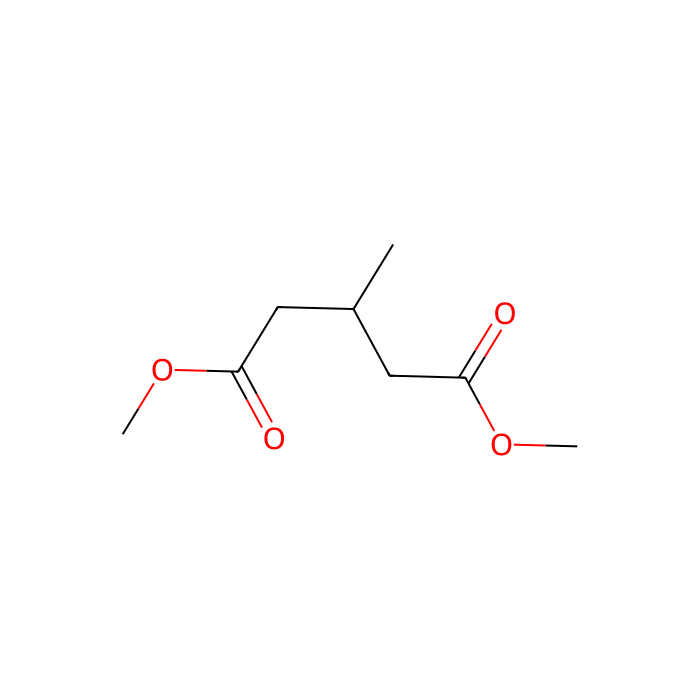
Brief: Dimethyl 3-methylglutarate is the dimethyl diester of 3-methylglutaric acid; an aliphatic, branched diester useful as a polymer/intermediate building block.
Item-specific (from Product Data)
CAS: 19013-37-7
SKU: D168204
Storage: Room temperature; shipped under normal conditions
InChIKey: Not specified for this item; refer to CoA/Spec Sheet.
SMILES: Not specified for this item; refer to CoA/Spec Sheet.
Molecular formula: Not specified for this item; refer to CoA/Spec Sheet.
Molecular weight: Not specified for this item; refer to CoA/Spec Sheet.
Literature/computed identifiers and description (for reference only; not item specifications)
Structural features: aliphatic chain bearing two terminal methyl ester groups and a secondary carbon bearing a methyl substituent at the 3-position (relative to one carbonyl). No rings; no stereocenter in the parent name (mixtures of enantiomers may occur if prepared from racemic intermediates).
2D description: MeO–C(=O)–CH2–CH(CH3)–CH2–C(=O)–OMe (two ester carbonyls separated by a three-carbon chain with a central methyl branch).
Synthetic Utility
Dimethyl 3-methylglutarate serves as a versatile masked diacid and C6 branched building block (literature/general):
Access to 3-methylglutaric derivatives
Base- or acid-catalyzed hydrolysis yields 3-methylglutaric acid; subsequent activation (SOCl2, oxalyl chloride) affords the diacid chloride for acylations and polymerizations.
Selective mono-saponification opens routes to mixed ester–acid intermediates for stepwise coupling.
Diamide and amino-ester synthesis
Aminolysis with primary amines gives diamides; mixed amide–ester species can be targeted under controlled stoichiometry, enabling spacer design in ligands or linkers.
Reduction chemistry
LiAlH4/BH3 reductions furnish the corresponding diol (2-methyl-1,5-pentanediol analog). Subsequent functionalizations (tosylation, oxidation) provide access to cyclic ethers or extended scaffolds.
Polymer/intermediate roles
Transesterification with diols produces aliphatic polyesters; the 3-methyl branch perturbs packing and can depress crystallinity and melting points relative to linear analogs—useful for tailoring elastomeric properties.
Retrosynthetic value
The diester functions as a convergent handle: either side can be transformed independently (e.g., sequential mono-saponification, amidation, or alcoholysis) to create asymmetry from a symmetric starting material with a single internal branch.
Tips: Control water/alcohol content; acid value influences polymerization. Use catalysts (Ti(OBu)4, Sn(Oct)2) for efficient transesterification. Protect against over-reduction when targeting partial transformations.
Target Specificity
Not applicable. This product is a small-molecule diester, not an antibody, enzyme, or affinity reagent. No antigen/epitope or species reactivity is relevant.
Wir verwenden Cookies, um die ordnungsgemäße Funktion der Website sicherzustellen und, soweit zulässig, Ihr Nutzererlebnis zu verbessern. Sie können Ihre Einstellungen jederzeit unter „Einstellungen“ verwalten. Weitere Informationen finden Sie in unserer Cookie-Richtlinie.
Shall we send you a message when we have discounts available?
Remind me later
Thank you! Please check your email inbox to confirm.
Products are supplied to verified businesses, institutions, and qualified professionals for research and development use only. Not for use in humans, animals, diagnosis, or therapy.

 G2425380