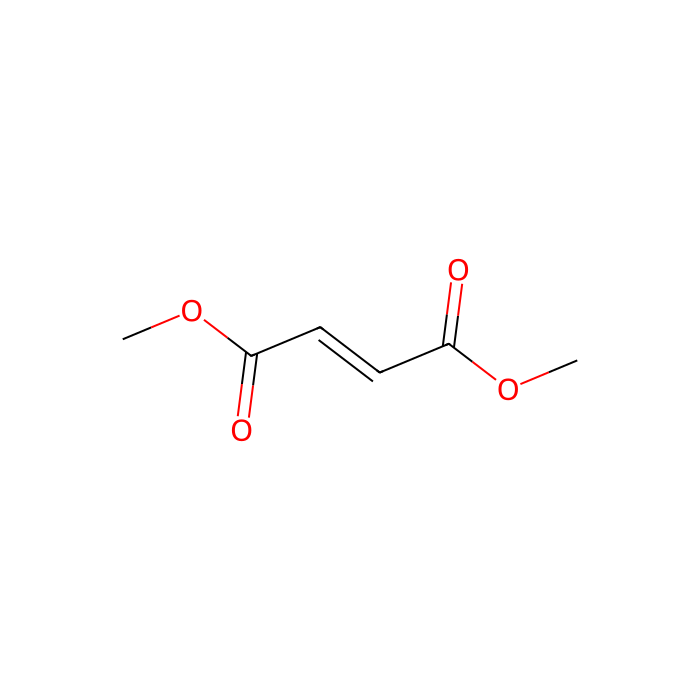
Dimethyl Fumarate - Moligand™, 10mM in DMSO , Kelch-like ECH-associated protein 1 inhibitor, CAS No.624-49-7, Kelch-like ECH-associated protein 1 inhibitor
Dimethyl Fumarate - Moligand™, 10mM in DMSO , Kelch-like ECH-associated protein 1 inhibitor, CAS No.624-49-7, Kelch-like ECH-associated protein 1 inhibitor
GRADE & PURITYMoligand™?Moligand™ — Aladdin's line of ligands and bioactive small molecules. Use for receptor, pathway, and binding studies needing defined small-molecule tools.10mM in DMSO
Moligand™, 10mM in DMSO Moligand™ for sensitive chromatographic and analytical workflows requiring minimal baseline interference.
🌡
Storage & shipping
Store at -80°C Ships Dry ice packs + Cold packs Check lot-specific COA for exact specifications.
📋
Quality documents
SDS, COA, datasheet, and spec sheet available for download. Lot-specific COA accessible via lot number lookup.
📚
Literature proof
Cited in 8 peer-reviewed publications across chromatography, organic synthesis, and cross-coupling reactions.
Übersicht
Information
Dimethyl Fumarate Dimethyl fumarate (DMF) is the methyl ester of fumaric acid, used to treat people with relapsing forms of multiple sclerosis. Dimethyl fumarate is a nuclear factor (erythroid-derived)-like 2 (Nrf2) pathway activator and induces upregul In vitro
Dimethyl fumarate causes short-lived oxidative stress, which leads to increased levels and nuclear localization of the transcription factor nuclear factor erythroid 2-related factor 2 and a subsequent increase in glutathione synthesis and recycling in neuronal cells. Dimethyl fumarate inhibits dendritic cell (DC) maturation by reducing inflammatory cytokine production (IL-12 and IL-6) and the expression of MHC class II, CD80, and CD86. Dimethyl fumarate impairs nuclear factor κB (NF-κB) signaling via reduced p65 nuclear translocalization and phosphorylation. Dimethyl fumarate inhibits maturation of DCs and subsequently Th1 and Th17 cell differentiation by suppression of both NF-κB and ERK1/2-MSK1 signaling. Dimethyl fumarate inhibits TNF-alpha-induced nuclear entry of NF-kappaB in rat heart endothelial cells (RHEC). Dimethyl fumarate, an immune modulator and inducer of the antioxidant response, suppresses HIV replication and neurotoxin release. Dimethyl fumarate attenuates CCL2-induced monocyte chemotaxis, suggesting that Dimethyl fumarate could decrease recruitment of activated monocytes to the CNS in response to inflammatory mediators.
In vivo
Dimethyl fumarate inhibits nuclear entry of NF-kappaB in RHEC and reduces myocardial infarct size after ischemia and reperfusion in rats in vivo. Dimethyl fumarate oral administration is shown to upregulate mRNA and protein levels of Nrf2 and Nrf2-regulated cytoprotective genes, attenuate 6-OHDA induced striatal oxidative stress and inflammation in C57BL/6 mice. Cell Data
Dimethyl fumarate (DMF) is the methyl ester of fumaric acid, used to treat people with relapsing forms of multiple sclerosis. Dimethyl fumarate is a nuclear factor (erythroid-derived)-like 2 (Nrf2) pathway activator and induces upregulation of antioxidant
Storage
Store at -80°C
Verschickt in
Dry ice packs + Cold packs
Dieses Produkt erfordert Kühlkettenversand. Grundversand und andere Economy-Optionen sind nicht verfügbar.
Determine the necessary mass, volume, or concentration for preparing a solution.
Dilution Calculator
Determine the dilution needed to prepare a stock solution.
Reconstitution Calculator
Bewertungen
Kundenbewertungen
Application Protocols
No validated application protocols are provided for this SKU.
Item-specific recommendations (from Product Data): Not specified for this item; refer to CoA/Spec Sheet.
General lab practice (non-validated, for planning only):
Prepare concentrated stocks (e.g., 10–50 mM) in dry DMSO under inert gas; vortex and, if needed, sonicate briefly to aid dissolution.
Filter through a 0.22 μm PTFE membrane if particulate is observed.
For biological assays, dilute into pre-warmed media with gentle mixing to minimize precipitation; final DMSO typically kept ≤0.5–1% v/v depending on assay tolerance.
Document exact lot ID, concentration, and preparation date to support data traceability.
Biological Roles
This section summarizes general biochemical knowledge about fumarate esters and electrophilic small molecules; it is not a statement of medical use. For research use only.
Electrophilic reactivity (general):
Dimethyl fumarate (DMF) is an α,β-unsaturated diester capable of Michael addition to nucleophilic amino acid side chains (notably cysteine thiols), forming reversible or irreversible adducts (succination). Such covalent modification can modulate protein function in cell and chemical biology studies.
Redox and signaling context (literature):
Alkene-conjugated carbonyls act as soft electrophiles that can engage cellular redox sensors and influence stress-response pathways in model systems. In biochemical assays, DMF has been used as a prototypical electrophile to explore thiol reactivity and covalent ligandability of protein targets.
Metabolic fate (general):
Esterases can hydrolyze fumarate esters to monoester and fumaric acid in biological matrices; the rate depends on species, enzyme expression, and local environment. Fumarate itself is a Krebs cycle intermediate.
Formulation and delivery for research assays (general):
Stock solutions are commonly prepared in dry DMSO, then diluted into buffered media immediately before use to limit hydrolysis and precipitation. Adsorption to plastics is generally low; however, precipitation may occur upon high aqueous dilution—confirm with visual inspection or LC.
Item-specific biological activity data, targets, or potency values: Not specified for this item; refer to literature appropriate to your assay design.
Buffer Applications
Dimethyl fumarate is not a buffering agent and does not constitute a defined buffer system. It lacks ionizable groups in the relevant pH range (as an ester), and thus is not used to control solution pH.
Practical note: If introducing dimethyl fumarate into buffered systems for biological assays, dissolve first in an organic cosolvent (e.g., dry DMSO or MeOH) and add to the buffer with rapid mixing. Monitor for precipitation and consider surfactants or higher organic content if needed.
For actual buffer preparation, select established systems (e.g., phosphate, HEPES, MOPS) appropriate to your pH range and ionic strength requirements.
Green Alternatives
While dimethyl fumarate is a substrate/reagent rather than a solvent, greener choices can be made for its handling and the reaction media in which it is used.
Greener solvent choices (general, literature):
Replace chlorinated solvents (DCM, CHCl3) with ethyl acetate or 2-MeTHF where feasible—both offer good solvation for esters and improved environmental/health profiles.
Favor alcohols (EtOH, i-PrOH) or MeCN over DMF/DMSO when workup and EHS considerations dominate, provided solubility/reaction rates remain acceptable.
Example comparison (general):
DCM vs EtOAc: Similar dissolution for diesters; EtOAc features lower toxicity and better biodegradability. Workups are straightforward and align with many green chemistry guides.
THF vs 2-MeTHF: 2-MeTHF has a safer peroxide profile, biorenewable sourcing, and favorable partitioning for extractions.
Process intensification:
Employ catalytic rather than stoichiometric promoters (e.g., organocatalysts for Michael additions, Lewis acids in catalytic amounts for Diels–Alder).
Use flow chemistry to minimize solvent volumes and improve heat/mass transfer for cycloadditions.
Waste minimization:
Select crystallization-driven purifications (antisolvent addition) to avoid large volumes of silica and halogenated eluents.
Note: No alternative “reagent” replaces dimethyl fumarate if its unique reactivity is required; instead, optimize media and conditions to reduce environmental impact.
Pharmaceutical Uses
No excipient or pharmacopeial listing is provided for this SKU. Do not infer therapeutic applications from this listing. For research use only.
Item-specific regulatory/formulation status: Not specified for this item; refer to CoA/Spec Sheet.
General formulation notes for research materials:
As a small-molecule solid used in discovery screening, dimethyl fumarate is typically handled as DMSO stock solutions and dispensed into in vitro assays or chemical biology experiments.
If formulating for in vivo research in laboratory animals, select appropriate vehicles (e.g., aqueous PEG, cyclodextrins, or lipid-based systems) to achieve solubility and stability; validate by analytical methods. Observe all institutional and regulatory requirements.
Manufacturing context (general):
Electrophilic reagents may require specialized containment to limit operator exposure. Low-temperature storage and moisture control help maintain material quality during development workflows.
Any claims regarding therapeutic use, dosing, or clinical performance are outside the scope of this catalog entry and are intentionally not provided.
Physical Properties
Only literature/general values are provided here for planning; they are not item-specific specifications.
Phase/appearance: Typically a crystalline solid at ambient temperature (literature).
Melting point: ~101–105 °C (literature, varies with source and isomer purity).
Boiling point: Decomposes before boiling at atmospheric pressure; reported bp ~194–196 °C for the Z-isomer (dimethyl maleate). The E-isomer (dimethyl fumarate) is less volatile and usually handled as a solid (literature).
Density: Not specified for this item; refer to CoA/Spec Sheet.
Refractive index: Not applicable (solid); solution nD not routinely reported (literature).
Solubility (qualitative, literature):
Water: Low to moderate solubility (hydrolyzable diester; practical dissolution often achieved in DMSO/MeOH before aqueous dilution).
Organic solvents: Soluble in polar aprotic solvents (DMSO, DMF, acetonitrile), lower alcohols, esters, chlorinated solvents, and moderately in ethers.
logP/logS: Not specified for this item; consult literature or predictive tools as needed.
pKa: Not applicable (no acidic protons akin to the parent diacid; ester hydrolysis rather than acid–base chemistry dominates; literature).
Note: Values above are general references. For batch-specific analytical data (e.g., residual solvents, water, UV cutoff), Not specified for this item; refer to CoA/Spec Sheet.
Quality and Grades
Item-specific grade information:
Grade: Moligand™ (from Product Data). This designation indicates suitability for inclusion in small-molecule/ligand libraries for discovery screening and chemical biology, emphasizing compound identity, handling, and storage appropriate for high-throughput or fragment-like workflows. Exact acceptance criteria (e.g., purity cutoff, analytical suite) are Not specified for this item; refer to CoA/Spec Sheet.
What Moligand™ typically implies (general guidance):
Verified identity by orthogonal methods (commonly NMR/MS/HRMS); LC/UPLC purity snapshot appropriate for library use.
Packaging optimized for low-temperature shipment and long-term stability; aliquoting to reduce freeze–thaw.
Documentation set intended for rapid integration into screening collections.
Stabilizers/inhibitors: Not specified for this item; refer to CoA/Spec Sheet.
Practical considerations for this compound class (general):
As an electrophilic diester, dimethyl fumarate can slowly hydrolyze or undergo Michael additions with adventitious nucleophiles. Strict moisture control and low-temperature storage help preserve integrity.
For screening workflows, prepare single-use aliquots in dry DMSO under inert atmosphere to minimize degradation; verify purity post-solubilization where critical (UPLC-UV/ELS/MS).
Reaction and Applications
As an electron-deficient alkene bearing two ester groups, dimethyl fumarate is a versatile synthon and reagent.
Michael acceptor chemistry (general):
Under base or nucleophile catalysis, it undergoes 1,4-conjugate additions with thiols, amines, enolates, and stabilized carbanions, yielding succinate derivatives. Organocatalysts (secondary amines) and phase-transfer conditions are often effective.
Diels–Alder dienophile (general):
The conjugated diester activates the C=C toward cycloaddition with electron-rich dienes (e.g., cyclopentadiene, furans). Thermal reactions proceed in nonpolar solvents (toluene/xylene) or faster under Lewis acids (AlCl3, TiCl4, BF3·OEt2) at lower temperatures, furnishing bicyclic succinate frameworks. Endo/exo selectivity can be tuned by solvent, temperature, and additives.
Radical and photochemical additions (general):
Accepts radical additions across the double bond (AIBN/peroxide-initiated or photoredox), enabling access to functionalized succinates.
Hydrogenation/functional group interconversion:
Catalytic hydrogenation (Pd/C) gives dimethyl succinate. Hydrolysis affords fumaric acid; selective transesterification enables access to mixed fumarate esters. Ozonolysis or dihydroxylation followed by elaboration can diversify substitution patterns.
Utility in materials/ligand discovery (general):
The electrophilic alkene engages with nucleophilic residues in chemical biology probes and in fragment/ligand discovery workflows (covalent fragment-like electrophile), consistent with Moligand™ library applications.
Manufacturer-provided application text for this SKU: Not specified in the Product Data. The above reflects established literature uses of dimethyl fumarate.
Reaction Conditions
General literature guidance for planning reactions with dimethyl fumarate (not item-specific specifications):
Michael additions:
Solvents: MeCN, DMSO, THF, or alcohols depending on nucleophile.
Temperature: 0–60 °C typically; higher temperatures accelerate but may promote side reactions or transesterification.
Notes: Use mild base for thiol/amine additions; monitor by TLC/UPLC. Quench and neutralize to avoid post-reaction polymerization or over-addition.
Diels–Alder cycloadditions:
Solvents: Toluene, xylene (thermal); CH2Cl2, CHCl3, or MeNO2 under Lewis acid catalysis.
Conditions: Reflux (80–140 °C) thermally; 0 to room temperature with Lewis acids (e.g., BF3·OEt2, TiCl4) depending on diene reactivity.
Stereocontrol: Endo selectivity often favored thermally; temperature and catalysts modulate exo/endo ratios.
Hydrogenation:
Catalyst: Pd/C (5–10%).
Conditions: H2 1–3 bar, RT–40 °C in MeOH/EtOAc; rapid reduction to dimethyl succinate.
Transesterification/hydrolysis:
Base-catalyzed methanolysis/ethanolysis (NaOMe/NaOEt) or acid-catalyzed (cat. H2SO4, p-TsOH) under reflux; aqueous hydrolysis with NaOH affords fumarate/succinate salts depending on addition pathway.
Photoredox Giese additions:
Catalyst: Ir(ppy)3 or fac-Ir(ppy)3 analogs (0.5–2 mol%), blue LED; solvent MeCN/DMF; ambient temperature; 2–12 h typical.
Expected yields are substrate-dependent; consult primary literature for substrates most analogous to your case.
Safety and Handling
Always consult the SDS for authoritative safety information. The following are general laboratory precautions for unsaturated diesters and electrophilic small molecules.
GHS classification and pictograms: Not specified for this item; refer to CoA/Spec Sheet and SDS.
Primary hazards (general):
May cause skin/eye irritation; handle with appropriate PPE.
Electrophilic (Michael acceptor); can react with nucleophiles (thiols, amines). Avoid unnecessary exposure and contact with reducing agents or strong nucleophiles unless intended.
Dust formation from solids can be combustible; minimize dust and ignition sources.
PPE and engineering controls:
Wear lab coat, safety glasses, and appropriate gloves (e.g., nitrile). Use in a chemical fume hood.
For solid handling, consider dust mask/respirator if dust generation cannot be controlled (per SDS guidance).
Skin/eye contact: Rinse with water for ≥15 min; remove contaminated clothing; seek medical attention as needed.
Inhalation: Move to fresh air; seek medical attention if symptoms persist.
Ingestion: Rinse mouth; do not induce vomiting; seek medical attention.
Storage and handling notes:
Follow item-specific storage: Store at -80 °C (from Product Data). Keep container tightly closed, dry, and protected from light. Allow to warm in a desiccator before opening to prevent moisture ingress/condensation.
Use clean, dry tools; avoid prolonged exposure to ambient humidity.
Solvent Selection
Dimethyl fumarate is a crystalline, moderately polar organic compound that dissolves well in common polar aprotic and protic organic solvents. Selection depends on the intended use (screening solution, synthesis, or reaction medium).
Moderate solubility: THF, 2-MeTHF, MTBE; can be improved by warming.
Limited in water; dissolve in DMSO/MeOH first, then dilute with aqueous buffers if needed (watch for precipitation and ester hydrolysis).
Typical use scenarios:
Screening stocks: Dry DMSO (anhydrous) is preferred for 10–50 mM master stocks; filter-sterilize if required by workflow.
Synthetic transformations: Choice driven by reaction—polar aprotics (MeCN, DMF, DMSO) for Michael additions; nonpolar aromatics (toluene) for Diels–Alder at reflux or with Lewis acids; alcohols for transesterification.
Comparison notes (general):
DMSO vs MeCN: DMSO offers superior solubility and stability for concentrated stocks but is harder to remove; MeCN facilitates workup and crystallization but may afford lower solubility.
EtOAc vs DCM: EtOAc is a greener alternative with similar solvation for esters; DCM can provide faster dissolution but with higher environmental burden.
Specifications such as water content or solvent UV cutoffs: Not specified for this item; refer to CoA/Spec Sheet.
Storage and Reconstitution
Item-specific storage and shipping (from Product Data):
Storage Conditions: Store at -80 °C.
Shipped In: Dry ice packs + Cold packs.
Stability considerations (general guidance for this compound class):
Protect from moisture and light. As an electrophilic diester, dimethyl fumarate can undergo slow hydrolysis or unwanted reactions with nucleophiles; low temperature greatly retards these pathways.
Minimize freeze–thaw cycles by preparing single-use aliquots.
Reconstitution/dissolution (general planning guidance; not item-specific specifications):
Solvents: Dry DMSO is preferred for concentrated master stocks; MeCN or MeOH are alternatives when lower boiling point is desired.
Procedure: Allow vial to equilibrate to room temperature in a desiccator before opening to prevent condensation. Add solvent to achieve the desired concentration (e.g., 10–50 mM), cap tightly, mix to dissolve, and, if necessary, sonicate briefly.
Storage of solutions: Keep aliquots at ≤−20 °C (short term) or −80 °C (long term) in airtight containers; avoid repeated warming. Check for precipitation or degradation by LC before critical use.
Specifications such as solution stability windows, water content limits, or inhibitor presence: Not specified for this item; refer to CoA/Spec Sheet.
For research use only.
Structure and Identity
Dimethyl fumarate is the trans di-methyl ester of fumaric acid, featuring an electron-poor C=C flanked by two methyl ester groups.
Item-specific identifiers (from Product Data):
SKU: D408186
CAS: 624-49-7
Grade: Moligand™
Category: Small molecules and compound library (小分子和化合物库)
Structure descriptors (literature/computed; not item-specific specs):
InChIKey: Not specified for this item; refer to CoA/Spec Sheet.
Structural features (general chemistry description):
Contains an alkene (E-configuration) conjugated with two ester carbonyls, making the double bond strongly electrophilic (activated Michael acceptor/dienophile).
Two equivalent methyl ester termini (–CO2Me) provide good leaving-group potential under transesterification conditions and enhance solubility in organic media compared with the parent diacid.
Planar, conjugated O=C–C=C–C=O backbone; no stereocenters. E-isomer confers anti orientation of carboxylate substituents, differentiating it from the Z-isomer (dimethyl maleate).
Synthetic Utility
Dimethyl fumarate serves as a robust electrophilic building block enabling convergent access to substituted succinate and cyclohexene frameworks.
Functional group highlights:
Activated C=C flanked by two esters: strong Michael acceptor and potent dienophile; readily hydrogenated to the saturated diester.
Two methyl esters: amenable to selective or global transesterification, hydrolysis (to mono-/di-acids), amidation (via activation), and decarboxylative strategies.
Typical transformations (literature):
Conjugate additions with thiols, amines, malonates, and enolates, furnishing β-substituted succinates after protonation.
Diels–Alder cycloadditions with electron-rich or strained dienes to afford bicyclic adducts that can be diversified by hydrogenation, reduction, or selective ester manipulations.
Radical Giese-type additions under photoredox catalysis (e.g., Ir/Ru or organic dyes) to install alkyl fragments across the double bond.
Stereoselective dihydroxylation (OsO4/NMO) across the alkene, with subsequent elaboration.
Retrosynthetic value:
As a traceless activation handle, the double bond can be used to set relative stereochemistry and connectivity, followed by reduction to succinate or conversion to other functionalities.
The symmetric diester facilitates symmetrical disconnections; desymmetrization via selective mono-functionalization enables access to chiral building blocks.
Practical tips:
Maintain dry, neutral to mildly basic conditions for conjugate additions; avoid strong bases if ester integrity is required.
For selective mono-functionalization, use sub-stoichiometric nucleophile or protecting-group tactics to differentiate ester termini.
Target Specificity
This product is a small molecule, not a biological macromolecule or antibody. No target specificity data (e.g., antigen, epitope, clone, isotype) apply.
Item-specific target data: Not specified for this item; refer to CoA/Spec Sheet or primary literature if using as a covalent probe in target engagement studies.
Wir verwenden Cookies, um die ordnungsgemäße Funktion der Website sicherzustellen und, soweit zulässig, Ihr Nutzererlebnis zu verbessern. Sie können Ihre Einstellungen jederzeit unter „Einstellungen“ verwalten. Weitere Informationen finden Sie in unserer Cookie-Richtlinie.
Shall we send you a message when we have discounts available?
Remind me later
Thank you! Please check your email inbox to confirm.
Products are supplied to verified businesses, institutions, and qualified professionals for research and development use only. Not for use in humans, animals, diagnosis, or therapy.