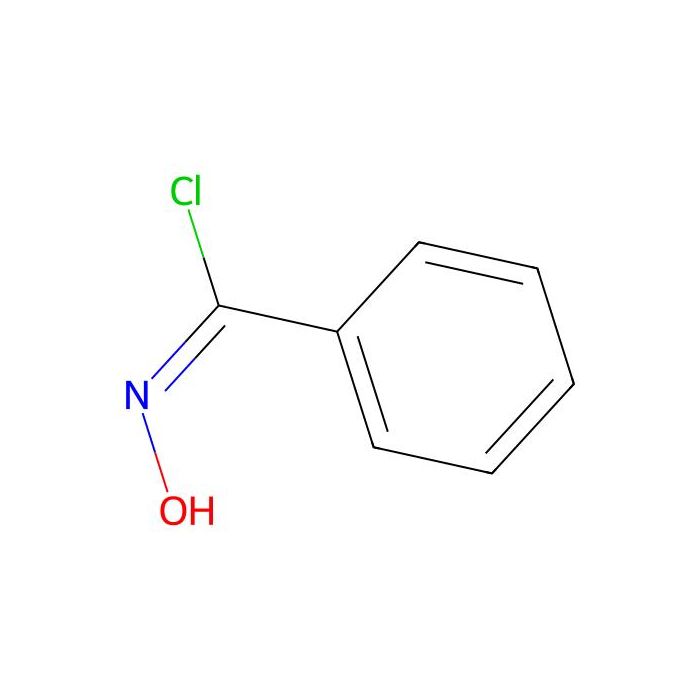
This compound belongs to the class of organic compounds known as benzene and substituted derivatives. These are aromatic compounds containing one monocyclic ring system consisting of benzene.
External Descriptors
Not available
1. Djoumbou Feunang Y, Eisner R, Knox C, Chepelev L, Hastings J, Owen G, Fahy E, Steinbeck C, Subramanian S, Bolton E, Greiner R, and Wishart DS. ClassyFire: Automated Chemical Classification With A Comprehensive, Computable Taxonomy. Journal of Cheminformatics, 2016, 8:61.
Zertifikate (CoA, COO, BSE/TSE und Analyse-Diagramm)
C of A & Other Certificates(BSE/TSE, COO):
Analytical Chart:
Chemische und physikalische Eigenschaften
Molekulargewicht
155.580 g/mol
XLogP3
2.700
Hydrogen Bond Donor Count
1
Hydrogen Bond Acceptor Count
2
Rotatable Bond Count
1
Exact Mass
155.014 Da
Monoisotopic Mass
155.014 Da
Topological Polar Surface Area
32.600 Ų
Heavy Atom Count
10
Formal Charge
0
Complexity
130.000
Isotope Atom Count
0
Defined Atom Stereocenter Count
0
Undefined Atom Stereocenter Count
0
Defined Bond Stereocenter Count
1
Undefined Bond Stereocenter Count
0
The total count of all stereochemical bonds
1
Covalently-Bonded Unit Count
1
Lösungsrechner
Molarity Calculator
Determine the necessary mass, volume, or concentration for preparing a solution.
Dilution Calculator
Determine the dilution needed to prepare a stock solution.
Reconstitution Calculator
Bewertungen
Kundenbewertungen
Application Protocols
No assay/application protocols are specified for this item. As a general synthetic reagent, typical protocols involve base-promoted generation of nitrile oxides for [3+2] cycloadditions as outlined under Reaction Conditions.
For project-specific procedures:
Start with small-scale scouting (0.1–0.3 mmol) to optimize solvent, base, and concentration.
Establish robust quench and workup to neutralize HCl and remove residual reactive species.
Validate analytical methods (TLC/HPLC/GC, NMR) to monitor consumption and product formation.
Please consult the primary literature and your institutional SOPs for detailed step-by-step methods.
Biological Roles
This reagent is a highly reactive synthetic intermediate without endogenous biological roles. It is not used as a buffer, nutrient, or biochemical cofactor.
Context for researchers:
In medicinal chemistry, aryl nitrile oxides derived from hydroximoyl chlorides are frequently employed to construct isoxazole frameworks that serve as bioisosteres or privileged motifs. However, any biological activity pertains to the final compounds, not to the hydroximoyl chloride itself.
The hydroximoyl chloride is moisture‑sensitive and corrosive; it is not intended for any biological system exposure.
Note: All uses are for research and laboratory synthesis only. No clinical, diagnostic, or in vivo use is intended or implied.
Buffer Applications
Not typically applicable. This compound is a moisture‑sensitive electrophile that hydrolyzes in aqueous media and is unsuitable for preparing or using buffer systems. For aqueous work, refer to downstream, hydrolysis‑resistant products or to the heterocycles synthesized from it. See Reaction & Applications and Synthetic Utility for relevant guidance.
Green Alternatives
Opportunity areas for greener practice with hydroximoyl chlorides focus on solvent choice and alternative dipole generation routes.
Greener solvent swaps (general):
Replace DCM/chloroform with ethyl acetate or 2‑MeTHF where solubility and selectivity allow.
MeCN can be retained when needed for polarity but consider EtOAc/MeOH biphasic quench strategies to minimize acetonitrile usage.
Alternative nitrile oxide generation (literature concepts):
Direct oxidation of aldoximes to nitrile oxides using hypervalent iodine reagents (e.g., IBX, PhI(OAc)2) or Oxone-based systems can avoid chlorinated intermediates; assess compatibility with your substrate scope.
Electrochemical or photochemical methods to access nitrile oxides in flow have been reported, potentially improving safety and reducing waste.
Comparison highlights (informational):
Hydroximoyl chloride route: fast, robust, broad substrate tolerance; requires handling a moisture‑sensitive, chlorinated reagent and often halogenated solvents.
Oxidative routes from aldoximes: fewer halogens and potentially simpler waste streams; may need specialized reagents or conditions and can be more substrate‑sensitive.
Mitigation strategies when using this SKU:
Employ minimal effective equivalents and run at lower concentrations to suppress dimerization, reducing byproduct waste.
Choose greener solvent alternatives (EtOAc, 2‑MeTHF) during cycloaddition and workup when feasible.
Implement in-line quench and contained workups to minimize HCl emissions and exposure.
Pharmaceutical Uses
No pharmacopeial excipient status or formulation role is specified for this item; refer to CoA/Spec Sheet if needed.
Research/manufacturing context (general):
This reagent is used in medicinal chemistry synthesis to access isoxazole and isoxazoline motifs that may be incorporated into drug candidates. Its role is confined to intermediate synthesis on discovery/process scale under controlled conditions.
Not suitable for direct incorporation into dosage forms due to reactivity, hydrolytic instability, and potential corrosivity.
Good manufacturing practice considerations:
If used in GMP settings for API intermediate synthesis, ensure appropriate specifications for assay, impurities (including chloride content and residual solvents), and documented control of moisture.
Validate quench and purge strategies to ensure residual hydroximoyl chloride is not present in downstream intermediates or final API.
Physical Properties
Item-specific numerical specifications (BP, MP, density, refractive index, UV cutoff, residuals): Not specified for this item; refer to CoA/Spec Sheet.
General/literature-based guidance for aryl N‑hydroxy imidoyl chlorides (informational only, not item specifications):
State at room temperature: often low-melting solids or viscous liquids; sensitive to moisture and base, with potential gradual decomposition on prolonged storage.
Volatility: typically low to moderate; avoid distillation under atmospheric pressure due to decomposition risk; if purification is needed, short-path at reduced temperature/pressure or rapid flash chromatography under dry conditions is preferred.
Solubility (qualitative):
Good solubility in moderately polar aprotic organic solvents such as dichloromethane, chloroform, ethyl acetate, acetonitrile, and THF.
Poor solubility in water; reacts with water to hydrolyze/decompose (see Safety & Handling).
Stability considerations: light and moisture can promote hydrolysis to benzaldoxime derivatives and liberation of HCl; base can induce dehydrohalogenation to form nitrile oxides.
Practical notes:
Handle and measure under dry atmosphere to maintain composition.
Avoid prolonged heating; if warming is required for dissolution, use the minimum temperature and time and ensure anhydrous conditions.
Quality and Grades
Grade/purity: Not specified for this item; refer to CoA/Spec Sheet for exact assay, impurity profile, and stabilizer information.
Context for this compound class:
For reactive intermediates such as N‑hydroxy imidoyl chlorides, the most relevant quality attributes are identity confirmation (NMR/IR/HRMS), assay (%), and stability under storage. Trace moisture and adventitious base are particularly detrimental, as they can induce hydrolysis or dehydrohalogenation.
If a stabilizer is used (e.g., acid inhibitor or packaging with desiccant), this would be noted on the CoA. Absence/presence of stabilizer can affect downstream reactivity and should be considered during method development.
What to look for on the CoA (general guidance):
Identity: 1H/13C NMR consistent with E‑oxime geometry; IR bands for N–O–H and C=N; presence of C–Cl (imidoyl) stretch.
Purity/assay: chromatography (HPLC/GC) and titration if applicable; water by Karl Fischer for moisture-sensitive work.
Appearance and color: reactive acyl chloride-type materials may darken slightly over time; minor coloration does not necessarily indicate significant degradation but should be correlated with assay.
If you require specific grades (e.g., ≥98% assay, inhibitor-free, or chromatography-grade), please contact us to confirm availability and lead time for this SKU.
Reaction and Applications
Manufacturer applications: Not specified beyond general research use. The following expands on well-established literature uses for aryl N‑hydroxy imidoyl chlorides.
Primary application: in situ generation of aryl nitrile oxides via base-promoted dehydrohalogenation of the hydroximoyl chloride, followed by 1,3‑dipolar cycloaddition.
Isoxazole and isoxazoline synthesis: rapid [3+2] cycloaddition with alkenes and alkynes to furnish heterocycles widely used in agrochemical and medicinal chemistry scaffolds.
Intramolecular cycloadditions: tethered dipolarophile strategies provide regio‑ and stereocontrolled heterocycles.
Regioselectivity: aryl nitrile oxides often add to electron-rich alkenes with predictable orientation; substituent effects on the aryl ring can tune dipole reactivity.
Other transformations (literature):
Conversion to amide oximes and amidoximes via nucleophilic substitution (with amines/alkoxides under carefully controlled conditions), en route to amidines or imidates after appropriate manipulations.
Oxime-to-nitrile conversions through dehydration/dehydrohalogenation pathways under non‑basic conditions using specific reagents.
Practical tips:
Generate the nitrile oxide at low to ambient temperature by adding a tertiary amine base (e.g., Et3N) to a dry solution containing the dipolarophile; this minimizes side reactions (dimerization to furoxans).
Maintain dilute to moderate concentrations to suppress nitrile oxide dimerization.
Exclude water; trace moisture reduces yield via hydrolysis to oximes and benzoic derivatives.
Monitor by TLC/GC/MS; isoxazole formation is typically fast (minutes to hours).
Reaction Conditions
The following are literature-style general conditions for this compound class; they are not product-specific specifications.
Nitrile oxide generation and cycloaddition (typical):
Solvent: dry DCM, EtOAc, THF, or MeCN.
Base: triethylamine (1.1–2.0 equiv), DIPEA, or 2,6‑lutidine.
Temperature: 0 to 25 °C, commonly ambient.
Concentration: 0.02–0.1 M to suppress dimerization.
Procedure: dissolve hydroximoyl chloride and dipolarophile; cool if exothermic; add base dropwise; stir until TLC indicates consumption (often 0.5–4 h). Quench with aqueous ammonium chloride or sodium bicarbonate; extract; dry; purify by flash chromatography.
Intramolecular cycloadditions:
Similar conditions, often higher dilution, with tethered alkenes/alkynes; temperature control critical to favor cyclization over intermolecular pathways.
Nucleophilic substitutions to amidoximes:
Solvent: dry MeCN or THF.
Nucleophile: primary amines (1.2–2.0 equiv) under mild base scavenging of HCl (e.g., Et3N).
Temperature: 0–25 °C; monitor carefully to avoid overreaction.
Notes:
Exclude moisture rigorously; hydrolysis reduces yields and may release HCl.
If dimerization to furoxans occurs, lower concentration or add dipolarophile in slight excess.
Expected yields: often good to excellent (50–90%) for well-matched cycloadditions; substrate-dependent.
Safety and Handling
GHS details (signal word, H-statements, pictograms, classification): Not specified for this item; refer to the SDS for authoritative safety information.
General hazards typical for N‑hydroxy imidoyl chlorides (informational; not product-specific classification):
Corrosive/irritant potential due to acid chloride functionality; contact with moisture can release HCl.
Lachrymatory behavior possible, particularly in open vessels.
Sensitization and respiratory irritation risks from HCl and reactive vapors; use in a fume hood.
PPE and engineering controls:
Wear chemical-resistant gloves (e.g., nitrile), lab coat, and splash goggles.
Use only in a certified chemical fume hood; avoid inhalation of vapors/mists.
Handling precautions:
Keep anhydrous: exclude water and alcohols to prevent hydrolysis and exothermic HCl release.
Avoid contact with strong bases except when intentionally generating nitrile oxides under controlled conditions.
Incompatibilities: water, alcohols, strong bases, strong nucleophiles, and strong oxidizers/reductants.
First-aid overview (consult SDS for full instructions):
Skin/eye contact: immediately flush with copious water for ≥15 minutes; remove contaminated clothing; seek medical attention.
Inhalation: move to fresh air; monitor for respiratory distress; seek medical advice.
Ingestion: rinse mouth; do not induce vomiting; obtain medical attention.
Spill/accident response:
Small spills: absorb with inert dry sorbent; quench residues cautiously under basic, buffered, controlled conditions in a hood after containment.
Waste: collect as halogenated, corrosive organic waste per institutional and regulatory guidance.
Solvent Selection
This moisture-sensitive, moderately polar electrophile performs best in dry, aprotic media.
Polarity/miscibility (general):
Preferred: dichloromethane (DCM), chloroform, ethyl acetate, acetonitrile, THF. These dissolve aryl imidoyl chlorides well and allow controlled base addition.
Avoid protic solvents (water, alcohols) which induce hydrolysis and HCl release.
Hydrocarbon solvents (toluene, hexanes) can be used if solubility permits; often require co-solvent.
Dielectric constant (solvent guidance, literature): DCM ~9, EtOAc ~6, MeCN ~37, THF ~7.6; choose based on base/catalyst solubility and cycloaddition partner.
When to choose each solvent (practical tips):
DCM: excellent for room-temperature base-promoted nitrile oxide generation and [3+2] cycloadditions with alkenes/alkynes; easy workup.
MeCN: beneficial when using inorganic bases or phase-transfer conditions; higher polarity can accelerate dipole generation.
THF: good for low-temperature operations and metal-mediated sequences; ensure rigorous drying.
EtOAc: greener profile; suitable for many cycloadditions and easier solvent removal; monitor for any gradual hydrolysis.
Small comparison (general):
DCM: high solubility, inert; environmental and safety considerations apply.
EtOAc/2‑MeTHF: greener alternatives; may require temperature control to match rates.
MeCN: strong polarity; ensure base compatibility and quench protocols.
Storage and Reconstitution
Storage conditions (from Product Data):
Store at room temperature.
Additional best practices for this compound class (general guidance):
Keep tightly sealed in original container with desiccant, protected from ambient humidity. Consider storing under inert gas (nitrogen/argon) to minimize hydrolysis.
Protect from light and heat; avoid long-term exposure to >25–30 °C.
Do not refrigerate/freezer-cycle in humid environments without secondary containment, as condensation upon warming can introduce moisture.
Handling on receipt:
Allow container to equilibrate to room temperature before opening to prevent moisture condensation.
If aliquoting, use dry glassware in a dry box or under a dry nitrogen purge; minimize headspace.
Reconstitution/dissolution:
Prepare solutions only in dry, aprotic solvents (e.g., DCM, THF, EtOAc, MeCN). Use immediately; do not store solutions for extended periods due to hydrolytic and base sensitivity.
Shipping: Not specified for this item; refer to CoA/Spec Sheet. As a general note, these materials are commonly shipped at ambient temperature with moisture-protective packaging.
Research Use Note: For research use only.
Structure and Identity
This product is an aryl N‑hydroxy imidoyl chloride (commonly known as a benzohydroximoyl chloride), presented as the E (anti) C=N oxime configuration relative to the phenyl substituent.
CAS: 698-16-8 (product-specific)
InChIKey: Not specified for this item; refer to CoA/Spec Sheet. (Product Data lists an incomplete key.)
SMILES: Not specified for this item; refer to CoA/Spec Sheet.
Molecular formula: Not specified for this item; refer to CoA/Spec Sheet.
Molecular weight: Not specified for this item; refer to CoA/Spec Sheet.
Structural features (general chemistry description):
Contains an aryl group (phenyl) directly bonded to a C=N–O(H) oxime functionality bearing a chloride on the imidoyl carbon (–C(=N–OH)–Cl).
The E descriptor indicates the hydroxyl and phenyl substituents are trans across the C=N bond (anti-oxime geometry), which can influence reactivity and cycloaddition stereochemical outcomes.
2D structure (verbal): a benzene ring attached to a C=N–OH linkage; the imidoyl carbon also bears a chlorine substituent. The C=N double bond confers planarity across the imidoyl fragment, conjugated with the phenyl ring.
Identification notes:
Imidoyl chlorides of oximes are precursors to nitrile oxides under base-promoted dehydrohalogenation. The aryl ring stabilizes the resulting dipole, making this a versatile building block for isoxazole/isoxazoline synthesis.
For definitive identifiers (exact SMILES/InChI), please consult the item’s CoA/specification sheet.
Synthetic Utility
Key functional elements:
Electrophilic imidoyl chloride center enabling substitution by selected nucleophiles under controlled conditions.
N‑hydroxy oxime unit that eliminates HCl under base to generate the corresponding aryl nitrile oxide (1,3‑dipole).
Valuable transformations (literature):
[3+2] Cycloadditions: rapid formation of isoxazoles (with alkynes) and isoxazolines (with alkenes). Regioselectivity is influenced by dipolarophile electronics; aryl substituents often direct addition to yield 3,5‑disubstituted isoxazoles.
Intramolecular ring construction: tether-based assembly of bicyclic isoxazolines/isoxazoles with high stereocontrol.
Diversification: post-cycloaddition N–O bond cleavage to β‑hydroxy/β‑keto carbonyls, or ring transformations to amide/amine derivatives.
Nucleophilic capture: amidoxime formation with amines as a gateway to amidines and related heterocycles after dehydration or reduction.
Retrosynthetic value:
Provides a convergent entry into heteroaromatic motifs under mild conditions, often orthogonal to metal-catalyzed couplings. Useful when sensitive functional groups preclude harsher nitrile oxide generation routes.
Operational guidance:
Generate the 1,3‑dipole in the presence of the trapping partner to minimize dimerization (furoxan formation).
Use non‑nucleophilic bases (Et3N, Hunig’s base, 2,6‑lutidine) and dry, aprotic solvents.
Control temperature (0–25 °C) to tune rate vs. selectivity and suppress side reactions.
Target Specificity
Not applicable. This product is a small-molecule synthetic reagent, not a biological targeting agent (e.g., antibody, ligand, or probe). No antigen, epitope, species reactivity, clone, or isotype information applies.
Häufig gestellte Fragen
How should this product be stored?
Store at room temperature.
What are the CAS number, molecular formula and molecular weight?
The CAS Number is 698-16-8, the molecular formula is C7H6ClNO, and the molecular weight is 155.58 g/mol. InChIKey GYHKODORJRRYBU-CLFYSBASSA-N.
What documentation is provided?
Available product documentation, including Certificates of Analysis (COA), Safety Data Sheets (SDS), and specification sheets, is shown in the product document area. Document availability and access follow the current site policy.
Wir verwenden Cookies, um die ordnungsgemäße Funktion der Website sicherzustellen und, soweit zulässig, Ihr Nutzererlebnis zu verbessern. Sie können Ihre Einstellungen jederzeit unter „Einstellungen“ verwalten. Weitere Informationen finden Sie in unserer Cookie-Richtlinie.
Dürfen wir Sie über Rabattaktionen informieren?
Später erinnern
Vielen Dank! Bitte überprüfen Sie Ihren E-Mail-Posteingang, um zu bestätigen.
Products are supplied to verified businesses, institutions, and qualified professionals for research and development use only. Not for use in humans, animals, diagnosis, or therapy.