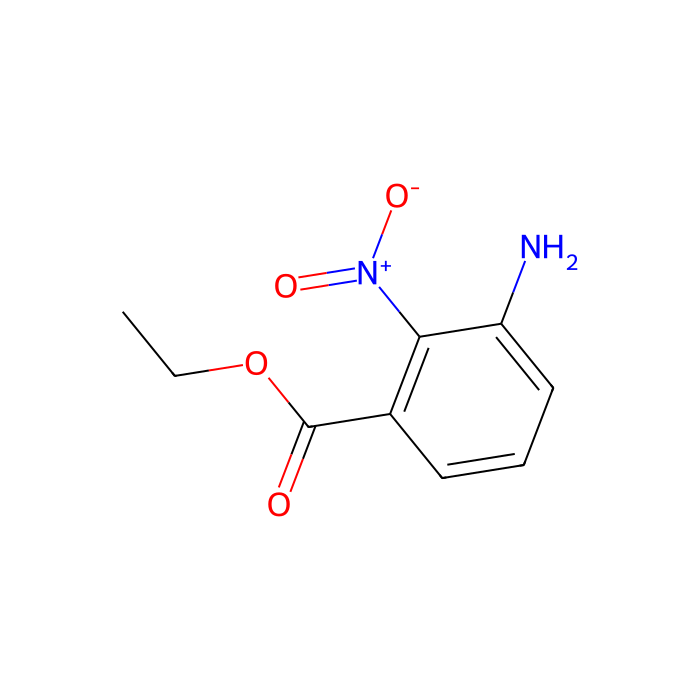
This compound belongs to the class of organic compounds known as nitrobenzoic acids and derivatives. These are compounds containing a nitrobenzoic acid moiety, which consists of a benzene ring bearing both a carboxylic acid group and a nitro group on two different ring carbon atoms.
External Descriptors
Not available
1. Djoumbou Feunang Y, Eisner R, Knox C, Chepelev L, Hastings J, Owen G, Fahy E, Steinbeck C, Subramanian S, Bolton E, Greiner R, and Wishart DS. ClassyFire: Automated Chemical Classification With A Comprehensive, Computable Taxonomy. Journal of Cheminformatics, 2016, 8:61.
Zertifikate (CoA, COO, BSE/TSE und Analyse-Diagramm)
C of A & Other Certificates(BSE/TSE, COO):
Analytical Chart:
Chemische und physikalische Eigenschaften
Molekulargewicht
210.190 g/mol
XLogP3
1.800
Hydrogen Bond Donor Count
1
Hydrogen Bond Acceptor Count
5
Rotatable Bond Count
3
Exact Mass
210.064 Da
Monoisotopic Mass
210.064 Da
Topological Polar Surface Area
98.100 Ų
Heavy Atom Count
15
Formal Charge
0
Complexity
251.000
Isotope Atom Count
0
Defined Atom Stereocenter Count
0
Undefined Atom Stereocenter Count
0
Defined Bond Stereocenter Count
0
Undefined Bond Stereocenter Count
0
The total count of all stereochemical bonds
0
Covalently-Bonded Unit Count
1
Lösungsrechner
Molarity Calculator
Determine the necessary mass, volume, or concentration for preparing a solution.
Dilution Calculator
Determine the dilution needed to prepare a stock solution.
Reconstitution Calculator
Bewertungen
Kundenbewertungen
Application Protocols
Not applicable. No tested bioassay protocols (e.g., WB, IHC, IF, FC) are associated with this small-molecule building block. For synthetic procedures, refer to the Reaction Conditions, Reaction & Applications, and Synthetic Utility sections.
Biological Roles
Item-specific biological data: Not specified for this item; for research use only.
General context (chemistry/biochemistry; no clinical claims):
The scaffold is a small aromatic molecule with an aniline and nitro group; it is not a natural metabolite and has no intrinsic biological role. However, aniline- and nitrobenzene-containing motifs occur in many synthetic probes and intermediates used to access heterocycles and substituted benzoic derivatives relevant to medicinal chemistry campaigns.
Functional handles:
Aniline (–NH2) serves as a nucleophilic site for generating amides, sulfonamides, ureas, and carbamates—common linkages in bioactive compound libraries.
Nitro group can be chemoselectively reduced to generate diamine frameworks or used as a temporary deactivating/masking group, aiding stepwise synthesis of structure–activity relationship (SAR) sets.
Analytical note: Nitroaromatics typically show strong UV absorbance in the 250–380 nm region (literature), facilitating HPLC/UV tracking during biochemical assay material preparation.
Use limitations:
No buffer capacity or specific biomolecular binding is inherent to this compound; it is intended as a chemical intermediate/feedstock to prepare target molecules used in biological research.
Buffer Applications
This product is not a buffering reagent. It lacks acid–base pairs with suitable pKa and solubility characteristics for preparing laboratory buffers. For aqueous work, it is generally handled in organic co-solvents (e.g., DMSO) prior to dilution into assay media if needed. Refer instead to the Reaction & Applications and Synthetic Utility sections for relevant uses.
Green Alternatives
Solvent choices (general, greener options):
Replace DMF/NMP with safer polar aprotics where feasible: acetonitrile, propylene carbonate, Cyrene, dimethyl carbonate, or 2-MeTHF (for less polar needs).
Swap DCM with ethyl acetate or toluene when reaction performance allows; for extra polarity, acetone or Me-THF/EtOAc blends can help.
Reductions (greener methods):
Prefer catalytic hydrogenation (H2/Pd, H2/Pt) over stoichiometric tin or iron salts to minimize metal-containing waste. If metal-mediated needed, employ aqueous ethanol and efficient filtration/chelation to simplify waste handling.
Couplings and activations:
Use carbodiimide/Oxyma or CDI instead of HOBt-containing systems (to reduce energetic byproduct concerns). Enzymatic or organocatalytic transesterifications in green solvents (2-MeTHF, EtOAc) can provide milder alternatives.
Workup/waste reduction:
Favor solvent swaps to EtOAc/IPA/water systems that enable phase-split and salt rejection. Employ in-line scavengers to reduce chromatographic silica use.
Comparison snapshot (general):
DMF vs MeCN: MeCN less problematic for worker exposure and often recyclable; may require higher temps for similar rates.
DCM vs EtOAc: EtOAc has better environmental profile; boiling point higher, may need longer evaporation times.
Tin reductions vs H2: H2 catalytic routes cut waste and simplify workup; require pressure equipment and careful selectivity control.
Pharmaceutical Uses
Item-specific pharmacopeial status or excipient role: Not specified for this item; refer to CoA/Spec Sheet.
General, non-clinical context:
Ethyl 3-amino-2-nitrobenzoate functions as a synthetic intermediate in the preparation of benzoic acid derivatives, benzoxazole/benzoxazinone scaffolds, and substituted anilides commonly encountered during lead optimization and impurity/reference standard synthesis.
The ester can be hydrolyzed to the corresponding acid for amide coupling, while the aniline serves as a point for salt formation (e.g., HCl salts) when making intermediates with improved handling characteristics.
No claims are made regarding therapeutic use, safety, or efficacy. For manufacturing development, impurity profiles, residual solvents, and elemental impurities would be controlled according to ICH guidelines if this intermediate were used upstream in an API route (process-development context only).
Physical Properties
Item-specific specifications: Not specified for this item; refer to CoA/Spec Sheet.
Literature/estimated properties for the neutral ethyl 3-amino-2-nitrobenzoate scaffold (for reference only):
Physical state: typically a yellow to tan crystalline solid for many nitroaniline esters (literature trend; not item-specific).
Molecular weight: ~210.19 g/mol (from formula C9H10N2O4; literature/computed).
Acid–base: aniline pKaH (conjugate acid) typically ~4.5–5.5; –NO2 reduces aniline basicity further (literature trend). Neutral compound expected at physiological pH.
LogP: Aromatic nitro aniline esters commonly show moderate lipophilicity (logP ca. 1.5–2.5; literature range, not item-specific).
Solubility (qualitative, literature):
Good in polar aprotic organics (DMSO, DMF, NMP, acetone, acetonitrile).
Moderate in ethyl acetate, dichloromethane; lower in hexanes/heptane.
Low in water as the free base; increased aqueous solubility possible upon salt formation of the aniline (e.g., HCl salt).
Melting point, boiling point, density, refractive index, UV cutoff: Not specified for this item; refer to CoA/Spec Sheet.
Practical notes (general): Moisture has limited effect on the ester, but strong acids/bases can promote hydrolysis/transesterification. Nitroaromatics often exhibit strong UV absorbance (useful for HPLC detection; literature observation).
Quality and Grades
Item-specific grade/purity: Not specified for this item; refer to CoA/Spec Sheet.
Interpreting common grades (general guidance):
Research/Technical grade: suitable for most synthesis; impurity profile adequate for routine reactions.
≥98–99% (typical for building blocks): minimizes side reactions in coupling/cyclization steps and reduces need for pre-purification.
HPLC grade (for solvents) or LC/MS grade (for analytes): not directly applicable here; for solids, “assay by HPLC/GC” and residual solvent/heavy metal limits may be reported on the CoA.
Stabilizers/inhibitors: Not typically required for nitroaniline esters; if present, will be listed on the CoA/Spec Sheet. Do not remove stabilizers unless necessary for the application.
What to check on receipt (best practices):
Assay/purity method (HPLC/GC/NMR integration), identity (1H NMR, 13C NMR, MS), and water content (KF) if moisture-sensitive steps are planned.
Residual solvents and byproducts from nitration/esterification (e.g., nitro isomers, unesterified acid). Verify with HPLC and LC–MS if your application is impurity-sensitive.
Particle size and color can vary; minor coloration (yellow/tan) is typical for nitro aromatics and usually not indicative of quality issues.
Reaction and Applications
Role: Versatile aryl building block combining an aniline handle, a nitro group, and an activated benzoate ester.
Nitro group chemistry: selective reduction (H2/Pd, Fe/AcOH, SnCl2) to give o-phenylenediamide equivalents; subsequent intramolecular cyclizations to benzoxazoles/benzoxazinones by condensing the aniline with the ester or with added carbonyl partners.
Aniline derivatization: acylation (acyl chlorides/anhydrides with base), sulfonylation (sulfonyl chlorides), and urea/carbamate formation (isocyanates, chloroformates). Diazonium chemistry (NaNO2/HCl, 0–5 C) enables Sandmeyer-type substitution to halides, CN, or borylation (via diazotization–borylation) while retaining the ester.
Ester functionalization: saponification to the acid (NaOH, MeOH/H2O), then coupling (EDC/HOBt, HATU, DIC/Oxyma) to amides while preserving the aniline (protect if needed), or direct aminolysis under forcing conditions.
Cross-coupling after diazotization: convert –NH2 to aryl halide via diazonium; then Suzuki–Miyaura, Sonogashira, or Buchwald–Hartwig on the new handle.
Selectivity considerations:
Electronic push–pull (–NH2 donor, –NO2 acceptor) modifies ring reactivity: electrophilic substitution is deactivated ortho/para to –NO2 and activated ortho/para to –NH2; meta relationships steer regiochemistry in subsequent steps.
Protecting groups: Boc/CBz/Fmoc on the aniline to avoid undesired acylation or metal-catalyst poisoning; nitro acts as a temporary masked amine.
Practical tips:
Keep reactions anhydrous when base- or acid-sensitive steps are planned.
For hydrogenations, monitor carefully to avoid over-reduction of the ester; choose catalysts/conditions for chemoselectivity.
Reaction Conditions
General literature guidance for transformations on this scaffold (adjust to your substrate and consult primary sources):
Saponification (ester→acid):
Conditions: NaOH or KOH (1–2 eq) in MeOH/H2O (3:1 to 9:1), 0–25 C to reflux; then acidify to pH ~1–2.
Notes: Protect –NH2 if downstream coupling requires selective activation; work up by extraction with EtOAc.
Direct aminolysis (ester→amide):
Conditions: Amine (3–10 eq) as solvent or in toluene/MeCN; catalytic DMAP or base (Et3N); 60–120 C (sealed tube if necessary).
Notes: For milder conversion, first form the acid chloride (SOCl2, catalytic DMF; 0–25 C) then couple at 0–25 C in DCM with base.
Cyclodehydration to benzoxazinone/benzoxazole (after nitro reduction):
Conditions: Dehydrating agent (POCl3, SOCl2) in toluene/PhMe or neat; 60–110 C, 1–6 h.
Notes: Ensure complete reduction before ring closure; control HCl evolution and quench cautiously.
Safety and Handling
Item-specific hazards (GHS, pictograms, H-statements): Not specified for this item; refer to the SDS for authoritative safety data.
General hazards for nitroaniline esters (literature/analog-based):
May cause skin/eye irritation; dust may be irritating to respiratory tract.
Nitroaromatics can present methemoglobinemia risk upon significant exposure; avoid inhalation/ingestion (general toxicology trend; consult SDS).
Combustible organic solid; fine particulates may pose dust explosion risk in confined atmospheres.
PPE and handling (good laboratory practice):
Wear lab coat, safety glasses, and appropriate chemical-resistant gloves (e.g., nitrile). Use in a fume hood to control dust/vapor.
Avoid incompatible reagents: strong oxidizers; strong acids/bases (can hydrolyze/transesterify the ester; strong reducing agents may reduce the nitro group).
Hygroscopicity/shock sensitivity: no special sensitivity expected for this class, but handle solids gently and avoid grinding vigorously. Do not heat to decomposition.
First aid (overview; defer to SDS):
Skin/eye contact: Rinse with water for ≥15 minutes; remove contaminated clothing; seek medical attention if irritation persists.
Inhalation: Move to fresh air; seek medical attention if symptoms occur.
Ingestion: Rinse mouth; do not induce vomiting; seek medical attention.
Storage: Room temperature as per Product Data; keep tightly closed, dry, and protected from excessive heat and strong light. Dispose of waste according to local regulations.
Solvent Selection
Polarity class and behavior (general):
Moderately polar aromatic ester bearing an aniline and nitro group. Best handled in polar aprotic media for dissolution and reactions.
Solubility/miscibility profile (literature trends; not item-specific):
High solubility: DMSO, DMF, NMP, acetone, acetonitrile.
Low solubility: alkanes (hexanes/heptane); water (as free base).
Selection guidance by task:
Nucleophilic acyl substitutions on the ester (transesterification, aminolysis): alcohol or amine as solvent/co-solvent; include base or catalyst (e.g., NaOMe/ROH, DMAP in DCM/MeCN/THF).
Nitro reduction to anilide: protic (EtOH, iPrOH) or aprotic (THF, EtOAc) with hydrogenation; for metal reductions (Fe/AcOH, SnCl2/EtOH), choose media compatible with workup.
Diazotization of the aniline: aqueous mineral acid (HCl) with an organic co-solvent (MeCN/AcOH) at 0–5 C; subsequent trapping in DCM/MeCN.
Cyclizations to benzoxazinones/benzoxazoles: typically polar aprotic (DMF/DMSO) or PhMe with dehydrating agents.
Comparison (general):
DMSO/DMF: maximal solubilization for functionalization steps; harder workups.
EtOAc/MeCN/DCM: balanced reactivity and ease of removal; may require heating or higher volumes to dissolve.
Alcohols (MeOH/EtOH): facilitate transesterification but can compete or cause product scrambling.
Storage and Reconstitution
Storage (item-specific): Room temperature (per Product Data). Store in a tightly closed container in a dry place. Keep away from strong acids/bases and oxidizing or strong reducing agents.
Stability notes (general):
Esters can hydrolyze under strong acidic/basic aqueous conditions; keep dry and avoid prolonged exposure to moisture if high assay is critical.
Nitro and aniline functionalities are generally stable in the solid state under ambient lab conditions; minimize exposure to strong light/heat.
Reconstitution/dissolution (general guidance):
Preferred solvents for stock solutions: DMSO or DMF (10–100 mg/mL). Soluble at lower concentrations in EtOAc, MeCN, THF, or DCM.
For aqueous applications, prepare a concentrated DMSO stock and dilute into buffer with vigorous mixing to avoid precipitation; final DMSO content ≤1–2% is often acceptable for biochemical assays (check assay tolerance).
Filtration: If particulates are present, pass solutions through a 0.2 µm PTFE or PVDF syringe filter.
Freeze–thaw: Generally not applicable to solids. If storing solutions, keep at 2–8 C for short term or at −20 C for longer term in amber vials; avoid repeated freeze–thaw cycles.
Refer to the product’s CoA/Spec Sheet and SDS for definitive stability and compatibility information.
Structure and Identity
Ethyl 3-amino-2-nitrobenzoate is an ortho-nitro, meta-amino substituted ethyl benzoate ester useful as an aniline/nitroarene building block.
Product Data (item-specific):
SKU: E191828
CAS: 193014-01-6
InChIKey: Not specified for this item; refer to CoA/Spec Sheet.
SMILES: Not specified for this item; refer to CoA/Spec Sheet.
Storage: Room temperature (per Product Data)
Shipping: Normal (per Product Data)
Literature/computed identifiers (for reference only; not item specifications):
Expected molecular formula (literature): C9H10N2O4
Functional groups: one primary aniline (–NH2) at the 3-position, one nitro group (–NO2) at the 2-position, and an ethyl ester (–CO2Et) at the 1-position.
Electronic characteristics: the –NO2 is strongly electron withdrawing (–M, –I), while –NH2 is strongly electron donating (+M, –I). The juxtaposition of these groups creates an internal push–pull system, influencing regioselectivity of subsequent transformations.
2D description: An aromatic ring bearing, in order, a carboxylate ethyl ester, adjacent ortho –NO2, and meta –NH2 relative to the ester; remaining ring positions are unsubstituted.
Stereochemistry: None (achiral, no stereocenters).
Synthetic Utility
Functional group triad:
Aniline (–NH2): nucleophilic, readily derivatized to amides/carbamates/ureas; convertible to diazonium for substitution/diversification.
Nitro (–NO2): strategic electron-withdrawing group; reducible to a second amine to access o-phenylenediamine-type reactivity relative to the ester.
Ethyl ester (–CO2Et): convertible handle to the acid (saponification) or to amides via aminolysis or activation routes.
Named/typical transformations (literature):
Diazonium chemistry (Balz–Schiemann/Sandmeyer variants) from the aniline to install F, Cl, Br, CN, or B(OH)2 surrogates (via diazotization–borylation), enabling downstream cross-coupling.
Nitro-to-amine reduction followed by intramolecular cyclodehydration to benzoxazoles/benzoxazinones (e.g., using POCl3, SOCl2, or polyphosphoric acid).
Saponification to 3-amino-2-nitrobenzoic acid, then peptide-like couplings (EDC/HATU/DIC) to furnish amides without disturbing the aniline when protected.
Direct aminolysis/transesterification under basic or catalytic conditions to introduce diverse alkyl/aryl amides/esters.
Retrosynthetic value:
Orthogonal handles enable stepwise divergence: modify the aniline (protect/functionalize), manipulate the nitro (retain as EWG or reduce), then set carboxylate functionality (ester→acid→amide) late-stage.
Practical considerations:
Protect –NH2 (Boc, Cbz) prior to acid chloride formation or strong electrophiles to avoid over-acylation.
Choose reduction conditions that spare the ester when desired (e.g., H2/Pd at controlled pressure/temperature).
Target Specificity
Not applicable. This product is a small-molecule chemical intermediate and is not an antibody, enzyme, or targeted biological reagent. No antigen/epitope or species reactivity information applies.
Wir verwenden Cookies, um die ordnungsgemäße Funktion der Website sicherzustellen und, soweit zulässig, Ihr Nutzererlebnis zu verbessern. Sie können Ihre Einstellungen jederzeit unter „Einstellungen“ verwalten. Weitere Informationen finden Sie in unserer Cookie-Richtlinie.
Dürfen wir Sie über Rabattaktionen informieren?
Später erinnern
Vielen Dank! Bitte überprüfen Sie Ihren E-Mail-Posteingang, um zu bestätigen.
Products are supplied to verified businesses, institutions, and qualified professionals for research and development use only. Not for use in humans, animals, diagnosis, or therapy.