QUALITÄT & REINHEITMoligand™?Moligand™ — Aladdin's line of ligands and bioactive small molecules. Use for receptor, pathway, and binding studies needing defined small-molecule tools.
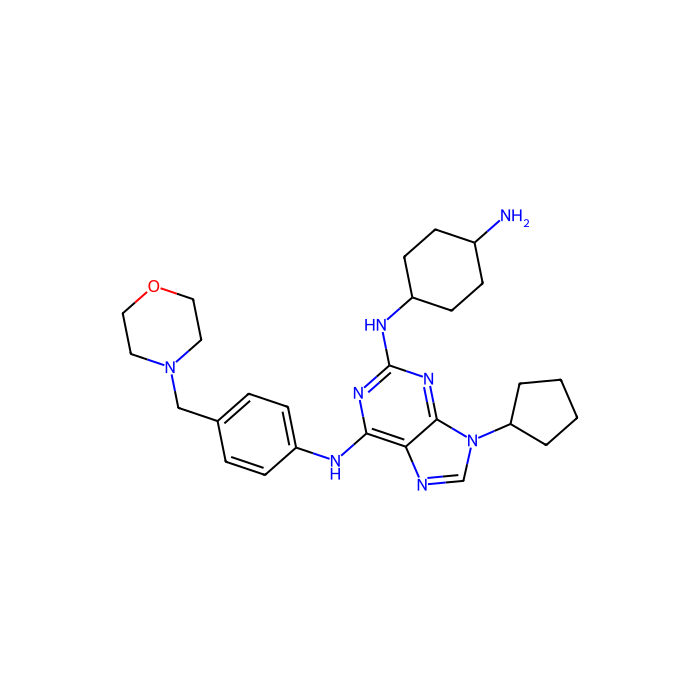
This compound belongs to the class of organic compounds known as 6-aminopurines. These are purines that carry an amino group at position 6. Purine is a bicyclic aromatic compound made up of a pyrimidine ring fused to an imidazole ring.
External Descriptors
Not available
1. Djoumbou Feunang Y, Eisner R, Knox C, Chepelev L, Hastings J, Owen G, Fahy E, Steinbeck C, Subramanian S, Bolton E, Greiner R, and Wishart DS. ClassyFire: Automated Chemical Classification With A Comprehensive, Computable Taxonomy. Journal of Cheminformatics, 2016, 8:61.
Determine the necessary mass, volume, or concentration for preparing a solution.
Dilution Calculator
Determine the dilution needed to prepare a stock solution.
Reconstitution Calculator
Bewertungen
Kundenbewertungen
Application Protocols
No item-specific tested application protocols are provided in the Product Data.
General research-use guidance (non-binding; verify in your system):
Stock preparation: Dissolve in anhydrous DMSO to a convenient concentration (e.g., 10–50 mM). Filter sterilize through 0.22 µm PTFE if sterility is required and compatible.
Serial dilution: Perform in DMSO or assay buffer to achieve desired concentration range; maintain constant final DMSO across controls and treatments.
Controls: Include vehicle controls, positive controls (orthogonal inhibitor where applicable), and negative controls to confirm assay integrity.
Data quality: Use triplicates and include counter-screens (e.g., fluorescence interference, aggregation) as appropriate.
For any validated, item-specific protocols (e.g., enzyme assay conditions, cell line usage), please consult the CoA/Spec Sheet or contact Technical Support.
Biological Roles
General biology of FLT3 (literature overview; not specific to this item’s performance):
FLT3 (Fms-like tyrosine kinase 3) is a class III receptor tyrosine kinase expressed primarily in hematopoietic progenitors. Ligand binding promotes receptor dimerization and autophosphorylation, activating downstream pathways including PI3K/AKT, MAPK/ERK, and STAT5.
Physiological role: Regulation of hematopoietic stem/progenitor cell survival, proliferation, and differentiation. FLT3 signaling integrates with cytokine networks in the bone marrow niche.
Dysregulation: Internal tandem duplications (ITD) or point mutations in the tyrosine kinase domain (TKD) can drive constitutive signaling, altering transcriptional programs via STAT5 and other effectors. These biology points are provided for context and do not imply specific performance of this item.
Research use context (general):
Small-molecule ligands nominally associated with FLT3 are often employed to probe pathway dependencies, validate targets in model systems, and enable comparative selectivity studies across kinase families.
Important note:
No item-specific target potency, selectivity, or cellular activity data are provided here. All uses are for research only; verify activity in your system with appropriate controls.
Buffer Applications
This product is a small-molecule research ligand and is not a buffering agent. Therefore, conventional buffer preparation guidelines (pH, buffer capacity) do not directly apply.
Practical assay-related notes (general):
Prepare concentrated stocks in DMSO, then dilute into your chosen assay buffer (e.g., HEPES, Tris, PBS) while maintaining a consistent final DMSO percentage across all wells/conditions.
Consider adding low levels of carrier protein (e.g., 0.1% BSA) or a nonionic surfactant where compatible to mitigate adsorption and precipitation of hydrophobic compounds.
Item-specific buffer compatibility and pH stability: Not specified for this item; refer to CoA/Spec Sheet.
Green Alternatives
Context: For tool compounds like FLT3-IN-3, the main green chemistry lever is solvent and process choice rather than changing the active molecule.
Greener handling strategies (general):
Minimize DMSO use: Prepare highly concentrated stocks to reduce overall DMSO volume, keeping final assay concentrations ≤0.1–0.5% where feasible.
Aqueous-first workflows: When compatible, dilute into buffered aqueous media with gentle warming and mixing to discourage precipitation, reducing reliance on organic co-solvents.
Solvent hierarchy: Prefer ethanol or isopropanol (where assay-compatible) over chlorinated solvents; avoid DMF/DMAC unless necessary; eliminate chlorinated waste streams.
Microscale assays: Use miniaturized plates (384/1536-well) to cut solvent and compound usage.
Waste management: Segregate DMSO/organic waste; adopt on-demand prep of small aliquots to minimize expired materials.
Illustrative comparison (general, not item-specific):
DMSO (benchmark): excellent solvency; moderate EHS concerns; high boiling point complicates recovery.
Ethanol: greener, renewable; limited solvency for very hydrophobic scaffolds.
Reference standard: Use as a comparator or control compound in analytical and bioanalytical method development (e.g., LC–MS/MS quantitation in matrices relevant to preclinical studies).
Target validation: As a research tool in screening cascades, hit triage, and MoA elucidation for kinase-focused discovery.
Formulation screening (in vitro): Evaluate solubilization strategies (co-solvents, cyclodextrins, lipid vehicles) for preclinical assay compatibility. Ensure all excipients are validated for the intended in vitro system.
Compliance notes:
No pharmacopeial monograph or excipient designation is provided for this item. Any GMP-related or clinical manufacturing uses are out of scope for this product grade.
Item-specific regulatory status, impurity profile, and specification limits: Not specified for this item; refer to CoA/Spec Sheet.
Physical Properties
Item-specific properties (from Product Data):
Appearance: Not specified for this item; refer to CoA/Spec Sheet.
Molecular Weight: Not specified for this item; refer to CoA/Spec Sheet.
Common physico-chemical parameters (item-specific):
Melting point (MP): Not specified for this item; refer to CoA/Spec Sheet.
Boiling point (BP): Not specified for this item; refer to CoA/Spec Sheet.
Density: Not specified for this item; refer to CoA/Spec Sheet.
Refractive index: Not applicable/Not specified for this item; refer to CoA/Spec Sheet.
LogP / cLogP: Not specified for this item; refer to CoA/Spec Sheet.
pKa: Not specified for this item; refer to CoA/Spec Sheet.
Solubility: Not specified for this item; refer to CoA/Spec Sheet.
General guidance (literature/practice, not item-specific):
Small-molecule kinase tool compounds are commonly reconstituted in anhydrous DMSO to prepare concentrated stock solutions (e.g., 10–50 mM), followed by dilution into aqueous assay buffers with careful control of final DMSO percentage (often ≤0.1–0.5% v/v). Verify solubility and stability experimentally for this specific item.
Light and moisture sensitivity can vary by scaffold; protect from light and air until item-specific data are confirmed.
Quality and Grades
Item-specific grade:
Grade/Purity: Moligand™ (as provided).
What Moligand™ implies (general description):
Moligand™ denotes inclusion in a curated research collection of small-molecule ligands suitable for biochemical and cellular screening, target validation, and SAR exploration. While not a pharmacopeial grade, Moligand™ focuses on synthetic identity and suitability for discovery workflows.
Documentation and controls:
For this specific item, assay purity, residual solvents, water content, and elemental analysis are Not specified for this item; refer to CoA/Spec Sheet. Always consult the item’s CoA for batch-level purity, identity confirmation (e.g., HPLC/LC–MS, NMR), and any stabilizers used.
Analytical expectations (general guidance):
Typical release testing for discovery-grade ligands may include HPLC purity determination, mass confirmation, and, where applicable, 1H NMR identity. Low-UV-absorbing solvents and clean baselines are preferred for chromatographic analyses.
Use context:
Appropriate for research use in biochemical assays, target engagement studies, and medicinal chemistry screening. Not for human or veterinary use.
Reaction and Applications
This product is offered as a finished small-molecule research ligand rather than a synthetic reagent.
Research applications (general, non-clinical):
Biochemical assays: Use as a reference tool in kinase activity assays, autophosphorylation readouts, and ATP-competitive profiling panels where relevant.
Selectivity assessment: Include broad kinase profiling or chemoproteomic approaches to contextualize on- and off-target interactions.
Mechanistic studies: Time-dependent vs. reversible inhibition, ATP-competition analyses, and washout experiments can elucidate binding mode and residence time (assay design dependent).
Assay tips (general):
Validate concentration ranges via preliminary solubility checks; avoid overshooting solubility to prevent aggregation artifacts.
Include orthogonal assay formats (enzymatic, thermal shift/DSF, NanoBRET/target engagement) to confirm activity and rule out fluorescence/assay interference.
Counter-screen against common assay-interfering profiles (e.g., PAINS-like behaviors) when applicable.
Note: No item-specific potency, solubility, or stability data are provided here; consult the CoA/Spec Sheet and generate in-house control data for your system.
Reaction Conditions
Not typically applicable. This product is a finished research ligand rather than a reagent designed for use in chemical transformations.
If chemical modification is undertaken (general guidance only):
Solvents: Dry polar aprotics (DMSO, DMF, NMP) or aryl-coupling media (1,4-dioxane, toluene) may be applicable depending on the scaffold (structure not provided here). Verify stability.
Temperatures: Keep as low as feasible for stability; many heteroaryl systems tolerate 25–100 °C, but confirm by TLC/HPLC.
Catalysts/Bases: Choice depends entirely on the actual functional groups present (not specified). Avoid conditions that risk hydrolysis/oxidation if sensitive motifs are suspected.
Workup: Minimize aqueous exposure if the compound is hydrophobic; use buffered extractions and gentle evaporation.
Item-specific reaction/stability data: Not specified for this item; refer to CoA/Spec Sheet.
Safety and Handling
Regulatory and GHS information (item-specific):
Signal Word: Not specified for this item; refer to SDS.
H-Statements: Not specified for this item; refer to SDS.
GHS Classification & Pictograms: Not specified for this item; refer to SDS.
General laboratory safety (best practice; defer to SDS for authoritative guidance):
Handle in a chemical fume hood. Avoid inhalation, ingestion, and skin/eye contact. Wear appropriate PPE: lab coat, nitrile gloves, safety glasses or goggles.
Avoid generating dust/aerosols with powdered solids. For solutions, minimize DMSO skin contact due to transdermal transport potential.
Storage incompatibilities: segregate from strong oxidizers and strong acids/bases unless item-specific compatibility data indicate otherwise.
First aid (overview): in case of contact, rinse affected area with water for ≥15 minutes; remove contaminated clothing. If inhaled, move to fresh air. If ingested, rinse mouth and seek medical attention. Always follow your institution’s emergency procedures.
Spill/accidental release: avoid breathing dust/vapors; collect with inert absorbent and dispose of according to local regulations.
Shipping and storage (from Product Data):
Shipped in: Ice chest + ice pads.
Storage: Store at −20 °C. Keep tightly closed, in a dry, well-ventilated place. Consider desiccation and light protection until item-specific stability data are reviewed.
Solvent Selection
Item-specific solubility data:
Not specified for this item; refer to CoA/Spec Sheet.
General guidance for small-molecule kinase tool compounds (literature/practice):
Primary stock solvent: Anhydrous DMSO is typically preferred due to broad solvency and compatibility with biochemical assays.
Assay dilution: Prepare concentrated DMSO stocks (e.g., 10–50 mM), then dilute into aqueous buffer (e.g., HEPES, Tris, PBS) while maintaining low final DMSO (≤0.1–0.5% v/v) to minimize assay interference.
Co-solvent strategies: If precipitation occurs upon dilution, consider stepwise dilution, inclusion of 0.01–0.1% nonionic surfactant (e.g., Tween-20) where assay-compatible, warming to room temperature before use, or using co-solvents like ethanol or acetonitrile at low percentages (validate for your assay).
Avoid: High ionic strength precipitating weakly basic/neutral hydrophobes; uncontrolled pH shifts that can alter ionization state; plastic adsorption for highly lipophilic compounds—use low-binding labware.
Quick comparison (general):
DMSO: highest solvency, excellent stability; potential to carry compounds through skin—use PPE.
DMF/Acetonitrile: good solvency; check protein compatibility in biochemical assays.
Aqueous buffers: preferred final medium; may require pH adjustment or co-solvents.
Storage and Reconstitution
Storage (from Product Data):
Recommended storage: Store at −20 °C.
Shipping condition: Ice chest + ice pads.
Item-specific stabilizers, water content, and packaging: Not specified for this item; refer to CoA/Spec Sheet.
General reconstitution guidance (for small-molecule research ligands; verify for this item):
Solvent: Use anhydrous DMSO for initial stock preparation unless item-specific data recommend otherwise.
Concentration: Common practice is 10–50 mM stock solutions; select based on anticipated assay range and solubility. Confirm absence of undissolved solids.
Aliquoting: Dispense single-use aliquots into low-binding vials or plates to avoid freeze–thaw cycles.
Storage of solutions: Store aliquots at −20 °C or below, protected from light and moisture. Allow to reach room temperature before opening to avoid condensation.
Stability checks: Periodically verify by HPLC/LC–MS after storage; discard if degradation is detected or after a defined in-use period.
Always consult the product’s CoA and SDS for definitive, lot-specific guidance.
Structure and Identity
Brief overview: FLT3-IN-3 is a small-molecule research tool compound listed in our Moligand™ collection, named to indicate activity in FLT3-related assay contexts.
Item-specific identifiers (from Product Data):
SKU: F413385
Product Name: FLT3-IN-3
CAS: 2229050-90-0
PubChem CID: 133081975
InChIKey: 330660 (as provided)
SMILES: Not specified for this item; refer to CoA/Spec Sheet.
Composition & formulae (item-specific):
Molecular Formula: Not specified for this item; refer to CoA/Spec Sheet.
Molecular Weight: Not specified for this item; refer to CoA/Spec Sheet.
Structural features:
Item-specific functional groups, ring systems, stereochemistry, and 2D structure description: Not specified for this item; refer to CoA/Spec Sheet.
Notes:
The Product Name suggests a small-molecule inhibitor scaffold used in kinase assay research; however, detailed structure and stereochemical information are not provided here. Please consult the CoA/SDS or the PubChem CID record for definitive structural data.
Synthetic Utility
This material is sold as a finished small-molecule tool compound, not as a synthetic building block or reagent.
Implications for synthetic chemistry:
Functional group reactivity: Not specified for this item; refer to CoA/Spec Sheet for structure if derivatization is contemplated.
Derivatization: In the absence of a disclosed structure, any late-stage functionalization or bioconjugation strategy requires first confirming the scaffold and reactive handles (e.g., anilines, heteroaryl chlorides, nitriles). Obtain structural data from the CoA or the cited PubChem entry.
Analytical characterization: If you plan to modify the compound, confirm identity and purity pre- and post-transformation via orthogonal analyses (HPLC, HRMS, 1H/13C NMR) and track stability under your reaction conditions.
Bottom line: The item is not typically used as a reagent; synthetic applications are secondary and require prior access to detailed structural information.
Target Specificity
Target/assay specificity data are not provided in the Product Data for this item.
Item-specific target, IC50/Ki values, on/off-target profiles, and species selectivity: Not specified for this item; refer to CoA/Spec Sheet and primary literature.
Note: Although the Product Name suggests relevance to FLT3 research, Aladdin provides no explicit potency/selectivity data in this listing. Users should independently verify activity in their assay system.
Häufig gestellte Fragen
How is this product shipped?
This product ships in an insulated container with ice pads. Unpack on arrival and transfer it to the storage condition stated above.
What is Moligand??
Moligand? is one of Aladdin Scientific's premium product lines, formulated for high-purity applications across multiple workflows. Compared to standard grades in the same workflow, Moligand? products typically offer tighter specifications, more rigorous QC, and stronger lot-to-lot consistency.
How should this product be stored?
Store at ?20 °C. Freezer storage is required to maintain the specified shelf life.
What are the CAS number, molecular formula and molecular weight?
The CAS Number is 2229050-90-0, the molecular formula is C27H38N8O, and the molecular weight is 490.6 g/mol. InChIKey SAEGVASGMTZGFI-UHFFFAOYSA-N.
What documentation is provided?
Available product documentation, including Certificates of Analysis (COA), Safety Data Sheets (SDS), and specification sheets, is shown in the product document area. Document availability and access follow the current site policy.
Benötigen Sie Hilfe bei der Auswahl der Qualität?
Unser Leitfaden zur Qualitätsauswahl behandelt Reinheit, Stabilisatorstatus und Anwendungseignung für alle Varianten in unserem Katalog.
Wir verwenden Cookies, um die ordnungsgemäße Funktion der Website sicherzustellen und, soweit zulässig, Ihr Nutzererlebnis zu verbessern. Sie können Ihre Einstellungen jederzeit unter „Einstellungen“ verwalten. Weitere Informationen finden Sie in unserer Cookie-Richtlinie.
Dürfen wir Sie über Rabattaktionen informieren?
Später erinnern
Vielen Dank! Bitte überprüfen Sie Ihren E-Mail-Posteingang, um zu bestätigen.
Products are supplied to verified businesses, institutions, and qualified professionals for research and development use only. Not for use in humans, animals, diagnosis, or therapy.