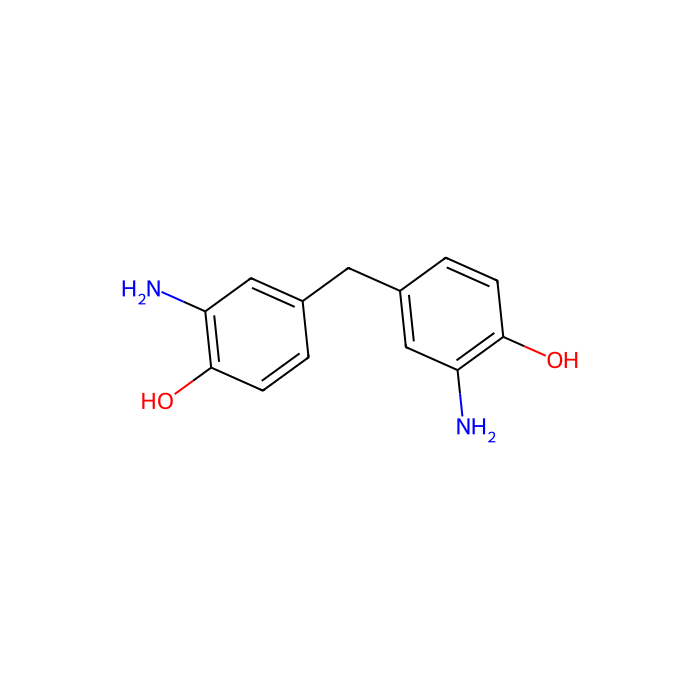
This compound belongs to the class of organic compounds known as diphenylmethanes. These are compounds containing a diphenylmethane moiety, which consists of a methane wherein two hydrogen atoms are replaced by two phenyl groups.
External Descriptors
Not available
1. Djoumbou Feunang Y, Eisner R, Knox C, Chepelev L, Hastings J, Owen G, Fahy E, Steinbeck C, Subramanian S, Bolton E, Greiner R, and Wishart DS. ClassyFire: Automated Chemical Classification With A Comprehensive, Computable Taxonomy. Journal of Cheminformatics, 2016, 8:61.
Zertifikate (CoA, COO, BSE/TSE und Analyse-Diagramm)
C of A & Other Certificates(BSE/TSE, COO):
Analytical Chart:
Chemische und physikalische Eigenschaften
Molekulargewicht
230.260 g/mol
XLogP3
1.800
Hydrogen Bond Donor Count
4
Hydrogen Bond Acceptor Count
4
Rotatable Bond Count
2
Exact Mass
230.106 Da
Monoisotopic Mass
230.106 Da
Topological Polar Surface Area
92.500 Ų
Heavy Atom Count
17
Formal Charge
0
Complexity
226.000
Isotope Atom Count
0
Defined Atom Stereocenter Count
0
Undefined Atom Stereocenter Count
0
Defined Bond Stereocenter Count
0
Undefined Bond Stereocenter Count
0
The total count of all stereochemical bonds
0
Covalently-Bonded Unit Count
1
Lösungsrechner
Molarity Calculator
Determine the necessary mass, volume, or concentration for preparing a solution.
Dilution Calculator
Determine the dilution needed to prepare a stock solution.
Reconstitution Calculator
Bewertungen
Kundenbewertungen
Application Protocols
No application protocols are provided in the Product Data for this item. The following are general, non-item-specific practices for small-molecule tool compounds.
Example workflow (general):
Prepare a concentrated stock in anhydrous DMSO (e.g., 10–50 mM). Vortex and, if needed, sonicate briefly to ensure dissolution.
Aliquot the stock into low-bind microtubes to avoid repeated freeze–thaw cycles; store at −20 °C.
For biochemical assays, dilute the stock into assay buffer to the desired working concentration, keeping final DMSO constant across controls and samples (commonly ≤0.1–1% v/v).
For cell-based assays, begin with a concentration–response (e.g., 10-point 1:3 serial dilution) and include vehicle controls. Confirm compound solubility and absence of precipitation under culture conditions.
For analytical methods (LC–MS/HPLC), prepare calibration standards by serial dilution in compatible solvent matrices; filter through 0.22 µm membranes before injection.
These steps are illustrative only and must be adapted to your assay platform and institutional SOPs. Always verify compatibility, stability, and safety using the item’s CoA/SDS.
Biological Roles
Item-specific biological targets and mechanisms are not provided in the Product Data for this SKU. The following context is general and should not be interpreted as product specifications or claims.
General context (literature; not item-specific):
Compounds sold under tool-compound names (such as “FMP-API-1”) are often used in chemical biology to probe signaling pathways, enzyme function, or protein–protein interactions in vitro and in cells. Their roles include serving as ligands, inhibitors, activators, or chemical probes for target validation and pathway mapping.
When deploying such compounds, best practice includes characterization of potency (IC50/EC50), selectivity panels, and orthogonal readouts to confirm on-target effects. Vehicle controls and counter-screens for assay interference (fluorescence quenching, redox activity, aggregation) help ensure data quality.
For cell-based work, assess permeability, efflux liability, and metabolic stability. Conduct concentration–response experiments with adequate replication and include cytotoxicity controls if relevant to the assay.
Important: No disease- or therapy-related claims are made. This item is designated for research use only (RUO). Consult primary literature and the item’s CoA/SDS for any target- or pathway-specific information relevant to your laboratory’s application.
Buffer Applications
This product is not a buffering agent and is not typically used to prepare buffer systems. Therefore, classic buffer recipes or pH ranges are not applicable.
Practical notes for assay buffers (general):
If dissolving this compound into aqueous buffer, first prepare a concentrated DMSO stock, then dilute into buffer with vigorous mixing to avoid local supersaturation and precipitation.
Verify buffer compatibility (ionic strength, pH, presence of surfactants or carrier proteins such as 0.1% BSA) empirically for your assay. Maintain a constant final vehicle percentage across all wells/samples.
Green Alternatives
This product is a discrete small-molecule research reagent rather than a process solvent or commodity reagent where greener substitutions are typically evaluated. As such, the concept of a “green alternative” is generally not applicable.
Guidance for greener practice around small-molecule tools (general):
Minimize solvent usage by preparing concentrated stocks and using microvolume dispensing.
Prefer lower-toxicity, high-purity solvents (e.g., ethanol, water-buffer mixtures) where compatible with your assay, and minimize DMF/DMAC/NEP usage in bioassays.
Implement waste segregation to reduce halogenated solvent volumes and enable appropriate disposal pathways.
Opt for room-temperature protocols and shorter incubations where scientifically justified to reduce energy consumption.
If your workflow primarily uses this compound as a spike-in or standard, the environmental impact is dominated by solvent choice and waste management rather than the compound itself. Focus green-chemistry optimization on solvent selection and process design.
Pharmaceutical Uses
No pharmacopeial designation or excipient role is provided for this item in the Product Data. This product is supplied strictly for research use only (RUO) and is not intended for human or veterinary use.
Possible laboratory roles (general; not item-specific):
Reference material in analytical method development (e.g., LC–MS/MS calibration, retention-time markers) when evaluating small-molecule impurities or metabolites in preclinical research matrices.
Internal standard or spike-in control for recovery and matrix-effect assessments in bioanalytical workflows (with appropriate validation).
Important compliance notes:
For any use in regulated environments, establish fitness-for-purpose by qualifying the material (identity, purity, stability) and documenting traceability via the CoA. Where applicable, perform in-house stability studies under your storage and handling conditions.
No claims are made regarding GMP status, compendial compliance (USP/EP/JP), residual solvents, elemental impurities, or bioburden/endotoxin. If such attributes are required, contact Aladdin Scientific for availability or consider sourcing a GMP-grade analog from a qualified supplier.
Physical Properties
Only item-specific values from Product Data may be reported; where absent, consult the CoA/SDS. Do not treat the following as product specifications.
Appearance: Not specified for this item; refer to CoA/Spec Sheet.
Melting point / Boiling point: Not specified for this item; refer to CoA/Spec Sheet.
Density, refractive index: Not specified for this item; refer to CoA/Spec Sheet.
Aqueous solubility: Not specified for this item; refer to CoA/Spec Sheet.
LogP, pKa: Not specified for this item; refer to CoA/Spec Sheet.
General handling guidance (literature/typical for small-molecule tools; not item-specific):
Stock solutions are commonly prepared in anhydrous DMSO (e.g., 10–50 mM), then diluted into assay buffers immediately before use to minimize precipitation.
For aqueous work, co-solvents (DMSO, ethanol) and surfactants (e.g., 0.01–0.1% Tween-20) are sometimes used to aid solubilization; compatibility must be verified for each assay.
If the compound is hydrophobic, warming to 37 °C and brief sonication can help dissolve; always cool to assay temperature before use.
Note: The above are general practices for small, organic bioactive reagents and are not specifications for this item. Always defer to the item’s CoA/SDS for physical property limits and suitability in specific media.
Quality and Grades
Grade/Purity: Not specified for this item; refer to CoA/Spec Sheet.
Research use note: For research use only (RUO). Not for diagnostic or therapeutic use in humans or animals.
Interpretation and practical impact:
In the absence of an explicit grade (e.g., “analytical,” “HPLC,” “bioXtra”), conformity should be established by reviewing the item’s CoA for assay purity, identifiable impurities, and any residual solvent or moisture content limits.
Chromatography suitability (e.g., LC–MS background, UV cut-off) and stabilizers are not listed. If your application is analytical (calibration standards, method development), verify UV/fluorescence background and LC–MS cleanliness via a small pilot.
If your workflows are sensitive (kinase assays, cell-based phenotypic screens), confirm batch-to-batch consistency (purity, identity by NMR/MS, water content) using the CoA, and consider incoming QC where required by your QA system.
Stabilizers and additives:
No stabilizer information is provided in the Product Data. If long-term stability is critical, consider aliquoting under inert atmosphere and minimizing freeze–thaw cycles. Confirm any stabilizer presence/absence on the CoA.
Documentation:
Lot-specific CoA and SDS are the authoritative sources for identity, purity, and safety attributes for this product.
Reaction and Applications
This item is supplied as a research-use-only small-molecule tool. It is not primarily offered as a synthetic reagent or process catalyst; therefore, classical synthetic “reaction applications” (e.g., coupling, reductions) are not typically applicable.
Typical laboratory uses (general, not item-specific):
Preparation of concentrated DMSO stocks for biochemical assays (e.g., enzymatic activity, binding, or phenotypic screens) followed by serial dilution into assay buffer or media.
Use as a reference material or spike-in standard in analytical methods (LC–MS/MS, HPLC-UV) to support quantification/retention-time matching.
Control experiments in cell-free or cell-based systems to probe pathway responses, with appropriate vehicle controls and concentration–response curves.
Practical tips (general):
Verify chemical identity and purity via the CoA prior to critical experiments. Where appropriate, confirm by in-house LC–MS.
Solubilize first in a high-strength organic solvent (commonly DMSO), then dilute into the final matrix immediately before use to minimize precipitation.
Protect from moisture and repeated warming/cooling cycles to preserve integrity; light protection may be prudent for aromatic/π-rich compounds (verify on SDS/CoA).
If you intend to use this material as a synthetic intermediate or starting material, perform a small feasibility study to confirm reactivity and stability, as no item-specific reactivity guidance is provided.
Reaction Conditions
Classical synthetic reaction conditions are not applicable for this product as listed, because it is supplied as a discrete small-molecule research tool rather than a reagent intended to mediate transformations.
Assay solution preparation (general; not item-specific):
Solvent: DMSO stock solutions (e.g., 10–50 mM) are typical for small molecules, diluted into assay buffer or culture media immediately prior to use.
Temperature: Prepare and store working solutions at room temperature or 4 °C as compatible with your assay; avoid prolonged exposure to elevated temperatures.
Light and atmosphere: If the compound is light- or air-sensitive (not specified), prepare and store solutions protected from light and under inert atmosphere as prudent practice.
Filtration: For analytical applications, pass solutions through 0.22 µm PVDF/PTFE filters to remove particulates prior to LC/HPLC injections.
These are general laboratory practices and do not constitute specifications for this SKU. Always validate conditions empirically for your specific application.
Safety and Handling
Safety data specific to this SKU are not provided in the Product Data. Always consult the product SDS for authoritative guidance.
GHS classification, signal word, pictograms, H-statements: Not specified for this item; refer to SDS.
Primary hazards: Unknown for this SKU. Treat as a potentially harmful laboratory chemical. Avoid inhalation, ingestion, skin/eye contact, and environmental release.
Personal protective equipment (PPE): Laboratory coat, safety glasses or face shield, and appropriate chemically resistant gloves (e.g., nitrile). Work in a certified chemical fume hood when handling powders/solutions or when generating aerosols.
General handling: Avoid dust generation. Use closed containers and secondary containment when transporting. Prevent contamination of water/soil drains.
Incompatibilities: Not specified for this item; check SDS. As a prudent practice, segregate from strong oxidizers/reductants and acids/bases until specific data are confirmed.
First aid (general): In case of skin/eye contact, rinse with water for ≥15 minutes. If inhaled, move to fresh air. If ingested, rinse mouth and seek medical attention. Provide SDS to responders.
Spill/leak: Absorb with inert material, collect in chemical-waste container. Decontaminate area per institutional SOPs.
Waste disposal: Dispose in accordance with local/regional regulations for organic laboratory chemicals.
Storage and transport (from Product Data):
Storage: Store at −20 °C.
Shipping: Shipped in ice chest with ice pads to maintain cold chain.
Solvent Selection
This product is a small-molecule research reagent rather than a process solvent. Solvent selection therefore focuses on dissolving the compound for assays or stock preparation.
Item-specific solubility is not provided; use the following general guidance (not specifications):
Primary solvent for stocks: DMSO (anhydrous) is commonly used for bioactive small molecules due to broad solvency and assay compatibility at ≤0.1–1% v/v final.
Alternative co-solvents: Ethanol or methanol can be used for intermediate stocks if compatible with your biology/analytical platform; DMF may be effective but is less favored in biological assays.
Aqueous buffers: Many hydrophobic compounds precipitate in aqueous buffers unless diluted from a DMSO stock; consider 0.01–0.1% non-ionic surfactant to improve tolerance, if compatible.
Filtration: 0.22 µm PVDF or PTFE syringe filters can clarify solutions prior to sensitive assays or HPLC injections.
Selection tips (general):
For enzymology/biochemical assays, prefer DMSO stocks and keep final DMSO below assay tolerance.
For LC–MS quantitation, use LC–MS grade solvents and pass solutions through low-adsorption plastics/glass.
For long incubations or live-cell work, verify vehicle effects with matched solvent controls and perform precipitation checks by visual inspection and test injections.
Storage and Reconstitution
From Product Data:
Storage conditions: Store at −20 °C.
Shipping: Shipped in ice chest with ice pads.
Reconstitution guidance (general; not item-specific):
Solvent choice: Use anhydrous DMSO (preferred for many small molecules) to prepare a concentrated stock. Alternative solvents (ethanol, methanol) may be used if compatible with downstream applications.
Concentration: Prepare a high-concentration stock (e.g., 10–50 mM) to minimize freeze–thaw and solvent load in assays. Determine the exact limit empirically; do not exceed solubility.
Technique: Allow vial to equilibrate to room temperature in a desiccator before opening to prevent moisture condensation. Add solvent, vortex thoroughly, and, if needed, sonicate briefly to aid dissolution.
Aliquoting: Dispense into single-use, low-bind microtubes. Flush headspace with inert gas if stability warrants (not specified for this item).
Storage of solutions: Store aliquots at −20 °C or per your validated stability study. Avoid repeated freeze–thaw cycles; discard aliquots exhibiting precipitation, discoloration, or unexpected LC–MS/HPLC profiles.
Important notes:
Appearance, water content, and stabilizers: Not specified for this item; refer to CoA/Spec Sheet and SDS.
Always document lot number, preparation date, solvent, and concentration on each aliquot for traceability.
Structure and Identity
Brief overview: FMP-API-1 is supplied as a research-use-only small-molecule reagent (tool compound). Item-specific structural descriptors are not provided in the Product Data for this SKU; consult the Certificate of Analysis (CoA) for definitive identifiers.
SKU: F167760
Product Name: FMP-API-1 (catalog/trade name)
CAS: 16523-28-7
PubChem CID: 138746 (catalog cross-reference)
InChIKey: 176312 (as provided; note that typical InChIKeys are 27 characters—verify on CoA)
SMILES: Not specified for this item; refer to CoA/Spec Sheet.
Molecular formula: Not specified for this item; refer to CoA/Spec Sheet.
Molecular weight: Not specified for this item; refer to CoA/Spec Sheet.
Structural features (general context):
The specific ring systems, functional groups, and stereochemistry are not provided in the Product Data. Refer to the item’s CoA/SDS for authoritative structure information.
Literature context (general, not item-specific):
The name “FMP-API-1” appears in literature as a small-molecule biochemical tool. If you require a precise structural depiction (2D/3D), verify against the CAS/CID on your internal sourcing dossier or CoA to avoid confusion with similarly named analogs.
Synthetic Utility
This SKU is offered as a research tool compound rather than a general-purpose synthetic building block. No item-specific functional group information or reactivity guidance is provided in the Product Data.
General considerations if used in synthesis (not item-specific):
Verify functional groups and stereochemistry via the CoA/SDS or independent characterization (NMR, HRMS, IR) before planning transformations.
Assess stability toward common reaction conditions (acid/base, oxidants/reductants, heat) on milligram scale before scale-up.
For late-stage diversification (if structurally amenable), consider mild cross-couplings, SNAr, or amide formations under conditions that preserve any sensitive motifs the compound may contain. Protecting groups and orthogonal chemistries should be selected only after confirming functional group inventory.
Given the absence of structural details in the Product Data, treat any synthetic deployment as exploratory and confirm feasibility with small-scale trials and analytical monitoring (LC–MS/HPLC).
Target Specificity
Item-specific biological target(s), binding mode, and selectivity panels are not provided in the Product Data for this SKU.
Verified target(s): Not specified for this item; refer to CoA/Spec Sheet and primary literature if applicable.
Assay-confirmed selectivity: Not specified for this item; refer to CoA/Spec Sheet.
Species cross-reactivity: Not applicable to small molecules in the same sense as biologics; efficacy/engagement may nonetheless be species-dependent and must be established empirically.
For rigorous research use, consult peer-reviewed sources and perform orthogonal assays to confirm target engagement and rule out off-target or assay-interference effects.
Häufig gestellte Fragen
What is the purity of this product, and how is it determined?
This product is supplied at ≥98% purity, determined by HPLC. Lot-specific values are stated on the Certificate of Analysis.
How should this product be stored?
Store at ?20 °C. Freezer storage is required to maintain the specified shelf life.
How is this product shipped?
This product ships in an insulated container with ice pads. Unpack on arrival and transfer it to the storage condition stated above.
What are the CAS number, molecular formula and molecular weight?
The CAS Number is 16523-28-7, the molecular formula is C13H14N2O2, and the molecular weight is 230.26 g/mol. InChIKey KCFVSHSJPIVGCG-UHFFFAOYSA-N.
What documentation is provided?
Available product documentation, including Certificates of Analysis (COA), Safety Data Sheets (SDS), and specification sheets, is shown in the product document area. Document availability and access follow the current site policy.
Wir verwenden Cookies, um die ordnungsgemäße Funktion der Website sicherzustellen und, soweit zulässig, Ihr Nutzererlebnis zu verbessern. Sie können Ihre Einstellungen jederzeit unter „Einstellungen“ verwalten. Weitere Informationen finden Sie in unserer Cookie-Richtlinie.
Dürfen wir Sie über Rabattaktionen informieren?
Später erinnern
Vielen Dank! Bitte überprüfen Sie Ihren E-Mail-Posteingang, um zu bestätigen.
Products are supplied to verified businesses, institutions, and qualified professionals for research and development use only. Not for use in humans, animals, diagnosis, or therapy.