QUALITÄT & REINHEITMoligand™?Moligand™ — Aladdin's line of ligands and bioactive small molecules. Use for receptor, pathway, and binding studies needing defined small-molecule tools.≥98%
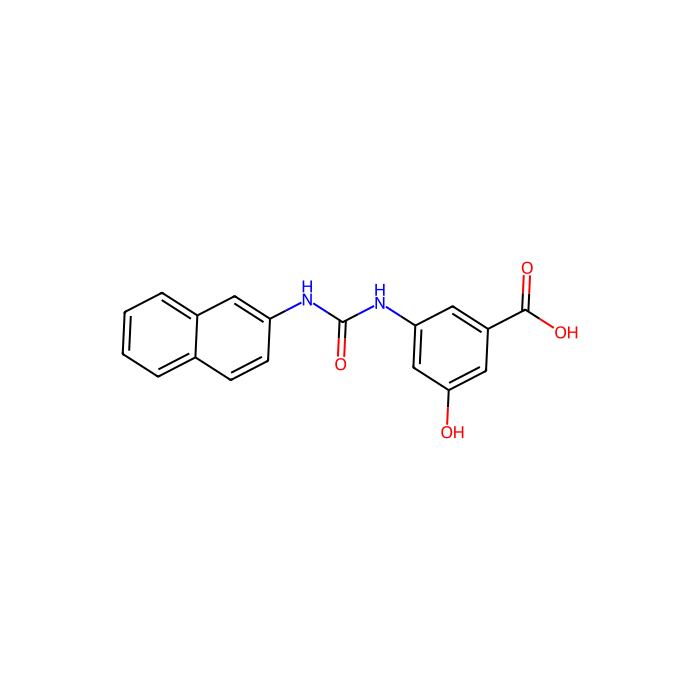
FzM1.8 comes from FzM1 and is an allosteric agonist of FZD4 with a pEC50 of 6.4. FzM1.8 promotes TCF/LEF transcriptional activity in the absence of any WNT ligand, binds to FZD4, and activates WNT/ β- The catenin pathway. FzM1.8 binds to stable FZD4, incr
Storage
Store at -20°C
Verschickt in
Ice chest + Ice pads
Dieses Produkt erfordert Kühlkettenversand. Grundversand und andere Economy-Optionen sind nicht verfügbar.
Solvent:DMSO, Max Conc. mg/mL: 32.23, Max Conc. mM: 100
Lösungsrechner
Molarity Calculator
Determine the necessary mass, volume, or concentration for preparing a solution.
Dilution Calculator
Determine the dilution needed to prepare a stock solution.
Reconstitution Calculator
Bewertungen
Kundenbewertungen
Application Protocols
No vendor-validated applications or assay protocols are provided for this specific item. The following are general, non-binding examples to help plan internal method development.
Example workflows (general):
Enzymatic inhibition assay: Prepare a 10 mM DMSO stock; perform 10-point 1:3 serial dilutions; final DMSO 0.1–0.5% v/v. Include no-compound and vehicle controls; fit dose–response with a four-parameter logistic model.
Thermal shift (DSF): 1–10 µM protein with SYPRO Orange; test compound at 10–200 µM; scan 25–95°C; calculate ΔTm vs. vehicle.
SPR binding: Immobilize target on CM5; inject 0.1–100 µM compound in running buffer with 1–2% DMSO; apply solvent correction; fit to 1:1 model as appropriate.
Cell viability or reporter assays: Maintain constant DMSO across wells; confirm absence of fluorescence/absorbance interference by spectral scans when applicable.
Important: These are illustrative only. Optimize concentrations, buffers, and readouts for your system. Refer to the CoA/Spec Sheet for any item-specific instructions if available.
Biological Roles
Item-specific biological roles or endogenous functions for FzM1.8 are not provided. No assertions should be made about targets or pathways without confirmatory data.
General considerations for small-molecule ligands in research:
Such compounds may act as binders, inhibitors, activators, or modulators in biochemical or cellular assays; however, the specific modality for FzM1.8 is not specified for this item; refer to CoA/Spec Sheet and primary data.
If the compound is to be used as a probe, establish on-target effects via genetic controls (knockdown/knockout or overexpression), orthogonal chemotypes, and dose–response with proper vehicle controls.
Rule out assay artifacts (fluorescence interference, redox activity, colloidal aggregation) using standard counterscreens and orthogonal readouts before biological interpretation.
Data management:
Record exact conditions (cell line, media, assay format, exposure time), solvent percentages, and plate maps to ensure reproducibility.
Note: No medical, diagnostic, or therapeutic claims are made. This product is for research use only, as stated in the Product Data.
Buffer Applications
This product is a small-molecule ligand entry and is not a buffering reagent. Therefore, conventional buffer formulation guidance (pKa-based recipes, buffering ranges) does not apply.
Practical notes for assay buffers (general):
Choose buffers (e.g., HEPES, PBS, Tris) based on assay pH and compatibility with detection modalities.
Maintain consistent DMSO content across wells/conditions to avoid solvent-driven artifacts.
Include surfactant at low levels (if assay permits) to minimize non-specific adhesion and colloidal aggregation.
For compound-specific stability in buffers (hydrolysis, oxidation, photolysis), consult the CoA/Spec Sheet or perform small-scale stability tests by LC–MS.
Green Alternatives
Without structure-specific solubility, a pragmatic green approach focuses on solvent and process choices surrounding FzM1.8 handling and analytics.
Stock solutions: While DMSO remains the most reliable stock solvent, consider aqueous co-solvent systems (e.g., 10–30% ethanol or propylene glycol in buffer) if the compound dissolves and the assay tolerates it.
Chromatography: Replace acetonitrile with methanol where performance allows; use volatile, low-toxicity modifiers (formic acid, ammonium formate/acetate).
Workup/extraction (if synthesis/derivatization is attempted): Favor ethyl acetate, MTBE, or cyclopentyl methyl ether (CPME) over chlorinated solvents when compatible with the compound’s stability.
Energy minimization: Store and ship efficiently (batch consolidations, minimized dry ice use where stability permits—this product specifies −20°C storage and cold shipment; follow label).
Illustrative comparison (general):
DMSO vs. DMF/NMP: DMSO offers comparable solvency with a better EHS profile; prefer DMSO when possible.
ACN vs. MeOH in LC: MeOH is greener but can change selectivity/pressure; validate gradients before adoption.
Risk–benefit notes:
Greener substitutions must not compromise compound integrity or assay fidelity. Validate any solvent switch with stability and performance checks (purity by LC–MS before/after exposure, assay Z’ factor, and signal-to-background).
Pharmaceutical Uses
No pharmacopeial status, excipient role, or formulation use is provided for this item. FzM1.8 is supplied for research use only and is not intended for human or veterinary use.
General context (non-clinical):
In early discovery, compounds like this may be used for target validation and SAR hypothesis testing in preclinical assays. Any discussion of therapeutic application would be premature and inappropriate without structure, qualification, and safety data.
If pre-formulation research is contemplated (e.g., for in vivo exploratory studies in model systems), develop bespoke vehicle systems based on measured solubility and stability (common vehicles include PEG400/saline, Captisol, or lipid-based carriers), but such use requires comprehensive internal safety review and is outside the scope of this catalog listing.
Compliance reminder:
Do not use in diagnostic procedures or clinical applications. Follow institutional and regulatory guidelines for handling investigational research compounds.
Physical Properties
Status: Item-specific physical constants are not provided in the current listing. Do not assume values for screening or formulation.
Appearance: Not specified for this item; refer to CoA/Spec Sheet.
Molecular Weight: Not specified for this item; refer to CoA/Spec Sheet.
Molecular Formula: Not specified for this item; refer to CoA/Spec Sheet.
Melting point (literature/computed): Not available; requires structure. Not specified for this item; refer to CoA/Spec Sheet.
Boiling point (literature/computed): Not available; requires structure. Not specified for this item; refer to CoA/Spec Sheet.
Density (literature): Not available; requires structure. Not specified for this item; refer to CoA/Spec Sheet.
Refractive index (literature): Not applicable unless liquid; Not specified for this item; refer to CoA/Spec Sheet.
LogP/cLogP (literature/computation): Not available; requires structure. Not specified for this item; refer to CoA/Spec Sheet.
pKa (literature/computation): Not available; requires structure. Not specified for this item; refer to CoA/Spec Sheet.
Aqueous/organic solubility: Not specified for this item; refer to CoA/Spec Sheet.
Practical guidance (general):
If the compound is intended for biochemical screening, start with a 10–50 mM DMSO master stock and perform a small-scale solubility test (serial dilution into assay buffer with 0.1–1% DMSO). Visual inspection and nephelometry can reveal precipitation.
For purification or analytics, determine mobile-phase compatibility experimentally (e.g., ACN/H2O vs MeOH/H2O with 0.1% FA or NH4OAc) and confirm stability under LC–MS conditions.
What Moligand™ typically implies (general description):
A designation for small-molecule ligands or screening compounds used in discovery workflows (assay development, target validation, SAR by catalog). It emphasizes suitability for biochemical/cellular screening rather than for use as a synthetic reagent grade per se.
Item-specific quality data:
Assay/purity, residual solvents, water/peroxides, metal content, UV cutoff, stabilizers: Not specified for this item; refer to CoA/Spec Sheet.
Practical QA/QC recommendations:
On receipt, verify identity by LC–MS (ESI+/-) against the expected [M+H]+ or [M−H]− from the CoA/SDS; confirm purity by analytical HPLC/UPLC with a standard gradient.
If the compound will be used in quantitative biology, establish extinction coefficients or use LC–MS-based quantitation for dosing accuracy.
For plate-based screening, qualify DMSO stock stability at room temperature and 4°C (e.g., 24–72 h) and under multiple freeze–thaw cycles.
Notes on grades vs. applications (general):
Compared with “AR,” “HPLC,” or “Pharm” grades, Moligand™ emphasizes biological screening utility; low UV absorbance or stringent elemental specs are not implied unless reported on the CoA.
Document lot numbers in ELN/LIMS; retain CoA attachments with assay data for auditability.
Reaction and Applications
Scope: FzM1.8 is positioned as a small-molecule ligand for research screening. No explicit synthetic or application notes are provided for this specific item; the following outlines common discovery uses.
Discovery-oriented applications (general):
Biochemical assay development: Evaluate target engagement using enzymatic readouts, fluorescence polarization (FP), thermal shift (DSF/TS), or surface plasmon resonance (SPR).
Cell-based assays: Probe pathway modulation using reporter genes, imaging, or target translocation assays, keeping DMSO ≤0.1–0.5% when feasible.
Hit validation/orthogonalization: Confirm activity using multiple assay formats to reduce false positives (redox cycling, PAINS/aggregation controls).
Mechanistic studies: Derive basic kinetic/thermodynamic parameters (IC50, Ki, KD) under controlled conditions; perform counterscreens for selectivity.
Chemoproteomics/affinity capture (if derivatizable): When functional handles are available (not specified here), immobilize on resin or append photoaffinity/biotin tags for target ID.
Analytical and practical tips:
Solubility/aggregation: Run detergent controls (0.01–0.05% Triton X-100/Tween-20 as allowed) and light-scatter checks to flag colloidal aggregators.
Redox interference: Include H2O2/metal chelator counters where redox cycling could confound readouts (general precaution).
Data integrity: Use fresh stocks; confirm concentration by UV or LC–MS; document lot and preparation date.
Note: In the absence of structure-specific information, do not ascribe a mechanism of action or target class to FzM1.8. Treat as an uncharacterized ligand pending internal profiling.
Reaction Conditions
Specific reaction conditions for FzM1.8 are not applicable as no synthetic use case or functional groups are disclosed.
General guidance (if analog synthesis or tagging of a known structure is undertaken):
Amide couplings: Typical reagents include HATU/EDC/HBTU with DIPEA or TEA in DMF/DCM. Temperatures: 0–25°C; times: 0.5–16 h. Monitor by LC–MS.
Suzuki/Miyaura cross-coupling (if aryl boron/halide present): Pd(PPh3)4 or XPhos-type catalysts; bases K2CO3/Cs2CO3; solvents dioxane/H2O or toluene/EtOH/H2O; 60–100°C.
N-alkylation/O-alkylation: Alkyl halides with base (K2CO3/Cs2CO3) in DMF/ACN; 0–60°C; watch for over-alkylation.
Click chemistry (CuAAC): CuSO4/sodium ascorbate in t-BuOH/H2O or DMSO/H2O; rt–50°C; rapid and high-yielding.
These are literature-standard conditions provided as general references, not specific recommendations for FzM1.8. Always tailor to the confirmed structure and assess stability and safety in small-scale trials before scale-up.
Safety and Handling
Regulatory note: For research use only. Always consult the SDS for definitive hazard and response guidance.
GHS Classification: Not specified for this item; refer to SDS.
Signal Word: Not specified for this item; refer to SDS.
Hazard (H) statements: Not specified for this item; refer to SDS.
Pictograms: Not specified for this item; refer to SDS.
General laboratory precautions for small molecules:
PPE: Lab coat, safety glasses, and appropriate chemically resistant gloves (e.g., nitrile). Handle powders in a fume hood or ventilated balance enclosure to avoid inhalation.
Avoid: Ingestion, inhalation of dust/aerosols, and skin/eye contact. Prevent environmental release until hazards are known.
First aid (overview): In case of contact, rinse affected area with water for 15 minutes; remove contaminated clothing. If inhaled, move to fresh air. If ingested or in case of symptoms, seek medical attention. Follow SDS-specific instructions when available.
Incompatibilities: Unknown for this item; avoid strong oxidizers/reducers and extremes of pH until stability is verified.
Thermal/photostability: Not defined; store as directed (−20°C). Protect from moisture and light as a precaution when aliquots are prepared.
Waste: Collect organic waste in halogenated/non-halogenated streams per local regulations. Decontaminate work surfaces after handling.
Shipping and storage:
Shipped on ice pads within an ice chest. Store at −20°C upon receipt. Minimize freeze–thaw by aliquoting concentrated stock solutions.
Solvent Selection
Applicability: Specific solubility data for FzM1.8 are not provided. Use a tiered solvent-screening approach typical for small-molecule library compounds.
Recommended workflow (general):
Primary stock solvent: DMSO (anhydrous) is the default for 10–50 mM master stocks due to broad solvency and assay compatibility up to 0.1–1% v/v in buffers.
Co-solvent strategies: For aqueous assays, titrate DMSO into buffer (HEPES, PBS, Tris) while monitoring turbidity. Where needed, include 0.01–0.05% nonionic surfactant (e.g., Tween-20 or Pluronic F-68) to suppress aggregation (assay permitting).
Alternative organic media: If DMSO solubility is insufficient, test DMF, NMP, or ethanol. For water-insoluble materials, pre-dissolve in DMSO/DMF, then dilute into buffer with vigorous mixing.
Chromatography solvents: For LC–MS analytics, ACN/H2O or MeOH/H2O with 0.1% formic acid (positive mode) or 5–10 mM ammonium acetate (negative mode) are broadly compatible. Adjust based on observed retention/ionization.
Polarity/miscibility context (general knowledge):
DMSO: high dielectric constant, miscible with water—maximizes solvation of polar and many nonpolar scaffolds.
DMF/NMP: strong dipolar aprotic solvents; use cautiously in biology-facing workflows due to cytotoxicity—keep final assay % minimal.
Ethanol/Isopropanol: useful for moderately lipophilic compounds; generally tolerable at low assay percentages.
Documentation:
Record exact stock concentrations and solvent compositions; confirm absence of precipitate visually or by light scatter before running assays.
Storage and Reconstitution
Storage conditions (from Product Data): Store at −20°C. Shipped in an ice chest with ice pads. For research use only.
General best practices for small-molecule ligands:
Upon receipt: Allow the sealed container to equilibrate to room temperature before opening to prevent moisture condensation. Inspect for integrity and any visible changes.
Aliquoting: If supplied as a solid, prepare small aliquots to minimize repeated vial openings. If supplied as a solution, subdivide into single-use aliquots in low-bind tubes.
Stock preparation: Dissolve in anhydrous DMSO to 10–50 mM unless solubility dictates otherwise. Filter (0.22 µm PTFE) if particulate is observed and the compound is known to be filter-stable.
Freeze–thaw management: Store aliquots at −20°C (or colder if specified on the CoA). Avoid repeated freeze–thaw; thaw just before use and keep on ice during assay setup.
Light/moisture/air: In the absence of stability data, protect from light, moisture, and prolonged exposure to air. Consider argon/nitrogen headspace for long-term storage of air- or moisture-sensitive compounds (unknown for this item).
Working solutions: Prepare immediately before use in assay buffer; verify clarity after dilution. Discard working solutions at end of day unless stability is established.
Item-specific parameters such as exact solubility, stability limits, and reconstitution solvents beyond DMSO are not specified for this item; refer to CoA/Spec Sheet.
Structure and Identity
Brief overview: FzM1.8 is listed as a small-molecule library/ligand entry (Moligand). Item-specific structural identifiers are limited in the current record.
Product Name: FzM1.8 (SKU: F288778)
CAS: 2204290-85-5 (from Product Data)
PubChem CID: 137553171 (from Product Data)
InChIKey: 417412 (as provided; full-length InChIKey not specified in current record)
SMILES: Not specified for this item; refer to CoA/Spec Sheet.
Molecular Formula: Not specified for this item; refer to CoA/Spec Sheet.
Molecular Weight: Not specified for this item; refer to CoA/Spec Sheet.
Structural features (general guidance):
The precise 2D/3D structure, ring systems, stereochemistry, and functional groups are not disclosed in the provided data. For unambiguous structure representation (e.g., to build screening libraries or register the compound in ELN/LIMS), obtain the official SMILES/InChI from the CoA/Spec Sheet or the vendor SDS.
Without a structure, cheminformatic properties (cLogP, TPSA, HBD/HBA counts) and substructure alerts cannot be computed. If you have access to the PubChem CID record, export canonical SMILES and InChI to ensure consistency across procurement lots.
Notes for identity verification (general best practice):
Cross-check CAS, CID, and (full) InChIKey across databases; verify batch identity by LC–MS (accurate mass), 1H/13C NMR, and, where relevant, chiral HPLC.
For library plating, assign a unique internal compound code and barcode linked to CAS/CID and the vendor lot to preserve traceability.
Synthetic Utility
This entry is positioned as a screening ligand rather than a synthetic building block; no functional-group information is provided. Consequently, specific transformations cannot be recommended for this item.
General strategies if derivatization is pursued (structure-dependent):
Handle discovery: Identify positions tolerant to modification via SAR; introduce linkers for immobilization (e.g., PEGylated amide/urea/ether linkers) if the scaffold contains a modifiable handle (amine, carboxyl, phenol, halide). Not specified for this item; refer to structure.
Probe development: Append photoaffinity (diazirine, aryl azide) and enrichment tags (biotin, alkyne/azide for CuAAC) through minimal, metabolically stable linkers.
Isosteric replacement: Explore bioisosteres (e.g., amide→triazole, carboxylic acid→tetrazole) to fine-tune potency, pKa, and ADME—applicable only when corresponding groups are present.
Analytical support:
Employ LC–MS/MS for rapid analog screening; validate purity (> assay-acceptable level per internal SOP) by UPLC with orthogonal detection (UV/ELSD/MS) before biological testing.
Caveat:
Do not infer reactivity or feasible reactions for FzM1.8 without confirmed structural information. All synthetic considerations above are generic and contingent on the compound’s actual functional groups.
Target Specificity
No target, selectivity profile, or mechanistic annotation is provided for FzM1.8 in the Product Data.
Do not attribute activity toward any specific protein, pathway, or receptor without primary data.
If target deconvolution is pursued, consider orthogonal strategies: thermal proteome profiling (TPP/CETSA), DARTS, SPROX, photoaffinity labeling (if a photoprobe is synthesized), or affinity enrichment with chemoproteomic LC–MS/MS.
Establish specificity by comparing activity across close homologs, off-target panels, and by testing inactive analogs/negative controls where available.
All statements above are general guidance and not item-specific claims.
Häufig gestellte Fragen
What is the purity of this product?
This product is supplied at ≥98% purity (chemical assay). Lot-specific values are stated on the Certificate of Analysis.
What is Moligand??
Moligand? is one of Aladdin Scientific's premium product lines, formulated for high-purity applications across multiple workflows. Compared to standard grades in the same workflow, Moligand? products typically offer tighter specifications, more rigorous QC, and stronger lot-to-lot consistency.
How should this product be stored?
Store at ?20 °C. Freezer storage is required to maintain the specified shelf life.
How is this product shipped?
This product ships in an insulated container with ice pads. Unpack on arrival and transfer it to the storage condition stated above.
What are the CAS number, molecular formula and molecular weight?
The CAS Number is 2204290-85-5, the molecular formula is C18H14N2O4, and the molecular weight is 322.32 g/mol. InChIKey XGNNCRZDDAJBFU-UHFFFAOYSA-N.
What documentation is provided?
Available product documentation, including Certificates of Analysis (COA), Safety Data Sheets (SDS), and specification sheets, is shown in the product document area. Document availability and access follow the current site policy.
Benötigen Sie Hilfe bei der Auswahl der Qualität?
Unser Leitfaden zur Qualitätsauswahl behandelt Reinheit, Stabilisatorstatus und Anwendungseignung für alle Varianten in unserem Katalog.
Wir verwenden Cookies, um die ordnungsgemäße Funktion der Website sicherzustellen und, soweit zulässig, Ihr Nutzererlebnis zu verbessern. Sie können Ihre Einstellungen jederzeit unter „Einstellungen“ verwalten. Weitere Informationen finden Sie in unserer Cookie-Richtlinie.
Dürfen wir Sie über Rabattaktionen informieren?
Später erinnern
Vielen Dank! Bitte überprüfen Sie Ihren E-Mail-Posteingang, um zu bestätigen.
Products are supplied to verified businesses, institutions, and qualified professionals for research and development use only. Not for use in humans, animals, diagnosis, or therapy.

 E2626159