≥98% für empfindliche chromatographische und analytische Workflows, die minimale Basislinieninterferenzen erfordern.
🌡
Lagerung & Versand
Store at -20°C,Desiccated Versand Ice chest + Ice pads. Genaue Spezifikationen finden Sie im chargenspezifischen COA.
📋
Qualitätsdokumente
SDS, COA, Datenblatt und Spezifikationsblatt stehen zum Download bereit. Chargenspezifische COA über Chargennummernsuche abrufbar.
📚
Literaturbeleg
In 0 peer-reviewten Publikationen zu Chromatographie, organischer Synthese und Kreuzkupplungsreaktionen zitiert.
Spezifikationen
Product Name
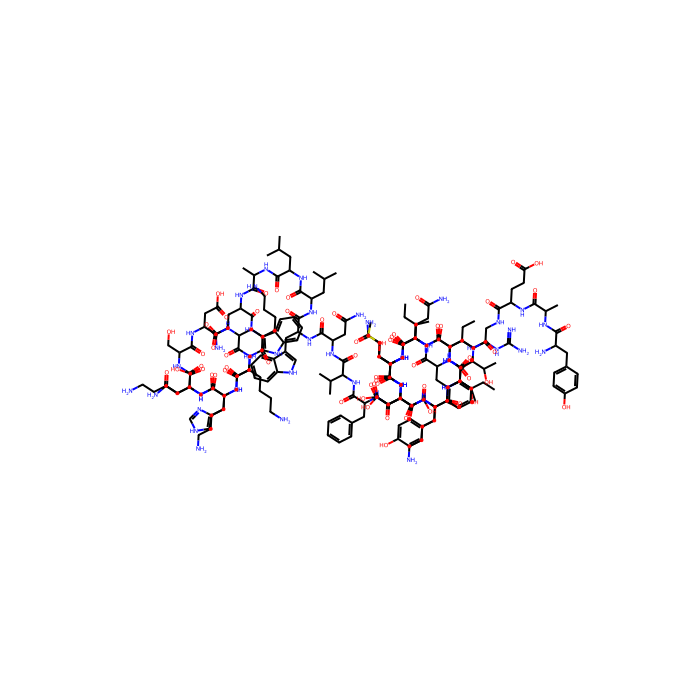
GIP(1-39) TFA, CAS No.725474-97-5(free)
Synonyme
Gastric Inhibitory Polypeptide (1-39)
Spezifikationen & Reinheit
≥98%
Biochemische und physiologische Mechanismen
Endogenous truncated form of the incretin hormone GIP. More potent at stimulating glucose-dependent insulin secretion from rat pancreaticβ-cells than GIP.
Sequenz
YAEGTFISDYSIAMDKIRQQDFVNWLLAQKGKKSDWKHN
Aktionsart
AGONIST
CAS
725474-97-5(free)
Molekültyp
Peptide
Lagerung und Versand
Storage
Store at -20°C,Desiccated
Verschickt in
Ice chest + Ice pads
Dokumentation
📋 Sicherheitsdatenblatt (SDS)
Umfassendes Dokument zu Gefahren, Handhabung, Lagerung und Einhaltung regulatorischer Vorschriften.
Zertifikate (CoA, COO, BSE/TSE und Analyse-Diagramm)
C of A & Other Certificates(BSE/TSE, COO):
Analytical Chart:
Lösungsrechner
Molarity Calculator
Determine the necessary mass, volume, or concentration for preparing a solution.
Dilution Calculator
Determine the dilution needed to prepare a stock solution.
Reconstitution Calculator
Bewertungen
Kundenbewertungen
Application Protocols
Not specified for this item; refer to CoA/Spec Sheet and SDS. No internally validated protocols are provided with this listing.
General reminder: tailor assay conditions (ligand concentration range, buffer composition, incubation time/temperature) to your specific platform and controls.
Biological Roles
Literature background (for context only; not product specifications):
GIP (glucose-dependent insulinotropic polypeptide) is a 42–amino-acid incretin peptide hormone secreted by K-cells of the small intestine. It signals through the GIP receptor (GIPR), a class B GPCR, to elevate intracellular cAMP in responsive cells.
The N-terminal region is critical for receptor activation in class B GPCR peptides. Truncations such as GIP(1–39) are commonly used to interrogate the contribution of C-terminal residues to receptor binding, bias, and efficacy.
Downstream signaling: canonical coupling to Gs leads to cAMP production; secondary pathways can include PKA/EPAC activation and ensuing phosphorylation cascades (e.g., CREB). Bias and pathway selectivity can be probed using fragment peptides.
Proteolysis: DPP-4 rapidly clips certain incretin peptides; the susceptibility and kinetics for GIP fragments are studied to guide stabilization strategies (e.g., N-terminal modifications or noncanonical residues).
Cross-reactivity studies: comparative assays with GLP-1 and other class B GPCR ligands help map sequence determinants of receptor specificity.
This background is provided to guide experimental design in receptor pharmacology, signaling, and enzymology. No clinical or diagnostic claims are implied. Use strictly for laboratory research.
Buffer Applications
This item is not a buffering reagent. However, successful use in biochemical assays depends on appropriate buffer systems that preserve peptide integrity and receptor function (literature guidance):
Common assay buffers: HEPES- or PBS-based buffers at pH 7.2–7.4, supplemented with 0.1% BSA to reduce adsorption and 0.5 mM Mg2+/1 mM Ca2+ when using live cells.
Stock preparation: dissolve at 0.5–5 mg/mL in sterile water with 0.1–1% acetic acid, then dilute into assay buffer. Adjust pH to physiological range after initial dissolution if needed.
Low-concentration handling: include carrier protein (0.1% BSA) or 0.01–0.05% polysorbate-20 to mitigate surface losses in plasticware.
Filter sterilization: if required, use low-protein-binding 0.22 µm filters; pre-rinse with buffer containing carrier to minimize adsorption.
If a validated buffer recipe is required for your specific assay platform, consult relevant method literature or your institutional SOPs.
Green Alternatives
Although this is a peptide reagent rather than a volatile solvent, there are sustainability considerations around solvents and counterions during preparation and use.
Greener choices (literature/practice):
Prefer aqueous buffers over organic cosolvents whenever feasible. Start dissolution with a minimal amount of acidified water instead of DMSO; only use DMSO if required for solubility.
Counterion considerations: TFA is persistent and can impact downstream analytics. When appropriate, exchange to acetate or chloride via desalting or RP-HPLC using formic/acetic acid mobile phases (reduced environmental persistence).
Minimize single-use plastics by employing glass vials for stock solutions and low-retention tips/tubes to reduce peptide waste.
Optimize concentration to reduce repeated freeze–thaw and associated disposables.
Comparison (general):
TFA vs acetate counterion:
Environmental persistence: TFA > acetate.
MS compatibility: TFA suppresses ESI more than acetate/formate.
Bioassay impact: Acetate/chloride often preferred when TFA sensitivity is a concern.
Waste handling:
Collect TFA-containing aqueous waste separately if institutional guidelines require; neutralize acids before disposal when permitted.
Avoid chlorinated organic solvents for routine handling; they offer no benefit for this hydrophilic peptide.
Pharmaceutical Uses
No pharmacopeial or clinical-use specifications are provided for this research reagent. For research use only.
Literature/formulation context (non-clinical):
Reference standard: can serve as a control peptide in preclinical receptor pharmacology, stability, and formulation screening studies (e.g., evaluating pH, excipients, and ionic strength effects on peptide integrity).
Excipient interactions: screening against common peptide excipients (trehalose, mannitol, arginine, polysorbates) to reduce aggregation/adsorption during processing and storage.
Device/material compatibility: assessment of peptide recovery from syringes, filters, and tubing; selection of low-binding materials (Cyclic Olefin Polymer vials, silicone-free syringes) in development environments.
Counterion exchange studies: evaluate impact of TFA vs acetate/chloride on solubility, stability, and analytical performance.
No claims of suitability for human or veterinary use are made or implied. Not formulated to any pharmacopeial monograph.
Physical Properties
Item-specific numerical specifications are not provided; consult the CoA/Spec Sheet for definitive values.
General/literature expectations for a 39-mer peptide TFA salt:
Physical state: off-white to white amorphous solid or lyophilized powder (typical for peptides; literature).
Solubility (literature):
Water/buffers: generally soluble; initial dissolution often improved with 0.1–1% acetic acid or 0.01–0.1 M HCl to reach 0.1–1 mg/mL, then adjust to desired buffer.
DMSO: useful for preparing concentrated stocks for hydrophobic sequences; subsequent dilution into aqueous media recommended.
Alcohols: limited and sequence-dependent; not preferred for bioassays.
pH stability (literature): peptides are typically most stable as frozen acidic aqueous aliquots (pH 3–5) or as dry solids under inert, desiccated conditions.
Hygroscopicity: peptides can be hygroscopic and may absorb atmospheric moisture and CO2; handle quickly at ambient.
LogP/partitioning: not applicable; highly polar, macromolecular character (literature).
BP/MP/density/refractive index: not meaningful for macromolecular lyophilizates; not typically reported for peptides.
Note: Actual solubility and stability are sequence- and lot-dependent. Always validate solubility in your intended vehicle and verify concentration by UV at 205–215 nm or by amino acid analysis when critical (literature guidance).
Quality and Grades
Grade/purity: Not specified for this item; refer to CoA/Spec Sheet.
Context and implications for peptide TFA salts (general guidance):
Peptide grade terminology (literature):
Crude: minimal purification; suitable for initial screening where impurities are tolerable.
Desalted: major small-molecule impurities and salts reduced.
Purified (e.g., >90–98% by HPLC): appropriate for most biochemical assays and receptor studies.
MS-verified/sequence-confirmed: identity supported by MS and, when stated, amino acid analysis.
TFA counterion: Most RP-HPLC peptide purifications use TFA, yielding TFA salts. TFA can affect some bioassays and MS sensitivity. If counterion content matters, consider counterion exchange (to acetate or chloride) via preparative RP-HPLC or lyophilization from HCl/HOAc buffers (literature practice).
Analytical package: For rigorous work, request CoA with: HPLC purity trace (215–220 nm), MS data, net peptide content (NPC), water/ash content, and counterion analysis when available.
Lot-to-lot consistency: Peptides can show small variations in residual solvents, TFA content, and NPC; normalize dosing by molar concentration adjusted for NPC where data are provided (literature).
Always defer to the item’s CoA/specification sheet for actual grade, purity, and analytical results of this SKU.
Reaction and Applications
This product is primarily a bioactive research peptide rather than a traditional small-molecule reagent. Its applications are biochemical and pharmacological rather than synthetic chemistry.
Research applications (literature/general):
Receptor pharmacology: use as an agonist/ligand in in vitro studies of the GIP receptor (GIPR, a class B GPCR), including binding assays and cAMP accumulation readouts in transfected cells or native systems.
Structure–activity relationships (SAR): compare signaling efficacy/potency of the 1–39 fragment versus longer or modified GIP analogs; probe the role of C-terminal residues in receptor engagement.
Signal transduction: quantify downstream PKA/EPAC activation, CREB phosphorylation, or cAMP reporter responses upon GIPR activation.
Peptidase susceptibility studies: assess DPP-4 and other protease cleavage patterns on the N-terminal region; evaluate stabilization strategies (e.g., N-terminal modifications) using GIP(1-39) as reference.
Analytical standards: calibrant/control in LC–MS peptide mapping and immunoassay spike/recovery experiments.
Practical tips (literature):
Prepare fresh working solutions in compatible buffer; keep on ice during use.
Include carrier protein or surfactant to reduce low-concentration adsorption losses.
Validate concentration by UV at 205–215 nm using sequence-derived extinction or by amino acid analysis when precision is critical.
Note: No medical or clinical claims are made; all uses are for laboratory research only.
Reaction Conditions
Traditional chemical reaction conditions (solvent, catalyst, temperature) are not applicable to this peptide as a synthetic reagent. The following literature-based conditions relate to its use in biochemical assays and analytical workflows:
Ligand–receptor assays: incubate cells expressing GIPR with serial dilutions (pM–nM) in HBSS or HEPES-buffered saline (pH 7.2–7.4) containing 0.1% BSA; measure cAMP after 5–30 min at 20–37°C depending on assay platform. Optimize time/temperature per cell line and endpoint.
Binding assays: perform equilibrium binding at 4–25°C to minimize internalization; include protease inhibitors where appropriate.
Proteolysis/stability: incubate peptide in serum or buffer with defined proteases at 25–37°C; sample over time; quench with acid (e.g., 1% formic acid) and analyze by LC–MS.
Stock/working solutions: prepare concentrated stock (e.g., 0.5–5 mg/mL) in acidified water or DMSO; dilute into assay buffer immediately before use. Keep final DMSO low (≤0.1–0.5%).
All values above are general guidance from literature and should be optimized empirically for each experimental system. No specifications are implied for this catalog item.
Safety and Handling
GHS classification: Not specified for this item; refer to SDS.
Signal word / H-statements / pictograms: Not specified for this item; refer to SDS.
General laboratory safety for research peptides and TFA salts (literature/best practice):
Avoid inhalation of dust and contact with skin/eyes. Work in a clean area; weigh in a fume hood if powdering is possible.
PPE: lab coat, nitrile gloves, safety glasses. Change gloves frequently to minimize peptide adsorption and contamination.
TFA considerations: the trifluoroacetate counterion renders solutions acidic; avoid contact with bases and carbonate-rich solutions that may outgas CO2. Neutralization during buffer exchange may release small amounts of TFA; handle with adequate ventilation.
Incompatibilities: strong oxidants; avoid prolonged exposure to elevated temperature, light, or moisture, which can promote hydrolysis/deamidation.
First aid (overview; defer to SDS):
Skin/eye contact: rinse with water for ≥15 min; remove contaminated clothing; seek medical evaluation if irritation persists.
Inhalation: move to fresh air; seek medical attention if symptoms occur.
Ingestion: rinse mouth; do not induce vomiting; seek medical attention.
Spill response: gently sweep/HEPA vacuum to minimize dust; dampen with water/ethanol if appropriate; dispose per institutional guidelines.
For research use only. Not for diagnostic, therapeutic, or human/animal consumption.
Solvent Selection
GIP(1-39) TFA is a polar, water-compatible peptide. Solvent choice should balance rapid dissolution, preservation of bioactivity, and compatibility with the intended assay.
Primary solvents (literature):
Ultrapure water or buffer: often dissolves readily up to 0.1–1 mg/mL. For difficult sequences, first wet with a small volume of 0.1–1% acetic acid or 0.01–0.1 M HCl before dilution.
DMSO: enables concentrated stocks (e.g., 5–20 mg/mL) for hydrophobic sequences; keep final DMSO in assays ≤0.1–0.5% to avoid biological effects.
Dilute NH4OH (0.01–0.1 N): occasionally helps highly acidic peptides; typically not required for GIP-like sequences.
Miscibility/compatibility (literature):
Compatible with PBS, HBSS, and most physiological buffers once initially dissolved. Avoid strong bases and prolonged high-pH exposure (backbone hydrolysis, deamidation risk).
Minimize adsorption: include 0.1% BSA or 0.01–0.1% polysorbate when working at low nM concentrations in plasticware.
Practical selection tips:
Start with acidified water to make a clear concentrate (e.g., 1 mg/mL), then back-dilute into assay buffer.
Filter sterilize (0.22 µm) only if necessary; peptides can adsorb to filters—recover by pre-wetting with buffer containing carrier protein.
Comparison (literature):
Water/acidified water: best for bioassays; gentle on peptide structure.
DMSO: best for stock stability/solubility; watch for assay artifacts.
Alcohols: generally avoided due to denaturation/limited solubility.
Storage and Reconstitution
Item-specific storage/shipping:
Storage Conditions: Store at -20°C, desiccated (per product data). Protect from light and moisture.
Reconstitution (general best practices for peptides; literature):
Upon arrival, allow the sealed container to equilibrate to room temperature in a desiccator before opening to prevent condensation.
Spin down briefly to collect material. Reconstitute with sterile water or buffer. For rapid dissolution, first add a minimal volume of 0.1–1% acetic acid or 0.01–0.1 M HCl, then dilute to desired concentration with assay buffer.
Typical stock concentrations: 0.5–5 mg/mL depending on solubility and intended use. Verify concentration by UV (205–215 nm) or amino acid analysis if critical.
Aliquoting: divide into single-use portions to avoid repeated freeze–thaw. Use low-binding tubes; include carrier protein (e.g., 0.1% BSA) for low-nanomolar work.
Storage of solutions: short-term (≤24–48 h) at 4°C; longer-term at -20 to -80°C. Avoid multiple freeze–thaw cycles and exposure to basic pH.
If the CoA specifies net peptide content or counterion content, adjust dosing to molar equivalents accordingly. For research use only.
Structure and Identity
GIP(1-39) TFA is the trifluoroacetate salt of the N-terminal 39–amino-acid fragment of glucose-dependent insulinotropic polypeptide (GIP), supplied for research use.
SKU: G286726
CAS: 725474-97-5 (free base/peptide; literature identifier for the peptide without counterions)
Category: Small molecules and compound libraries (peptide hormone fragment)
Counterion: Trifluoroacetate (TFA), typical of TFA-salt peptide isolations
Molecular formula: Not specified for this item; refer to CoA/Spec Sheet.
Molecular weight: Not specified for this item; refer to CoA/Spec Sheet.
SMILES: Not specified for this item; refer to CoA/Spec Sheet.
InChIKey: Not specified for this item; refer to CoA/Spec Sheet.
Structural features (general, literature-based):
Linear peptide comprising residues 1–39 from the N-terminus of human GIP. The full-length human GIP is 42 residues; this truncation lacks the C-terminal 3 residues (literature).
Functional groups: multiple amide bonds (peptide backbone), side-chain functionalities including basic (Lys/Arg), acidic (Asp/Glu), polar (Ser/Thr/Gln/Asn), and hydrophobic (Leu/Ile/Val/Phe) residues (typical of GIP-family peptides; literature).
Stereochemistry: L-amino acids, all centers defined by natural proteinogenic configuration (literature).
2D description: A single unbranched polypeptide chain with an N-terminal free amine (unless otherwise protected; typical peptide TFA salt) and a C-terminal carboxylate/acid, with TFA counterions associated with protonated basic sites (literature).
Synthetic Utility
As a bioactive peptide, GIP(1-39) TFA is not typically used as a building block in organic synthesis. However, it has utility in analytical and methodological development (literature):
Analytical standards: use as a calibrant for LC–MS peptide mapping, retention-time indexing on RP-HPLC, and verifying peptide enrichment workflows.
Protease assay substrate: evaluate site-specific cleavage patterns and kinetics for enzymes that target class B GPCR peptide ligands (e.g., DPP-4), informing proteolysis-resistant analog design.
Conjugation method development: optimization of mild bioconjugation chemistries (e.g., NHS-ester labeling of Lys, maleimide chemistry if a Cys is present in a variant sequence) on model peptides before application to scarce targets. Note: sequence-specific availability of reactive residues must be confirmed for the actual lot/sequence in use.
Solid-phase synthesis benchmarking: comparative studies on purification and counterion exchange protocols using a medium-length, moderately polar peptide.
For classic small-molecule synthetic transformations (e.g., cross-couplings, Grignard), this reagent is not applicable. Focus on bioanalytical and peptide-chemistry method development instead.
Target Specificity
Not specified for this item; refer to catalog documentation. No antigen/epitope/clone data apply, as this is a peptide reagent rather than an antibody or protein capture reagent.
Häufig gestellte Fragen
What is the purity of this product?
This product is supplied at ≥98% purity (chemical assay). Lot-specific values are stated on the Certificate of Analysis.
How should this product be stored?
Store at ?20 °C, desiccated. Keep the container tightly closed with desiccant — the material is moisture-sensitive.
How is this product shipped?
This product ships in an insulated container with ice pads. Unpack on arrival and transfer it to the storage condition stated above.
What are the CAS number, molecular formula and molecular weight?
The CAS Number is 725474-97-5(free).
What documentation is provided?
Available product documentation, including Certificates of Analysis (COA), Safety Data Sheets (SDS), and specification sheets, is shown in the product document area. Document availability and access follow the current site policy.
Wir verwenden Cookies, um die ordnungsgemäße Funktion der Website sicherzustellen und, soweit zulässig, Ihr Nutzererlebnis zu verbessern. Sie können Ihre Einstellungen jederzeit unter „Einstellungen“ verwalten. Weitere Informationen finden Sie in unserer Cookie-Richtlinie.
Dürfen wir Sie über Rabattaktionen informieren?
Später erinnern
Vielen Dank! Bitte überprüfen Sie Ihren E-Mail-Posteingang, um zu bestätigen.
Products are supplied to verified businesses, institutions, and qualified professionals for research and development use only. Not for use in humans, animals, diagnosis, or therapy.