GRADE & PURITYMoligand™?Moligand™ — Aladdin's line of ligands and bioactive small molecules. Use for receptor, pathway, and binding studies needing defined small-molecule tools.10mM in DMSO
Moligand™, 10mM in DMSO Moligand™ for sensitive chromatographic and analytical workflows requiring minimal baseline interference.
🌡
Storage & shipping
Store at -80°C Ships Dry ice packs + Cold packs Check lot-specific COA for exact specifications.
📋
Quality documents
SDS, COA, datasheet, and spec sheet available for download. Lot-specific COA accessible via lot number lookup.
📚
Literature proof
Cited in 0 peer-reviewed publications across chromatography, organic synthesis, and cross-coupling reactions.
Übersicht
Information
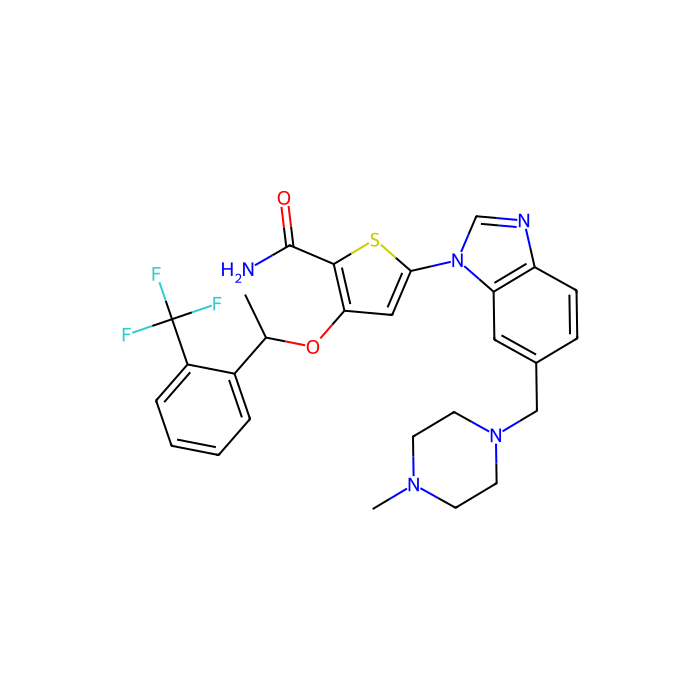
GSK461364 (GSK461364A) inhibits purifiedPlk1withKiof 2.2 nM in a cell-free assay. It is more than 1000-fold selective against Plk2/3. Phase 1. In vitro
GSK461364 inhibits cancer cell line proliferation from multiple origins with minimal toxicity in nondividing human cells. RNA silencing of WT p53 increases the antiproliferative activity of GSK461364. As many cancer therapies tend to be more effective in p53 WT patients, the higher sensitivity of p53-deficient tumors toward GSK461364 could potentially offer an opportunity to treat tumors that are refractory to other chemotherapies as well as early line therapy for these genotypes. GSK461364 is a thiophene amide that inhibits purified Plk1 enzyme in vitro with a Ki of 2 nM and has >100-fold selectivity for Plk1 compared with Plk2 and Plk3. GSK461364 is a potent inhibitor of cell proliferation causing 50% growth inhibition (GI50) below 100 nM in most of the cell lines tested with limited toxicity against human nonproliferating cells. Inhibition of cell cycle progression is concentration dependent with initial delay at G2 phase at high GSK461364 concentrations and arrest at M phase at lower concentrations. Currently, GSK461364 is in a dose-escalation first-time-in-human trial. Cell lines with mutations in the TP53 gene tended to be more sensitive to GSK461364, and that inhibiting the p53 response by RNA silencing confers increased sensitivity in some p53 wild-type (WT) cells. Furthermore, these more sensitive cell lines also have increased levels of chromosome instability, a characteristic associated with TP53 mutations. In preclinical testing, GSK461364 shows antiproliferative activity against multiple (>120) tumor cell lines and potently inhibits the proliferation of greater than 83% and 91% of these cell lines, with IC50 values lower than 50 and 100 nM, respectively.
In vivo
Cell culture growth inhibition by GSK461364 can be cytostatic or cytotoxic but leads to tumor regression in xenograft tumor models under proper dose scheduling. GSK461364 shows clear antitumor activity in human tumor xenograft models. GSK461364 shows a dose-dependent mitotic arrest in mouse xenografts, which correlates with effects on tumor growth. Intraperitoneal administration of GSK461364 causes regression or tumor growth delay in different xenograft models, including Colo205 xenografts. Suppression of Plk1 in vivo by using GSK461364 results in mitotic arrest with aberrant mitotic figures consisting of monopolar or collapsed mitotic spindles. Cell Data
Determine the necessary mass, volume, or concentration for preparing a solution.
Dilution Calculator
Determine the dilution needed to prepare a stock solution.
Reconstitution Calculator
Bewertungen
Kundenbewertungen
Application Protocols
Only information from the provided Product Data may be included here.
Tested applications (e.g., WB, IHC, IF, enzymatic assays), recommended working concentrations, and positive controls: Not specified for this item.
General usage notes (non-item-specific)
For biochemical assays: Prepare serial dilutions from a validated DMSO stock; include solvent-only controls and replicate wells. Define assay windows with known positive/negative controls as appropriate to your target class.
For cell-based assays: Titrate across a broad concentration range (e.g., 8–12 points, half-log spacing) to establish concentration–response curves; monitor solvent tolerance of your cell system.
Refer to your lab’s SOPs and the CoA/Spec Sheet for any item-specific recommendations when available.
Biological Roles
Item-specific biological target details are not provided in the product data for this listing. The following is general context for small-molecule research probes and should not be construed as a specification for this item.
General context (literature)
Small-molecule tools like GSK461364 are commonly used to interrogate protein kinase signaling and cell-cycle regulation in biochemical and cellular models. Such compounds typically act via reversible, ATP-competitive binding within the kinase catalytic domain, enabling modulation of phosphorylation-dependent processes.
In target-validation workflows, these molecules support exploration of pathway dependencies, synthetic lethality hypotheses, and mechanism-of-action studies through concentration–response experiments, time-course analyses, and rescue assays.
Off-target assessment and selectivity profiling against broad enzyme/receptor panels are often undertaken to build a more complete bioactivity fingerprint. Results are highly compound- and lot-dependent and should be sourced from your own testing or the literature.
Good practices
Confirm identity, purity, and stock concentration before biological use. Employ orthogonal assay formats (biochemical vs. cellular) and include solvent controls to deconvolute assay artifacts.
If using in complex matrices (e.g., serum-containing media), account for protein binding and potential adsorption to plastics; preconditioning plates and adding carrier proteins can mitigate losses.
Note
For precise biological targets, potencies, and selectivity data for the exact lot supplied, consult the CoA/Spec Sheet or generate in-house characterization data.
Buffer Applications
This product is not a buffering agent. It does not define or maintain pH in the way classical buffers (e.g., HEPES, Tris, phosphate) do.
Practical guidance (general)
When preparing assay-ready solutions, dissolve the compound in DMSO to make a concentrated stock, then dilute into your chosen assay buffer (e.g., HEPES-, Tris-, or phosphate-buffered saline systems) while keeping final DMSO at a level compatible with the assay (often ≤0.5–1% v/v).
If solubility is challenged upon dilution, consider adding a minimal amount of co-solvent, non-ionic surfactant (e.g., 0.01–0.05% Tween 80), or carrier protein (e.g., 0.1% BSA) as permissible for your assay.
For information on pKa or ionization that could influence buffer choice
Not specified for this item; refer to CoA/Spec Sheet or determine experimentally.
Green Alternatives
Because this product is a discrete bioactive compound rather than a solvent or reagent used in bulk, “green alternative” considerations focus on handling solvents and processes used with it rather than substitution of the compound itself.
Greener handling strategies (general)
Prefer DMSO over DMF/NMP for stock solutions when compatible with your assays, due to lower toxicity and better biodegradation profile.
Minimize solvent volumes and employ microscale assay formats (384/1536-well plates) to reduce chemical footprint.
Use aqueous buffers with minimal organic content for dilutions where solubility allows; consider surfactants (at very low %), cyclodextrins, or PEG-400 to enable lower organic content.
Implement solvent recycling for LC/UPLC method development where feasible and choose gradient systems that minimize acetonitrile usage (e.g., methanol–buffer if chromatographically acceptable).
Illustrative comparison (general)
DMF/NMP: strong solvency, higher worker exposure concerns; avoid where possible in biological labs.
DMSO: strong solvency, broadly accepted in bioassays; handle with care due to skin permeability.
Methanol/ethanol: greener and volatile; limited solvency for many hydrophobic inhibitors; good for rinsing and plate washing.
Operational tips
Aliquot to reduce waste from expired, repeatedly thawed stocks.
Adopt sealed, low-dead-volume containers and cold-chain logistics to enhance longevity and reduce discard rates.
Pharmaceutical Uses
This product is supplied strictly for research use and is not intended for human or veterinary administration, diagnostic procedures, or clinical applications.
General formulation context (non-clinical research)
In preclinical research settings, small-molecule tool compounds are sometimes formulated for in vivo exploratory studies using vehicles such as aqueous buffers with co-solvents (e.g., DMSO, PEG-400, ethanol) and/or surfactants to achieve acceptable solubility and exposure. Selection depends on compound-specific properties and institutional animal care guidelines.
For in vitro studies, DMSO stock solutions are commonly diluted into cell culture media or assay buffers, maintaining low final DMSO percentages to limit solvent-related effects.
Compliance and documentation
No pharmacopeial monograph, excipient status, or GMP manufacturing claims are made for this item.
Any consideration of formulation or dosing in regulated studies requires material of appropriate quality grade, documentation, and regulatory review, which are outside the scope of this research-use-only product.
Not specified for this item; refer to CoA/Spec Sheet or generate internal formulation data.
Physical Properties
Item-specific physico-chemical data
Appearance: Not specified for this item; refer to CoA/Spec Sheet.
Melting point: Not specified for this item; refer to CoA/Spec Sheet.
Boiling point: Not applicable for a discrete bioactive solid under ambient pressure; item-specific value not specified.
Density: Not specified for this item; refer to CoA/Spec Sheet.
Refractive index: Not applicable for a solid; not specified.
UV-Vis characteristics (cutoff, ε): Not specified for this item; refer to CoA/Spec Sheet.
Water content / residual solvents: Not specified for this item; refer to CoA/Spec Sheet.
General guidance (literature/practice; not item-specific)
Many kinase research tool compounds are crystalline, hydrophobic solids with limited aqueous solubility and good solubility in polar aprotic organic solvents (e.g., DMSO). Verify solubility empirically for your lot.
Stock solution practices often target 10–50 mM in anhydrous DMSO for screening; filter sterilization may be used where particulate control is required.
Partition properties (logP/logD), pKa(s), and ionization state across pH can strongly impact bioassay performance; obtain these values from the CoA or determine experimentally for modeling and formulation.
Note
Where precise numeric values are critical (e.g., for biophysical binding assays, LC method development), obtain the current-lot CoA/Spec Sheet or measure directly under your lab’s conditions.
Quality and Grades
Grade/Purity: Moligand™
What Moligand™ implies (general program description; not a specification)
Moligand™ indicates a research-grade small-molecule suitable for ligand discovery, screening, and mechanistic studies. Compounds in this class are typically selected for known or putative bioactivity and are intended for in vitro/in vivo exploratory research (non-clinical).
Typical expectations include identity confirmation and purity suitable for biochemical/biological assays; however, exact test methods (e.g., HPLC area%, NMR identity, HRMS) and numeric acceptance criteria are lot-specific.
Item-specific notes
Purity percentage, residual solvent limits, water content, counter-ion/salt form, and stabilizers: Not specified for this item; refer to CoA/Spec Sheet.
UV-absorbance profile for analytical detection (e.g., HPLC at 220/254 nm): Not specified for this item; refer to CoA/Spec Sheet.
Recommendations for QC in your lab
Upon receipt, verify identity/purity according to your application’s stringency (e.g., HPLC, LC–MS, 1H NMR). Archive raw data with the lot number for traceability.
For screening libraries, consider preparing barcoded, aliquoted plates under low-moisture conditions to minimize freeze–thaw and solvent evaporation artifacts.
Regulatory/usage
For research use only. Not for human or veterinary use, diagnostic procedures, or therapeutic applications.
Reaction and Applications
This product is a bioactive research compound primarily intended for biochemical and cellular investigations rather than as a synthetic reagent.
Applicable research uses (general; not item-specific claims)
Serves as a reference small molecule in target validation, pathway interrogation, and phenotypic screening workflows.
Useful for establishing positive controls, concentration–response relationships, and assay window verification in kinase-focused or cell-cycle pathway studies, where appropriate.
Not typically applicable
It is not commonly used as a reagent, catalyst, or building block in preparative organic synthesis. Consequently, there are no standard “named reaction” roles or stoichiometric transformations to highlight for this catalog item.
Practical considerations
For biochemical assays, ensure compound integrity (fresh aliquots, minimal light/moisture exposure) and control final DMSO content in assay wells to avoid solvent artifacts.
Implement counter-screens (e.g., assay interference controls, detergent controls) to rule out non-specific effects typical of hydrophobic small molecules in high-throughput screening.
Documentation
Record source, lot, stock concentration, and dilution scheme with each experiment for reproducibility. When publishing, cite the SKU/CAS and provide handling/storage details to aid method transfer.
Reaction Conditions
Not typically applicable. This product is not used as a reagent in chemical transformations; therefore, standard reaction conditions, catalysts, or yields are not relevant.
General laboratory operations that may apply
Dissolution: Prepare concentrated stocks in anhydrous DMSO with gentle warming (≤40°C) and vortex/sonication as needed; avoid prolonged heating.
Sterile filtration: For cell-based work, 0.22 μm PTFE or PES filters can be used if particulate control is required; verify no significant loss due to adsorption.
Analytical methods: LC–MS and HPLC with UV detection (e.g., 220–280 nm) are typical for identity/purity checks; gradients using aqueous buffer and acetonitrile or methanol are common starting points.
Item-specific reaction/processing parameters (e.g., stability in acids/bases, light, oxidants)
Not specified for this item; consult CoA/SDS or determine empirically before extensive use.
Safety and Handling
Item-specific hazard information
Signal word: Not specified for this item; refer to SDS.
GHS classification and pictograms: Not specified for this item; refer to SDS.
H-statements: Not specified for this item; refer to SDS.
General laboratory safety (good practice; defer to SDS)
Handle in a chemical fume hood. Avoid inhalation of dust and contact with skin/eyes. Use appropriate PPE: lab coat, nitrile gloves, and safety glasses or face shield.
Avoid generating aerosols or dust; use antistatic measures when weighing small quantities.
Incompatibilities (general): Strong oxidizers and strong acids/bases may degrade many heteroaromatic drug-like molecules; segregate accordingly. Avoid prolonged exposure to light, moisture, and elevated temperature.
First aid (overview): If on skin/eyes, rinse with water for at least 15 minutes and seek medical attention. If inhaled, move to fresh air. If ingested, rinse mouth; do not induce vomiting; seek medical attention. Always follow your institutional SOPs.
Spill/accidental release: Avoid dust formation. Cover with inert absorbent, collect mechanically, and dispose according to local regulations.
Waste: Dispose as organic laboratory waste in accordance with institutional and regulatory requirements.
Authoritative source
For authoritative hazard classification, exposure controls, and transport information, consult the product’s SDS for the exact lot supplied.
Solvent Selection
Item-specific solubility data are not provided; select solvents empirically with small-scale tests.
General solvent guidance for drug-like small molecules (literature/practice)
Primary stock solvent: Anhydrous DMSO is commonly used due to high solvency for heteroaromatic, moderately lipophilic scaffolds and compatibility with biological assays at low final DMSO percentages (typically ≤0.5–1% v/v in assay wells).
Co-solvent systems: For aqueous delivery, pre-dissolve in DMSO, then dilute with assay buffer containing a co-solvent or surfactant if needed (e.g., 0.01–0.05% Tween 80 or 0.1–1% PEG-400) to mitigate precipitation.
Alternative organic solvents for method development: DMF, NMP, methanol, acetonitrile, or ethanol can be used for chromatographic method development and intermediate dilutions, subject to stability.
pH adjustment: If the compound possesses ionizable groups (consult CoA), modest pH adjustment of aqueous media can improve solubility; avoid extremes that may cause degradation.
Small comparison (general)
DMSO: highest solvency, excellent for stocks; can interfere at high % in certain assays.
DMF/NMP: strong solvency; higher cytotoxicity and less favored in biological assays.
MeOH/EtOH: greener, volatile; limited solubility for many hydrophobic inhibitors.
ACN: good for LC; limited aqueous miscibility in biological contexts.
Practical tips
Prepare concentrated DMSO stocks (e.g., 10–50 mM) and store as single-use aliquots at –80°C to avoid freeze–thaw.
Visually inspect for precipitation upon dilution into assay media; sonication or gentle warming may assist dissolution as compatible with assay components.
Storage and Reconstitution
Storage conditions (item-specific)
Store at –80°C.
Shipped on dry ice packs + cold packs to maintain the cold chain.
General handling and reconstitution (good practice; not item-specific specifications)
Upon receipt, allow the container to equilibrate to room temperature in a desiccator before opening to avoid moisture condensation.
If supplied as a solid: Prepare single-use aliquots by dissolving in anhydrous DMSO to your desired stock concentration (e.g., 10–50 mM), then store aliquots at –80°C in tightly sealed, inert-atmosphere vials or plates.
If supplied in solution: Keep tightly capped; minimize headspace to limit oxidation/hydrolysis; avoid repeated freeze–thaw cycles by aliquoting.
Protect from light and moisture. Record preparation date, concentration, and lot number on each aliquot.
Stability notes
Long-term stability, solution stability, and freeze–thaw tolerance: Not specified for this item; refer to CoA/Spec Sheet and verify experimentally for your application.
Research use
For research use only. Not for human or veterinary use.
Structure and Identity
Product name: GSK461364 (SKU: G408291)
CAS: 929095-18-1; PubChem CID: 15983966
Category: Small-molecule library member (Moligand™ series)
Molecular formula (item-specific): Not specified for this item; refer to CoA/Spec Sheet.
Molecular weight (item-specific): Not specified for this item; refer to CoA/Spec Sheet.
SMILES: Not specified for this item; refer to CoA/Spec Sheet.
InChIKey: Not specified for this item; refer to CoA/Spec Sheet.
Structural features
Item-specific 2D structure depiction, stereochemistry, and substituent pattern: Not specified for this item; refer to CoA/Spec Sheet.
General identity notes (literature)
GSK461364 is widely cited as a selective small-molecule tool compound used in kinase biology research. Detailed atom-by-atom connectivity, tautomers, and salt/solvate state may vary by supplier; consult the supplied CoA/SDS for the exact form of this catalog item.
Practical identifiers and traceability
Ensure any internally generated structural data (NMR, HRMS, HPLC) are mapped to the above CAS/CID and to your received lot number to maintain data integrity across screening campaigns.
If you require explicit stereochemical assignment or salt form confirmation for computational studies, request the current lot CoA and structure record from technical support before use.
Synthetic Utility
This catalog item is provided as a finished small-molecule research tool and is not typically employed as a reagent, catalyst, or synthetic intermediate.
Consequences for synthetic planning
There are no commonly reported named reactions or building-block roles where this compound is used as a substrate or reagent.
If derivatization is desired for probe development (e.g., tagging, linker installation), chemists generally begin from earlier synthetic intermediates or known scaffolds rather than modifying the final, bioactive molecule directly, to preserve activity and avoid complex purification.
General notes (method development)
Should you pursue analog synthesis or SAR around the scaffold referred to in the literature, consult peer-reviewed routes that detail key bond-forming steps, protecting-group strategies, and late-stage diversification tactics. Apply parallel synthesis and rapid LC–MS triage to accelerate SAR cycles.
Item-specific reactivity or function-group compatibility
Not specified for this item; refer to CoA/Spec Sheet and literature precedents for the specific scaffold.
Target Specificity
Only information from the provided Product Data may be included here.
Target, pathway, selectivity profile, and potency: Not specified in the provided product data for this item.
Species reactivity, off-targets, and panel profiling: Not specified in the provided product data for this item.
For detailed target information (if required for your study), consult the product CoA/Spec Sheet or generate in-house profiling data using appropriate biochemical and cellular assays.
Need help choosing the grade?
Our grade selection guide covers purity, stabilizer status, and application suitability for all variants in our catalog.
Wir verwenden Cookies, um die ordnungsgemäße Funktion der Website sicherzustellen und, soweit zulässig, Ihr Nutzererlebnis zu verbessern. Sie können Ihre Einstellungen jederzeit unter „Einstellungen“ verwalten. Weitere Informationen finden Sie in unserer Cookie-Richtlinie.
Shall we send you a message when we have discounts available?
Remind me later
Thank you! Please check your email inbox to confirm.
Products are supplied to verified businesses, institutions, and qualified professionals for research and development use only. Not for use in humans, animals, diagnosis, or therapy.

 L2220020