HA14-1 - 10mM in DMSO , CAS No.65673-63-4

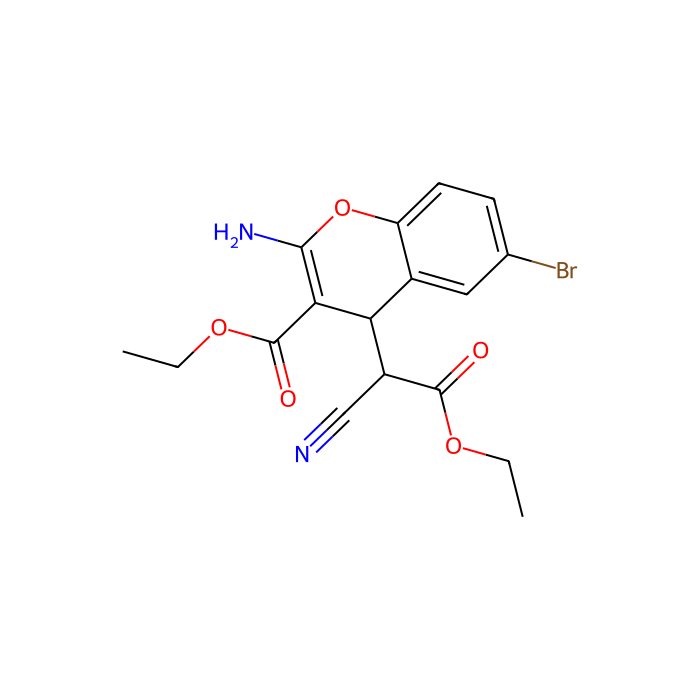
CAS: 65673-63-4 Cat. No.: H408968 Summenformel: C17H17BrN2O5 Molekulargewicht: 409.23
Zu bestellen verfügbar
QUALITÄT & REINHEIT 10mM in DMSO
Synonyms
(R)-ethyl 2-amino-6-bromo-4-((R)-1-cyano-2-ethoxy-2-oxoethyl)-4H-chromene-3-carboxylate
Storage
Store at -80°C
Shipped In
Dry ice packs + Cold packs
★
Größe
Deutschland (EU)
USA*
Preis
Menge
1ml
H408968-1ml
—
2 Auf Lager

63,26€

74,54€
Speichern 11,28 € (15.13%)
Enter a quantity for the sizes you want to add.

Übersicht

Information

HA14-1 is a non-peptidic ligand of aBcl-2surface pocket withIC50of ~9 μM.
In vitro

HA14-1 is a small molecule and nonpeptidic ligand of a Bcl-2 surface pocket with IC50 of approximately 9 μM. HA14-1 induces the apoptosis of HL-60 cells in a dose-dependent manner via caspase activation. HA14-1 shows cytotoxic effects on HF1A3, HF4.9 and HF28RA follicular lymphoma B cell lines with LC50 of 4.5 μM, 12.6 μM and 8.1 μM respectively. HA14-1 induces apoptosis of HF1A3, HF4.9 and HF28RA cells via caspase and ROS.

In vivo

HA14-1(400 nM) treatment did not have any significant effect on the growth of glioblastoma tumors in immunodeficient mice. But HA14-1 (400 nM) increases the effect of the DNA-damaging agent etoposide (2.5 mg/Kg) on glioblastoma growth in vivo.
Cell Data

cell lines:

Concentrations:~25 μM

Incubation Time:20 h

Powder Purity:

Spezifikationen

Synonyme
(R)-ethyl 2-amino-6-bromo-4-((R)-1-cyano-2-ethoxy-2-oxoethyl)-4H-chromene-3-carboxylate
Spezifikationen & Reinheit
10mM in DMSO
Biochemische und physiologische Mechanismen
HA14-1 is a non-peptidic ligand of a Bcl-2 surface pocket with IC50 of ~9 μM.
Storage
Store at -80°C
Verschickt in
Dry ice packs + Cold packs
Dieses Produkt erfordert Kühlkettenversand. Grundversand und andere Economy-Optionen sind nicht verfügbar.
Aktionsart
INHIBITOR
Namen und Kennungen
Isomere SMILES
CCOC(=O)C1=C(OC2=C(C1C(C#N)C(=O)OCC)C=C(C=C2)Br)N
WGK Deutschland
3
Molekulargewicht
409.23
Reaxys
1405035
Reaxys-RN_link_address
https://www.reaxys.com/reaxys/secured/hopinto.do?context=S&query=IDE.XRN=1405035&ln=

Erweiterte Daten

Zertifikate (CoA, COO, BSE/TSE und Analyse-Diagramm)
C of A & Other Certificates(BSE/TSE, COO):
Analytical Chart:

Find and download the COA for your product by matching the lot number on the packaging.

1 results found

Lot NumberCertificate TypeDatumArtikel
J2424442J2424442Certificate of AnalysisSep 01, 2026 H408968
Chemische und physikalische Eigenschaften
LöslichkeitSolubility (25°C) In vitro DMSO: 32.5 mg/mL warmed with 50ºC Water: bath (100.16 mM); Water: Insoluble; Ethanol: Insoluble;
Brechungsindex1.57
Siedepunkt (°C)535.1° C at 760 mmHg
Schmelzpunkt (°C)105-108°C
Sicherheit und Gefahren (GHS)
WGK Deutschland
3
Reaxys
1405035
Reaxys-RN_link_address
https://www.reaxys.com/reaxys/secured/hopinto.do?context=S&query=IDE.XRN=1405035&ln=
Lösungsrechner
Bewertungen

Kundenbewertungen

Application Protocols

No tested applications or protocols are provided in the Product Data for this item.

Please refer to the primary literature for assay-specific procedures relevant to HA14-1 and validate in your laboratory. Maintain rigorous controls (vehicle-only, orthogonal probes, and inactive analogs) and confirm compound identity/purity using the lot-specific CoA before initiating critical experiments.

Biological Roles

Item-specific biological characterization is not provided in the Product Data. The following context is from the open scientific literature and should be treated as general background only; it is not a specification of this product.

  • Literature context: HA14-1 has been reported as a small-molecule ligand used to interrogate anti-apoptotic BCL-2 family protein function. Publications describe binding within or near the BH3-recognition groove of BCL-2 and consequent disruption of PPIs in reconstituted systems. Reported selectivity and potency vary across assay formats and compound preparations; orthogonal confirmation is recommended for any critical conclusions.
  • Mechanistic considerations: As with many PPI ligands, observed cellular effects may be sensitive to compound aggregation state, assay buffer composition, and expression levels of target proteins. Perform counterscreens against unrelated targets, add detergent controls, and apply thermal shift or ITC/SPR to confirm direct interaction.
  • Off-targets and liabilities (literature cautions): Reports note context-dependent activity on related BCL-2 family members and potential nonspecific effects at higher concentrations. Track cytotoxicity of the vehicle and compound separately.
  • Use in systems biology: HA14-1 and analogs have been used to probe apoptosis pathways in cell-free extracts and to calibrate computational models of BCL-2 network dynamics. When translating between systems, re-validate potency due to matrix effects.

No clinical or therapeutic claims are made for this product. It is supplied strictly for research use only.

Buffer Applications

This product is not a buffering agent and is not typically used to control solution pH. Therefore, classic buffer system guidance (e.g., phosphate, HEPES, Tris recipes) does not apply.

Practical notes for using this compound in buffered systems (general):

  • Prepare concentrated stocks in a water-miscible organic solvent (commonly DMSO) and dilute into your working buffer (e.g., PBS, HEPES) while maintaining a constant final vehicle percentage across control and treated samples.
  • To mitigate precipitation upon dilution, pre-warm buffer (if compatible), add slowly with mixing, and consider adding 0.01–0.05% nonionic surfactant or 0.1% BSA to reduce adsorption and aid solubility.
  • Filter or centrifuge working solutions to remove particulates before sensitive assays (e.g., optical or biophysical readouts).

For buffer formulation itself, consult standard biochemical references; this item does not substitute for a buffering reagent.

Green Alternatives

Because this item is a discrete small-molecule probe rather than a process solvent or reagent, “green alternatives” primarily concern solvent handling, concentration, and waste minimization rather than replacing the compound itself.

Greener handling strategies (general):

  • Stock solvent choice: Prefer ethanol or aqueous cyclodextrin formulations when feasible and compatible with your assay, to reduce reliance on high-boiling aprotic solvents (DMSO/DMF). Confirm solubility and assay tolerability.
  • Minimize DMSO: Keep final assay DMSO at ≤0.1–0.5% v/v when possible; use pre-dilution steps to improve miscibility and reduce precipitation.
  • Microscale workflows: Use microvolume dispensing (acoustic or positive displacement) to cut solvent consumption and waste.
  • Closed-vial operations: Reduce operator exposure and evaporative losses during plate preparation.
  • Waste segregation: Collect DMSO/DMF/NMP streams separately to enable appropriate waste treatment; avoid halogenated solvent mixes unless required.

Illustrative comparison (general solvent considerations for small-molecule stocks):

  • DMSO: High solvency; low volatility; challenging waste stream; widely compatible (baseline option).
  • Ethanol: Renewable feedstock; higher volatility (easier removal); lower solvency; better EHS profile.
  • Aqueous + carriers (e.g., HP-β-CD): Potentially greenest vehicle if compound forms soluble inclusion complexes; requires assay validation and stability checks.

For scale-up syntheses of HA14-1 (if undertaken in-house), apply green chemistry principles: choose safer solvents (e.g., 2-MeTHF over THF, EtOAc over DCM), reduce protecting-group manipulations, and assess PMI/E-factor.

Pharmaceutical Uses

No pharmacopeial status or excipient role is provided for this item, and none should be inferred. This product is for research use only; it is not intended for human or veterinary use, APIs, or cGMP manufacturing.

Relevant research/formulation contexts (general, non-clinical):

  • Reference material: May be used as a non-compendial reference in discovery-stage analytical method development (e.g., LC-MS retention behavior, stability-indicating methods) with in-house qualification (identity/purity) against the CoA.
  • Preformulation studies: Solubility screening in biorelevant media, vehicle tolerance assessments (e.g., max % DMSO/EtOH), and adsorption studies to lab plastics (evaluate low-bind consumables) can be performed to support upstream biology experiments. These studies are internal research tools only.
  • Stability studies: Conduct forced-degradation (acid/base, oxidative, thermal, photolytic) to understand degradation pathways and to optimize storage and handling of assay stocks. These are for research characterization and not for regulatory submissions.

Explicitly not covered:

  • No claims of GMP compliance, compendial conformity (USP/EP/JP), or suitability as an excipient/API.
  • No clinical, diagnostic, or therapeutic uses are supported or implied.
Physical Properties

Item-specific physicochemical specifications are not provided in the Product Data for this SKU. Do not treat literature values as product specifications; consult the lot-specific CoA/SDS for authoritative data.

  • Appearance: Not specified for this item; refer to CoA/Spec Sheet.
  • Molecular weight: Not specified for this item; refer to CoA/Spec Sheet.
  • Molecular formula: Not specified for this item; refer to CoA/Spec Sheet.
  • Melting point: Not specified for this item; refer to CoA/Spec Sheet. (Literature values for compounds reported as HA14-1 vary by source; verify against your lot.)
  • Boiling point: Not typically applicable for this class (decomposes or has no useful BP at ambient pressure); Not specified for this item.
  • Density: Not specified for this item; refer to CoA/Spec Sheet.
  • Refractive index: Not applicable for solids; Not specified for this item.
  • LogP/logD, pKa: Not specified for this item. Any literature/computational values should be used only for preliminary method development and verified experimentally.
  • Solubility: Not specified for this item. General laboratory practice for screening compounds is to prepare 10–50 mM DMSO stocks (literature/general practice); actual solubility must be determined empirically for your batch.

Practical notes (general guidance):

  • If solid, warm gently to ambient in a desiccator before opening to avoid condensation. Assess solubility first in dry DMSO, DMF, or ethanol, then prepare aqueous working solutions via serial dilution with aqueous buffer containing ≤0.1–1% cosolvent and appropriate surfactant (e.g., 0.01–0.05% Tween-20) if needed.
Quality and Grades
  • Grade/Purity: Not specified for this item; refer to CoA/Spec Sheet. In the absence of an explicit grade (e.g., ≥98%, HPLC grade), treat it as a research-use compound intended for discovery, screening, and method development rather than quantitative reference standard work.

What the absence of a declared grade implies:

  • Analytical suitability: If using for quantitative bioassays or as a reference standard, determine purity by an orthogonal method (e.g., HPLC-UV/ELSD with purity normalization, qNMR) and confirm identity (HRMS, NMR) against the CoA.
  • Chromatographic background: If planning LC-UV or LC-MS analysis in low-UV windows, evaluate baseline absorbance and potential late-eluting impurities; adjust gradient and detection wavelength accordingly.
  • Stabilizers/inhibitors: Not specified for this item. If a stabilizer is present, it will be stated on the CoA/SDS. Absence of a declared stabilizer does not guarantee none is present—verify before sensitive biophysical assays.

Lot-specific documentation:

  • Request and retain the Certificate of Analysis and, where available, a Specifications Sheet. These documents provide acceptance criteria (identity/purity, residual solvents, water content) for your lot.

Fit-for-purpose qualification (recommended):

  • For screening: verify dissolution at target stock concentration; spot-check purity.
  • For mechanistic/biophysical studies: confirm authenticity versus an authenticated reference (e.g., compare NMR and LC-MS traces).
Reaction and Applications

This product is supplied as a research small molecule for use in discovery and assay contexts rather than as a general-purpose synthetic reagent or solvent.

Applications (research-use; general):

  • Chemical biology: Employed as a probe molecule in binding and mechanistic studies where literature has associated HA14-1 with protein–ligand interactions (verify target and binding mode from primary sources for your use-case). Use appropriate controls, including inactive analogs and orthogonal probes.
  • Screening: Suitable for inclusion in small-molecule libraries for phenotypic or target-based screening. Validate compound integrity and solubility before HTS or SPR/ITC studies.
  • Analytical reference: May serve as a method-development standard for chromatographic retention and detection optimization in matrices similar to your biological system.

Not typically applicable:

  • It is not commonly used as a reagent to drive named organic reactions (e.g., cross-couplings, oxidations) or as a solvent.

Practical tips:

  • Prepare fresh DMSO stocks and aliquot to avoid freeze–thaw cycles. Record exact stock concentration by weight-in/weight-out and confirm by UV or qNMR where possible.
  • For biophysical assays, pre-clear solutions by centrifugation and check for aggregation (e.g., DLS or detergent sensitivity controls) to avoid nonspecific artifacts.
  • For cell-free enzymology, maintain constant vehicle percentage across controls and treatments.
Reaction Conditions

Not typically applicable. HA14-1 is provided as a research small molecule rather than a reagent for driving chemical reactions. No item-specific reaction conditions are provided in the Product Data.

If conducting studies involving this compound (general assay conditions rather than chemical reactions):

  • Stock solutions: Commonly 10–50 mM in DMSO (literature/general). Verify solubility and stability experimentally.
  • Working concentrations: Determine empirically for your assay format. For biochemical binding assays, broad-range titrations (e.g., 0.03–100 µM) are typical starting points, maintaining constant vehicle across wells/tubes.
  • Incubation: Optimize time and temperature (e.g., 4–37°C) based on assay biology; protect from light if the compound has strong chromophores (unknown for this item; verify experimentally).
  • Controls: Include vehicle-only, unrelated compound controls, and (if available) a known orthogonal probe. Use detergent controls to assess aggregation artifacts.

For chemical synthesis involving HA14-1 or analogs, consult primary literature for the specific scaffold once the exact structure is confirmed; standard conditions vary widely and are not specified for this item.

Safety and Handling

Safety data specific to this item (GHS classification, hazard statements) are not provided in the Product Data. Always consult the SDS shipped with your order for authoritative guidance.

  • GHS/Signal word/Pictograms: Not specified for this item; refer to SDS.
  • General hazards (precautionary, not product-specific): Many drug-like, aromatic small molecules are harmful if swallowed, cause skin/eye irritation, and may cause respiratory irritation. Treat as a potentially toxic laboratory chemical.
  • Personal protective equipment (PPE): Use lab coat, safety glasses or chemical splash goggles, and appropriate chemical-resistant gloves (e.g., nitrile). Handle in a certified chemical fume hood when weighing, dissolving, or aliquoting.
  • Handling: Avoid dust/aerosol generation. Use pre-chilled tools if handling outside the freezer for short durations. Allow containers shipped on dry ice to equilibrate in a desiccator to room temperature before opening to prevent moisture ingress.
  • Incompatibilities: Unknown for this specific item; as good practice, keep away from strong oxidizers, strong acids/bases until compatibility is assessed.
  • First aid (overview; defer to SDS): In case of skin/eye contact, rinse with water for at least 15 minutes; remove contaminated clothing. If inhaled, move to fresh air. If swallowed, rinse mouth. Seek medical attention and provide the SDS to responders.
  • Waste: Collect in a properly labeled organic waste container. Deactivate/neutralize only if a validated method exists for this compound class; otherwise dispose via licensed chemical waste contractor.
Solvent Selection

Given its use as a research small molecule, HA14-1 is typically handled as a concentrated stock in water-miscible organic solvents, then diluted into assay buffer. Item-specific solubility is not provided; evaluate empirically.

  • Primary solvents (general practice):
    • DMSO: First-line solvent for screening stocks (10–50 mM typical, literature/general). Offers broad solubilization and is compatible with many biochemical assays up to 0.1–1% v/v final.
    • DMF or NMP: Useful alternatives when DMSO solubility is limited; confirm assay compatibility and cytotoxicity of solvent.
    • Ethanol: May dissolve moderately lipophilic scaffolds; limit to ≤1% v/v in biological buffers.
  • Aqueous vehicles: Prepare working solutions by serial dilution into buffer (e.g., PBS, HEPES) containing minimal organic cosolvent. Addition of inert carriers (0.1% BSA) or low levels of nonionic surfactant (0.01–0.05% Tween-20) can mitigate precipitation and nonspecific binding.
  • Solvent selection for analytics:
    • LC-MS: Use LC-MS–compatible solvents (water/acetonitrile or water/methanol + 0.1% formic acid or ammonium acetate). Assess ionization in ESI±.
    • NMR: DMSO-d6 or CD3OD are common for drug-like molecules; reference residual solvent peaks and consider temperature to improve solubility.

Quick comparison (general):

  • DMSO: Highest solvency; potential assay interference at high %.
  • DMF/NMP: Strong solvency; higher toxicity; adsorptive losses lower.
  • Ethanol: Lower solvency; best biocompatibility among organics.

Always perform a small-scale solubility screen and filter (0.2 µm PTFE) if needed before critical experiments.

Storage and Reconstitution

Item-specific storage conditions and shipping are provided; additional notes below are general best practices for research compounds.

  • Storage (item-specific): Store at -80°C.
  • Shipping (item-specific): Shipped on dry ice packs + cold packs to maintain low temperature during transit.

Best practices (general guidance):

  • Upon receipt: Without opening, allow the sealed container to equilibrate to room temperature in a desiccator to prevent condensation. Then promptly return to -80°C storage.
  • Aliquoting: If solid, aliquot under dry inert atmosphere when possible. If preparing solutions, make single-use DMSO stocks to avoid repeated freeze–thaw. Store frozen stocks in tightly sealed, low-bind vials.
  • Reconstitution: Because item-specific solubility is not provided, begin with dry, anhydrous DMSO to prepare a concentrated stock (e.g., 10–50 mM as a general starting range), vortex and, if needed, sonicate briefly. Confirm complete dissolution visually and analytically (e.g., UV, LC).
  • Working solutions: Dilute into assay buffer to the desired final concentration while keeping the vehicle constant across samples. Inspect for precipitation; if observed, lower concentration, increase temperature moderately, or adjust vehicle within assay tolerances.
  • Stability: Without item-specific data, assume limited stability in solution at room temperature. Keep solutions cold and protected from light, and discard after a defined period based on an in-house stability check.

Note: For any item-specific parameters (purity, stabilizers, exact solubility), consult the lot-specific CoA/Spec Sheet and SDS.

Structure and Identity

Brief overview: HA14-1 (SKU H408968) is supplied as a research-use small molecule in our small-molecule/compound library category. Item-specific structural identifiers beyond CAS/CID are not provided in the Product Data and should be confirmed from the CoA/SDS for your lot.

  • Product name: HA14-1
  • SKU: H408968
  • CAS: 65673-63-4 (item-specific)
  • PubChem CID: 3549 (literature identifier; verify against CoA for your lot)
  • InChIKey: Not specified for this item; refer to CoA/Spec Sheet.
  • SMILES: Not specified for this item; refer to CoA/Spec Sheet.
  • Molecular formula: Not specified for this item; refer to CoA/Spec Sheet.
  • Molecular weight: Not specified for this item; refer to CoA/Spec Sheet.

Structural features (general, literature context):

  • Literature sources commonly describe HA14-1 as an aromatic, drug-like small molecule used as a biochemical probe. Because multiple stereochemical or tautomeric depictions may exist across databases, verify the exact structure used in your assays by consulting the lot-specific CoA and confirming with an internal reference standard when needed.
  • 2D description (general): compact polyaromatic/heteroaromatic scaffold bearing polar functional groups that enable DMSO solubility and protein-binding studies (literature). Exact ring systems and substituent pattern should be verified from the CoA or an authenticated reference.

Note: Where structural parameters are critical (e.g., docking, QSAR, or analytical reference work), we recommend confirming identity by orthogonal techniques (e.g., HRMS, 1H/13C NMR) against the certificate supplied for your shipment.

Synthetic Utility

This product is supplied as a defined small-molecule probe/compound and is not commonly used as a synthetic building block or reagent. Consequently, classic discussions of functional group transformations, protecting-group strategies, or named reactions centered on this compound are not typically applicable.

If synthesis or derivatization is of interest (general guidance):

  • Literature surveys on HA14-1 analogs suggest that structure–activity relationship (SAR) studies have been performed by modifying aromatic substituents and heteroatom-containing moieties. If engaging in analog synthesis, select robust cross-coupling or electrophile–nucleophile strategies compatible with the scaffold once its exact structure is confirmed from the CoA.
  • For analytical tracking during synthesis, employ LC-MS for rapid profiling and 1H/13C NMR for identity confirmation. Establish a stability-indicating HPLC method early to monitor potential isomerization or decomposition.
  • Purification: Reverse-phase preparative HPLC or silica gel chromatography may be applicable depending on lipophilicity; avoid conditions that might induce degradation (strong acid/base, high temperature) until stability is characterized.

Bottom line: treat this item as a finished research probe; only consider synthetic manipulation after confirming structure and ensuring that derivatization does not compromise your intended biological or analytical readout.

Target Specificity

Not applicable. This product is not an antibody or affinity reagent, and no target-binding specification is provided in the Product Data.

Note: Any literature references that associate HA14-1 with specific protein targets (e.g., BCL-2 family proteins) are contextual background only and are not product specifications. Verify target engagement independently for your system using orthogonal biophysical and biochemical assays.

Häufig gestellte Fragen

How should this product be stored?
Store at ?80 °C. Ultra-low temperature storage is required to maintain the specified shelf life.
How is this product shipped?
This product ships frozen with dry ice and cold packs. Unpack on arrival and transfer it to the storage condition stated above; handle dry ice with insulated gloves in a ventilated area.
What are the CAS number, molecular formula and molecular weight?
The CAS Number is 65673-63-4, the molecular formula is C17H17BrN2O5, and the molecular weight is 409.23 g/mol.
What documentation is provided?
Available product documentation, including Certificates of Analysis (COA), Safety Data Sheets (SDS), and specification sheets, is shown in the product document area. Document availability and access follow the current site policy.

Dürfen wir Sie über Rabattaktionen informieren?

Später erinnern

Vielen Dank! Bitte überprüfen Sie Ihren E-Mail-Posteingang, um zu bestätigen.

Hoppla! Benachrichtigungen sind deaktiviert.