Determine the necessary mass, volume, or concentration for preparing a solution.
Dilution Calculator
Determine the dilution needed to prepare a stock solution.
Reconstitution Calculator
Bewertungen
Kundenbewertungen
Application Protocols
No validated, item-specific application protocols are provided for this product.
Tested applications, recommended dilutions, positive controls: Not specified for this item; refer to CoA/Spec Sheet.
Please consult your internal SOPs and assay development guidelines to adapt HCM-006 to your workflows.
Biological Roles
No biological function, pathway involvement, or target annotation is provided for HCM-006 in the Product Data.
Item-specific biological roles: Not specified for this item; refer to CoA/Spec Sheet or your internal target database.
General context (non-item-specific):
Compounds in screening libraries are typically uncharacterized with respect to endogenous biological roles. Their value lies in serving as chemical matter to probe biological systems, identify initial hits, and derive structure–activity relationships (SAR).
If biological annotation is required, consider target-deconvolution workflows after phenotypic screening hits are confirmed (e.g., chemical proteomics, CRISPR-based modifier screens, CETSA/thermal profiling, or affinity capture with tagged analogs).
This product is supplied strictly for research use only. No clinical or diagnostic applications are implied.
Buffer Applications
HCM-006 is a small-molecule screening compound and not a buffering reagent.
Buffer usage: Not typically applicable. There is no defined pKa/pH range or buffering capacity available for this item.
Practical note for assay buffers (general guidance, not item-specific specifications):
When dosing from DMSO stocks, validate the tolerated final DMSO percentage for your biological system (commonly ≤0.5–1% v/v in many assays).
Use standard biological buffers (e.g., PBS, HEPES, Tris, MOPS) as dictated by your assay. Confirm compound stability in the chosen buffer matrix and at the working temperature/time.
Filter or centrifuge dose solutions if precipitation is observed after dilution to avoid artifacts.
Green Alternatives
Item-specific solvent and process choices are not provided. The following green chemistry considerations can guide handling and assay preparation for small molecules of unknown structure.
Greener choices for routine tasks (general guidance):
Stock solutions: Prefer DMSO or ethanol over chlorinated solvents for routine handling and biological assays, provided the compound is stable and soluble.
Analytical prep: ACN is generally preferred over MeOH for LC due to lower viscosity and often reduced pressure; both are preferable to halogenated solvents when feasible.
Workup/extraction (if applicable): Replace dichloromethane with ethyl acetate or MTBE where compatible; consider 2-MeTHF in place of THF for bench operations (if structure/compatibility allows).
Energy: Minimize heating and extended stirring under air if the compound is air-sensitive (argon charged). Use sealed, inert vials to avoid repeated degassing.
Scale: Favor microscale solubility and stability screens to reduce solvent consumption and waste.
Illustrative comparison (general, not item-specific):
DCM vs EtOAc: EtOAc is less toxic and has a better environmental profile, though it is more polar and can change extraction selectivity.
THF vs 2-MeTHF: 2-MeTHF offers improved safety/renewability and reduced peroxide issues compared to THF, but may alter solubility and reaction rates.
Always confirm chemical stability and assay compatibility for HCM-006 before adopting a greener alternative.
Pharmaceutical Uses
No pharmacopeial status, excipient role, or manufacturing use is provided for HCM-006.
Item-specific pharmaceutical/formulation uses: Not specified for this item; refer to CoA/Spec Sheet.
General considerations (non-clinical, research-only):
Screening compounds may be formulated into DMSO stocks for in vitro or ex vivo research assays. Any further formulation (e.g., for in vivo research) requires comprehensive evaluation of solubility, stability, and safety; none of these properties are provided for this product.
No claims are made regarding suitability for human or veterinary use. This product is for research use only.
Physical Properties
Item-specific physicochemical parameters were not included in the provided Product Data.
Appearance: Not specified for this item; refer to CoA/Spec Sheet.
Purity/Grade: Not specified for this item; refer to CoA/Spec Sheet.
Melting point (MP): Not specified for this item; refer to CoA/Spec Sheet.
Boiling point (BP): Not specified for this item; refer to CoA/Spec Sheet.
Density: Not specified for this item; refer to CoA/Spec Sheet.
Refractive index: Not specified for this item; refer to CoA/Spec Sheet.
pKa/logP/logD: Not specified for this item; refer to CoA/Spec Sheet.
Solubility profile: Not specified for this item; refer to CoA/Spec Sheet.
General guidance (literature/practice, not item-specific):
Many screening library members are handled as solid powders or concentrated DMSO solutions (e.g., 10–50 mM stocks) for HTS/assay use. Actual solubility, stability, and hygroscopicity are structure-dependent and must be verified experimentally for HCM-006.
If physical data are needed quickly, consider small-scale exploratory tests: visual solubility screening (water, PBS, DMSO, MeOH, ACN, DMF), short-term stability at room temperature vs refrigerated, and pH-dependent solubility checks (e.g., pH 2, 7.4, 9 buffers) while minimizing material consumption.
Always defer to the item’s CoA/Spec Sheet for authoritative specifications.
Quality and Grades
Grade/Purity: Not specified for this item; refer to CoA/Spec Sheet.
Context and implications (general guidance for small-molecule screening compounds; not item-specific claims):
Screening-library compounds are typically provided with purity suitable for discovery biology and cheminformatics workflows. Common analytical controls include HPLC/UPLC area % and mass confirmation (LC–MS or HRMS). Verify the exact assays performed for HCM-006 on the CoA.
For sensitive assays (biophysical binding, photophysical readouts), trace impurities and residual solvents may matter. Review chromatograms and residual solvent data, if provided.
“Argon charged” packaging suggests the supplier aims to preserve material integrity against air/moisture or oxidative degradation. Minimize headspace oxygen and repeated warm/cold cycles after receipt.
If UV transparency matters (e.g., optical assays), request or consult UV–Vis background absorbance of the material/solvent system. For MS-based assays, check for salt content or counterions.
If tighter specifications are required (e.g., >98% HPLC, metal content, water content), contact Technical Support with the SKU and CAS to request a lot that meets your threshold.
Bottom line: Confirm purity, identity, and any stabilizers/solvates on the batch CoA. Do not assume assay compatibility without verification.
Reaction and Applications
This item is listed under “small molecules and compound libraries,” indicating primary use in discovery screening and chemical biology rather than as a classical reagent. Without a disclosed structure, reaction chemistry specifics cannot be given.
Discovery and assay applications (general best practices):
HTS/Fragment/Lead screening: Prepare accurate, moisture-free DMSO stocks, verify identity/purity, and confirm assay interference (PAINS/fluorescence/colloids) using orthogonal counterscreens.
SAR campaigns: If HCM-006 yields a signal, verify concentration–response behavior, confirm on fresh aliquots/independent lots, and profile basic physicochemical traits (solubility, stability, logD, pKa if applicable).
Biophysical validation: Use orthogonal techniques (DSF, SPR, MST, ITC) to rule out aggregation or redox/photochemical artifacts when appropriate to the target class.
Cell-based assays: Titrate DMSO tolerance, monitor cytotoxicity baselines, and track compound stability in culture media (binding to serum proteins/plastics).
Analytical: Establish a stability-indicating LC method early; track freeze–thaw cycles and room-temperature bench time.
If you intend to employ HCM-006 in synthetic transformations (e.g., as a building block), the lack of structural information precludes guidance. Obtain and review the structure (CoA/Spec Sheet) before planning any synthetic uses.
Reaction Conditions
Reaction conditions are not applicable without the structure or intended transformation.
Typical solvents, catalysts, temperatures, and times: Not specified for this item; refer to CoA/Spec Sheet.
Guidance:
If HCM-006 is to be used as a substrate, building block, or ligand, first obtain the structural information and conduct micro-scale scouting experiments to establish compatibility with moisture, oxygen, acids/bases, and thermal stress.
Given the “Argon charged” note, consider inert-atmosphere techniques for any transformations until stability is confirmed.
Safety and Handling
Safety information was not supplied in the Product Data and may vary by batch.
GHS Classification: Not specified for this item; refer to SDS.
Signal Word / H-Statements / Pictograms: Not specified for this item; refer to SDS.
General laboratory safety guidance (not item-specific; follow your institutional SOPs):
PPE: Use appropriate protective gloves, lab coat, and eye/face protection. Handle in a fume hood to avoid inhalation of dust or vapors.
Atmosphere: This item is shipped on wet ice and labeled “Argon charged,” indicating potential air/moisture sensitivity. Open under inert gas if feasible; promptly reseal under argon or nitrogen.
Incompatibilities: Until reactivity is known, avoid strong oxidizers and bases/acids. Keep away from ignition sources if volatile/flammable characteristics are suspected.
First aid (overview): In case of skin/eye contact, rinse with water for at least 15 minutes and remove contaminated clothing. If inhaled, move to fresh air. If ingested, rinse mouth. Seek medical attention in all cases and provide the SDS to responders.
Spill response: Avoid dust formation and aerosolization. Absorb small spills with inert material; collect for disposal in accordance with regulations. Ventilate area and decontaminate surfaces.
Waste: Dispose according to local regulations; many screening compounds are treated as organic hazardous waste.
Authoritative safety guidance resides in the SDS. Always review the lot-specific SDS before first use.
Solvent Selection
Item-specific solubility and polarity are not provided. The following are general, practical strategies for small-molecule screening compounds when structure is not disclosed.
Primary stock solvent: DMSO is the default for HTS/assays due to broad solvating power and biological compatibility at low final percentages (commonly ≤0.5–1% v/v in assays).
Secondary solvents for characterization: Consider MeOH, ACN, and DMF for analytical sample prep (HPLC, LC–MS, NMR), contingent on stability. Avoid chlorinated solvents for bioassay stocks unless required and compatible with the assay system.
Aqueous compatibility: If water solubility is unknown/limited, prepare DMSO concentrates (e.g., 10–50 mM) and dilute into buffer with vigorous mixing or surfactant-free sonication, keeping final DMSO low.
pH leverage: Weak acids/bases may show improved solubility upon salt formation. If permitted, test buffered systems at pH 3–4 (for bases) or pH 8–9 (for acids) on micro-scale while monitoring for degradation.
Adsorption mitigation: Use low-bind plastics or silanized glass for hydrophobic compounds; pre-rinse tips/vials with dilute analyte or with DMSO.
Analytical co-solvent choices: For LC–MS, ACN/H2O with 0.1% formic acid (positive mode) or 5–10 mM ammonium acetate (negative mode) are common starting points.
Note: Because HCM-006 is argon charged, confirm that chosen solvents are anhydrous and oxygen-low when preparing concentrated stocks for long-term storage.
Storage and Reconstitution
Item-specific storage conditions are provided; reconstitution details are not.
Storage Conditions (as provided): Store at 2–8°C, argon charged.
Shipping: Wet ice.
Implications and best practices (general guidance consistent with the provided storage notes):
Air/moisture sensitivity: The argon charge suggests potential sensitivity. Open vials swiftly, preferably in an inert glovebox or under a dry inert gas purge. Reseal promptly and minimize headspace oxygen.
Temperature: Keep refrigerated (2–8°C) when not in use. Allow the vial to equilibrate to room temperature in a sealed state before opening to avoid condensation.
Reconstitution: Not specified for this item; refer to CoA/Spec Sheet. In the absence of item-specific instructions, many users prepare concentrated DMSO stock solutions (e.g., 10–50 mM) if compatible, then aliquot into inert-atmosphere vials to avoid repeated freeze–thaw cycles.
Light: If the compound is potentially photosensitive (unknown), protect from light during handling and storage.
Stability monitoring: Establish a stability-indicating analytical method (e.g., LC–MS/UPLC). Track bench time and the number of freeze–thaw events per aliquot.
Research Use Note: For research use only.
Structure and Identity
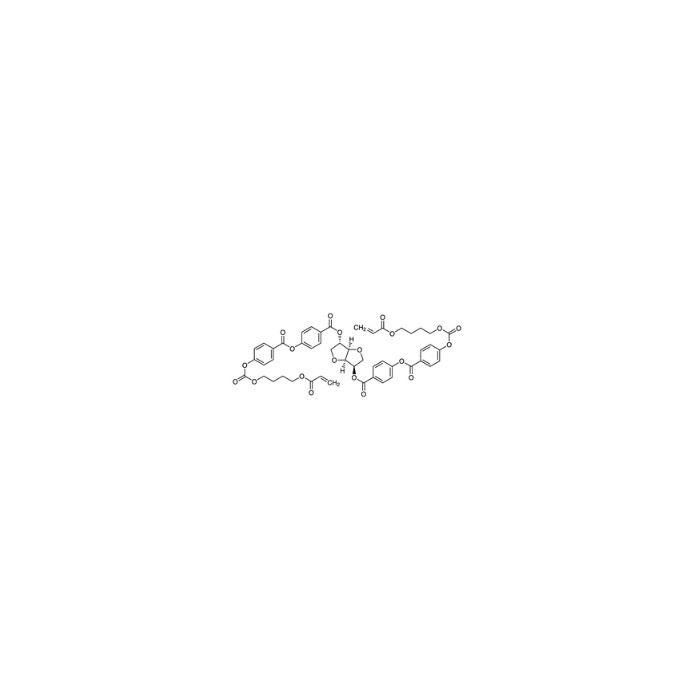
Brief overview: HCM-006 is listed as a small-molecule screening compound in our chemical libraries. Item-specific structural identifiers are largely not provided in the Product Data for this SKU.
SKU: B303109
Product Name: HCM-006
CAS: 223572-88-1
InChIKey: 52551 (as provided; note: this does not conform to the typical 27-character InChIKey format; verify on the CoA/Spec Sheet)
SMILES: Not specified for this item; refer to CoA/Spec Sheet.
Molecular Formula: Not specified for this item; refer to CoA/Spec Sheet.
Molecular Weight: Not specified for this item; refer to CoA/Spec Sheet.
Structural description (general):
Functional groups, ring systems, and stereochemistry cannot be described without a structure. Not specified for this item; refer to CoA/Spec Sheet.
Notes:
Because the structure and line notations (SMILES, InChI) are not fully provided, definitive structural features cannot be summarized here. For unequivocal identity confirmation, please consult the Certificate of Analysis (CoA), Spec Sheet, or SDS associated with this batch.
Synthetic Utility
Without the disclosed structure of HCM-006, specific synthetic roles or transformations cannot be proposed.
Functional group reactivity, named-reaction participation, and protecting-group strategies: Not specified for this item; refer to CoA/Spec Sheet.
General note:
If you intend to derivatize HCM-006 (e.g., for probe development, biotinylation, or photoaffinity tagging), obtain the exact structure and an impurity profile. Evaluate points of diversification and liability motifs (oxidation-prone sites, hydrolytically labile linkages) before planning synthetic routes.
For supply continuity in a program, request route-of-synthesis information or analytical fingerprints to qualify alternative lots/suppliers, ensuring consistent performance across SAR.
Target Specificity
Target, epitope, species reactivity, clone/isotype: Not applicable to a small-molecule compound and not provided in the Product Data.
No target-binding or selectivity profile is supplied for HCM-006. If used in target-based discovery, determine specificity empirically and confirm with orthogonal assays.
Häufig gestellte Fragen
What is the purity of this product?
This product is supplied at ≥95% purity (chemical assay). Lot-specific values are stated on the Certificate of Analysis.
How should this product be stored?
Store at 2–8 °C under argon. It is supplied under an argon blanket; reseal under inert gas after each use.
How is this product shipped?
This product ships chilled on wet ice. Unpack on arrival and transfer it to the storage condition stated above.
What are the CAS number, molecular formula and molecular weight?
The CAS Number is 223572-88-1, the molecular formula is C50H46O20, and the molecular weight is 966.9 g/mol. InChIKey CSNCPNFITVRIBQ-UHFFFAOYSA-N.
What documentation is provided?
Available product documentation, including Certificates of Analysis (COA), Safety Data Sheets (SDS), and specification sheets, is shown in the product document area. Document availability and access follow the current site policy.
Wir verwenden Cookies, um die ordnungsgemäße Funktion der Website sicherzustellen und, soweit zulässig, Ihr Nutzererlebnis zu verbessern. Sie können Ihre Einstellungen jederzeit unter „Einstellungen“ verwalten. Weitere Informationen finden Sie in unserer Cookie-Richtlinie.
Dürfen wir Sie über Rabattaktionen informieren?
Später erinnern
Vielen Dank! Bitte überprüfen Sie Ihren E-Mail-Posteingang, um zu bestätigen.
Products are supplied to verified businesses, institutions, and qualified professionals for research and development use only. Not for use in humans, animals, diagnosis, or therapy.

 H2617544