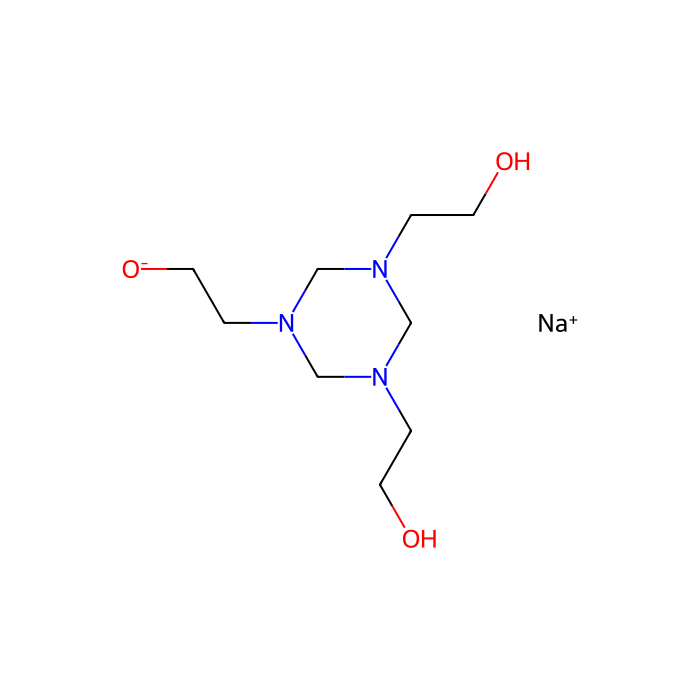
Heparin sodium - Moligand™, Anti factor Xa titers 110~210IU/mg , CAS No.9041-08-1

CAS: 9041-08-1 Cat. No.: H284091 EG-Nummer: 618-546-9 PubChem CID: 118989588
Zu bestellen verfügbar
QUALITÄT & REINHEIT Moligand™ ? Moligand™ — Aladdin's line of ligands and bioactive small molecules. Use for receptor, pathway, and binding studies needing defined small-molecule tools. Anti factor Xa titers 110~210IU/mg
Synonyms
Heparin, sodium salt | PD056845 | sodium;2-[3,5-bis(2-hydroxyethyl)-1,3,5-triazinan-1-yl]ethanolate | Heparin sodium salt (MW 15kDa) | D78319 | Nadroparin Sodium
Storage
Store at 2-8°C
Shipped In
Wet ice
★
Größe
Deutschland (EU)
USA*
Preis
Menge
1g
H284091-1g
—
5 Auf Lager

204,70€

307,09€
Speichern 102,39 € (33.34%)
5g
H284091-5g
—
2 Auf Lager

868,52€

1.303,26€
Speichern 434,74 € (33.36%)
Enter a quantity for the sizes you want to add.
🧪
Warum diese Qualität

Moligand™, Anti factor Xa titers 110~210IU/mg Moligand™ für empfindliche chromatographische und analytische Workflows, die minimale Basislinieninterferenzen erfordern.

🌡

Lagerung & Versand

Store at 2-8°C Versand Wet ice. Genaue Spezifikationen finden Sie im chargenspezifischen COA.

📋

Qualitätsdokumente

SDS, COA, Datenblatt und Spezifikationsblatt stehen zum Download bereit. Chargenspezifische COA über Chargennummernsuche abrufbar.

📚

Literaturbeleg

In 229 peer-reviewten Publikationen zu Chromatographie, organischer Synthese und Kreuzkupplungsreaktionen zitiert.

Spezifikationen

Synonyme
Heparin, sodium salt | PD056845 | sodium;2-[3,5-bis(2-hydroxyethyl)-1,3,5-triazinan-1-yl]ethanolate | Heparin sodium salt (MW 15kDa) | D78319 | Nadroparin Sodium
Spezifikationen & Reinheit
Moligand™, Anti factor Xa titers 110~210IU/mg
Storage
Store at 2-8°C
Verschickt in
Wet ice
Dieses Produkt erfordert Kühlkettenversand. Grundversand und andere Economy-Optionen sind nicht verfügbar.
Note
Moligand™
Namen und Kennungen
Pubchem Sid
Pubchem Sid Url
https://pubchem.ncbi.nlm.nih.gov/substance/504772906
Kanonisches Lächeln
C1N(CN(CN1CCO)CC[O-])CCO.[Na+]
IUPAC Name
sodium;2-[3,5-bis(2-hydroxyethyl)-1,3,5-triazinan-1-yl]ethanolate
InChIKey
YOMTXLQWRQUKAK-UHFFFAOYSA-N
INCHI
1S/C9H20N3O3.Na/c13-4-1-10-7-11(2-5-14)9-12(8-10)3-6-15;/h13-14H,1-9H2;/q-1;+1
Isomere SMILES
C1N(CN(CN1CCO)CC[O-])CCO.[Na+]
WGK Deutschland
2
RTECS
MI0850000
PubChem CID
118989588

Dokumentation

📋 Sicherheitsdatenblatt (SDS)

Umfassendes Dokument zu Gefahren, Handhabung, Lagerung und Einhaltung regulatorischer Vorschriften.

<<<<<<< HEAD SDS herunterladen → ======= SDS herunterladen → >>>>>>> release248-p3

✅ Analysezertifikat (COA)

Chargenspezifische Qualitätsdaten. Geben Sie Ihre Chargennummer ein, um das genaue COA abzurufen.

COA nachschlagen →

📊 Datenblatt

Kurzübersicht über Produktspezifikationen und Anwendungen.

Datenblatt ansehen →

🔬 Spezifikationsblatt

Vollständige Qualitätsmerkmale und Akzeptanzkriterien für diese Qualität.

Spezifikationsblatt ansehen →

Erweiterte Daten

Taxonomic Classification

Taxonomy Tree

KingdomOrganic compounds
SuperclassOrganoheterocyclic compounds
KlasseTriazinanes
Subclass1,3,5-triazinanes
Intermediate Tree Nodes Not available
Direct Parent1,3,5-triazinanes
Alternative Parents Azacyclic compounds  Alkanolamines  Organopnictogen compounds  Organic zwitterions  Organic sodium salts  Organic oxides  Hydrocarbon derivatives  Alkoxides  Alcohols and polyols  
Molecular FrameworkAliphatic heteromonocyclic compounds
Substituents 1,3,5-triazinane - Azacycle - Organic alkali metal salt - Alkanolamine - Organic nitrogen compound - Organic oxygen compound - Organopnictogen compound - Organic oxide - Hydrocarbon derivative - Organic sodium salt - Organic salt - Organic zwitterion - Alkoxide - Organooxygen compound - Organonitrogen compound - Alcohol - Aliphatic heteromonocyclic compound
BeschreibungThis compound belongs to the class of organic compounds known as 1,3,5-triazinanes. These are triazinanes having three nitrogen ring atoms at the 1-, 3-, and 5- positions.
External Descriptors Not available
3D-Struktur
Interaktives chemisches Strukturmodell


Zugehörige Ziele (menschlich)
SERPINC1 Tclin Antithrombin-III (0 Activities)
Activity TypeActivity Value -log(M)Mechanism of ActionActivity ReferencePublications (PubMed IDs)
Zertifikate (CoA, COO, BSE/TSE und Analyse-Diagramm)
C of A & Other Certificates(BSE/TSE, COO):
Analytical Chart:

Find and download the COA for your product by matching the lot number on the packaging.

5 results found

Lot NumberCertificate TypeDatumArtikel
J2609086J2609086Certificate of AnalysisOct 19, 2026 H284091
G2509021G2509021Certificate of AnalysisJul 19, 2025 H284091
E2224168E2224168Certificate of AnalysisFeb 18, 2022 H284091
E2224169E2224169Certificate of AnalysisFeb 18, 2022 H284091
F2328100F2328100Certificate of AnalysisFeb 18, 2022 H284091
Chemische und physikalische Eigenschaften
Löslichkeitsoluble in water and insoluble in ethanol
FAQs und Artikel
Red Blood Cell Lysis Buffer — Technical Description & Operating Guide
Isolation, Culture, and Induced Differentiation of Bone Marrow Mesenchymal Stem Cells into Osteoclasts: Experimental Procedure
108 common laboratory cell lines
Magnetic Bead Isolation and Flow Cytometric Identification of Human Peripheral Blood CD4⁺ T Cells
From Anticoagulant to Research Tool: An Overview of the Structure and Applications of Heparin (Hep)
Molecular Mechanisms and Biomedical Applications of Heparinase
Technical Analysis and Application Guide for RNase Inhibitors
An Introduction to Research-Grade Carbohydrates: Decoding the “Glycan Language” and a Product-Selection Guide (with Tables 1–3)
Understanding Hydrophilic Polymers in Aqueous Systems: Hydration Mechanisms, Structural Knobs, and Task-Oriented Selection Guide (Including Tables 1–3)
Systematic Anticoagulant Selection Strategy
FGF2-Induced Angiogenesis Model: Standard Operating Procedure (Protocol)
dsDNase-Mediated Hydrolysis of Double-Stranded DNA: Enzymatic Characteristics, Methodological Strategies, and Bioanalytical Applications
Furin: A Review of Its Structural Features, Substrate Recognition, and Research Applications
Glycoprotein Hormone Family: Molecular Features, Signaling Bias, and In Vivo Pharmacokinetics
Regulatory Mechanisms of Extracellular Matrix Glycosylation in Tissue Homeostasis Maintenance and Remodeling
Sulfation Landscape Remodeling and Its Biological Effects
Research Value of Polyelectrolyte Multilayers: Layer-by-Layer Design of Interfacial Composition, Mass Transport, and Function
Effects of Cell Sample Preservation Systems on Morphological Integrity, Anticoagulant Stability, and Analytical Results
Key Judgments in Medical Hydrogel R&D: From Polymer Source and Crosslinking Strategy to Sterilization Planning, Scale-Up Feasibility, and Quality Control
Designing Hydrogel Scaffolds as Programmable Cell Microenvironments: From Click-Chemistry Functionalization to 3D Cell Culture Experimental Design
Evaluation of Blood-Brain Barrier Permeability: Tracer Extravasation, TEER Measurement, and Interpretation of In Vitro Model Results
Exosome-Related Ingredients in Skincare Products: Sources and Preparation, Quality Control, Evidence of Efficacy, and Safety Assessment
Structure and Functions of Fibronectin: Cell Adhesion, Cutaneous Wound Repair, and Topical Applications
Citations of This Product
Lösungsrechner
Bewertungen

Kundenbewertungen

Dürfen wir Sie über Rabattaktionen informieren?

Später erinnern

Vielen Dank! Bitte überprüfen Sie Ihren E-Mail-Posteingang, um zu bestätigen.

Hoppla! Benachrichtigungen sind deaktiviert.