≥98% for sensitive chromatographic and analytical workflows requiring minimal baseline interference.
🌡
Storage & shipping
Store at -20°C Ships Ice chest + Ice pads Check lot-specific COA for exact specifications.
📋
Quality documents
SDS, COA, datasheet, and spec sheet available for download. Lot-specific COA accessible via lot number lookup.
📚
Literature proof
Cited in 0 peer-reviewed publications across chromatography, organic synthesis, and cross-coupling reactions.
Übersicht
Information
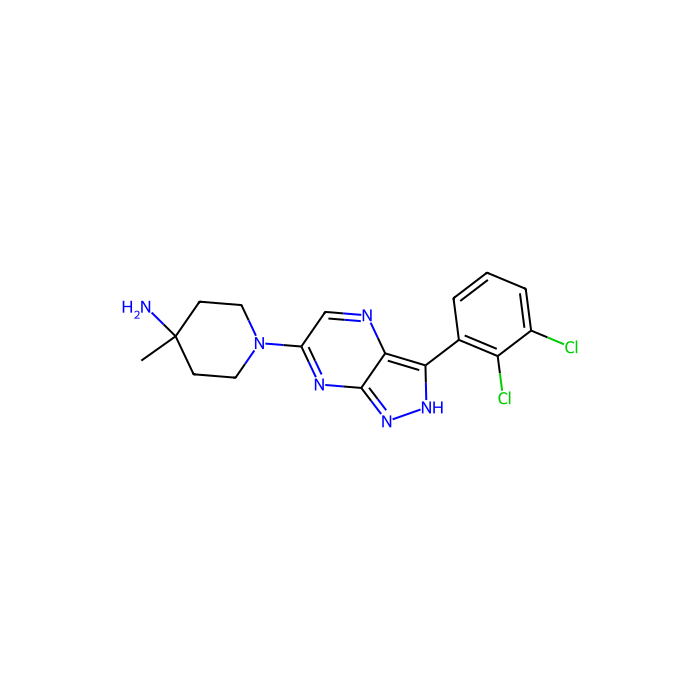
IACS-13909 IACS-13909 (BBP-398) is a specific and potent allosteric inhibitor of SHP2 (Src homology 2 domain-containing phosphatase) that suppresses signaling through the MAPK pathway.
Targets
SHP2
In vitro
IACS-13909 is a specific and potent allosteric inhibitor of SHP2 that suppresses signaling through the MAPK pathway. IACS-13909 potently impedes proliferation of tumors harboring a broad spectrum of activated RTKs as the oncogenic driver. IACS-13909 potently suppresses tumor cell proliferation in vitro.
In vivo
In EGFR-mutant osimertinib-resistant NSCLC models with EGFR-dependent and EGFR-independent resistance mechanisms, IACS-13909, administered as a single agent or in combination with osimertinib, causes tumor regression in vivo.
IACS-13909 (BBP-398) is a specific and potent allosteric inhibitor of SHP2 (Src homology 2 domain-containing phosphatase) that suppresses signaling through the MAPK pathway.
Storage
Store at -20°C
Verschickt in
Ice chest + Ice pads
Dieses Produkt erfordert Kühlkettenversand. Grundversand und andere Economy-Optionen sind nicht verfügbar.
This compound belongs to the class of organic compounds known as phenylpyrazoles. These are compounds containing a phenylpyrazole skeleton, which consists of a pyrazole bound to a phenyl group.
External Descriptors
Not available
1. Djoumbou Feunang Y, Eisner R, Knox C, Chepelev L, Hastings J, Owen G, Fahy E, Steinbeck C, Subramanian S, Bolton E, Greiner R, and Wishart DS. ClassyFire: Automated Chemical Classification With A Comprehensive, Computable Taxonomy. Journal of Cheminformatics, 2016, 8:61.
Determine the necessary mass, volume, or concentration for preparing a solution.
Dilution Calculator
Determine the dilution needed to prepare a stock solution.
Reconstitution Calculator
Bewertungen
Kundenbewertungen
Application Protocols
No tested application protocols are provided in the current listing. The following general procedure outlines common handling for small-molecule screening compounds (not item-specific).
Example workflow (general)
Stock solution: Prepare at 10–50 mM in anhydrous DMSO. Vortex and, if needed, sonicate; avoid heating above 40°C.
Aliquoting: Dispense single-use aliquots (10–50 μL) in amber vials or 96/384-well source plates. Cap/heat-seal to minimize moisture uptake.
Storage: Store aliquots at −20°C (see Storage tab). Record lot, concentration, and date.
Working dilutions: On the day of use, thaw on ice and dilute into assay buffer to reach final DMSO ≤0.5–1% v/v unless validated otherwise.
Quality checks: Inspect for precipitation/turbidity; measure absorbance or run quick LC to confirm integrity if critical.
Controls: Include vehicle-only controls and, if available, orthogonal assay formats to exclude artifacts.
Plate handling
Use low-binding polypropylene plates for compound storage; avoid polystyrene for lipophilic compounds.
Limit freeze–thaw events to a single cycle per aliquot to maintain consistency.
Biological Roles
Item-specific biological target(s), pathways, or mechanisms are not disclosed in the product data for IACS-13909. The guidance below reflects general roles of small molecules in research contexts and should not be interpreted as target claims for this item.
General research roles (not item-specific)
Chemical probes/modulators: Small molecules are used to perturb biochemical pathways, enabling studies of signaling, metabolism, and regulatory networks.
Phenotypic screening: Compounds can elicit measurable cellular or organismal phenotypes that inform pathway mapping, MOA hypothesis generation, and lead prioritization.
Biochemical tool use: Evaluation against purified proteins or complexes to determine binding and functional modulation; orthogonal assays help identify assay interference.
Good-practice notes
Validate activity with independent assays and counterscreens to exclude artifacts (e.g., aggregation, redox cycling, fluorescence interference).
Establish dose–response relationships and confirm reproducibility across lots/aliquots.
If eventual target identification is desired, consider chemoproteomics, thermal shift profiling, or ligand–receptor displacement studies using appropriately derivatized analogs.
Research-use only
This product is designated for laboratory research use only. It is not intended for diagnostic, therapeutic, or in vivo clinical applications.
Buffer Applications
IACS-13909 is not a buffering agent. However, buffer compatibility is often critical for its intended use in biochemical and cell-based assays.
General guidance (not item-specific)
Assay buffers: Use physiologically relevant buffers (e.g., HEPES, Tris, PBS) compatible with the assay modality. Maintain ionic strength to reduce nonspecific effects.
Co-solvent limits: Keep DMSO or other co-solvents at the lowest compatible level (commonly ≤0.5–1% v/v). Verify no precipitation upon dilution.
Surfactants: Low levels of nonionic detergents (e.g., 0.01–0.05% Tween-20) can reduce adsorption/aggregation for hydrophobic compounds; confirm no interference with readout.
pH considerations: If the compound is ionizable (unknown here), adjust buffer pH to optimize solubility and maintain target protein stability.
Filtration: Clarify working solutions via 0.22 μm filtration when appropriate for cell-free assays.
Recipe hint (example, not item-specific)
HEPES buffer 50 mM, NaCl 150 mM, pH 7.4, 0.01% Tween-20; final DMSO 0.5% v/v after adding compound stock. Always confirm buffer composition is compatible with the specific assay and analyte.
Green Alternatives
Given that IACS-13909 is a research-use small molecule rather than a process solvent or common reagent, “green alternative” considerations focus on solvent handling and assay design rather than substituting the compound itself.
Practical greener choices (general; not item-specific)
Minimize DMSO load: Validate activity at the lowest feasible DMSO percentage (e.g., 0.1–0.5% v/v) without compromising solubility.
Prefer aqueous buffers when compound ionization allows; use small co-solvent fractions rather than neat organic media.
Right-size reaction/assay volumes: Microplate formats (384/1536-well) reduce total solvent use.
Waste segregation: Keep halogenated and non-halogenated organic waste separate to facilitate compliant disposal.
If synthetic modification is contemplated (e.g., for probe optimization), consider:
Performing small-scale parallel chemistry in benign solvents where compatible (e.g., water/EtOH, 2-MeTHF) and using flow or microwave methods to reduce energy/time—subject to the compound’s stability.
Trade-offs
Lower solvent percentages can increase precipitation risk; confirm solubility margins and use gradual dilution protocols.
Alternative co-solvents (e.g., ethanol) may alter assay readouts; revalidate controls after switching vehicles.
Pharmaceutical Uses
No pharmacopeial status, excipient role, or manufacturing specification is provided for this item.
Regulatory status (item-specific): Not specified for this item; refer to CoA/Spec Sheet. Supplied strictly for research use only.
General context (not item-specific)
In early discovery settings, small molecules may be used in screening campaigns, hit validation, and lead optimization workflows. Any translation toward formulation development requires extensive ADME, safety, and CMC characterization that is beyond the scope of this research-use product.
If pre-formulation studies are contemplated (research only), typical investigations include solubility screening (pH/ionic strength/co-solvent), stability vs pH/light/oxidation, and solid-state form assessment (salt/cocrystal/polymorph). None of these parameters are specified for this item.
Important
Not intended for human or veterinary use. No clinical, diagnostic, or therapeutic claims are made or implied for this product.
Physical Properties
Item-specific physicochemical constants are not provided in the current listing.
Appearance: Not specified for this item; refer to CoA/Spec Sheet.
Melting point (mp): Not specified for this item; refer to CoA/Spec Sheet.
Boiling point (bp): Not specified for this item; refer to CoA/Spec Sheet.
Density: Not specified for this item; refer to CoA/Spec Sheet.
Refractive index: Not specified for this item; refer to CoA/Spec Sheet.
LogP / cLogP: Not specified for this item; refer to CoA/Spec Sheet.
pKa: Not specified for this item; refer to CoA/Spec Sheet.
Solubility profile: Not specified for this item; refer to CoA/Spec Sheet.
General laboratory considerations (literature/good practice; not item-specific)
Small-molecule screening compounds are commonly dissolved at 10–50 mM in DMSO to create master stocks; actual solubility must be verified experimentally for this item.
If aqueous use is intended, evaluate co-solvent systems (e.g., DMSO ≤0.5–1% v/v in the final assay buffer) and determine if pH adjustment facilitates dissolution of ionizable compounds.
Filter sterilization (0.22 μm PTFE) of stock solutions may be considered for cell-free biochemical assays to remove particulates; confirm chemical compatibility of filters with the chosen solvent.
Always rely on the CoA/SDS for item-specific physical data and handling limits.
Quality and Grades
Item-specific quality information is limited in the current listing.
Grade/Purity (item-specific): Not specified for this item; refer to CoA/Spec Sheet.
Appearance (item-specific): Not specified for this item; refer to CoA/Spec Sheet.
General notes for small-molecule library compounds (literature/good practice; not item-specific)
Typical QC packages for research-use screening compounds may include: LC–MS identity confirmation, HPLC purity determination, and optional 1H NMR. Purity targets of ≥95% are common in screening libraries, but the specification for this SKU must be confirmed from its CoA.
Trace residual solvents, water content (KF), and salt form may influence solubility and assay performance. Verify the counterion/form (free base/acid vs salt) on the CoA.
If UV-based assays are planned, request a UV–Vis scan to ensure the compound’s absorbance does not interfere at assay wavelengths.
Recommendations
Document batch-specific data (purity, retention time, exact mass) from the CoA for reproducibility.
For structural or purity-sensitive work (e.g., SAR), consider running independent LC–MS and 1H NMR on receipt to verify lot consistency.
Reaction and Applications
This product is supplied as a research-use small molecule intended primarily for biochemical/biological screening and chemical biology, not as a general synthetic reagent.
Research applications (general; not item-specific)
Tool compound use: Evaluation in cell-free enzymatic assays or phenotypic screens to probe biological pathways. No target specificity is provided in the product data; users should determine applicability to their system.
Assay development: As a putative positive/negative control once activity is verified independently; includes determination of potency, solubility limits, and assay interference.
SAR workflows: If related analogs are available, can support structure–activity studies and cheminformatics modeling.
Practical handling tips
Prepare concentrated DMSO master stocks (e.g., 10–50 mM), aliquot, and store at −20°C to minimize freeze–thaw cycles.
Maintain final DMSO ≤0.5–1% v/v in biochemical assays (unless validated otherwise) to mitigate solvent effects.
Use polypropylene labware to reduce adsorption; pre-rinse tips and wells with vehicle where low nM work is anticipated.
Confirm absence of assay interference (auto-fluorescence, inner-filter, redox activity, detergent-like effects) via orthogonal readouts and counterscreens.
Note: This item is not typically used in classical organic reactions (e.g., couplings, reductions). If chemical transformations are planned, first confirm structure and functional groups from the CoA.
Reaction Conditions
This product is not supplied for use as a synthetic reagent, and no item-specific reaction conditions are applicable.
Preparation/handling conditions relevant to research use (general; not item-specific)
Stock preparation: Dissolve in dry, anhydrous DMSO to prepare 10–50 mM master stocks. If difficult to dissolve, warm gently (<40°C) and sonicate briefly.
Dilution into assay buffer: Add DMSO stock slowly with vigorous mixing to minimize precipitation; verify clarity and stability over the assay window.
Adsorption control: Use low-binding plasticware; pre-wet tips and wells with vehicle.
Light/oxidation: If the compound contains chromophores or oxidation-prone motifs (unknown here), protect from strong light and air; consider inert gas overlay for long incubations.
No expected yields, catalysts, or temperatures are provided or applicable for this SKU in a synthetic context.
Safety and Handling
Safety data in the current listing are incomplete; handle as a potentially hazardous organic laboratory chemical.
Item-specific safety data
GHS Classification: Not specified for this item; refer to SDS.
Signal Word: Not specified for this item; refer to SDS.
Hazard (H) Statements: Not specified for this item; refer to SDS.
Pictograms: Not specified for this item; refer to SDS.
General precautions (good laboratory practice; not item-specific)
PPE: Lab coat, safety glasses, and appropriate chemically resistant gloves (e.g., nitrile). Consider double-gloving for DMSO solutions due to enhanced dermal absorption potential.
Engineering controls: Work in a fume hood to avoid inhalation of vapors/aerosols and to contain spills.
Avoid: Contact with strong oxidizers and strong acids/bases until compatibility is confirmed. Prevent exposure to ignition sources if solvent carriers are flammable.
Hygiene: Wash hands after handling; avoid ingestion/inhalation/skin contact.
First aid (overview): If on skin/eyes, rinse with water for ≥15 min; if inhaled, move to fresh air; if ingested, seek medical attention. Always follow your institution’s emergency procedures.
Waste: Collect in halogenated or non-halogenated organic waste according to the solvent used; dispose per local regulations.
Always consult the product’s SDS for authoritative hazard classification, exposure limits, and spill/fire-fighting measures.
Solvent Selection
Item-specific solubility data are not provided; select solvents empirically while considering assay compatibility.
General guidance for small-molecule screening stocks (literature/good practice)
Primary stock solvent: DMSO is the default choice for many HTS and biochemical assays due to broad solvating power and assay compatibility at ≤0.5–1% v/v in final wells.
Alternative polar aprotics: DMF or NMP can dissolve challenging scaffolds but may be less assay-friendly; use at minimal final percentages.
Protic/volatile options: Ethanol or isopropanol may be acceptable for some biochemical assays; confirm tolerance.
Aqueous systems: For ionizable compounds, adjust pH with minimal buffer components or use co-solvent blends (e.g., DMSO 10–20% in buffer) to reach working concentrations.
Typical solvent comparison (general; not item-specific)
Start with a 10 mM DMSO stock; if insoluble, warm gently (<40°C) and sonicate. Avoid prolonged heating.
Upon dilution into buffer, add stock slowly with mixing to minimize precipitation.
Verify solubility and clarity at intended assay conditions (temperature, ionic strength, pH).
Storage and Reconstitution
Item-specific conditions
Storage Conditions: Store at −20°C (item-specific).
Shipped In: Ice chest + ice pads (item-specific).
General best practices (not item-specific)
Solid material (if supplied as solid): Keep desiccated and protected from light in a tightly closed container. Allow vial to equilibrate to room temperature before opening to avoid moisture condensation.
Solution stocks: Reconstitute in anhydrous DMSO to a convenient concentration (e.g., 10–50 mM). Vortex to dissolve; brief sonication may help. Avoid heating above 40°C.
Aliquoting: Prepare single-use aliquots to prevent repeated freeze–thaw. Clearly label with concentration, solvent, lot, and date.
Short-term handling: Thaw on ice and keep solutions cold and protected from light during use.
Stability monitoring: Periodically verify integrity (e.g., LC–MS or HPLC) for long-stored stocks, especially after >3–6 months at −20°C. Specific stability data for this item are not provided.
Notes
Item-specific parameters such as exact solubility, hygroscopicity, and light/oxidation sensitivity are not specified; consult the CoA/SDS and perform a small pilot stability check under your workflow conditions.
For research use only; not for human or veterinary use.
Structure and Identity
Brief overview: IACS-13909 is listed as a research-use small molecule within Aladdin’s small-molecule/compound library category. Structural identifiers are limited in the current product record.
Product Name: IACS-13909 (research-use compound)
SKU: I414468
CAS: 2160546-07-4 (item-specific)
PubChem CID: 132166923 (item-specific)
InChIKey: 9020 (item-specific; truncated/nonstandard format as provided)
SMILES: Not specified for this item; refer to CoA/Spec Sheet.
Molecular Formula: Not specified for this item; refer to CoA/Spec Sheet.
Molecular Weight: Not specified for this item; refer to CoA/Spec Sheet.
Structural features and 2D description
Item-specific functional groups, ring systems, and stereochemistry are not disclosed in the current listing. Consult the CoA/Spec Sheet or authoritative databases for the definitive structure.
2D depiction in words (general): Without the SMILES/InChI, a reliable text description of rings, heteroatoms, or stereocenters cannot be provided. If using this compound in structure–activity work, verify the exact scaffold and substituent pattern via CoA and analytical data (NMR, MS).
Notes
This product is categorized as a small-molecule library member; exact identity parameters should be confirmed by the end user as needed for regulated workflows.
Synthetic Utility
IACS-13909 is offered as a finished small molecule for research screening and is not positioned as a general-purpose synthetic reagent or building block. The following comments are generic and contingent on the (undisclosed) functional groups.
General considerations (not item-specific)
If structural modification is desired for SAR or probe development, common strategies include bioisosteric replacement, vector exploration (substituent changes around the core), and handle installation for conjugation (e.g., alkyne/azide for click chemistry), subject to the compound’s scaffold.
Derivatization may require protection/deprotection tactics, choice of C–C or C–X coupling methods (e.g., Suzuki, Buchwald–Hartwig), or late-stage functionalization techniques if compatible.
For target ID workflows, analogs bearing photoaffinity or biotin/fluorophore tags can be prepared if the scaffold tolerates modification without abrogating activity.
Caveat
Because the exact structure and functional groups are not provided here, any synthetic planning must begin with verified structural data from the CoA or primary literature corresponding to the CAS/CID listed.
Target Specificity
No target, pathway, enzyme, receptor, or phenotype specificity is provided in the product data for IACS-13909.
Item-specific target information: Not specified for this item; refer to CoA/Spec Sheet and primary literature corresponding to CAS 2160546-07-4 / CID 132166923.
Guidance (general; not item-specific)
Establish specificity empirically using orthogonal assays, selectivity panels, and concentration–response profiling.
Include counterscreens to identify assay interference (fluorescence quench/enhance, redox cycling, aggregation).
Wir verwenden Cookies, um die ordnungsgemäße Funktion der Website sicherzustellen und, soweit zulässig, Ihr Nutzererlebnis zu verbessern. Sie können Ihre Einstellungen jederzeit unter „Einstellungen“ verwalten. Weitere Informationen finden Sie in unserer Cookie-Richtlinie.
Shall we send you a message when we have discounts available?
Remind me later
Thank you! Please check your email inbox to confirm.
Products are supplied to verified businesses, institutions, and qualified professionals for research and development use only. Not for use in humans, animals, diagnosis, or therapy.

 G2221035