IOX2 - Moligand™, 10mM in DMSO , Inhibitor of egl-9 family hypoxia inducible factor 1;Inhibitor of lysine demethylase 2A;Inhibitor of lysine demethylase 5C, CAS No.931398-72-0, Inhibitor of egl-9 family hypoxia inducible factor 1;Inhibitor of lysine demethylase 2A;Inhibitor of lysine demethylase 5C
IOX2 - Moligand™, 10mM in DMSO , Inhibitor of egl-9 family hypoxia inducible factor 1;Inhibitor of lysine demethylase 2A;Inhibitor of lysine demethylase 5C, CAS No.931398-72-0, Inhibitor of egl-9 family hypoxia inducible factor 1;Inhibitor of lysine demethylase 2A;Inhibitor of lysine demethylase 5C
QUALITÄT & REINHEITMoligand™?Moligand™ — Aladdin's line of ligands and bioactive small molecules. Use for receptor, pathway, and binding studies needing defined small-molecule tools.10mM in DMSO
Moligand™, 10mM in DMSO Moligand™ für empfindliche chromatographische und analytische Workflows, die minimale Basislinieninterferenzen erfordern.
🌡
Lagerung & Versand
Store at -80°C Versand Dry ice packs + Cold packs. Genaue Spezifikationen finden Sie im chargenspezifischen COA.
📋
Qualitätsdokumente
SDS, COA, Datenblatt und Spezifikationsblatt stehen zum Download bereit. Chargenspezifische COA über Chargennummernsuche abrufbar.
📚
Literaturbeleg
In 0 peer-reviewten Publikationen zu Chromatographie, organischer Synthese und Kreuzkupplungsreaktionen zitiert.
Übersicht
Information
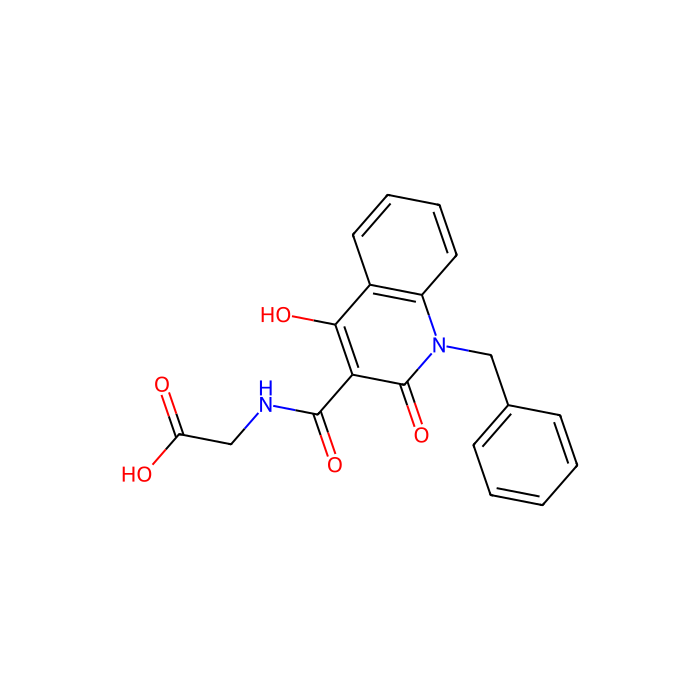
IOX2 IOX2 (JICL38) is a potent inhibitor of HIF-1α prolyl hydroxylase-2 (PHD2) with IC50 of 21 nM in a cell-free assay, >100-fold selectivity over JMJD2A, JMJD2C, JMJD2E, JMJD3, or the 2OG oxygenase FIH. In vitro
IOX2 potently inhibits PHD2 (IC50 of 21 nM) with over 100-fold selectivity compared to inhibition of JMJD2A, JMJD2C, JMJD2E, JMJD3, or the 2OG oxygenase FIH (IC50s <100 μM). IOX2 is active in cells, inhibiting HIF-1α hydroxylation in RCC4 cells at 50 μM. Hypoxia Inducible Factor (HIF) is regulated by the hydroxylation of prolyl residues in oxygen-dependent degradation domains in the HIF-1α subunit, which mark it for degradation by the proteosome. 1,2 HIF prolyl hydroxylation is catalyzed by prolyl hydroxylase domain enzymes (PHD1, 2, and 3), members of the Fe(II) and 2-oxoglutarate (2OG) oxygenase family. They require dioxygen as a cosubstrate, thus acting as the hypoxia-sensing component of the HIF system. The activity of PHD is suppressed by hypoxia, increasing both the abundance and activity of the HIF transcriptional complex.
IOX2 (JICL38) is a potent inhibitor of HIF-1α prolyl hydroxylase-2 (PHD2) with IC50 of 21 nM in a cell-free assay, >100-fold selectivity over JMJD2A, JMJD2C, JMJD2E, JMJD3, or the 2OG oxygenase FIH.
Storage
Store at -80°C
Verschickt in
Dry ice packs + Cold packs
Dieses Produkt erfordert Kühlkettenversand. Grundversand und andere Economy-Optionen sind nicht verfügbar.
Note
Moligand™
Aktionsart
INHIBITOR
Mechanismus der Wirkung
Inhibitor of egl-9 family hypoxia inducible factor 1;Inhibitor of lysine demethylase 2A;Inhibitor of lysine demethylase 5C
Determine the necessary mass, volume, or concentration for preparing a solution.
Dilution Calculator
Determine the dilution needed to prepare a stock solution.
Reconstitution Calculator
Bewertungen
Kundenbewertungen
Application Protocols
No validated, item-specific protocols are provided in the product data for this SKU. The following are general, non-binding suggestions for handling small-molecule ligands in common assay formats. Adjust for your target and readout.
General small-molecule handling in cell-based assays:
Prepare 10–50 mM DMSO stocks. Store aliquots at −80°C. Avoid repeated freeze–thaw cycles.
Dose-response setup: 8–12 concentrations, half-log spacing; include vehicle (DMSO) and positive/negative controls.
Incubation: 2–24 h typical for transcriptional or stabilization readouts; optimize per cell line and endpoint.
Readouts: Reporter gene activity, Western blot for target substrates, qPCR for pathway markers, or high-content imaging.
Biochemical assay setup (general):
Use freshly prepared cofactors and substrates. Include controls lacking enzyme or containing heat-inactivated enzyme to define background.
Validate linearity of signal with respect to time and enzyme concentration before inhibitor testing.
Analytics and documentation:
Confirm compound integrity by LC–MS pre- and post-assay for stability.
Record lot, stock concentration, solvent percent, and storage history in your ELN.
Note: For any standardized or regulated protocol requirements, rely on your internal SOPs and the lot-specific CoA/Spec Sheet.
Biological Roles
Product data do not specify biological targets for this SKU. The following describes general, literature-based context for IOX-class small molecules in research settings (non-clinical, for laboratory use only).
Pathway focus (general): IOX-type tool compounds are widely used to interrogate oxygen-sensing signaling via 2-oxoglutarate (2-OG)-dependent oxygenases in biochemical and cellular assays. Modulation of these enzymes can influence hydroxylation-dependent signaling cascades and transcriptional responses in vitro (literature, general).
Cellular studies (general): Employed as probes to stabilize hydroxylation-sensitive substrates and as reference controls in hypoxia-mimetic studies. Outcomes are highly cell-type- and context-dependent; rigorous controls are required.
Selectivity considerations (general): Many 2-OG oxygenase inhibitors display varying selectivity across enzyme subfamilies; off-target profiling by panel screening and chemoproteomics is advised prior to mechanistic conclusions.
Assay readouts (general):
Reporter gene assays (e.g., HRE reporters) to quantify pathway activation.
Target protein stabilization by Western blot or ELISA.
LC–MS-based hydroxylation stoichiometry on peptide/protein substrates in biochemical assays.
Translational caution: No medical or clinical claims are made. Use is restricted to research applications; biological effects observed in vitro may not extrapolate to organisms.
Good practices:
Include time-course and washout experiments to distinguish direct target engagement from secondary adaptive responses.
Employ matched inactive analogs or orthogonal inhibitors for triangulation.
For definitive, item-specific biological properties, consult primary literature and the CoA/Spec Sheet.
Buffer Applications
This product is a small-molecule research ligand, not a buffering reagent. Therefore, it is not typically used to prepare buffer systems or to control pH.
Practical notes for assay buffers (general guidance):
Choose a buffering system compatible with your biological target and detection method (e.g., HEPES or Tris for enzyme assays, phosphate-buffered saline for cell culture-compatible dilutions).
Maintain ionic strength and include essential cofactors (e.g., Fe(II), ascorbate, 2-oxoglutarate) or omit strategically depending on the enzymology being studied (general practice, not item-specific).
Keep final DMSO concentration from stock additions ≤1–2% v/v to minimize solvent effects on pH and protein stability.
If you require buffer recipes or validation for a specific assay, consult the relevant literature for your target enzyme or pathway.
Green Alternatives
As a small-molecule research reagent, IOX2 itself is the active entity rather than a process solvent or consumable. Green-chemistry considerations therefore focus on how you handle and formulate it rather than substituting the compound.
Opportunities to improve sustainability (general):
Solvent choices for stocks and assays:
Prefer water with minimal DMSO where biologically feasible. Keep DMSO ≤1% v/v in final assays to reduce solvent load.
When preparing analytical samples, use ACN/H2O instead of chlorinated solvents. Avoid DMF/NMP unless necessary.
Waste minimization:
Scale assays to microliter volumes in microplates to reduce solvent and reagent use.
Pool compatible samples for single analytical runs.
Energy and cold-chain:
Consolidate shipments on dry ice/cold packs to reduce packaging. Store at the recommended −80°C but avoid unnecessary freezer door openings; plan batch retrievals.
Safer workup/cleanup:
Use aqueous, biodegradable detergents for bench cleanup; avoid halogenated rinses. Prefer PTFE or glass syringeless filters to minimize solvent-wetted plastics.
Comparison table (general guidance):
DMSO vs DMF/NMP: DMSO offers lower toxicity profile and is broadly compatible; choose DMSO first.
ACN vs MeOH: ACN often yields better chromatographic performance at lower pressures; MeOH is greener but may increase backpressure—balance performance and sustainability.
These recommendations are generalized; adapt to your assay, EHS policy, and regulatory context.
Pharmaceutical Uses
No pharmaceutical or clinical use is claimed or supported for this product. It is provided strictly for research use only (product data).
Formulation and development context (general, non-clinical):
As a chemical biology tool compound, IOX2-class molecules may be formulated into DMSO-based stocks for in vitro assays and ex vivo studies.
For pre-formulation research, solubility screening across pH and cosolvent systems (e.g., SIF/SGF simulants, PEG400 or cyclodextrin vehicles) can support in vitro ADME profiling, but such activities remain strictly non-clinical.
There are no pharmacopeial monographs or excipient roles indicated for this item.
Regulatory note:
Not for human or veterinary use. Not for diagnostic procedures. No GMP status is implied. For any regulated application, obtain and review the lot-specific CoA and perform internal qualification tests.
If your project requires materials suitable for IND-enabling or GLP studies, please contact us to discuss sourcing or custom synthesis options under enhanced quality frameworks.
Physical Properties
Item-specific physicochemical specifications were not provided in the product data.
Appearance: Not specified for this item; refer to CoA/Spec Sheet.
Melting point: Not specified for this item; refer to CoA/Spec Sheet.
Boiling point: Not applicable/Not measured for typical solid research inhibitors; Not specified for this item; refer to CoA/Spec Sheet.
Density: Not specified for this item; refer to CoA/Spec Sheet.
Solubility: Not specified for this item; refer to CoA/Spec Sheet.
LogP/logD: Not specified for this item; refer to CoA/Spec Sheet.
pKa: Not specified for this item; refer to CoA/Spec Sheet.
Refractive index: Not applicable for solids; Not specified for this item; refer to CoA/Spec Sheet.
General, literature-based guidance (not item-specific):
Small-molecule heteroaromatic inhibitors with multiple HBD/HBA sites often show good solubility in polar aprotic solvents such as DMSO and DMF; aqueous solubility may require cosolvent or salt forms.
For analytical prep: LC–MS grade acetonitrile/water with 0.1% formic acid commonly affords sharp peaks; gradient elution aids in resolving closely related analogs.
Practical notes:
Prepare a concentrated DMSO stock (e.g., 10–50 mM) and dilute into assay buffer to the final working concentration; keep final DMSO ≤1–2% v/v to minimize assay interference (general practice).
Filter through 0.22 µm PTFE before bioassays to remove particulates.
Always consult the CoA/Spec Sheet for definitive, lot-specific physical data.
Quality and Grades
Grade/Purity: Moligand (product data).
What “Moligand” implies (general description of the grade):
Moligand denotes a small-molecule ligand/inhibitor quality appropriate for screening, target engagement, and chemical biology workflows. Emphasis is typically placed on identity confirmation and assay suitability rather than bulk commodity specifications.
Chromatographic purity and identity are controlled per lot; detailed acceptance criteria (e.g., HPLC area %, residual solvents, water content, counterion content) are defined in the internal specification and reported on the CoA when applicable. Item-specific numeric specs are not provided here.
How this affects use:
Suitable for biochemical assays, cell-based target modulation, and profiling in compound libraries.
If ultra-low UV background, metal traces, or residual peroxide limits are critical for your application (e.g., photophysics, metalloproteomics controls), confirm acceptability with the lot-specific CoA. If a specific value is not provided, it is Not specified for this item; refer to CoA/Spec Sheet.
Verification and QC recommendations:
Independently confirm identity/purity via LC–MS and 1H NMR upon receipt if your workflow requires validated provenance.
For quantitative biology, qualify a reference standard curve from the same lot.
Stabilizers/additives:
None stated for this item. If stabilizers are present, they will be listed explicitly on the CoA.
Documentation: Request the CoA/Spec Sheet for the supplied lot prior to regulated or high-sensitivity studies.
Reaction and Applications
Manufacturer applications: Not explicitly provided for this SKU beyond inclusion in a small-molecule/compound library (product data). The following expands on typical research uses of IOX2-class compounds as small-molecule ligands.
Research applications (general, non-clinical):
Chemical biology tool compound for modulating enzyme-catalyzed oxygenation pathways in vitro and in cells, enabling pathway mapping and hypoxia-response studies (literature, general). No medical/clinical use is implied.
Positive control in target engagement assays (e.g., biochemical IC50 determination, thermal shift assays, CETSA, NanoBRET target binding) when investigating 2-oxoglutarate-dependent oxygenase families (general guidance).
Probe in transcriptional reporter assays to benchmark hypoxia-responsive element (HRE) activation dynamics under controlled conditions (general).
Analytical/assay considerations:
Validate activity in your system with a concentration-response (8–12 points, half-log spacing). Include DMSO-only and inactive analog controls.
Monitor compound aggregation via detergent sensitivity and light scattering at high micromolar concentrations; maintain final DMSO ≤1–2% v/v.
For enzymology: Use freshly prepared stocks; include cofactors (e.g., Fe(II), ascorbate, and 2-OG) or omit per the intended competitive design (general enzymology practice).
Data quality tips:
Employ orthogonal readouts (biochemical and cellular) to confirm on-target effects.
Record exact lot, solvent, and storage history in ELN to ensure reproducibility.
Note: Item-specific potency/target data are not provided—consult primary literature and the CoA/Spec Sheet for definitive guidance.
Reaction Conditions
Not typically applicable. This product is a small-molecule research ligand and is not intended to serve as a reagent or catalyst in chemical transformations.
If you are performing biochemical or cellular assays (general guidance, not item-specific):
Stock preparation: Dissolve in anhydrous DMSO at a convenient concentration (e.g., 10–50 mM). Vortex and, if necessary, sonicate briefly to aid dissolution. Filter through 0.22 µm PTFE.
Working solutions: Dilute into assay buffer immediately before use. Maintain final DMSO ≤1–2% v/v to limit solvent effects.
Temperature: Most enzymatic assays run at 20–37°C; avoid prolonged room-temperature exposure of stock solutions to limit degradation.
Light and oxygen: Many heteroaromatics are light-sensitive; protect from strong light. If the target enzymology involves Fe(II), prepare cofactors fresh and use degassed buffers as needed.
Stability monitoring: Check for precipitation or peak changes by LC–MS/HPLC after freeze–thaw or prolonged storage.
For chemical synthesis applications, refer to literature specific to your scaffold; however, this SKU is not designated for use as a reagent.
Safety and Handling
GHS/SDS details are not provided in the product data for this item.
Signal word: Not specified for this item; refer to SDS.
Hazard statements (H-codes): Not specified for this item; refer to SDS.
GHS classification/pictograms: Not specified for this item; refer to SDS.
General laboratory safety guidance (not item-specific; follow your institutional EHS policies):
PPE: Use lab coat, safety glasses or goggles, and appropriate chemical-resistant gloves (e.g., nitrile). Handle powders in a fume hood to avoid inhalation of dust/aerosols.
Avoid contact with skin, eyes, and clothing. Prevent ingestion and inhalation. Wash thoroughly after handling.
Incompatibilities: Avoid strong oxidizers and strong acids/bases until compatibility is confirmed from SDS/CoA.
First aid overview: If on skin/eyes, rinse with water for at least 15 minutes and remove contaminated clothing; if inhaled, move to fresh air; if ingested, rinse mouth—seek medical attention in all cases (follow SDS instructions).
Environmental precautions: Prevent release to drains or the environment; collect spills with inert absorbent.
Special risks for small-molecule inhibitors (general):
Some heteroaromatics can be photosensitive. Minimize light exposure during handling and storage unless otherwise specified.
Hygroscopicity varies; keep containers tightly closed and desiccated.
Authoritative source: Always defer to the product-specific Safety Data Sheet (SDS) and your organization’s EHS protocols for definitive hazard classifications and response procedures.
Solvent Selection
Item-specific solubility data are not provided. The guidance below reflects general best practices for small-molecule heteroaromatic inhibitors.
Primary stock solvent: DMSO (anhydrous, ≥99.9%, low-water) is generally preferred for preparing concentrated stocks (e.g., 10–50 mM) due to broad solvency and assay compatibility at ≤1–2% v/v final.
Alternative solvents: DMF (anhydrous) and NMP offer similar solvency; use only if compatible with your biological system and materials of construction.
Aqueous vehicles: For working solutions, dilute DMSO stocks into buffered saline or assay buffer (e.g., HEPES or PBS) with optional surfactant (0.01–0.05% Tween-20 or Pluronic F-68) to reduce aggregation (general practice). Avoid exceeding tolerated cosolvent percentages.
Chromatography: For analytical HPLC, ACN/H2O or MeOH/H2O with 0.1% formic acid or ammonium acetate is typical. Choose gradient to avoid peak tailing often observed with polyfunctional heteroaromatics.
Lyophilization/redissolution: If you dry down DMSO stocks, redissolution may be slower; pre-wet with a small amount of DMSO before adding aqueous buffer.
Comparison (general):
DMSO: highest solvency/assay tolerance; hygroscopic—store dry, minimize water pickup.
DMF/NMP: strong solvency, but higher toxicity/odor; verify biocompatibility.
MeOH/EtOH: useful for quick rinses and intermediate dilutions but may be insufficient for high-concentration stocks.
Always verify solvent and concentration compatibility in your specific assay system.
Storage and Reconstitution
Storage conditions: Store at −80°C (product data). Keep tightly closed, desiccated, and protected from light. Minimize freeze–thaw events by aliquoting upon receipt.
Shipping: Shipped on dry ice packs + cold packs (product data) to maintain the cold chain.
Reconstitution (general guidance for small-molecule ligands; not item-specific):
Solvent: Use anhydrous DMSO for initial stock solution. Target 10–50 mM depending on expected working concentrations and solubility.
Technique: Allow vial to equilibrate to room temperature in a desiccator before opening to prevent moisture condensation. Add pre-measured DMSO, vortex, and, if necessary, sonicate briefly. Filter through a 0.22 µm PTFE syringe filter to remove particulates.
Aliquoting: Dispense into low-bind microtubes (amber if light-sensitive) to single-use volumes. Flush headspace with inert gas if long-term storage is planned (optional best practice).
Stability and handling:
Working solutions in aqueous buffer should be prepared fresh. Avoid prolonged exposure to ambient light and temperature.
If precipitate forms after dilution, gently warm to room temperature and vortex; avoid strong base/acid unless stability is documented.
Record-keeping:
Document lot number, preparation date, solvent, and concentration on each aliquot. Review the CoA/Spec Sheet for any lot-specific stability notes or additional storage instructions.
Structure and Identity
Brief overview: IOX2 is supplied as a Moligand small-molecule research reagent. Item-specific structural identifiers are not provided in the product data for this SKU.
Chemical name: Not specified for this item; refer to CoA/Spec Sheet.
Molecular formula: Not specified for this item; refer to CoA/Spec Sheet.
Molecular weight: Not specified for this item; refer to CoA/Spec Sheet.
SMILES: Not specified for this item; refer to CoA/Spec Sheet.
InChIKey: Not specified for this item; refer to CoA/Spec Sheet.
CAS: 931398-72-0 (product data)
PubChem CID: 54685215 (product data)
Structural features (general, literature context; not item-specific):
IOX-class compounds used in chemical biology commonly feature heteroaromatic rings and amide linkages designed to engage metalloenzyme active sites via H-bonding and chelation motifs (literature, general).
Expect an aromatic core bearing polar substituents (e.g., hydroxyls/carboxamide-like groups) and a secondary heteroaromatic appendage; multiple H-bond donors/acceptors increase polarity relative to simple aromatics (literature, general).
Identity verification recommendations:
Confirm identity by LC–MS and 1H/13C NMR against the manufacturer’s CoA/Spec Sheet.
Cross-check CAS and CID when integrating into screening libraries or database registrations.
Synthetic Utility
This SKU is supplied as a finished small-molecule research ligand rather than a synthetic building block, and item-specific functional group details are not provided in the product data. As such, it is not typically used as a reagent or intermediate in general organic synthesis.
General considerations (not item-specific):
Heteroaromatic inhibitors with multiple H-bonding groups are often sensitive to strong acids/bases, limiting their utility as substrates under forcing conditions.
Late-stage diversification (e.g., amide coupling on pendant acids/amines, SNAr on activated heteroaryl chlorides, or Suzuki couplings on aryl boronates) is possible for related scaffolds but requires precise knowledge of functional group placement and compatibility.
If derivatization or probe tagging (e.g., biotinylation, alkyne/azide handles for click chemistry) is desired, consult structural data from the CoA or primary literature to identify positions tolerant to substitution.
Recommendation:
Use this item as provided for biological assays. For synthetic campaigns or SAR exploration, consider procuring the corresponding intermediates or custom variants designed for diversification.
Target Specificity
Item-specific target, selectivity, and potency data are not provided in the product data for this SKU. Therefore, no claims are made here regarding biochemical targets or selectivity profiles.
Guidance (general, literature-based context):
IOX-type small molecules are often employed in research to modulate 2-oxoglutarate-dependent oxygenases in vitro and in cells. Selectivity can vary widely among family members; conclusions should be supported by orthogonal assays and profiling panels.
For definitive specificity information for your lot, consult the CoA/Spec Sheet and primary literature. Implement internal confirmation with side-by-side reference compounds and inactive analog controls.
Benötigen Sie Hilfe bei der Auswahl der Qualität?
Unser Leitfaden zur Qualitätsauswahl behandelt Reinheit, Stabilisatorstatus und Anwendungseignung für alle Varianten in unserem Katalog.
Wir verwenden Cookies, um die ordnungsgemäße Funktion der Website sicherzustellen und, soweit zulässig, Ihr Nutzererlebnis zu verbessern. Sie können Ihre Einstellungen jederzeit unter „Einstellungen“ verwalten. Weitere Informationen finden Sie in unserer Cookie-Richtlinie.
Dürfen wir Sie über Rabattaktionen informieren?
Später erinnern
Vielen Dank! Bitte überprüfen Sie Ihren E-Mail-Posteingang, um zu bestätigen.
Products are supplied to verified businesses, institutions, and qualified professionals for research and development use only. Not for use in humans, animals, diagnosis, or therapy.

 G2403078