QUALITÄT & REINHEITMoligand™?Moligand™ — Aladdin's line of ligands and bioactive small molecules. Use for receptor, pathway, and binding studies needing defined small-molecule tools.≥98%
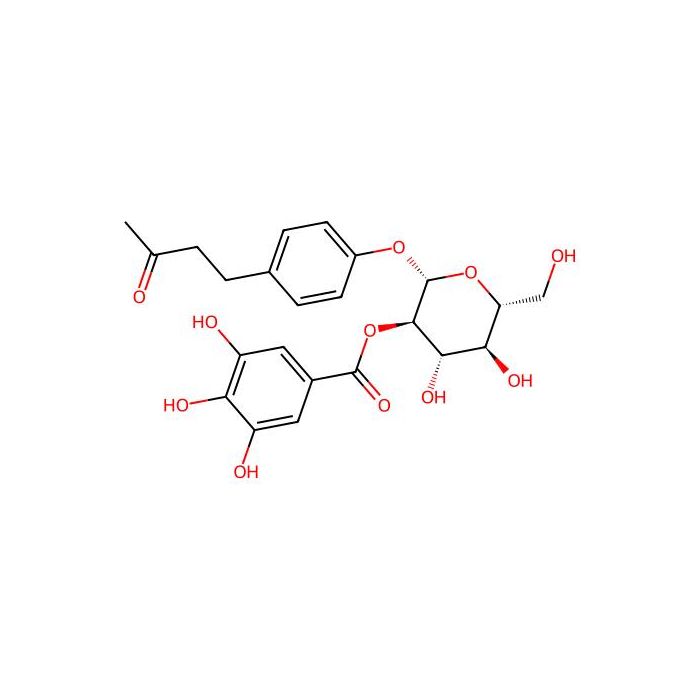
Isolindleyin, a butyrophenone, is a tyrosinase inhibitor, with a Kd of 54.8 μM for human tyrosinase. Isolindleyin exhibits anti-inflammatory, analgesic and anti-melanogenic activities.
Spezifikationen
Spezifikationen & Reinheit
Moligand™, ≥98%
Storage
Store at 2-8°C,Argon charged
Verschickt in
Wet ice
Dieses Produkt erfordert Kühlkettenversand. Grundversand und andere Economy-Optionen sind nicht verfügbar.
Determine the necessary mass, volume, or concentration for preparing a solution.
Dilution Calculator
Determine the dilution needed to prepare a stock solution.
Reconstitution Calculator
Bewertungen
Kundenbewertungen
Application Protocols
No item-specific, validated application protocols are provided in the Product Data. The following general procedures are commonly used for screening-library compounds and should be adapted to your assay and the compound’s confirmed properties.
Stock solution preparation:
Weigh the solid quickly in a low-humidity environment.
Prepare a 10–50 mM stock in anhydrous DMSO (or suitable solvent), vortex and sonicate briefly if needed. Record exact concentration.
Sterile-filter (0.2 µm PTFE) for cell-based assays where particulate contamination is a concern.
Working solution and dosing:
Prepare intermediate dilutions to limit final DMSO to 0.1–1% v/v in assay wells.
Typical screening ranges: 0.1 nM–100 µM depending on assay sensitivity; include vehicle controls and, where possible, a positive control reference.
Plate handling:
Use low-binding polypropylene plates for hydrophobic analytes; seal plates to minimize evaporation.
Equilibrate plates to assay temperature to avoid precipitation from temperature shifts.
Stability checks:
Assess freeze–thaw tolerance by LC–MS after 3–5 cycles; aliquot stocks to reduce cycling.
Light sensitivity: Work under low-light conditions and use amber vials if degradation is suspected.
Document any deviations and record lot numbers to ensure traceability across replicates and campaigns.
Biological Roles
Item-specific biological function, targets, or pathway roles are not provided in the Product Data and should be confirmed from primary literature using the CAS (87075-18-1) or CID (10390322). The following guidance outlines how such compounds are typically evaluated in research, without implying specific activities for this item.
Putative origin: Compounds designated with names like “Isolindleyin” are often natural products or natural-product-like molecules. If so, literature may report biosynthetic origins (plant, microbial) and chemotaxonomic context; confirm via databases before citing.
Typical assessments: In vitro biochemical target panels, phenotypic cellular assays, and orthogonal biophysical binding methods (SPR, ITC, DSF) to determine binding and mechanism-of-action hypotheses.
ADME profiling: Aqueous solubility, microsomal stability, plasma protein binding, and permeability (PAMPA/Caco-2) are frequently measured early to inform assay design and dose ranges.
Selectivity and off-targets: Cross-screening across kinases, GPCRs, ion channels, or enzyme families can reveal polypharmacology; counter-screens reduce false positives.
Chemical liabilities to watch (general): Aggregation at high micromolar concentrations, redox cycling, metal chelation (for polyphenolic/heteroaromatic motifs), or fluorescent interference; design assays accordingly.
Research-use statement: This product is for research use only. No medical, diagnostic, or clinical claims are made or implied.
Buffer Applications
This product is not a buffering reagent and no buffer-related specifications or pKa values are provided in the Product Data.
Applicability: Not typically used to prepare biological or analytical buffers. Instead, it may be dissolved in assay buffers as a test article.
Practical note: When dosing into buffered assay media, limit DMSO or organic co-solvent to levels tolerated by the biological system (commonly 0.1–1% v/v). Pre-dilute concentrated DMSO stocks into intermediate aqueous-organic solutions to avoid local precipitation.
pH considerations: If the compound contains ionizable groups (structure-dependent), apparent potency and solubility can be pH-dependent. Perform pH scouting where activity or solubility is sensitive.
For buffer preparation, use established systems (e.g., phosphate, HEPES, Tris, MOPS) appropriate to your assay’s pH and ionic strength requirements.
Green Alternatives
While green chemistry is most pertinent to solvent-intensive synthesis, thoughtful selection of solvents and handling practices can also improve the sustainability of small-molecule screening workflows.
Replace DMF and NMP with dimethyl sulfoxide (DMSO) or propylene carbonate when chemically compatible.
Favor ethanol or isopropanol over methanol and acetonitrile for preparative tasks when viable, acknowledging potential assay constraints.
For extractions or workups (if applicable), consider ethyl acetate and 2-methyltetrahydrofuran (2-MeTHF) over dichloromethane or THF.
Comparison snapshot (general; not item-specific specs):
DMSO vs DMF: DMSO offers comparable solvating power with lower reproductive toxicity concerns; viscosity is higher and may affect liquid handling at low temperatures.
2-MeTHF vs THF: 2-MeTHF is bio-derived with reduced peroxide formation tendency and higher bp; miscibility with water is lower, impacting phase behavior.
EtOAc vs DCM: EtOAc is less volatile and less chlorinated waste; may extract bases/acids differently and has higher boiling point.
Operational practices:
Use concentrated master stocks to minimize solvent volumes during assay setup.
Employ sealed, low-dead-volume plates to reduce DMSO evaporation and waste.
Consolidate analytical runs to reduce ACN consumption; consider water-rich UPLC methods where feasible.
Note: Validate compound stability and assay performance whenever substituting solvents or changing handling conditions.
Pharmaceutical Uses
No pharmacopeial status, excipient role, or manufacturing specifications are provided in the Product Data for this item. The product is supplied strictly for research use only.
General information for research settings (non-clinical, non-GLP):
Reference material: May be used as an internal standard or comparator during analytical method development once identity and purity are verified from the CoA.
Pre-formulation experiments: Solubility screening (cosolvents, pH adjustment, complexation), solid-state screening (if material quantity permits), and stability-indicating method development can be conducted to characterize behavior—results are research-informative only.
Not for human or veterinary use: Do not use in APIs, clinical candidates, or compounded preparations. No claims regarding safety, efficacy, or dosage are made or implied.
Documentation:
For any regulated application, a different grade with extended documentation would be necessary. Contact us if you require augmented characterization (e.g., residual solvent panels, elemental impurities per ICH Q3D, stability data) beyond typical Moligand-grade deliverables.
Physical Properties
Only properties present in the Product Data or otherwise documented for this exact item should be treated as specifications. Values not listed below are not provided with this product and should be taken from the CoA/Spec Sheet if needed for regulated workflows.
Appearance: Not specified for this item; refer to CoA/Spec Sheet.
Molecular weight: Not specified for this item; refer to CoA/Spec Sheet.
Molecular formula: Not specified for this item; refer to CoA/Spec Sheet.
Melting point: Not specified for this item; refer to CoA/Spec Sheet.
Boiling point: Not applicable/rarely used for discrete bioactive solids; Not specified for this item; refer to CoA/Spec Sheet.
Density: Not specified for this item; refer to CoA/Spec Sheet.
LogP/logD: Not specified for this item; refer to CoA/Spec Sheet.
pKa(s): Not specified for this item; refer to CoA/Spec Sheet.
Refractive index: Not applicable for solids; Not specified for this item; refer to CoA/Spec Sheet.
Solubility profile: Not specified for this item; refer to CoA/Spec Sheet. For screening use, DMSO stocks (e.g., 10–50 mM) are commonly employed when chemically compatible.
Notes (general/literature-style guidance; not specifications):
For library members with mixed polarity or multiple H-bond donors/acceptors, solubility is often improved in high-dielectric, aprotic solvents (DMSO, DMF). If phenolic or carboxylic groups are present, mild basification (e.g., 0.1 eq base) may increase solubility, subject to stability.
Always verify exact solubility and phase behavior using the product’s batch CoA prior to high-throughput or formulation work.
Quality and Grades
Grade: Moligand™ (as listed in Product Data)
What Moligand™ signifies (general description):
Intended for small-molecule discovery workflows, including ligand screening, chemoproteomics probe development, fragment-to-lead, and reference standard applications.
Emphasis is typically placed on identity confirmation, mass purity, and suitability for solution-phase screening rather than on chromatographic UV baselines or trace-metal specifications associated with analytical or semiconductor grades.
Item-specific notes:
Purity level, residual solvents, water content, and stabilizers: Not specified for this item; refer to CoA/Spec Sheet.
Structural confirmation methods (e.g., 1H/13C NMR, HRMS, LC–MS chromatographic purity) commonly support Moligand-grade materials; obtain the batch CoA for exact methods and acceptance criteria.
When to choose Moligand™ over other grades:
Early-stage SAR, HTS, or target deconvolution where rapid procurement and confirmed identity are prioritized.
Assay development where solubility in DMSO and predictable reconstitution are desired.
Considerations for regulated/quantitative contexts:
For GLP, clinical, or GMP-adjacent use, or for quantitative bioanalysis requiring certified reference material (CRM) characteristics, additional documentation and tighter impurity controls may be necessary. In such cases, contact us for a tailored specification or alternate grade if available.
Reaction and Applications
This product is offered primarily for discovery and screening use; no specific synthetic application is provided in the Product Data. The following points outline common research uses for small-molecule library members like Isolindleyin.
Discovery and profiling:
Ligand screening: Evaluate binding or functional modulation across biochemical, biophysical (e.g., DSF, MST, SPR), and cellular assays.
Polypharmacology mapping: Test across panel assays to generate activity fingerprints and support target deconvolution.
Reference standard: Use as a comparator or spike-in control for analytical method development (LC–MS, HPLC), once identity/purity are confirmed from the CoA.
Chemical biology workflows:
Probe development: If functional handles exist (as determined from structure), derivatize for affinity capture or photo-crosslinking; validate that modifications preserve activity.
ADME surrogate testing: Assess solubility, stability in assay buffers, microsomal stability, and permeability (PAMPA/Caco-2) as part of early triage.
Practical tips (general):
Prepare fresh DMSO stocks at 10–50 mM, aliquot, and minimize freeze–thaw cycles. Record exact concentration by weight-in-volume or quantitative NMR when precision is required.
Filter (0.2 µm PTFE) solutions used for biophysical assays to remove particulates; avoid filters that might adsorb hydrophobic analytes.
Control for PAINS/assay interference: Implement counterscreens (e.g., detergent sensitivity in enzymatic assays, redox cycling checks) according to the assay class.
Reaction Conditions
No item-specific reaction conditions are provided in the Product Data. If using this compound as a substrate or for derivatization, adopt conditions guided by the confirmed functional groups (from CoA or literature) and perform small-scale scouting.
General condition templates (to be adapted as appropriate; literature-style guidance):
Amide coupling (for –CO2H/–NH2 pairs): HATU (1.1–1.5 eq), DIPEA (2–3 eq), DMF or DCM, 0–25°C, 1–16 h; monitor by LC–MS. For base-sensitive motifs, use EDC·HCl/HOBt alternatives in MeCN.
Carbamate formation (for –OH/–NH): Triphosgene or CDI with alcohol/amine partner, DCM/THF, 0–25°C; quench carefully.
Suzuki–Miyaura (if aryl–X and boronate are present): Pd(PPh3)4 (1–3 mol%), K2CO3 (2–3 eq), 1,4-dioxane/H2O (3:1), 60–90°C, 2–12 h under inert gas.
Protect from strong acid/base and prolonged heat until stability is known. Many library members show improved longevity when handled under inert gas and low light—aligning with the storage recommendation (2–8°C, argon).
Yields and scalability:
Expect variable yields depending on scaffold complexity and functional-group density. Optimize on milligram scale first, using analytical-scale purification (prep-LC or flash) before scale-up.
Safety and Handling
Safety data specific to this item are not provided in the Product Data and must be confirmed in the SDS before use.
GHS classification: Not specified for this item; refer to SDS.
Signal word / pictograms / H-statements: Not specified for this item; refer to SDS.
General laboratory precautions for small-molecule research compounds:
PPE: Lab coat, safety glasses, and appropriate chemically resistant gloves (e.g., nitrile). Handle in a certified fume hood to avoid inhalation of dust or solvent vapors during solution prep.
Storage incompatibilities: Store away from strong oxidizers and acids/bases unless stability is documented. Avoid prolonged exposure to moisture and light pending stability information.
Special storage for this item: Store at 2–8°C, under argon (Product Data). Shipments are provided on wet ice. Allow to equilibrate to room temperature in a desiccated environment before opening to minimize condensation.
Hygiene: Avoid ingestion and skin contact. Wash thoroughly after handling. Do not pipette by mouth. Use dedicated tools for weighing to avoid cross-contamination in screening libraries.
First aid (overview; consult SDS): Eye/skin contact—rinse with water for 15 min; remove contaminated clothing. Inhalation—move to fresh air. Ingestion—rinse mouth; seek medical attention. Provide SDS to responders.
Waste and spill response:
Collect solid residues and DMSO/organic solutions in compatible waste containers for disposal according to institutional and local regulations. Absorb small spills with inert material (silica/vermiculite) and clean area with suitable solvent while wearing PPE.
Solvent Selection
Given the product’s use as a small-molecule library member, solvent choice is typically driven by assay compatibility and compound stability rather than bulk process parameters.
General guidance (not item-specific specifications):
Primary stock solvent: DMSO is the default for discovery libraries due to broad solvating power and assay compatibility up to 0.1–1% v/v in most biochemical/cellular formats.
Alternative solvents: DMF, acetonitrile, methanol, ethanol may be used where compatible with the compound’s stability and downstream assay.
Aqueous use: If the structure contains ionizable groups, aqueous buffers with co-solvent (5–20% DMSO or ACN) can be employed after pH adjustment; confirm stability.
Polarity/miscibility (general expectations):
DMSO: fully miscible with water and most organics; ideal for high-concentration master stocks (e.g., 10–50 mM) for plating.
ACN/MeOH/EtOH: HPLC-friendly but may require higher volumes to dissolve hydrophobic solids; often used in analytical characterization.
Selection tips:
Begin with DMSO; if insoluble or unstable, test DMF or ACN. Minimize water uptake by dispensing into pre-dried vials/plates. For sensitive chemotypes (e.g., acylals, lactols), avoid basic alcohols and prolonged exposure to aqueous base.
Small comparison (general):
DMSO: maximal solubility, high bp; potential to affect certain enzyme assays at >1% v/v.
ACN: low viscosity, LC-MS compatible; lower solvating power for highly lipophilic compounds.
MeOH/EtOH: protic; may participate in transesterification with acid derivatives—check stability.
Storage and Reconstitution
Item-specific storage conditions are provided in the Product Data; reconstitution guidance below is general and should be adapted once the compound’s exact solubility/stability are confirmed from the CoA.
Storage (from Product Data): Store at 2–8°C, under argon. Shipped on wet ice.
Container: Keep tightly closed in the original argon-charged container. If subdividing, backfill with inert gas (argon or nitrogen) and use amber vials if light sensitivity is suspected.
Humidity control: Allow the vial to reach room temperature before opening to prevent moisture condensation. Work in a dry box or with desiccant present when practical.
Reconstitution (general):
Preferred solvent: Anhydrous DMSO is typically used for small-molecule screening stocks. Alternative solvents (DMF, ACN, MeOH/EtOH) may be used if compatible.
Stock concentration: Commonly 10–50 mM. Verify complete dissolution by visual inspection and, if critical, by analytical confirmation (UV/LC–MS).
Aliquoting: Prepare single-use aliquots to minimize freeze–thaw cycles. Store aliquots at 2–8°C (short term) or below −20°C (longer term) if stability permits; confirm with CoA/SDS.
Stability notes:
Avoid prolonged exposure to air, moisture, and light. Track solution age; many discovery compounds are best used within weeks to months once in solution, pending stability data.
Always defer to the product’s CoA and SDS for definitive storage limits, re-test intervals, and handling constraints.
Structure and Identity
Concise identity overview for a small-molecule library member supplied under Moligand grade. Item-specific identifiers are provided below; structural specifics are not included in the Product Data.
Product name: Isolindleyin (SKU: I649770)
CAS: 87075-18-1
PubChem CID: 10390322 (identifier reference only; consult primary literature for structural details)
InChIKey: Not specified for this item; refer to CoA/Spec Sheet.
SMILES: Not specified for this item; refer to CoA/Spec Sheet.
Molecular formula: Not specified for this item; refer to CoA/Spec Sheet.
Molecular weight: Not specified for this item; refer to CoA/Spec Sheet.
Structural features (general guidance):
This listing is supplied as part of a small-molecule/compound library category. Without an item-specific structure, assume a discrete organic small molecule suitable for ligand screening and chemoinformatics workflows.
If you require exact functional group inventory (e.g., phenolics, glycosidic linkages, heteroaromatic cores), please obtain the CoA/Spec Sheet or consult authoritative databases using the CAS or CID provided.
2D structure description (general):
Not specified for this item; refer to CoA/Spec Sheet. When available, summarize the carbon skeleton (aliphatic vs. (hetero)aromatic), heteroatom types (O/N/S/halogen), and stereochemical features (anomeric centers, E/Z, R/S) to inform solubility, stability, and potential assay interferences.
Synthetic Utility
The Product Data do not specify functional groups or reactivity. The following outlines general strategies if researchers elect to derivatize a small-molecule library member like Isolindleyin for probe or SAR purposes. Verify the actual structure from the CoA or literature before any transformation.
Derivatization goals: Introduce tags (biotin, fluorophores), handles (alkynes/azides for CuAAC), or isotopic labels for analytical tracing.
Common transformations (structure-dependent):
Phenolic/alcoholic OH: Carbamate/carbonate or ether formation; acylation with activated esters.
Carboxylic acids: Amide coupling (HATU/EDC), esterification (Steglich/Fischer) for prodrugs or solubility tuning.
Amines: Amide/urea/sulfonamide formation; reductive alkylation for SAR expansion.
Aromatic rings: Electrophilic substitution, Suzuki–Miyaura/Buchwald–Hartwig if halogens/boronates are present.
Protecting-group strategy: If multiple nucleophiles exist, temporary protection (Boc, Fmoc, TBDMS) may be required to achieve chemoselectivity.
Analytical support:
Track reactions via LC–MS with matched UV/Vis methods; confirm structures by NMR (1D/2D) and HRMS. For stereogenic centers, consider chiral HPLC.
Caveats:
Natural-product-like scaffolds can contain labile acetals, glycosidic bonds, or conjugated systems that are sensitive to acid/base, heat, or light. Pilot small-scale reactions and stability studies are recommended.
Target Specificity
No target, pathway, or binding specificity is provided in the Product Data for this item.
Tested biological targets, IC50/Kd/EC50 values, and selectivity panels: Not specified for this item; refer to CoA/Spec Sheet or primary literature (search by CAS 87075-18-1 or CID 10390322) if needed.
Assay guidance (general): Include orthogonal assays (biophysical plus functional) and appropriate counter-screens (aggregation, redox cycling, fluorescence interference) to validate any apparent target engagement.
Research-use only: No claims are made regarding therapeutic targets or clinical relevance.
Häufig gestellte Fragen
What is the purity of this product?
This product is supplied at ≥98% purity (chemical assay). Lot-specific values are stated on the Certificate of Analysis.
What is Moligand??
Moligand? is one of Aladdin Scientific's premium product lines, formulated for high-purity applications across multiple workflows. Compared to standard grades in the same workflow, Moligand? products typically offer tighter specifications, more rigorous QC, and stronger lot-to-lot consistency.
How should this product be stored?
Store at 2–8 °C under argon. It is supplied under an argon blanket; reseal under inert gas after each use.
How is this product shipped?
This product ships chilled on wet ice. Unpack on arrival and transfer it to the storage condition stated above.
What are the CAS number, molecular formula and molecular weight?
The CAS Number is 87075-18-1, the molecular formula is C23H26O11, and the molecular weight is 478.45 g/mol.
What documentation is provided?
Available product documentation, including Certificates of Analysis (COA), Safety Data Sheets (SDS), and specification sheets, is shown in the product document area. Document availability and access follow the current site policy.
Benötigen Sie Hilfe bei der Auswahl der Qualität?
Unser Leitfaden zur Qualitätsauswahl behandelt Reinheit, Stabilisatorstatus und Anwendungseignung für alle Varianten in unserem Katalog.
Wir verwenden Cookies, um die ordnungsgemäße Funktion der Website sicherzustellen und, soweit zulässig, Ihr Nutzererlebnis zu verbessern. Sie können Ihre Einstellungen jederzeit unter „Einstellungen“ verwalten. Weitere Informationen finden Sie in unserer Cookie-Richtlinie.
Dürfen wir Sie über Rabattaktionen informieren?
Später erinnern
Vielen Dank! Bitte überprüfen Sie Ihren E-Mail-Posteingang, um zu bestätigen.
Products are supplied to verified businesses, institutions, and qualified professionals for research and development use only. Not for use in humans, animals, diagnosis, or therapy.
 J2619628

