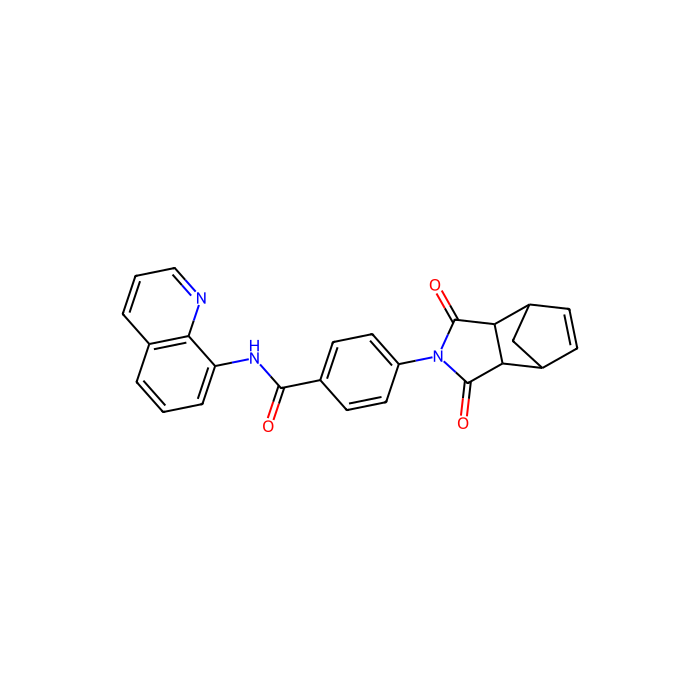
IWR-1 - ≥98% , CAS No.1127442-82-3

CAS: 1127442-82-3 Cat. No.: I129780 Summenformel: C25H19N3O3 Molekulargewicht: 409.44
Zu bestellen verfügbar
GRADE & PURITY ≥98%
Synonyms
IWR1 | 4-(1,3,3a,4,7,7a-Hexahydro-1,3-dioxo-4,7-methano-2H-isoindol-2-yl)-N-8-quinolinyl-Benzamide | rel-4-[(3aR,4S,7R,7aS)-1,3,3a,4,7,7a-Hexahydro-1,3-dioxo-4,7-methano-2H-isoindol-2-yl]-N-8-quinolinylbenzamide
Storage
Room temperature
Shipped In
Normal
★
Size
Deutschland (EU)
USA*
Price
Qty
5mg
I129780-5mg
—
2 Auf Lager

65,86€

98,84€
Speichern 32,97 € (33.36%)
10mg
I129780-10mg
Auf Bestellung · 8–12 Wochen

111,85€

168,25€
Speichern 56,40 € (33.52%)
50mg
I129780-50mg
—
2 Auf Lager

296,68€

445,06€
Speichern 148,38 € (33.34%)
Enter a quantity for the sizes you want to add.
🧪
Why this grade

≥98% for sensitive chromatographic and analytical workflows requiring minimal baseline interference.

🌡

Storage & shipping

Room temperature Ships Normal Check lot-specific COA for exact specifications.

📋

Quality documents

SDS, COA, datasheet, and spec sheet available for download. Lot-specific COA accessible via lot number lookup.

📚

Literature proof

Cited in 1 peer-reviewed publications across chromatography, organic synthesis, and cross-coupling reactions.

Specifications

Synonyme
IWR1 | 4-(1,3,3a,4,7,7a-Hexahydro-1,3-dioxo-4,7-methano-2H-isoindol-2-yl)-N-8-quinolinyl-Benzamide | rel-4-[(3aR,4S,7R,7aS)-1,3,3a,4,7,7a-Hexahydro-1,3-dioxo-4,7-methano-2H-isoindol-2-yl]-N-8-quinolinylbenzamide
Spezifikationen & Reinheit
≥98%
Biochemische und physiologische Mechanismen
Inhibitor of Wnt signaling. Induces an increase in axin2 protein levels; promotesβ-catenin phosphorylation by stabilizing Axin-scaffolded destruction complexes. Promotes endothelial cell specification of cardiac progenitor cellsNegative Controlalso availa
Storage
Room temperature
Verschickt in
Normal
Aktionsart
INHIBITOR
Reinheit
≥98%
Namen und Kennungen
Pubchem Sid
Pubchem Sid Url
https://pubchem.ncbi.nlm.nih.gov/substance/504770354
Kanonisches Lächeln
C1C2C=CC1C3C2C(=O)N(C3=O)C4=CC=C(C=C4)C(=O)NC5=CC=CC6=C5N=CC=C6
IUPAC Name
4-[(1S,2R,6S,7R)-3,5-dioxo-4-azatricyclo[5.2.1.02,6]dec-8-en-4-yl]-N-quinolin-8-ylbenzamide
InChIKey
ZGSXEXBYLJIOGF-ALFLXDJESA-N
INCHI
1S/C25H19N3O3/c29-23(27-19-5-1-3-14-4-2-12-26-22(14)19)15-8-10-18(11-9-15)28-24(30)20-16-6-7-17(13-16)21(20)25(28)31/h1-12,16-17,20-21H,13H2,(H,27,29)/t16-,17+,20-,21+
Isomere SMILES
C1[C@@H]2C=C[C@H]1[C@@H]3[C@H]2C(=O)N(C3=O)C4=CC=C(C=C4)C(=O)NC5=CC=CC6=C5N=CC=C6
Molekulargewicht
409.44
Reaxy-Rn
30206857
Reaxys-RN_link_address
https://www.reaxys.com/reaxys/secured/hopinto.do?context=S&query=IDE.XRN=30206857&ln=

Documentation

📋 Safety Data Sheet (SDS)

Comprehensive hazard, handling, storage, and regulatory compliance document.

Download SDS →

✅ Certificate of Analysis (COA)

Lot-specific quality data. Enter your lot number to retrieve the exact COA.

Look up COA →

📊 Datasheet

Quick-reference summary of product specifications and applications.

View datasheet →

🔬 Specification Sheet

Full quality attributes and acceptance criteria for this grade.

View spec sheet →

Advanced Data

Taxonomic Classification

Taxonomy Tree

KingdomOrganic compounds
SuperclassBenzenoids
KlasseBenzene and substituted derivatives
SubclassBenzoic acids and derivatives
Intermediate Tree Nodes Not available
Direct ParentAcylaminobenzoic acid and derivatives
Alternative Parents Phenylpyrrolidines  Quinolines and derivatives  Isoindolones  Benzamides  Benzoyl derivatives  Pyrrolidine-2-ones  N-substituted carboxylic acid imides  Pyridines and derivatives  Pyrroles  Heteroaromatic compounds  Dicarboximides  Secondary carboxylic acid amides  Lactams  Azacyclic compounds  Organic oxides  Hydrocarbon derivatives  Carbonyl compounds  Organonitrogen compounds  Organopnictogen compounds  
Molecular FrameworkAromatic heteropolycyclic compounds
Substituents Acylaminobenzoic acid or derivatives - 1-phenylpyrrolidine - Isoindolone - Quinoline - Benzamide - Isoindoline - Isoindole or derivatives - Benzoyl - Carboxylic acid imide, n-substituted - Pyridine - Pyrrolidone - 2-pyrrolidone - Pyrrolidine - Pyrrole - Heteroaromatic compound - Carboxylic acid imide - Dicarboximide - Secondary carboxylic acid amide - Carboxamide group - Lactam - Organoheterocyclic compound - Azacycle - Carboxylic acid derivative - Organopnictogen compound - Organonitrogen compound - Organooxygen compound - Organic oxygen compound - Organic nitrogen compound - Carbonyl group - Organic oxide - Hydrocarbon derivative - Aromatic heteropolycyclic compound
BeschreibungThis compound belongs to the class of organic compounds known as acylaminobenzoic acid and derivatives. These are derivatives of amino benzoic acid derivatives where the amine group is N-acylated.
External Descriptors dicarboximide - bridged compound
3D-Struktur
Interaktives chemisches Strukturmodell


Zugehörige Ziele (menschlich)
TNKS Tchem Tankyrase-1 (3 Activities)
Activity TypeActivity Value -log(M)Mechanism of ActionActivity ReferencePublications (PubMed IDs)
TNKS2 Tchem Tankyrase-2 (6 Activities)
Activity TypeActivity Value -log(M)Mechanism of ActionActivity ReferencePublications (PubMed IDs)
PARP1 Tclin Poly [ADP-ribose] polymerase-1 (6206 Activities)
Activity TypeRelationActivity valueUnitsAction TypeJournalPubMed IddoiAssay Aladdin ID
DLD-1 (17511 Activities)
Activity TypeRelationActivity valueUnitsAction TypeJournalPubMed IddoiAssay Aladdin ID
HT-29 (80576 Activities)
Activity TypeRelationActivity valueUnitsAction TypeJournalPubMed IddoiAssay Aladdin ID
LoVo (4724 Activities)
Activity TypeRelationActivity valueUnitsAction TypeJournalPubMed IddoiAssay Aladdin ID
MG-63 (795 Activities)
Activity TypeRelationActivity valueUnitsAction TypeJournalPubMed IddoiAssay Aladdin ID
A549 (127892 Activities)
Activity TypeRelationActivity valueUnitsAction TypeJournalPubMed IddoiAssay Aladdin ID
H9 (1832 Activities)
Activity TypeRelationActivity valueUnitsAction TypeJournalPubMed IddoiAssay Aladdin ID
HepG2 (196354 Activities)
Activity TypeRelationActivity valueUnitsAction TypeJournalPubMed IddoiAssay Aladdin ID
PARP2 Tclin Poly [ADP-ribose] polymerase 2 (1185 Activities)
Activity TypeRelationActivity valueUnitsAction TypeJournalPubMed IddoiAssay Aladdin ID
PARP3 Tclin Poly [ADP-ribose] polymerase 3 (206 Activities)
Activity TypeRelationActivity valueUnitsAction TypeJournalPubMed IddoiAssay Aladdin ID
TNKS Tchem Tankyrase-1 (1241 Activities)
Activity TypeRelationActivity valueUnitsAction TypeJournalPubMed IddoiAssay Aladdin ID
Liver microsomes (16955 Activities)
Activity TypeRelationActivity valueUnitsAction TypeJournalPubMed IddoiAssay Aladdin ID
TNKS2 Tchem Tankyrase-2 (1531 Activities)
Activity TypeRelationActivity valueUnitsAction TypeJournalPubMed IddoiAssay Aladdin ID
AXIN1 Tbio Axin-1 (7 Activities)
Activity TypeRelationActivity valueUnitsAction TypeJournalPubMed IddoiAssay Aladdin ID
PARP10 Tchem Poly [ADP-ribose] polymerase 10 (418 Activities)
Activity TypeRelationActivity valueUnitsAction TypeJournalPubMed IddoiAssay Aladdin ID
TNKS2 Tchem Tankyrase 1/2 (384 Activities)
Activity TypeRelationActivity valueUnitsAction TypeJournalPubMed IddoiAssay Aladdin ID
HEK-293T (167025 Activities)
Activity TypeRelationActivity valueUnitsAction TypeJournalPubMed IddoiAssay Aladdin ID
DVL2 Tbio Axin-1/DVL-2 (1 Activities)
Activity TypeRelationActivity valueUnitsAction TypeJournalPubMed IddoiAssay Aladdin ID
CSNK1E Tclin Axin-1/Casein kinase I epsilon (1 Activities)
Activity TypeRelationActivity valueUnitsAction TypeJournalPubMed IddoiAssay Aladdin ID
GSK3B Tclin Axin-1/Glycogen synthase kinase-3 beta (1 Activities)
Activity TypeRelationActivity valueUnitsAction TypeJournalPubMed IddoiAssay Aladdin ID
AXIN1 Tbio Axin-1/Low-density lipoprotein receptor-related protein 2 (1 Activities)
Activity TypeRelationActivity valueUnitsAction TypeJournalPubMed IddoiAssay Aladdin ID
CTNNB1 Tchem Axin-2/Catenin beta-1 (1 Activities)
Activity TypeRelationActivity valueUnitsAction TypeJournalPubMed IddoiAssay Aladdin ID
Zugehörige Ziele (nicht menschlich)
L929 (3802 Activities)
Activity TypeRelationActivity valueUnitsAction TypeJournalPubMed IddoiAssay Aladdin ID
rep Replicase polyprotein 1ab (378 Activities)
Activity TypeRelationActivity valueUnitsAction TypeJournalPubMed IddoiAssay Aladdin ID
Danio rerio (3092 Activities)
Activity TypeRelationActivity valueUnitsAction TypeJournalPubMed IddoiAssay Aladdin ID
Blood (6 Activities)
Activity TypeRelationActivity valueUnitsAction TypeJournalPubMed IddoiAssay Aladdin ID
Plasma (328 Activities)
Activity TypeRelationActivity valueUnitsAction TypeJournalPubMed IddoiAssay Aladdin ID
Axin2 Axin-2 (1 Activities)
Activity TypeRelationActivity valueUnitsAction TypeJournalPubMed IddoiAssay Aladdin ID
Zwnt[a] Protein Wnt (3 Activities)
Activity TypeRelationActivity valueUnitsAction TypeJournalPubMed IddoiAssay Aladdin ID
Wirkungsmechanismen
Zertifikate (CoA, COO, BSE/TSE und Analyse-Diagramm)
C of A & Other Certificates(BSE/TSE, COO):
Analytical Chart:

Find and download the COA for your product by matching the lot number on the packaging.

3 results found

Lot NumberCertificate TypeDatumArtikel
L1813172Certificate of AnalysisFeb 05, 2026 I129780
L1813171Certificate of AnalysisFeb 05, 2026 I129780
A2206255Certificate of AnalysisJul 14, 2025 I129780
Chemische und physikalische Eigenschaften
LöslichkeitSolvent:DMSO, Max Conc. mg/mL: 40.94, Max Conc. mM: 100
Molekulargewicht409.400 g/mol
XLogP32.900
Hydrogen Bond Donor Count1
Hydrogen Bond Acceptor Count4
Rotatable Bond Count3
Exact Mass409.143 Da
Monoisotopic Mass409.143 Da
Topological Polar Surface Area79.400 Ų
Heavy Atom Count31
Formal Charge0
Complexity772.000
Isotope Atom Count0
Defined Atom Stereocenter Count4
Undefined Atom Stereocenter Count0
Defined Bond Stereocenter Count0
Undefined Bond Stereocenter Count0
The total count of all stereochemical bonds0
Covalently-Bonded Unit Count1
Citations of This Product
Lösungsrechner
Bewertungen

Kundenbewertungen

Application Protocols

Item-specific, validated application protocols are not provided for this catalog entry. The following general, literature-based guidance is offered for typical cell-based use of Wnt pathway inhibitors like IWR-1. Adjust to your system and consult primary sources.

  • Preparation of stock:

    • Dissolve IWR-1 in anhydrous DMSO to 10–50 mM. Aliquot into amber microtubes; store desiccated. Avoid repeated freeze–thaw.
  • Cell-based reporter assay (general outline):

    1. Seed cells with TCF/LEF-luciferase reporter in 96-well plates to 60–80% confluence next day.
    2. Prepare serial dilutions (e.g., 0.03–10 µM final) in culture medium with ≤0.5% DMSO.
    3. Treat for 16–24 h. Include vehicle control and a structurally unrelated Wnt inhibitor as orthogonal control.
    4. Measure luciferase activity; normalize to viability (e.g., resazurin or ATP assay).
  • Western blot readouts (general):

    • After dosing (4–24 h), harvest lysates; probe for β-catenin and Axin. Expect decreased β-catenin transcriptional activity and elevated Axin levels with effective dosing (literature expectation).
  • Biochemical assays:

    • For tankyrase activity assays, use purified enzyme systems and PARylation readouts; optimize compound and NAD+ concentrations.

These are general guidelines; verify conditions for your cell line and endpoint.

Biological Roles

Research-use, literature-based summary (no clinical claims):

  • Pathway focus: IWR-1 is widely used as a chemical probe of canonical Wnt/β-catenin signaling. It is reported to reduce β-catenin–dependent transcription by stabilizing Axin within the destruction complex, which enhances β-catenin phosphorylation and proteasomal turnover (literature).
  • Putative target class: Tankyrase poly(ADP-ribose) polymerases (PARP5A/5B; “TNKS1/2”) have been reported as molecular targets of IWR-1-class inhibitors, leading to decreased PARsylation and increased Axin stability (literature). Selectivity vs. other PARP family members should be verified from primary sources for the specific analog and lot in use.
  • Use cases (research):
    • Cell-based reporter assays (e.g., TOPFlash/TCF-Luc) to benchmark Wnt pathway inhibition.
    • Phenotypic studies in stem cell biology and differentiation where Wnt tone is critical.
    • Mechanism and target validation experiments in chemical biology and early discovery.
  • Typical working ranges (literature): Submicromolar to low micromolar concentrations in cells; exact potency depends on cell line, assay design, and serum.

Important notes:

  • Off-targets and cytotoxicity can occur at higher concentrations; include orthogonal controls (e.g., structurally unrelated Wnt inhibitors) and vehicle controls.
  • Confirm the identity and purity of the specific lot used to correlate phenotypes with mechanism.
Buffer Applications

IWR-1 is not a buffering agent and is not used to prepare pH buffer systems. Accordingly, there are no standard buffer recipes or buffering ranges associated with this product.

Practical note (general):

  • When dosing into buffered media (e.g., PBS, HBSS, culture medium), prepare a concentrated DMSO stock and dilute into the buffer to the desired final concentration, maintaining low DMSO content (typically ≤0.1–0.5% v/v). Verify that no precipitation occurs upon dilution.
Green Alternatives

As IWR-1 is a bioactive screening compound rather than a process solvent or commonly used reagent, the concept of “green alternative solvents/reagents” is generally not applicable.

Context and practical notes (general):

  • Dissolution media: If DMSO use is a concern, consider minimizing its final concentration in assays (≤0.1% v/v) or evaluate ethanol as an alternate vehicle where soluble and compatible. However, assay performance and compound solubility must take precedence; validate substitutes experimentally.
  • Waste minimization: Prepare small, concentrated stock solutions; aliquot to reduce freeze–thaw cycles and discard minimal volumes. Consolidate DMSO-containing waste streams for proper disposal per institutional EHS guidance.
  • Safer handling: Use closed, low-loss dispensing (positive-displacement pipettes) to reduce exposure and waste.

Bottom line: Greener choices are better framed around solvent management and assay design (miniaturization, low final DMSO) rather than substituting the compound itself, which serves as a specific biochemical probe.

Pharmaceutical Uses

This product is offered strictly for research use only. It is not an API, excipient, or GMP material, and is not intended for human or veterinary use.

Research and development context (literature, no clinical claims):

  • IWR-1 is used as a reference tool compound in early discovery to interrogate Wnt/β-catenin pathway biology. It may serve as a comparator in SAR studies and in vitro ADME/tox screens during hit-to-lead research.
  • Formulation screening: For in vitro assays, DMSO stock solutions are typical. For any pre-formulation studies in nonclinical research, assess compound stability versus pH, light, and antioxidants empirically; these are not provided for this catalog item.

Regulatory status:

  • Pharmacopeial monograph: None known for IWR-1 (literature/general). This item is not certified to pharmacopeial standards.

Documentation:

  • For any GLP-adjacent work, obtain the CoA and SDS for the specific lot, and qualify the material internally before use.
Physical Properties

The catalog entry does not provide item-specific physicochemical specifications for IWR-1.

  • Appearance (item-specific): Not specified for this item; refer to CoA/Spec Sheet.
  • Molecular weight (item-specific): Not specified for this item; refer to CoA/Spec Sheet.
  • Molecular formula (item-specific): Not specified for this item; refer to CoA/Spec Sheet.
  • Melting point (item-specific): Not specified for this item; refer to CoA/Spec Sheet.
  • Boiling point (item-specific): Not applicable for a high-melting, multi-ring small molecule; typically decomposes before boiling under ambient pressure (general statement).
  • Density: Not specified for this item; refer to CoA/Spec Sheet.
  • Solubility (general, literature): Tool compounds of this class are typically supplied for dissolution in anhydrous DMSO to prepare concentrated stocks (e.g., 10–50 mM), then diluted into aqueous assay media with final DMSO ≤0.1–0.5% v/v. Exact solubility of this item should be verified experimentally or from CoA.
  • LogP/logD, pKa, refractive index: Not specified for this item; refer to CoA/Spec Sheet.

Practical notes (general):

  • For cell assays, prepare fresh DMSO stock and avoid repeated freeze–thaw of working aliquots to minimize degradation (literature best practice).
  • Filter-sterilize working solutions (0.22 µm) when sterility is required. Confirm compound compatibility with filters and plastics prior to use.
Quality and Grades
  • Grade/Purity (item-specific): Not specified for this item; refer to CoA/Spec Sheet.

Interpretation and guidance (general):

  • For bioactive screening compounds like IWR-1, suppliers may offer research-grade material with purity typically determined by HPLC/UPLC and identity confirmed by NMR/MS (literature norms). In absence of an explicit grade, assume research-use only and verify suitability for your assays via the provided CoA.
  • UV/fluorescence background: If the compound is used in readouts sensitive to optical interference (e.g., reporter assays), review the CoA chromatogram and any UV spectra to anticipate background absorbance or autofluorescence.
  • Residual solvents and water: Not specified for this item; refer to CoA/Spec Sheet. For sensitive applications, consider gentle in vacuo drying or lyophilization if compatible (confirm stability first).
  • Lot-to-lot consistency: For screening campaigns, reserve sufficient quantity of a single lot to avoid variability; archive a small amount as reference standard.
  • Stabilizers: Not specified for this item; refer to CoA/Spec Sheet. If no stabilizer is listed, protect from moisture and light during storage and handling.

Documentation: Request the Certificate of Analysis for batch-specific assay purity, identity, and any residual volatile profile relevant to your experimental needs.

Reaction and Applications

This product is supplied as a bioactive small molecule for research use, not as a synthetic reagent. Consequently, conventional organic reaction applications (e.g., couplings, reductions, Grignard reactions) are not typically relevant.

  • Applicability to chemical synthesis: Not typically used as a reagent, catalyst, or solvent in preparative chemistry. If incorporated into medicinal chemistry workflows, it serves as a reference standard or control compound rather than a building block.

  • Research application context (literature):

    • IWR-1 is widely employed as a tool compound to suppress canonical Wnt/β-catenin signaling in cells, often by inhibiting tankyrase activity and stabilizing Axin, thereby promoting β-catenin degradation. It is used to probe pathway dependence, validate targets, and benchmark novel inhibitors in biochemical and cell-based assays.

If your goal is organic transformation development, consider browsing Aladdin’s reagent categories (acids, bases, catalysts, coupling reagents, solvents) for appropriate chemicals. For bioassays and mechanism studies, see the “Biological Roles,” “Target Specificity,” and “Application Protocols” sections in this page.

Reaction Conditions

Not applicable. IWR-1 is not sold for use as a reagent in chemical transformations, so standard reaction condition guidance (solvent, catalysts, temperature, stoichiometry) does not apply.

Assay preparation conditions (general, literature):

  • Stock preparation: Dissolve IWR-1 in anhydrous DMSO to 10–50 mM. Vortex and, if needed, briefly sonicate. Filter if particulate persists.
  • Working solutions: Dilute into pre-warmed culture medium or assay buffer to final DMSO ≤0.1–0.5% v/v, mixing thoroughly to avoid local supersaturation.
  • Concentration ranges: Pilot dose–response from ~0.03 to 10 µM in cells; refine based on observed potency and cytotoxicity (literature guidance).
  • Incubation: 4–48 h in cell assays depending on endpoint (reporter activity, Western blot for Axin/β-catenin levels, etc.). Optimize per cell line.

All values above are general literature guidance for Wnt-pathway tool compounds and should be validated empirically for your system.

Safety and Handling

Item-specific GHS classification and hazard statements are not provided in the Product Data for IWR-1.

  • GHS classification (item-specific): Not specified for this item; refer to SDS.
  • Signal word, pictograms, H-statements (item-specific): Not specified for this item; refer to SDS.

General laboratory safety guidance (not a substitute for SDS):

  • PPE: Use lab coat, appropriate chemical-resistant gloves (e.g., nitrile), and safety glasses. Handle powders in a fume hood or ventilated enclosure to minimize inhalation/dermal exposure.
  • Handling: Avoid dust generation and aerosolization. Prevent contact with skin and eyes. Do not ingest or inhale. Use clean, dry tools for weighing.
  • Incompatibilities (general): Avoid strong oxidizers and strong acids/bases until compatibility is confirmed from the SDS. Keep away from ignition sources when using organic solvents (e.g., DMSO, DMF) for dissolution.
  • First aid (general): If inhaled—move to fresh air; seek medical attention if symptoms persist. Skin/eye contact—rinse with water for ≥15 minutes; remove contaminated clothing. If ingested—rinse mouth; seek medical attention. Always follow site SOPs.
  • Spill/accidental release: Avoid dust; collect with inert absorbent. Dispose of waste per institutional and regulatory guidance.
  • Stability notes (general): Protect solutions from light and prolonged exposure to elevated temperature. Use amber vials where possible.

Always consult the product-specific SDS for authoritative hazard, toxicological, and disposal information.

Solvent Selection

IWR-1 is used primarily as a bioactive tool compound rather than a processing solvent. This section summarizes dissolution media selection for assay stock solutions.

  • Primary stock solvent (literature/good practice):
    • Anhydrous DMSO is typically preferred due to strong solvating power for heteroaromatic tool compounds.
  • Secondary solvents (verify compatibility):
    • DMF, NMP, or ethanol may dissolve certain lots but can increase cytotoxic background; use only if validated for your assay (literature cautions).
  • Aqueous media:
    • Following preparation in DMSO, dilute into culture media or buffer with final DMSO ≤0.1–0.5% v/v to limit solvent effects on cells/enzymes (literature).
  • Solubility verification:
    • Visually inspect for precipitation after dilution; where possible, confirm by LC or light scattering.
  • Adsorptive losses:
    • Some hydrophobic compounds adsorb to polystyrene; prefer low-binding polypropylene plates/tubes for accurate dosing (general recommendation).

Comparison (general):

  • DMSO vs ethanol: DMSO affords higher solubility and lower volatility; ethanol can be acceptable for short exposures but may perturb membranes at comparable v/v.
  • DMF/NMP: High solvating power but greater cytotoxicity; restrict to biochemical assays or very low final percentages after risk assessment.
Storage and Reconstitution
  • Storage conditions (item-specific): Room temperature (per Product Data). Protect from moisture and light. For long-term stability, many users store aliquots at 2–8°C or −20°C once dissolved; validate for your application (general guidance).
  • Shipped in (item-specific): Normal.
  • Research use: For research use only.

Reconstitution and handling (general best practices):

  • Solid handling: Equilibrate vial to ambient conditions before opening to prevent moisture condensation. Reseal promptly.
  • Stock solution preparation: Dissolve in anhydrous DMSO to prepare a concentrated stock (e.g., 10–50 mM). If sterility is required, sterile-filter through 0.22 µm PTFE or PES.
  • Aliquoting: Dispense small, single-use aliquots in amber tubes to minimize freeze–thaw and light exposure.
  • Working solutions: Dilute into pre-warmed assay buffer or culture medium with thorough mixing. Keep final DMSO low (≤0.1–0.5% v/v) to reduce vehicle effects.
  • Stability notes: Item-specific stability, peroxide formation, or degradant profiles are Not specified for this item; refer to CoA/Spec Sheet. Empirically monitor by LC/MS for extended studies.

Disposal: Collect solvent-containing waste according to institutional and regulatory requirements.

Structure and Identity

IWR-1 (SKU I129780) is a small-molecule research tool compound widely used to modulate Wnt/β-catenin signaling in cell-based studies (literature). Item-specific structure fields below reflect the catalog record for this product.

  • Item-specific identifiers from Product Data:

    • CAS: 1127442-82-3
    • PubChem CID: 44483163 (literature cross-reference; confirm before citation)
    • InChIKey: Not specified for this item; refer to CoA/Spec Sheet. (Product Data lists "456578," which is not a standard InChIKey format; consult CoA.)
    • SMILES: Not specified for this item; refer to CoA/Spec Sheet.
  • Molecular formula: Not specified for this item; refer to CoA/Spec Sheet.

  • Molecular weight: Not specified for this item; refer to CoA/Spec Sheet.

  • Structural features (general, literature):

    • IWR-1 is reported as a heteroaromatic, polycyclic small molecule used as a Wnt pathway inhibitor, commonly associated with inhibition of tankyrase (PARP5) isoforms and stabilization of Axin in the β-catenin destruction complex (literature). Exact functional group inventory and stereochemical descriptors should be confirmed from a primary structure record (CoA/SDS or authoritative databases) for this specific lot.
  • 2D structural description (general):

    • Planar/near-planar fused aromatic substructures connected to heteroatom-containing rings are typical in reported structures of IWR-class inhibitors (literature). For exact ring count, substitution pattern, and connectivity, defer to the CoA/Spec Sheet for this catalog item.
Synthetic Utility

IWR-1 is supplied as a finished bioactive small molecule and is not commonly used as a synthetic intermediate or reagent.

  • Role in synthesis: Limited. Medicinal chemistry groups may prepare IWR-1 analogs for SAR, using IWR-1 itself as a reference standard in analytical comparisons rather than as a building block.
  • Functional group reactivity: Without an item-specific structural disclosure in this catalog entry, no reliable guidance can be given on chemoselective transformations of this molecule. Refer to primary literature for the specific scaffold.

If your goal is to perform organic synthesis around Wnt pathway modulators, consult the literature for robust routes to IWR-class inhibitors and obtain starting materials and coupling reagents from Aladdin’s catalog. For characterization of purchased IWR-1, use orthogonal analytics (LC/MS, 1H/13C NMR, HRMS) to confirm identity and purity.

Target Specificity

Item-specific target validation data are not provided in the Product Data. The following is a literature-based summary for research context only.

  • Primary targets (literature): Tankyrase enzymes TNKS1 and TNKS2 (PARP5A/5B) are frequently reported as molecular targets of IWR-1-class inhibitors. Inhibition reduces PARsylation of Axin, stabilizing the β-catenin destruction complex.
  • Pathway outcome (literature): Decreased β-catenin–dependent transcriptional activity in canonical Wnt signaling assays (e.g., TCF/LEF reporters), with concomitant changes in Axin levels.
  • Selectivity considerations (literature): Selectivity versus other PARP family members and unrelated off-targets is compound- and context-dependent. Researchers should consult primary biochemical profiling data for the exact analog and confirm with orthogonal assays.

Note: No antibody epitope, clone, isotype, or species-reactivity data apply to this small-molecule product.

Häufig gestellte Fragen

How is this product shipped?
This product ships under standard ambient conditions. No temperature-controlled packaging is required.

Dürfen wir Sie über Rabattaktionen informieren?

Später erinnern

Vielen Dank! Bitte überprüfen Sie Ihren E-Mail-Posteingang, um zu bestätigen.

Hoppla! Benachrichtigungen sind deaktiviert.